Flipkart and the amazing growth of Indian startups

Year 2007 saw a landmark event in the history of Indian enterprise – one of many events that mean you should change your strategy for India market entry.

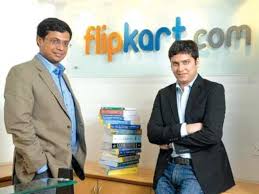
In October 2007, two young Amazon executives – Sachin and Binny Bansal (pictured above) set up an e-commerce website they called Flipkart, India’s most iconic startup story till date.

Flipkart was valued at US$ 21 billion when it was eventually acquired by Walmart in 2018.

Flipkart

The success of the Bansals also inspired many a startup journey in this period. Flipkart was obviously not an isolated event.

More top-notch professionals started sensing lucrative opportunities, leading by example and setting up their own ventures in the 1990’s.  Sanjeev Bikhchandani, Founder & Executive Vice Chairman, Info Edge India Ltd (of Naukri.com fame), and VSS Mani, founder of Justdial, were some notable examples.

Deep Kalra, (pictured below) Founder, Chairman and Group CEO, MakeMyTrip.com, got acquainted with the potential of the internet as an avenue for distribution while working at GE Capital and decided to set up the popular travel portal.

makemytrip

The most significant game changer is the manner in which mobile phones and more specifically smartphones have penetrated the Indian market. The direct implication of this has been that a large majority of Indians have, or are about to access the internet for the first time on their mobile phones.

A report by Kantar-IMRB in March 2019 estimated India’s internet users at 566 million, projected to reach 627 million by the end of the year.

millennialshopping

Around 97% of India’s netizens use mobile as one of the mediums.

This has created new avenues of growth and spurred startups like InMobi, Ola, Zomato, Practo, UrbanClap, BigBasket, Pepperfry and more.

These startups have been fueled by several other factors – increasing affinity towards entrepreneurship, potential of the Indian market, globalization and the resulting interface with other ecosystems (particularly Silicon Valley), rising confidence towards startup funding and facilitating policies.

According to the NASSCOMZinnov Startup Report 2019, the ecosystem added around 1,300 startups in 2019, taking the total to 8,900 tech startups.

India ranks third both in the number of startups and unicorns. The aggregation space has definitely been the beehive for startup innovation. The top ten unicorns of India as on date include 6 aggregators, two fintech firms and one edtech firm.

Investments by VCs have grown by four times during the period, and number of deals increased from 130 in 2013 to 270 in 2017.

India needs more stories like Delhivery (logistics), Vortex (solar ATMs) and Ather Energy (electric mobility).

vortex

A welcome trend is that of well-established corporates engaging with startups to bring greater innovative capabilities in their own DNA. This could be pivotal for India as it seeks to move ahead of the curve in areas like AI and machine learning.

Meantime China is part of this Indian story.

Chinese tech giants Alibaba and Tencent, early-stage investors Hillhouse Capital and CDH Investments, large corporations such as Meituan and Fosun, and smartphone makers Xiaomi and Oppo — a little over 100 Chinese firms have made investments in Indian startups.

Chinese VCs have invested over USD8 billion and hold large stakes in a number of Indian startups, including unicorns and “soonicorns”.

Watch this space…

Thanks to the Trade Promotion Council of India for information for this blog.
A great Indian Australian continues to give – Dr Rao and family

Well done Jana!

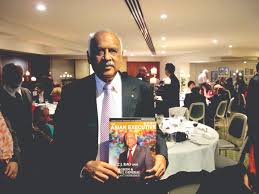
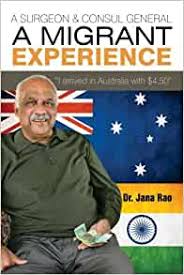
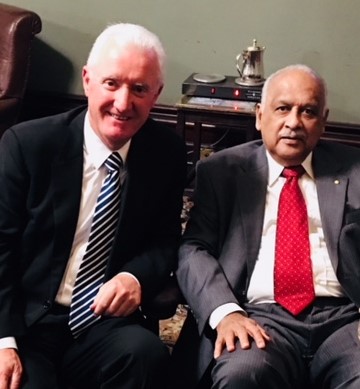
The Australia India Institute has just announced that the Australia India Social and Charitable Ventures Limited, through Mr T. Janardhana Rao OAM (pictured above and below) and his family, are providing a gift of at least $400,000 dollars over four years to the Australia India Institute.

jana 3

The Aii said: “This extremely generous gift will support the Australia India Institute’s engagement activities with the University and business communities and also support students from India or of Indian heritage.”

Professor Craig Jeffrey, Director of the Aii, thanked Mr Rao and his family noting, “This important gift will greatly enhance the efforts of the Institute and University of Melbourne to develop the study of India and engage with the Indian diaspora. We are extremely grateful to Mr Rao and his family for their generosity and vision.”

For around 25 years Jana was both a surgeon and the Honorary Indian Consul in Victoria – a huge task.

He has been an inspiration to me for many years – pictured below:

JanaRao 5

Jana continues to be an example to us all – respectful, modest, a great listener, a principled man who could be very strong but never in an aggressive or divisive way, a man of quiet consensus and leading by example.

His son Harish Rao is a former National Chair of the Australia India Business Council, an advisor to the Australia India Institute, Director of the Australia World Orchestra and more – and my personal mentor on things India.

jana2


India wine harvest down this year – opportunity for Australia?

India’s wine grape harvest is well down this year. A spell of unseasonal rain in October and November has spoiled grapes sown in Sangli and Nashik – both are in the State of Maharashtra in the “cooler” areas near the Western Ghats mountain range.

Sula_Vineyards

Pictured above – Sula vineyards – dominant Indian wine brand

On average, the state of Maharashtra crushes 20,000 tonnes of grapes and produces 1.2 million litres of wine – this year, however, just 12,000 to 15,000 tonnes of grapes will be crushed, resulting in the production of 700,000 litres of wine.

I first heard about this from the Trade Promotion Council of India who produce terrific information about trade with India – well worth having a look at their website.

But the figures hide another reality – quality will be down.

Commenting on the issue, Mr. Rajesh Jadhav, secretary of All India Wine Production Association, said, “There will be a 25% reduction in wine production and due to poor quality of the fruit, it will be difficult to maintain quality.”

India’s millennials (there are 450 million of them) are drinking wine – not in quantity but definitely chasing quality.

The Australian wine industry has a presence in India but mostly at the lower end – cheaper or good value wines led by Jacobs Creek.

Time for Australian wines to pursue sales channels in India!

Asia Society doing great things to connect Australia with India and beyond

Very good news for my hometown Melbourne and our State of Victoria.

Manoj Kohli, Country Head of SoftBank India, SoftBank Group International, was appointed the second Asia Society-Victoria Distinguished Fellow in May 2020.

Manoj Kohli - profile photo 900 x 600

Asia Society Australia-Victoria Distinguished Fellowship is a partnership between Asia Society Australia and the Victorian Government to bring the best minds and ideas from Asia and Australia to Victoria. It aims to generate new ideas and promote greater economic, strategic and cultural connectivity between Australia and the Asia-Pacific region. The Fellowship will showcase the state of Victoria as Australia’s centre of excellence for Asia insights and capabilities.

The Asia Business Taskforce

On Friday 5 October 2019, the Business Council of Australia and Asia Society Australia announced the formation of an Asia taskforce of senior leaders from the business, education and government sectors to examine how Australian companies and organisations can increase their presence and position in Asia to ensure our continued prosperity and deliver progress for future generations.

The Asia Business Taskforce is chaired by Mark van Dyck, Managing Director (Asia-Pacific), Compass Group, and co-led by Jennifer Westacott, CEO of the Business Council of Australia, Philipp Ivanov, CEO Asia Society Australia, and Andrew Parker, Asia Practice Leader and Partner at PwC.

The taskforce examines how Australia can build and enhance its position with the powerhouse Asian economies in our proximity, diversify our economic partners, and prepare for a more strategically and economically competitive region.

Throughout 2020, the taskforce aims to delivering a series of policy recommendations to government.

These are two brilliant programs of the Asia Society here in Australia.


The 7 ways business and brand can thrive in Industry 4.0

The world is moving quickly into a new era known as Industrial Revolution 4.0 and business brands will have to adapt. This will be our biggest challenge “after coronavirus”.

We have already seen Tata Consulting Services (TCS) shake the world of work by announcing a target of 75% or its 450,000 workers operating from home or remotely by 2025. Others will have to follow.

The fourth industrial revolution sees at least ten major changes, each reinforcing the other so that how we do business and how we work will be totally transformed. The first three industrial revolutions were each about only one change – steam, electricity and computers.

industry4.7

Companies will need to be nimble and honest about the status of their brand – the immediate future can either build or destroy your brand credibility. Here are my 7 tips for thriving as a brand in Industry 4.0:

  1. Show your company can continue to learn

Having a “we want to keep learning” brand is highly desirable for the market, clients and future employees. Audit your brand communication – does it show the organisation is curious, reading and listening widely, entering staff and customers into discussion groups and a genuine “learning organisation”.

  1. SECOND – Demonstrate wisdom and common sense

Your clients look for more than knowledge from you – they want a brand that demonstrates common sense. The best way to describe the difference is through the humble tomato – knowledge tells you a tomato is a fruit (not a vegetable) – but common sense prevents you adding the tomato to a fruit salad. Making sure your senior people have mentors can help their levels of common sense.

  1. THREE – Gain good collaboration and friendship skills

Industrial 4.0 will make collaboration easy and instant with anyone, anywhere and anytime – and the change will benefit those businesses that have the skills to reach out, make friends, work across the globe and build collaboration. It is worthwhile evaluating how much you are seen as a collaborative partner.

  1. FOUR – Build cross-border understanding and skills

Already our lives in one country are intersecting with lives of other countries, and Industrial 4.0 will make the globe an even smaller place. Those who have travelled, who have acquired both knowledge and experience of other cultures will be in high demand, simply because almost every job will have global aspects. Prepare your employees via cross cultural training and global exposure.

  1. FIVE – Make everyone an outstanding communicator

Traditional “soft skills” training will not prepare your team for the fast future – outstanding communication skills for Industrial 4.0 will include rapid pitching, ability to support points in a way which moves others, skills to relate directly and closely with those above and below you. The irony is that as the technology impacts even more, it is the brands that communicate well who will succeed.

  1. SIX – Be known as team-based problem solvers

More work will be team-based, and a powerful brand characteristic is being “team-based problem solvers”. Do your problem-solving teams include members from other companies? Should you offer clients and customers a role?

  1. SEVEN – Build self-reliance and resilience

With the pace of change, your people will need to be more self-reliant and resilient. Life will present challenges almost constantly. Make sure your people can cope, because that reflects in your brand being a steady and trusted delivery sources. When staff lose resilience, your brand is also diminished.

Stephen Manallack is the author of four books, including one published in India (“Soft Skills for a Flat World”, Tata McGraw-Hill India), a speaker on communication and is delivering a series of webinars on Industry 4.0 for Indian and Australian universities. He is a blogger at Into India and regular visitor to India. EMAIL stephen@manallack.com.au

industry4.0hands

India should be a vital part of the world’s biggest trade deal – RCEP

The countries involved in the world’s biggest trade deal hope to welcome India back into the group – this was announced after their remote meeting last week.

The 16-country Regional Comprehensive Economic Partnership – known as the RCEP – would be the world’s largest when operational, spanning India to New Zealand, including 30% of global GDP and half of the world’s people.

rcep3

But resistance from India – concerned about a flood of cheap mass-produced Chinese goods hurting small businesses in its economy – came to a head last year when India walked out of the deal. I hope it comes back to RCEP.

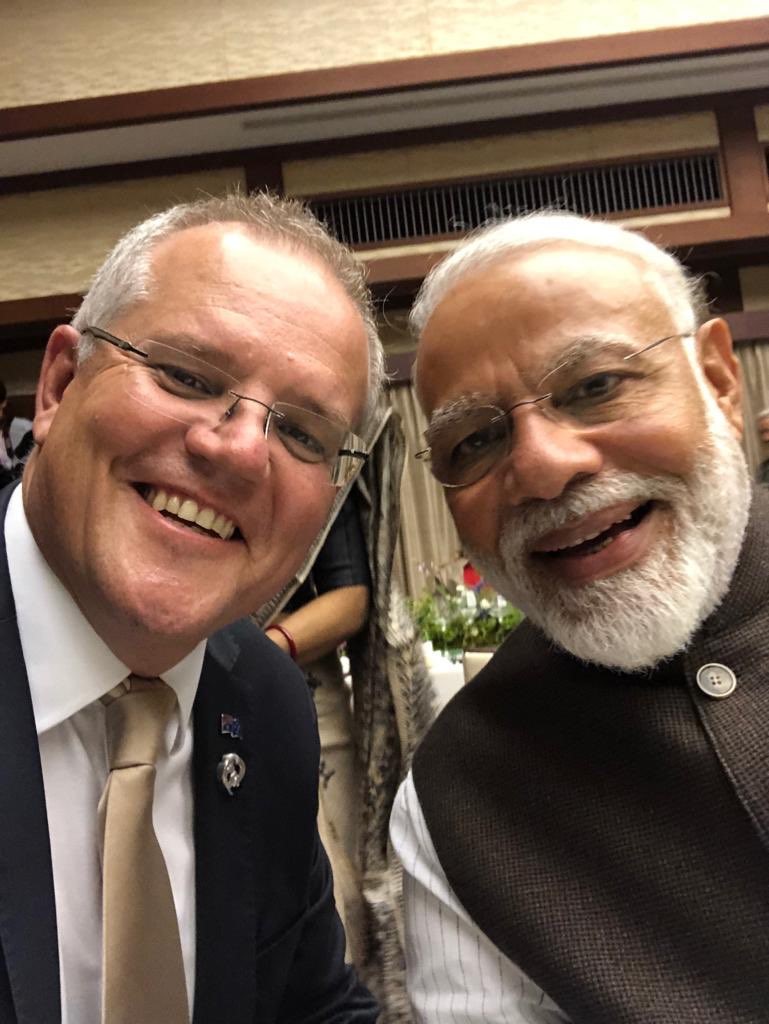
India had legitimate concerns and hopefully RCEP will deliver on these. Australian Prime Minister Morrison and Indian Prime Minister Modi have a good relationship and could work together on the way forward.

ModiMorrisonSmile2

The meeting, while reaching out to India, also made it clear that one way or another the RCEP deal will be finalised and signed in 2020. 

RCEP includes the ASEAN nations plus China, Japan, Korea, Australia and New Zealand.

India’s TCS to move 75% of employees to work from home – permanently!

Remember this man – his name is Rajesh Gopinathan, Chairman of TCS, and he is about to turn the way we work upside down – permanently!

India’s biggest IT firm, TCS, is set to shake up the global IT industry employment practices – and maybe start a global revolution in how we work.

work

Post-coronavirus, TCS has announced it will not go back to the old way, launching instead a new model called 25/25 using what is called Secure Borderless Work Spaces (SBWS).

Running up to 2025, TCS will ask a vast majority of 75% of its 450,000 employees globally to work from home, up from the industry average of 20% today.

tcs

TCS will discard its 20-year-old operating model and leapfrog into a new mode of work.

Others will have to follow. For a start, how will they compete for the best recruits? And how else will they achieve productivity gains?

The new model called 25/25 will require far less office space than occupied today. “We don’t believe that we need more than 25% of our workforce at our facilities in order to be 100% productive,” says TCS’s chief operating officer NG Subramaniam (pictured below).

tcs subramanian

TCS is something of a bellwether among India’s IT services firms, so Wipro, Infosys and others will likely follow.

Experts say before the lockdown no more than 15-20% of employees ever worked from home among the Indian services firms.

I have been on some of the Indian IT “campuses” – huge sites usually on the edge of the city in a park-like area with multiple buildings, lifestyle facilities and essentially a “living away from home” model for thousands of employees.

All this will change – and fast.

tcs campus

RIL’s Jio moves to shake up India’s retail market in partnership with kirana stores

INTO INDIA wrote recently about Facebook investing in Jio, the Reliance Industries (RIL) internet and  telecoms arm.

Now they have announced a move which could long term shake up the retail space in India.

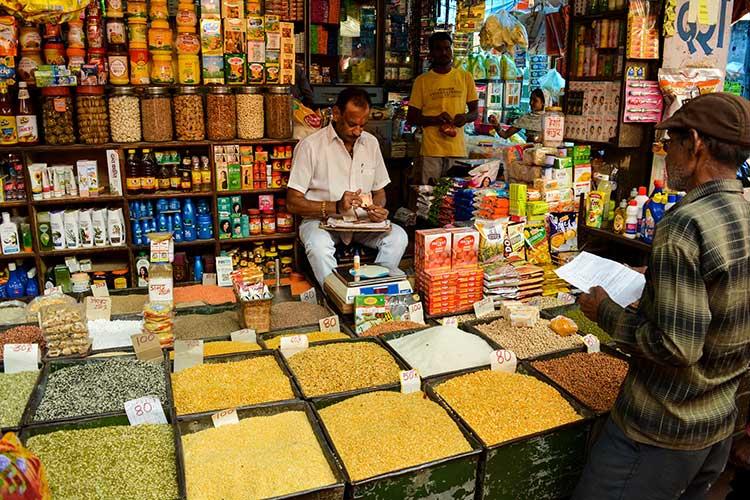
It seems that forever retail in India has been dominated by “mom and pop” local stores which are known as “kirana stores”. Most retail changes so far have been in competition with these stores.

kirana2

But kirana stores have a firm grip on the Indian shopping psyche.

So now comes news that RIL has started home delivery of essentials in partnership with local kirana stores in Navi Mumbai, Thane and Kalyan. These services are available under JioMart, an e-commerce venture of Reliance Retail, an RIL subsidiary.

kirana3

This innovation uses WhatsApp (owned by Facebook), which has more than 400 million users in India. If it goes well, the scheme will be extended to other Indian cities.

jiomart

Bank of America reports that RIL could digitise 5 million stores by 2023. Kirana stores are keen to go digital, driven in a big way by GST compliance.

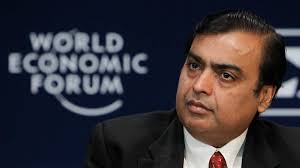
Mukesh Ambani, Chairman of RIL, is moving fast to change from a petrochemical giant to a mixed business including strong telecom and retail capacity.

mukeshambani2

Facebook buys big in India and the battle for market share is on

Facebook has taken a huge leap into India.

It has bought a 9.99% stake in Reliance Jio platforms for US$5.7bn. According to Mugunthan Siva, CEO, India Avenue Investment Management (Sydney): “This is the largest investment for a minority stake by a technology company anywhere in the world.”

I would add it is the largest FDI in the technology sector in India.

So now the battle lines are drawn in India – the deal will also help Facebook battle rapidly growing Chinese apps like Tiktok which have attracted India’s youth. Not to mention a mouth-watering four-way tech tussle with Japan’s Softbank, US heavyweights Google & Amazon and China’s Alibaba.

India is worth fighting over – a recent report by Cisco said India is poised to have more than 900 million internet users due to the increased penetration of affordable smartphones and cheaper internet plans. India will also have around 2.1 billion internet-connected devices by 2023, said the report.

This is also another step for the Mukesh Ambani led Reliance Industries Ltd (RIL) which has been pursuing an oil-to-telecom move plus cutting debt.

Mukesh Ambani

In less than four years, Jio has brought more than 388 million people online,

This battle is bigger than just the investment – Jio Platforms, Reliance Retail and Facebook’s WhatsApp service have also entered into a commercial partnership agreement to further accelerate Reliance Retail’s new commerce business on the JioMart platform using WhatsApp and to support small businesses on WhatsApp.

Ambani invested around $40 billion to launch Jio in 2016. RIL is also the largest retail player in India thanks to a series of aggressive expansionary moves into consumer-facing businesses such as e-commerce and grocery.

Austrade and Amazon provide “your passage to online India”

Vegemite will make its way into Indian shoppers’ online baskets after the launch of an Amazon Australia store there – possibly the most exciting India news for Aussie consumer goods exporters.

The Aussie shop at Amazon India already has Australian brands including Capilano, Swisse, Sukin, Gaia Skin Naturals, Australis, Sanitarium, Sun Rice, Orgran, Australia’s Own and the Byron Bay Chilli Co available immediately.

amazon8

Why is this so exciting? India has just been a distant dream, a major hassle, a demanding market with too many markets, too many restrictions and challenges at every turn. Going with this online alternative makes it accessible, sensible and possible.

Up to now, India is Australia’s fifth-largest export market and is tipped to be the third biggest economy in the world by 2035, behind China and the US. This could well up the priority of India for Australian exporters.

amazon9

Who can play in this new space? Australian food, health, fashion, sporting goods, home care and lifestyle brands.

The online store gives local Australian businesses easier access to 450 million internet users in India out of the population of 1.3 billion.

How do you get into this online space?

You still have to know about India, the market and the trends. You also have to know where you might fit in this scene. You would expect me to say this – but having someone here who knows India has been a key for almost every successful exporter to India.

Then team up with Austrade and Amazon for your “passage to online India”.

amazon9