India has the largest child population globally – 125-150 million in the age group up to 4 years.
With increasing numbers of Indian women in employment, rising awareness of child nutrition and rapid urbanisation, the paediatric nutrition category presents a significant growth opportunity.
Opportunities include child products in health, wellness and nutrition space – encompassing wellness nutrition as well as disease specific nutrition and our consumer brands.
Add to this education and learning, toys, clothing and much more.
The Demographic Dividend
In a favourable development for India, the growth in India’s working age population (people between 15 and 64 years of age) is outnumbering the growth in its dependant population. Children aged 14 or below as well as people aged above 65 years fall under the latter category.
This surge in the working-age population is expected to last for a total spell of 37 years, until 2055.
According to studies, such a phase is usually accompanied by a rapid economic growth.
According to research by London & Partners and its analysis of Dealroom.co investment data, India was the second-largest global venture capital investment hub for digital retail startups in 2022, increasing sharply by 175% from US$ 8 billion in 2020 to US$ 22 billion in 2021. Last year, India came in second to the United States, which attracted US$ 51 billion in investment, followed by China, which received US$ 14 billion, and the United Kingdom, which received US$ 7 billion. Bengaluru led the way in terms of worldwide Venture Capital (VC) investments in digital shopping in 2021, with US$ 14 billion, followed by Gurugram with US$ 4 billion and Mumbai with US$ 3 billion.
Bengaluru was a global leader in digital shopping investment last year. The metropolis nearly tripled its inflows of investments from US$ 5 billion in 2020 to take first place, ahead of New York City (second), San Francisco (third), London (fourth), and Berlin (fifth). Bengaluru was placed fifth among cities with the potential to produce future unicorns, just behind London, according to the research. Following a large consumer shift to e-commerce platforms during the pandemic, global venture capital investment in digital shopping more than doubled in 2021. In 2021, total worldwide venture capital investment is estimated to have reached a new high of US$ 140 billion, up from US$ 68 billion in 2020.
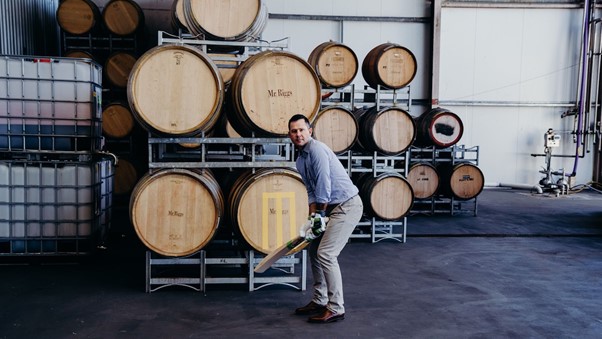
Ricky Ponting has teamed up with Mr Riggs for the India wine market
Sam Freeman is Trade and Investment Commissioner at Australian Trade and Investment Commission (Austrade) in India and is working with the Aussie wine industry to boost sales in India.
Now he is supporting Ricky Ponting (Ponting Wines) and Ben Riggs (Mr Riggs) in entering the India market.
He says: “Australia has witnessed a dramatic rise in the volume and value of wine being imported into India. The last 12 months have seen 81% growth in Australian exports to India and 10 new brands entering the market.
“Austrade is working with a number of wineries across Australia, to assist in their access to this small but emerging market. It was great to see coverage of one of our clients in Glam Adelaide, expressing their interest in the market and the potential it holds.
“It’s been a pleasure working with Ricky, David & Ben to help them build a strategy and channel for Ponting Wines to enter India. We look forward to seeing their labels on shelves soon.”
Conservative figures put the Indian middle class at 228 million
How big is India’s middle and wealthy class? And where are they?
Although this information is essential to your India engagement strategy, until now the answers have really only been speculation.
Lack of data continues to be a challenge, and estimates can vary wildly.
So, INTO INDIA brings you some numbers robust enough for you to use in your planning.
While some estimates put the middle class at 500 million or more, using a much tighter definition of middle class, Hurun Research produced much smaller numbers than most. They defined middle class as households who have more than over A$4,682 per year to spend on housing, travel, cars, education and products. These numbers found 57 million Indian households in the combined class of middle class and wealthy. Now, assuming each household might be four people, that becomes 228 million people.
Most of my research – but not all of it – comes from the Hurun Report, a leading research, luxury publishing and events group established in London in 1998 with presence in India, China, France, UK, USA, Australia, Japan, Canada and Luxembourg. It is widely recognized world-over for its comprehensive evaluation of the wealthiest individuals across the globe.
There are 412,000 dollar-millionaire households/affluent households in India with a networth of at least US$1 million.
Hurun Rich Listers have a wealth of Rs 1,000 crore (142 million), the report says, and pegs the number of such cumulative households in India at 3,000.
At the other end of the spectrum is the ‘Indian middle class’ that has earnings of over Rs 2.5-lakh per annum (over A$4,682) and a net worth of less than Rs 7 crore (A$1.3 million). 56,400,000 families in India fall under this category – approximately 224 million individuals.
The McKinsey Global Institute, which defines India’s middle class as households with real annual disposable incomes between 200,000 and 1 million rupees (US$3,606 to $18,031), estimates the ranks of middle class will more than double by 2025 to 583 million—41 percent of the population.
Where are they?
The top 10 states home to 70.3 per cent of millionaire households in India are Maharashtra (capital is Mumbai) has the highest number of millionaires (56,000), followed by Uttar Pradesh (36,000), Tamil Nadu (35,000), Karnataka (33,000) and Gujarat (29,000). City-wise, Mumbai is home to most millionaires (16,933), followed by Delhi (16,000), Kolkata (10,000), Bengaluru (7,582) and Chennai (4,685).
Aslany, who published a study on the Indian middle class in 2019, found that contrary to most assumptions, a significant segment of the Indian middle class resides in rural areas. About 28.05% of India’s population was middle class, Aslany found, adding that 52.31% of the lower middle class, more than 32% of the comfortable middle class, and more than 23% of the upper-middle class was in rural India. Most of the lower middle class in rural India are involved in agriculture, he said.
These realistic numbers should excite you to engage with India – right now demand for everything has gone through the roof!
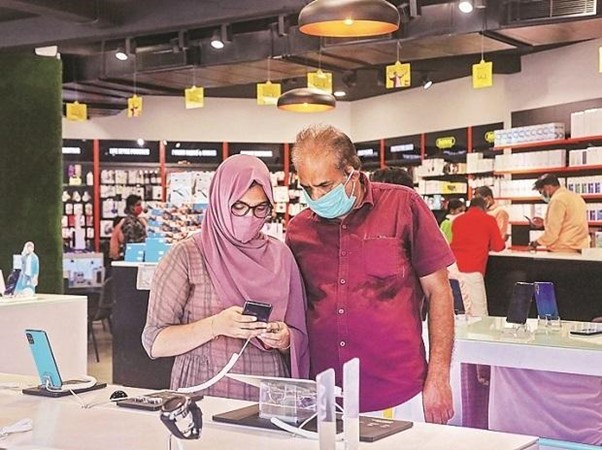
Generation change is seen in shopping malls across India
Growing at around 9 per cent this year, India is well on track to be number 3 or 4 economy in the world. It is also one of the youngest countries on earth – with around 50% of the population aged under 25. Demand outstrips supply – for everything.
Here are some tips that might help your experience, but keep in mind you will find many variations and contradictions of these points in the very diverse and exciting India market:
India is many countries in one
Differences are not just seen in the North, South, East and West, India is truly many countries in one and you need to be ready for cultural diversity. While Mumbai is the fast and flashy financial capital, it is also a tough place because everything is done on grand scale and at great speed. New Delhi is more formal, also more liveable, and is more than a political capital – it is a powerful business city. Chennai is one of my favourites, embracing that slower southern pace and the values that shine in southern businesses. Pune is sophisticated and a major player across many sectors. Bengaluru is technology but much more as well. Regions have varying strengths, so research is the key.
Market entry strategies should think longer term
India is looking for more than a quick sale – it looks to build relationships and create trust that can last a lifetime. India is what we call a “collective” culture – everything is done within the group and if you make it into the group, you will make it there. This means your first venture should probably not be to send the sales and business development team over there is search of deals. Rather, lead from the top to create relationships – deals will follow.
Find your local Indian team and culture
Companies that have tried to impose their Head office teams and cultures on India operations rarely succeed. A priority should be to identify Indians who can lead locally – with your support. Accepting that the corporate culture might not be an exact mirror of your HQ culture is also vital – with care and guidance over time, your Indian operations will reflect key elements of central culture but will bring added value too.
“Yes” can mean “maybe” or “no”
Indians are among the most courteous and generous hosts on the planet. On top of this, their culture demands that they never provide an outright rejection or “no” statement, even when this is clearly the only answer. The dumbest question for a business to ask in India is “can you help me with market entry for my products?” The answer will always be “yes” and you will sit idle for a long time back home until you realise this is not the right question. Within Indian culture built so solidly on relationship above all else, the word “no” is a real relationship breaker and is rarely or never used. “Yes” can in fact mean “maybe” or even “no” and you need to look for the signs. Like most of Asia, Indians are indirect communicators. If that is not complex enough, consider that India has 26 major languages.
Learn the art of flexibility and patience
Being patient and flexible is an asset, even if you come from a country that likes to be blunt, direct and structured. Most Indian communication is indirect, so it can take some time to work out what the real issues are. India is full of surprises and you cope best through being flexible. Dropping any “one rule for all” approach is a good start.
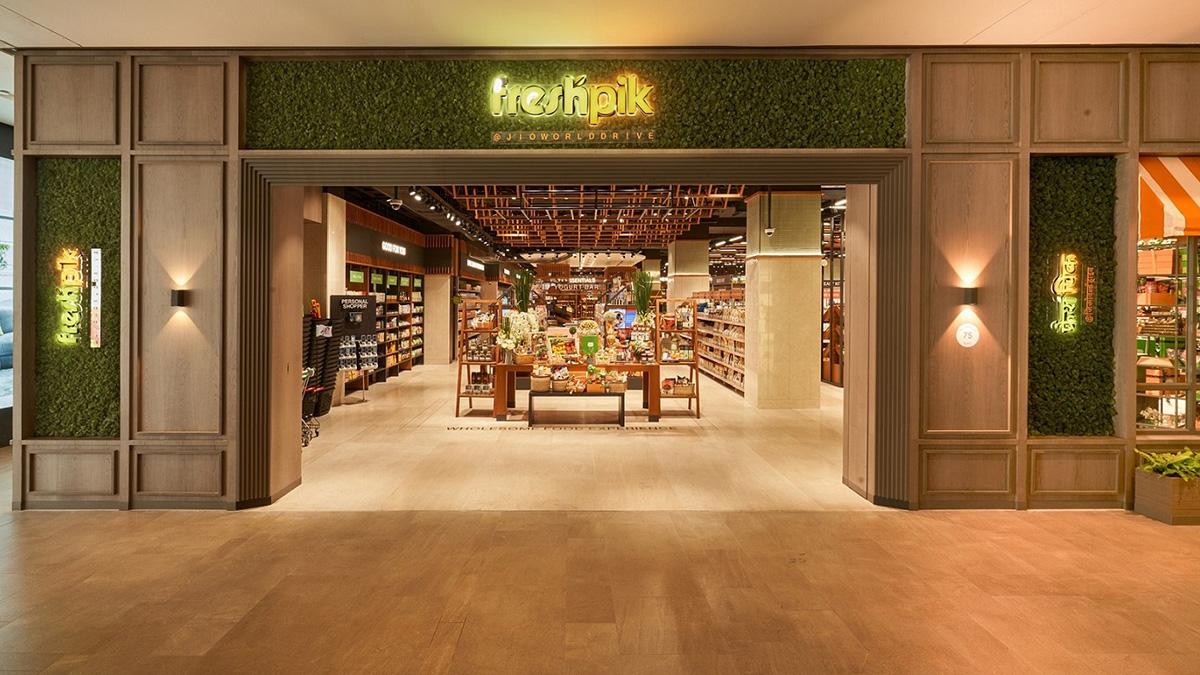
Freshpik has just been launched and marks Reliance Retail’s foray into the Ultra-Premium grocery segment in India. It is a new “experiential gourmet food store” and comes within the retail arm of Mukesh Ambani-led Reliance Industries Ltd.
Freshpik will offer a range of food items comprising fruits and vegetables – with specially curated organic varieties and live microgreens, essential ingredients for international cuisines like Japanese, Italian, Korean, and Thai, breads, ice creams, artisanal cheese, chocolates from local and international producers, and frozen desserts.
The ‘Good for You’ range of premium and healthy food products caters to the diverse dietary preferences of health-conscious customers.
Apart from this, customers can also choose from exotic varieties of tea and coffee; a wide range of personal care products, including premium ayurvedic and natural products; a host of kitchen accessories like cooking ware, serve ware, and bespoke and ready-to-pick gifting options.
A distinctive aspect of Freshpik is its immersive shopping concepts – created by integrating digital and physical themes – that elevate the experience of shopping to a whole new plane.
“If good food is your thing, Freshpik is a paradise. It’s a playground to delight all our senses, touch, see, smell, hear, taste, enjoy… Freshpik is a food experience, not just a store” said Damodar Mall, CEO Grocery Retail, Reliance Retail.
One billion vaccines: The cumulative coronavirus (Covid-19) vaccine doses administered across the country surpassed the 1-billion milestone, today. Over 700 million people have been administered the first dose of Covid-19 vaccine, while 290 million have been fully vaccinated, according to the government’s CoWin website. The government has set a target to vaccinate all adults by the end of 2021.
Moody’s banking rating: Moody’s Investors Service has upgraded the outlook for the Indian banking system to ‘stable’ from ‘negative’. It believes that the deterioration of asset quality since the onset of Covid-19 pandemic has been moderate and an improving operating environment will support asset quality. Moody’s expects asset quality to further improve, leading to decline in credit costs, as economic activity normalises. The rating agency has projected India’s real GDP growth for 2021-22 at 9.3 per cent.
Tax targets overshoot: The Centre is likely to exceed the budgeted tax collection target of Rs.22.2 trillion for the current fiscal year by Rs.2.5 trillion, according to experts. This is driven by better indirect tax mop-up, compliance measures and recovery in most sectors following the second wave of the pandemic. Personal income and corporate tax collections grew by 74 per cent to Rs.5.7 trillion in the first half of the current financial year, mainly due to advance tax and tax deduction at source (TDS) payments.
Power deficit: The power shortage situation in the country is improving as per the data released by the Central Electricity Authority. Power shortage came down to 1,456 MW on 17 October 2021 from 2,714 MW a week back. Peak power shortage stood at a massive 11,626 MW on 7 October 2021. According to power sector experts, demand has moderated due to the onset of autumn and heavy rains in many parts of the country. Moreover, an improvement in coal supplies would further bring down the power deficit.
Data consumption: India has the highest mobile data consumption in the world which is about 11 to 12 GB per user a month. The country is adding as much as 25 million new smartphone users every quarter making it a flourishing ground to launch digital initiatives, Ram Sewak Sharma, chief executive of the National Health Authority of India said. By 2025, India’s data consumption is likely to be doubled to nearly 25 GB per person a month, driven by affordable mobile broadband services and changing video viewing habits, Swedish gear maker Ericsson said.
E-Commerce sales: The share of e-commerce in the overall sales pie has touched new highs in the first fortnight of October 2021, according to market trackers and companies. Several categories, including smartphones, consumer electronics, apparel and daily necessities are growing faster than last year. The share of smartphone sales online surged to around 60 per cent in the first fortnight of Navratri-Dussehra from around 55 per cent, early estimates by market tracker Counterpoint Research showed. Televisions grew to 40 per cent from 31 per cent in the same period last year, while refrigerators, air-conditioners, washing machines and kitchen appliances rose to 9-10 per cent from 6-8 per cent. Market research firm RedSeer Consulting said the overall online shopper base has grown by around 20 per cent this festive season compared to last year, with tier II markets contributing to almost 61 per cent of all shoppers
Foreign investment: India witnessed net foreign investment inflows of USD 8.3 billion in August 2021, as compared to net inflows of USD 649 million in the preceding month. Net inflows of foreign direct investment (FDI) rose to USD 5 billion from nearly USD 3 billion in July 2021. Net inflows of foreign portfolio investment (FPI) worth USD 3.3 billion were seen in August 2021, after witnessing net outflows of USD 1.6 billion in July 2021.
Thanks to ASK Capital Management Pte Ltd for the above information.
S&P Global Ratings said that after stalling post the second wave of the Covid pandemic, India retained the country’s BBB-sovereign rating with a stable outlook.
INTO INDIA has urged Australian firms looking for new markets to take another close look at opportunities in India.
S&P said that growth will improve over the July-September quarter, pointing to high-frequency indicators such as goods and services tax receipts and motor vehicle sales. Record forex reserves, and India emerging as an external creditor to the world has also supported the rating and stable outlook, S&P said.
Data released in July showed India’s economy expanded 20.1% year-on-year in the April-June quarter on a low base though sequentially it was down 16.9% over the previous quarter.
S&P anticipates another Covid wave in India, but with rising vaccination coverage, it expects this to be less severe both in terms of health and economic impact. India’s vaccinations have crossed 700 million and in the first week of September, the daily average has been over 7.6 million doses.
Source THE INDIA EXPERT blog of Gunjan Bagla
CONCLUSION – INTO INDIA asks exporters and investors – if you are not now heavily committed to India, now is the time to take action.
INTO INDIA has long called for more western investment into the growth story that is modern India.
Now, according to a survey conducted by multinational professional services network, Deloitte, a large proportion of international business leaders remain confident in India’s short- and long-term prospects and are readying plans to make additional and first-time investments in the country.
The India FDI Opportunity survey of September 2021, which questioned 1,200 business leaders of multinational corporations in the U.S., U.K., Japan, and Singapore, found that India remains an attractive destination for investments, scoring highly for its skilled workforce and prospects for economic growth.
44 percent of the 1,200 business leaders surveyed are planning additional or first-time investments in India
Nearly two-thirds of first-time investments will be made within the next two years
Business perceptions of India are better in the U.S. and UK compared to Singapore and Japan
Recent reforms by the Indian government to improve ease of doing business are popular, but awareness of policy improvements remains low
It also said that more business leaders, especially in Japan, are making investments in India for access to the domestic market rather than using India as a springboard for exports.
“India has the strongest positive perception in the U.S. when compared to markets such as China, Brazil, Mexico, and Vietnam. The U.S. and U.K. business leaders expressed greater confidence in India’s stability,” it said.
Investment is always indirectly but powerfully linked with market entry and trade outcomes. INTO INDIA applauds the enthusiasm of the US for India and hope this is also taken up in Australia – where investment funds are high – fourth largest wealth management market in the world.
You can get lost in Higginbothams – or, at least, I have!
On Chennai’s Mount Road, Higginbothams has stood tall and proud since 1844. Said to be the oldest bookstore in India, it was founded by Abel Joshua Higginbotham—an India-born Englishman.
After an unsatisfying career as a seamen, Higginbotham became the manager of a bookstore in the basement of a Methodist chapel. He bought and ran the store for 60 years with his youngest son, before switching to the current Mount Road location.
The bookshop is housed in a grand, colonial structure and still carries an old world charm with wooden furniture and tall stained-glass windows.
LIC Building, 116, Anna Salai, near Regional Passport Office, Chennai.








 Into India