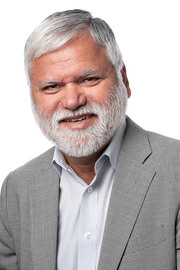
A paper by two University of Melbourne academics, Dr Pradeep Taneja (pictured) and Surjeet D Dhanji, tells the inspiring story of how the Indian diaspora around the world went to the rescue of countless Indians as Covid closed all the doors.
India has the largest diaspora population in the world – around 13 million Indian citizens living outside the country and another 17 million people of Indian origin spread across 146 countries.
Hundreds of thousands of Indian tourists, students, workers on short-term visas, and families visiting relatives were stranded in far-flung parts of the world.
Amongst these were the elderly and those with medical conditions as well as pregnant women. Grandparents who had travelled abroad to spend time with their grandchildren and children who had travelled to spend time with their grand-parents were all affected by the chaos and confusion caused by the pandemic.
The study covers three different cases around the world, showing how the Indian diaspora took action and pointing to how emergency assistance like this could be further enhanced.
It’s a brilliant report – a tribute to the writers and to the worlds’ biggest diaspora – Indians.
Engaging with India means building relationships – and although this is a bit quick, you can build relationships after 3 flights and 3 visits. Anything less places you at risk of misunderstanding both the opportunity and the pathway.
Here are 4 ways to make your 3 flights X 3 meetings introduction work well:
Adopt a patient long term view
One way to improve our cultural dexterity would be to take a long term view and apply lots of patience. Businesses should not start out on market entry unless they are prepared to commit at least five years to making it work.
Focus on relationships
India is not a short term transaction opportunity – to succeed there needs a longer term focus on building relationships. The first trade meeting in India can be exciting and positive, but from the India side this is just seen as an introduction and they will wait to see if the relationship grows.
Remember in Indian culture “no” is rarely said
Indians are among the most courteous and generous hosts on the planet. On top of this, their culture demands that they never provide an outright rejection or “no” statement, even when this is clearly the only answer. To succeed, our businesses and governments need to dig deeper and find the reality beyond the politeness.
Adapt to indirect communications
Like most of Asia, Indians are indirect communicators. Problems are rarely addressed directly and unless you have an ear for indirectness, you will miss the warning signs. You can learn how indirect communication works.
INTO INDIA recommends you go to India asap – it could be the time of your life! (business and personal)
According to research by London & Partners and its analysis of Dealroom.co investment data, India was the second-largest global venture capital investment hub for digital retail startups in 2022, increasing sharply by 175% from US$ 8 billion in 2020 to US$ 22 billion in 2021. Last year, India came in second to the United States, which attracted US$ 51 billion in investment, followed by China, which received US$ 14 billion, and the United Kingdom, which received US$ 7 billion. Bengaluru led the way in terms of worldwide Venture Capital (VC) investments in digital shopping in 2021, with US$ 14 billion, followed by Gurugram with US$ 4 billion and Mumbai with US$ 3 billion.
Bengaluru was a global leader in digital shopping investment last year. The metropolis nearly tripled its inflows of investments from US$ 5 billion in 2020 to take first place, ahead of New York City (second), San Francisco (third), London (fourth), and Berlin (fifth). Bengaluru was placed fifth among cities with the potential to produce future unicorns, just behind London, according to the research. Following a large consumer shift to e-commerce platforms during the pandemic, global venture capital investment in digital shopping more than doubled in 2021. In 2021, total worldwide venture capital investment is estimated to have reached a new high of US$ 140 billion, up from US$ 68 billion in 2020.
Russia’s Putin meets with India’s Modi in 2018 – Russia has consistently supported India over Pakistan and China
India has taken a lot of criticism for not joining in global criticism of Russia over the invasion of Ukraine.
In the drama of conflict, few take time to think – but India perhaps deserves you taking a moment to reflect on why it has taken a neutral stance.
At the very centre of India’s position is that in face of border challenges with China, it needs its defence partnership with Russia to continue.
Interesting that almost all western leaders recognise this strategic dilemma.
India is an important part of the move to balance China in the Indo-Pacific, so it is vital to understand their position.
Few are aware that for all of its democratic and independent life, India has been very close to Russia. It is a long standing relationship.
India is now the only Quad country to have not called Russia out by its name let alone by imposing economic sanctions.
But the other three nations in the Quad know that India’s defence relationship with Russia could be described as its “most valued partnership”, as a recent Lowy Institute paper put it.
How important is Russia to India? A whopping 86% of Indian military hardware is of Russian origin – and this hardware is central to India’s ability to stand up to China over longstanding territorial disputes.
In 2018, India signed a US$5 billion deal with Russia to buy the S-400 missile defence system. Trump warned India that it might impose sanctions – so far, no sanctions have arisen.
And don’t forget Russia has been the only country to support India over decades of problems with Pakistan. In 1971 when India and Pakistan fought for 13 days, Russia was the only country to help India – no western country provided support. The USA ignored Delhi’s please for help over East Pakistan as it then was.
You could see this as an “over reliance” on Russia, but don’t forget it has been close to Russia since the first Prime Minister Nehru took office – and it is only recently that it has become involved closely with countries like the USA, Japan and Australia.
India’s position on Russia and problems with China were somewhat challenged by the recent Russia-China joint statement, pledging that “there are no ‘forbidden’ areas of cooperation”. India is no doubt seeking to understand what this means – and in such a fast changing environment, is even more unlikely to call our Russia over Ukraine.
With the brutality and horror of the war on Ukraine now clearly visible, whether India will change its neutrality stance remains to be seen.
But hopefully the above information has helped you understand India’s position.
Could the nations of the Indian Ocean region combine to put their focus on OPTIMISM as a replacement for rampant negativity, fear politics and division?
What a contrast this would be to the so-called “Indo-Pacific Region” which seems to have one negative driver – containment of China.
Debate has started in Australia which “needs a new narrative and new thinking from the top,” according to the Centre for Optimism which has released a six-point plan for government and industry to adopt to boost their capabilities with a positive, uplifting mindset and optimistic leadership focused on collaboration, participation, and transparency.
What is wrong with the current narrative?
The Centre’s founder Victor Perton said the current national narrative is framed in old behaviours – state-federal squabbling over policy and service responsibility, hand-outs addressing market failures, institutional inertia, and short-run responses to crises.
I would add that our politicians are disconnected, use fear and manipulate the electorate through division and hostility.
The World Economic Forum recently warned its members, including Australia, that the contemporary “lack of optimism could create a vicious cycle of disillusionment and social unrest.”
Mr. Perton said that with Australia coming out of COVID lockdowns, people’s lives have changed, and people expect their governments to learn the lessons too. “They want positivity, not an aggressive fear-driven narrative,” he said.
Victor Perton was a Victorian MP for 18 years, a former Victorian Government’s Commissioner to the Americas, and the Federal Government’s Senior Engagement Adviser for the Brisbane G20 Leaders’ Summit of Finance Ministers & Central Bank Governors.
The six (6) point-plan proposed to government and political leaders is:
Collaboration – as a primary goal – Federal Cabinet should create a National Collaboration Commission to exist alongside the ACCC and National Competition Council.
Vision focus – Government Agencies should establish teams in each Department whose core purpose is to develop a vision, a long-run view of the future.
Active community engagement – through the establishment of citizen juries, in which citizens can assess policies, or plans that are either prospective, or already in place.
Reframe measurement (evaluation) – Replace the preoccupation with GDP and introduce a new Optimism indicator…increasing attention on (a) volunteerism, (b) community engagement, (c) non-market work, (d) care for disadvantaged segments, (e) satisfaction with life, and (f) confident and optimistic outlooks.
Reframe economic development – Move from a focus on size of Government to broader based policies. This to include policies on care and health sectors, innovation, education, green capabilities, and supporting them through “needs clusters”. This would involve the establishment of more public-private partnerships and socially responsible funds, including social impact funding.
Broader institutional change – The inclusion of Opposition party members in the National Cabinet to promote bipartisanship and a collective long-term view on national issues which have been clearly delineated, such as those covering climate change and immigration. The Cabinet would have pre-determined flexibility to add issues or remove them from the agenda.
Is this the optimism lens we need?
I think so, and am keen to hear your views and ideas.
Atal Tunnel – recently opened by Indian PM Narendra Modi – is the world’s longest highway tunnel above 10,000 feet according to the World Book of Records.
The tunnel carries a lot of importance strategically as it is 9.02 kilometres long which runs under the ‘Rohtang Pass’ and was constructed on the Manali–Leh highway.
It reduced the travel time by four to five hours and have reduced the distance on Manali–Sarcha road by 46 km. Lt General Mr. Rajeev Chaudhry, Director General of the Border Roads Organisation (DGBR), was honoured for the Border Roads Organisation (BRO’s) outstanding performance in establishing this engineering marvel connecting Manali and the Lahaul-Spiti Valley.
Some things provide a “wake up call” on how quickly things are changing in modern India.
This is a great example.
India is placed third in the globe on the US Green Building Council’s (USGBC) annual ranking of the top 10 nations and areas outside of the United States for Leadership in Energy and Environmental Design (LEED) in 2021. The country has seen a 10% rise in LEED certified space since 2020. These are 146 buildings that have a total of 2.8 million gross area square meters (GSM) of space.
India has 1,649 LEED certified buildings with a total area of 46.2 million gross square metres. The Indian government has taken the lead in putting the health of its residents first, asking businesses to start with the required safety standards in place said Mr.Gopalakrishnan Padmanabhan, Managing Director – Southeast Asia & Middle East, GBCI.
India at the QUAD was being squeezed more than a little by the USA wanting the QUAD to condemn Russia over Ukraine. Russia is a long-standing friend of India (since 1947 independence).
And behind the scenes there are questions about the commitment of the USA to the region and specifically to South East Asia and the Indian Ocean.
The four QUAD countries (India, Australia, Japan and USA) are closer than ever before and doing positive things in supply chains, emergency relief and vaccines for poor countries.
But, are the cracks beginning to show?
My article in India’s biggest media group, Network 18 News:
Conservative figures put the Indian middle class at 228 million
How big is India’s middle and wealthy class? And where are they?
Although this information is essential to your India engagement strategy, until now the answers have really only been speculation.
Lack of data continues to be a challenge, and estimates can vary wildly.
So, INTO INDIA brings you some numbers robust enough for you to use in your planning.
While some estimates put the middle class at 500 million or more, using a much tighter definition of middle class, Hurun Research produced much smaller numbers than most. They defined middle class as households who have more than over A$4,682 per year to spend on housing, travel, cars, education and products. These numbers found 57 million Indian households in the combined class of middle class and wealthy. Now, assuming each household might be four people, that becomes 228 million people.
Most of my research – but not all of it – comes from the Hurun Report, a leading research, luxury publishing and events group established in London in 1998 with presence in India, China, France, UK, USA, Australia, Japan, Canada and Luxembourg. It is widely recognized world-over for its comprehensive evaluation of the wealthiest individuals across the globe.
There are 412,000 dollar-millionaire households/affluent households in India with a networth of at least US$1 million.
Hurun Rich Listers have a wealth of Rs 1,000 crore (142 million), the report says, and pegs the number of such cumulative households in India at 3,000.
At the other end of the spectrum is the ‘Indian middle class’ that has earnings of over Rs 2.5-lakh per annum (over A$4,682) and a net worth of less than Rs 7 crore (A$1.3 million). 56,400,000 families in India fall under this category – approximately 224 million individuals.
The McKinsey Global Institute, which defines India’s middle class as households with real annual disposable incomes between 200,000 and 1 million rupees (US$3,606 to $18,031), estimates the ranks of middle class will more than double by 2025 to 583 million—41 percent of the population.
Where are they?
The top 10 states home to 70.3 per cent of millionaire households in India are Maharashtra (capital is Mumbai) has the highest number of millionaires (56,000), followed by Uttar Pradesh (36,000), Tamil Nadu (35,000), Karnataka (33,000) and Gujarat (29,000). City-wise, Mumbai is home to most millionaires (16,933), followed by Delhi (16,000), Kolkata (10,000), Bengaluru (7,582) and Chennai (4,685).
Aslany, who published a study on the Indian middle class in 2019, found that contrary to most assumptions, a significant segment of the Indian middle class resides in rural areas. About 28.05% of India’s population was middle class, Aslany found, adding that 52.31% of the lower middle class, more than 32% of the comfortable middle class, and more than 23% of the upper-middle class was in rural India. Most of the lower middle class in rural India are involved in agriculture, he said.
These realistic numbers should excite you to engage with India – right now demand for everything has gone through the roof!
Finance Minister Nirmala Sitharaman delivers the 2022 Indian Budget
Finance Minister, Nirmala Sitharaman has delivered the 2022 Indian Budget – here are my 6 takeaways:
India is the fastest-growing large economy
At 9.2% for 2021-2022, India’s GDP growth will be the fastest of all the large economies.
Launching a digital currency
Indian minister’s 2022 budget speech focused on various incentives to boost India’s digital economy, including the launch of a digital rupee within 2022. Minister Sitharaman noted that the central bank digital currency will “give a big boost to the digital economy and lead to a more efficient and cheaper currency management system.”
India is going green
Calling climate change one of the highest external risks facing the country and the green economy a sunrise economy, the finance minister presented multiple proposals and pathways to climate action across different sectors. These include raising climate finance and developing greener public transportation.
Emphasizing inclusive development
The pandemic financially hurt millions of Indian families and analysts have warned against the threat of growing inequality amidst the pandemic. Prime Minister Modi’s government has, since 2014, laid a strong focus on citizen empowerment. India 2022 budget aims to expand its support for Indians, particularly vulnerable groups such as girls, women, senior citizens and farmers. The budget expands social welfare support, while economically empowering marginalised groups through job creation.
Expanding education and mental health care
The pandemic has meant that many Indian school children have lost up to 2 years of valuable schooling. Major educational programs include expanded digital tools for schools in remote regions.
In a significant move, Minister Sitharaman announced the launch of a National Tele-Mental Health Programme, which, built around 23 core health centres, will provide citizens with access to quality mental health counselling and care services.
But Covid is the big concern this year
With a new growth in Covid numbers, there is growing concern that the pandemic could hit India big again this year and could impact the budget numbers.








 Into India