Austrade and Amazon provide “your passage to online India”

Vegemite will make its way into Indian shoppers’ online baskets after the launch of an Amazon Australia store there – possibly the most exciting India news for Aussie consumer goods exporters.

The Aussie shop at Amazon India already has Australian brands including Capilano, Swisse, Sukin, Gaia Skin Naturals, Australis, Sanitarium, Sun Rice, Orgran, Australia’s Own and the Byron Bay Chilli Co available immediately.

amazon8

Why is this so exciting? India has just been a distant dream, a major hassle, a demanding market with too many markets, too many restrictions and challenges at every turn. Going with this online alternative makes it accessible, sensible and possible.

Up to now, India is Australia’s fifth-largest export market and is tipped to be the third biggest economy in the world by 2035, behind China and the US. This could well up the priority of India for Australian exporters.

amazon9

Who can play in this new space? Australian food, health, fashion, sporting goods, home care and lifestyle brands.

The online store gives local Australian businesses easier access to 450 million internet users in India out of the population of 1.3 billion.

How do you get into this online space?

You still have to know about India, the market and the trends. You also have to know where you might fit in this scene. You would expect me to say this – but having someone here who knows India has been a key for almost every successful exporter to India.

Then team up with Austrade and Amazon for your “passage to online India”.

amazon9


How to thrive in Industry 4.0

Industry 4.0 will power ahead after Covid19, bringing massive change – an Oxford study estimates that 47% of the jobs in the US, 69% of the jobs in India and 77% of the jobs in China will not exist in 25 years – such is the pace of change under Industry 4.0.

How will you thrive? Whether mid-career, just beginning or at university, here are some ways to make yourself adaptable for Industry 4.0:

  1. Show you can continue to learn

We know employers’ value this very highly – their focus is not on what you know through your degree – but is more on what you can learn in future. Prepare for this by being curious, reading and listening widely, entering discussion groups and being able to summarise what you have learned outside of university or since your degree.

  1. Demonstrate wisdom and common sense

For employers, further than what you know is how you think, and the value of wisdom and common sense. The best way to describe the difference between knowledge and wisdom is through the humble tomato – knowledge tells you a tomato is a fruit (not a vegetable) – but wisdom prevents you adding the tomato to a fruit salad. One fast track to wisdom is via mentors and guides, those who can share experience with you at whatever level you currently are.

  1. Gain good collaboration and friendship skills

Industrial 4.0 will make collaboration easy and instant with anyone, anywhere and anytime – and the change will benefit those who have the skills to reach out, make friends, work across the globe and build collaboration. Future corporations and employers will be looking for people who can build collaboration.

  1. Gain cross-border understanding and skills

Already our lives in one country are intersecting with lives of other countries, and Industrial 4.0 will make the globe an even smaller place. Those who have travelled, who have acquired both knowledge and experience of other cultures will be in high demand, simply because almost every job will have global aspects.

  1. Become an outstanding communicator

Traditional “soft skills” training will not prepare students for the fast future – outstanding communication skills for Industrial 4.0 will include rapid pitching, ability to support points in a way which moves others, skills to relate directly and closely with those above and below you – any student sitting back quietly as a “newbie” will get left behind. Old notions of being silent in front of elders or superiors will not apply. Respectful and strong communication skills will rule.

  1. Be a team-based problem solver

More work will be team-based and some of those who succeed will actually present to future employers as a team. Problem solving as a team while at university should lead students to then approach employers as teams – a good standout in the race to gain attention.

  1. Build self-reliance and resilience

As jobs come and go, individuals will need to be able to bounce back and start again, maybe many times in their careers. Where no jobs are forthcoming, graduates will need to create their own or join teams that provide solutions.

Work on these skills so you can thrive during Industry 4.0


Think things will go “back to normal” after Covid 19? Think again as Industry 4.0 will flourish

Think things will “go back to normal” after Covid19? Think again – for the moment it is over, what is called Industrial Revolution 4.0 will power ahead and the changes will be dramatic.

An Oxford study estimates that 47% of the jobs in the US, 69% of the jobs in India and 77% of the jobs in China will not exist in 25 years – such is the pace of change under Industry 4.0.

But most employees, students and many universities will not be ready for the fast-changing world of “Industrial Revolution 4.0” which has begun and will be in full swing by the time most graduate.

What kind of world is Industry 4.0?

The Economist Intelligence Unit 2017 report showed younger generations face a significantly different world in their future working and personal lives. Developments such as machine learning and automation promise further disruption, particularly in the workplace, and many established jobs are likely to vanish as a result.

Whole employment sectors are likely to disappear, with others hopefully created. Students, workers and entire economies will compete across global borders for the best education, jobs and growth; all three will need to be nimble, flexible and dynamic, ready to recognise and respond to emerging trends swiftly.

Industry 4.0 will make huge advances in genomics, artificial intelligence, robotics, materials and manufacturing technologies – with convergence bringing massive rates of change.

The first three industrial revolutions were steam and water-power driving mechanisation in the late 1700’s, electricity from 1870 creating mass production and the electronics and IT revolution of the 1960’s onward. Each “revolution” was led by one change or one sector. Industrial 4.0 could not be more different with at least 10 major innovations converging to create across the board revolutionary change.
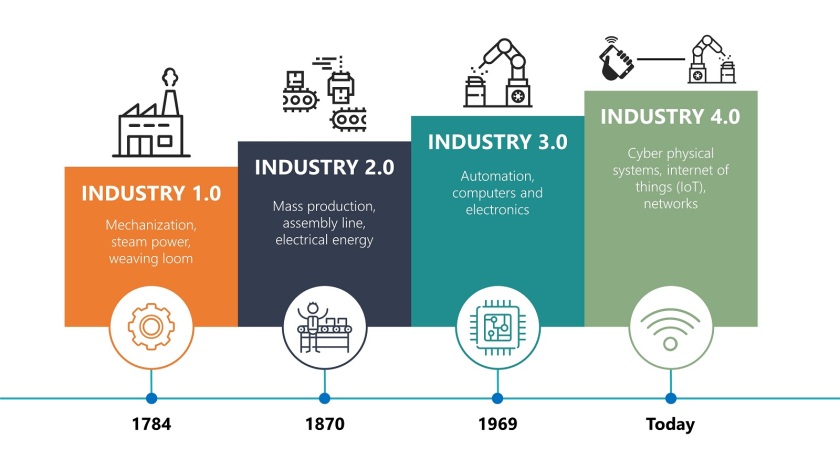
industry4.0

The megashifts of Industrial 4.0 include Digitisation, Mobilisation, Screenification, Disintermediation, Transformation, Intelligisation, Automation, Virtualisation, Anticipation and Robotisation.

The changing world of work

As with previous industrial revolutions, new technologies will create new jobs and simultaneously destroy many old ones. The rise of machines, from robots to smart software, threatens to impact not just low-skilled factory and construction workers, but everyone including managers, software engineers, stock traders and taxi drivers.

This is already happening – China’s factories are adding robots faster than they are hiring people. India’s information technology sector is already witnessing jobless growth and total employment may have peaked.

“Humanity will change more in the next 20 years than in the previous 300 years” – Gerd Leonhard “Technology vs Humanity” (Fast Future Publishing 2016).

Good news – India could shape Industrial 4.0

As the world’s largest democracy and the country with one of the highest number of scientists and engineers, India is a key political, social and economic player that could shape the course of the Fourth Industrial Revolution

It is exciting that the Geneva based World Economic Forum has created a Centre for the Fourth Industrial Revolution in India –  NITI Aayog will coordinate the partnership on behalf of the government and the work of the centre among multiple ministries.

“The Fourth Industrial Revolution will change how we produce, how we consume, how we communicate and even how we live,” WEF Founder and Executive Chairman Klaus Schwab said.

The challenge for universities and students is to enter a world of constant change – where jobs you are being trained for might not be there any more, where you might have to create your own job, or become an entrepreneur while at university, or team up with friends to create an enterprise.

In my next blog – how to thrive in Industry 4.0


Stephen Manallack is the author of four books including “Soft Skills for a Flat World” (Tata McGraw-Hill India 2010). He led a Pilot Study on Improving the Employability of Indian Graduates in his home city of Melbourne, where he has also been President of the Australia India Business Council. A passionate advocate of closer relations with India, his blog is at IntoIndia.blog


Mahatma Gandhi can inspire business and leaders in the post Covid19 world

When Mahatma Gandhi said “Be the change you want to see in the world” he proclaimed one of the great calls to action of all time. You want change? Be that change – start with yourself.

After Covid19 we will all have changed in some way. We need to.

So, today:

Mahatma Gandhi can inspire the post Covid19 world

In 1882 the British rulers of India imposed a Salt Act which banned Indians from collecting or selling salt – as a result, Indians had to buy salt from their British rulers.

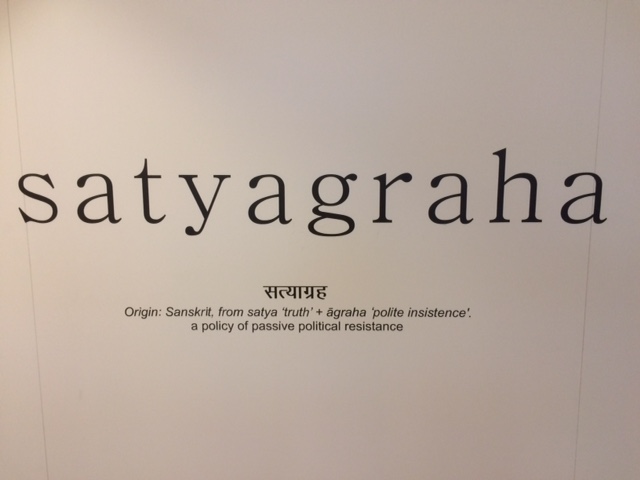
In 1930, Mahatma Gandhi developed his concept of SATYAGRAHA – nonviolent resistance. He walked 240 miles to the coast to peacefully break this law.

saltmarch2

What was the outcome? India had a pathway to independence – nonviolent resistance. Mahatma Gandhi was now centre stage in the march to Indian independence – the nation had a voice and he became a global figure.

How should this inspire us for post Covid19? Especially those of us who are in business or are budding entrepreneurs?

Instead of complaining how things “should be”, take action

Become a visual symbol of what you want – pictures of Gandhi collecting salt went global

Stick to core principles (for Gandhi, Satyagraha)

Be agile, innovate and create simple, local things the market can do – thousands picked up salt and defied the British

Think of ways to break out of the norm, defy conventions and thereby gain market presence

gandhisatyagraha

Gandhi lay drastically ill with the Spanish Flu almost 100 years ago

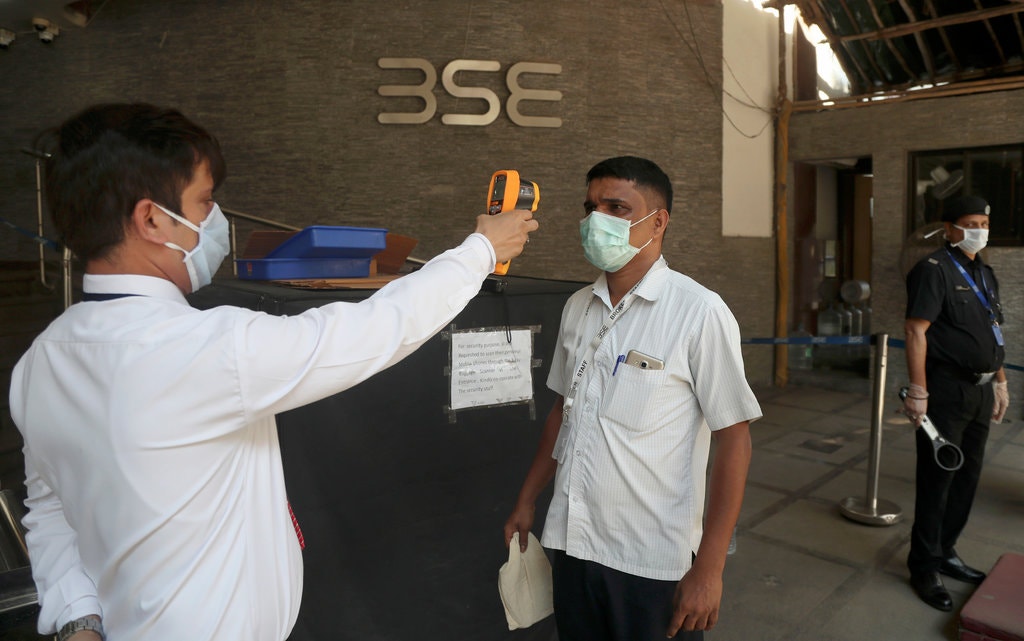
As India fights to contain the Corona Virus (pictured are temperature checks on visitors to the Bombay Stock Exchange) it has been announced that the historic Sabarmati Ashram (a former home of Mahatma Gandhi) will remain closed for visitors from March 19 till March 29 in view of the coronavirus threat, the trust managing the complex said on Wednesday. The ashram receives a large number of visitors everyday.

The closure comes almost 100 years after the great Mahatma Gandhi lay ill in this ashram – with the Spanish Flu (1918).

Sabarmati Ashram is located in the Sabarmati suburb of Ahmedabad, Gujarat, adjoining the Ashram Road, on the banks of the River Sabarmati.

I was there one year ago – a quiet, beautiful and emotional experience coming closer to the great Mahatma.

Gandhiashram

“All interest in living has ceased”, Mahatma Gandhi, battling a vile flu in 1918, told a confidante.

The highly infectious Spanish flu had swept through the ashram in Gujarat where 48-year-old Gandhi was living, four years after he had returned from South Africa. He rested, stuck to a liquid diet during “this protracted and first long illness” of his life. When news of his illness spread, a local newspaper wrote: “Gandhi’s life does not belong to him – it belongs to India”.

Fortunately for India and the world, Gandhi recovered. However, tragically the Spanish Flu killed between 17 and 18 million Indians.

Our thoughts are with India as it now battles to limit the Corona Virus – so far, all indications are that measures are succeeding.


7 strategies for India market entry 2020

  1. Find the affluent millennials

India is home to the world’s largest population of millennials—typically defined as those aged 18-35. At 450 million, these millennials are influencing the way Indians eat, shop, commute and buy, much like their global counterparts. They are the first upwardly mobile group in recent history of India – and will have an impact very like the way western baby boomers changed most things.

YoungIndians4

According to Santosh Desai, managing director of Indian Brand Advisory Group Futurebrands, Indians used to be “born something” but now can “become something”.

  1. Drill down to the real middle-class market

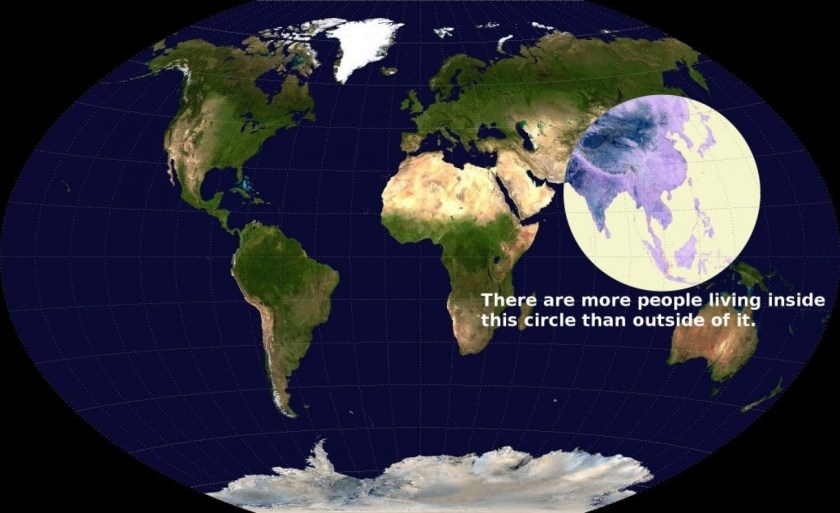
We know India has 1.3 billion people, but if you think too much about this you will get nowhere. Drill down to find your market.

asiamap8circle

For example, some estimate the “middle class” as high as 300 million. For me, this is way too high. Austrade takes a dimmer view – it estimates that there are approximately 30 – 80 million people in our target demographic, many of whom live outside Tier 1 cities. That’s a big range from 30 to 80, which shows that we just do not know. But for me Austrade’s numbers are too low.

Austrade looks for consumers that:

  1. can afford international travel to destinations, like Australia;
  2. can afford to send their children for study abroad; and
  3. can afford to eat at high-end restaurants and hotels or eat significant amounts of imported food and wine at home
  1. Think of India as many markets

Thinking of India as “one market” will slow down your impact and waste your marketing efforts. First, there is the divide between north, south, east and west. Then there are big metropolises (8-10) and hundreds of tier two cities (around one million plus). Then there are over 26 different languages, multiple food cultures, differing beliefs and interests. It is complex, so build that into your “many markets” strategy.

  1. Consumerism is changing in India

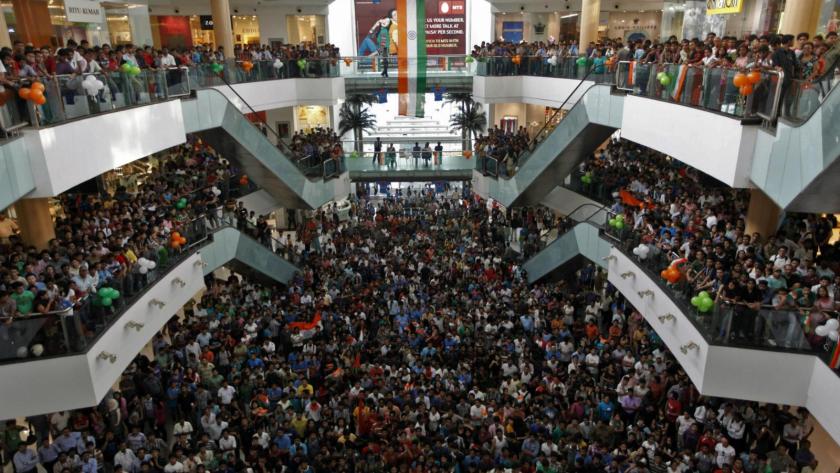
India had just 9 Shopping Malls in 2007. There are over 350 Shopping Malls in 2019. Plus 85 new Shopping Malls will be built in the next 5 years = 435 Shopping Malls in 2025.

malls

Add to this that online retail is taking off, with Amazon and the local Flipkart leading the way – Indian consumers use cell phones for online access.

Dr Mark Morley Trade Commissioner India Government of Australia makes a key point about opportunities for us: “Australia is well positioned with the Indian consumer. Across India, we have a great reputation for clean, safe and reliable supply. We are well known as a premium supplier of produce, and we have a global reputation for our quality brands.”

  1. Thinking local is a good way to start

Especially for those in food, beverages, education and fashion, your beginnings for India can start right here in Australia.

About 650,000 Australians claim Indian ancestry, and we have over 65,000 Indian students here, which means a significant local market spending money. Add to that the growth in Indian tourists – up to over 300,000 per year and growing at around 15%. This gives you a good market testing opportunity.

  1. Collaboration is the new relationship

If you just want to “sell” to India, sharpen your pencil and think short term – sooner rather than later, India will find an alternative to you.

To be in India for the long term, seek genuine opportunities to collaborate with Indians – once you and Indian collaborators are working together, your future is more secure. This is how Indians prefer to operate, so drop “transactional” thinking and focus on “collaboration” – it is the new relationship.

  1. Give India the time it needs

Cultures based on relationship (collaboration) are slower to move, so give India at least three years. You might “sell” sooner, but for most this is a very short-term market entry approach.


Online food consumers fastest growing sector in India

In the next two years, the Indian food-tech industry is expected to reach the US$8 billion mark, according to a report by Google and Boston Consulting Group (BCG).

The food tech space has been the fastest growing e-commerce segment in terms of reach and engagement, on the back of the rapid advancement in internet adoption and continued investments on consumer trials and delivery satisfaction.

According to the report, titled ‘Demystifying the online food consumer’, the major reasons for growth in the use of online food ordering apps includes a large variety of cuisines, good discounts and convenience.

food7

It said, “In fact, once users are satisfied with the service and start becoming habitual, they become more discerning about value – this behaviour is observable independent of town, class, social status, age and gender.”

Food tech is now in more than 500 cities in India.

Mr Rachit Mathur, MD and Partner, India Lead of BCG’s Consumer & Retail Practice added, “Overall online spending in India is rising rapidly and expected to grow at 25 per cent over the next five years to reach over US$ 130 billion.

“Riding on the wave of rapid digitization and steadily growing consumption, the reach of food-tech companies has grown six times over the last couple of years and will continue to increase further.”

The report is based on feedback of about 1,500 respondents across 12 cities.

food11

Why Australian schools have missed out in India and 7 steps to succeeding there

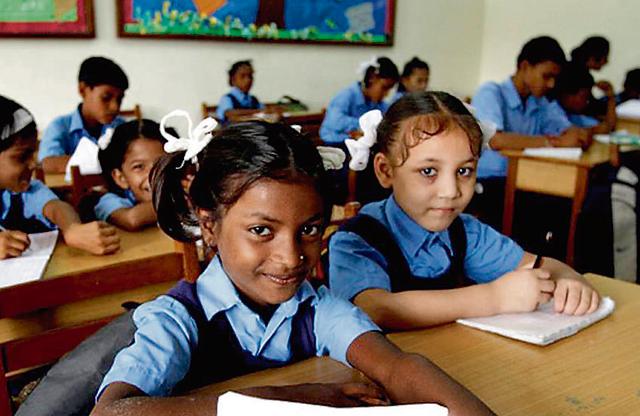
Demand for education in private international English-medium schools in India is soaring.

Despite this, few if any Australian private schools and school product providers have made inroads into India.

One of the barriers is what I call the “agency thinking” of education – just appoint lots of agents and the business will flow. Maybe – but India is a relationship country and you only become a big player through relationships, not through agency.

Indian nationals in the more expensive private international schools with fees above USD$10,000 make up 43 per cent of students. That’s high. As India’s middle class expands, this figure will also rise.

It is a great opportunity for Australian school education – our whole education system is well regarded in India.

The main international curricula offered in India are the International Baccalaureate (IB) curriculum and the Cambridge International Examinations.

Here is the bad news – no Indian schools are offering the Australian curriculum. Why not?

schools 3

I have long advocated a “partnership model” for market entry into India. I recently conducted research on “partnership and collaboration” opportunities in the horticulture sector and this is looking much more positive than simple going to India for a quick sale.

This strategy has also been endorsed in the Final Report International Opportunities for Australian School Curriculum, Assessment and Regulatory Products; Australian International Education: Enabling Growth and Innovation – NSW Education Standards Authority and Nous Group January 2019 – “Given the size and complexity of operating in India, a partnership approach could assist Australian agencies and providers in developing market opportunities.”

Australia is much more “transactional” than we like to think. That is why we have not done well in Indian schooling.

Keep in mind there are many barriers to market entry.

How do you create a “partnership model”?

  1. Of course, do your homework, which means pay for expertise to deliver real on the ground opportunities in India, which might include exchanges, curriculum, technology or some form of JV with an existing school or group
  2. Build relationships – which also means take your time, budget for the long road
  3. Look in the developing sectors, such as Smart Cities, new cities, redevelopments and the property landscape
  4. Create relationships across all areas of the education sector – governments (central and state), schools, advisors, curriculum, technology providers and more
  5. Leverage existing Australian university relationships in India
  6. Always, where you can, build a local Indian presence, because this above all else signals that you want to be a genuine long-term partner
  7. And always, where you can, build your presence through a Joint Venture with a respected Indian brand in your sector

Amazon is backing India to the hilt

Pictured recently in India – Amazon CEO Jeff Bezos with Amit Agarwal, senior VP & country head, Amazon India, during the Amazon Smbhav event at the Jawahar Lal Nehru stadium in New Delhi

Amazon.com Inc Founder and Chief Executive Officer Jeff Bezos said on Wednesday that his company would invest an additional $1 billion to help bring small businesses online in India, and also committed to using the retail giant’s “size, scope and scale” to export $10 billion of made-in-India goods by 2025.

amazon4

Bezos has faced some problems in India, but he is bullish and active.

Seeking to reach out to critics, Bezos, donning traditional Indian attire, said his company was committed to be a long-term partner of India.

Bezos was into India so much – “I want to make a prediction for you. I predict that the 21st century is going to be the Indian century.”

Why? “The dynamism, the energy… everywhere I go here, I meet people who are working in self-improvement and growth. This country has something special, democracy,” he said.

Bezos contradicted my recent blog (India and Russia the closest relationship on earth) – “I make one more prediction for you: In this 21st century, the most important alliance is going to be the alliance between India and the US,” Bezos added.

millennialsphones

The firm aims to digitise 10 million MSMEs with the proposed investment. In addition to providing training and enrolling MSMEs into its programmes, Amazon will help them work on cloud technology through specialised Amazon Web Services offerings at low costs. It will also establish 100 “digital haats’ in cities and villages throughout India.

Amazon has invested $5 billion in India in the past five years. The e-commerce platform also announced plans to support local neighbourhood shops and kiranas. It will expand its Amazon Easy programme.

In many ways, India retail is leapfrogging from the corner store to fully online.

For those in the FMCG sector this is a pretty exciting opportunity. Time to get your India strategy right!

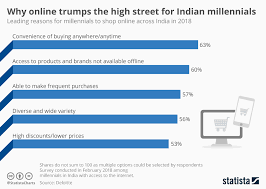
millennialshopping

10 reasons to look again at India in 2020

Dr Mark Morley is an Australian Trade Commissioner in India. In the last twelve months, like many of us, he has changed his view of Australia’s prospects in India. Why?

Here are 10 reasons to change – taken from his writings:

  1. Indian tourists coming to Australia has for the first time beaten the number of Aussies going to India – there were about 350,000 and each of them sees “clean and green” and innovative Australia first-hand. Plus, more than 700,000 Indians live down under.
  2. Across India, Australia has a great reputation for clean, safe and reliable supply. We are well known as a premium supplier of produce, and we have a global reputation for our quality brands.
  3. India’s ease of doing business and transparency has improved, its regional infrastructure – including roads and airports, as well as its cold chain – is improving, it now has a national GST alongside unified regulations around food importation and labelling, and a hungry entrepreneurial scene that is looking for international brands.
  4. Most importantly, and this is the game-changer for Australian FMCG producers, it has unified, national (or near national) platforms for Australian companies to connect their products with consumers. Can you believe this change? India now has a platform for Australian companies to connect their products directly with consumers.
  5. Amazon, as well as other platforms such as FlipKart and niche online marketplaces such as NetMeds, have turned the retail environment on its head.
  6. The scale and scope of the opportunity in India is now hard to ignore: Amazon India can deliver to 50% of all postcodes in India within 3 days of order, and 100% within 5 days.
  7. The Amazon platform is currently adding 200k+ Stock Keeping Units (SKU) every day, joining the 170 million SKUs already present on the site.
  8. With the cheapest mobile data accessibility in the world, 85% of Indians access online platforms via their mobile devices. This has huge implications for a market of more than 1.3b people.millennialsphones
  9. Mobile accessibility has meant that the modern retail format in India has been largely leap-frogged. Greater connectivity, greater receptivity to international brands, and greater opportunity for Australian exporters.
  10. India is a global player. But it’s not China (and that’s important for many of you with lots of eggs in the one basket). So, hasten slowly.

I would add to this list that India has 450 million millennials (those aged around 21 to 37), more than any other country and they will not live, learn, watch, listen, consume, travel, drive or behave like the previous generation.

millennialsonline

Why not start a conversation with Mark? Email  mark.morley@austrade.gov.au

austrade1