India has a huge future in tourism – not just a destination, India is an experience!

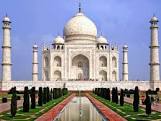
Think tourism in India and most people think Taj Mahal and the Golden Triangle. But there is so much more to the Indian tourism story.

India is changing and tourism is growing – it is now 10 million visitors per year and will grow to 30 million by 2028. The growth will include new parts of India, and new forms of tourism – cruises, medical, mind and wellness, sports, adventure and religion.

tourism7

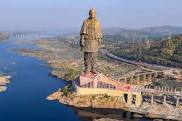
India has just built the world’s tallest statue – the “Statue of Unity” of Sardar Vallabhbhai Patel, an independence fighter and India’s first Home Minister. At 182 metres, it is already bringing tourists into the state of Gujarat.

patel33

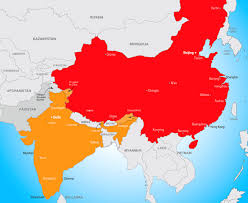
Things can change quickly these days – China is now the world’s leading tourist destination with over 100 million visitors per year. Other high ranking countries are France (90m), USA (77m) and Japan (30m).

For Australia, India provides around 300,000 tourists per year, but China is number one at 1.4 million.

Some of my wonderful experiences of touring India include ayuvedic massage in Kerala that fixed a problematic shoulder, covered in coloured powder in Kolkata during Holi, visiting Raj Ghat the wonderful Gandhi shrine and gardens in New Delhi and being embraced by an Indian family I met there, being on Chowpatty Beach in Mumbai during the Ganesha Festival with one million of my closest new friends. And on it goes. India is not so much a destination as an experience!

Watch out for the next phase of India tourism – it will take you beyond the Taj Mahal.


Are you ready for the facts on how much India has changed?

(Based on an article by Monika Halan, consulting editor at Mint and writer on household finance, policy and regulation)

Indian elections have just opened – so, how long does it take to find out if your name is on the Indian electoral role? Go to the Election Commission site, it asks you to SMS to check if your name is on the list—thirty seconds later, you will get a confirmation that your name is or is not there. Things move fast in modern India.

As Monika Halan writes – “Most people get their Provident Fund (PF) balance on SMS too. Also, the passport and visa processes are mostly all automated and keeps us well-informed about the progress of the process.”

So, what else works fast and well in India?

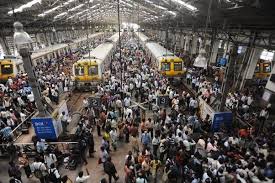
The metro network where it exists, in cities like Delhi and Kochi, is superb.

trains2

Getting or renewing a passport used to be a total nightmare a decade back. Enter private sector plus technology and the average time it takes for the passport application process is 30 minutes to under 4 hours. The passport reaches home by courier in a couple of days. At every stage, you get an SMS informing you what will happen next.

What about getting a driving licence? At least in Delhi, the process is mostly painless—online form filling, and 30 minutes to three hours of time in the local office. The licence reaches home in just a few days – according to Monika Halan.

Property registration used to be a nightmare. But Halan says “That again is a breeze. Again, a mix of technology and processes has reduced transaction time and pain hugely.”

Payments is the other huge success story of modern India. Forgetting your wallet at home is no big deal anymore. The money is in the phone. In a wallet, on an app or available through mobile banking. Riding on the backbone built by the National Payments Corp. of India (NPCI), transaction options and ease are both world-class.

payment

So how long does it take you to get a Wi-fi connection? How long does it take you to open a bank account? At least in the big metros, a Wi-fi connection happens within a day. Opening a bank account takes lesser time. The average time for these services in most developed countries is much longer. In most of Europe, for instance, it takes at least a month to get both these services.

Modern India is fast. Click on “buy” at 11pm and hear the doorbell ring at 9am the next morning.

A huge shift has happened in India and even Indians have failed to notice. The mix of technology, competition and cheap labour – plus reformist governments – means modern India has some of the simplest and fastest processes in the world.

All of this in just over a decade.

Time to catch up with what is really happening in modern India?

How China and India differ in the consumer goods market

India’s share in the consumption of consumer goods is expected to double by 2030 and favourable demographics (youth) will soon take it ahead of China in regional market dynamics, according to a report by Credit Suisse.

Interestingly, in India it is the home-grown brands like watchmaker Titan, hosiery company Rupa and another watchmaker Sonata which are gaining the most out of this propensity to spend in India.

consumer8

However, India is at a comparative disadvantage vis-a-vis China because of factors like less urbanisation, high concentration of urban pockets and lower enrolments in higher education.

It said in 2015, China had 150 million more people in working age than India, while by 2045, the northern neighbour will have 300 million less people than India in the bracket.

Additionally, China will also have to grapple with ageing related issues by 2045, it said, pointing out that the Communist country will have 350 million people aged over 65 as against 200 million in India.

consumer1

It marked out the apparel and meat sectors as the ones with ‘high’ growth potential as the per capital income of the country grows, followed by beverages, cars, cereals, personal computers, smart phones and education with ‘medium’ growth potential, while healthcare, consumer credit and tourism were the ones with ‘low’ potential.

consumer 4

From a consumption perspective, the Chinese prefer more of travel and entertainment-related options, it is staples that dominate the Indian story, the brokerage said.

India scores over China when it comes to spending intentions, the brokerage said, pointing out that the desire to spend is declining “more broadly” in China.

consumer3


Can you name India’s biggest hotel chain?

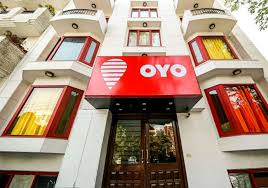
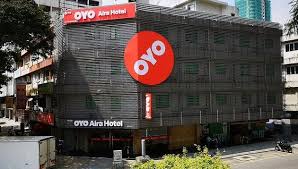
This chain started in India, expanded to China and has now invested heavily in Indonesia. It is called OYO (On Your Own) and was started in 2011 by then 18-year old Ritesh Agarwal. It is like the “Uber” of hotels – acquiring and setting standards for previously struggling hotels.

oyo

The group now has more hotel rooms in India than Taj Hotels – of course, Taj is at the top end while OYO has been a big provider of budget rooms.

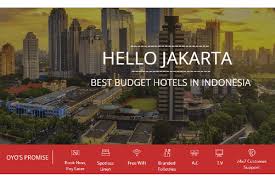
Within three months of its foray into Indonesia, the company has launched the first phase of expansion in 16 cities and witnessed a 5x growth. It aims to expand to 100 cities by the end of the year.

oyo4

The company is adding on an average 70 hotels in Indonesia every month.

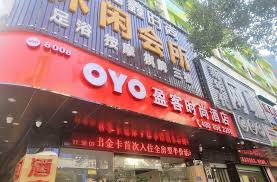
OYO created a uniquely Chinese identity for its local Chinese business and is localising in Indonesia.

oyo1

OYO is in over 280 cities in China, with about 5,000 hotels, and over 260,000 rooms.

The company has already started operations in Malaysia and will enter Philippines soon.

oyo3

It plans to have a pan-southeast Asian presence by the end of the year, before it starts making a move towards Europe.

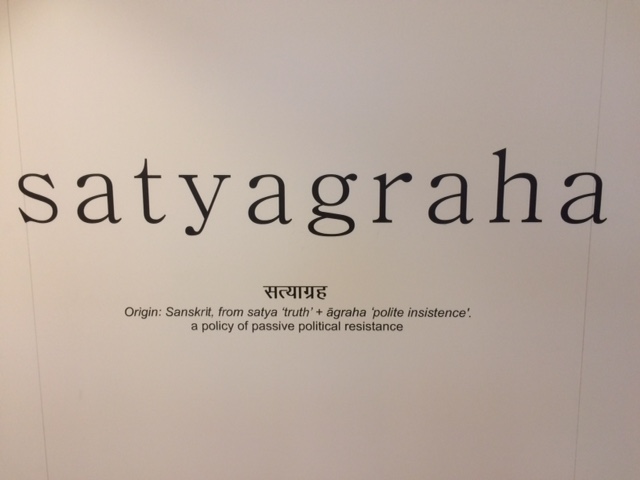
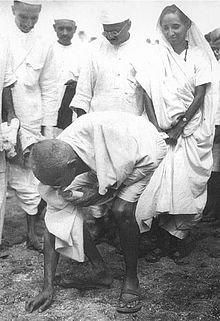
The Jamnalal Bajaj Awards promote the values of the great Mahatma Gandhi

Many things amaze me in India and one that both amazes and inspires is the Jamnalal Bajaj Awards – for the “unsung heroes” who inspire many through selfless effort in the tradition of Gandhian values.

gandhisatyagraha

My good friend eminent scientist and regular visitor to Australia, Dr R A Mashelkar, is Chairman of the Selection Committee of the Award for Application of Science and Technology for Rural Development and a Member of the Council of Advisors for the whole scheme.

Dr Mashelkar said: “The fundamental issue is about Gandhian values and creating an inclusive society by dismantling inequalities.”

ATT00012_

The Nobel Laureate Kailash Satyarthi is one of the trustees of the Jamnalal Bajaj Foundation and a jury member for the Awards: “Changemakers firstly need to understand the trend of the change and then change the direction to positivity, righteousness, justice, equality and humanity.”

My country – Australia – has seen a decline in the reputation of major institutions and corporate Australia is in the firing line as the Banking and Finance Commission finds unethical behaviour is rife. Beyond the so-called ethic of “building shareholder returns”, no Australian business leader has had anything constructive to say on corporate ethics. Very disappointing. We could learn much from this foundation and the great Mahatma Gandhi.

More information about this wonderful foundation and the awards is at http://www.jamnalalbajajfoundation.org/

Gandhi Salt

6 trends to watch for India in 2019

1. Politics to dominate

Internal politics will dominate India with a general election due in May 2019. The Modi Government won in 2014 with a slogan of “good days are coming” but higher inflation, declining rural incomes and lack of jobs are all hitting government prospects, while the big unknown is the huge number of “first time” voters – India has 20 million young people turning 18 each year which means there will be around 100 million first time voters.

modiyoung

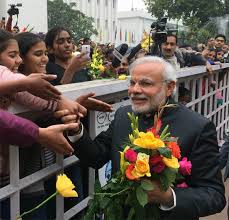
Modi has so far appealed strongly to young voters. However, state elections show that the Indian voter is now harder to predict. Most predict Modi will be returned but with a reduced majority. But when the world’s biggest democracy votes, politics becomes the theme of the year.

2. Trade deals point to stronger region

India has a growing number of trade deals that place it at a point of influence in the Indo-Pacific Region and there is a growing prospect of countries such as India, Indonesia and Australia leading a stronger Indian Ocean grouping. Of significance is the Regional Comprehensive Economic Partnership or RCEP (a trade alliance currently in negotiation among 16 countries in Asia and Oceania) which India could join in 2019 – perhaps a long shot but one to watch.

3. Fashion, weddings and pride

fashion

National pride has been growing (some call it Hindu pride, but it seems broader) and so we can expect Indian fashion, traditions and weddings to be bigger than ever – the wedding planning industry will be booming but fashion and festivals not far behind. The trend in India is to combine modernity with preservation of the past – a great balancing act. Another result is that well placed local brands – if marketed well – will attract huge consumer interest. And any year now the west will become very interested in “all things Indian” which is good news for Indian fashion, music, films and dance.

4. Economy and shares to grow

nifty50

Despite trade and currency wars slowing global growth, Moody’s and others predict continuing Indian economic growth and shares to remain buoyant for 2019. However, keep in mind shares have been booming – the Nifty 50 Index (the largest 50 stocks in India) rose from 7000 points at the end of 2015 to 11,750 points in September 2018. That is a growth of 57% in the market in just three years. It seems the psychological touch point is 10,500 for the Nifty – above that and shareholders will have a good year. Below that and watch out.

5. Business opportunities abound

health4

Healthcare for India has got to be one of the world’s biggest business opportunities with massive growth prospects for healthcare clinics and online service delivery. When you consider 60% of the people are rural but 80% of healthcare is urban (and not meeting demand there) so there will be a big rural boost. Agribusiness is strong with specific areas to watch – dairy, butter/ghee, strawberries, button mushrooms, salad supplies and alternative production such as hydroponics on urban fringes. But really, growth opportunities are everywhere as domestic demand soars – tourism (domestic and global) and education (including western immersion tours for Indian uni students) are top growth areas.

6. Energy up

India is a global leader in investment in alternative energy and this will gain ground with solar, wind and biomass to surge ahead. All of which makes the proposed and controversial Adani coal mine in Australia more of a mystery.

mumbaitrain

10 reasons every business can find a market in India

To understand what a great long-term opportunity India is, consider these facts:

  1. The numbers are on your side:  564 million below the age of 20
  2. The middle class is growing: 600 million growing middle-class, saving rates have tripled in last 12 years
  3. The mindset is right:  adaptability, competitive, entrepreneurial, believes in “learning, earning and spending”
  4. Challenges lead to opportunity:  mainly in areas such as transport and agricultural infrastructure, medical, power generation & distribution, education, healthcare
  5. Eating and drinking is changing: food & Beverages: food processing, food packaging, food warehouse and transport, health drinks
  6. Homes are stylish: home decor products, kitchenware essentials, bed and bath
  7. Paying for Healthcare: diagnostics and testing, medical equipment, health supplements, clean air and water products
  8. Consultancy Services are flat out: engineering, business development, product development, security analysis, accounting
  9. Infrastructure is big ticket: waste management, solar and wind technologies, temperature-controlled warehouses, air and noise pollution control technologies, towing trucks, and automated parking lot equipment.
  10. “Franchising” is popular: Top sectors with franchising opportunities are Education and Healthcare due to a huge mismatch between supply and demand now and in the coming years

Time to find your niche in India?

indiagate

Why everything you know about Indian tourism is wrong

Two recent major research reports show the high impact Indian tourists are having – with good news for the Asia-Pacific region.

The latest research published by Colliers International, ahead of Arabian Travel Market 2019 (ATM), showed Indians just love travelling west to Dubai and the gulf – the number of Indian visitors travelling to the Gulf Cooperation Council (GCC) nations over the coming five years will create an extra 10.8 million room nights, as Indians are among the world’s highest spenders per visit made abroad, according to new data.

The report predicts around nine million Indians will travel to the GCC states by 2022 37 per cent of India’s total outbound market with business, place of work and leisure underpinning this demand.

tourism6

But it is not just the gulf – numbers are up everywhere. Indian outbound tourists will account for 22.5 million worldwide tourists in 2018, with reports from the UN World Tourism Organisation (UNWTO) estimating this figure will increase by 122 per cent to reach over 50 million by 2022.

Adding to this, Indian tourists are among the world’s highest spenders per visit made abroad, with visitor spend expected to increase from USD 23 billion in 2018 to USD 45 billion by 2022.

tourism 5

There has been a huge amount of research and attention paid to the growth of outbound tourism for China, but a report issued last week from Tourism Research Australia looks at the current status and potential of the Indian market for tourism in Australia.

India has a population of around 1.3 billion, with consumer spending forecast to reach $3.6 trillion in 2020 – almost four times 2010 levels.

Between 2000 and 2015, outbound tourism grew more than four-fold to 21.8 million departures. The UNWTO predicts that by 2020, there will be around 35 million outbound departures from India – that is an average annual growth rate of 12% between 2015–20.
tourists

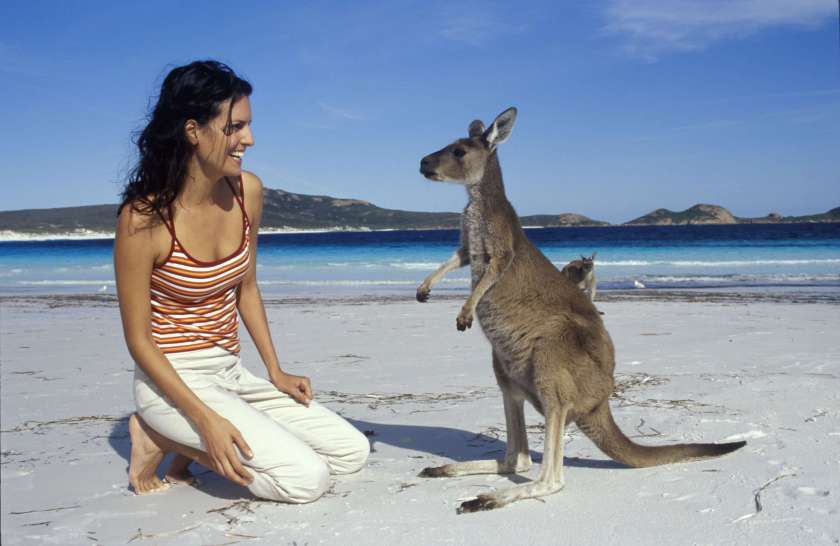
Indian tourism to Australia has grown even faster than the overall rise in outbound tourism from India, with a 6-fold increase between 2000 and 2015. Between 2005 and 2016, visitor arrivals from India grew by 299% to reach 262,300 – almost six times faster than the 51% growth in total inbound arrivals to Australia over the same period. Spend growth was even more impressive, increasing 350% to reach A$1.2 billion in 2016.

Using visitor numbers as a measure, Indian visitation to Australia is in about the same position as Chinese visitation was in 2004. India’s per-capita GDP is now at about the same level as China’s in 2005, so if GDP and tourism follow the same upward trajectory in the next decade in India as occurred in China in the last decade, then India has the potential to become a very important market in the future.

tourism7

TRA’s latest forecasts (TRA 2017) predict that arrivals from India to Australia will grow at an average annual rate of 8.7% between 2016–17 and 2026–27 to reach 642,000 visitors.

It is good news, but where you have a high local Indian population, a significant proportion are VFR – visiting friends and relatives. This means their economic impact is constrained. More than 40% of Indian visitors in 2016–17 were here for VFR purposes, relying on their hosts in Australia for accommodation, food and travel costs.

My state of Victoria hits record export levels and is open for business

Forgive me for being parochial in this blog, but I just have to talk about my home city of Melbourne and our state of Victoria – so well known to tourists for the Great Ocean Road (pictured below).

greatoceanroad

Victoria’s exports have hit record levels and are still growing as the Victorian Government helps more Victorian companies break into global markets and create local jobs. Exports from Victoria grew 6.45 per cent to reach a record $51.6 billion in 2017-18.

Victoria’s services export performance has been particularly strong. Valued at $22.5 billion in 2017, it now represents more than 40 per cent of total Victorian exports.

This has been driven by sectors like international education, which has grown 98 per cent since 2012 to $9.8 billion, and tourism which is up 62 per cent to $4.8 billion over the same period.

melbourne

Medical technologies and pharmaceuticals, a key sector identified for support through the government’s $200 million Future Industries Fund, has seen substantial growth, with exports of pharmaceutical products surging 72 per cent in the past two years to $1.56 billion.

Victoria is Australia’s biggest exporter of food and fibre, another key sector the Victorian Government is supporting, with exports reaching a record $12.8 billion in 2016-17. Victoria now accounts for 79 per cent of Australia’s dairy exports, 52 per cent of animal fibre, 45 per cent of horticulture and 38 per cent of prepared foods exports.

Victoria’s export growth is even more impressive given it has come over a period when the state’s single biggest exporter, Toyota, ceased production, highlighting the diversity and strength of our export sector.

mcgmelb

The Victorian Government offers a range of services to help local businesses get export ready, prepare market strategies and understand regulatory requirements so they can start taking their products and services to the world.

Since December 2014, more than 4600 Victorian companies have participated in 130 government-supported inbound and outbound trade missions, resulting in more than $267 million of actual export sales.

The government has also grown Victoria’s network of international trade and investment offices (VGTIs) to 22, which is more than any other state, and put in place strategies to grow trade and investment with key markets including ChinaIndiaLatin America, and Southeast Asia.

So – looking for a dynamic, quality partner or location for business and education? Try Victoria!

Spur

Above pic – just one hour drive from Melbourne CBD is the beautiful wine and food area the Yarra Valley and one of the great forest drives, the Black Spur.

Indian tourists choosing Australia – and Melbourne is a “must see”

Australia had a 19 per cent growth in Indian tourist arrivals between June 2017-May 2018, with 330,700 Indians visiting the country.

This has made India the eighth largest inbound market, after China, New Zealand, the US, Britain, Japan, Singapore and Malaysia, according to the data.

suburbs

Indians are also considered good spenders while travelling Down Under – spending by Indian tourists grew by 14 per cent between April 2017 and March 2018, with visitors spending AUD 1.53 billion.

melbourne2

In terms of spending, India stood seventh after China, the US, Britain, New Zealand, Japan and Korea.

This is the fourth year where Australia has recorded double-digit growth in both arrivals and spend, indicating the destination’s growing preference among Indians.

The recent government move to extend online visitor visa applications to all Indians also helped boost the numbers.

greatoceanroad

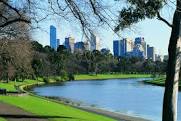
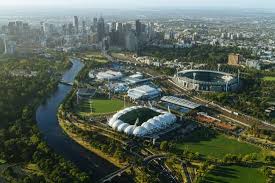
Melbourne is a “must see” – beautifully designed city, clean, green, lots of parks, the famous MCG (the city is a sporting capital, with Australian Open tennis and Grand Prix), galleries and great shopping – plus easy access to the Great Ocean Road and the Phillip Island penguins. This is Australia’s most multicultural (diverse) city with people from Greece, Italy, China, India, Vietnam, Malaysia, New Zealand, Britain and more, making it a rich food and cultural centre.