A great Indian Australian continues to give – Dr Rao and family

Well done Jana!

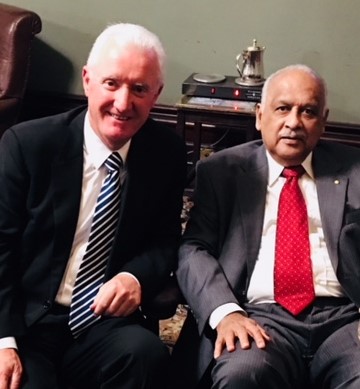
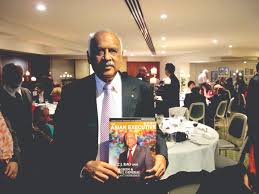
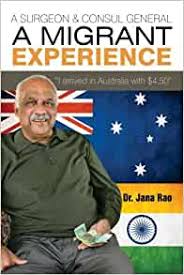
The Australia India Institute has just announced that the Australia India Social and Charitable Ventures Limited, through Mr T. Janardhana Rao OAM (pictured above and below) and his family, are providing a gift of at least $400,000 dollars over four years to the Australia India Institute.

jana 3

The Aii said: “This extremely generous gift will support the Australia India Institute’s engagement activities with the University and business communities and also support students from India or of Indian heritage.”

Professor Craig Jeffrey, Director of the Aii, thanked Mr Rao and his family noting, “This important gift will greatly enhance the efforts of the Institute and University of Melbourne to develop the study of India and engage with the Indian diaspora. We are extremely grateful to Mr Rao and his family for their generosity and vision.”

For around 25 years Jana was both a surgeon and the Honorary Indian Consul in Victoria – a huge task.

He has been an inspiration to me for many years – pictured below:

JanaRao 5

Jana continues to be an example to us all – respectful, modest, a great listener, a principled man who could be very strong but never in an aggressive or divisive way, a man of quiet consensus and leading by example.

His son Harish Rao is a former National Chair of the Australia India Business Council, an advisor to the Australia India Institute, Director of the Australia World Orchestra and more – and my personal mentor on things India.

jana2


Asia Society doing great things to connect Australia with India and beyond

Very good news for my hometown Melbourne and our State of Victoria.

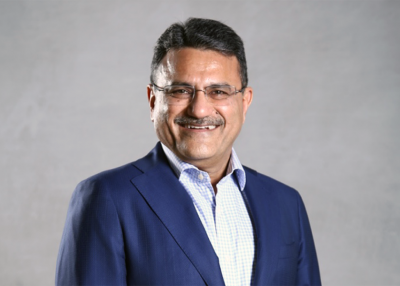
Manoj Kohli, Country Head of SoftBank India, SoftBank Group International, was appointed the second Asia Society-Victoria Distinguished Fellow in May 2020.

Manoj Kohli - profile photo 900 x 600

Asia Society Australia-Victoria Distinguished Fellowship is a partnership between Asia Society Australia and the Victorian Government to bring the best minds and ideas from Asia and Australia to Victoria. It aims to generate new ideas and promote greater economic, strategic and cultural connectivity between Australia and the Asia-Pacific region. The Fellowship will showcase the state of Victoria as Australia’s centre of excellence for Asia insights and capabilities.

The Asia Business Taskforce

On Friday 5 October 2019, the Business Council of Australia and Asia Society Australia announced the formation of an Asia taskforce of senior leaders from the business, education and government sectors to examine how Australian companies and organisations can increase their presence and position in Asia to ensure our continued prosperity and deliver progress for future generations.

The Asia Business Taskforce is chaired by Mark van Dyck, Managing Director (Asia-Pacific), Compass Group, and co-led by Jennifer Westacott, CEO of the Business Council of Australia, Philipp Ivanov, CEO Asia Society Australia, and Andrew Parker, Asia Practice Leader and Partner at PwC.

The taskforce examines how Australia can build and enhance its position with the powerhouse Asian economies in our proximity, diversify our economic partners, and prepare for a more strategically and economically competitive region.

Throughout 2020, the taskforce aims to delivering a series of policy recommendations to government.

These are two brilliant programs of the Asia Society here in Australia.


The 7 ways business and brand can thrive in Industry 4.0

The world is moving quickly into a new era known as Industrial Revolution 4.0 and business brands will have to adapt. This will be our biggest challenge “after coronavirus”.

We have already seen Tata Consulting Services (TCS) shake the world of work by announcing a target of 75% or its 450,000 workers operating from home or remotely by 2025. Others will have to follow.

The fourth industrial revolution sees at least ten major changes, each reinforcing the other so that how we do business and how we work will be totally transformed. The first three industrial revolutions were each about only one change – steam, electricity and computers.

industry4.7

Companies will need to be nimble and honest about the status of their brand – the immediate future can either build or destroy your brand credibility. Here are my 7 tips for thriving as a brand in Industry 4.0:

  1. Show your company can continue to learn

Having a “we want to keep learning” brand is highly desirable for the market, clients and future employees. Audit your brand communication – does it show the organisation is curious, reading and listening widely, entering staff and customers into discussion groups and a genuine “learning organisation”.

  1. SECOND – Demonstrate wisdom and common sense

Your clients look for more than knowledge from you – they want a brand that demonstrates common sense. The best way to describe the difference is through the humble tomato – knowledge tells you a tomato is a fruit (not a vegetable) – but common sense prevents you adding the tomato to a fruit salad. Making sure your senior people have mentors can help their levels of common sense.

  1. THREE – Gain good collaboration and friendship skills

Industrial 4.0 will make collaboration easy and instant with anyone, anywhere and anytime – and the change will benefit those businesses that have the skills to reach out, make friends, work across the globe and build collaboration. It is worthwhile evaluating how much you are seen as a collaborative partner.

  1. FOUR – Build cross-border understanding and skills

Already our lives in one country are intersecting with lives of other countries, and Industrial 4.0 will make the globe an even smaller place. Those who have travelled, who have acquired both knowledge and experience of other cultures will be in high demand, simply because almost every job will have global aspects. Prepare your employees via cross cultural training and global exposure.

  1. FIVE – Make everyone an outstanding communicator

Traditional “soft skills” training will not prepare your team for the fast future – outstanding communication skills for Industrial 4.0 will include rapid pitching, ability to support points in a way which moves others, skills to relate directly and closely with those above and below you. The irony is that as the technology impacts even more, it is the brands that communicate well who will succeed.

  1. SIX – Be known as team-based problem solvers

More work will be team-based, and a powerful brand characteristic is being “team-based problem solvers”. Do your problem-solving teams include members from other companies? Should you offer clients and customers a role?

  1. SEVEN – Build self-reliance and resilience

With the pace of change, your people will need to be more self-reliant and resilient. Life will present challenges almost constantly. Make sure your people can cope, because that reflects in your brand being a steady and trusted delivery sources. When staff lose resilience, your brand is also diminished.

Stephen Manallack is the author of four books, including one published in India (“Soft Skills for a Flat World”, Tata McGraw-Hill India), a speaker on communication and is delivering a series of webinars on Industry 4.0 for Indian and Australian universities. He is a blogger at Into India and regular visitor to India. EMAIL stephen@manallack.com.au

industry4.0hands

India should be a vital part of the world’s biggest trade deal – RCEP

The countries involved in the world’s biggest trade deal hope to welcome India back into the group – this was announced after their remote meeting last week.

The 16-country Regional Comprehensive Economic Partnership – known as the RCEP – would be the world’s largest when operational, spanning India to New Zealand, including 30% of global GDP and half of the world’s people.

rcep3

But resistance from India – concerned about a flood of cheap mass-produced Chinese goods hurting small businesses in its economy – came to a head last year when India walked out of the deal. I hope it comes back to RCEP.

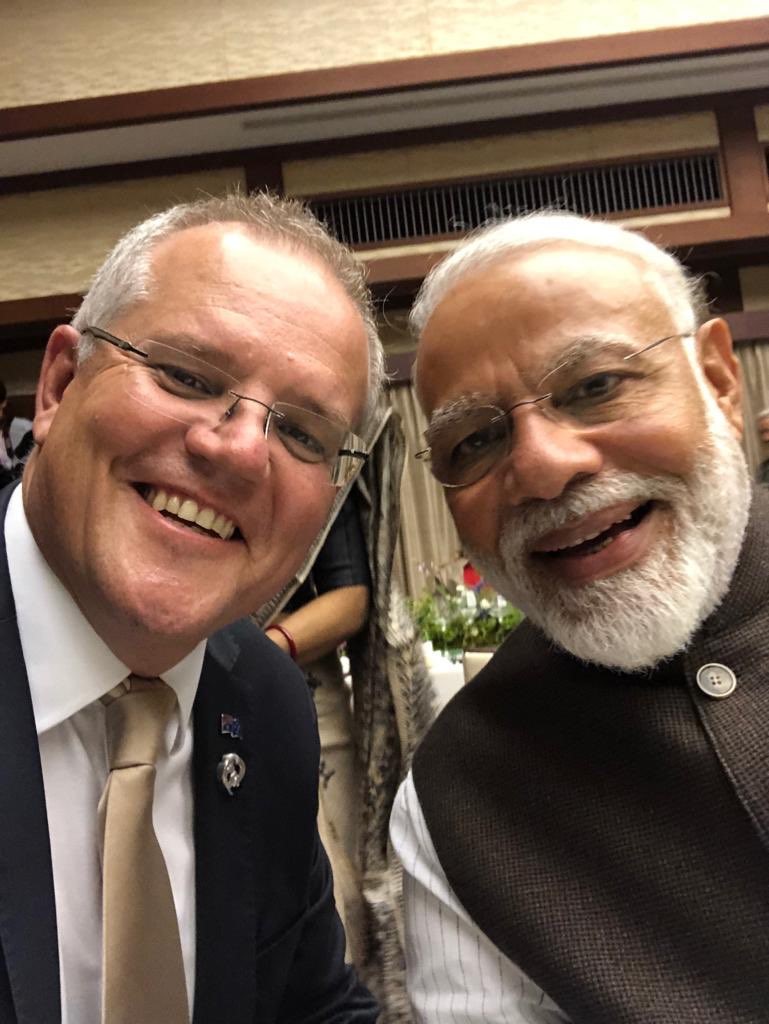
India had legitimate concerns and hopefully RCEP will deliver on these. Australian Prime Minister Morrison and Indian Prime Minister Modi have a good relationship and could work together on the way forward.

ModiMorrisonSmile2

The meeting, while reaching out to India, also made it clear that one way or another the RCEP deal will be finalised and signed in 2020. 

RCEP includes the ASEAN nations plus China, Japan, Korea, Australia and New Zealand.

India’s TCS to move 75% of employees to work from home – permanently!

Remember this man – his name is Rajesh Gopinathan, Chairman of TCS, and he is about to turn the way we work upside down – permanently!

India’s biggest IT firm, TCS, is set to shake up the global IT industry employment practices – and maybe start a global revolution in how we work.

work

Post-coronavirus, TCS has announced it will not go back to the old way, launching instead a new model called 25/25 using what is called Secure Borderless Work Spaces (SBWS).

Running up to 2025, TCS will ask a vast majority of 75% of its 450,000 employees globally to work from home, up from the industry average of 20% today.

tcs

TCS will discard its 20-year-old operating model and leapfrog into a new mode of work.

Others will have to follow. For a start, how will they compete for the best recruits? And how else will they achieve productivity gains?

The new model called 25/25 will require far less office space than occupied today. “We don’t believe that we need more than 25% of our workforce at our facilities in order to be 100% productive,” says TCS’s chief operating officer NG Subramaniam (pictured below).

tcs subramanian

TCS is something of a bellwether among India’s IT services firms, so Wipro, Infosys and others will likely follow.

Experts say before the lockdown no more than 15-20% of employees ever worked from home among the Indian services firms.

I have been on some of the Indian IT “campuses” – huge sites usually on the edge of the city in a park-like area with multiple buildings, lifestyle facilities and essentially a “living away from home” model for thousands of employees.

All this will change – and fast.

tcs campus

Facebook buys big in India and the battle for market share is on

Facebook has taken a huge leap into India.

It has bought a 9.99% stake in Reliance Jio platforms for US$5.7bn. According to Mugunthan Siva, CEO, India Avenue Investment Management (Sydney): “This is the largest investment for a minority stake by a technology company anywhere in the world.”

I would add it is the largest FDI in the technology sector in India.

So now the battle lines are drawn in India – the deal will also help Facebook battle rapidly growing Chinese apps like Tiktok which have attracted India’s youth. Not to mention a mouth-watering four-way tech tussle with Japan’s Softbank, US heavyweights Google & Amazon and China’s Alibaba.

India is worth fighting over – a recent report by Cisco said India is poised to have more than 900 million internet users due to the increased penetration of affordable smartphones and cheaper internet plans. India will also have around 2.1 billion internet-connected devices by 2023, said the report.

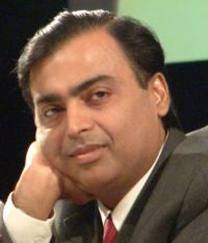
This is also another step for the Mukesh Ambani led Reliance Industries Ltd (RIL) which has been pursuing an oil-to-telecom move plus cutting debt.

Mukesh Ambani

In less than four years, Jio has brought more than 388 million people online,

This battle is bigger than just the investment – Jio Platforms, Reliance Retail and Facebook’s WhatsApp service have also entered into a commercial partnership agreement to further accelerate Reliance Retail’s new commerce business on the JioMart platform using WhatsApp and to support small businesses on WhatsApp.

Ambani invested around $40 billion to launch Jio in 2016. RIL is also the largest retail player in India thanks to a series of aggressive expansionary moves into consumer-facing businesses such as e-commerce and grocery.

Austrade and Amazon provide “your passage to online India”

Vegemite will make its way into Indian shoppers’ online baskets after the launch of an Amazon Australia store there – possibly the most exciting India news for Aussie consumer goods exporters.

The Aussie shop at Amazon India already has Australian brands including Capilano, Swisse, Sukin, Gaia Skin Naturals, Australis, Sanitarium, Sun Rice, Orgran, Australia’s Own and the Byron Bay Chilli Co available immediately.

amazon8

Why is this so exciting? India has just been a distant dream, a major hassle, a demanding market with too many markets, too many restrictions and challenges at every turn. Going with this online alternative makes it accessible, sensible and possible.

Up to now, India is Australia’s fifth-largest export market and is tipped to be the third biggest economy in the world by 2035, behind China and the US. This could well up the priority of India for Australian exporters.

amazon9

Who can play in this new space? Australian food, health, fashion, sporting goods, home care and lifestyle brands.

The online store gives local Australian businesses easier access to 450 million internet users in India out of the population of 1.3 billion.

How do you get into this online space?

You still have to know about India, the market and the trends. You also have to know where you might fit in this scene. You would expect me to say this – but having someone here who knows India has been a key for almost every successful exporter to India.

Then team up with Austrade and Amazon for your “passage to online India”.

amazon9


Think things will go “back to normal” after Covid 19? Think again as Industry 4.0 will flourish

Think things will “go back to normal” after Covid19? Think again – for the moment it is over, what is called Industrial Revolution 4.0 will power ahead and the changes will be dramatic.

An Oxford study estimates that 47% of the jobs in the US, 69% of the jobs in India and 77% of the jobs in China will not exist in 25 years – such is the pace of change under Industry 4.0.

But most employees, students and many universities will not be ready for the fast-changing world of “Industrial Revolution 4.0” which has begun and will be in full swing by the time most graduate.

What kind of world is Industry 4.0?

The Economist Intelligence Unit 2017 report showed younger generations face a significantly different world in their future working and personal lives. Developments such as machine learning and automation promise further disruption, particularly in the workplace, and many established jobs are likely to vanish as a result.

Whole employment sectors are likely to disappear, with others hopefully created. Students, workers and entire economies will compete across global borders for the best education, jobs and growth; all three will need to be nimble, flexible and dynamic, ready to recognise and respond to emerging trends swiftly.

Industry 4.0 will make huge advances in genomics, artificial intelligence, robotics, materials and manufacturing technologies – with convergence bringing massive rates of change.

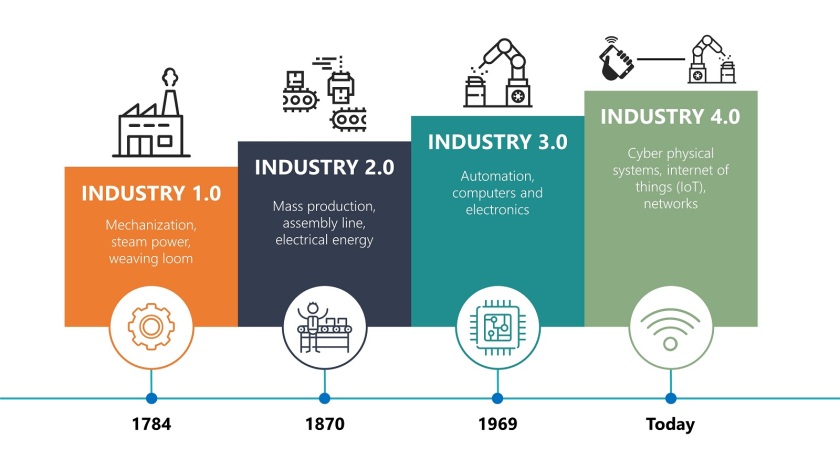
The first three industrial revolutions were steam and water-power driving mechanisation in the late 1700’s, electricity from 1870 creating mass production and the electronics and IT revolution of the 1960’s onward. Each “revolution” was led by one change or one sector. Industrial 4.0 could not be more different with at least 10 major innovations converging to create across the board revolutionary change.
industry4.0

The megashifts of Industrial 4.0 include Digitisation, Mobilisation, Screenification, Disintermediation, Transformation, Intelligisation, Automation, Virtualisation, Anticipation and Robotisation.

The changing world of work

As with previous industrial revolutions, new technologies will create new jobs and simultaneously destroy many old ones. The rise of machines, from robots to smart software, threatens to impact not just low-skilled factory and construction workers, but everyone including managers, software engineers, stock traders and taxi drivers.

This is already happening – China’s factories are adding robots faster than they are hiring people. India’s information technology sector is already witnessing jobless growth and total employment may have peaked.

“Humanity will change more in the next 20 years than in the previous 300 years” – Gerd Leonhard “Technology vs Humanity” (Fast Future Publishing 2016).

Good news – India could shape Industrial 4.0

As the world’s largest democracy and the country with one of the highest number of scientists and engineers, India is a key political, social and economic player that could shape the course of the Fourth Industrial Revolution

It is exciting that the Geneva based World Economic Forum has created a Centre for the Fourth Industrial Revolution in India –  NITI Aayog will coordinate the partnership on behalf of the government and the work of the centre among multiple ministries.

“The Fourth Industrial Revolution will change how we produce, how we consume, how we communicate and even how we live,” WEF Founder and Executive Chairman Klaus Schwab said.

The challenge for universities and students is to enter a world of constant change – where jobs you are being trained for might not be there any more, where you might have to create your own job, or become an entrepreneur while at university, or team up with friends to create an enterprise.

In my next blog – how to thrive in Industry 4.0


Stephen Manallack is the author of four books including “Soft Skills for a Flat World” (Tata McGraw-Hill India 2010). He led a Pilot Study on Improving the Employability of Indian Graduates in his home city of Melbourne, where he has also been President of the Australia India Business Council. A passionate advocate of closer relations with India, his blog is at IntoIndia.blog

Mahatma Gandhi can inspire business and leaders in the post Covid19 world

When Mahatma Gandhi said “Be the change you want to see in the world” he proclaimed one of the great calls to action of all time. You want change? Be that change – start with yourself.

After Covid19 we will all have changed in some way. We need to.

So, today:

Mahatma Gandhi can inspire the post Covid19 world

In 1882 the British rulers of India imposed a Salt Act which banned Indians from collecting or selling salt – as a result, Indians had to buy salt from their British rulers.

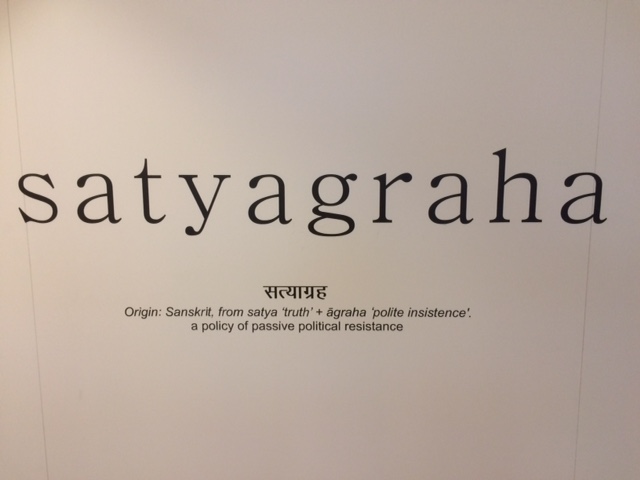
In 1930, Mahatma Gandhi developed his concept of SATYAGRAHA – nonviolent resistance. He walked 240 miles to the coast to peacefully break this law.

saltmarch2

What was the outcome? India had a pathway to independence – nonviolent resistance. Mahatma Gandhi was now centre stage in the march to Indian independence – the nation had a voice and he became a global figure.

How should this inspire us for post Covid19? Especially those of us who are in business or are budding entrepreneurs?

Instead of complaining how things “should be”, take action

Become a visual symbol of what you want – pictures of Gandhi collecting salt went global

Stick to core principles (for Gandhi, Satyagraha)

Be agile, innovate and create simple, local things the market can do – thousands picked up salt and defied the British

Think of ways to break out of the norm, defy conventions and thereby gain market presence

gandhisatyagraha

Will Australia’s vision swing to the Indian Ocean rim after Covid-19?

Australia is torn between two worlds – it has an unchanging alliance with the USA, but it is placed in the middle of a massively changing region, the Indian Ocean. The two can make life uncomfortable.

We are all expecting life to be somehow different after Covid-19. Perhaps one of the differences will be Australia looking more to the west – to the Indian Ocean.

If so, there will be a lot of diplomatic wriggling to be done, with China and the USA looking on.

Why does the Indian Ocean matter so much?

One third of the world’s population (2.5 billion) live around the Indian ocean rim. Their average age is below 30, making it the youngest region on earth.

This ocean is critical to global trade and food and energy security.

There are a dizzying array of global strategic and regional military and security interests.

It is at the crossroads of how the world works. Global trade and economic growth flow in and through it.

But it is also a region where instability and conflict can quickly arise – badly drawn borders create disputes, internal conflicts are rife and competing national interests make for a volatile region.

Why is the Indian Ocean so important for Australia?

First, it’s our neighbourhood.

Second, we are starting from way behind for we have long ignored this region and only recently have been building solid bridges.

Third, one-third of Australia’s coastline borders the Indian Ocean.

Fourth, our future depends on security of lines of trade and the development of both on-shore and off-shore assets – these hold the key to our economy and development.

Fifth, when you look at this Wikipedia map of the “western world” you might wonder why we have not looked to the Indian Ocean before.

westernworld2

Best of both worlds?

Looking west to the Indian Ocean does not mean we have to ignore our powerful friends – China to the north and USA to the east.

Changing our view while keeping our old friends will take diplomatic skill.

And probably it also takes time.