The 7 ways business and brand can thrive in Industry 4.0

The world is moving quickly into a new era known as Industrial Revolution 4.0 and business brands will have to adapt. This will be our biggest challenge “after coronavirus”.

We have already seen Tata Consulting Services (TCS) shake the world of work by announcing a target of 75% or its 450,000 workers operating from home or remotely by 2025. Others will have to follow.

The fourth industrial revolution sees at least ten major changes, each reinforcing the other so that how we do business and how we work will be totally transformed. The first three industrial revolutions were each about only one change – steam, electricity and computers.

industry4.7

Companies will need to be nimble and honest about the status of their brand – the immediate future can either build or destroy your brand credibility. Here are my 7 tips for thriving as a brand in Industry 4.0:

  1. Show your company can continue to learn

Having a “we want to keep learning” brand is highly desirable for the market, clients and future employees. Audit your brand communication – does it show the organisation is curious, reading and listening widely, entering staff and customers into discussion groups and a genuine “learning organisation”.

  1. SECOND – Demonstrate wisdom and common sense

Your clients look for more than knowledge from you – they want a brand that demonstrates common sense. The best way to describe the difference is through the humble tomato – knowledge tells you a tomato is a fruit (not a vegetable) – but common sense prevents you adding the tomato to a fruit salad. Making sure your senior people have mentors can help their levels of common sense.

  1. THREE – Gain good collaboration and friendship skills

Industrial 4.0 will make collaboration easy and instant with anyone, anywhere and anytime – and the change will benefit those businesses that have the skills to reach out, make friends, work across the globe and build collaboration. It is worthwhile evaluating how much you are seen as a collaborative partner.

  1. FOUR – Build cross-border understanding and skills

Already our lives in one country are intersecting with lives of other countries, and Industrial 4.0 will make the globe an even smaller place. Those who have travelled, who have acquired both knowledge and experience of other cultures will be in high demand, simply because almost every job will have global aspects. Prepare your employees via cross cultural training and global exposure.

  1. FIVE – Make everyone an outstanding communicator

Traditional “soft skills” training will not prepare your team for the fast future – outstanding communication skills for Industrial 4.0 will include rapid pitching, ability to support points in a way which moves others, skills to relate directly and closely with those above and below you. The irony is that as the technology impacts even more, it is the brands that communicate well who will succeed.

  1. SIX – Be known as team-based problem solvers

More work will be team-based, and a powerful brand characteristic is being “team-based problem solvers”. Do your problem-solving teams include members from other companies? Should you offer clients and customers a role?

  1. SEVEN – Build self-reliance and resilience

With the pace of change, your people will need to be more self-reliant and resilient. Life will present challenges almost constantly. Make sure your people can cope, because that reflects in your brand being a steady and trusted delivery sources. When staff lose resilience, your brand is also diminished.

Stephen Manallack is the author of four books, including one published in India (“Soft Skills for a Flat World”, Tata McGraw-Hill India), a speaker on communication and is delivering a series of webinars on Industry 4.0 for Indian and Australian universities. He is a blogger at Into India and regular visitor to India. EMAIL stephen@manallack.com.au

industry4.0hands

Austrade and Amazon provide “your passage to online India”

Vegemite will make its way into Indian shoppers’ online baskets after the launch of an Amazon Australia store there – possibly the most exciting India news for Aussie consumer goods exporters.

The Aussie shop at Amazon India already has Australian brands including Capilano, Swisse, Sukin, Gaia Skin Naturals, Australis, Sanitarium, Sun Rice, Orgran, Australia’s Own and the Byron Bay Chilli Co available immediately.

amazon8

Why is this so exciting? India has just been a distant dream, a major hassle, a demanding market with too many markets, too many restrictions and challenges at every turn. Going with this online alternative makes it accessible, sensible and possible.

Up to now, India is Australia’s fifth-largest export market and is tipped to be the third biggest economy in the world by 2035, behind China and the US. This could well up the priority of India for Australian exporters.

amazon9

Who can play in this new space? Australian food, health, fashion, sporting goods, home care and lifestyle brands.

The online store gives local Australian businesses easier access to 450 million internet users in India out of the population of 1.3 billion.

How do you get into this online space?

You still have to know about India, the market and the trends. You also have to know where you might fit in this scene. You would expect me to say this – but having someone here who knows India has been a key for almost every successful exporter to India.

Then team up with Austrade and Amazon for your “passage to online India”.

amazon9


Mahatma Gandhi can inspire business and leaders in the post Covid19 world

When Mahatma Gandhi said “Be the change you want to see in the world” he proclaimed one of the great calls to action of all time. You want change? Be that change – start with yourself.

After Covid19 we will all have changed in some way. We need to.

So, today:

Mahatma Gandhi can inspire the post Covid19 world

In 1882 the British rulers of India imposed a Salt Act which banned Indians from collecting or selling salt – as a result, Indians had to buy salt from their British rulers.

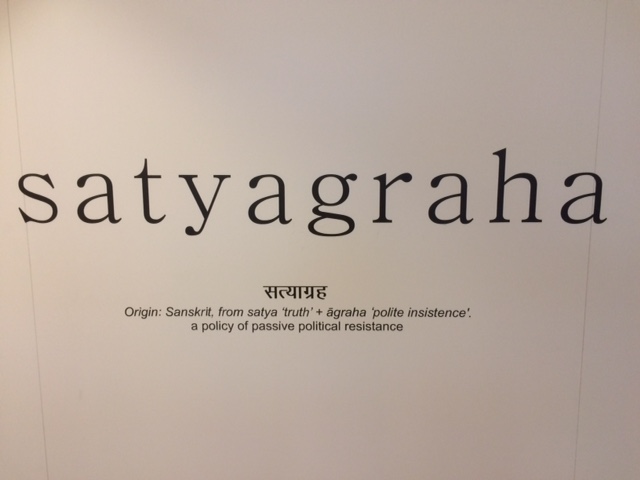
In 1930, Mahatma Gandhi developed his concept of SATYAGRAHA – nonviolent resistance. He walked 240 miles to the coast to peacefully break this law.

saltmarch2

What was the outcome? India had a pathway to independence – nonviolent resistance. Mahatma Gandhi was now centre stage in the march to Indian independence – the nation had a voice and he became a global figure.

How should this inspire us for post Covid19? Especially those of us who are in business or are budding entrepreneurs?

Instead of complaining how things “should be”, take action

Become a visual symbol of what you want – pictures of Gandhi collecting salt went global

Stick to core principles (for Gandhi, Satyagraha)

Be agile, innovate and create simple, local things the market can do – thousands picked up salt and defied the British

Think of ways to break out of the norm, defy conventions and thereby gain market presence

gandhisatyagraha

For Indian friends – what makes Australians so different?

My Indian friends and colleagues often talk about our Aussie cricketers – skills so good but sledging so bad, very blunt yet charming as well. Some go on to talk about how casual we Aussies are, even when meeting the elite.

I think we Australians remain something of a mystery to most Indians.

So, here is my take on what is in our hearts (or what are our values) – yes, we have time to reflect in this era of Covid-19.

I like to outline four characteristics of Australians:

  1. Give everyone a “fair go”
  2. All should be treated equally, and have equal opportunity
  3. Be casual and friendly and say “G’day mate” to complete strangers
  4. Be confident that “we’ll be right” – we have always found a way to bounce back

These four – the casual friendliness, the fair go, egalitarianism and resilience – have defined what it is to become Australians, and in these concepts is the heart of what has attracted so many to our shores.

Of course, we do not always stick by these values.

Look how the arrival of a few desperate families in leaking boats led many to abandon the fair go, as if it never existed.

In the face of wars, bushfires, floods, droughts, financial depressions and more, we have unpacked our casual bravado (she’ll be right mate) and found a way through.

You might not know Australia was founded by the British to house their convicts. Not a great start – but out of this has come a free and open society with sophisticated cities, world leading agribusinesses and services the envy of many.

Out of the humble beginning of convicts came a society that strives to be all inclusive – whether you are thousands of miles from anyone, you should still have a phone, an education and so on.

As the convicts would have understood, freedom is more than the right to vote. These values have made Australia a genuinely free society – for they underpin that greatest of freedoms, to be whoever you are and whoever you want to be.

Now, if only we could bring ourselves to truly understand the minds of Indians.

Will Australia’s vision swing to the Indian Ocean rim after Covid-19?

Australia is torn between two worlds – it has an unchanging alliance with the USA, but it is placed in the middle of a massively changing region, the Indian Ocean. The two can make life uncomfortable.

We are all expecting life to be somehow different after Covid-19. Perhaps one of the differences will be Australia looking more to the west – to the Indian Ocean.

If so, there will be a lot of diplomatic wriggling to be done, with China and the USA looking on.

Why does the Indian Ocean matter so much?

One third of the world’s population (2.5 billion) live around the Indian ocean rim. Their average age is below 30, making it the youngest region on earth.

This ocean is critical to global trade and food and energy security.

There are a dizzying array of global strategic and regional military and security interests.

It is at the crossroads of how the world works. Global trade and economic growth flow in and through it.

But it is also a region where instability and conflict can quickly arise – badly drawn borders create disputes, internal conflicts are rife and competing national interests make for a volatile region.

Why is the Indian Ocean so important for Australia?

First, it’s our neighbourhood.

Second, we are starting from way behind for we have long ignored this region and only recently have been building solid bridges.

Third, one-third of Australia’s coastline borders the Indian Ocean.

Fourth, our future depends on security of lines of trade and the development of both on-shore and off-shore assets – these hold the key to our economy and development.

Fifth, when you look at this Wikipedia map of the “western world” you might wonder why we have not looked to the Indian Ocean before.

westernworld2

Best of both worlds?

Looking west to the Indian Ocean does not mean we have to ignore our powerful friends – China to the north and USA to the east.

Changing our view while keeping our old friends will take diplomatic skill.

And probably it also takes time.


4 tips from India for business and entrepreneurs during the Covid-19 crisis

Pranshu Sikka, CEO, Strategic Planner and Founder of The Pivotals (which styles itself as India’s first “Business Worries Outsourcing” firm) mentions how important it is to do four right things keeping everyone in mind.

  1. Empathize & Strategize- It is important to keep our relationship with existing clients alive. Empathize- they are as badly hit as we are. Consider creating a pipeline of business through digital outreach. Look at the older leads that were on the backburner due to one reason or another.
  2. Offers: Check, if there is merit in diversifying your offering to keep yourself relevant in a post corona world. Think about your stakeholders, yourself, consumer and employees.
  3. No Knee-Jerk Reactions– Businesses are getting affected but don’t get lured into completely diversifying to a new, unrelated stream of business. It is only a matter of time until the situation settles and allows business houses to take more informed calls. Knee-jerk reactions won’t do any business any good.
  4. Morality & Law- As a business don’t cut corners. Don’t do the mistake of doing something not in consonance with morality or law. It is imperative to be on the right side of the law as well as ethics- something which will hold the key to tiding over these difficult times and creating a sustainable value propositions.

Melbourne and Victoria leading the way on India growth story

My home town is leading big time on engagement with India.

Michelle Wade, Commissioner to South Asia, State Government of Victoria, Australia, outlined some of the facts in a recent speech to a BDO event “India – it’s time to diversify”.

Melbourne and Victoria are dominant in Indian student numbers, we have close on 180,000 Victorians who were born in India plus on tourism we lead the way.

According to Michelle Wade, trade and investment opportunities abound for us in India – including advanced technologies, edtech, health and wellness.

One key to doing well is to drill down and find organisations with the right capabilities, according to Wade.

BTW Victoria has business offices in Mumbai and Bengaluru – and have been very helpful to me.

Which Victorians are doing well in India? A few from the big list – Linfox, Deakin University, Rubicon Water, MedSurge, Monash University and Swisse.

Time you engaged with the India growth story?

Canada boosts student numbers and gains in diversification of source countries

Canada welcomed more than 400,000 new international students at all study levels in 2019, with Indian student enrolments accounting for most of the increase in new study permits issued.

More important than the increase – Canada is succeeding in diversification of source countries. This has become a “top priority” for Canada.

These students were for university, colleges and K-12 schools.

Immigration, Refugees and Citizenship Canada statistics show that 404,165 individuals were issued study permits in 2019, an increase of almost 50,000 on the previous year. In 2018, 355,100 new study permits were issued.

Although total figures for the 2019 student population are yet to be released, this new data indicates that the entire international student population in Canada now exceeds 600,000, according to one analyst.

The statistics reveal that 139,740 Indian students were issued study permits in 2019 – up from 107,175 in 2018 – and Indian citizens represent 35% of all 2019 new study permits.

The second biggest cohort came from China with 84,710 permits, marking a decrease on 2018 figures where 85,165 Chinese students were given study permits.

Iran (+39% to 9,795), Nigeria (+16% to 7,585), France (+9% to 14,670) all showed increases of study permits becoming effective in 2019, compared with 2018.

Other countries represented in the top 10 such as South Korea, Brazil, the US and Japan have remained stable, while Vietnam decreased slightly on 2018 figures.

Rounding off the top 15, the Philippines, Mexico, Bangladesh, Colombia and Taiwan all saw increases, with new study permits for the Philippines notably increasing by 56% to a total of 6,365 in 2019.

In 2018, just 40% of active study permits in Canada were for university study – the rest for students at colleges, Quebec’s CEGEPs or at K-12 schools, Universities Canada highlighted.

Although the 2019 breakdown is not yet available, the organisation expects a similar division.

“With the caveat that these new numbers reflect the system as a whole, rather than just university enrolments, Canadian universities are pleased to see continued growth in the number of students choosing Canada as their study destination,” explained assistant director of International Relations at Universities Canada, Cindy McIntyre.

Source: The PIE News


“Namaste Trump” good diplomacy for India but differences with USA remain

Can India make the most out of US President Donald Trump’s visit?

“Namaste Trump” this week been a great visit for India and looks to have been celebrated across the nation. Two leaders of great democracies.

But differences still exist, and the question is can India and PM Modi build on President Trump’s historic visit which took place this week?

PM Modi will drive the relationship, but he is not alone.

One man in South Block — Harsh Vardhan Shringla, India’s foreign secretary – will make a big contribution to the outcome.

India’s foreign secretary is seen as a calm and composed officer, and he has handled bilateral ties even during turbulent times as the Indian ambassador to the US.

It was he who dreamed up and led the “Howdy, Modi!” event in Houston.

trumpmodi6

Now he has a lot of the responsibility of making “Namaste Trump” a success.

What will be the big issues? Top of the list is a free-trade agreement and disagreements on intellectual property rights. Plus how both countries feel about and react to China.

But clearly Namaste Trump is a big win for India and PM Modi and a mark of the increasing respect India has on the global stage.

trumpindia8

Indian PM Modi and US President Trump – two men who enjoy centre stage and get on well

Melbourne seminar on India has best expert panel

BDO has assembled Melbourne’s best India panel to speak on Tuesday 3 March – book now – free event. Email michaelm@eastwestadvisers.net

They have a great line-up of speakers:
Michelle Wade, Victorian Trade Commissioner for India, Bengaluru
Susan Coles, Deputy State Director, Victoria, Department of Foreign Affairs and Trade
Bill Cole, Partner International, BDO
Sandeep Khurana, Director, EastWest Advisers
Michael Moignard, Director, EastWest Advisers

I am proud to be the MC of this one.

Venue: BDO, 727 Collins Street Melbourne
Date: Tuesday 3 March 2020
Time: 12 noon start (lunch will be provided)
Email michaelm@eastwestadvisers.net

Pictured below: Bill Cole, Partner International, BDO

billcole2