India way behind on the “study in India” goal of attracting foreign students

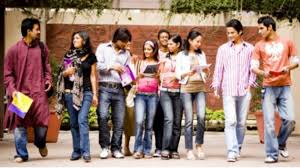
India’s higher education institutions hosted a total of 47,427 international students from 164 countries in the academic year 2018/19, newly-released figures reveal.

Prime Minister Narendra Modi is determined to increase the quality of university education in India but he has a long way to go.

About 64% of all international enrolments came from 10 countries, and the highest senders were India’s regional neighbours.

Nepal sent 27% of all international students, Afghanistan 10% and Bangladesh 4%. The other countries in the top 10 were Sudan, Bhutan, Nigeria, US, Yemen, Sri Lanka and Iran.

Almost two thirds of the international student cohort were enrolled at undergraduate level, while 16% were pursuing postgraduate qualifications

Last year, the Study in India initiative made headlines as the country announced plans to rebrand as a major study destination and host 1 million international students.

According to Sannam S4  executive director & head of education Lakshmi Iyer, the country is “a long way” from achieving its goal.

“[International students are] merely 0.13% of the total enrolments in higher education in the year 2018-19,” she explained.

“The number of foreign students enrolled in India has increased by 3% year-on-year. So, a long way to go especially considering that foreign students come from 164 different countries across the globe.”

“India has always recognised the importance of education as a soft diplomacy tool, however it is for the first time we have stitched together a credible initiative to really push this agenda forward in the face of China’s well-funded Belt and Road Initiative which is pushing into regions which India considers as her natural allies,” she added.


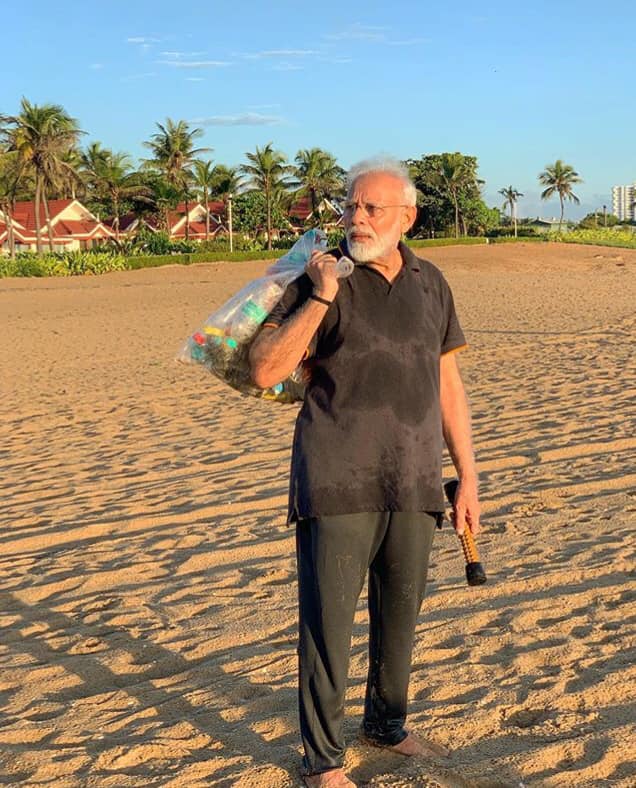
Indian PM Modi picks up rubbish on the beach – how many PM’s and Presidents would do that?

Into India has always said Indian Prime Minister Narendra Modi is different – in a very good way! News this week gives another example.

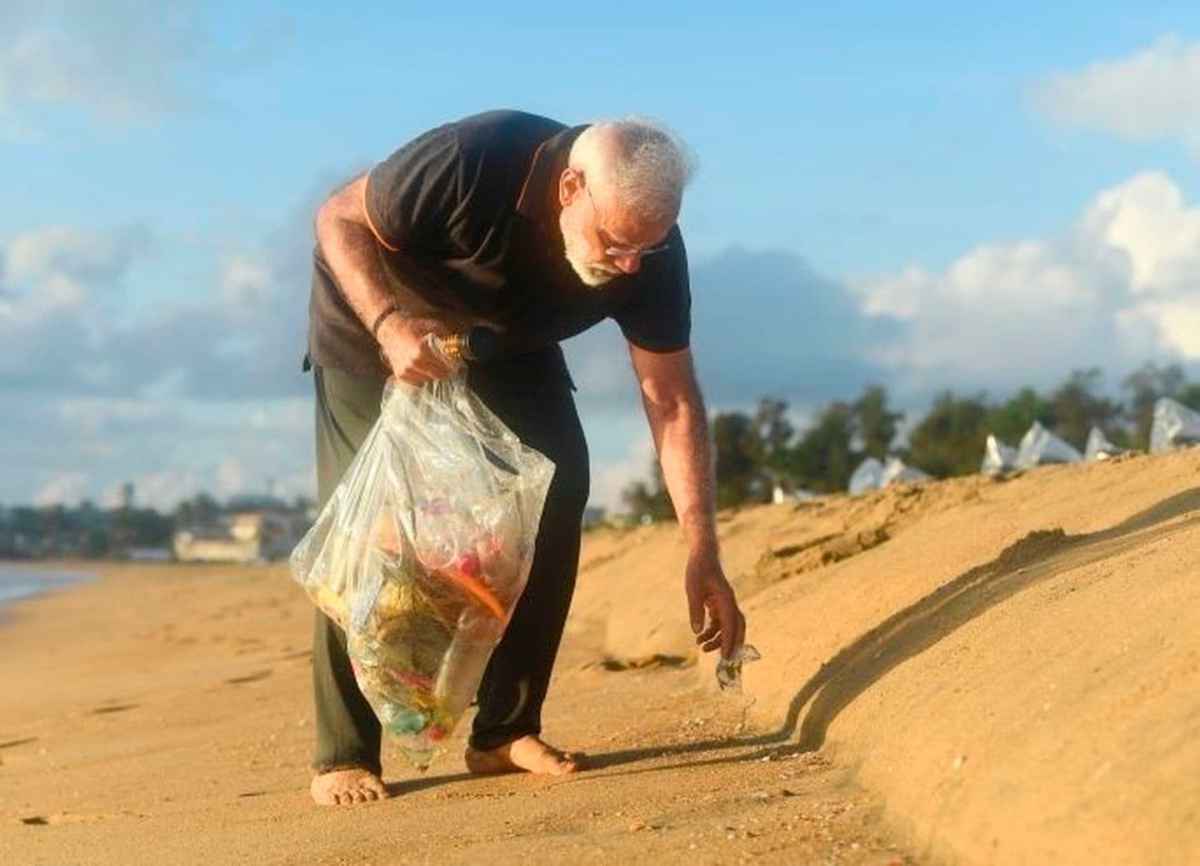
As part of his cleanliness drive, PM Modi picked up trash Saturday (pictured above) from a beach in the southern temple town where he hosted Chinese President Xi Jinping.

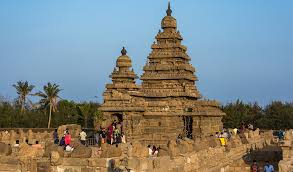
Modi released a short video on Twitter showing him walking barefoot in the sand, collecting the trash in a bag on Saturday morning in Mamallapuram in Tamil Nadu state (pictured below).

mamallapuram

He tweeted, “Let us ensure our public places are clean and tidy.”

Modi launched a “Clean India” campaign after he became prime minister in 2014.

In a radio talk last month, Modi lauded the efforts of an Indian “plogger,” Ripudaman Belvi, who launched a campaign to pick up litter while jogging.

Modi said that “plogging” is popular in foreign countries, and praised Belvi for promoting it in India.

We told you he was different! Let’s have more like him.

Modi rubbish

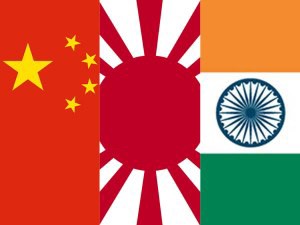
China, Japan and India – the new startup triangle

China is a major provider of funding and control of many Indian startups. In 2015, Alibaba invested in Paytm through its affiliate Ant Financial. In 2017, Tencent took major stakes in Flipkart and Ola.

ola

Japan is also a serious provider of funding in India. Japanese giant Softbank has invested over US$8B in startups in the country, with a goal of $10B by 2024 that now looks surprisingly conservative.

As a result of this “triangle”, India is currently home to 26 startups valued over US$1B.

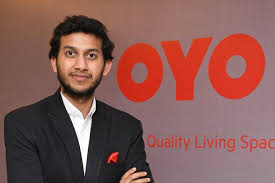
Oyo Hotels and Homes is raising US$1.5 billion from founder Ritesh Agarwal, SoftBank Group Corp., and other investors as it expands into foreign markets such as the U.S. and Europe.

agarwal

Agarwal, 25, will spend $700 million to buy new shares in the company.

Indian edtech startup CollegeDekho, which helps students connect with prospective colleges and keep track of exams, has raised US$8 million in a Series B round.

Last October, Indian e-commerce startup Snapdeal raised US$627 million at a valuation of over $2 billion. In the same month, India’s Uber-style taxi service, Olaraised $210 million, while being valued at over $1 billion in under three years.

snapdeal

India’s largest online retailer and version of Amazon is Flipkart which recently raised another US$700 million at over a $11 billion valuation.

India’s online restaurant guide, Zomato, recently bought US-based Urbanspoon for over $50 million—one of the largest acquisitions by an Indian startup.

zomato

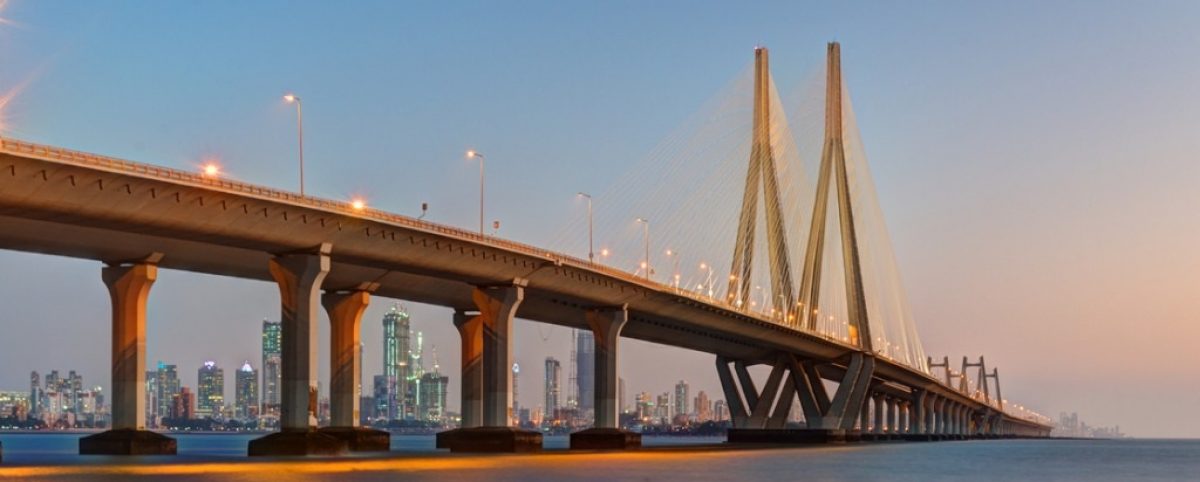
India’s Silicon Valley – Both Koramangala in Bangalore and Hiranandani Powai (pictured below) in Mumbai – are becoming thriving ecosystems to nurture startups in India.

hirandani

Things are changing in modern India – and the “triangle” of India, China and Japan is playing a big role in the change.

 Time to look again?

India’s diversity means agreement can be a rare thing, even on the Vada Pav

A recent discussion with a group of young Indians was a great insight into the diversity of India.

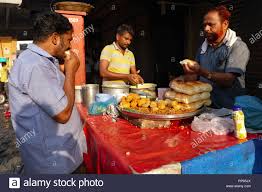
I had asked the group what is in a Vada Pav (Mumbai’s favourite street food)?  Generally Vada Pav contains spicy potato filling, in a cut bun with layers of spicy garlic and green chutney. By the way, it is delicious!

vada pav7

One in the group did not think it had potato, Another member thought is was based on chick peas. Then the discussion went on. Finally, there was a happy confusion about Vada Pav.

This is India. Often you find there is no common understanding on what seem fairly simple things. Ask a group to tell you what a “crore” or a “lakh” is and pretty soon your head will be spinning.

Why does this happen?

It is not India, but many Indias. This is not one country – this is a country of countries. There are so many Indias and common understandings across the whole country are rare.

Major festivals often have different names or slightly different spelling of names, depending on where you are.

This is diversity and needs to be understood if you are to succeed there. India manages to stay together but it really is an amalgamation of ethnicity, culture and over 26 major languages.

Investigating culture pays off. Underestimating cultural difference can be the beginning of the end for your project.

Ready?

I hope Australian PM Morrison will speak in January at India’s Raisina Dialogue

Good news – Australian Prime Minister Scott Morrison is to visit India next year.

There is a hint that the timing is January.

I hope he chooses to become a keynote speaker at the Raisina Dialogue – January 14-16.

Raisina Dialogue is a multilateral conference committed to addressing the most challenging issues facing the global community. Every year, global leaders in policy, business, media and civil society are hosted in New Delhi to discuss cooperation on a wide range of pertinent international policy matters.

The Dialogue is structured as a multi-stakeholder, cross-sectoral discussion, involving heads of state, cabinet ministers and local government officials, as well as major private sector executives, members of the media and academics.

The conference is hosted by the Observer Research Foundation in collaboration with the Government of India, Ministry of External Affairs.

The visit is also a great opportunity to further develop the positive relationship PM Morrison has with Indian Prime Minister Narendra Modi.

Modi20192

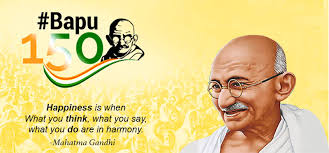
The world has been changed by Gandhi – celebrating 150 years since his birth

History recognizes Mahatma Gandhi (1869-1948) as India’s “Father of the Nation”.

But he has been the “Father of Change” throughout the world.

ATT00036_

Peaceful freedom campaigners such as Nelson Mandela, Martin Luther King and Tibet’s Dalai Lama owe much to this great man.

Gandhiashram

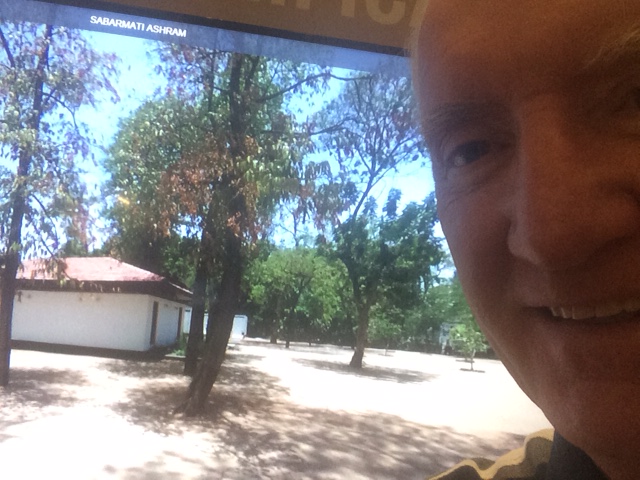
I am pictured visiting the Gandhi Ashram in Gujarat

In my own generation it was our opposition to the Vietnam War that led us to study Gandhi and his methods of non-violent protest. In this way he inspired young people in the 1960’s in Australia, USA, Canada and more.

I especially love his message encouraging tolerance: “As long as you derive inner help and comfort from anything, keep it”. He said: “The golden rule is to test everything in the light of reason and experience, no matter from where it comes.”

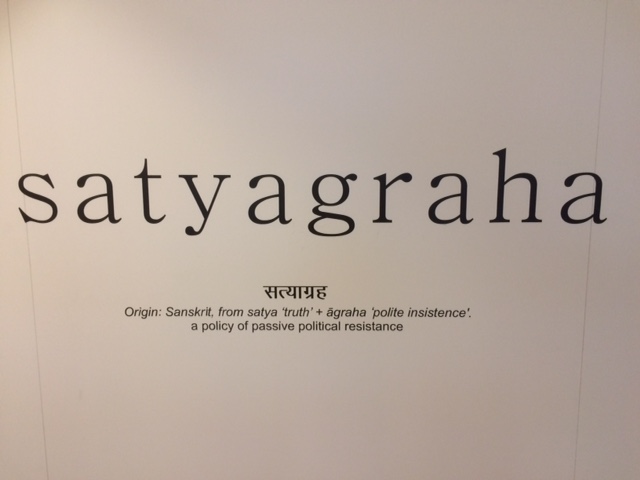
gandhisatyagraha

Some more Gandhi messages for specific sectors:

Communities: “The weak can never forgive. Forgiveness is the attribute of the strong”.

Leadership: “I suppose leadership at one time meant muscles; but today it means getting along with people.”

Careers: “The best way to find yourself is to lose yourself in the service of others.”

Business: “A customer is the most important visitor on our premises; he is not dependent on us. We are dependent on him. He is not an interruption in our work. He is the purpose of it. He is not an outsider in our business. He is part of it. We are not doing him a favour by serving him. He is doing us a favour by giving us an opportunity to do so.”

Innovation: “Freedom is not worth having if it does not include the freedom to make mistakes.”

Education: “Live as if you were to die tomorrow. Learn as if you were to live forever.”

In our ever-busy lives, Gandhi is a role model in taking time out for the simple things. I saw this in bustling Mumbai at Mani Bhavan (Gandhi House), a three storey home with shuttered windows, a residence that Mahatma Gandhi was able to use. His room is simply furnished, austere. He would sit and read, spin cotton or talk to friends. It was his quiet time.

This was indeed the man who said there was enough in the world for everyone’s need but not for everyone’s greed.

No surprise then that Gandhi’s core approach to life was “You must be the change you want to see in the world”, a message very alive today as we seek to enhance our tolerant, multicultural communities.

ATT00012_

Indian middle-class consumers are spending big this festive season and online shopping is booming

India’s e-Commerce major Flipkart set record sales in the “Big Billion Days” launch of festival season online sales (Navrati and Diwali are in October).

Both e-commerce majors Flipkart and Amazon India had record transactions on their platforms on the first day of their annual festive sale, which started early on Sunday.

Flipkart is now owned by American retail major Walmart.

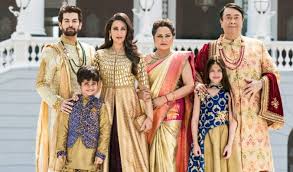
ethnicwear

Flipkart had demand in all major categories, including beauty, women’s ethnic wear, kidswear, sports, fast-moving consumer goods, baby care, private labels, and furniture on the first day of the sale.

High end phones are in demand – Amazon had big sales in premium smartphone brands OnePlus (pictured), Samsung, and Apple. Large appliances and televisions showed growth.

oneplus

The company said the largest number of new customers shopped for fashion, daily essentials, and consumables.

For Flipkart, travel was also the fastest-growing category which saw 12X growth over last year.

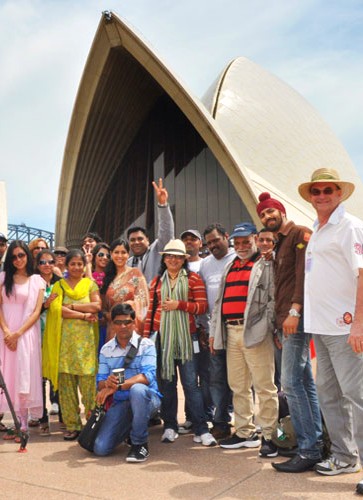
tourists 4

Also, over 2.3 million consumers engaged with games on the platform. There were close to 10 million new app downloads in less than a month in the run-up to BBD 2019.

AAAdiwali_11

Candles of the Diwali celebrations coming up on 27 October – a time of gift giving and family gatherings similar in scale to Christmas

Navrati festival now and Diwali to follow – “don’t be scared, be blessed”

On my second visit to India, staying in a hotel in New Delhi, I was alarmed at two or three in the morning by a series of explosions – in this post 9/11 era we are all a little on edge. I spent a nervous night and next morning anxiously asked the concierge had he heard the massive explosions?

With a beaming smile on his face, he said “This is Diwali and people always fire off crackers – don’t be scared, be blessed”.

navrati4

Pictured are dancers during Navrati Festival

This year, Navratri (Durga Puja) is being observed from September 29 to October 7 and Diwali on 27 October – which is my birthday, so it will be very special for me this year.

Navratri in Sanskrit means nine nights in which nine forms of Goddess Durga are worshipped in a particular order. Alongside observing fast and performing various rituals, preparing a special offering for each day holds symbolic significance.

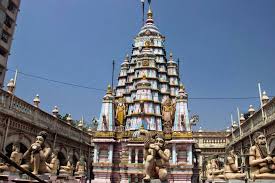
mumba

Aarti was also performed and people were seen offering prayers at Mumba Devi temple in Mumbai (pictured above) on the first day of Navratri. Mumba Devi is an amazing temple and I recommend it be on your “must visit” list if in Mumbai.

Kalkaji temple and Jhandewalan temple in New Delhi were all decked up with flowers as people stood in long queues to attend the first aarti of the nine-day-long festival.

In India festivals are generally about great optimism – in one way or another, about the triumph of good over evil.

So, from me – “all best wishes of Navrati to you!”

navrati5


Horticulture & Hydroponics research mission from Australia to India

From 3 November to 13 November Tony Bundock of Genesis Horticulture Solutions will be leading a research project in India on “POTENTIAL AUSTRALIA-INDIA COLLABORATION ON HYDROPONIC & PROTECTED CROP PRODUCTION AND TRAINING”.

Tony is clear that the mission is not taking a “one size fits all” solution but will genuinely  research potential Australia-India Horticulture Collaboration – understanding the state of play in this sector in India – identifying business and education/skills training opportunities and partnerships. He aims to identify levels of support in both countries for showcasing best practices in controlled cropping/hydroponics and for provision of skills training and train-the-trainer through Australian education/TAFE partners.

PROJECT FIRST STAGE RESEARCH FUNDING

Funding support has been provided for the first research stage by the Australia India Council, Department of Foreign Affairs and Trade, Government of Australia.

I am really pleased to be joining Tony on this mission.

Steve’s 7 tips for exporting to India’s middle class

  1. Find the affluent millennials

India is home to the world’s largest population of millennials—typically defined as those aged 18-35. At 450 million, these millennials are influencing the way Indians eat, shop, commute and buy, much like their global counterparts. They are the first upwardly mobile group in recent history of India – and will have an impact very like the way western baby boomers changed most things.

According to Santosh Desai, managing director of Indian Brand Advisory Group Futurebrands, Indians used to be “born something” but now can “become something”.

2. Drill down to the real middle-class market

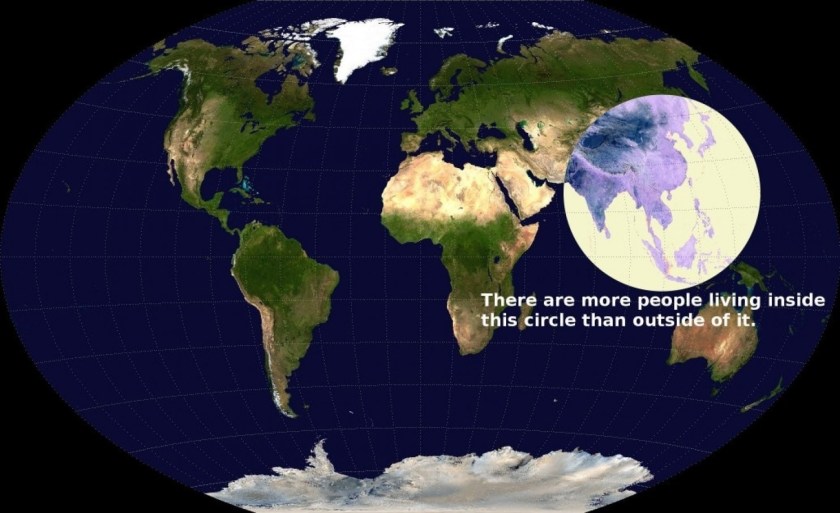
We know India has 1.3 billion people, but if you think too much about this you will get nowhere. Drill down to find your market.
asiamap8circle

For example, some estimate the “middle class” as high as 300 million. For me, this is way too high. Austrade takes a dimmer view – it estimates that there are approximately 30 – 80 million people in our target demographic, many of whom live outside Tier 1 cities. That’s a big range from 30 to 80, which shows that we just do not know. But for me Austrade’s numbers are too low.

Austrade looks for consumers that:

  1. can afford international travel to destinations like Australia;
  2. can afford to send their children for study abroad; and
  3. can afford to eat at high-end restaurants and hotels or eat significant amounts of imported food and wine at home

3. Think of India as many markets

Thinking of India as “one market” will slow down your impact and waste your marketing efforts. First, there is the divide between north, south, east and west. Then there are big metropolises (8-10) and hundreds of tier one cities (around one million plus). Then there are over 26 different languages, multiple food cultures, differing beliefs and interests. It is complex, so build that into your “many markets” strategy.

4. Consumerism is changing in India

India had just 9 Shopping Malls in 2007. There are over 350 Shopping Malls in 2019. Plus 85 new Shopping Malls will be built in the next 5 years = 435 Shopping Malls in 2025.

ambience7

Add to this that online retail is taking off, with Amazon and the local Flipkart leading the way.

Dr Mark Morley Trade Commissioner India Government of Australia makes a key point about opportunities for us: “Australia is well positioned with the Indian consumer. Across India, we have a great reputation for clean, safe and reliable supply. We are well known as a premium supplier of produce, and we have a global reputation for our quality brands.”

5. Thinking local is a good way to start

Especially for those in food, beverages, education and fashion, your beginnings for India can start right here in Australia.

About 650,000 Australians claim Indian ancestry, and we have over 65,000 Indian students here, which means a significant local market spending money. Add to that the growth in Indian tourists – up to over 300,000 per year and growing at around 15%. This gives you a good market testing opportunity.

6. Collaboration is the new relationship

If you just want to “sell” to India, sharpen your pencil and think short term – sooner rather than later, India will find an alternative to you.

To be in India for the long term, seek genuine opportunities to collaborate with Indians – once you and Indian collaborators are working together, your future is more secure. This is how Indians prefer to operate, so drop “transactional” thinking and focus on “collaboration” – it is the new relationship.

7. Give India the time it needs

Cultures based on relationship (collaboration) are slower to move, so give India at least three years. You might “sell” sooner, but for most this is a very short-term market entry approach.