7 ways to succeed in wonderful India

This short list can be your guide to success in wonderful India:

  1. Bring a culturally aware and adaptable mind to India – you will need both. By “culturally aware” I mean more than how to greet and exchange cards. Cultural awareness is understanding how the other thinks and requires some study and effort.
  2. Develop some flexible plans for India – they will need to change!
  3. Commit to India for the long term. One or two years is not enough. I have been going to India since around 2005 and still learning new things and making new connections – to find a way through the maze that is India.
  4. Make social media a part of your program to build your brand and product awareness in India – the shift to social media/digital marketing there is huge.IndiaDigitalEco
  5. Adapt planning and approaches for the need of your business and sector. You might need a quick market study – or you might need studies over several years. Each is different.
  6. Learn as much as you can about your potential market – connect with your potential customers and see how they operate and what is happening in their sector.
  7. Let the market build a relationship with you and learn about your business. Again, like all the other points, this takes time.

CONCLUSION

It is going to take time to succeed in India. But for one of the biggest most dynamic markets with the youngest population on the planet, investing your time will pay off.

Why get closer to India? About 600 million people, more than half India’s population, are under 25 years old; no country has more young people. Remember the economic impact of the western “baby boom”? It is time the west moved closer to India in trade, culture and tourism. What do you think? As the great Indian philosopher Rabindranath Tagore said: “You can’t cross the sea merely by standing and staring at the water.”
kirana

Google backing India as it becomes cautious on China

Google plans to invest US$10 billion over the next five to seven years to help accelerate the adoption of digital technologies in India.

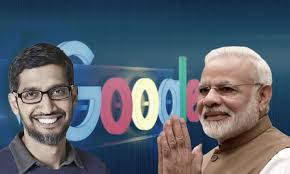
Mr Sundar Pichai (pictured below), who was born in the country and is currently chief executive officer of parent Alphabet Inc., made the announcement at the annual Google for India event via video conference.

google3

He said, “This is a reflection of our confidence in the future of India and its digital economy”.

The US$10 billion funds are expected to be invested in partnerships, operations, infrastructure, the digital ecosystem, and equity investments. Google will focus on several key areas:

  • Providing affordable access and information for every Indian in their own language, including Hindi, Tamil, and Punjabi
  • Developing new products and services focused on India’s unique needs
  • Encouraging businesses as they continue or embark on their digital transformation
  • Utilising technology and artificial intelligence for social good, in areas like health, education, and agriculture

INTO INDIA can report there are more than 500 million internet users in India, second only to China, with growth that has attracted all the American technology giants.

google 6

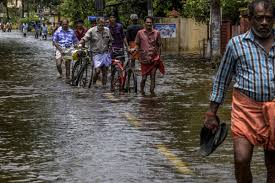
Google is already using AI to predict floods in India

For those watching political and strategic shifts away from China – earlier this month, Google stopped its plans to offer a new cloud service in China and other politically sensitive countries.

tradewar3

India has had a surge of foreign interest in its digital economy. In the last few months, investors including Facebook Inc., Qualcomm Inc. and Intel Corp. have put around US$16 billion in the digital services unit of India’s largest conglomerate, the retail-to-telecom giant Reliance Industries Ltd.

Google, Facebook, Amazon.com Inc., and others are investing billions into the market.

As China seems less attractive for investors, India has the opportunity to shine and show its true attractions to investors and business.


Indian retail massive shift to online

INTO INDIA has previously commented on the changing face of retail in India. Now here is the BIG NEWS:

The Indian online grocery market is estimated to exceed sales of US$3.19 billion in 2020.

This is a massive 76% jump over the previous year.

YoungIndians11

FMCG retail in India is being transformed – and it is not just Covid 19 – new younger urban consumers prefer tech shopping.

Flipkart is the biggest online retailer with about 38% market share, closely followed by Amazon.

For Australian businesses, Austrade has established The Australian Store at Amazon India.

amazon2

Culture eats deals and even foreign policy for breakfast!

I write a lot about the vital role “culture” plays in doing business – especially in the context of the west and India. When things go wrong, generally the source is culture. Culture outlasts the deal and it is bigger than the contract.

The point about culture was researched at the University of Melbourne in 2013 by Dr Kadira Pethiyagoda in a doctoral thesis “The influence of dominant cultural values on India’s foreign policy.”

If you were wondering how India could simultaneously be friendly with the USA and Iran, culture has the answer.

The thesis identified four Indian cultural values that have survived the course of history – non-violence, hierarchy, pluralism and tolerance.

These cultural values have a significant influence on India’s foreign policy overall.

The most powerful value is non-violence.

The research found several non-violence driven preferences: global peace; caution in the use of force; and the preference for maintaining a non-violent image.

Hierarchy is found to be more influential in India’s nuclear posture than in its approach to humanitarian intervention. This value drives a preference for India rising up the global hierarchy of states.

Pluralism and tolerance strongly impact India’s approach to humanitarian intervention. These values support a pluralistic and tolerant worldview, the preference for sovereignty, and the preference for caution in condemning the internal actions of other states.

The author has a book out titled “Indian Foreign Policy and Cultural Values” which makes a major contribution to our understanding.

culture7


7 ways Australia could build relations with India to balance China

While it is true that India is not just another China, there is a good risk management case for improving Australia’s trade and diplomatic relations with India.

To give energy to this relationship, Australia should take eight urgent steps:

(Keep in mind most of this relates to “post-Covid” but some could action now)

First, we should be flat out campaigning to get more Indian tourists down under. They now have the money, and a campaign for tourism would also communicate our culture to the broader Indian public. Let’s get Australia on the billboards, on the cable TV and in the cinemas in India.

tourists 4

Second, encourage Bollywood to make more films down under and help them show the diversity of the Australian population and culture.

Third, reinforce our intellectual property and leadership in the twin areas of high demand over there – health and education.

Fourth, take more initiatives to exchange knowledge and services in the waste management and waste disposal fields – we are pretty good in this, with some of the cleanest cities in the world, and India is worried that rubbish is taking over their country.

water2

Fifth, create ways we can work closer on sustainable energy.

Sixth, make sure Indians are aware of our global leadership in fields such as wealth management, a growing need over there. The best way to do this would be to increase our investment into India.

Seventh, provide cultural training to Australians in all fields who are to visit India, so that our blundering around (which we often see as down to earth and friendly) does not continue to cause offence or confusion among our hosts.

India post-Covid to get major economic boost from the rural economy

The Covid19 pandemic has crippled India’s urban economies.

But fortunately for India, the rural economy is stepping up.

Over two thirds of the population and 70 per cent of the workforce of India are in rural areas. The rural economy is now 46 per cent of national income.

And India’s 650,000 villages have money to spend.

How is this happening?

farming 2

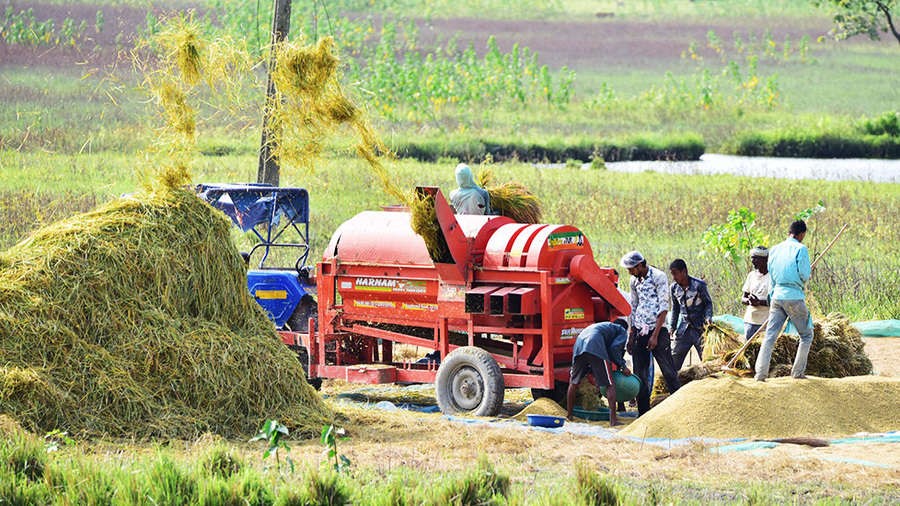
Bharat, or rural India, is thriving – it is a combination of bumper crops, good monsoons and Government handouts.

In India’s auto sector, biggest demand is now rural – for tractors and two wheelers.

tractors

Rural unemployment peaked at 26 per cent in May but by June 21 had dropped to 7.3 per cent.

For once in a long time, the Indian rural economy is the good news and could be the big driver post this pandemic.

India to benefit from Industry 4.0 says head of Rolls Royce

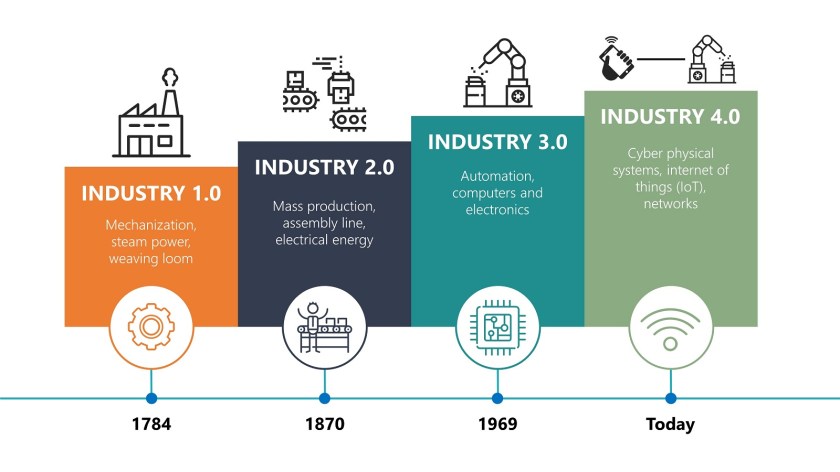
The fourth industrial revolution also known as Industry 4.0 or a new age of connected technologies and data-driven insights is now upon us and is changing the way we live, work, and interact with each other.

One of India’s inspirational business leaders is Kishore Jayaraman, President, Rolls-Royce, India & South Asia. He has a vision for India and Industry 4.0.

Industry4.0 2

Industry 4.0 is all about innovative technologies, such as artificial intelligence (AI), mass automation, industrial communications, Big Data, robotics and 3D printing.

According to HSRC’s “Global Industry 4.0 Market & Technologies 2018-2023” report, the global Industry 4.0 market is projected to reach US$214 billion by 2023.

The Indian government estimates India’s manufacturing sector would breach US$ 1 trillion by 2025.

KishoreJayaraman

But Kishore Jayaraman (pictured above) warns that Indian manufacturers need to move beyond the current status, characterized by manual inputs, lack of ICT integration in manufacturing, and critical gaps in capability, to move to the next stage and fill the critical technology gaps.

He says: “To that end, government’s ‘Make in India’ initiative is providing the groundwork for both small and large companies to develop advanced manufacturing capabilities and invest in technology upgradation.

“Additionally, programmes such as green corridors and smart cities have been launched to support critical technology interventions across various industries. Besides creating jobs, these initiatives appeal to a new generation of workers with different values and skills that boost synergies,” he said.

Here’s how he sees India benefiting from Industry 4.0:

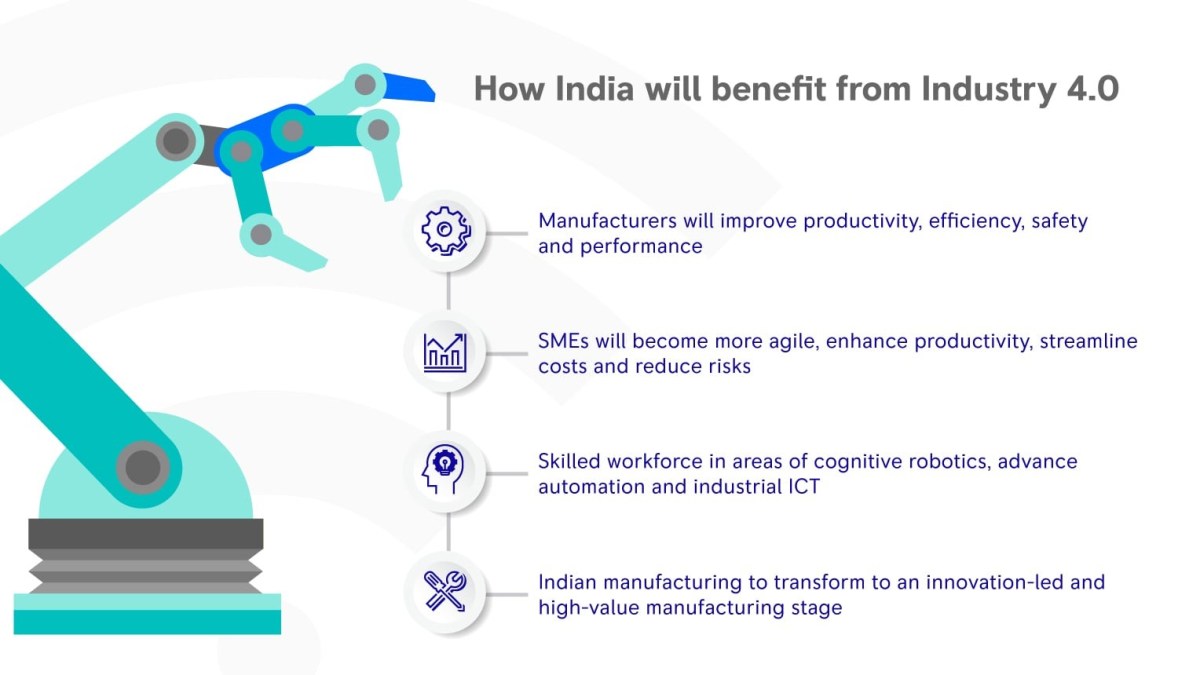
First, it will allow manufacturers to improve productivity, efficiency, safety and performance and help position India as a global manufacturing hub.

Several Indian e-commerce companies are using advanced data analytics to gain insights on customer behavior and improve business performance. Likewise, manufacturers can implement data analytics to improve forecasting, predict and prevent manufacturing downtimes, manage supply chain and enhance production capacity and quality.

Second, Small and Medium enterprises (SMEs), which form the backbone of Indian manufacturing, can leverage Industry 4.0 technologies to become more agile, enhance productivity, streamline costs and reduce risks.

Third, employers will be able to increase the skills of their workforce. While some jobs may be lost, new ones will be created in the new economy. New technologies inadvertently require new skills and trained Industry 4.0-ready workforce especially in areas of cognitive robotics, advanced automation and industrial ICT. Training in safety-related skills will also come into play with an increased level of human-machine cooperation.

Finally, Industry 4.0 could provide a pathway for Indian manufacturing to transform to an innovation-led and high-value manufacturing stage. Technology-intensive sectors such as the Aerospace & Defence (A&D), which is at the cusp of innovation and growth in India, are clear beneficiaries.

industry4.0

At Rolls-Royce, Industry 4.0 is a critical aspect of business and strategy – using connected systems to make better decisions. This brings together a number of technologies, such as the Internet of Things, intelligent manufacturing, digital product verification as well as virtual design and simulation.


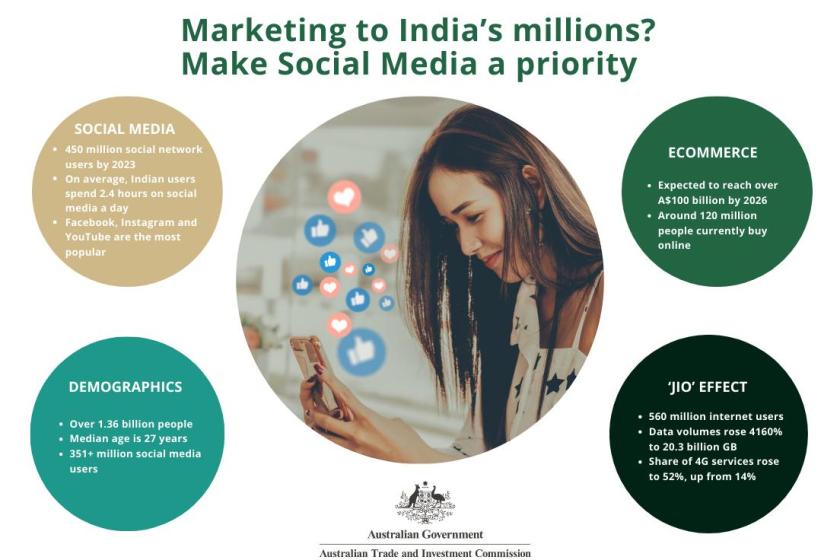
Marketing to India’s millions is now about social media and e-commerce

India has 560 million internet users – and growing fast.

Over 450 million will be social media users within 2 years.

India is a young population – the median age is just 27.

E-commerce will be over A$100 billion by 2026.

Australia now has a good starting point thanks to Austrade – we have the AUSTRALIAN STORE at Amazon India.

Check it out.

India also has some of the world’s best digital marketing agencies – one leader was SOCIAL WAVELENGTH which has now become Mirum India – top outfit.

I have great respect for Mirum India which is led so well by Sanjay Mehta and Hareesh Tribrewala.

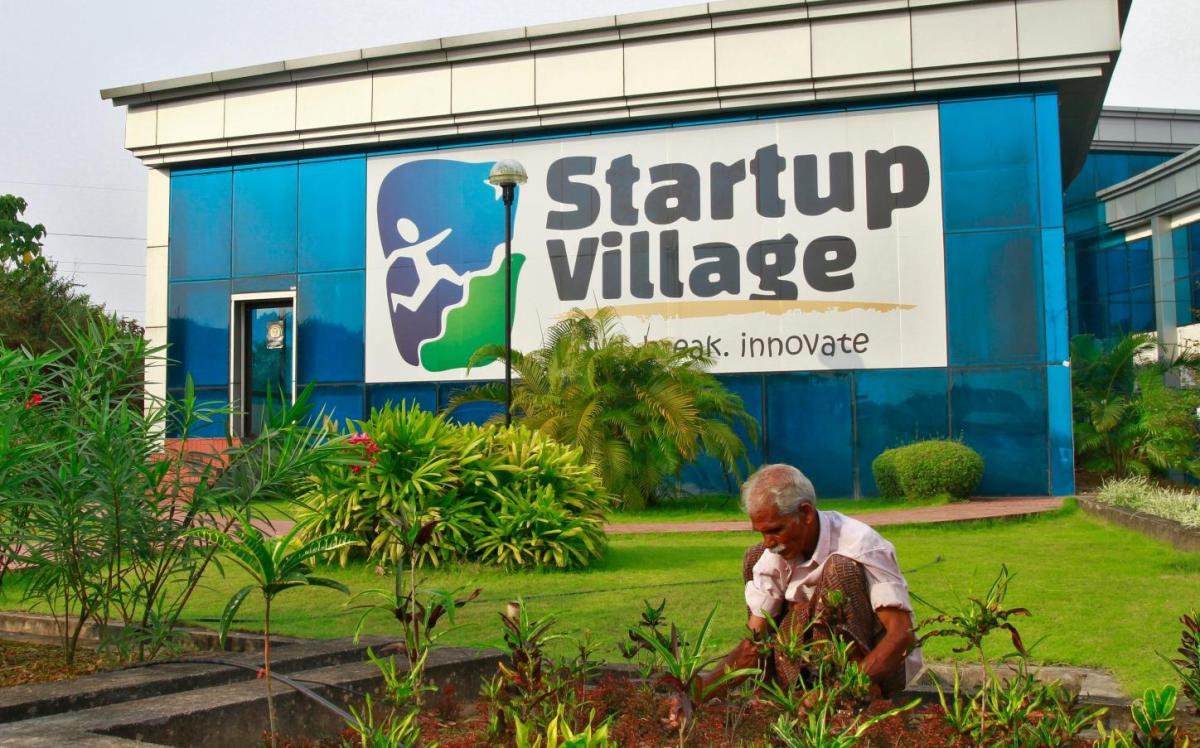
Indian startups are driving growth and change

There are many drivers of India’s economic growth and transformation – but certainly punching above their weight are Indian startups.

There were over 50,000 startups in India in 2018.

India has the third largest startup ecosystem in the world.

The success is partly driven by corporate India (which is providing much of the funding) and by the Indian Government policies.

Bengaluru is in the world’s top 20 startup cities and ranks in the top 5 of the “fastest growing”.

Some of the best known Indian startups include Ola Cabs, Snapdeal (e-commerce), OYO (hotels), Swiggy (food delivery), Big Basket (food e-commerce) and BYJU’s (ed tech).

Watch this space.

Can you trade with India without leaving home?

As Covid19 has made us all (Australia, UK, USA, Canada etc) more cautious, we are reluctant to travel.

Add to that a leap in Indian online e-commerce for all kinds of products and services.

Is the future of trade with India digital? Do relationships matter any more?

We have always said that the key to long term success with India is in the careful and gradual development of close working relationships. This has to be done face to face, but these days can be supported via phone and video calls.

Deakin University is the prime example of success through perseverance and relationship building – they have had a presence in India for over 25 years.

Ravneet Pawha has led Deakin in India for most of that time and she is now the Deputy Vice President – Global and CEO – South Asia. She knows everybody in decision making on education in India. Ravneet is a regular promoter of Australia and our education at conferences and in Indian media.

ravneet

The Australian citrus industry is taking a closer look at India but their CEO has told members it could take five years to build a market.

citruspic

So relationship still matters in dealing with India.

For our diplomacy, we need closer relationships at Indian central and state government levels.

For education, we need to follow the lead of Deakin University and be on the ground over there, building collaborative relationships.

And for products and services, while online is becoming the way of the future, products and services will only become trusted and valued as people have a relationship with your brand.

Australian PM Morrison has been gradually building a closer relationship with India PM Modi and this is producing some progress on agreements and cooperation.

Relationship – it is the way forward with India.

ModiMorrisonSmile2