New “Business Champions” group to provide much needed top level links between India and Australia

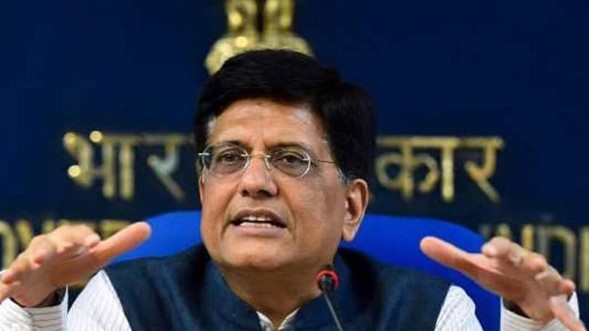
Indian Commerce Minister Mr Piyush Goyal

A new “Business Champions” group will lead top level business engagement between India and Australia – and it was launched last week in India.

INTO INDIA welcomes this move to bring the “top end” of both countries together. Business engagement at this level has not worked well in the past. Most of the business councils and chambers have provided lower level SME engagement – important as this is.

“Supply chains” is behind the enthusiasm of India for the new Australia-India Business Champions Group’s role. Mr. Piyush Goyal, Minister of Commerce & Industry, Consumer Affairs, Food & Public Distribution, Textiles, Government of India said this when addressing the Inaugural Meeting of the Australia India Business Champions.

The Minister is co-chairing the group with Australian Trade Minister, the Hon Dan Tehan.

“The Australia-India Business Champions Group’s key aim is to liberalise and deepen bilateral trade between both the nations and pave the way for collaborative economic growth.” stated Mr. Dan Tehan MP, Minister of Trade, Tourism and Investment, Government of Australia.

Major business organisations leading the group are the Confederation of Indian Industry (CII) and the Business Council of Australia (BCA). Both represent almost all the major business corporations in both countries.

Mr. Chandrajit Banerjee, Director General, CII, pointed to areas such as mining, education, defence, space and emerging sectors which the group can take forward.

Ms. Jennifer Westacott AO, CEO, BCA, highlighted that we must strengthen and reform regional and global institutions, so they deliver for our citizens.  She said the Business Champions would engage directly with the top tier of Australian and Indian Governments on matters critical to business. 

Other panelists at the meeting included H E Mr. Manpreet Vohra, High Commissioner of India to Australia, H E Mr. Barry O’ Farrell AO, High Commissioner of Australia to India, Dr. Anish Shah, MD & CEO, Mahindra & Mahindra Ltd, Ms. Julie Shuttleworth, CEO, FFI, Mr. Rakesh Bharti Mittal, Vice Chairman, Bharti Enterprises, Mr. Mike Cannon-Brookes, Co-Founder and Co-CEO, Atlassian, Mr. Nitish Jain, President, SP Jain School of Global Management, Ms. Verena Lim, Asia CEO, Macquarie Group, Mr. Girish Ramachandran, President, Tata Consultancy Services Asia Pacific, Professor Duncan Maskell, Vice Chancellor, University of Melbourne.
Business with India? Leave your ego behind and let Indians run the business

Pretty much every western company that has succeeded in India has done so on the support of a strong local Indian team across all levels. To do this, they have effectively left their ego behind.

Those who struggle typically want to transfer their “culture” to India so they put their expat team in charge of the local team. This is ego centred and mostly does not work. These are mainly companies that do not trust the locals and are over-confident about their own “head office culture”.

Being preoccupied with transferring “the way we do things in our company” to India makes them blind to “the way Indians do things there” which is the most important insight for future success.

So – local management teams are essential in India (and probably anywhere you go in Asia) and that team should lead and manage your enterprise throughout India. This does not mean you do not provide the support of some expats – of course good companies do, but this is to empower the local team. Expats can come and go as needed – but your business needs longevity in India and that is what an Indian management team can provide.

Smart companies that go into Asia also ensure they hire Asians into the HO team, so you have Asians running your enterprise on the ground in Asia and Asians at the right level in HO guiding and advising the HO team.

Real access to family and business networks in India (and probably all of Asia) is mostly only achieve by Indians.

Conclusion – if you want to succeed in business in India, rely on Indians to run your Indian business.

Breathing program making Yale students happy coming to Australia in September

Art of Living – quick, simple program for happiness in tough times

A program from India that is being used at Yale University and many other American universities to improve wellbeing of students – is coming to Australia online.

Starting on 30 September, this short Pan Australia Happiness Program will be held in the Presence of Gurudev Sri Sri Ravi Shankar who creating the breathing technique that changes lives. INTO INDIA has been doing this program for many years and loves the energy and simplicity of it.

This is a super simple, quick and unbelievably powerful way to have a good day!

If you are feeling alone.

If covid is dominating your mind.

If your breathing is shallow.

If you feel anxiety and stress.

Step in and join a big and strong group of like-minded people who believe in contributing and creating waves of happiness, sharing, and caring that are so much required right now.   

Registration link: www.artofliving.org/au-en/program/6401

Videos: The videos below showcase how Breathing and Meditation can help us become stress-free

James Nestor, author of Breath, on his research & the power of SKY (Sudarshan Kriya)

Take a breath: What a new study from Yale reveals about stress and mental health

Art of Living Australia Foundation is looking forward to sharing this beautiful program with you and your friends and colleagues.

Contact for further information – Rohit 

Art of Living Happiness Program and Sri Sri Yoga Facilitator

0423 531 787

“Make others comfortable and you will see that Nature will take care of your comfort” Sri Sri Ravi Shankar

Tony Abbott might have overstated it – but he is more right than wrong on India

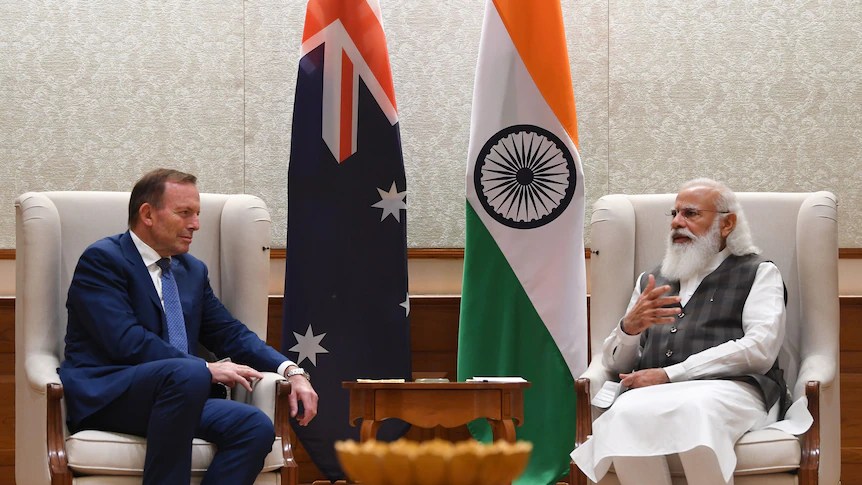
Tony Abbott wants Australia to make a big shift towards India and away from China.

Despite some hysterical responses from two former Aussie PM’s, Tony Abbott has by and large got it right on India and we should work towards the closer relationship he believes is possible – and necessary!

Consider this verbal stoush:

“The answer to almost every question about China is India. Although currently not as rich as China … India is perfectly placed to substitute for China in global supply chains … India has revived the Quadrilateral Security Dialogue, and the first in-person Quad summit is expected before the end of the year. Under Modi, India has invited Australia to join the annual Malabar naval exercises that will soon involve India, the US, Japan, Australia and also the UK … It will be an impressive show of strength, demonstrating the democracies’ commitment to a free and open Indo-Pacific … If Australian business and officialdom were to make the same effort with India that they’ve long made with China, there’s potential for a ‘family’ relationship with India that was never likely with China.”

– Former prime minister Tony Abbott in The Australian (10/8/21)

“No, (Abbott’s comment) is just wrong. We all agree our relationship with India has been underdone over the years … India has got a very deep longstanding protectionist political culture. They weren’t even prepared to sign up to RCEP … You have got to be realistic about what you can achieve in terms of trade. They are different countries, different economies. We should be aiming to have much stronger deeper relations with India …  Every prime minister should and will do that. But the idea that can sort of delete China and insert India is just nonsense.”

– Former prime minister Malcolm Turnbull at a La Trobe University webinar (10/8/21)

“We have got to be deeply realistic about one thing (about the Quad). Is it the assumption of future Australian governments, like Tony Abbott’s view in today’s press, that the Indian navy is going to go steaming into the South China Sea to defend Uncle Sam’s interest if the balloon goes up over Taiwan? I think not   …  We need to ask some very hard military questions about the core strategic utility of this (the Quad) for the longer term … We need to go into this with wide eyes open, not the blithering idiot remarks we’ve seen from Abbott in today’s newspapers.”

– Former prime minister Kevin Rudd also at La Trobe University

“The one thing we should not be doing is saying to India, this is to line you up to be the next member of ANZUS to take on China. I agree with what Kevin said, that equally just plays into the paranoia of China … We have to just move gently, avoid extravagant language (with India) …  Frankly, extravagant claims of the type we were talking about a moment ago are not helpful.”

– Malcolm Turnbull again

“India is the world’s emerging democratic superpower and my god don’t we need another democratic superpower in the world right now. Isn’t it so important that a country like Australia do everything it can to ensure India does take its rightful place up there at the head of the world’s great democracies.”

– Tony Abbott, Australia India Address (17/8/2021) 

Well, what do you think?

Australian critical minerals, infrastructure, energy, technology, agribusiness, education and space – step up to the table for FTA talks with India

The Australian Trade Minister, The Hon Dan Tehan MP, last week pointed to Indian FTA priority areas such as critical minerals, infrastructure, energy, technology, agribusiness, education and space.

He announced a speeding up of talks with India last week and chose the launch of the Canberra chapter of the Australia India Chamber of Commerce to also announce an update of the India Economic Strategy.

This is a great time for business to step forward. You can have a say. You can be at the FTA discussion table.

The Minister said he had asked former Prime Minister, Tony Abbott, to visit India for meetings around the Comprehensive Economic Cooperation Agreement (which is an FTA).

He announced to the AICC that both countries were hopeful of concluding negotiations this year – a dramatic ramping up of the pace.

The AICC has the Hon. Ted Baillieu AO as its Founding Patron.

There are so many great Indian startup stories – and much more to come

Mr. Girish Mathrubootham started Freshworks without any special help, nor did he come from wealth.

There are so many startup and unicorn stories in India today – and we know there will be more tomorrow.

Consider Freshworks which began eleven years ago and is now a huge firm with more than 3,800 team members and offices all over the world.

Mr. Girish Mathrubootham started Freshworks without any special help, nor did he come from wealth.

“We were only a six-person company operating out of a tiny garage in Chennai over eleven years ago. I didn’t have a gilded CV or come from a wealthy household, but that didn’t stop me from dreaming big.”

“I recognise that not every creator is as lucky, which is why as an angel investor, I have funded more than sixty startups,” he continued.

Now Girish Mathrubootham of Freshworks, Mr. Manav Garg of Eka Software, Mr. Shubham Gupta ex-Matrix, and Mr. Avinash Raghava ex-Accel have teamed together to establish a founders-first company called Together Fund in an effort to boost entrepreneurial enthusiasm in India.

The fund, which has a US$ 85 million initial capital, aims to assist India’s finest SaaS entrepreneurs in building, scaling, and winning together, therefore creating India as a true product country. Together Fund is India’s first and only venture capital fund run by founders. They operate some of India’s most well-known SaaS businesses in addition to being founding partners of Together.

The future of startups and innovation is looking good for India.

India speeding up solar power across Africa

Indian PM Narendra Modi meets with African leaders during the International Solar Alliance meeting – an initiative created by India.

India is taking a leading role in supporting the spread of solar power across Africa – where nearly 600 million Africans still do not have access to modern sources of electricity.

India created and leads the International Solar Alliance, which has 86 member countries including Australia – and is now attracting strong participation from Africa.

With drastically falling technology costs, renewable energy has become a cost-effective option of generating clean power all over the world.

The International Solar Alliance (ISA) was conceived as a coalition of solar-resource-rich countries (which lie either completely or partly between the Tropic of Cancer and the Tropic of Capricorn) to address their special energy needs.

The ISA will provide a dedicated platform for cooperation among solar-resource-rich countries, through which the global community, including governments, bilateral and multilateral organizations, corporates, industry, and other stakeholders, can contribute to help achieve the common goal of increasing the use and quality of solar energy in meeting energy needs of prospective ISA member countries in a safe, convenient, affordable, equitable and sustainable manner.

ISA has been conceived as be an action-oriented, member-driven, collaborative platform for increased deployment of solar energy technologies to enhance energy security and sustainable development, and to improve access to energy in developing member countries. The ISA has 122 sun-belt countries that lie between the two tropics as its prospective member countries and currently boasts a membership of 86 countries globally.

Can India teach the west and China about co-existence?

With India’s role as a rising power, plus its long record of peaceful co-existence with multiple countries, can it help the west and China live together?

Here is the situation as outlined by Michael Spence, a Nobel laureate in economics, Professor of Economics Emeritus and a former dean of the Graduate School of Business at Stanford University:

“At the recent G7 and NATO gatherings, China was singled out as a strategic competitor, a calculating trading partner, a technological and national-security threat, a human-rights violator, and a champion of authoritarianism globally.”

Not a great recipe for co-existence.

Spence continues: “China denounced these characterizations, which its embassy in the United Kingdom called “lies, rumors, and baseless accusations.” The risks that such rhetoric poses should not be underestimated.”

Also not a recipe for co-existence.

He concludes: ” The real danger, however, is that officials on both sides seem to have embraced a zero-sum framework, according to which the two sides cannot simply co-exist; one side must “win.”

But India has long experience of getting along with all sorts of regimes and managing to see both sides of the argument.

As India plays a bigger role in global groupings, can it influence both the west and China to drop “zero sum” thinking and work to co-exist?

10 tips for creating trusting cross-cultural teams

No trust, no team.

When trust is absent, you do not have a working team.

Creating teams across cultures is not easy – and even once you have trust, you can accidentally break it in one meeting.

Why?

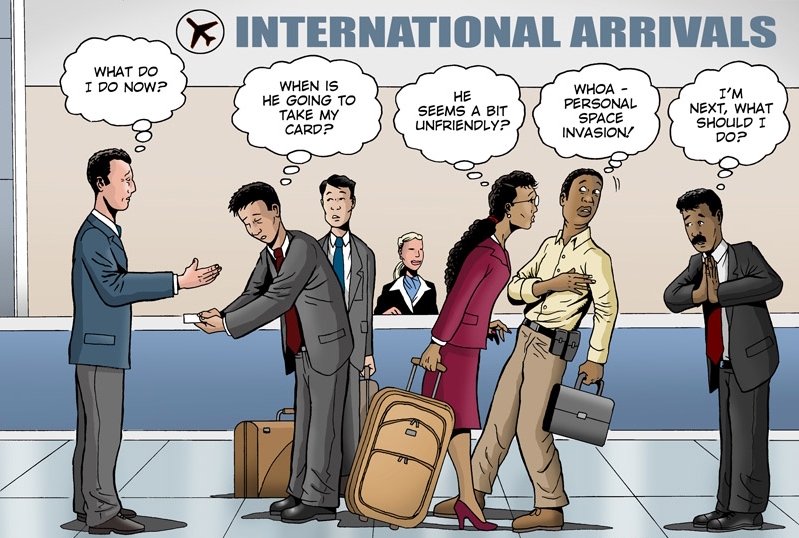
Communication styles differ across cultures. Some (like Australia) are blunt and direct. Others (like India) are very polite and indirect.

Some cultures (USA and others) like a lot of social talk before getting down to business. Others prefer business first.

Add to this differences over how to give feedback and disagreements in public and you have a potential minefield that will destroy trust in an instant.

We know that diversity has an upside and succeeding across borders is a business imperative.

So, how do you avoid destroying trust? My 10 tips:

First, learn about cultural differences. Ignorance is your own personal enemy. Too many global business leaders have little or no awareness of differing cultures. It is time to change by learning about these cultures.

Second, creating a strong starting point is essential – which means having a clear direction and an optimistic and compelling goal.

Third, ensure that at least some of the team members have been trained in cultural difference and can operate successfully across cultures.

Fourth, encouraging your team to be curious, adaptable, caring and friendly – leaders can do this by showing these characteristics themselves.

Fifth, be specifically aware of the potential explosive points of the different cultures represented in the team. This makes team leaders aware of what can go wrong, what can be misunderstood and how to involve and encourage team members who are from cultures that are reserved and indirect. If conflict does arise, address it straight away in a calm and friendly way.

Sixth, help the team understand the differences between cultures in terms of giving feedback – Australians on the team will generally be very direct, while Indians on the team will be more cautious and indirect with feedback. Talking these differences through can help both sides.

Seventh, based on the trust created by the above, team leaders can establish team standards and norms that everyone commits to sticking to. This will mean for several team members that they have to adapt from their cultural norm. If it is seen that the whole team is adapting, it becomes a shared and positive experience. If I am the only one in the team adapting, it is just no fun and will not last.

Eighth, watch out for cultural differences over starting times – this will cause simmering divisions in the team. Westerners will generally be on time and expect everyone else to be on time too. Other cultures will arrive late and be surprised that others are already there. Create an agreed standard for the starting time and everything else has a better chance of success.

Ninth, have a predictable and mutually agreed timetable for information sharing, such as zoom meetings, email information, one-on-one sessions and physical meetings. Some cultures do not respond well to variations and unpredictability – so try for stability but also allow for those urgent meetings that just need to occur.

Tenth, work hard on creating personal connections with every member of the team. This can take time and seems like a distraction to many leaders, but it is your strongest tool in reducing conflict in cross-cultural teams. Know what their non-work interests are and you will be surprised how well you connect.  

India a prime target for Aussie exports and investment – Austrade

Austrade’s Ashley Brosnan puts the case for Australian businesses to quickly get into India:

Australian businesses continue to see opportunities across a range of sectors including education, mining and resources, infrastructure, agri-food, and digital services. Thanks to the steady success of some great Australian brands, Australia is already a trusted supplier and investor.

However, India remains a challenging place do business. Expansion requires a high degree of market literacy and on-the-ground experience. Local partners help exporters and investors to navigate markets and regulation – and these partners can prove invaluable.

Despite this, the Government of India has signalled that India is ‘open for business’. It is emphasising investment and competitiveness as factors that will support the economy and encourage a return to growth.

The effects can be observed already in global rankings. India has moved up 63 places in the World Bank ‘ease of doing business’ rankings in recent years.

Austrade is helping Australian companies to explore India

The Australian Government is investing heavily in developing commercial links between Australia and India. The Australia-India Comprehensive Strategic Partnership agreed by Prime Ministers in June 2020 creates further opportunities for Australian business.

The Partnership seeks to build supply chain resilience between the two countries. It strengthens and diversifies trade and investment links with a focus on education, critical minerals and technology cooperation.

Today, Austrade posts across India are working intensively with Australian businesses to understand market, identify opportunities, make connections and help companies negotiate contracts.