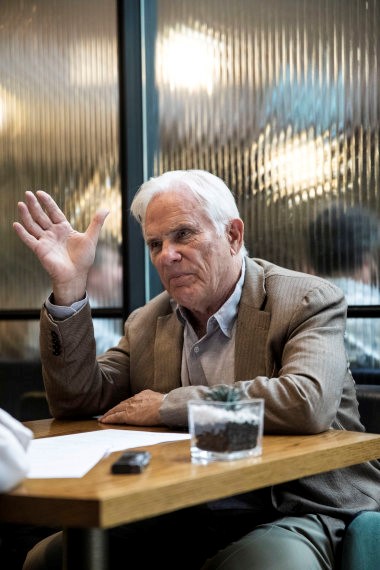
Former diplomat John McCarthy shows how Australia can gain respect in Asia

INTO INDIA recently called for an end to “Australia giving Asia a lecture”.

Now former diplomat John McCarthy has highlighted the importance of regaining respect in Asia.

In an interview in the Australian Financial Review, McCarthy said: “American power is diminishing, whichever way you look at it. Chinese power is increasing. We don’t like it. And we are not doing much about it. Part of the reason why is because there is no popular understanding of why it’s important. So, the political class are not giving it the huge amount of thought they should be.”

He is concerned that our political leaders publicly criticise China because they think the Australian electorate will support it.

More from McCarthy: “What we should be doing now is working quietly with other nations to present “a united, cogent front” against China’s excesses. Instead, our politicians are playing the punters, using foreign policy to win support at home.”

He made the key point that Japan, Vietnam and India all have much bigger problems with China than we have – border issues and very considerable policy differences that go back many years – yet they are very careful. “Occasionally they will make a strong criticism of China, but they hedge. They are cautious. They are measured,” he said.

When Australia made a loud and public call for the coronavirus investigation, McCarthy was well placed to judge the reaction in Asia.

“The immediate reaction of my Asian friends to those comments was ‘Why are you following Trump on this?’ When you are looking for respect, you don’t follow the words and actions of the most condemned American I can think of.”

So, what is ahead for Australia in Asia?

“I think over the longer term it can get back to a more mutually respectful, interest-based relationship. At some stage we will have to get the thing back into some sort of kilter. It is really totally wrong right now.”

“We don’t want to be seen by our regional friends as the voice at the table that could be an embarrassment – yet I think we are.”

Can we gain respect? McCarthy’s concluding remarks are a powerful lesson in diplomacy.

“The Chinese may not like us, but it would be nice if they respected our views,” he says. “I think partly because of the way we have said things, pronounced on things, they have put us in the same basket as Trump and that is seriously hurtful to Australia.”

He also says it’s not just China we need to worry about.

“If we want to contribute to the responses to the changes in the region, we don’t want to be seen by our regional friends as the voice at the table that could be an embarrassment – yet I think we are. Because of the way we sound off, the small country echoing Trump, the countries that are more measured in the way they deal with China are thinking, ‘Do we want to be closely associated in public with this maverick?'”

Right there is the challenge for Australia.
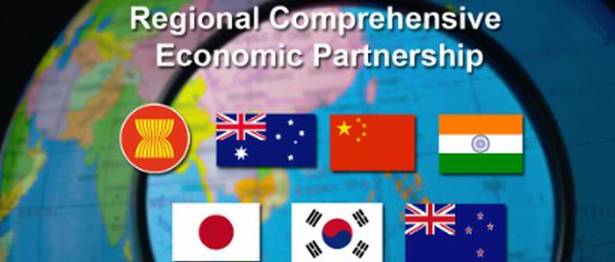
 

India offered flexibility on RCEP – the world’s biggest trading bloc

RCEP – the initials that describe potentially the world’s biggest trading bloc.

RCEP needs India back – it walked out during earlier negotiations.

To urge India back to the negotiations for the Regional Comprehensive Economic Partnership (RCEP), its 15 member countries have offered New Delhi the option of deferring commitments related to opening up its market.

Reports on the RCEP move come on the eve of online discussions between Indian PM Modi and Australian PM Morrison. I hope they can advance the talks.

ModiMorrisonSmile2

The move was reported in The Hindu Business Line.

According to some diplomatic sources, the deferral means that India does not need to worry about RCEP’s impact on the broadening of its trade deficit with China and other member countries when it signs the RCEP agreement.

India quit talks with the RCEP — which includes the 10-member ASEAN, China, Japan, Australia, South Korea and New Zealand — in November 2019, as it could not agree on crucial issues including the level of market opening being demanded by the members, especially China.

“If India agrees to the package then it can enjoy the benefits of all other aspects of the RCEP pact such as investments, services and intellectual property rights, without having to worry about the fate of industry and farmers,” the diplomat further said.

The RCEP, once completed, could be the largest trading bloc in the world, accounting for 45 per cent of the world’s population and 40 per cent of world trade.


Stop seeing India through the lens of someone else’s trade war

Things get a bit biased in the west, and right now China is seen by politicians as a negative – even if most western economies rely on China trade.

The mythology from politicians is that their country – including Australia – should look at “diversifying” trade targets away from China.

Thinking of India as an “alternative” to China is a bit disrespectful of India and setting up for failure. Seeing India for what it is – a really good opportunity but on a different scale to China – will lead to better commercial and political decisions.

Let’s not look at India through the lens of someone else’s “trade wars”.

tradewars

When it comes to the world, China is the big game. India and Indonesia are also in the game and worth playing with, but each needs to be respected for what it is.

Take the 2017 Foreign Policy White Paper which reported that growth in demand through to 2030 from China would be greater than that from the US, Japan, India and Indonesia combined. China’s rapidly expanding middle-class market is the big market.

ChinaIndia2

Even the Peter Varghese report on India’s potential showed that by 2035, Australia might export $45 billion of products and services to India. That would be great news! But compare that figure of $45 billion (and it’s 15 years off) with last year when Australia exported more than $160 billion to China.

When we remove the blinkers of politics, we can treat each country with respect and see the actual opportunity they represent.

We can open our eyes to a better view of trade – seeing it as part of the overall relationship of friendship with trading partners.

ModiMorrisonSmile2

Why Australia makes diplomatic errors in Asia – Article 4

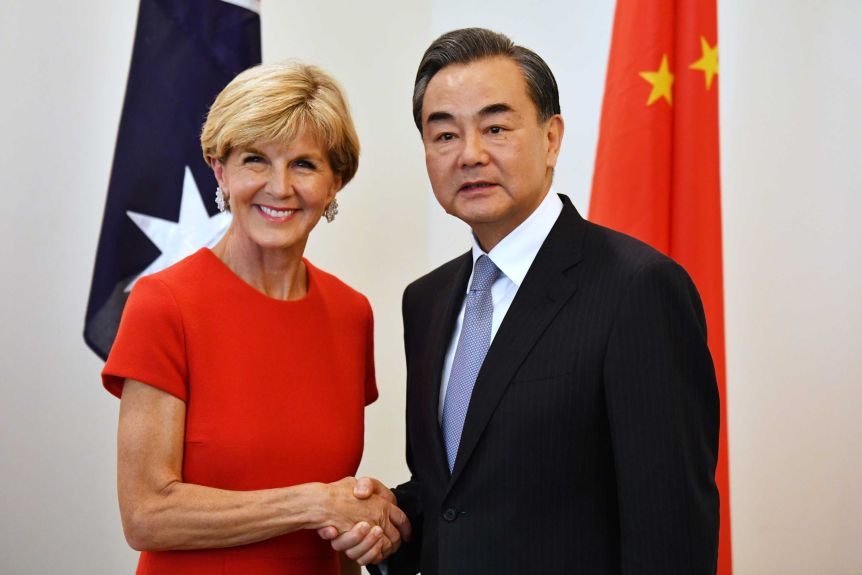
Pictured – Julie Bishop was an exceptional politician and Australia Foreign Minister – preferring behind the scenes discussion to public brawling

Australia is well represented in Asia by outstanding diplomats, but most are frustrated that too much of their time is spent repairing relationships after public outbursts from down under.

Today’s good diplomatic work leads into tomorrow’s diplomatic problem – one step forward two steps back diplomacy.

What is to be done to change Australia?

Short term, although the public is suspicious of “junkets” we need to send our politicians (and aspiring politicians) regularly to India and China, charged with building relationships that build through regular telephone follow up.

Being able to make that call across a range of levels is effective communication with cultures that are collective, like most of Asia. Every MP becomes a diplomat.

Also building on the relationships that exist through our very large Indian and Chinese diasporas would make sense, and we just need to sit down with them and work out how to leverage their networks.

India Students

Of course, it would also be good if our political leaders listened to their diplomatic advisors before rushing into public commentary – but that might be wishful thinking.

This is an entrenched problem and the solution is long term.

We need to produce a generation of culturally sensitive and adaptable students. Any move to increase student exchanges will pay off long term in relationships and cultural understanding. It has to occur at every level of education with creative ways for primary and secondary schools to make Asian connections.

Australia has pulled off the miracle of creating multicultural Australia and we accept the need for sensitivity and adaptability to other cultures at home – we now need to do the same abroad.

multicult

Finally, for leaders at all levels, please, no more “lecturing”. No Asian country welcomes a public lecture from the west – it is seen as not respecting the achievements of the Asian country and, given our history of colonial exploitation, it is just another instance of the west’s superiority complex. In other words, it’s a bit hard to take from their perspective.

The Father of the Indian Nation, Mahatma Gandhi, understood the Indian public and their sense of being exploited by the west. When asked what he thought of western culture he replied that it would be a good idea.

gandhi150

This is the fourth article on “Why Australia makes diplomatic errors in Asia”. 

Why Australia makes diplomatic errors in Asia – Article 3

Australians display a remarkable lack of curiosity about the culture of other countries.

Leading trade missions, I find few who really want to dig deep and understand the culture they are visiting. Most are either not interested or overly confident that good old Aussie friendship will get us through. It does not.

mateship

Friendship is overlaid by culture, so what we see as merely being friendly can give offence in other cultures.

Cultural training for businesses rarely goes beyond the “how to greet and exchange business cards” approach which is merely the tip of the cultural iceberg.

diplomacy3

By learning about cultures, including our own, we can work out effective ways to stay true to ourselves while adapting to others. But this is a long way off.

Look at the case of relationships with India – soon to become one of the world’s top five economies and a vital cog in Indian Ocean regional security.

First there was the ban on sales on uranium – but the problem was more than the ban, it was our outspoken and public defence of not selling them uranium until they complied with global protocols.

It came across as a public lecture. It could have been done so much better in private diplomacy.

Then there was the issue of violence against an Indian student in Australia – before any investigation, Australia very strongly and publicly denied that there was any racist element in the attack. Clearly this was a premature claim and it riled the Indians, with hints of a cover up.

Again, a public spat which should have been a behind closed doors discussion and then a considered and cautious public statement. In the end, the relationship and trust were repaired but it took a Prime Ministerial visit and a lot of time to achieve this.

Underneath all these diplomatic errors is lack of cultural sensitivity.

culture7

This is the third in a series on “Why Australia makes diplomatic errors in Asia”.

Why Australia makes diplomatic errors in Asia – Article 2

As a regular visitor to India I note that USA President Donald Trump seems to be respected and popular there – he is evaluated in India based on his economic record and not on his bloopers.

I have not heard him ridiculed over there. His high office makes ridicule unthinkable.

Not so in Australia – from day one he has been ridiculed at all levels. Of course, he has provided ample material for these critics. I use this as an example of differing world perspectives, not as a defence of President Trump.

tallpoppy2

We always bring the “tall poppy syndrome” into play when we look around the world and we relish seeing the mighty fall – or at least have their weaknesses exposed. How many Aussies realise that most of the world and certainly Asia does not have tall poppy syndrome and are mystified when it is explained to them?

This syndrome is not a good cultural basis for friendships in Asia – and combine that with an aggressive public mindset and you have poor diplomacy.

In reality Australia is one of the friendliest nations – just not in politics or diplomacy.

This is the second in a series on “Why Australia makes diplomatic errors in Asia”.

Why Australia makes diplomatic errors in Asia – Article 1

Australia’s biggest challenge in relating to Asia is culture.

OUR culture, not theirs.

We have seen it recently with China and our call for an inquiry into the origins of Covid19 – surely a topic for behind the scenes diplomacy but it became a public fight and still bubbles along.

diplomacy

In our culture “if I am right, I will speak up, name and shame”.

In Asian culture, if I am right, I might speak but only “around the bush” and in a way that “saves face” and preserves relationship.

This is no small difference – it is the gulf that divides us from reaching our potential in our region.

“Saving face” is a part of Asian culture – so pointing the finger when something has gone wrong is the last thing we should do – better outcomes come from cultural awareness.

diplomacy3

We all know the best diplomacy happens behind closed doors. The above might explain why so much of Australia’s diplomacy is conducted on the front page and the TV news.

This is the first in a series on “Why Australia makes diplomatic errors in Asia”.

Indian PM Modi announces A$400 billion stimulus policy

Indian prime Minister Narendra Modi has announced a A$400 billion stimulus package, one of the biggest in the world’s responses to Covid19.

The package is approximately 10% of India’s GDP.

The stimulus package is called “Atmanirbhar Bharat Abhiyaan” and aims to make India self reliant and to revive the stalled economy.

Details are still coming out but part of the program will be major reforms across areas such as land, labour and liquidity laws to underpin a boost to the “Make in India” campaign.

Other areas will likely include supply chain for agriculture, reforms to national taxation, simplification of some laws, build capable human resources and strengthening the financial system.

It is typical Modi – ambitious, unexpected in magnitude and investors are already reacting with enthusiasm.

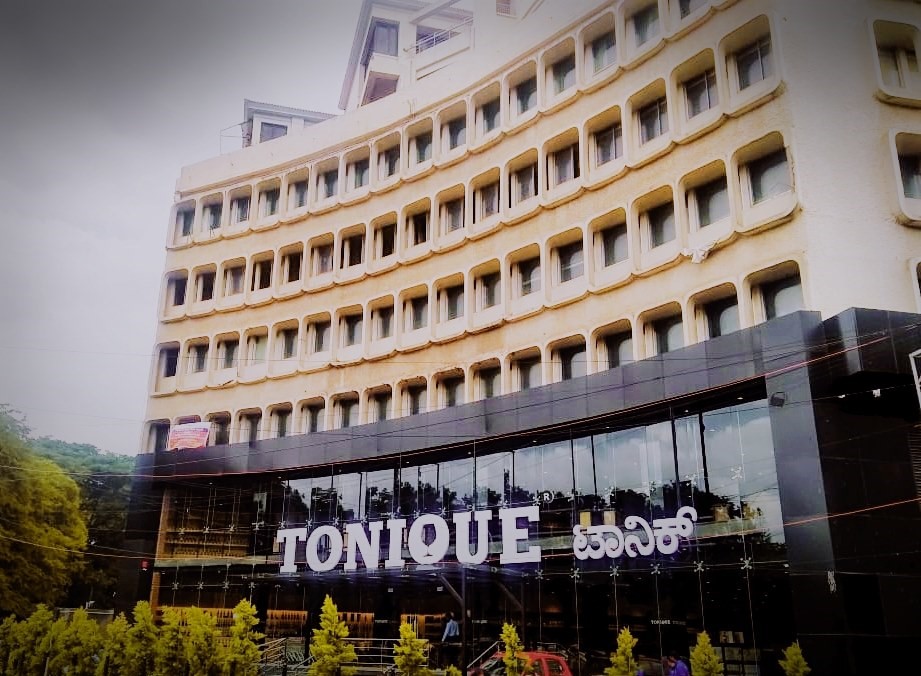
The emerging symbol of change in India – watch out for Tonique

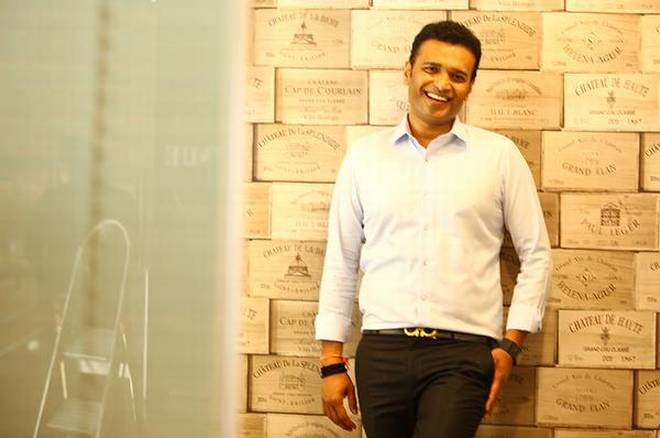
From the family coal mines to creating India’s largest and classiest liquor boutique, Anith Reddy (pictured below) and his new Tonique boutique liquor stores are a symbol of modern India with special attraction to middle class millennials.

Reddy has just opened his second store – Asia’s largest liquor boutique – in Bengaluru after earlier success in Hyderabad.

He has a store in Mumbai in mind but like the modern Indian entrepreneur, his ambitions are beyond India – he wants to open Tonique in New York.

tonique

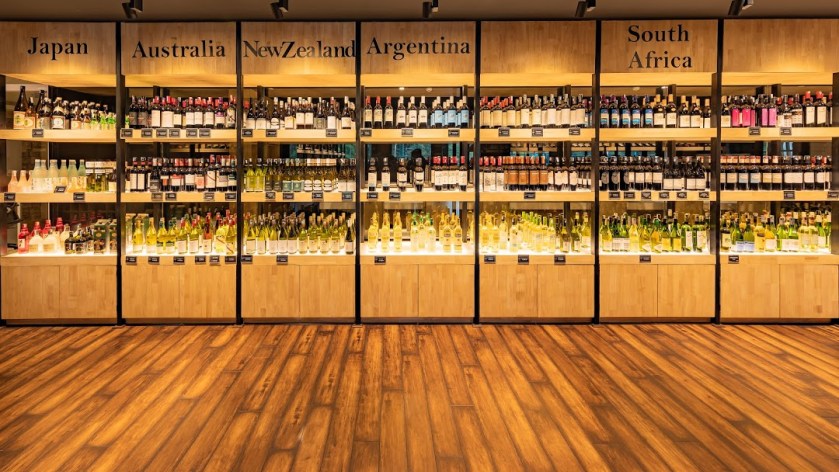
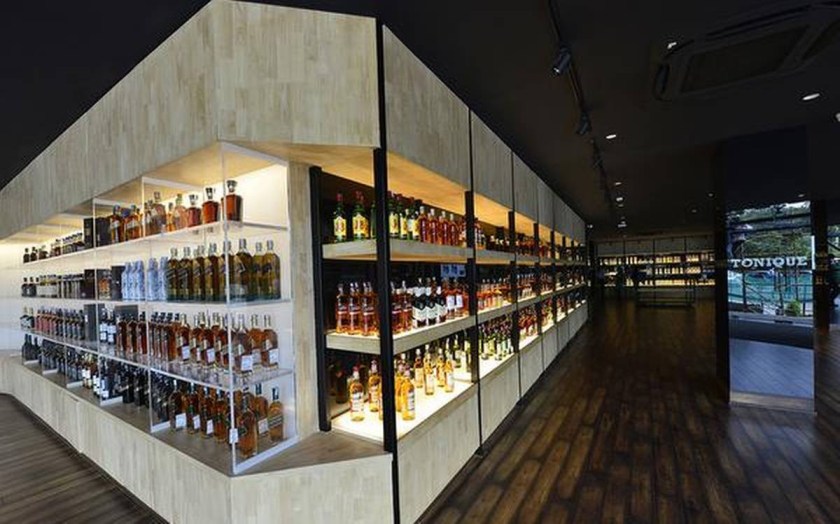
At 30,000 sq. ft, spread over two floors, Tonique is certainly large. Unlike other liquor supermarkets in Bengaluru, like Madhuloka, Drops Total Spirits and House of Spirits, it is stylishly appointed, with hardwood floors, aroma oil diffusers and subtle mood lighting. “We want to be the Louis Vuitton of the liquor industry,” says Tonique’s founder, Hyderabad-based entrepreneur Anith Reddy.

Reddy, 43, (pictured below) believes buying liquor should be an experience – millennials value “experience” way above possessions and status, so he is on target.

tonique2

In the store, buyers can interact with sommeliers and brewmasters. The store’s top floor, entirely dedicated to wine (1,000 different labels, including champagne), also houses a 600 sq. ft wine-tasting room that will host events, a bakery that will serve fresh liqueur chocolates and other delicacies, and a cheese section.

Bengaluru is a smart choice – the city’s social life and drinking habits set it apart from the rest of the cities in India. Bangalore has also been a favourite amongst many international brands.

And social behaviour is changing – now 60% of the visitors to Tonique are women, compared to an expectation of around 30%.

tonique3

Apart from purchasing wine bottles to stock up your wine collection, you can also drink your wine in-store.

The consumer power of India’s millennials is just beginning to have impact and stores like Tonique are moving with this generation. There are 450 million millennials in India and those with money to spend are looking for that special brand. Tonique is showing the way!

Flipkart and the amazing growth of Indian startups

Year 2007 saw a landmark event in the history of Indian enterprise – one of many events that mean you should change your strategy for India market entry.

In October 2007, two young Amazon executives – Sachin and Binny Bansal (pictured above) set up an e-commerce website they called Flipkart, India’s most iconic startup story till date.

Flipkart was valued at US$ 21 billion when it was eventually acquired by Walmart in 2018.

Flipkart

The success of the Bansals also inspired many a startup journey in this period. Flipkart was obviously not an isolated event.

More top-notch professionals started sensing lucrative opportunities, leading by example and setting up their own ventures in the 1990’s.  Sanjeev Bikhchandani, Founder & Executive Vice Chairman, Info Edge India Ltd (of Naukri.com fame), and VSS Mani, founder of Justdial, were some notable examples.

Deep Kalra, (pictured below) Founder, Chairman and Group CEO, MakeMyTrip.com, got acquainted with the potential of the internet as an avenue for distribution while working at GE Capital and decided to set up the popular travel portal.

makemytrip

The most significant game changer is the manner in which mobile phones and more specifically smartphones have penetrated the Indian market. The direct implication of this has been that a large majority of Indians have, or are about to access the internet for the first time on their mobile phones.

A report by Kantar-IMRB in March 2019 estimated India’s internet users at 566 million, projected to reach 627 million by the end of the year.

millennialshopping

Around 97% of India’s netizens use mobile as one of the mediums.

This has created new avenues of growth and spurred startups like InMobi, Ola, Zomato, Practo, UrbanClap, BigBasket, Pepperfry and more.

These startups have been fueled by several other factors – increasing affinity towards entrepreneurship, potential of the Indian market, globalization and the resulting interface with other ecosystems (particularly Silicon Valley), rising confidence towards startup funding and facilitating policies.

According to the NASSCOMZinnov Startup Report 2019, the ecosystem added around 1,300 startups in 2019, taking the total to 8,900 tech startups.

India ranks third both in the number of startups and unicorns. The aggregation space has definitely been the beehive for startup innovation. The top ten unicorns of India as on date include 6 aggregators, two fintech firms and one edtech firm.

Investments by VCs have grown by four times during the period, and number of deals increased from 130 in 2013 to 270 in 2017.

India needs more stories like Delhivery (logistics), Vortex (solar ATMs) and Ather Energy (electric mobility).

vortex

A welcome trend is that of well-established corporates engaging with startups to bring greater innovative capabilities in their own DNA. This could be pivotal for India as it seeks to move ahead of the curve in areas like AI and machine learning.

Meantime China is part of this Indian story.

Chinese tech giants Alibaba and Tencent, early-stage investors Hillhouse Capital and CDH Investments, large corporations such as Meituan and Fosun, and smartphone makers Xiaomi and Oppo — a little over 100 Chinese firms have made investments in Indian startups.

Chinese VCs have invested over USD8 billion and hold large stakes in a number of Indian startups, including unicorns and “soonicorns”.

Watch this space…

Thanks to the Trade Promotion Council of India for information for this blog.