India economy has weathered the pandemic and set for growth – ASK Capital Management report

ASK Capital Management is a Singapore based entity with a focus on managing and advising India centric investments for institutional and family office clients. Their latest report shows how the Indian economy has weathered the pandemic and is set for growth:

This report relates to ASK India Opportunities Fund – Fund 1

The rapid rise in COVID cases due to the new Omicron variant, hawkish tone by major Central Banks around the world and persistent inflation contributed to a volatile December for the global equity markets. Despite this the markets ended on a positive note with most markets registering positive returns in the month. India was amongst the better performing markets with benchmark BSE500 ending up 3.2% in USD terms while the Fund was up 2.7%, net of fees in December. For the year 2021, the Fund returned 29.7%, net of fees compared to 27.6% for BSE500.

After another year spent in the shadow of the COVID, we begin 2022 with a new variant of the virus disrupting resumption of normal life. This, along with inflationary pressures and a move away from high liquidity and accommodative stance of Central Banks are the biggest risks to global economy for the year. While the new variant of the virus appears less fatal, the disruption means global supply chain issues will take longer to resolve. Tighter liquidity and end of cheap money means investors will have to temper expectations of returns in the new year and bottom-up stock picking will become crucial differentiator.

The Indian economy has weathered the pandemic induced slowdown well due to the proactive and effective steps taken by the RBI and the Government. The economy is above pre-COIVD levels in size and expected to grow around 9% in FY22 and 7.5%-7.9% in FY2023 by various estimates, one of the highest growing major economies in the world. As described in the past, lower debt on corporate balance sheets, controlled NPAs in banking sector and Government policies such as “Make In India” and Production Linked Incentives (PLIs) for various sectors should revive a domestic capex cycle.

While the recovery in India has been strong, it has also been uneven with the rural segment affected more from the Delta variant in Q1FY22. This should normalise over the course of the year and aid in demand recovery. Similarly, hiring activity continues to remain strong which should support demand.

As commodity prices and inflation stabilise, companies should report increase in margins over the coming quarters as prices increases are passed on to consumers. Thus, companies with higher pricing power and better cost controls should be able to deliver superior earnings growth with likely increase in market share. This has historically been the case for our portfolio companies, and we see no reason that this cannot be the case again. Our expectation is for the portfolio to deliver an average earnings CAGR of 26% over the next 3 years.

During the month we exited from Pidilite Industries and added Avenue SuperMart to the portfolio. We believe Avenue SuperMart is a well-oiled business model in a large opportunity landscape with a strong focus on low procurement and operating costs. Its store ownership model, right store size and low supply chain cost with auto replenishments help it to maintain low operating cost to achieve the key pillar of its success – everyday low cost and everyday low price. In a predominantly food and grocery business (52% revenue contribution) with wafer-thin margins (15% gross margin), the company is able to offer everyday low pricing, unlike peers that offer discounts on select days in a week or month, creating a competitive edge.

Contact:

Nikhil Iyer, CFA, Head of Institutional Business, APAC

ASK Capital Management Pte Ltd

m: +65 83800064 EMAIL nikhil.iyer@ask-capital.com

https://www.askfinancials.com/

How the QUAD can help Australia in trade talks with India

At last night’s meeting in Melbourne of the Australian Institute of International Affairs, Trade Minister Dan Tehan MP made reference to how the QUAD could be useful for future trade agreements.

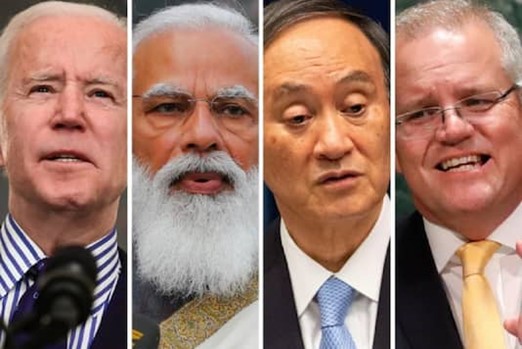
The QUAD includes Australia, India, Japan and the USA. It focuses on supply chains and “independent and free region” – that is, a buffer to China.

But it might be a big help on trade.

India wants to use the QUAD as it steps up global trade relations.

And Australia already has FTA deals with the other two QUAD parties – Japan and USA.

The Quad is a diplomatic network of four countries committed to supporting an open, inclusive and resilient region. It complements our other bilateral, regional and multilateral cooperation, including with ASEAN.

The Quad aims to respond to the defining challenges of our time, including COVID-19 vaccines, critical and emerging technology, cyber security, climate change, infrastructure, maritime security, countering disinformation, counter-terrorism, and humanitarian assistance and disaster relief.

Will India and Australia achieve “early harvest” trade deals and lay groundwork for a CECA?

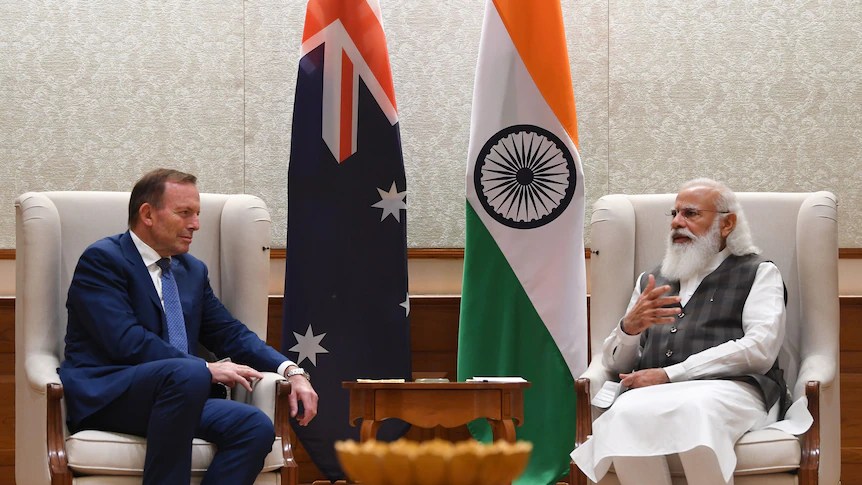
Former PM Tony Abbott was instrumental in getting trade talks going again

INTO INDIA believes the two big issues facing Australia are allowing greater people movement from India to Australia, and directing more of our massive A$ 2.3 trillion pension fund sector that could be a regular source of investments in the Indian infrastructure and disinvestment story.

The key for Australia is to see India as more than a “quick sale” – Indian negotiators will be looking to push the two countries to become partners, adopting policies that streamline physical movement, including, on-arrival visas, multiple entry long term business visas, etc.

From India’s perspective, it will want to ensure that trade deficits in the post agreement period do not widen. And two, non-tariff barriers and differences in standards or recognition of qualifications do not offset higher access through the trade deal. As an Indian report recently wrote: “This is the crux of the matter.”

In the larger CECA agreement, investments from Australia will play a big role in the growth of bilateral trade between the two countries, because the growth trajectory of India will create new opportunities for Australian companies, including in areas like water management and up in future, for which Australia can be a long term reliable supplier.

In the early harvest agreement, Australia wants services included with goods – an area where India has not performed well in earlier trade deals such as with ASEAN.

Australia however just needs to accept the sensitivity of the agribusiness sector in India – the deal will fall over if Australia demands substantially lower tariffs across the board for fruits, dairy, agriculture and processed food items.

INTO INDIA RECOMMENDS Australia narrow its ambitions down to selected niche items in the agriculture sector. Finding ways that Australian expertise, technology innovation and scale can actually transform Indian agriculture sector towards value addition would give Australia a big advantage.

Finally, you can expect India could show flexibility in tariff lines related to commodities and minerals, which are needed for its growing economy and the e-mobility program. In turn, Australia could be accommodative in tariff lines related to refined petroleum, medicaments, railway vehicles, gems and jewellery, auto components and made up textile items, which it imports in any case from countries around the world, in addition to India.

Thanks to Confederation of Indian Industry (CII), in collaboration with KPMG and led by Amb Anil Wadhwa, who is Former Secretary (East), Ministry of External Affairs, Government of India.

Emerging Markets Guru Mark Mobius – India a 50-year rally

Emerging Markets guru Mark Mobius is bullish on India

Thanks to my friend Mugunthan Siva, Managing Director, India Avenue Investment Management for spotting this one!

“India is on a 50-year rally,” even when there are quick bouts of bear markets, veteran Emerging Markets investor Mark Mobius mentioned in an interview on Bloomberg Tv. “India is possibly the place China was once 10 years in the past,” he said.

A man of his word, Mark Mobius has allotted nearly half of his emerging-markets fund to India and Taiwan to assist offset a slide in China shares that has dragged down returns from creating nations as an entire.

Mobius’ bullish view on India clashes with these of analysts at Morgan Stanley and Nomura Holdings Inc, who’ve downgraded the inventory market after the benchmark S&P BSE Sensex Index greater than doubled from a March 2020 low.

“Individuals say emerging-markets look unhealthy as a result of China is dragging down the index, however they’ve got to have a look at different areas similar to India which can be going up,” mentioned Mobius, who created Mobius Capital Companions LLP after a profession at Franklin Templeton Investments.

The Mobius Rising Markets Fund has a mixed 45% of its portfolio allotted to India and Taiwan, with tech {hardware} and software program the largest holdings in these markets. Indian software program companies supplier Persistent Techniques Ltd. and eMemory Know-how Inc, a Taiwanese chip know-how supplier, have been amongst its largest stakes as of end-September. The shares have each greater than doubled this year.

India chasing battery manufacturing

India plans to pitch to companies such as Tesla, Samsung and LG Energy to encourage them to invest in manufacturing batteries within the country, as it looks to establish a domestic supply chain for clean transport.

India will host five roadshows starting next month in countries including the United States, Germany, France, South Korea and Japan to convince battery manufacturers to set up local production.

Tesla, LG Energy and Samsung are among those who will be invited to attend, although a delegate list has not yet been confirmed.

Other companies targeted include Northvolt, Panasonic and Toshiba. The move is a part of USD 2.4 billion incentive program to boost battery manufacturing for which the government has begun inviting investment proposals from companies.

8 things we need to know about India

Confident young Indians like these are driving new entrepreneurial spirit

CAUTION – generalisations are just that, and you will almost always encounter those who do not fit in this list. This is offered to assist those visiting India for business, education or tourism.

1. Successful and confident

Economic success has restored Indian confidence. Indian entrepreneurs are now recognized around the world and there is a national expectation that the next Bill Gates will be an Indian. This entrepreneurial spirit permeates the nation (most dream of becoming entrepreneurs) which is now confident.

2. Never forget rural people

Indian business and political leaders may live the urban lifestyles, but they do not forget the small towns and villages at the centre of rural life – and it’s not just the politicians with an eye for votes, with major corporates such as Infosys pouring resources and funding into village developments.

3. Avoid pointing the finger

Indians become instantly passionate when challenged on subjects like their high tariffs, especially if the challenge comes from the west. The message is, point the finger at India and you can expect a robust response.

4. Oceans of patience

Indians have oceans of patience which can drive westerners crazy, but it gives them a special strength in negotiations. This patience is derived from deeply held spiritual views such as impermanence – Indians are constantly reminded of the impermanence of this life, everything changes, and they can wait when often we cannot. Who has the advantage in this situation?

5. Not just an IT miracle

Do not be fooled with the view that the Indian economic miracle is just driven by call centres and IT. Important as these are, look also at insurance, energy, retail, clean technology, manufacturing, pharmaceuticals and even agriculture as areas where efficiency is producing startling results.

6. Not especially “Asian”

While India feels great about the success of “Asia”, in many ways it does not feel particularly “Asian”. First and foremost, Indians feel Indian, and to them that is vastly more relevant than being geographically part of Asia.

7. Remember the “Father of the Nation”

Whether dealing with the young or the old, in India never forget the “Father of the Nation”, Mahatma Gandhi.

8. Equity up there with democracy

Partly because of Gandhi, Indian leaders are more concerned with equity than with spreading democracy around the world – and cannot understand the enthusiasm of the USA and its allies to champion democracy in unlikely locations.

Japan investing in India – role model for Australia?

Japanese firm SoftBank is leading investment into Indian IT and startups

Japanese investment in the Indian IT and start-up ecosystem has grown fourfold since 2016, according to a report by the National Association of Software and Services Companies (NASSCOM), in association with Nomura Research Institute (NRI).

It estimated the investment is helping create 102,000 additional jobs.

Japanese investment reached US$ 9.2 billion, mostly by large investors like Softbank.

Fintech, healthcare and mobility are the top sectors drawing investment from multiple Japanese investors followed by e-commerce, enterprise, and real estate.

Japanese policymakers see India as a trustworthy partner for accelerating Japan’s digital transformation and began investing strongly in Indian tech start-ups since 2016.

Which raises the question for Australia – can India become a favoured investment location as Aussie companies strive for next level transformation?

How is India travelling? Some developments for investors and exporters

Some developments for investors and exporters

  • One billion vaccines: The cumulative coronavirus (Covid-19) vaccine doses administered across the country surpassed the 1-billion milestone, today. Over 700 million people have been administered the first dose of Covid-19 vaccine, while 290 million have been fully vaccinated, according to the government’s CoWin website. The government has set a target to vaccinate all adults by the end of 2021.
  • Moody’s banking rating: Moody’s Investors Service has upgraded the outlook for the Indian banking system to ‘stable’ from ‘negative’. It believes that the deterioration of asset quality since the onset of Covid-19 pandemic has been moderate and an improving operating environment will support asset quality. Moody’s expects asset quality to further improve, leading to decline in credit costs, as economic activity normalises. The rating agency has projected India’s real GDP growth for 2021-22 at 9.3 per cent.
  • Tax targets overshoot: The Centre is likely to exceed the budgeted tax collection target of Rs.22.2 trillion for the current fiscal year by Rs.2.5 trillion, according to experts. This is driven by better indirect tax mop-up, compliance measures and recovery in most sectors following the second wave of the pandemic. Personal income and corporate tax collections grew by 74 per cent to Rs.5.7 trillion in the first half of the current financial year, mainly due to advance tax and tax deduction at source (TDS) payments.
  • Power deficit: The power shortage situation in the country is improving as per the data released by the Central Electricity Authority. Power shortage came down to 1,456 MW on 17 October 2021 from 2,714 MW a week back. Peak power shortage stood at a massive 11,626 MW on 7 October 2021. According to power sector experts, demand has moderated due to the onset of autumn and heavy rains in many parts of the country. Moreover, an improvement in coal supplies would further bring down the power deficit.
  • Data consumption: India has the highest mobile data consumption in the world which is about 11 to 12 GB per user a month. The country is adding as much as 25 million new smartphone users every quarter making it a flourishing ground to launch digital initiatives, Ram Sewak Sharma, chief executive of the National Health Authority of India said. By 2025, India’s data consumption is likely to be doubled to nearly 25 GB per person a month, driven by affordable mobile broadband services and changing video viewing habits, Swedish gear maker Ericsson said.
  • E-Commerce sales: The share of e-commerce in the overall sales pie has touched new highs in the first fortnight of October 2021, according to market trackers and companies. Several categories, including smartphones, consumer electronics, apparel and daily necessities are growing faster than last year. The share of smartphone sales online surged to around 60 per cent in the first fortnight of Navratri-Dussehra from around 55 per cent, early estimates by market tracker Counterpoint Research showed. Televisions grew to 40 per cent from 31 per cent in the same period last year, while refrigerators, air-conditioners, washing machines and kitchen appliances rose to 9-10 per cent from 6-8 per cent. Market research firm RedSeer Consulting said the overall online shopper base has grown by around 20 per cent this festive season compared to last year, with tier II markets contributing to almost 61 per cent of all shoppers
  • Foreign investment: India witnessed net foreign investment inflows of USD 8.3 billion in August 2021, as compared to net inflows of USD 649 million in the preceding month. Net inflows of foreign direct investment (FDI) rose to USD 5 billion from nearly USD 3 billion in July 2021. Net inflows of foreign portfolio investment (FPI) worth USD 3.3 billion were seen in August 2021, after witnessing net outflows of USD 1.6 billion in July 2021.

Thanks to ASK Capital Management Pte Ltd for the above information.

Don’t get too excited about the new India and Australia talks on CECA

The relationship between these two might hold the key to the current CECA talks

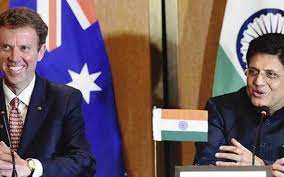
INTO INDIA is optimistic that some deals will emerge from the current round of talks on the Australia-India Comprehensive Economic Cooperation Agreement (CECA) – spearheaded by Australian Trade, Tourism and Investment Minister Dan Tehan and, Commerce and Industry Minister Piyush Goyal.

But a look at Australia’s stance and recent Indian trade policy actions is not reassuring.

India withdrew from the negotiations for the Regional Comprehensive Economic Partnership (RCEP); it renegotiated a number of its free trade agreements; it terminated most of its bilateral investment agreements; and it has failed to agree a mini-economic deal with the United States. Not to mention India’s stance in the World Trade Organisation which has been unchanged.

At the domestic level, India has imposed prohibitive tariffs in several sectors and introduced a range of incentives to attract reshoring and investment.

How does Australia’s record stack up? Eager to send more resources and agriculture to India, Australia has been reluctant to allow great services access and people movement from India. This is a thorny issue.

So our word is CAUTION – don’t get your hopes up too high – there has been little progress to show after ten years of negotiations.

So, why be optimistic now?

First, Australian professional trade negotiations have loosened up on what was a cornerstone article of faith for them – preferring the “single undertaking” negotiating model – in which nothing is agreed until everything is agreed. Now even they are talking about “early harvest” deals. But can they change their spots? The Morrison government, desperate for a trade win, hopes they can.

Second, India has direct concerns about China and is nervous about the US-China rivalry. It has sensibly decided to build up strategic and economic partnerships as a hedge. There is much talk in India about potentially good trade outcomes arising from China’s “trade war” on Australia.

But the stalemate is always market access.

Australia wants agriculture access – India is hesitant because this sector employs 40% of India’s population. India wants liberalisation of the services “mode 4”, specifically the short-term entry of business persons. India has argued that Australia’s short term business visitor regime constitutes a barrier to India’s services exports. Australia has pushed back on these demands, reflecting concerns at the potential impact on the labour market. In a nutshell – one big stalemate!

Overall, India is not a fan of Free Trade Agreements, seeing most of them widening its trade deficit. That is, India feels the other party benefits most. It has negotiated on five FTA’s over the last 11 years and only one has been signed.

True, India is looking eager, having revived trade talks with the European Union, United Kingdom, United States and Australia. But is it all just a lot of talk?

Remember, India is primarily after foreign investment, exports, making domestic industries competitive and incentivise other countries to manufacture in India. Can Australia play a role in any of this?

The key for Australia and India is to somehow align Australia’s export goals with India’s investment and new exports priorities.

Australia could partner India on technology, innovation and R&D.

Australian companies could boost investment into India – and there are good economic and government subsidy reasons to do so.

Australia has one big advantage here – critical minerals. India has high sustainable energy and e-mobility goals and will need these minerals.

Add to that, Australia has growing expertise in the hydrogen industry, while India has a National Hydrogen Mission. There are good R&D opportunities for both.

While India is the “pharmacy of the world”, Australia is a leader in biotech R&D. Biotech in dairy, marine and more could provide trade deal motivation.

But finally, there is the big blockage.

India wants to increase skill migration to Australia. Australia has opposed it. Most of the talks in the last decade have faltered at this point.

What has changed?

Border closures have left Australian businesses struggling to fill roles. Australia needs an ‘early harvest deal’ to attract skilled professionals from India.

So, despite the gloom of the past, there are reasons to have some optimism for these talks on CECA.

Watch this space.

India’s Economy “Picking up Steam” Says S&P

Australian exporters – take another look at India

S&P Global Ratings said that after stalling post the second wave of the Covid pandemic, India retained the country’s BBB-sovereign rating with a stable outlook.

INTO INDIA has urged Australian firms looking for new markets to take another close look at opportunities in India.

S&P said that growth will improve over the July-September quarter, pointing to high-frequency indicators such as goods and services tax receipts and motor vehicle sales. Record forex reserves, and India emerging as an external creditor to the world has also supported the rating and stable outlook, S&P said.

Data released in July showed India’s economy expanded 20.1% year-on-year in the April-June quarter on a low base though sequentially it was down 16.9% over the previous quarter. 

S&P anticipates another Covid wave in India, but with rising vaccination coverage, it expects this to be less severe both in terms of health and economic impact. India’s vaccinations have crossed 700 million and in the first week of September, the daily average has been over 7.6 million doses.

Source THE INDIA EXPERT blog of Gunjan Bagla

CONCLUSION – INTO INDIA asks exporters and investors – if you are not now heavily committed to India, now is the time to take action.