India releases its first ever “Australia Economic Strategy” as the two countries move closer

The launch by India on 18 December of its Australia Economic Strategy (AES) – the first of its kind for India – could be an exciting step along the way to increased trade. As KPMG has expressed it: “It demonstrates India’s intent to fast-track the relationship with Australia in a post-pandemic world.” Exciting.

My view is that as Australia and India move closer together, opportunities will emerge for the two to create and lead an “Indian Ocean Countries Group” – a pathway to peace and prosperity in our region.

India and Australia could lead a prosperous and peaceful Indian Ocean Region

The AES is India’s response to Australia’s An India Economic Strategy to 2035 (IES), launched two years ago.

The AES adds to the Comprehensive Strategic Partnership (CSP) announced by Prime Ministers Morrison and Modi in June 2020 – and both are real evidence that India and Australia are moving closer together.

Three pillars of India’s strategy

The AES is based on three pillars: resources; technology & services; and research & innovations.

Five key sectors

According to KPMG there are five key sectors:

The first is Indian investment in Australia’s mining and resources sector, especially lithium, cobalt and nickel, important for a rapidly growing e-vehicle market.

Second is Indian investment in renewable energy both in the establishment & operation of solar farms as well as the supply of EPC services with Sterling Wilson Solar Limited being a case in point.

Third is health and pharmaceuticals. Collaboration in clinical trials, cancer research, medical & health-tech and training, knowledge transfer and sharing of Australian best practices in hospital administration and patient care.

Fourth is investment in Australia’s agribusiness sector including farmlands and Australian food processing capabilities. There is also significant potential for knowledge sharing and collaboration in best practices for dairy processing.

The fifth is software & information technology. India’s tech giants already have sizeable operations in Australia with further organic and inorganic growth on the cards and an opportunity to extend their business portfolio into government accounts. Further, as Australia looks to build up internal capability and capacity, there is opportunity for the tech giants to set-up centres of excellence or innovation hubs in strategically important areas such as cyber security, cloud and digital, for Australia and the wider ASPAC region.

Make in India program

The new AES, and IES and the wider strategic partnership, all serve to complement India’s flagship Make in India program, which makes India a credible alternative for lower cost manufacturing for Australian companies as they look to diversify business and supply chain risk in a post pandemic world.

Conclusion

Close relations have historically been built on a combination of defence/strategic alliances, mutual investment and trade.

For Australia and India, the future is looking bright in all three areas.

6 steps to bring India and Australia closer in 2021

6 steps to strong India-Australia ties in 2021

  1. Australian Prime Minister Scott Morrison and Indian Prime Minister Narendra Modi get on well – they can turn that into specific outcomes by continuing the close dialogue.
  2. PM Modi is a politician who likes to think outside the square, so innovative ideas from Australia will be welcome in Delhi.
  3. Two-way trade is at around A$30 billion and can grow – aiming for slow and steady rather than dramatic boosts will work well for both sides.
  4. Food security and food quality provide collaboration opportunities for both countries. India offers the advantage of diversifying Australian global agricultural exports away from wheat and beef and towards vegetables and fruit.
  5. More interaction at all levels of politics (State and Federal, Ministers and Members) will help because India is a complicated political puzzle with Modi pushing more decision making down to state level and competition between states is increasing – and there are 29 of those!
  6. Creatively looking for ways to collaborate will work well and move our trade from “transactional” to “relationship”.

With these steps we will see strong India-Australia ties in 2021.

How did India miss out on being part of the world’s biggest trading bloc?

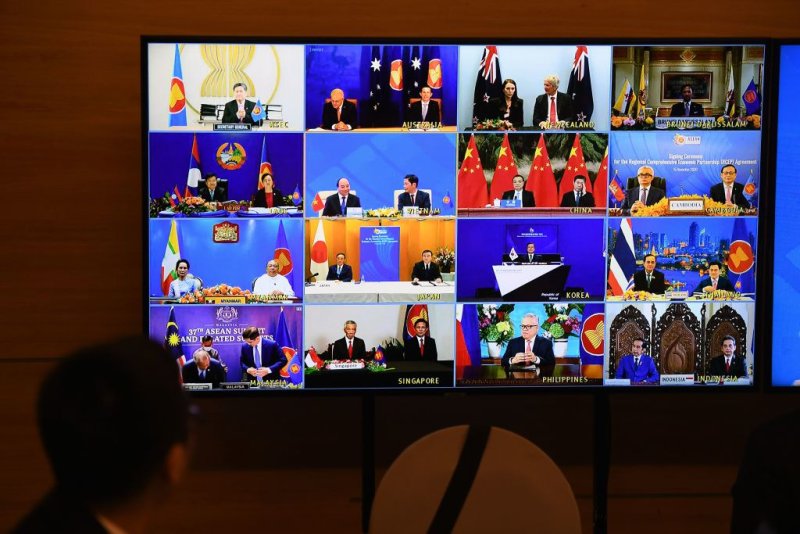
India is missing from the world’s biggest trade bloc which has just been formed – 15 countries representing 2.2 billion people have signed on to a Regional Comprehensive Economic Partnership (RCEP). Talks on RCEP began in 2012 and it has now created a bloc which accounts for about one third of the world economy.

This is a massive new initiative for global trade.

India and the USA have missed out – India because of concerns for farmers produce, and the USA because President Trump pulled the pin on the concept.

India is the mystery case in the region because opting out of RCEP is not going to help its economy. Concerns over lower tariffs hurting local producers won the day and India moved out of the deal.

Did India also withdraw because the relations between India and China are sour, with border disputes and other issues on the rise?

But India could ultimately join RCEP – the doors for India to join the bloc will remain open in future, according to the participant countries.

Otherwise, India looks like being one of the two big losers in this move.

The RCEP group is composed of the 10 Southeast Asian (ASEAN) countries along with China, South Korea, Japan, New Zealand and Australia.

Vietnam “hosted” the final deal online and said the deal will help to lower trade tariffs between the participant countries, over time, and is less comprehensive than the Trans-Pacific Partnership (TPP).

“RCEP will soon be ratified by signatory countries and take effect, contributing to the post-COVID pandemic economic recovery,” said Nguyen Xuan Phuc, prime minister of Vietnam.

The actual legacy of President Donald Trump’s “America First” withdrawal from multilateralism and deals like TPP and RCEP could be a declining US role in world trade.

In contrast, China could be the big winner – experts say that this pact is a testament of China’s strong influence in the region.

The RCEP will lower or eliminate tariffs on various goods and services, although the scope of the agreement—essentially an extension of free trade under existing frameworks—is limited.

So, what is the biggest benefit of RCEP? The pact will create so-called rules of origin, which make it easier for companies to set up supply chains spanning multiple countries.

This is super important – it will be much easier to manufacture and sell goods in the region once RCEP comes into force.

India and Australia have a trade relationship that can grow

A great source of information about Asia is ASIALINK here in Australia – and for those interested in India their INDIA STARTER PACK is valuable.

Australia’s economic relationship with India has expanded significantly in recent years – particularly exports of minerals and energy, as well as our provision of education services to tens of thousands of Indian students.

We now have the basis to do more. It will take some marketing creativity and a realisation that brand “Australia” goes down well in India.

Two-way goods and services trade between Australia and India totalled AUD 27.4 billion in 2017. Major Australian exports to India included coal (AUD 9.2 billion), education-related travel (AUD 3.4 billion) and vegetables (AUD 1.38 billion). Our main imports from India were refined petroleum (AUD 1.6 billion), medicines (AUD 335 million), pearls and gems (AUD 274 million) railway vehicles (AUD 199 million). 

The total value of Australian goods exports to India for 2017 was AUD 15.7 billion, making it our fifth-largest goods export market. We exported an additional AUD 4.4 billion in services to India, a figure primarily made up of education-related travel services and other personal travel.

Time to review your India market entry strategy? Let’s talk.

Indian PM Modi and Australian PM Morrison could create “Indian Ocean Food Bowl” – India exports up

Not many in the west think of India as a food exporter. But it is – and the numbers are going up.

This blog Into India has called for greater collaboration between India and Australia to become the “food bowls of the Indian Ocean Region”. The combination of the know-how in both countries could produce major agribusiness innovations, especially in horticulture and hydroponics.

Indian exports of essential agricultural commodities for the cumulative period of April-September, 2020 has increased by 43.4% to US$ 7.34 billion.

The major commodity groups doing well in export include Groundnut (35%), Refined Sugar (104%), wheat (206%), Basmati Rice (13%) and Non-Basmati Rice (105%).

It’s a great outcome for the Modi Government.

To boost agri exports, the Government created an Agriculture Export Policy, 2018 which, among other things, provides for a cluster-based approach for export-centric farming of cash crops like fruits, vegetables, spices, etc. It is working!

Recently, the Government has also announced an Agri Infra Fund of US$ 13.70 billion to improve the agri business environment – so more export growth is on the way.

E-commerce and wellness trends spark new opportunities in South Asia, says Austrade

The health & wellness trend

Since the onset of the coronavirus pandemic, consumers in South Asia have focused on boosting their health and immunity. This is a sector where Australian companies have already made commercial inroads — and more opportunities will arise. Australia’s iconic wellness brand, Swisse, reacted quickly and is now selling across 10 major e-commerce platforms in India.

Indian consumers are highly receptive to Australian wellness products. Consumers appreciate our clean, green and reliable manufacturing standards, and these high standards confer an automatic brand premium on Australian wellness products.

Similarly, there is increased demand across South Asia for products that are perceived to boost people’s immune system. In India and Bangladesh this applies to fresh produce, and in particular to Manuka honey. The demand for Australian citrus in Bangladesh has remained high this year, even during the local harvest season.

E-commerce: the next big shift

The rapid growth of e-commerce in the health and wellness sector is accelerating opportunities for Australian companies and South Asia is uniquely poised for a boom. With a combined 670 million internet users – and over 130 million online shoppers – the region is the second largest mass market for Australian companies, second only to China.

Growth in regional e-commerce is rapid. Online retail clocked A$75 billion in sales across South Asia in 2018–19. With year-on-year growth of over 40 per centthe region’s internet economy is forecast to be worth more than A$200 billion within the next five years.

Based on market observations by Austrade in South Asia, we forecast that the market for Australian e-commerce products will grow exponentially in the coming years. This applies especially to health, beauty, nutraceuticals and processed-food products.

The impact on Australian exporters

These two consumer trends – a growing appetite for wellness goods and enthusiasm for e-commerce – create good scope for Australian companies wanting to diversify their export markets to the South Asia region. Australian companies with a brand narrative that speaks to health and immunity will likely find ready markets among consumers.

Thanks to Austrade for the above analysis

India and Australia are perfectly placed to become closer allies in the post-Covid19 world

The relationship between India should flourish in strategic and defence areas plus trade and investment.

Both Australia and India are significant powers in the Indian Ocean region.

India, the world’s largest democracy, is a major power.

The trade relationship

India was Australia’s eighth-largest trading partner and fifth-largest export market in 2018-19, driven by coal and international education. Two-way goods and services trade with India was $30.3 billion in 2018-19, and the level of two-way investment was $30.7 billion in 2018.

Strategic relations much closer now

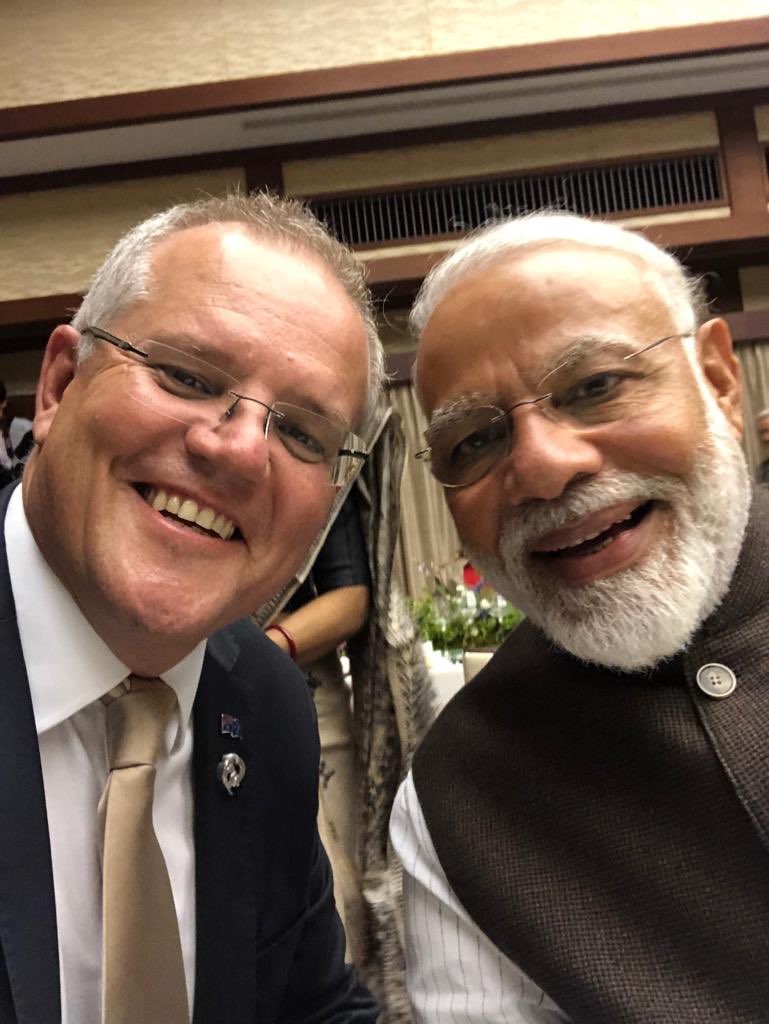
Australian Prime Minister Scott Morrison has worked hard on the India relationship and his personal connection with Indian PM Narendra Modi.

On 4 June 2020, Prime Minister Scott Morrison and Prime Minister of India, Narendra Modi, participated in the Australia-India Leaders’ Virtual Summit. At this meeting, the two Prime Ministers elevated the bilateral Strategic Partnership concluded in 2009 to a Comprehensive Strategic Partnership (CSP).

The CSP is based on mutual understanding, trust, common interests and the shared values of democracy and rule of law. Through the CSP, both countries have committed to work together across a range of areas.

The CSP also marks a step forward in the two countries’ ambitious agenda to expand our trade and economic relationship, as outlined in the India Economic Strategy (IES), which was released in July 2018 and endorsed by the Australian Government in November 2018.

India’s growing economy and young population need Australian goods and services

Over the next 20 years, a growing India will need many of Australia’s goods and services, including agriculture, education and skills training, and healthcare. There will of course be growth across most areas – but these are the standouts.

Since 2000, India’s GDP has grown seven-fold to reach USD3 trillion. India’s economy is forecast to become the third largest by 2030 (currently seventh) in market exchange rate terms. India already has the third largest economy in PPP terms and is set to maintain this ranking. The two-way stock of investment was valued at AUD30.7 billion in 2018. In 2018, Australia’s investment in India was valued at AUD15.6 billion and India’s investment in Australia was valued at AUD15.1 billion. India was Australia’s 18th largest investment destination.

The Aussie “India Economic Strategy”

Australia’s economic engagement with India is underpinned by the India Economic Strategy (IES), which was commissioned by the Australian Government in 2017 and led by Mr Peter Varghese, former Secretary of the Department of Foreign Affairs and Trade (2012-2016) and High Commissioner to India (2009-2012). This document is the guide for future growth.

Education is huge but facing challenges

Education is Australia’s largest service export to India, valued at AUD5.5 billion and accounting for around 85 per cent of the total. Indian students in Australia number almost 110, 000 (year to date September 2019), which marks a 33 per cent increase over the previous year. These students made 132,079 enrolments in Australia, comprising 15 per cent of international enrolments. As an education export market, India is second only to China, with exports valued at AUD12.1 billion in 2018-19 and 246,454 enrolments in Australia. Adapting to post-Covid19 education market changes will be a challenge for Australian universities.

Austrade is showing and creating the way

The Australia-India Business Exchange (AIB-X) is a new, Austrade-led, Australia-India business marketing platform that will build on the success of Australian Business Week in India, last held in 2017. This multi-month campaign included a coordinated program of activities and events. Minister Birmingham led a business mission to India in late February as part of AIB-X, with sectoral events and workshops to be held in five cities.

This will provide an opportunity to deepen trade and investment ties, focusing on small and medium across the IES’ priority sectors. Further information can be found on the Austrade website.

Plus Austrade has set up The Australian Store at Amazon India – primed to take off over the next few years.

amazon2

People-to-people links

Australia and India are building strong and lasting ties through our people-to-people links.

The Indian diaspora (comprising both Australians of Indian origin and Indians resident in Australia) is now Australia’s fastest growing large diaspora. According to the most recent (2016) Census, the number of people born in India amounts to 592,000, representing 2.4 per cent of the Australian population, or 1 in 50 people. Around 700,000 people claim Indian ancestry.

India remains Australia’s largest source of skilled migrants and the second largest source of international students. Hinduism is our fastest growing religion and Punjabi is our fastest growing language.

The Australia India Council

The Australia-India Council is also advancing Australia’s foreign and trade policy interests with India. Each year it provides grants for programs linking the two countries. I was fortunate to support the Genesis Horticulture Services research mission to India in November – part funded by AIC.

(Thanks to DFAT for lots of the above information)

world3


India post-Covid to get major economic boost from the rural economy

The Covid19 pandemic has crippled India’s urban economies.

But fortunately for India, the rural economy is stepping up.

Over two thirds of the population and 70 per cent of the workforce of India are in rural areas. The rural economy is now 46 per cent of national income.

And India’s 650,000 villages have money to spend.

How is this happening?

farming 2

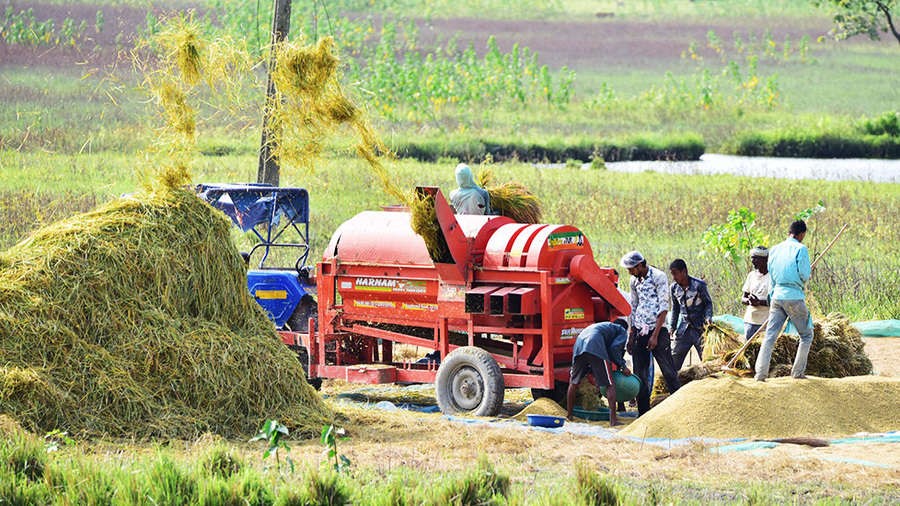
Bharat, or rural India, is thriving – it is a combination of bumper crops, good monsoons and Government handouts.

In India’s auto sector, biggest demand is now rural – for tractors and two wheelers.

tractors

Rural unemployment peaked at 26 per cent in May but by June 21 had dropped to 7.3 per cent.

For once in a long time, the Indian rural economy is the good news and could be the big driver post this pandemic.

Can you trade with India without leaving home?

As Covid19 has made us all (Australia, UK, USA, Canada etc) more cautious, we are reluctant to travel.

Add to that a leap in Indian online e-commerce for all kinds of products and services.

Is the future of trade with India digital? Do relationships matter any more?

We have always said that the key to long term success with India is in the careful and gradual development of close working relationships. This has to be done face to face, but these days can be supported via phone and video calls.

Deakin University is the prime example of success through perseverance and relationship building – they have had a presence in India for over 25 years.

Ravneet Pawha has led Deakin in India for most of that time and she is now the Deputy Vice President – Global and CEO – South Asia. She knows everybody in decision making on education in India. Ravneet is a regular promoter of Australia and our education at conferences and in Indian media.

ravneet

The Australian citrus industry is taking a closer look at India but their CEO has told members it could take five years to build a market.

citruspic

So relationship still matters in dealing with India.

For our diplomacy, we need closer relationships at Indian central and state government levels.

For education, we need to follow the lead of Deakin University and be on the ground over there, building collaborative relationships.

And for products and services, while online is becoming the way of the future, products and services will only become trusted and valued as people have a relationship with your brand.

Australian PM Morrison has been gradually building a closer relationship with India PM Modi and this is producing some progress on agreements and cooperation.

Relationship – it is the way forward with India.

ModiMorrisonSmile2

10 essential tips for doing business with India

Doing business with India? Here are some tips that might help your experience, but keep in mind you will find many variations and contradictions of these points in the very diverse and exciting India market:

The language barrier is real – even English

India has some 26 major languages, but your Indian counterpart will almost certainly speak English, which itself can be a problem – it creates the illusion of communication and understanding. Many of us speak English and think western – your Indian partner speaks English and thinks Indian, so take care to build real understanding. Also keep in mind there are “many Indias” with many different languages and ways of thinking.

business2

You are in a different culture

Visitors to most of Asia and China are visually reminded all day that they are in a vastly different culture. But often, especially in offices, India can appear quite westernised and individuals also give that impression. Better to open your mind and see things and people more clearly, looking beyond the surface level “westernisation” – exploring cultural differences expands your horizons and you will find many charming similarities.

Be patient and you will get there faster

Adopt a patient long term view – India is a 5 to 10 year game. It is very easy to get MOU’s (Memorandum of Understanding) signed with fanfare in India but too many do not produce any outcome. One way to improve our cultural dexterity would be to take a long-term view and apply lots of patience.

Narendra-Modi-Mohammed-bin-Zayed-Al-Nahyan

Businesses should not start out on market entry unless they are prepared to commit at least five years to making it work. Governments need the same longer-term perspective. Rushed trade missions, political announcements and photo opportunities amount to very little – we see them as an achievement, but they are just a beginning.

Relationships take time – but they are everything

India is a collective culture which means relationships are the number one factor in success, and building relationships takes time. Many who see India as not a short-term transaction opportunity can find success, but not for long as someone with a better price comes along. A better strategy is to aim for longer success through a focus on building relationships. The first trade meeting in India can be exciting and positive, but from the India side this is just seen as an introduction and they will wait to see if the relationship grows. Trust and relationship take time.

ModiMorrisonSmile2

“Yes” can mean “maybe” or “no”

See beyond the politeness: Indians are among the most courteous and generous hosts on the planet. On top of this, their culture demands that they never provide an outright rejection or “no” statement, even when this is clearly the only answer. The dumbest question for a business to ask in India is “can you help me with market entry for my products?” The answer will always be “yes” and you will sit idle for a long time back home until you realise this is not the right question. Within Indian culture built so solidly on relationship above all else, the word “no” is a real relationship breaker and is rarely or never used. “Yes” can in fact mean “maybe” or even “no” and you need to look for the signs. Like most of Asia, Indians are indirect communicators.

Prepare for the collective

Most westerners come from a culture of the individual, but the Indians they meet are firmly placed in a collective culture.  A visitor to an Indian company will often find four or five Indians in the meeting, and often it is not clear who is in charge. Many Indian leaders will not speak up or even speak at all in these meetings – in the collective someone else does the talking while they do the evaluating.

It will be slow and fast

Modern India can be slow or fast and it is hard to know which you will encounter. Sometimes delivery seems to take forever, yet on other occasions it is faster than the west. This means to succeed there you need incredible patience, so don’t send your least patient executive to India. Being able to respond positively under both slow and fast delivery is the key.

The visitor can be shocked and unprepared for the speed of modern India. Businesses need to go prepared to deliver on a product or service right now, not just having some idea for a future opportunity. Trade missions from around the world arrive weekly, so they have plenty of choice. Fast and slow, east and west – India is a living and dynamic paradox.

business 4

India is many countries in one

Differences are not just seen in the North, South, East and West, India is truly many countries in one and you need to be ready for cultural diversity. While Mumbai is the fast and flashy financial capital, it is also a tough place because everything is done on grand scale and at great speed. New Delhi is more formal and stuffy, also more liveable, and is more than a political capital – it is a powerful business city. Chennai is one of my favourites, embracing that slower southern pace and the values that shine in southern businesses. Regions have varying strengths, so research is the key. Recent moves to allocate Smart Cities across India can provide insights into alternative gateways for you.

Navigate through the spider web

While the west strives for simplicity and certainty, Indian business leaders know that life is like trying to find your way through a spider web – where does it begin, where does it lead, who can tell? Consistent with this view, most Indian corporations offer an incredibly diverse range of products and services – whereas western business tends to focus on just one area. In most cases Indian companies are willing to buy from you but are also looking for the deal to include some intellectual property sharing arrangements – think about these before you head over there.

Learn the art of flexibility and patience

Being patient and flexible is an asset, even if you come from a country that likes to be blunt, direct and structured. Most Indian communication is indirect, so it can take some time to work out what the real issues are. India is full of surprises and you cope best through being flexible. Dropping any “one rule for all” approach is a good start.

If you are thinking of going, India’s great thinker Rabindranath Tagore can be your inspiration: “You can’t cross the sea merely by standing and staring at the water.”

business