India and the USA have very different world views – the 10 differences

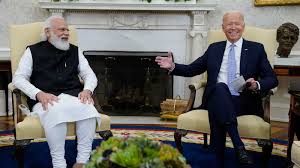
Indian PM Modi meets with US President Biden in the White House recently

There has been a lot of talk recently about India becoming part of some formal military alliance with the US – in response to the rise and actions of China.

But is this likely?

Here are 10 key differences in the world view of India and the USA

New Delhi is wary that any formal alliance with the US could draw it into almost constant military activity such as the Iraq war

India prefers to do its own strategic deals on a country by country basis – rather than manage these through a dominant US strategic alliance. For example, India and Australia have a Mutual Logistics Support Arrangement allowing each to uses each other’s bases

Historically India has never agreed to open-ended commitments that might lead to future military involvement

Of the four countries speculated to be invited to join the Five Eyes security arrangement (the four are Germany, India, South Korea and Japan) – India is the only one of these four to NOT have a treaty alliance with the US

An example of differences between India and the US is Iran and the Nuclear Non-proliferation Treaty (NPT) – the US attacks Iran on the nuclear issue, sees the NPT as something to be enforced – but India has not signed the NPT itself and sees it as discriminatory

There are differences on the “threat” from China – the US is most assertive on freedom of navigation in the South China Sea while India has been quite reserved on this issue

India is more concerned about its Himalayan border conflicts with China than the South China Sea

India generally has little or nothing to say about human rights issues in other countries. Whereas the US and its allies such as the UK and Australia are constantly calling out human rights abuses around the world

The US wants “all in” commitment from allies but India has always been non-aligned and refuses to get drawn into “us versus them” views of the world. One current example is India is finalising a logistics deal with the UK while also negotiating a similar deal with Russia

India is content to be “the world’s biggest democracy” but is not evangelical about it, accepting that all countries are different – a sharp contrast to the US wanting to remake countries in its own image and championing democracy for all
New “Business Champions” group to provide much needed top level links between India and Australia

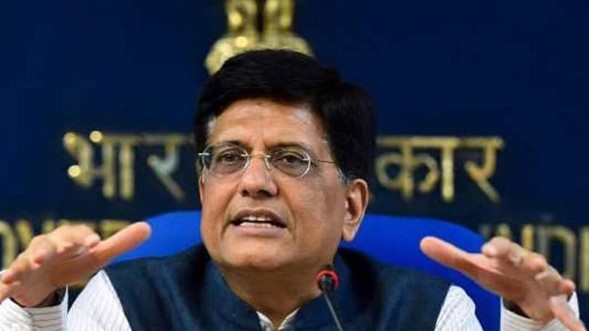
Indian Commerce Minister Mr Piyush Goyal

A new “Business Champions” group will lead top level business engagement between India and Australia – and it was launched last week in India.

INTO INDIA welcomes this move to bring the “top end” of both countries together. Business engagement at this level has not worked well in the past. Most of the business councils and chambers have provided lower level SME engagement – important as this is.

“Supply chains” is behind the enthusiasm of India for the new Australia-India Business Champions Group’s role. Mr. Piyush Goyal, Minister of Commerce & Industry, Consumer Affairs, Food & Public Distribution, Textiles, Government of India said this when addressing the Inaugural Meeting of the Australia India Business Champions.

The Minister is co-chairing the group with Australian Trade Minister, the Hon Dan Tehan.

“The Australia-India Business Champions Group’s key aim is to liberalise and deepen bilateral trade between both the nations and pave the way for collaborative economic growth.” stated Mr. Dan Tehan MP, Minister of Trade, Tourism and Investment, Government of Australia.

Major business organisations leading the group are the Confederation of Indian Industry (CII) and the Business Council of Australia (BCA). Both represent almost all the major business corporations in both countries.

Mr. Chandrajit Banerjee, Director General, CII, pointed to areas such as mining, education, defence, space and emerging sectors which the group can take forward.

Ms. Jennifer Westacott AO, CEO, BCA, highlighted that we must strengthen and reform regional and global institutions, so they deliver for our citizens.  She said the Business Champions would engage directly with the top tier of Australian and Indian Governments on matters critical to business. 

Other panelists at the meeting included H E Mr. Manpreet Vohra, High Commissioner of India to Australia, H E Mr. Barry O’ Farrell AO, High Commissioner of Australia to India, Dr. Anish Shah, MD & CEO, Mahindra & Mahindra Ltd, Ms. Julie Shuttleworth, CEO, FFI, Mr. Rakesh Bharti Mittal, Vice Chairman, Bharti Enterprises, Mr. Mike Cannon-Brookes, Co-Founder and Co-CEO, Atlassian, Mr. Nitish Jain, President, SP Jain School of Global Management, Ms. Verena Lim, Asia CEO, Macquarie Group, Mr. Girish Ramachandran, President, Tata Consultancy Services Asia Pacific, Professor Duncan Maskell, Vice Chancellor, University of Melbourne.

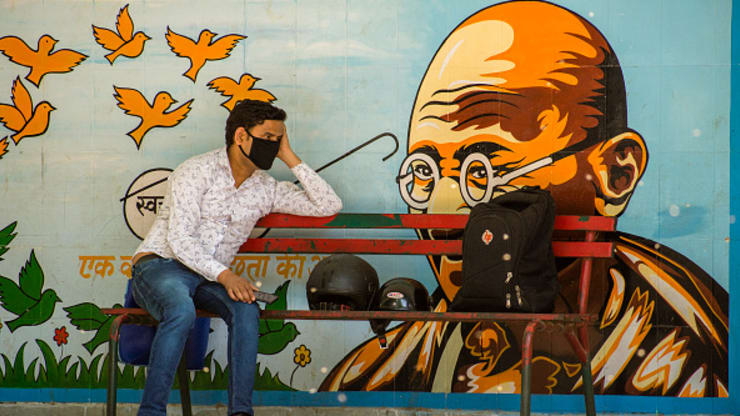
It’s his birthday today, so what does Gandhi say for our modern world?

India’s Mahatma Gandhi was born on 2 October 1869 and died in 1948

The Mahatma Gandhi memorial in New Delhi, known as Raj Ghat, expresses his values – it is peaceful and quiet, a green open space with a marble tomb in the middle, marked by one word “Ram” – God, the word Gandhi uttered when shot on 30 January 1948. Here there are no lengthy accolades, just a simple and lasting tribute.

I first visited this on a warm afternoon with time alone – but you are not alone for long in India. I was soon joined by a family of four, there to show the children and pay their respects to this great human being. In doing so, their shining eyes invited me into their circle, we talked, laughed, turning back regularly to gaze at the marble tomb. The moment was defined by simplicity and love.

This was how he lived – you can see this in Mumbai at Mani Bhavan (Gandhi House), a three story home with shuttered windows, a residence that Mahatma Gandhi was able to use when in that bustling city. The house is in a leafy and relatively quiet street.

The austere dwelling seems a long way from our consumer society, for here in Mani Bhavan, the feeling is respectful and quiet. No one rushes. This was indeed the man who said there was enough in the world for everyone’s need but not for everyone’s greed.

Knowing this, it becomes redundant to ask what Gandhi means for our modern world. He means everything.

The world is nervously watching the rise of China, and the contest for leadership in a rapidly changing world. Believing that in situations like this, hatred is the real enemy, Gandhi urged us to hate the sin, love the sinner. His view on answering violence with violence was “An eye for an eye makes the whole world blind”.

Gandhi knew that around the world, people are different – and they see the world differently. He knew that much hostility began because we each tend to believe that our own world view is the correct one.

It was the pragmatist in Gandhi (which infuriated extremists) who accepted that all of our differing world views are neither right nor wrong – they are just differing world views.

There is a story that showed how different this person was – while boarding a moving train one day, one of Gandhi’s shoes slipped off and fell upon the track. As he was unable to retrieve it, Gandhi – to the astonishment of his fellow travelers – calmly removed his other shoe and threw it down the track to where the first had landed. “The poor man who finds the shoe lying on the track,” Gandhi explained, “will now have a pair he can use.”

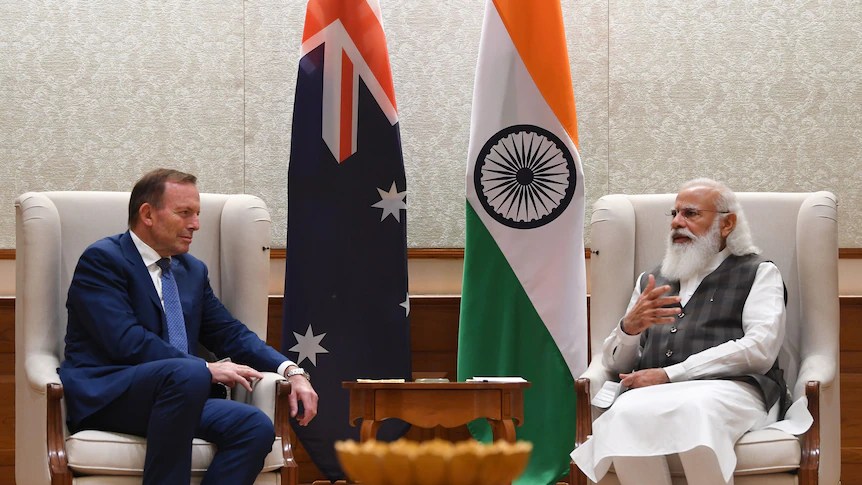
Tony Abbott might have overstated it – but he is more right than wrong on India

Tony Abbott wants Australia to make a big shift towards India and away from China.

Despite some hysterical responses from two former Aussie PM’s, Tony Abbott has by and large got it right on India and we should work towards the closer relationship he believes is possible – and necessary!

Consider this verbal stoush:

“The answer to almost every question about China is India. Although currently not as rich as China … India is perfectly placed to substitute for China in global supply chains … India has revived the Quadrilateral Security Dialogue, and the first in-person Quad summit is expected before the end of the year. Under Modi, India has invited Australia to join the annual Malabar naval exercises that will soon involve India, the US, Japan, Australia and also the UK … It will be an impressive show of strength, demonstrating the democracies’ commitment to a free and open Indo-Pacific … If Australian business and officialdom were to make the same effort with India that they’ve long made with China, there’s potential for a ‘family’ relationship with India that was never likely with China.”

– Former prime minister Tony Abbott in The Australian (10/8/21)

“No, (Abbott’s comment) is just wrong. We all agree our relationship with India has been underdone over the years … India has got a very deep longstanding protectionist political culture. They weren’t even prepared to sign up to RCEP … You have got to be realistic about what you can achieve in terms of trade. They are different countries, different economies. We should be aiming to have much stronger deeper relations with India …  Every prime minister should and will do that. But the idea that can sort of delete China and insert India is just nonsense.”

– Former prime minister Malcolm Turnbull at a La Trobe University webinar (10/8/21)

“We have got to be deeply realistic about one thing (about the Quad). Is it the assumption of future Australian governments, like Tony Abbott’s view in today’s press, that the Indian navy is going to go steaming into the South China Sea to defend Uncle Sam’s interest if the balloon goes up over Taiwan? I think not   …  We need to ask some very hard military questions about the core strategic utility of this (the Quad) for the longer term … We need to go into this with wide eyes open, not the blithering idiot remarks we’ve seen from Abbott in today’s newspapers.”

– Former prime minister Kevin Rudd also at La Trobe University

“The one thing we should not be doing is saying to India, this is to line you up to be the next member of ANZUS to take on China. I agree with what Kevin said, that equally just plays into the paranoia of China … We have to just move gently, avoid extravagant language (with India) …  Frankly, extravagant claims of the type we were talking about a moment ago are not helpful.”

– Malcolm Turnbull again

“India is the world’s emerging democratic superpower and my god don’t we need another democratic superpower in the world right now. Isn’t it so important that a country like Australia do everything it can to ensure India does take its rightful place up there at the head of the world’s great democracies.”

– Tony Abbott, Australia India Address (17/8/2021) 

Well, what do you think?

Australian Trade Minister announces boost to India FTA talks at launch of Australia India Chamber of Commerce chapter in Canberra

Major announcements made at launch of Canberra chapter of Australia India Chamber of Commerce.

The Australian Trade Minister, The Hon Dan Tehan MP, chose the launch of the Canberra chapter of the Australia India Chamber of Commerce to announce both a speed up to negotiations on a Free Trade Agreement and an update of the India Economic Strategy.

The Minister said he had asked former Prime Minister, Tony Abbott, to visit India for meetings around the Comprehensive Economic Cooperation Agreement (which is an FTA).

He announced to the AICC that both countries were hopeful of concluding negotiations this year – a dramatic ramping up of the pace.

The Minister pointed to trade and investment in areas such as critical minerals, infrastructure, energy, technology, agribusiness, education and space.

AICC in Canberra is led by Tony Huber, a Director within DFAT and former Consul in Mumbai, and Deepak Raj Gupta, former Member of the ACT Legislative Assembly.

Indian Independence Day is joyful and optimistic

Have you been in India on Independence Day, 15 August? It is a most joyful and optimistic day, in a country which has many joyful and optimistic celebrations.

India proudly celebrates Independence Day to cherish the idea of oneness and remember the sacrifices that freedom fighters made during their struggle against the British empire.

What really hits me about this day is the feeling people have about the glory of India’s struggle. It is a kind of mindset that “if we can do this, then anything is possible”.

Well done India – have a great celebration.

Despite a shift towards USA and Japan, India maintains close friendship with Russia and a “multipolar” world view

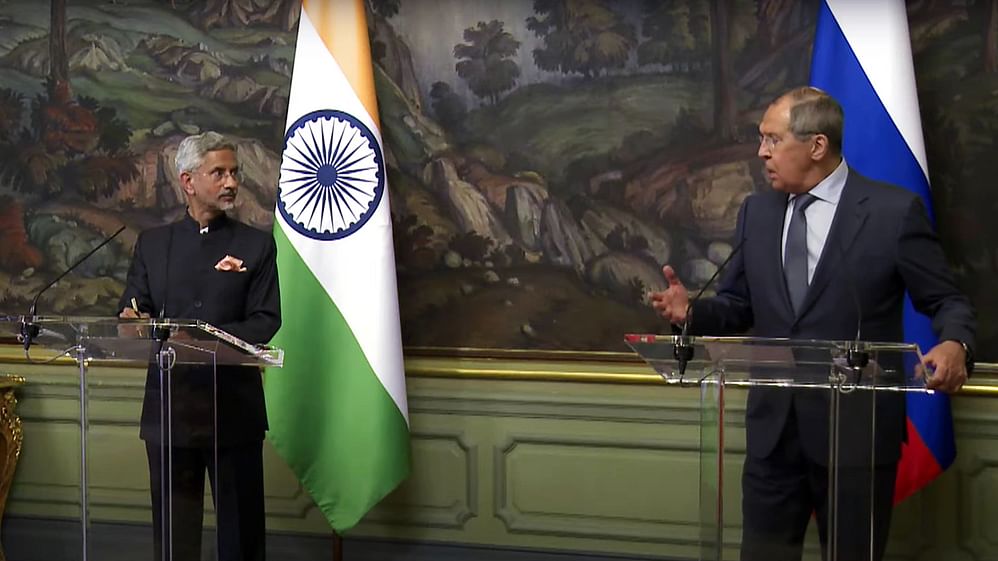
External Affairs Minister S Jaishankar along with Russian Foreign Minister Sergey Lavrov address a joint press conference, in Moscow. The visit was aimed more at reiterating the importance both nations accord each other.

India has long been able to see both sides of an argument in international affairs – and today is a champion of a multipolar global order.

This frustrates countries like the USA and Australia, which clearly see the world in terms of goodies and baddies – for them, the world order is either run by “us or them”.

India’s independent approach was seen in the recent reinforcement of its long held close friendship with Russia. At a time when the rise of China has pushed India into closer relations with the US and Japan, the Indian External Affairs Minister, Dr S Jaishankar held a three day visit to Russia, to reassure an old friend.

Russia could be described as India’s oldest and strongest allies since independence.

“I think what makes our working together so natural and comfortable is our belief in a multipolar global order,” Jaishankar said.

In the complexity of our pandemic world, “multipolar” could be something that takes us forward in peace.

Can India teach the west and China about co-existence?

With India’s role as a rising power, plus its long record of peaceful co-existence with multiple countries, can it help the west and China live together?

Here is the situation as outlined by Michael Spence, a Nobel laureate in economics, Professor of Economics Emeritus and a former dean of the Graduate School of Business at Stanford University:

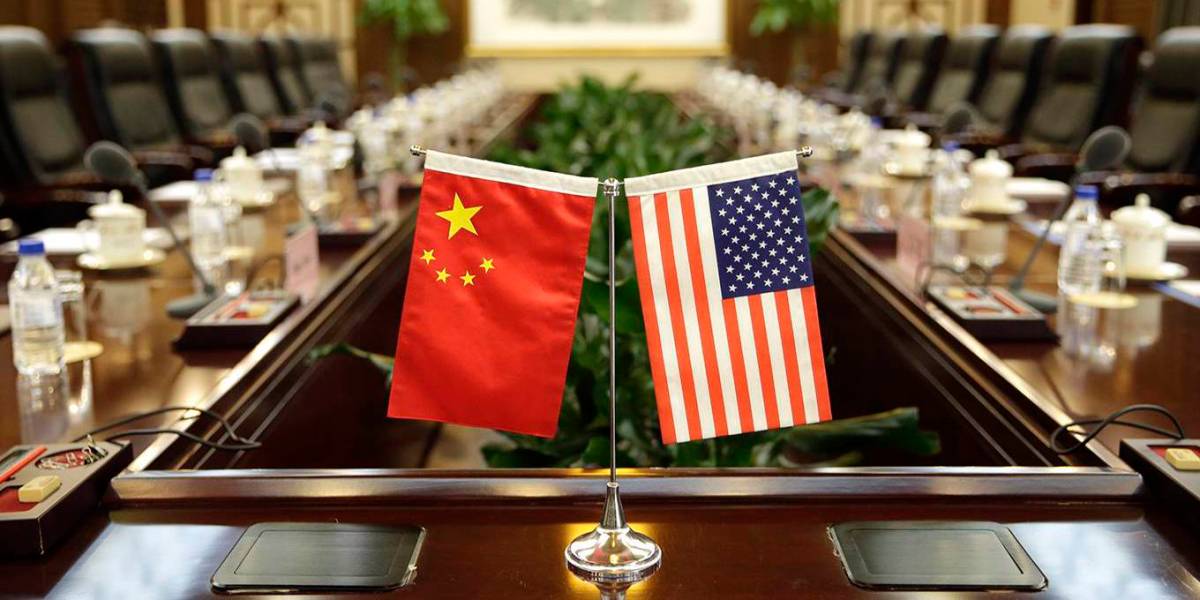
“At the recent G7 and NATO gatherings, China was singled out as a strategic competitor, a calculating trading partner, a technological and national-security threat, a human-rights violator, and a champion of authoritarianism globally.”

Not a great recipe for co-existence.

Spence continues: “China denounced these characterizations, which its embassy in the United Kingdom called “lies, rumors, and baseless accusations.” The risks that such rhetoric poses should not be underestimated.”

Also not a recipe for co-existence.

He concludes: ” The real danger, however, is that officials on both sides seem to have embraced a zero-sum framework, according to which the two sides cannot simply co-exist; one side must “win.”

But India has long experience of getting along with all sorts of regimes and managing to see both sides of the argument.

As India plays a bigger role in global groupings, can it influence both the west and China to drop “zero sum” thinking and work to co-exist?

10 tips for creating trusting cross-cultural teams

No trust, no team.

When trust is absent, you do not have a working team.

Creating teams across cultures is not easy – and even once you have trust, you can accidentally break it in one meeting.

Why?

Communication styles differ across cultures. Some (like Australia) are blunt and direct. Others (like India) are very polite and indirect.

Some cultures (USA and others) like a lot of social talk before getting down to business. Others prefer business first.

Add to this differences over how to give feedback and disagreements in public and you have a potential minefield that will destroy trust in an instant.

We know that diversity has an upside and succeeding across borders is a business imperative.

So, how do you avoid destroying trust? My 10 tips:

First, learn about cultural differences. Ignorance is your own personal enemy. Too many global business leaders have little or no awareness of differing cultures. It is time to change by learning about these cultures.

Second, creating a strong starting point is essential – which means having a clear direction and an optimistic and compelling goal.

Third, ensure that at least some of the team members have been trained in cultural difference and can operate successfully across cultures.

Fourth, encouraging your team to be curious, adaptable, caring and friendly – leaders can do this by showing these characteristics themselves.

Fifth, be specifically aware of the potential explosive points of the different cultures represented in the team. This makes team leaders aware of what can go wrong, what can be misunderstood and how to involve and encourage team members who are from cultures that are reserved and indirect. If conflict does arise, address it straight away in a calm and friendly way.

Sixth, help the team understand the differences between cultures in terms of giving feedback – Australians on the team will generally be very direct, while Indians on the team will be more cautious and indirect with feedback. Talking these differences through can help both sides.

Seventh, based on the trust created by the above, team leaders can establish team standards and norms that everyone commits to sticking to. This will mean for several team members that they have to adapt from their cultural norm. If it is seen that the whole team is adapting, it becomes a shared and positive experience. If I am the only one in the team adapting, it is just no fun and will not last.

Eighth, watch out for cultural differences over starting times – this will cause simmering divisions in the team. Westerners will generally be on time and expect everyone else to be on time too. Other cultures will arrive late and be surprised that others are already there. Create an agreed standard for the starting time and everything else has a better chance of success.

Ninth, have a predictable and mutually agreed timetable for information sharing, such as zoom meetings, email information, one-on-one sessions and physical meetings. Some cultures do not respond well to variations and unpredictability – so try for stability but also allow for those urgent meetings that just need to occur.

Tenth, work hard on creating personal connections with every member of the team. This can take time and seems like a distraction to many leaders, but it is your strongest tool in reducing conflict in cross-cultural teams. Know what their non-work interests are and you will be surprised how well you connect.  

India consumer spending skyrockets

India’s consumer spending a “revolution”

Austrade’s Ashley Brosnan on India’s consumer spending “revolution”:

The biggest revolution taking place is the rapid rise of a huge, diverse and wealthy consumer market. Despite the impacts of the pandemic, domestic demand is likely to be a major driver of recovery and growth over the next decade, making up 60% of the overall economy.

E-commerce is taking off as smartphone usage multiplies. India already has over 1 billion internet users and the digital economy’s contribution to GDP is projected to grow 15–20% by 2024.

Incomes are also rising strongly. India’s median income per household is expected to reach A$13,867 by 2025. The World Economic Forum considers that consumer expenditure in India will grow by a factor of four up to 2030.

This means over 80% of Indian households will be middle-income in 2030 – an increase of 140 million. Another 20 million will be considered high income.

India’s emerging and aspirational middle class is seeking premium food and beverage, healthy lifestyle products, technical infrastructure, quality healthcare and education, entertainment and consumer goods.

Trends in consumer demand are encouraged by a substantial, highly-skilled Indian diaspora in Australia, which is set to number 1.4 million in 2031.