Australia told to be partners, not adversaries, with China

Prime Minister Lee Hsien Loong of Singapore and PM Scott Morrison of Australia

Prime Minister Lee Hsien Loong of Singapore gives advice to Australia on China

“China is one of the biggest policy questions for every major power in the world. You need to work with the country. It is going to be there, it is going to be a substantial presence. You don’t have to become like them, neither can you hope to make them become like you. You have to be able to work on that basis, that this is a big world in which there are different countries, and work with others who are not completely like minded but with whom you have many issues, where your interests do align. There will be rough spots … and you have to deal with that. But deal with them as issues in a partnership which you want to keep going and not issues, which add up to an adversary which you are trying to suppress. That is speaking in very general terms, but I think that’s from Singapore’s point of view how you have the best chance of developing a constructive relationship and avoiding very bad outcomes.”

INTO INDIA has long campaigned for Australia to just calm down and deal with the massive regional opportunity (and challenge) that we face.

Such common sense. Calm, rational and accepting of reality.

Can Australia follow this advice?

9 weird things about Australians

CAUTION – these are generalisations that are meant to be helpful, but you will find exceptions.

  1. Aussie Modesty

Australians admire humility and authenticity. They loath boasting or pretentiousness. Even if their company is number one in its sector, they will often just say “we’re not too bad”, preferring understatement to boasting.

Informality and humour are always present in Australia – the Prime Minister would be greeted on a first name basis by people he or she had never met.

An unusual part of Australian humour is to make comments about someone that seem to be critical – but this is actually a sign of friendship. If I am given a project to do, an Australian might say “you will find some way to mess this one up” and this is meant as humorous and friendly.

People from countries where “face” is highly valued will find some of this humour difficult. But it is never meant to be offensive.

Because Aussies are laid back and informal, they think you will automatically like them, even though they might be giving offense with their humour.

An Australian with a PhD will not like you using the title – “just call me Steve” is their usual response to being called Dr Jones.

These characteristics can be a challenge for people from cultures which place high value on formality, titles, achievements and so on.

2. “Mates” in Australian Relationships

“Mate” is the Australian word for close friend. Once you become a mate, you will stay that way because Australians put mateship and loyalty together.

“Mates” can cross financial and social barriers – a rich person could be “best mates” with their gardener, and so on.  

This is part of the overall friendliness and openness.

3. Tall Poppy Syndrome

Australians like everyone to be in the middle – so if you are poor, you will get welfare, if you are rich, be wary of flaunting your wealth because they will try to bring you down to earth. Anyone claiming to be the best, or boasting about some valid achievement is fair game for tall poppy syndrome.

“Chopping off tall poppies” is almost a national sport.

4. A Multi-Cultural Society

Australia is a very multicultural society with a strong mix of indigenous groups, individuals with historical European roots, and a diverse mix of immigrant populations – lately this has been dominated by India and China. Approximately 25% of Australian citizens were born overseas and almost half the population had at least one parent who was born overseas.

The indigenous groups, made up of Aboriginal and Torres Strait Islanders, share rich, ancient cultures and histories.

Post-World War II Australian attracted immigrants to boost the population and work force, mainly from Europe, (especially from Greece, Italy, Germany, the Netherlands and Yugoslavia), Lebanon and Turkey.

Large numbers came from Northern Europe in the 1950s, Southern Europe in the 1960s and Vietnam (as a consequence of war) in the 1970s.

Such diversity has changed how Aussies see themselves – as a multi-cultural and multi-faith society rather than the homogenous, white, Anglo- Saxon, Protestant nation of old.

5. Meeting Etiquette

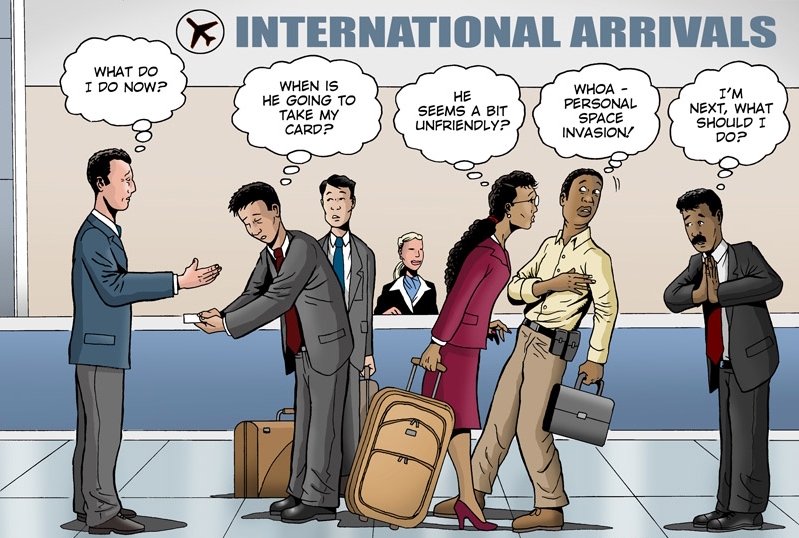
Australian culture is not very formal, so greetings are typically casual and relaxed. A handshake, smile and a simple ‘hello, how are you’ should suffice.

While an Australian may say, ‘G’day’ or ‘G’day, mate’, this is meant to be a warm and friendly greeting, but this may sound a bit off-handed to foreigners.

Aussies prefer to use first names, even at the initial meeting.  As such, avoid using titles when you first meet someone and, instead, introduce yourself with your first name only.

6. Gift Giving Etiquette

Small gifts are commonly exchanged with family members, close friends, and neighbours to mark special events such as birthdays, births, engagements or Christmas.

Trades people and service people such as cleaners, may be given a bottle of wine or a six-pack of beer!

If you are invited to someone’s home for dinner or a lunch time barbeque, it is polite to bring a box of chocolates, bottle of wine or flowers to your hosts.

Australians are relatively big meat eaters and can sometimes be insensitive to vegetarian diets – so it is important to let a future host know that you are a vegetarian.

In a culture that values humility and equality, it’s important that gifts are modest and not too expensive.

Although it’s acceptable to give high value gifts to those you’re close to, giving high value gifts to others may cause embarrassment and you may be perceived as flaunting your wealth.

Gifts are typically opened when received.

7. The Aussie “barbie” (BBQ)

The Aussie ‘barbie’ is an important part of Australian social culture.

Guests typically bring wine or beer as gifts for the host. In some cases, very informal barbecues may suggest that you bring your own meat!

As a vegetarian or someone who does not drink alcohol, let your host know these things before the event – they will adapt, and it saves embarrassment.

People tend to dress very casually at BBQs. For dinner, you can check the dress code beforehand.

In Australian culture, being overdressed can sometimes be more embarrassing than being underdressed!

You can contact the hosts ahead of time to see if they would like you to bring a dish.

Offering to help the hosts with the preparation or clearing up after a meal is well received.

How to indicate you have finished eating – lay your knife and fork parallel on your plate with the handles facing to the right.

8. Business Meeting Etiquette

Appointments are necessary and relatively easy to schedule. They should be made with as much lead time as possible. Many CEO’s will have an appointment diary covering two or three years and they like to stick to what is in the diary – meaning if you want to see them, make a request well in advance of the proposed day.

Punctuality is important in business situations. It is better to arrive a few minutes early than to keep someone waiting.

Meetings are generally relaxed; however, they are serious events.

Australians can be very direct in communication – if an Australian takes exception to something that you say, they will tell you so. It might seem offensive, but Aussies are straight shooters and expect that you can “take it” – that is, you will not get upset.

If you make a presentation, avoid hype, making exaggerated claims, or “bells and whistles”.

Australians get down to business quickly with a minimum amount of small talk.

They are quite direct and expect the same in return. They appreciate brevity and are not impressed by too much detail.

Negotiations proceed quickly. Bargaining is not customary.

They will expect your initial proposal to have only a small margin for negotiation.

They do not like high-pressure techniques.

9. Business Dress in Australia

Business dress is conservative in Melbourne and Sydney, but in recent years it is acceptable to be a little more informal – going to work in a suit but not wearing a tie has become fine. Men should wear a dark coloured, conservative business suit. Women should wear a smart dress or a business suit.  

Thanks to Commisceo Global for much of the above content.

8 things we need to know about India

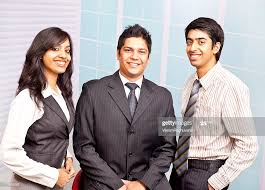
Confident young Indians like these are driving new entrepreneurial spirit

CAUTION – generalisations are just that, and you will almost always encounter those who do not fit in this list. This is offered to assist those visiting India for business, education or tourism.

1. Successful and confident

Economic success has restored Indian confidence. Indian entrepreneurs are now recognized around the world and there is a national expectation that the next Bill Gates will be an Indian. This entrepreneurial spirit permeates the nation (most dream of becoming entrepreneurs) which is now confident.

2. Never forget rural people

Indian business and political leaders may live the urban lifestyles, but they do not forget the small towns and villages at the centre of rural life – and it’s not just the politicians with an eye for votes, with major corporates such as Infosys pouring resources and funding into village developments.

3. Avoid pointing the finger

Indians become instantly passionate when challenged on subjects like their high tariffs, especially if the challenge comes from the west. The message is, point the finger at India and you can expect a robust response.

4. Oceans of patience

Indians have oceans of patience which can drive westerners crazy, but it gives them a special strength in negotiations. This patience is derived from deeply held spiritual views such as impermanence – Indians are constantly reminded of the impermanence of this life, everything changes, and they can wait when often we cannot. Who has the advantage in this situation?

5. Not just an IT miracle

Do not be fooled with the view that the Indian economic miracle is just driven by call centres and IT. Important as these are, look also at insurance, energy, retail, clean technology, manufacturing, pharmaceuticals and even agriculture as areas where efficiency is producing startling results.

6. Not especially “Asian”

While India feels great about the success of “Asia”, in many ways it does not feel particularly “Asian”. First and foremost, Indians feel Indian, and to them that is vastly more relevant than being geographically part of Asia.

7. Remember the “Father of the Nation”

Whether dealing with the young or the old, in India never forget the “Father of the Nation”, Mahatma Gandhi.

8. Equity up there with democracy

Partly because of Gandhi, Indian leaders are more concerned with equity than with spreading democracy around the world – and cannot understand the enthusiasm of the USA and its allies to champion democracy in unlikely locations.

KIIT & KISS Founder has been awarded the “Sandipani Gourav Maharshi Samman-2020” – dedicates award to young tribals

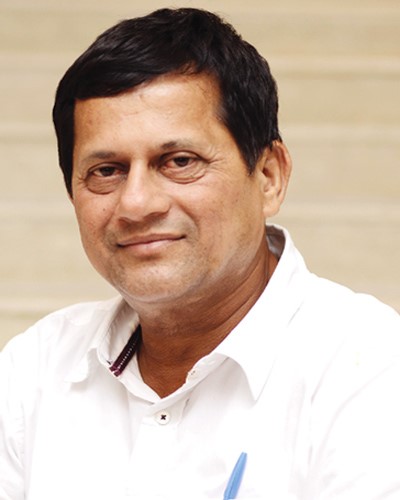
Dr Achyuta Samanta dedicates award to young tribals

Awards and recognitions are no mere feathers in the cap for the KIIT and KISS founder Dr. Achyuta Samanta, but it has become a reality about inheritance of ideals built on a foundation of benevolence and concern for others.

Dr Samanta is a social worker, educationist and philanthropist.

He has pioneered an Art of Giving program that is a force for change.

Kalinga Institute of Social Sciences – KISS, comprises of KISS Foundation, KISS School & College and KISS University. KISS Foundation is an NGO in India headquartered in Bhubaneswar, Odisha. School, College and University is the educational wing of this initiative located at the intersection of food, education and empowerment.

Dr Samanta’s ventures are powered by a belief that a better world – free from hunger, poverty & illiteracy – is possible. We provide free education, accommodation, food and healthcare to over 30,000 indigenous students currently studying at our main campus in Bhubaneswar. We are currently 20,000 alumni strong. We aim to serve an additional 10,000 students across our satellite centres which are going to be functional soon.

Dr. Achyuta Samanta, is also a Member of Parliament (Lok Sabha), Kandhamal, and has been conferred with the prestigious “Sandipani Gourav Maharshi Samman-2020” by Bharatiya Sanskrutik Sambhardhak Trust, Porbandar, Gujarat on the eve of celebration of the Silver Jubilee of the trust.

In a ceremonial event held in the presence of Shri Nimaben Acharya, Hon’ble Speaker, Gujarat Legislative Assembly, a galaxy of intellectuals and saints of the nation, this honour was bestowed upon Dr. Samanta for his exemplary dedication and lifetime contribution towards Social Work and Spiritualism. Humbled by the honour, Dr. Samanta extended his respectful gratitude towards Shri Ramesh Bhai Oza, Founder of Bharatiya Sanskrutika Sambhardhak Trust and all the members & office bearers of the trust.

It’s noteworthy that every year the trust has been honouring spiritual figures, saints, sages, intellectuals, thought leaders and social workers with coveted titles and honours namely ‘Devarshi’, ‘Brahmarshi’, ‘Rajarshi’ and ‘Maharshi’ since 1996.

 Apart from Dr. Samanta, Kokila Ben Dhirubhai Ambani was conferred with ‘Rajarshi’ Samman whereas treasurer of Sriram Janmabhumi Tirthakhetra, Pune Swami Govind Devagiri Maharaj received Devarshi Samman and former Vice-Chancellor of Sampurnanand Sanskrit University Dr. Rajaram Shukla was conferred with Brahmarshi Samman.

“Maharshi award is extremely special as it comes from the organisation led by the most revered and venerable Pujya Bhaishri, Shri Ramesh Bhai Oza ji. It will be remembered by our KIIT & KISS family and me forever. I dedicate this coveted recognition to our team that has worked relentlessly and to all the tribal young girls and boys who have struggled and have transformed their lives with resilience.”; said Dr. Samanta.

An Indian view of the Australian “Habits of an Optimist” free course

With Avinash Kshirsagar travelling in the Himalayas on my last trip to India

Yesterday was Mental Health Day – but really, it should be every day of the year. Many have found that good mental health and an optimistic outlook go together and there is a wonderful course suitable for all ages and FREE from the Centre for Optimism.

This has been reviewed by my friend Avinash Kshirsagar – a young Indian from Maharashtra state who is completing his accountancy qualifications. We met while travelling in the Himalayas and I joined him on his daily quest to find great cafes for lunch. Here is his review:

“Steve and I have had several discussions on optimism particularly a blend between optimism and realism.

We’ve shared our thoughts as well on this.

I’m very thankful to Steve that he shared with me a course on Project Optimism.

This course is all what one needs to do to be an optimist. Lots of takeaways on being positive and spreading optimism. I have highlighted the points that I particularly found were best inputs;

•             Smile like an optimist. The importance of smiling and how the optimist does it. It shared a quote by Charlie Chaplin “You’ll never find a rainbow if you are looking down.”

•             Habits of an optimist highlighted the importance of habits, and I could totally relate it to the book I’m currently reading by James Clear named “Atomic Habits.”

•             Another important aspect that was largely emphasised was Social media and being optimistic. The relationship between the two and impact of procrastination leading to a low key on positivity was very well illustrated.

•             The impact of asking oneself “What make you optimistic” ona regular basic or giving affirmations to check whether one is optimistic is relatable because I personally practice giving myself such affirmations. But this course doesn’t stop here. It teaches one to ask each other these questions so that the environment is healthy too. Imagine implementing the same in small groups. It will do wonders and promote mental health as well. This is spread optimism through optimism.

•             Optimism and success are very well connected. I would say that they complement one another. Would be of great help to those working in the corporates to check on this.

Each chapter had a questionnaire on how does one practice optimism in real life. The questions were really easy at first but didn’t seem as easy when I had to pen down the answers. They were very basic but made me press upon a lot to see where I stand. Totally worth it.

The chapters don’t have written context. It is more through video illustrations showing animated figures so that one won’t feel monotonous. Also, after each chapter they have added points through different research papers and other references. This would be of help to those who want to read more on it.

This course is a gift. It’s free of cost.

I have totally found this course worth the time and would recommend it to those who want to know what optimism is how can one practice being optimistic.

It’s not a choice. It’s a way to acceptance and leading an positive life in a realistic manner.

Thanks

Avinash Kshirsagar

India and the USA have very different world views – the 10 differences

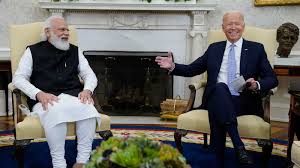
Indian PM Modi meets with US President Biden in the White House recently

There has been a lot of talk recently about India becoming part of some formal military alliance with the US – in response to the rise and actions of China.

But is this likely?

Here are 10 key differences in the world view of India and the USA

New Delhi is wary that any formal alliance with the US could draw it into almost constant military activity such as the Iraq war

India prefers to do its own strategic deals on a country by country basis – rather than manage these through a dominant US strategic alliance. For example, India and Australia have a Mutual Logistics Support Arrangement allowing each to uses each other’s bases

Historically India has never agreed to open-ended commitments that might lead to future military involvement

Of the four countries speculated to be invited to join the Five Eyes security arrangement (the four are Germany, India, South Korea and Japan) – India is the only one of these four to NOT have a treaty alliance with the US

An example of differences between India and the US is Iran and the Nuclear Non-proliferation Treaty (NPT) – the US attacks Iran on the nuclear issue, sees the NPT as something to be enforced – but India has not signed the NPT itself and sees it as discriminatory

There are differences on the “threat” from China – the US is most assertive on freedom of navigation in the South China Sea while India has been quite reserved on this issue

India is more concerned about its Himalayan border conflicts with China than the South China Sea

India generally has little or nothing to say about human rights issues in other countries. Whereas the US and its allies such as the UK and Australia are constantly calling out human rights abuses around the world

The US wants “all in” commitment from allies but India has always been non-aligned and refuses to get drawn into “us versus them” views of the world. One current example is India is finalising a logistics deal with the UK while also negotiating a similar deal with Russia

India is content to be “the world’s biggest democracy” but is not evangelical about it, accepting that all countries are different – a sharp contrast to the US wanting to remake countries in its own image and championing democracy for all

New “Business Champions” group to provide much needed top level links between India and Australia

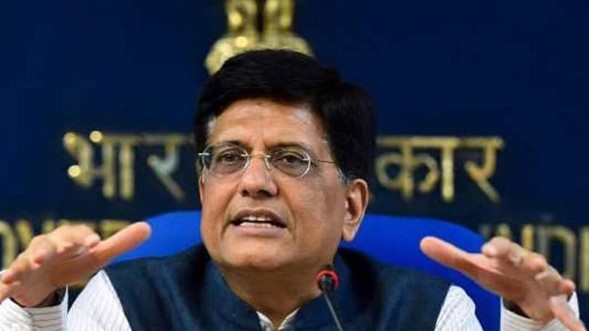
Indian Commerce Minister Mr Piyush Goyal

A new “Business Champions” group will lead top level business engagement between India and Australia – and it was launched last week in India.

INTO INDIA welcomes this move to bring the “top end” of both countries together. Business engagement at this level has not worked well in the past. Most of the business councils and chambers have provided lower level SME engagement – important as this is.

“Supply chains” is behind the enthusiasm of India for the new Australia-India Business Champions Group’s role. Mr. Piyush Goyal, Minister of Commerce & Industry, Consumer Affairs, Food & Public Distribution, Textiles, Government of India said this when addressing the Inaugural Meeting of the Australia India Business Champions.

The Minister is co-chairing the group with Australian Trade Minister, the Hon Dan Tehan.

“The Australia-India Business Champions Group’s key aim is to liberalise and deepen bilateral trade between both the nations and pave the way for collaborative economic growth.” stated Mr. Dan Tehan MP, Minister of Trade, Tourism and Investment, Government of Australia.

Major business organisations leading the group are the Confederation of Indian Industry (CII) and the Business Council of Australia (BCA). Both represent almost all the major business corporations in both countries.

Mr. Chandrajit Banerjee, Director General, CII, pointed to areas such as mining, education, defence, space and emerging sectors which the group can take forward.

Ms. Jennifer Westacott AO, CEO, BCA, highlighted that we must strengthen and reform regional and global institutions, so they deliver for our citizens.  She said the Business Champions would engage directly with the top tier of Australian and Indian Governments on matters critical to business. 

Other panelists at the meeting included H E Mr. Manpreet Vohra, High Commissioner of India to Australia, H E Mr. Barry O’ Farrell AO, High Commissioner of Australia to India, Dr. Anish Shah, MD & CEO, Mahindra & Mahindra Ltd, Ms. Julie Shuttleworth, CEO, FFI, Mr. Rakesh Bharti Mittal, Vice Chairman, Bharti Enterprises, Mr. Mike Cannon-Brookes, Co-Founder and Co-CEO, Atlassian, Mr. Nitish Jain, President, SP Jain School of Global Management, Ms. Verena Lim, Asia CEO, Macquarie Group, Mr. Girish Ramachandran, President, Tata Consultancy Services Asia Pacific, Professor Duncan Maskell, Vice Chancellor, University of Melbourne.

It’s his birthday today, so what does Gandhi say for our modern world?

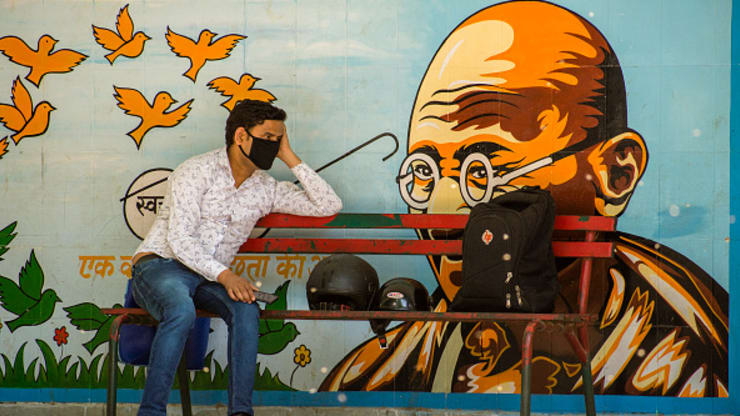
India’s Mahatma Gandhi was born on 2 October 1869 and died in 1948

The Mahatma Gandhi memorial in New Delhi, known as Raj Ghat, expresses his values – it is peaceful and quiet, a green open space with a marble tomb in the middle, marked by one word “Ram” – God, the word Gandhi uttered when shot on 30 January 1948. Here there are no lengthy accolades, just a simple and lasting tribute.

I first visited this on a warm afternoon with time alone – but you are not alone for long in India. I was soon joined by a family of four, there to show the children and pay their respects to this great human being. In doing so, their shining eyes invited me into their circle, we talked, laughed, turning back regularly to gaze at the marble tomb. The moment was defined by simplicity and love.

This was how he lived – you can see this in Mumbai at Mani Bhavan (Gandhi House), a three story home with shuttered windows, a residence that Mahatma Gandhi was able to use when in that bustling city. The house is in a leafy and relatively quiet street.

The austere dwelling seems a long way from our consumer society, for here in Mani Bhavan, the feeling is respectful and quiet. No one rushes. This was indeed the man who said there was enough in the world for everyone’s need but not for everyone’s greed.

Knowing this, it becomes redundant to ask what Gandhi means for our modern world. He means everything.

The world is nervously watching the rise of China, and the contest for leadership in a rapidly changing world. Believing that in situations like this, hatred is the real enemy, Gandhi urged us to hate the sin, love the sinner. His view on answering violence with violence was “An eye for an eye makes the whole world blind”.

Gandhi knew that around the world, people are different – and they see the world differently. He knew that much hostility began because we each tend to believe that our own world view is the correct one.

It was the pragmatist in Gandhi (which infuriated extremists) who accepted that all of our differing world views are neither right nor wrong – they are just differing world views.

There is a story that showed how different this person was – while boarding a moving train one day, one of Gandhi’s shoes slipped off and fell upon the track. As he was unable to retrieve it, Gandhi – to the astonishment of his fellow travelers – calmly removed his other shoe and threw it down the track to where the first had landed. “The poor man who finds the shoe lying on the track,” Gandhi explained, “will now have a pair he can use.”

Laughing in tough times

Karina Wegner is a psychologist in Australia’s sub-tropical Hervey Bay. Karina’s well-researched expert opinion is that “you should have as much fun as possible and laugh as much as you can. When you couple these together, you should be able to keep ‘depression’ (what they now call the disease of the 21st century) away.

“When you enjoy yourself and laugh, you will increase the serotonin levels in your body, thereby decreasing the risk of depression.

When my clients leave my office in Queensland’s Hervey Bay, my practice manager makes sure the client is laughing or at least smiling before they leave.

I have a waiting list of near three months and my clients travel long distances to see the “Optimistic Psychologist.”

University studies have shown laughter can improve your immune system. increase disease fighting antibodies and lower inflammation in the body.

Laughter increases heart rate and blood flow, and has similar health benefits to exercising. Endorphins are released during laughter, which helps to relieve pain, reduce cravings and stress, and slow the ageing process.

Humour can alleviate feelings of stress and depression.

It’s not always easy but when family and colleagues test your patience, put a smile on your face – even forced ones help. Try to find the humour in the situation and make a light-hearted comment. Not always easy, but give it a go!

INTO INDIA shares a few techniques to put a smile on your face:

Look at a photo of your favourite animal (hint – if you look at an Australian Koala you will definitely smile)

Listen to your favourite relaxing music

Sit quietly with no purpose, no agenda, just observe

Visit https://www.projectoptimism.com.au/

Visit https://www.centreforoptimism.com/

Best wishes to everyone and I hope you can find some smiles and laughter in these times – and if you do, share it with others?

Business with India? Leave your ego behind and let Indians run the business

Pretty much every western company that has succeeded in India has done so on the support of a strong local Indian team across all levels. To do this, they have effectively left their ego behind.

Those who struggle typically want to transfer their “culture” to India so they put their expat team in charge of the local team. This is ego centred and mostly does not work. These are mainly companies that do not trust the locals and are over-confident about their own “head office culture”.

Being preoccupied with transferring “the way we do things in our company” to India makes them blind to “the way Indians do things there” which is the most important insight for future success.

So – local management teams are essential in India (and probably anywhere you go in Asia) and that team should lead and manage your enterprise throughout India. This does not mean you do not provide the support of some expats – of course good companies do, but this is to empower the local team. Expats can come and go as needed – but your business needs longevity in India and that is what an Indian management team can provide.

Smart companies that go into Asia also ensure they hire Asians into the HO team, so you have Asians running your enterprise on the ground in Asia and Asians at the right level in HO guiding and advising the HO team.

Real access to family and business networks in India (and probably all of Asia) is mostly only achieve by Indians.

Conclusion – if you want to succeed in business in India, rely on Indians to run your Indian business.