
India economy has weathered the pandemic and set for growth – ASK Capital Management report

ASK Capital Management is a Singapore based entity with a focus on managing and advising India centric investments for institutional and family office clients. Their latest report shows how the Indian economy has weathered the pandemic and is set for growth:

This report relates to ASK India Opportunities Fund – Fund 1

The rapid rise in COVID cases due to the new Omicron variant, hawkish tone by major Central Banks around the world and persistent inflation contributed to a volatile December for the global equity markets. Despite this the markets ended on a positive note with most markets registering positive returns in the month. India was amongst the better performing markets with benchmark BSE500 ending up 3.2% in USD terms while the Fund was up 2.7%, net of fees in December. For the year 2021, the Fund returned 29.7%, net of fees compared to 27.6% for BSE500.

After another year spent in the shadow of the COVID, we begin 2022 with a new variant of the virus disrupting resumption of normal life. This, along with inflationary pressures and a move away from high liquidity and accommodative stance of Central Banks are the biggest risks to global economy for the year. While the new variant of the virus appears less fatal, the disruption means global supply chain issues will take longer to resolve. Tighter liquidity and end of cheap money means investors will have to temper expectations of returns in the new year and bottom-up stock picking will become crucial differentiator.

The Indian economy has weathered the pandemic induced slowdown well due to the proactive and effective steps taken by the RBI and the Government. The economy is above pre-COIVD levels in size and expected to grow around 9% in FY22 and 7.5%-7.9% in FY2023 by various estimates, one of the highest growing major economies in the world. As described in the past, lower debt on corporate balance sheets, controlled NPAs in banking sector and Government policies such as “Make In India” and Production Linked Incentives (PLIs) for various sectors should revive a domestic capex cycle.

While the recovery in India has been strong, it has also been uneven with the rural segment affected more from the Delta variant in Q1FY22. This should normalise over the course of the year and aid in demand recovery. Similarly, hiring activity continues to remain strong which should support demand.

As commodity prices and inflation stabilise, companies should report increase in margins over the coming quarters as prices increases are passed on to consumers. Thus, companies with higher pricing power and better cost controls should be able to deliver superior earnings growth with likely increase in market share. This has historically been the case for our portfolio companies, and we see no reason that this cannot be the case again. Our expectation is for the portfolio to deliver an average earnings CAGR of 26% over the next 3 years.

During the month we exited from Pidilite Industries and added Avenue SuperMart to the portfolio. We believe Avenue SuperMart is a well-oiled business model in a large opportunity landscape with a strong focus on low procurement and operating costs. Its store ownership model, right store size and low supply chain cost with auto replenishments help it to maintain low operating cost to achieve the key pillar of its success – everyday low cost and everyday low price. In a predominantly food and grocery business (52% revenue contribution) with wafer-thin margins (15% gross margin), the company is able to offer everyday low pricing, unlike peers that offer discounts on select days in a week or month, creating a competitive edge.

Contact:

Nikhil Iyer, CFA, Head of Institutional Business, APAC

ASK Capital Management Pte Ltd

m: +65 83800064 EMAIL nikhil.iyer@ask-capital.com

https://www.askfinancials.com/

Will 2022 see continued “hard diplomacy” or can we embrace “smart” and “soft” diplomacy?

INTO INDIA wishes you all a peaceful, prosperous, safe and healthy new year for 2022. This is our last post for this year.

The question for next year is how will we all get on better than we did in 2021?

I hope we will see “smart diplomacy” dominate next year – this is the kind of diplomacy that works with cultural and cross border differences. It is not insulting and does not force the other country into an aggressive response. It takes into account major global shared challenges such as climate change, Industry 4 and the continuing pandemic.

It is “smart” to talk to other countries in a way which allows them to make their own positive contribution to the debate – does not corner them into hostility.

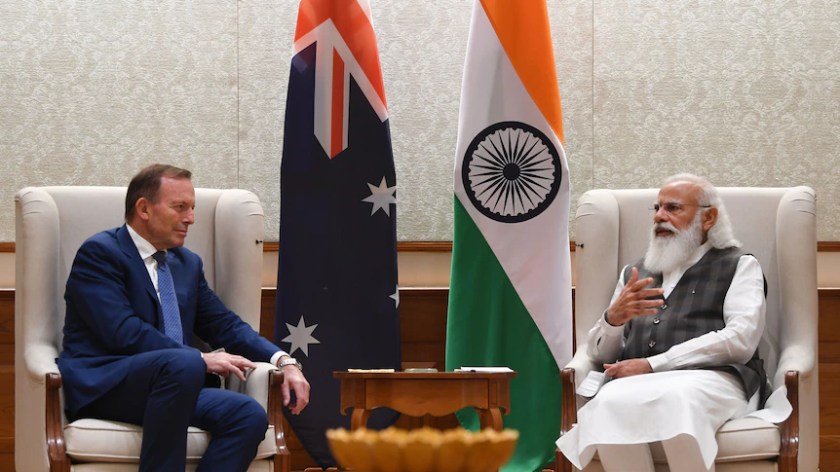
Australia has done some “smart” diplomacy things this year – such as using former Prime Minister Abbott as a special envoy, a move well received in Asia.

Hoping countries will all be a lot smarter in 2022.

It would make it a good year for all of us.

8 things we need to know about India

Confident young Indians like these are driving new entrepreneurial spirit

CAUTION – generalisations are just that, and you will almost always encounter those who do not fit in this list. This is offered to assist those visiting India for business, education or tourism.

1. Successful and confident

Economic success has restored Indian confidence. Indian entrepreneurs are now recognized around the world and there is a national expectation that the next Bill Gates will be an Indian. This entrepreneurial spirit permeates the nation (most dream of becoming entrepreneurs) which is now confident.

2. Never forget rural people

Indian business and political leaders may live the urban lifestyles, but they do not forget the small towns and villages at the centre of rural life – and it’s not just the politicians with an eye for votes, with major corporates such as Infosys pouring resources and funding into village developments.

3. Avoid pointing the finger

Indians become instantly passionate when challenged on subjects like their high tariffs, especially if the challenge comes from the west. The message is, point the finger at India and you can expect a robust response.

4. Oceans of patience

Indians have oceans of patience which can drive westerners crazy, but it gives them a special strength in negotiations. This patience is derived from deeply held spiritual views such as impermanence – Indians are constantly reminded of the impermanence of this life, everything changes, and they can wait when often we cannot. Who has the advantage in this situation?

5. Not just an IT miracle

Do not be fooled with the view that the Indian economic miracle is just driven by call centres and IT. Important as these are, look also at insurance, energy, retail, clean technology, manufacturing, pharmaceuticals and even agriculture as areas where efficiency is producing startling results.

6. Not especially “Asian”

While India feels great about the success of “Asia”, in many ways it does not feel particularly “Asian”. First and foremost, Indians feel Indian, and to them that is vastly more relevant than being geographically part of Asia.

7. Remember the “Father of the Nation”

Whether dealing with the young or the old, in India never forget the “Father of the Nation”, Mahatma Gandhi.

8. Equity up there with democracy

Partly because of Gandhi, Indian leaders are more concerned with equity than with spreading democracy around the world – and cannot understand the enthusiasm of the USA and its allies to champion democracy in unlikely locations.

New “Business Champions” group to provide much needed top level links between India and Australia

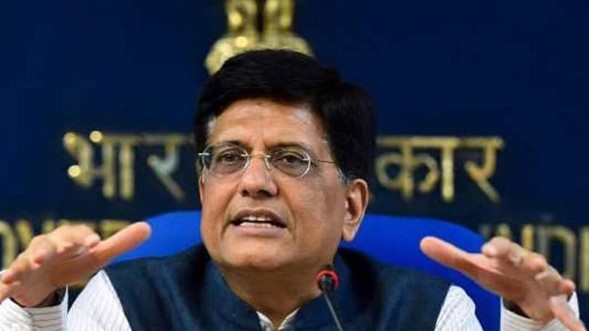
Indian Commerce Minister Mr Piyush Goyal

A new “Business Champions” group will lead top level business engagement between India and Australia – and it was launched last week in India.

INTO INDIA welcomes this move to bring the “top end” of both countries together. Business engagement at this level has not worked well in the past. Most of the business councils and chambers have provided lower level SME engagement – important as this is.

“Supply chains” is behind the enthusiasm of India for the new Australia-India Business Champions Group’s role. Mr. Piyush Goyal, Minister of Commerce & Industry, Consumer Affairs, Food & Public Distribution, Textiles, Government of India said this when addressing the Inaugural Meeting of the Australia India Business Champions.

The Minister is co-chairing the group with Australian Trade Minister, the Hon Dan Tehan.

“The Australia-India Business Champions Group’s key aim is to liberalise and deepen bilateral trade between both the nations and pave the way for collaborative economic growth.” stated Mr. Dan Tehan MP, Minister of Trade, Tourism and Investment, Government of Australia.

Major business organisations leading the group are the Confederation of Indian Industry (CII) and the Business Council of Australia (BCA). Both represent almost all the major business corporations in both countries.

Mr. Chandrajit Banerjee, Director General, CII, pointed to areas such as mining, education, defence, space and emerging sectors which the group can take forward.

Ms. Jennifer Westacott AO, CEO, BCA, highlighted that we must strengthen and reform regional and global institutions, so they deliver for our citizens.  She said the Business Champions would engage directly with the top tier of Australian and Indian Governments on matters critical to business. 

Other panelists at the meeting included H E Mr. Manpreet Vohra, High Commissioner of India to Australia, H E Mr. Barry O’ Farrell AO, High Commissioner of Australia to India, Dr. Anish Shah, MD & CEO, Mahindra & Mahindra Ltd, Ms. Julie Shuttleworth, CEO, FFI, Mr. Rakesh Bharti Mittal, Vice Chairman, Bharti Enterprises, Mr. Mike Cannon-Brookes, Co-Founder and Co-CEO, Atlassian, Mr. Nitish Jain, President, SP Jain School of Global Management, Ms. Verena Lim, Asia CEO, Macquarie Group, Mr. Girish Ramachandran, President, Tata Consultancy Services Asia Pacific, Professor Duncan Maskell, Vice Chancellor, University of Melbourne.

Australia: home to 48 of the world’s top 50 most innovative companies

Bosch and Monash University team up on “smart agriculture”

When you think Australia you might call to mind minerals, vast fields of agriculture or cricket.

But there is another reality about Australia – it’s a smart place.

International companies are leveraging Australia’s talent, government support and research to boost productivity, competitiveness and growth – according to data from Austrade and Boston Consulting Group.

Forty-eight out of Boston Consulting Group’s top 50 most innovative companies operate in Australia. These companies have partnered with Australian organisations to research additive manufacturing, renewable hydrogen technology and cloud supercomputing, among other areas.

Advanced manufacturing: General Electric

GE subsidiary GE Additive and the University of Sydney are establishing a high-tech manufacturing hub. The Sydney Manufacturing Hub will advance Australia’s capability in metal additive manufacturing technology.

Agricultural technology: Bosch

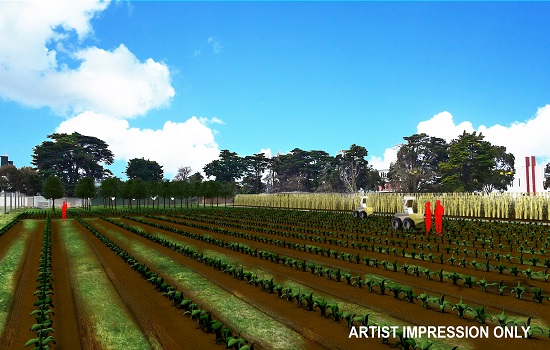
Bosch Australia and Monash University are co-developing Australia’s first smart agriculture research facility. The facility will contain a prototypical ‘smart farm’ to test: artificial intelligence; automation; robotic and advanced sensor technology solutions

Energy: Hyundai

Hyundai, Fortescue and CSIRO are working together to develop renewable hydrogen technology. The group seeks to:

  • develop new hydrogen technologies with the potential for bulk transport
  • build a renewable hydrogen refuelling facility, to deploy hydrogen fuel cell coaches
  • build the first combined hydrogen production and refuelling facility in Western Australia. 

Healthcare: Johnson & Johnson

The Johnson & Johnson Innovation Partnering Office @ Monash is a hub for researchers and early-stage companies. The facility allows them to develop novel pharmaceutical, medical devices, and consumer healthcare solutions.

Technology: Amazon Web Services and Intel

Amazon Web Services, Intel and AARNET established Australia’s first cloud supercomputing facility. Based at RMIT University, the facility focuses on advanced data processing and computing.

So, from the land of minerals, farming and cricket – there is also an advanced technology reason to team up with the Aussies.

Australian critical minerals, infrastructure, energy, technology, agribusiness, education and space – step up to the table for FTA talks with India

The Australian Trade Minister, The Hon Dan Tehan MP, last week pointed to Indian FTA priority areas such as critical minerals, infrastructure, energy, technology, agribusiness, education and space.

He announced a speeding up of talks with India last week and chose the launch of the Canberra chapter of the Australia India Chamber of Commerce to also announce an update of the India Economic Strategy.

This is a great time for business to step forward. You can have a say. You can be at the FTA discussion table.

The Minister said he had asked former Prime Minister, Tony Abbott, to visit India for meetings around the Comprehensive Economic Cooperation Agreement (which is an FTA).

He announced to the AICC that both countries were hopeful of concluding negotiations this year – a dramatic ramping up of the pace.

The AICC has the Hon. Ted Baillieu AO as its Founding Patron.

India speeding up solar power across Africa

Indian PM Narendra Modi meets with African leaders during the International Solar Alliance meeting – an initiative created by India.

India is taking a leading role in supporting the spread of solar power across Africa – where nearly 600 million Africans still do not have access to modern sources of electricity.

India created and leads the International Solar Alliance, which has 86 member countries including Australia – and is now attracting strong participation from Africa.

With drastically falling technology costs, renewable energy has become a cost-effective option of generating clean power all over the world.

The International Solar Alliance (ISA) was conceived as a coalition of solar-resource-rich countries (which lie either completely or partly between the Tropic of Cancer and the Tropic of Capricorn) to address their special energy needs.

The ISA will provide a dedicated platform for cooperation among solar-resource-rich countries, through which the global community, including governments, bilateral and multilateral organizations, corporates, industry, and other stakeholders, can contribute to help achieve the common goal of increasing the use and quality of solar energy in meeting energy needs of prospective ISA member countries in a safe, convenient, affordable, equitable and sustainable manner.

ISA has been conceived as be an action-oriented, member-driven, collaborative platform for increased deployment of solar energy technologies to enhance energy security and sustainable development, and to improve access to energy in developing member countries. The ISA has 122 sun-belt countries that lie between the two tropics as its prospective member countries and currently boasts a membership of 86 countries globally.

India great agritech market but an insider advises “find local partners”

Agritech booming in India but be careful about market entry

A recent story in EVOKE, an agritech site, really caught my eye with a piece of sound advice.

It was so good to read the Managing Partner of Omnivore, Mark Kahn, with his greatest piece of advice to those not already there: do not to move to India immediately. Omnivore is the largest and oldest player in the Indian agritech venture scene

“I’ve never seen a foreign startup succeed in India that was selling directly. Sometimes we have very well-meaning people that relocate their lives here and think they’re going to be able to build an organisation from the ground up and the reality is it’s just very difficult.

“The best thing you could do is get some Indian members on your team, co-create solutions that bridge the gap between whatever you’ve developed earlier and whatever our local farmers actually need and find local partners.

“You should be manufacturing in Australia or maybe India, but you don’t want to build a distribution system yourself and even if you try, you’re not very likely to succeed.”

He pointed to agritech related to water and drought resistance as two high priority opportunity areas.

The agritech opportunities are huge, but INTO INDIA has been advising for a long time that you need partners and a collaborative mindset to really succeed in India.

Adani takes giant steps towards becoming the world’s leading renewables company

Adani Group taking giant steps towards becoming the world’s largest solar power player by 2025.

Adani is taking a massive lead in India into green energy renewables.

But in Australia it is still seen as “the Indian coal company” because of its activities in Queensland – in this market the Adani reputation has taken a hit as a result.

The reality is Adani is a leader in green energy and just got a lot bigger!

Adani Green Energy Limited (AGEL), this week signed share purchase agreements for the acquisition of 100% interest in SB Energy India from SBG (80%) and Bharti Group (20%). 

SB Energy India has a total renewable portfolio of 4,954 MW spread across four states in India.

Adani is super serious about renewables – the transaction marks the largest acquisition in the renewable energy sector in India. The transaction values SB Energy India at an enterprise valuation of approximately USD 3.5 billion.

The target portfolio consists large scale utility assets with 84% solar capacity (4,180 MW), 9% wind-solar hybrid capacity (450 MW) and 7% wind capacity (324 MW).

With this acquisition, AGEL will achieve total renewable capacity of 24.3 GW (1) and operating renewable capacity of 4.9 GW.

You’ve got to hand it to Gautam Adani who has the vision to be the leader in sustainable energy transition globally and makes it one of the largest renewable energy platforms in the world.

Mr Adani created a vision in January 2020, wherein he laid out our plans to become the world’s largest solar player by 2025 and thereafter the world’s largest renewable company by 2030.

India releases its first ever “Australia Economic Strategy” as the two countries move closer

The launch by India on 18 December of its Australia Economic Strategy (AES) – the first of its kind for India – could be an exciting step along the way to increased trade. As KPMG has expressed it: “It demonstrates India’s intent to fast-track the relationship with Australia in a post-pandemic world.” Exciting.

My view is that as Australia and India move closer together, opportunities will emerge for the two to create and lead an “Indian Ocean Countries Group” – a pathway to peace and prosperity in our region.

India and Australia could lead a prosperous and peaceful Indian Ocean Region

The AES is India’s response to Australia’s An India Economic Strategy to 2035 (IES), launched two years ago.

The AES adds to the Comprehensive Strategic Partnership (CSP) announced by Prime Ministers Morrison and Modi in June 2020 – and both are real evidence that India and Australia are moving closer together.

Three pillars of India’s strategy

The AES is based on three pillars: resources; technology & services; and research & innovations.

Five key sectors

According to KPMG there are five key sectors:

The first is Indian investment in Australia’s mining and resources sector, especially lithium, cobalt and nickel, important for a rapidly growing e-vehicle market.

Second is Indian investment in renewable energy both in the establishment & operation of solar farms as well as the supply of EPC services with Sterling Wilson Solar Limited being a case in point.

Third is health and pharmaceuticals. Collaboration in clinical trials, cancer research, medical & health-tech and training, knowledge transfer and sharing of Australian best practices in hospital administration and patient care.

Fourth is investment in Australia’s agribusiness sector including farmlands and Australian food processing capabilities. There is also significant potential for knowledge sharing and collaboration in best practices for dairy processing.

The fifth is software & information technology. India’s tech giants already have sizeable operations in Australia with further organic and inorganic growth on the cards and an opportunity to extend their business portfolio into government accounts. Further, as Australia looks to build up internal capability and capacity, there is opportunity for the tech giants to set-up centres of excellence or innovation hubs in strategically important areas such as cyber security, cloud and digital, for Australia and the wider ASPAC region.

Make in India program

The new AES, and IES and the wider strategic partnership, all serve to complement India’s flagship Make in India program, which makes India a credible alternative for lower cost manufacturing for Australian companies as they look to diversify business and supply chain risk in a post pandemic world.

Conclusion

Close relations have historically been built on a combination of defence/strategic alliances, mutual investment and trade.

For Australia and India, the future is looking bright in all three areas.