4 trends for Indian university students studying abroad

Trend 1

STEM courses (Science, Technology, Engineering, and Mathematics) will remain the top preferences for Indian students for studying abroad.

Trend 2

Unusual course choices to increase – The Open Doors Report on International Educational Exchange shows Indian students in the US are now showing a strong interest in off-beat courses like marine engineering, geophysics, game design and development. One main reason behind the shift is that these interdisciplinary courses are not easily available in their home countries. Also, as parents in India become more supportive of their children’s career choices, students are no longer shying away from choosing the road less travelled.

Trend 3

With the ongoing fourth industrial revolution and rapid progress in automation, machine learning and AI (artificial intelligence), traditional job roles are evolving, and new jobs are coming up. Courses such as Robotics, Automation and Mechatronics are likely to witness increased demand in 2019.

Trend 4

The USA, Canada and UK have been the top destination, but challengers will emerge or pass them – including Australia. Plus, spending on tuition and hostel fees by Indians studying overseas has gone up by 44 per cent from $1.9 billion in 2013-14 to $2.8 billion in 2017-18. Australia now has 68,000 Indian students.


PM Modi an achiever for India – whether he wins or loses this week

Prime Minister Narendra Modi swept into power in 2014 with the first single-party majority government in over three decades – thus holding out the promise that “things would happen”. With results to come in this week for Indian elections, it is time to ask: Have things happened?

PM Modi has been an achiever for India and his legacy will continue whether he wins or loses this week – with higher expectations from governments, more revenue for governments, increasing digitisation and anti-corruption – and an expectation that India is a global player and needs global political leaders like Modi.

Modi

There are four achievements of Modi that have changed and are changing India forever – and for the better.

The first was to show he was serious about ending corruption – his Demonetisation move shocked many, hurt the economy short term but sent a clear signal. Indians had been used to governments paying lip service on corruption – Modi took action. Increasing digitisation of government means less opportunity for corruption.

Second, the world’s biggest tax reform was his Goods and Services Tax (GST), long talked about in Indian politics but it took the skills of Modi to make it happen. Modi was outstanding in gaining state government support, essential to the process. Government revenue is now getting to where it should be. As a result, governments in India are awash with money and can now do things.

Third, Modi knew that the key to improving India’s attractiveness to global investors and businesses was reform of the Bankruptcy law. Since Modi, business leaders who had run their businesses into the ground would be called to order and stripped of control. He was also a global sales person for India – vital in the global economy.

Fourth, Modi has also activated the 29 state governments by financing and introducing competition. Indices, which rank states on the ease of doing business, health, education and water, already creating energy and activity in every state capital.

I am not saying each of these were done flawlessly but given the history of India it is amazing that they were done at all. Yes, there is a lot to be done. But against the odds and expectations, Modi has made significant change to India that will last for decades or more. Win or lose, he has earned his place in history.

IndependenceDay


PM Modi leads India to 6th largest economy in the world with high growth

Things are happening fast under the leadership of the Prime Minister,  Shri Narendra Modi – India is having its best phase of macro-economic stability, becoming the sixth largest economy in the world from being the 11th in the World in 2013-14.

Presenting the Interim Budget for the year 2019-20 in Parliament this week, the Union Minister for Finance, Corporate Affairs, Railways & Coal, Shri  Piyush Goyal said “India is the fastest growing major economy in the world” with an average GDP growth  of 7.3% per annum, the highest ever achieved by any Government since economic reforms began in 1991.

Shri Goyal said  under the leadership of Prime Minister, Shri Narendra Modi, a clean, decisive and stable Government reversed the policy paralysis, laid the foundation for sustainable growth  and restored the image of the country.

New India by 2022

Shri Goyal said that a New India would celebrate its 75th Independence year in 2022 when every family would have a house with access to water, electricity and toilets; farmers income would have doubled; and the country would be free from terrorism, communalism, corruption and nepotism.

This is clearly an ambitious government, and the track record so far proves that Modi does get things done.

blackstone

Can you name India’s biggest hotel chain?

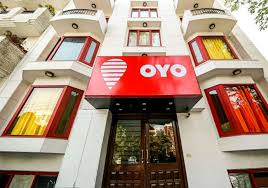
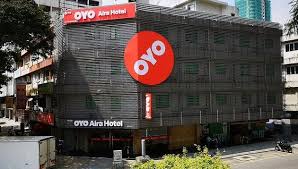
This chain started in India, expanded to China and has now invested heavily in Indonesia. It is called OYO (On Your Own) and was started in 2011 by then 18-year old Ritesh Agarwal. It is like the “Uber” of hotels – acquiring and setting standards for previously struggling hotels.

oyo

The group now has more hotel rooms in India than Taj Hotels – of course, Taj is at the top end while OYO has been a big provider of budget rooms.

Within three months of its foray into Indonesia, the company has launched the first phase of expansion in 16 cities and witnessed a 5x growth. It aims to expand to 100 cities by the end of the year.

oyo4

The company is adding on an average 70 hotels in Indonesia every month.

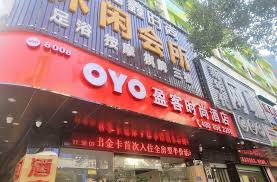
OYO created a uniquely Chinese identity for its local Chinese business and is localising in Indonesia.

oyo1

OYO is in over 280 cities in China, with about 5,000 hotels, and over 260,000 rooms.

The company has already started operations in Malaysia and will enter Philippines soon.

oyo3

It plans to have a pan-southeast Asian presence by the end of the year, before it starts making a move towards Europe.

Happy Republic Day for all in India, land of the “freedom fighters”

Today is Republic Day in India, celebrating 26 January, 1950, when the Indian Constitution came into effect.

India’s other major national event is Independence Day, a celebration of 15 August, 1947, when India became independent of the United Kingdom.

republic

The two days that created the “world’s largest democracy” really came about because of hundreds of years of “freedom fighters”. I am going to list some names – and apologies for all the great names I have not been able to include.

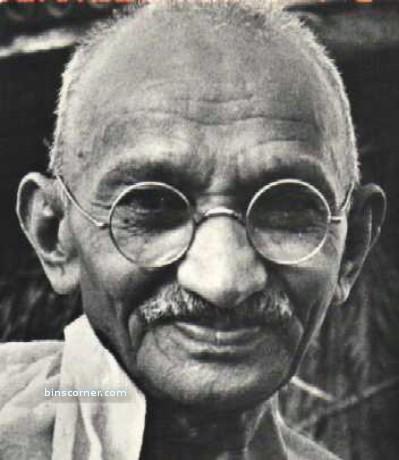
Most of us would think of Mahatma Gandhi (Mohandas Karamchand Gandhi 1869-1948) who became an inspiration to many around the world – including Martin Luther King, Nelson Mandela and The Dalai Lama.

att00036_

But other greats include Pandit Jawaharlal Nehru (India’s first Prime Minister), Subhas Chandra Bose and Sardar Vallabhbhai Patel.

republic7

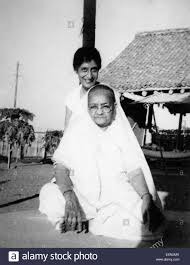
Picture above – Rajkumar Amrit Kaur

Indian women played a strong and vital role for freedom, including Sarojini Naidu, Rajkumar Amrit Kaur and Kasturba Gandhi.

republic8

Above – Kasturba Gandhi

Inspirational for many of these was the example of courage and self sacrifice shown by the young Bhagat Singh who lost his life in the cause.

republic 5

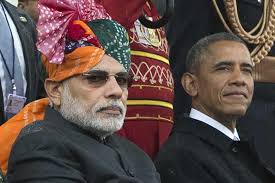
Above – Indian Prime Minister Modi hosts USA President Obama in 2018 at Republic Day celebrations in New Delhi

India – you have earned the right to celebrate! Have a great day.

India’s Bajaj Auto to jump into electric vehicles next year

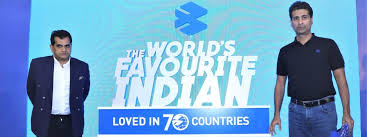
Pune-based Bajaj Auto is planning to make a foray into electric vehicles (EV) next year and is hoping to build market share in India, its Managing Director Rajiv Bajaj said Monday. The new marketing slogan is “The World’s Favourite Indian”.

bajaj5

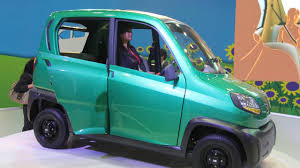
The company plans to launch electric version of its quadricycle Qute along with electric three-wheelers next year.

He also said the company would bring KTM-owned ‘Husqvarna’ motorcycle brand to the Indian market this year with “half a dozen” products in the pipeline.

bajaj1

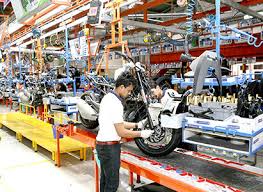
Bajaj said the company has leadership positions in over 20 overseas markets such as 70 per cent share in Bangladesh and around 50 per cent in Nepal and Sri Lanka and it would like to replicate this in India.

“We would like to be a little more successful in the domestic market than we have been so far in the motorcycles market,” he said.

bajaj2

In India: “We have only 20-21 per cent share. We think now the time has also come that after having done a good job overseas, after having huge dominant position in India in three-wheelers, it is about time we make the same impact in the domestic motorcycle segment in India as we have done across the world.”

Other big motorcycle makers in India are Yamaha, TVS and Honda.

Bajaj also has a partnership with British niche bikemaker Triumph.

Indian economy to pass the UK in 2019 to become 5th in the world – PwC

India is likely to pass the United Kingdom in the world’s largest economy rankings in 2019, becoming number 5, according to a report by global consultancy firm PwC.

The report said: “While the UK and France have regularly switched places owing to similar levels of development and roughly equal populations, India’s climb up the rankings is likely to be permanent.”

PwC’s report projects real GDP growth of 1.6 per cent for the UK, 1.7 per cent for France and 7.6 per cent for India in 2019.

PwC’s Global Economy Watch is a short publication that looks at the trends and issues affecting the global economy and details its latest projections for the world’s leading economies.

Really engaging with India becomes a smart step for anyone in business, politics or education – but start with the right strategy.

blackstone

Kerala – great tourism but also good for innovative business

India got its largest startup ecosystem Sunday when Kerala Chief Minister Pinarayi Vijayan inaugurated a facility housing incubation set-ups across a string of segments in modern technology.

The Integrated Startup Complex under the Kerala Startup Mission (KSUM) includes the ultra modern facilities of Maker Village that promotes hardware startups, the BioNest that promotes medical technologies, BRINC which is the country’s first international accelerator for hardware startups; BRIC which aids developing solutions for cancer diagnosis and care, and a Centre of Excellence set up by industry majors such as UNITY.

kerala3

After the completion of three more projects, Kerala will have startup and incubation space of 5 lakh sq ft, which will be the largest of this type in the world.

No less than 30 applications for patent has gone from startups with the 13.5-acre TIZ, the CM noted, lauding it as a sign of the high-quality work in the zone. Simultaneously, Kerala was sensing increasing optimism in boosting software export from the state.

M Sivasankar, secretary, IT (Kerala), pointed out that the entire space at the TIZ facility has been sold out.

kerala2

“This has never happened in our country, where it usually takes a couple of years for an incubator to get the whole area occupied,” he said. “The first three floors of the new complex have been furnished, while the rest of the floors have already got allotted to various startups.”

“The campus has another incubator complex coming up and it will be opened early next year,” Sivasankar said.

Besides the Maker Villager with its 30-odd startups, the facility has nascent firms working in fields such as biotechnology, computer-aided design, augmented/virtual reality and advanced communication.

So – Kerala is “gods own country” for tourism but also a magnet for innovative business. Worth a visit.

kerala

Can Australia make Asia a top priority?

A new study shows that three of the world’s top five economies by 2033 will be Asian, with China number one, India third and Japan fifth. The US will be second and Germany fifth.

This suggests Australia’s trade and investment focus for the next 15 years needs to swing more sharply to Asia.

The study is the World Economic League Table, published annually by the Centre for Economics and Business Research, or CEBR, in London.

It would be timely for Australia to radically change its approach to diplomatic appointments – our “plum” diplomatic postings remain Washington and London, but should now shift to Beijing, New Delhi and Tokyo.

We need to boost our presence in other Asian economies too – South Korea is set to become the 10th-largest, Indonesia (12th), Thailand (21st), the Philippines (22nd), Bangladesh (24th) and Malaysia (25th), all making the top 25.

On top of this, one of the world’s greatest transformational projects is on our doorstep – China’s Belt and Road Initiative might be controversial but is a growth driver. Infrastructure spending is set to increase from US$11.5 billion, or 13.5 percent of global GDP last year, to US$27.4 billion, or 15.5 percent, by 2032, largely due to this initiative.

While China is high profile, quietly building a supersized economy is India which in 2018 remained ahead of China to retain the world’s fastest growing large economy status.

Yet Australia has largely put India on the backburner, unable to complete the kind of trade agreements that we have with China and other Asian countries. This low focus on India needs to shift over the next 15 years of growth there.

David Morris, and Australian who chairs the United Nations Asia Pacific Business Forum, agrees that Asia is now vitally important to the global economy. His consistent message is: “We are in the midst of the biggest global economic shift in memory, with East Asia now driving growth in the world economy”.

The Australian specialist India advisory firm India Avenue Investment Management points out that Indian equity markets performed quite well relative to their emerging market and developed market peers – yet our focus has been on three regions which fared particularly poorly in 2018 – China, Australia and Emerging Markets (which China dominates).

Granted, Australia has shifted focus to Asia, as shown by the 2016 opening of our largest and most expensive embassy in Jakarta, Indonesia at a cost of A$415 million and hosting 500 staff.

Despite this, one of Australia’s major research houses, the Lowy Institute, has long claimed that our Department of Foreign Affairs and Trade is “under-resourced over a period of several decades”.

The symbolism at the very top suggests we are struggling against the shift to Asia – former Ministers and Prime Ministers almost salivate at the chance to take the top post in London or Washington.

It is time to shift this focus to New Delhi, Beijing and other parts of Asia – while these are the epicentres of our future, it is unlikely ex politicians will pursue them as vigorously as they chase the old world.

Perhaps appointing Julie Bishop as our Ambassador in a major Asian country would send better signals?

Symbolism is important, especially for investment and trade, so sending top ranking former politicians into Asian posts could have a powerful effect – so long as we give them the resources to do the job.

Knowledge of Australia remains dangerously low across the whole of Asia, including Commonwealth partners such as India and Malaysia. We are variously seen as a “kangaroo nation” or a giant mine and even a “white enclave” (admittedly said more in private these days), showing ignorance of our major multicultural achievements. This ignorance is dangerous for diplomatic and defence relationships and is restricting our trade.

Education and tourism are the two sectors that can really turn this around, giving Asians a first-hand experience of what a great country Australia is. We are boosting efforts in both, but do we really grasp the vast potential size of the market?

Only by shifting our diplomatic resources more and more to Asia will we gain a true understanding of these markets and how we can build a positive future together.