Business with India? Leave your ego behind and let Indians run the business

Pretty much every western company that has succeeded in India has done so on the support of a strong local Indian team across all levels. To do this, they have effectively left their ego behind.

Those who struggle typically want to transfer their “culture” to India so they put their expat team in charge of the local team. This is ego centred and mostly does not work. These are mainly companies that do not trust the locals and are over-confident about their own “head office culture”.

Being preoccupied with transferring “the way we do things in our company” to India makes them blind to “the way Indians do things there” which is the most important insight for future success.

So – local management teams are essential in India (and probably anywhere you go in Asia) and that team should lead and manage your enterprise throughout India. This does not mean you do not provide the support of some expats – of course good companies do, but this is to empower the local team. Expats can come and go as needed – but your business needs longevity in India and that is what an Indian management team can provide.

Smart companies that go into Asia also ensure they hire Asians into the HO team, so you have Asians running your enterprise on the ground in Asia and Asians at the right level in HO guiding and advising the HO team.

Real access to family and business networks in India (and probably all of Asia) is mostly only achieve by Indians.

Conclusion – if you want to succeed in business in India, rely on Indians to run your Indian business.

Breathing program making Yale students happy coming to Australia in September

Art of Living – quick, simple program for happiness in tough times

A program from India that is being used at Yale University and many other American universities to improve wellbeing of students – is coming to Australia online.

Starting on 30 September, this short Pan Australia Happiness Program will be held in the Presence of Gurudev Sri Sri Ravi Shankar who creating the breathing technique that changes lives. INTO INDIA has been doing this program for many years and loves the energy and simplicity of it.

This is a super simple, quick and unbelievably powerful way to have a good day!

If you are feeling alone.

If covid is dominating your mind.

If your breathing is shallow.

If you feel anxiety and stress.

Step in and join a big and strong group of like-minded people who believe in contributing and creating waves of happiness, sharing, and caring that are so much required right now.   

Registration link: www.artofliving.org/au-en/program/6401

Videos: The videos below showcase how Breathing and Meditation can help us become stress-free

James Nestor, author of Breath, on his research & the power of SKY (Sudarshan Kriya)

Take a breath: What a new study from Yale reveals about stress and mental health

Art of Living Australia Foundation is looking forward to sharing this beautiful program with you and your friends and colleagues.

Contact for further information – Rohit 

Art of Living Happiness Program and Sri Sri Yoga Facilitator

0423 531 787

“Make others comfortable and you will see that Nature will take care of your comfort” Sri Sri Ravi Shankar

Affordability and lack of credit holding back India’s digital economy – but not for long

Nitin Jain is CEO and principal fund manager at Kotak Mahindra Asset Management (Singapore)

While predicting rapid growth, Nitin Jain of Kotak Mahindra Asset Management (Singapore) says there might be one catch – the India digital economy has to overcome one big hurdle – affordability. This is matched by a shortage of consumer credit.

Nitin Jain explains:

With per capita incomes of about $2,000 and large infrastructural challenges, to offer a value proposition at a mass level is extremely challenging, and requires large capital.

2021 has been a breakout year with more than $20bn in funding so far this year and almost $10bn in July 2021 alone. Prior to this the average was just $8bn-$10bn per year.

The future is looking bright for India to become a credit-rich country enabled and backed by data. Fintechs with buy mow pay later (BNPL) businesses will help fuel the data backed credit boom.

With one of the youngest economies with about 1.4 billion people, the highway to growth is long.

India already have more than 100 million users on Amazon, and travel, transport, ed tech, food tech, gaming, SaaS in enterprise and mass, are seeing millions getting added every month.

Traditional businesses tend to grow in an algebraic way, but digital businesses are growing at geometric scale and some potentially at logarithmic scale. 

We as investors are keenly analysing these changes and investing in upcoming opportunities and remain hawk-eyed on potential disruptions.

A vibrant digital ecosystem throws in immense possibilities of large capital coming to India.

Tens of billions have been invested by global investors in Chinese internet businesses and India is at a similar stage and with the recent chaos, potential realignments can accelerate the flows.

Y2K was a watershed moment for India IT services and 20 years later, Covid-19 will likely be a watershed moment for the Indian digital economy.

Indian economy primed for growth – old and new

Nitin Jain CEO and principal fund manager of Kotak Mahindra Asset Management (Singapore)

For investors, India is at a very interesting juncture, according to Nitin Jain of Kotak Mahindra Investment Management.

The old economy is set to make a comeback after a Covid-19 hiatus and the digital economy is primed for hyper growth – perfect combination!

Nitin Jain says: “The latter is becoming more pertinent when we see serious regulatory challenges emanating from the biggest new economy play in the world, China.”

On the day when the China ed-tech companies and other new economy stocks were reeling under the fear of profits being taken away, Zomato, a fast growing Indian food tech company had its listing day gains of more than 50%.

Close on the heels are many other digital businesses which are getting ready for listing.

Indians are already hooked to the internet and now we are seeing transaction-related internet businesses gaining mega scale. 

In fact, around 750 million have access to a mobile payment system tied with the Aadhar card, a biometric card which uniquely identifies an individual and is very easily accessible by any business, government services, and healthcare services securely, seamlessly and at almost no cost.

So – time to review your investment and business/market entry strategies?

Getting lost in Higginbothams – amazing bookshop in Chennai

You can get lost in Higginbothams – or, at least, I have!

On Chennai’s Mount Road, Higginbothams has stood tall and proud since 1844. Said to be the oldest bookstore in India, it was founded by Abel Joshua Higginbotham—an India-born Englishman.

After an unsatisfying career as a seamen, Higginbotham became the manager of a bookstore in the basement of a Methodist chapel. He bought and ran the store for 60 years with his youngest son, before switching to the current Mount Road location.

The bookshop is housed in a grand, colonial structure and still carries an old world charm with wooden furniture and tall stained-glass windows.


LIC Building, 116, Anna Salai, near Regional Passport Office, Chennai.

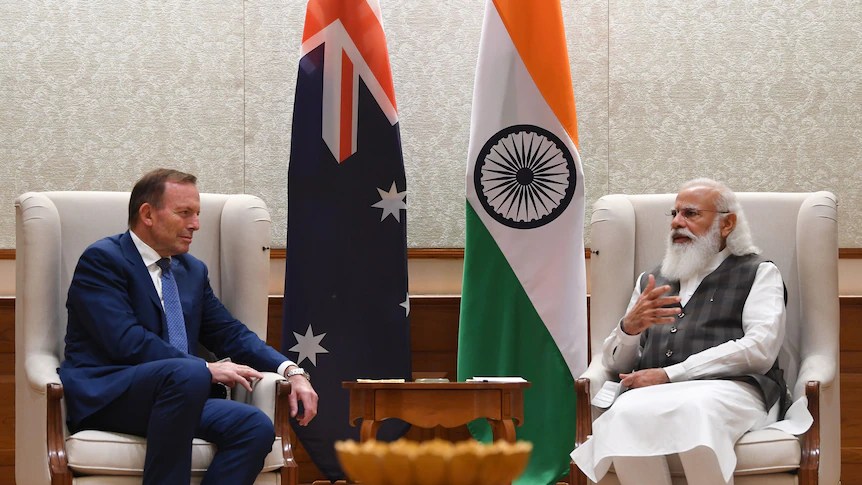
Tony Abbott might have overstated it – but he is more right than wrong on India

Tony Abbott wants Australia to make a big shift towards India and away from China.

Despite some hysterical responses from two former Aussie PM’s, Tony Abbott has by and large got it right on India and we should work towards the closer relationship he believes is possible – and necessary!

Consider this verbal stoush:

“The answer to almost every question about China is India. Although currently not as rich as China … India is perfectly placed to substitute for China in global supply chains … India has revived the Quadrilateral Security Dialogue, and the first in-person Quad summit is expected before the end of the year. Under Modi, India has invited Australia to join the annual Malabar naval exercises that will soon involve India, the US, Japan, Australia and also the UK … It will be an impressive show of strength, demonstrating the democracies’ commitment to a free and open Indo-Pacific … If Australian business and officialdom were to make the same effort with India that they’ve long made with China, there’s potential for a ‘family’ relationship with India that was never likely with China.”

– Former prime minister Tony Abbott in The Australian (10/8/21)

“No, (Abbott’s comment) is just wrong. We all agree our relationship with India has been underdone over the years … India has got a very deep longstanding protectionist political culture. They weren’t even prepared to sign up to RCEP … You have got to be realistic about what you can achieve in terms of trade. They are different countries, different economies. We should be aiming to have much stronger deeper relations with India …  Every prime minister should and will do that. But the idea that can sort of delete China and insert India is just nonsense.”

– Former prime minister Malcolm Turnbull at a La Trobe University webinar (10/8/21)

“We have got to be deeply realistic about one thing (about the Quad). Is it the assumption of future Australian governments, like Tony Abbott’s view in today’s press, that the Indian navy is going to go steaming into the South China Sea to defend Uncle Sam’s interest if the balloon goes up over Taiwan? I think not   …  We need to ask some very hard military questions about the core strategic utility of this (the Quad) for the longer term … We need to go into this with wide eyes open, not the blithering idiot remarks we’ve seen from Abbott in today’s newspapers.”

– Former prime minister Kevin Rudd also at La Trobe University

“The one thing we should not be doing is saying to India, this is to line you up to be the next member of ANZUS to take on China. I agree with what Kevin said, that equally just plays into the paranoia of China … We have to just move gently, avoid extravagant language (with India) …  Frankly, extravagant claims of the type we were talking about a moment ago are not helpful.”

– Malcolm Turnbull again

“India is the world’s emerging democratic superpower and my god don’t we need another democratic superpower in the world right now. Isn’t it so important that a country like Australia do everything it can to ensure India does take its rightful place up there at the head of the world’s great democracies.”

– Tony Abbott, Australia India Address (17/8/2021) 

Well, what do you think?

Winning in India – less about sales and more about culture and relationships  

Most Indians continue to live in joint families – your business host might be the same so be curious about their life and culture

When a company sends a salesperson into the Indian market, the goal is to fill the order book as quickly as possible – there is no time for that person to build ongoing relationships.

The result at best is a quick transaction based on price.

It rarely lasts.

India is a country where relationships drive and impact all aspects of business. That is “how they do things there” and expect us to be the same.

Some tips for relationship building in these tough times:    

You can build good relationships during Covid by hosting a zoom or similar catchup to see how things are going – no big agenda, share experiences and listen.     

You can join groups and chambers and be seen as a player.  
     
You can accept the intangibility of relationships and give your key executives time and resources to build them.      

You can look up Indian culture, architecture and history so you can have informal conversations about things close to their heart.

You will need strong curiosity and listening skills.

Really, decisions about future business with India need to be C-Suite and Boardroom driven, based around a minimum three-year strategy. And giving your people the right to spend time on the intangible of relationships is the best first step.  

Infosys now in the “big four” of Indian companies

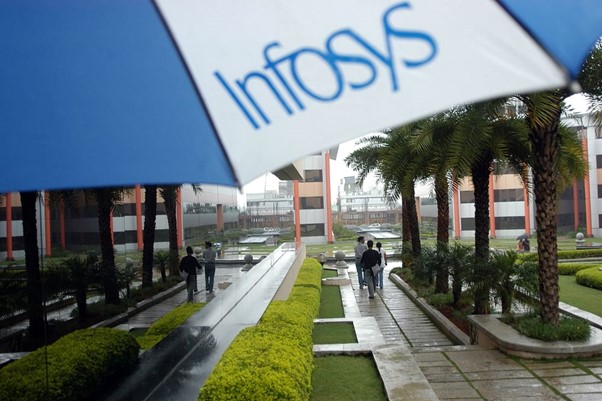
Infosys, a global IT firm headquartered in Bengaluru, joins the “big four”

Infosys Ltd this became the fourth Indian firm to reach a market capitalization of US$100 billion.

The IT services company has joined TCS (Tata Consulting Services), Reliance Industries, and HDFC Bank in passing the US$100 billion market value threshold.

Reliance Industries (originally a petroleum business but now diversifying to telecoms and retail) is the most valuable company, valued at US$184.69 billion), followed by Tata Consultancy Services (TCS) at US$181.18 billion and HDFC Bank at US$113.51 billion.

Something else to turn your mind to India – India’s GDP is likely to grow at 18.5% in the April-June quarter this year, according to an SBI report.

India second to China for APAC startups and globally third largest unicorn ecosystem

According to GlobalData, Indian entrepreneurs received US$ 16.9 billion in venture capital investment in 2021, second only to Chinese peers in the Asia-Pacific (APAC) region.

According to GlobalData’s financial transactions database, 828 venture capital financing agreements were reported in India between January and July 2021, with a total declared funding value of US$ 16.9 billion.

Flipkart raised US$ 3.6 billion, Mohalla Tech (ShareChat) raised US$ 502 million, Zomato raised about US$ 500 million, and Think and Learn (Byju’s) raised US$ 460 million in India between January and July 2021.

“While several of the top major countries globally saw a drop in VC financing value in July compared to the previous month, India managed to display growth despite a decline in VC funding transaction volume,” stated Mr. Aurojyoti Bose, Lead Analyst at GlobalData.

India has becoming a digital-first economy as smartphone usage has increased and mobile Internet has become cheaper. As a result, IT firms have benefited the most from this trend.

According to GlobalData, India has the world’s third-largest tech unicorn ecosystem, after only the United States and China. VC investors are showing interest in companies in e-commerce, social media and social networking, food delivery, edtech, and digital payments at the COVID-19 pandemic, according to Mr. Bose.

Australia: home to 48 of the world’s top 50 most innovative companies

Bosch and Monash University team up on “smart agriculture”

When you think Australia you might call to mind minerals, vast fields of agriculture or cricket.

But there is another reality about Australia – it’s a smart place.

International companies are leveraging Australia’s talent, government support and research to boost productivity, competitiveness and growth – according to data from Austrade and Boston Consulting Group.

Forty-eight out of Boston Consulting Group’s top 50 most innovative companies operate in Australia. These companies have partnered with Australian organisations to research additive manufacturing, renewable hydrogen technology and cloud supercomputing, among other areas.

Advanced manufacturing: General Electric

GE subsidiary GE Additive and the University of Sydney are establishing a high-tech manufacturing hub. The Sydney Manufacturing Hub will advance Australia’s capability in metal additive manufacturing technology.

Agricultural technology: Bosch

Bosch Australia and Monash University are co-developing Australia’s first smart agriculture research facility. The facility will contain a prototypical ‘smart farm’ to test: artificial intelligence; automation; robotic and advanced sensor technology solutions

Energy: Hyundai

Hyundai, Fortescue and CSIRO are working together to develop renewable hydrogen technology. The group seeks to:

  • develop new hydrogen technologies with the potential for bulk transport
  • build a renewable hydrogen refuelling facility, to deploy hydrogen fuel cell coaches
  • build the first combined hydrogen production and refuelling facility in Western Australia. 

Healthcare: Johnson & Johnson

The Johnson & Johnson Innovation Partnering Office @ Monash is a hub for researchers and early-stage companies. The facility allows them to develop novel pharmaceutical, medical devices, and consumer healthcare solutions.

Technology: Amazon Web Services and Intel

Amazon Web Services, Intel and AARNET established Australia’s first cloud supercomputing facility. Based at RMIT University, the facility focuses on advanced data processing and computing.

So, from the land of minerals, farming and cricket – there is also an advanced technology reason to team up with the Aussies.