Despite the huffing and puffing, China and the USA remain at the top of India’s trading partners

China trade is holding at much the same level as USA

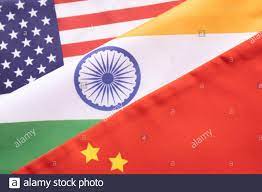
China and the USA might fluctuate in terms of who is the biggest trading partner of India, but the one stable thing is that they both remain around the same level as India’s biggest trading partners.

If you pay attention to the posturing over border clashes with China and the “contain China” rhetoric of the QUAD, you will be surprised that very little has changed in India’s trading relationships. There might be change ahead, but it is not happening now.

In Fiscal 21, China two-way trade is at US$86 billion, USA US$80 billion, and UAE US$43 billion.

The countries that India IMPORTS vastly more than it exports are (roughly in order) China, Germany, Saudi Arabia, Australia, Japan, Kuwait, Indonesia, Iran, Switzerland and Iraq.

While the US trade does favour the US, it is the closest major trading partner to delivering anything remotely close to trade balance – India exports roughly US$38billion while it imports US$50 billion.

Smaller partners that Indian EXPORTS dominate the relationship are Bangladesh and Sri Lanka.

India now chasing trade deals – having resisted for decades

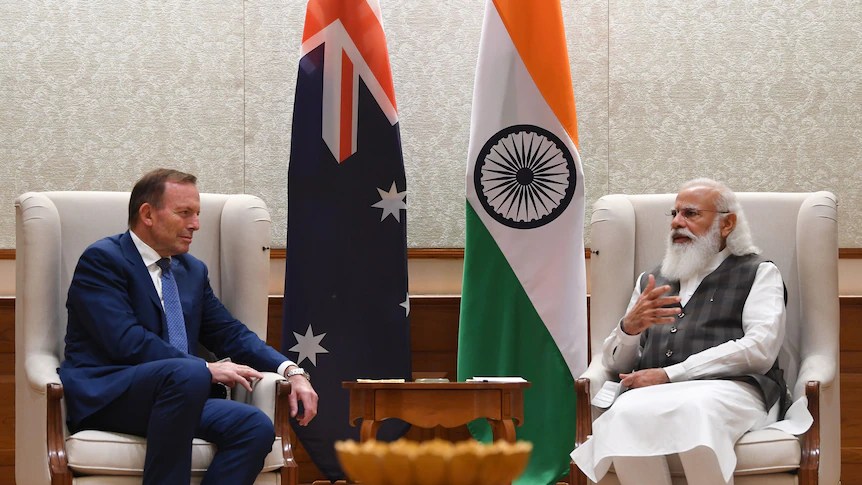
Indian PM Narendra Modi meets recently on trade with former Australian PM Tony Abbott

What has changed for India? It seems that having resisted trade deals for years, it now plans by the end of March 2022, to complete multiple quick-fire bilateral trade agreements.

Something has not changed however – the Indian government, distrustful of full scale FTA’s, is prioritizing “early harvest” pacts over comprehensive free trade agreements.

What has changed is the pandemic and the rise of China.

Therefore, the Indian government is focusing on strengthening the trade with G-7 nations with strong Indo-Pacific strategies and those with growing influence in central Asia such as the United Arab Emirates.

Australia, at a key position in the Indo-Pacific, is a high priority. As a fellow member of the QUAD, India and Australia have never been so close strategically and are keen to add trade now.

In large part, this is India’s push to do well as supply chain realignments take place – there is only a narrow window of opportunity to get these deals done.

How big is this? The government is negotiating bilateral trade agreements with 20 countries and expects to complete half a dozen deals, including those with Australia and Britain by this December and March 2022. 

India is ambitious – Mr. Piyush Goyal has set kept a target of US$ 400 billion for annual merchandise exports – almost 38% higher than US$ 290 billion achieved in last year and plans to achieve US$ 2 trillion annual merchandise exports by the end of this decade.

Outcome? Lots of deals that will not be quite world class Free Trade Agreement (FTA) but which will have some wriggle room.

KIIT & KISS Founder has been awarded the “Sandipani Gourav Maharshi Samman-2020” – dedicates award to young tribals

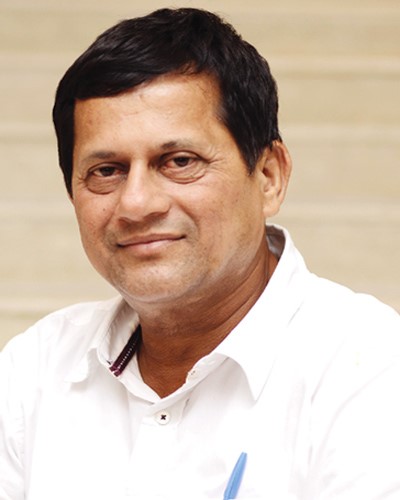
Dr Achyuta Samanta dedicates award to young tribals

Awards and recognitions are no mere feathers in the cap for the KIIT and KISS founder Dr. Achyuta Samanta, but it has become a reality about inheritance of ideals built on a foundation of benevolence and concern for others.

Dr Samanta is a social worker, educationist and philanthropist.

He has pioneered an Art of Giving program that is a force for change.

Kalinga Institute of Social Sciences – KISS, comprises of KISS Foundation, KISS School & College and KISS University. KISS Foundation is an NGO in India headquartered in Bhubaneswar, Odisha. School, College and University is the educational wing of this initiative located at the intersection of food, education and empowerment.

Dr Samanta’s ventures are powered by a belief that a better world – free from hunger, poverty & illiteracy – is possible. We provide free education, accommodation, food and healthcare to over 30,000 indigenous students currently studying at our main campus in Bhubaneswar. We are currently 20,000 alumni strong. We aim to serve an additional 10,000 students across our satellite centres which are going to be functional soon.

Dr. Achyuta Samanta, is also a Member of Parliament (Lok Sabha), Kandhamal, and has been conferred with the prestigious “Sandipani Gourav Maharshi Samman-2020” by Bharatiya Sanskrutik Sambhardhak Trust, Porbandar, Gujarat on the eve of celebration of the Silver Jubilee of the trust.

In a ceremonial event held in the presence of Shri Nimaben Acharya, Hon’ble Speaker, Gujarat Legislative Assembly, a galaxy of intellectuals and saints of the nation, this honour was bestowed upon Dr. Samanta for his exemplary dedication and lifetime contribution towards Social Work and Spiritualism. Humbled by the honour, Dr. Samanta extended his respectful gratitude towards Shri Ramesh Bhai Oza, Founder of Bharatiya Sanskrutika Sambhardhak Trust and all the members & office bearers of the trust.

It’s noteworthy that every year the trust has been honouring spiritual figures, saints, sages, intellectuals, thought leaders and social workers with coveted titles and honours namely ‘Devarshi’, ‘Brahmarshi’, ‘Rajarshi’ and ‘Maharshi’ since 1996.

 Apart from Dr. Samanta, Kokila Ben Dhirubhai Ambani was conferred with ‘Rajarshi’ Samman whereas treasurer of Sriram Janmabhumi Tirthakhetra, Pune Swami Govind Devagiri Maharaj received Devarshi Samman and former Vice-Chancellor of Sampurnanand Sanskrit University Dr. Rajaram Shukla was conferred with Brahmarshi Samman.

“Maharshi award is extremely special as it comes from the organisation led by the most revered and venerable Pujya Bhaishri, Shri Ramesh Bhai Oza ji. It will be remembered by our KIIT & KISS family and me forever. I dedicate this coveted recognition to our team that has worked relentlessly and to all the tribal young girls and boys who have struggled and have transformed their lives with resilience.”; said Dr. Samanta.

An Indian view of the Australian “Habits of an Optimist” free course

With Avinash Kshirsagar travelling in the Himalayas on my last trip to India

Yesterday was Mental Health Day – but really, it should be every day of the year. Many have found that good mental health and an optimistic outlook go together and there is a wonderful course suitable for all ages and FREE from the Centre for Optimism.

This has been reviewed by my friend Avinash Kshirsagar – a young Indian from Maharashtra state who is completing his accountancy qualifications. We met while travelling in the Himalayas and I joined him on his daily quest to find great cafes for lunch. Here is his review:

“Steve and I have had several discussions on optimism particularly a blend between optimism and realism.

We’ve shared our thoughts as well on this.

I’m very thankful to Steve that he shared with me a course on Project Optimism.

This course is all what one needs to do to be an optimist. Lots of takeaways on being positive and spreading optimism. I have highlighted the points that I particularly found were best inputs;

•             Smile like an optimist. The importance of smiling and how the optimist does it. It shared a quote by Charlie Chaplin “You’ll never find a rainbow if you are looking down.”

•             Habits of an optimist highlighted the importance of habits, and I could totally relate it to the book I’m currently reading by James Clear named “Atomic Habits.”

•             Another important aspect that was largely emphasised was Social media and being optimistic. The relationship between the two and impact of procrastination leading to a low key on positivity was very well illustrated.

•             The impact of asking oneself “What make you optimistic” ona regular basic or giving affirmations to check whether one is optimistic is relatable because I personally practice giving myself such affirmations. But this course doesn’t stop here. It teaches one to ask each other these questions so that the environment is healthy too. Imagine implementing the same in small groups. It will do wonders and promote mental health as well. This is spread optimism through optimism.

•             Optimism and success are very well connected. I would say that they complement one another. Would be of great help to those working in the corporates to check on this.

Each chapter had a questionnaire on how does one practice optimism in real life. The questions were really easy at first but didn’t seem as easy when I had to pen down the answers. They were very basic but made me press upon a lot to see where I stand. Totally worth it.

The chapters don’t have written context. It is more through video illustrations showing animated figures so that one won’t feel monotonous. Also, after each chapter they have added points through different research papers and other references. This would be of help to those who want to read more on it.

This course is a gift. It’s free of cost.

I have totally found this course worth the time and would recommend it to those who want to know what optimism is how can one practice being optimistic.

It’s not a choice. It’s a way to acceptance and leading an positive life in a realistic manner.

Thanks

Avinash Kshirsagar

Deloitte finds US firms investing more in India than in China

INTO INDIA has long called for more western investment into the growth story that is modern India.

Now, according to a survey conducted by multinational professional services network, Deloitte, a large proportion of international business leaders remain confident in India’s short- and long-term prospects and are readying plans to make additional and first-time investments in the country.

The India FDI Opportunity survey of September 2021, which questioned 1,200 business leaders of multinational corporations in the U.S., U.K., Japan, and Singapore, found that India remains an attractive destination for investments, scoring highly for its skilled workforce and prospects for economic growth.

  • 44 percent of the 1,200 business leaders surveyed are planning additional or first-time investments in India
  • Nearly two-thirds of first-time investments will be made within the next two years
  • Business perceptions of India are better in the U.S. and UK compared to Singapore and Japan
  • Recent reforms by the Indian government to improve ease of doing business are popular, but awareness of policy improvements remains low

It also said that more business leaders, especially in Japan, are making investments in India for access to the domestic market rather than using India as a springboard for exports.

“India has the strongest positive perception in the U.S. when compared to markets such as China, Brazil, Mexico, and Vietnam. The U.S. and U.K. business leaders expressed greater confidence in India’s stability,” it said.

Investment is always indirectly but powerfully linked with market entry and trade outcomes. INTO INDIA applauds the enthusiasm of the US for India and hope this is also taken up in Australia – where investment funds are high – fourth largest wealth management market in the world.

India and the USA have very different world views – the 10 differences

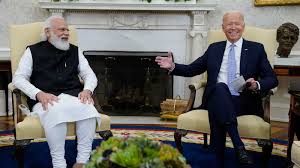
Indian PM Modi meets with US President Biden in the White House recently

There has been a lot of talk recently about India becoming part of some formal military alliance with the US – in response to the rise and actions of China.

But is this likely?

Here are 10 key differences in the world view of India and the USA

New Delhi is wary that any formal alliance with the US could draw it into almost constant military activity such as the Iraq war

India prefers to do its own strategic deals on a country by country basis – rather than manage these through a dominant US strategic alliance. For example, India and Australia have a Mutual Logistics Support Arrangement allowing each to uses each other’s bases

Historically India has never agreed to open-ended commitments that might lead to future military involvement

Of the four countries speculated to be invited to join the Five Eyes security arrangement (the four are Germany, India, South Korea and Japan) – India is the only one of these four to NOT have a treaty alliance with the US

An example of differences between India and the US is Iran and the Nuclear Non-proliferation Treaty (NPT) – the US attacks Iran on the nuclear issue, sees the NPT as something to be enforced – but India has not signed the NPT itself and sees it as discriminatory

There are differences on the “threat” from China – the US is most assertive on freedom of navigation in the South China Sea while India has been quite reserved on this issue

India is more concerned about its Himalayan border conflicts with China than the South China Sea

India generally has little or nothing to say about human rights issues in other countries. Whereas the US and its allies such as the UK and Australia are constantly calling out human rights abuses around the world

The US wants “all in” commitment from allies but India has always been non-aligned and refuses to get drawn into “us versus them” views of the world. One current example is India is finalising a logistics deal with the UK while also negotiating a similar deal with Russia

India is content to be “the world’s biggest democracy” but is not evangelical about it, accepting that all countries are different – a sharp contrast to the US wanting to remake countries in its own image and championing democracy for all

New “Business Champions” group to provide much needed top level links between India and Australia

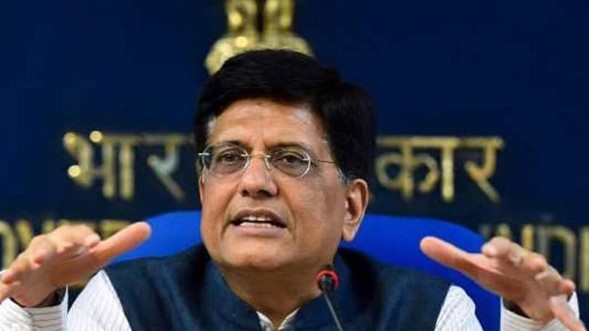
Indian Commerce Minister Mr Piyush Goyal

A new “Business Champions” group will lead top level business engagement between India and Australia – and it was launched last week in India.

INTO INDIA welcomes this move to bring the “top end” of both countries together. Business engagement at this level has not worked well in the past. Most of the business councils and chambers have provided lower level SME engagement – important as this is.

“Supply chains” is behind the enthusiasm of India for the new Australia-India Business Champions Group’s role. Mr. Piyush Goyal, Minister of Commerce & Industry, Consumer Affairs, Food & Public Distribution, Textiles, Government of India said this when addressing the Inaugural Meeting of the Australia India Business Champions.

The Minister is co-chairing the group with Australian Trade Minister, the Hon Dan Tehan.

“The Australia-India Business Champions Group’s key aim is to liberalise and deepen bilateral trade between both the nations and pave the way for collaborative economic growth.” stated Mr. Dan Tehan MP, Minister of Trade, Tourism and Investment, Government of Australia.

Major business organisations leading the group are the Confederation of Indian Industry (CII) and the Business Council of Australia (BCA). Both represent almost all the major business corporations in both countries.

Mr. Chandrajit Banerjee, Director General, CII, pointed to areas such as mining, education, defence, space and emerging sectors which the group can take forward.

Ms. Jennifer Westacott AO, CEO, BCA, highlighted that we must strengthen and reform regional and global institutions, so they deliver for our citizens.  She said the Business Champions would engage directly with the top tier of Australian and Indian Governments on matters critical to business. 

Other panelists at the meeting included H E Mr. Manpreet Vohra, High Commissioner of India to Australia, H E Mr. Barry O’ Farrell AO, High Commissioner of Australia to India, Dr. Anish Shah, MD & CEO, Mahindra & Mahindra Ltd, Ms. Julie Shuttleworth, CEO, FFI, Mr. Rakesh Bharti Mittal, Vice Chairman, Bharti Enterprises, Mr. Mike Cannon-Brookes, Co-Founder and Co-CEO, Atlassian, Mr. Nitish Jain, President, SP Jain School of Global Management, Ms. Verena Lim, Asia CEO, Macquarie Group, Mr. Girish Ramachandran, President, Tata Consultancy Services Asia Pacific, Professor Duncan Maskell, Vice Chancellor, University of Melbourne.

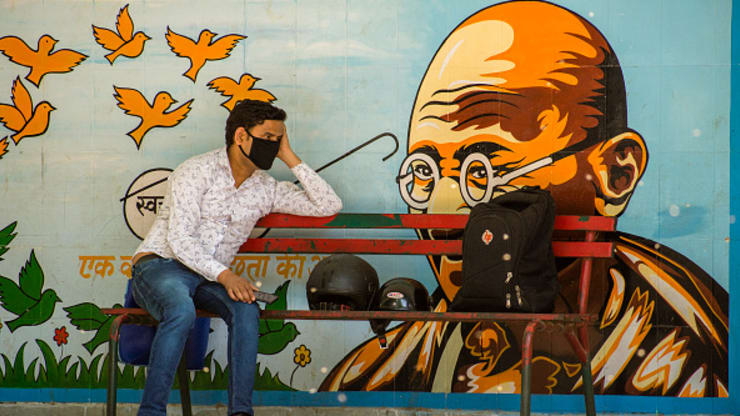
It’s his birthday today, so what does Gandhi say for our modern world?

India’s Mahatma Gandhi was born on 2 October 1869 and died in 1948

The Mahatma Gandhi memorial in New Delhi, known as Raj Ghat, expresses his values – it is peaceful and quiet, a green open space with a marble tomb in the middle, marked by one word “Ram” – God, the word Gandhi uttered when shot on 30 January 1948. Here there are no lengthy accolades, just a simple and lasting tribute.

I first visited this on a warm afternoon with time alone – but you are not alone for long in India. I was soon joined by a family of four, there to show the children and pay their respects to this great human being. In doing so, their shining eyes invited me into their circle, we talked, laughed, turning back regularly to gaze at the marble tomb. The moment was defined by simplicity and love.

This was how he lived – you can see this in Mumbai at Mani Bhavan (Gandhi House), a three story home with shuttered windows, a residence that Mahatma Gandhi was able to use when in that bustling city. The house is in a leafy and relatively quiet street.

The austere dwelling seems a long way from our consumer society, for here in Mani Bhavan, the feeling is respectful and quiet. No one rushes. This was indeed the man who said there was enough in the world for everyone’s need but not for everyone’s greed.

Knowing this, it becomes redundant to ask what Gandhi means for our modern world. He means everything.

The world is nervously watching the rise of China, and the contest for leadership in a rapidly changing world. Believing that in situations like this, hatred is the real enemy, Gandhi urged us to hate the sin, love the sinner. His view on answering violence with violence was “An eye for an eye makes the whole world blind”.

Gandhi knew that around the world, people are different – and they see the world differently. He knew that much hostility began because we each tend to believe that our own world view is the correct one.

It was the pragmatist in Gandhi (which infuriated extremists) who accepted that all of our differing world views are neither right nor wrong – they are just differing world views.

There is a story that showed how different this person was – while boarding a moving train one day, one of Gandhi’s shoes slipped off and fell upon the track. As he was unable to retrieve it, Gandhi – to the astonishment of his fellow travelers – calmly removed his other shoe and threw it down the track to where the first had landed. “The poor man who finds the shoe lying on the track,” Gandhi explained, “will now have a pair he can use.”

Laughing in tough times

Karina Wegner is a psychologist in Australia’s sub-tropical Hervey Bay. Karina’s well-researched expert opinion is that “you should have as much fun as possible and laugh as much as you can. When you couple these together, you should be able to keep ‘depression’ (what they now call the disease of the 21st century) away.

“When you enjoy yourself and laugh, you will increase the serotonin levels in your body, thereby decreasing the risk of depression.

When my clients leave my office in Queensland’s Hervey Bay, my practice manager makes sure the client is laughing or at least smiling before they leave.

I have a waiting list of near three months and my clients travel long distances to see the “Optimistic Psychologist.”

University studies have shown laughter can improve your immune system. increase disease fighting antibodies and lower inflammation in the body.

Laughter increases heart rate and blood flow, and has similar health benefits to exercising. Endorphins are released during laughter, which helps to relieve pain, reduce cravings and stress, and slow the ageing process.

Humour can alleviate feelings of stress and depression.

It’s not always easy but when family and colleagues test your patience, put a smile on your face – even forced ones help. Try to find the humour in the situation and make a light-hearted comment. Not always easy, but give it a go!

INTO INDIA shares a few techniques to put a smile on your face:

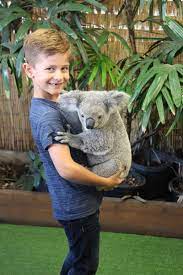
Look at a photo of your favourite animal (hint – if you look at an Australian Koala you will definitely smile)

Listen to your favourite relaxing music

Sit quietly with no purpose, no agenda, just observe

Visit https://www.projectoptimism.com.au/

Visit https://www.centreforoptimism.com/

Best wishes to everyone and I hope you can find some smiles and laughter in these times – and if you do, share it with others?

Australian fund investing in India returns 69% in 12 months

Mugunthan Siva is CEO of India Avenue Investment Management

Thinking of investing in India? The India Avenue Equity Fund returned 69.4% over a year August 2020 ending 31 August 2021, outperforming its benchmark (MSCI India in AUD) by 14.4% in the same period.

India Avenue Investment Management (IAIM) is a boutique investment company focused on providing investment solutions for clients in Australia and New Zealand who seek exposure to India’s growth potential through its capital markets. Click here for their website:

Over the last month the India Avenue portfolio has started increasing exposure to companies leveraged to urban consumption thematics. Given India’s vaccination drive, it is anticipated that close to 100% of India’s urban population above the age of 20 will be vaccinated (currently vaccinating at a pace of more than 10m per day) by the end of 2021.

Recently they have added stocks to the portfolio which are focused on the food delivery model or restaurant chains and fast-food outlets that are likely to benefit from rising propensity to eat out of home. India’s food delivery market is expected to grow from around US$5bn to over US$20bn1 over the next five years. Factors which are propelling online delivery are:

• Changing lifestyles and eating habits, driven by the lack of availability of time and rising

wealth as well as the rising prominence of the change of household structure in cities.

• Rising digitization (internet and smart phone penetration), particularly amongst India’s

significant millennial population.

• Rising urbanisation of India

• Growing working population, particularly amongst young women.

• COVID-19 has propelled the urge to eat prepared food with contactless delivery points introduced by Zomato, McDonalds, Pizza Hut, KFC, Dominoes etc.

The number of times Indians eat out rose from 2-4 times per month in 2010 to 6.6 times by the end of the last decade. Additionally, the average spends of a consumer rose from Rs.1000 to Rs.2500 in a month2

This was especially prevalent amongst India’s millennials in Tier I and Tier II city locations. This trend has been accentuated by food technology, social media and marketing, health, and wellness and as well as the evolution of consumer palates for ethnic diversity in food choice.

INTO INDIA has consistently pointed to the large number of vibrant Tier 1 and Tier 2 cities for trade and investment.

The CEO of IAIM is Mugunthan Siva – Mugunthan.Siva@indiaavenueinvest.com