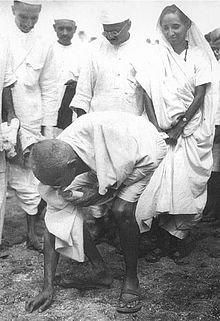
Can you name India’s biggest hotel chain?

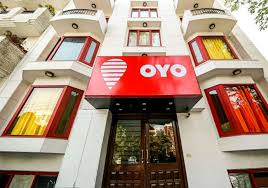
This chain started in India, expanded to China and has now invested heavily in Indonesia. It is called OYO (On Your Own) and was started in 2011 by then 18-year old Ritesh Agarwal. It is like the “Uber” of hotels – acquiring and setting standards for previously struggling hotels.

oyo

The group now has more hotel rooms in India than Taj Hotels – of course, Taj is at the top end while OYO has been a big provider of budget rooms.

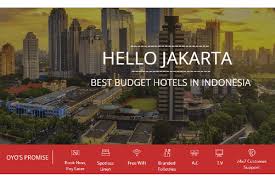
Within three months of its foray into Indonesia, the company has launched the first phase of expansion in 16 cities and witnessed a 5x growth. It aims to expand to 100 cities by the end of the year.

oyo4

The company is adding on an average 70 hotels in Indonesia every month.

OYO created a uniquely Chinese identity for its local Chinese business and is localising in Indonesia.

oyo1

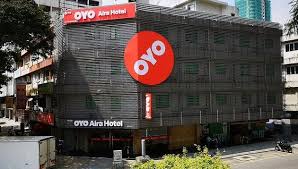
OYO is in over 280 cities in China, with about 5,000 hotels, and over 260,000 rooms.

The company has already started operations in Malaysia and will enter Philippines soon.

oyo3

It plans to have a pan-southeast Asian presence by the end of the year, before it starts making a move towards Europe.

Happy Republic Day for all in India, land of the “freedom fighters”

Today is Republic Day in India, celebrating 26 January, 1950, when the Indian Constitution came into effect.

India’s other major national event is Independence Day, a celebration of 15 August, 1947, when India became independent of the United Kingdom.

republic

The two days that created the “world’s largest democracy” really came about because of hundreds of years of “freedom fighters”. I am going to list some names – and apologies for all the great names I have not been able to include.

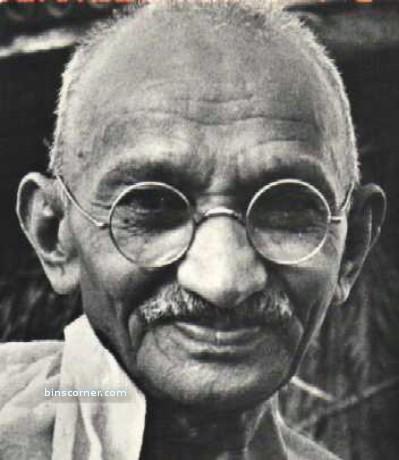
Most of us would think of Mahatma Gandhi (Mohandas Karamchand Gandhi 1869-1948) who became an inspiration to many around the world – including Martin Luther King, Nelson Mandela and The Dalai Lama.

att00036_

But other greats include Pandit Jawaharlal Nehru (India’s first Prime Minister), Subhas Chandra Bose and Sardar Vallabhbhai Patel.

republic7

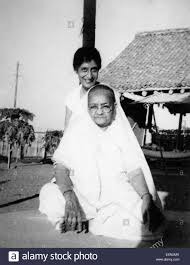
Picture above – Rajkumar Amrit Kaur

Indian women played a strong and vital role for freedom, including Sarojini Naidu, Rajkumar Amrit Kaur and Kasturba Gandhi.

republic8

Above – Kasturba Gandhi

Inspirational for many of these was the example of courage and self sacrifice shown by the young Bhagat Singh who lost his life in the cause.

republic 5

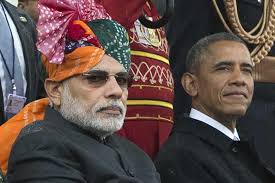
Above – Indian Prime Minister Modi hosts USA President Obama in 2018 at Republic Day celebrations in New Delhi

India – you have earned the right to celebrate! Have a great day.

India’s Bajaj Auto to jump into electric vehicles next year

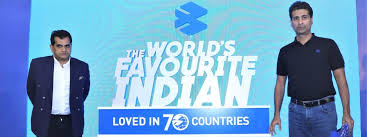
Pune-based Bajaj Auto is planning to make a foray into electric vehicles (EV) next year and is hoping to build market share in India, its Managing Director Rajiv Bajaj said Monday. The new marketing slogan is “The World’s Favourite Indian”.

bajaj5

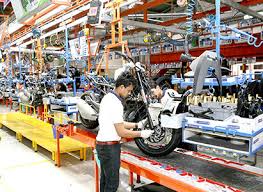
The company plans to launch electric version of its quadricycle Qute along with electric three-wheelers next year.

He also said the company would bring KTM-owned ‘Husqvarna’ motorcycle brand to the Indian market this year with “half a dozen” products in the pipeline.

bajaj1

Bajaj said the company has leadership positions in over 20 overseas markets such as 70 per cent share in Bangladesh and around 50 per cent in Nepal and Sri Lanka and it would like to replicate this in India.

“We would like to be a little more successful in the domestic market than we have been so far in the motorcycles market,” he said.

bajaj2

In India: “We have only 20-21 per cent share. We think now the time has also come that after having done a good job overseas, after having huge dominant position in India in three-wheelers, it is about time we make the same impact in the domestic motorcycle segment in India as we have done across the world.”

Other big motorcycle makers in India are Yamaha, TVS and Honda.

Bajaj also has a partnership with British niche bikemaker Triumph.

Indian economy to pass the UK in 2019 to become 5th in the world – PwC

India is likely to pass the United Kingdom in the world’s largest economy rankings in 2019, becoming number 5, according to a report by global consultancy firm PwC.

The report said: “While the UK and France have regularly switched places owing to similar levels of development and roughly equal populations, India’s climb up the rankings is likely to be permanent.”

PwC’s report projects real GDP growth of 1.6 per cent for the UK, 1.7 per cent for France and 7.6 per cent for India in 2019.

PwC’s Global Economy Watch is a short publication that looks at the trends and issues affecting the global economy and details its latest projections for the world’s leading economies.

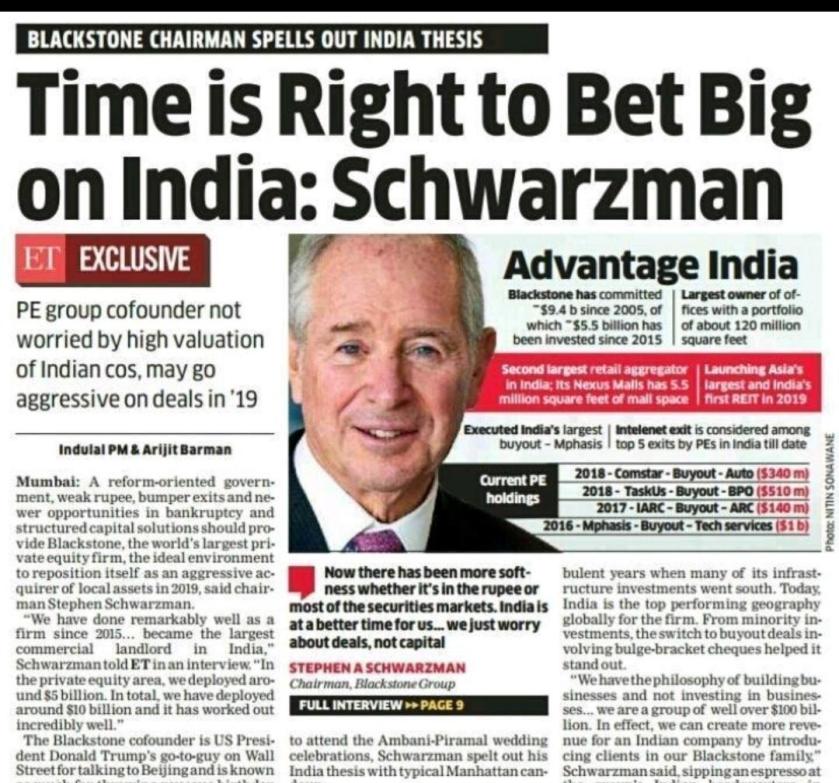
Really engaging with India becomes a smart step for anyone in business, politics or education – but start with the right strategy.

blackstone

Kerala – great tourism but also good for innovative business

India got its largest startup ecosystem Sunday when Kerala Chief Minister Pinarayi Vijayan inaugurated a facility housing incubation set-ups across a string of segments in modern technology.

The Integrated Startup Complex under the Kerala Startup Mission (KSUM) includes the ultra modern facilities of Maker Village that promotes hardware startups, the BioNest that promotes medical technologies, BRINC which is the country’s first international accelerator for hardware startups; BRIC which aids developing solutions for cancer diagnosis and care, and a Centre of Excellence set up by industry majors such as UNITY.

kerala3

After the completion of three more projects, Kerala will have startup and incubation space of 5 lakh sq ft, which will be the largest of this type in the world.

No less than 30 applications for patent has gone from startups with the 13.5-acre TIZ, the CM noted, lauding it as a sign of the high-quality work in the zone. Simultaneously, Kerala was sensing increasing optimism in boosting software export from the state.

M Sivasankar, secretary, IT (Kerala), pointed out that the entire space at the TIZ facility has been sold out.

kerala2

“This has never happened in our country, where it usually takes a couple of years for an incubator to get the whole area occupied,” he said. “The first three floors of the new complex have been furnished, while the rest of the floors have already got allotted to various startups.”

“The campus has another incubator complex coming up and it will be opened early next year,” Sivasankar said.

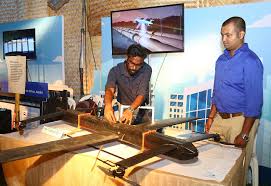
Besides the Maker Villager with its 30-odd startups, the facility has nascent firms working in fields such as biotechnology, computer-aided design, augmented/virtual reality and advanced communication.

So – Kerala is “gods own country” for tourism but also a magnet for innovative business. Worth a visit.

kerala

India the place for investors in 2019

According to India Avenue Investment Management, India is the growth market for investors this year – with a young population and strong economy. The company is based in Sydney and has an office in Mumbai.

India Avenue are very keen on the Indian banking sector and consumption providers.

Here are their thoughts:

“We expect companies in the Banking, Consumption and Industrial companies to outperform in the first half of 2019. Provisioning in Banks have bottomed out and we expect earnings to improve significantly from here, particularly given credit growth.

icici bank

“Our top picks here are ICICI Bank, HDFC Bank, Kotak Bank, State Bank of India, IndusInd Bank and Axis Bank.

“Consumption will also remain a dominant theme as interest rate cuts are delivered, retail credit growth increases and the benefit of handouts to rural India (Government initiatives, populist measures and farm loan waivers) lead to a pick-up in spending.

britannia 2

“Our top picks here are Mahindra and Mahindra (autos/tractors), Dabur (consumer health products), Britannia Industries (biscuits, milk and basic foods), Crompton Greaves (consumer products) and Sun TV (media/television).”

More information:

https://indiaavenueinvest.com/

Cricket shows business and politics how Australia and India should get closer

Can Australian business wake up to new realities – for example, if you do not have an India engagement strategy then you are missing out on the growth centre of the world.

Cricket had to wake up too – India is now the epicentre of cricket and the biggest contest in town is Australia and India.

The cricket battle between Australia and India has provided special moments and lots of insights into how our two countries should relate.

First, enjoy the difference – both teams clearly enjoyed their interaction and cultural differences.

Second, go beyond the basic commitment – the Tweet and pic of the series was Indian wicketkeeper Rishabh Pant and Bonnie Paine when he was babysitting the Paine children.

cricket5

Third, adapt to each other – Australia toned down the sledging and India toned it up, thereby meeting in the middle.

Fourth, sometimes we can all be direct – Indians are known as “indirect” communicators but Captain Kohli and his bat conveyed a direct message when he made a century – “my bat is talking!”

cricket2

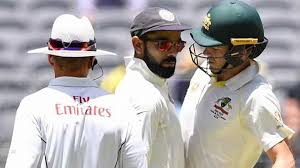
Fifth, conflict can be followed by harmony – both teams crossed the line but quickly resumed the contest as normal, tough but not over the top.

cricket9

Sixth, crowds can tell you a lot about a country – Australia is an increasingly successful multicultural community and enjoying it.

cricket8

Now the cricket is done – how about Aussie business and politics – can they learn too, and engage more closely with India?

Climate Change – India turns away from coal as Australia and Adani still dream of selling them more coal

More evidence that the Australian and Adani dream of selling coal to India is just a fantasy.

indiaeneregy

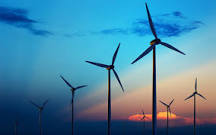
India is increasingly shifting towards green energy

Simon Mundy of the Financial Times reports that Indian power companies spent much of the past decade rushing to build coal-fired power plants in anticipation of surging electricity demand as economic growth took off.

You can see the article at https://on.ft.com/2GShz3Q

Now, many of those projects are mired in deep financial distress and private investment in coal power has ground to a near halt – making the Australian and Adani dream of selling more coal to India look deluded.

Mundy writes that the biggest driver of long-term uncertainty for the industry is one that few anticipated 10 years ago: an explosive take-off in the renewable power sector, as India joins the global push to tackle climate change by shifting towards green energy.

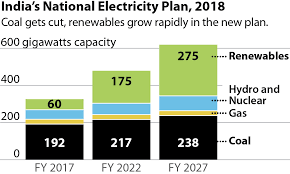
Soon after taking power in 2014, Prime Minister Narendra Modi’s government set a target of increasing India’s renewable energy capacity by 2022 to 175 gigawatts, equivalent to 40 per cent of the country’s total power capacity at the time of the announcement.

indiasolar

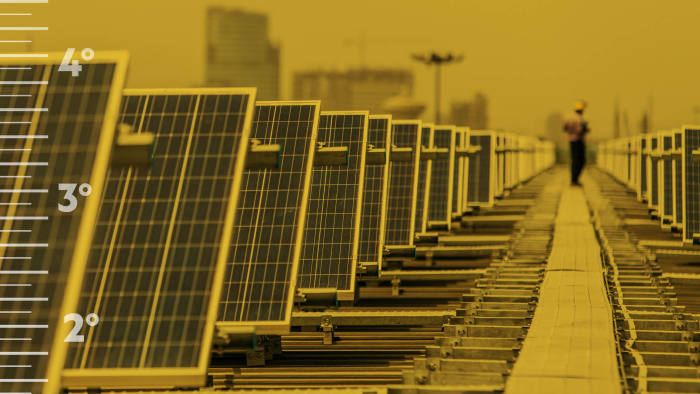
Indian coal power producers are considering renewable projects when they build new capacity © Getty

Mr Modi’s ambitions were stoked by a dramatic fall in the price of solar panels after a huge expansion of production in China, which is seeking to capitalise on the international drive to cut emissions. This was steadily making the cost of electricity from solar plants — once far more expensive than coal power — more competitive with plants running on the dirtiest fossil fuel.

Making a mockery of Australia’s long hopes of selling more coal to India, in the 2017 financial year, newly added renewable energy capacity overtook new coal-fired capacity for the first time. The renewable push attracted major investors such as Japan’s SoftBank, whose consortium last year sealed a deal that stunned the industry.

Mundy goes further on coal – this shift in the industry’s economics means that coal power — once one of the hottest prospects for Indian industrialists — is now a space where most fear to tread.

“You’d have to be quite courageous to invest in coal at this point,” said Navroz Dubash of New Delhi’s Centre for Policy Research.

Does Australia realise that India has plentiful supplies of coal in its eastern region?

This year, state-run NTPC — by far the biggest thermal power producer in India — has cancelled several plans for large coal projects, including one for a giant 4GW plant in southern Andhra Pradesh state.

Increasingly, large private-sector coal power producers are looking at renewable projects when they build new capacity.

adanisolar

Even Adani, which is in big strife with plans to mine and export coal from Australia, has invested more than $600m in a solar plant in Tamil Nadu — a southern state with abundant sunshine.

There is no longer an economic case for the highest-cost coal plants in inland areas of the country’s south and west, which are forced to rely on coal expensively transported over long distances from the northeastern coalfields, said Tim Buckley at the Institute for Energy Economics and Financial Analysis.

Credit Suisse estimates that more than half the debt owed by power companies is now stressed — with interest payments exceeding profits — amounting to a total of more than Rs2.5tn ($35bn).

Several coal-focused power groups are being dealt with under India’s new bankruptcy code, which will force them into liquidation if a swift sale is not agreed. Indian authorities have an incentive to minimise the distress in the coal power sector. State-controlled banks, reeling from a surge in non-performing corporate loans, are heavily exposed to this industry.

But the Modi Government is clear in favouring renewables, leading to long-term self-sufficiency, lower costs, more competitive industry and better climate outcomes. Even though major corporates like Tata and Essar are struggling with the economics of coal power plants, the Government remains unwilling to shift from renewables.

Which makes the Australian/Adani dream of creating our biggest coal mine and shipping it all to India look like a case of sticking to an old fantasy while the target market has moved on. Can Australia move on too?

Because Australia is expected to commit about A$1 billion towards the scaled down A$5 billion mine project, the Australian Prime Minister and the Queensland Premier need to have some serious discussions with Adani Group – and possibly Indian Prime Minister Modi – to get answers to some disturbing questions:

  • If Adani is simply planning to supply coal to its own power stations in India, what tiny fraction of the Carmichael coal reserve does this represent?
  • Does Australia face the worst of all worlds with no royalties and vastly fewer jobs than expected?
  • Exactly how many jobs will Adani Group commit to long term?
  • What would be the environmental degradation costs of the project?

With these answers both governments can assess the risk of being left holding a distressed or potentially stranded asset of no value to anyone.

Right now our politicians seem to want to resist the future, rather than embrace it.
wind2

India retains world fastest growing economy, while Apple to boost manufacture in Tamil Nadu

As Apple struggles for impact in India, one of their key contract manufacturers, Foxconn, will invest in new production lines to manufacture certain iPhone models in its factory in Sriperumbudur near Chennai, Tamil Nadu, according to the Economic Times.

TN5

Apple refused to comment on the development while Foxconn India officials were unavailable for comment. Lack of local manufacture is holding back the traditional “single store” marketing push of Apple, so this move is a timely one.
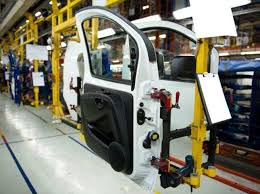

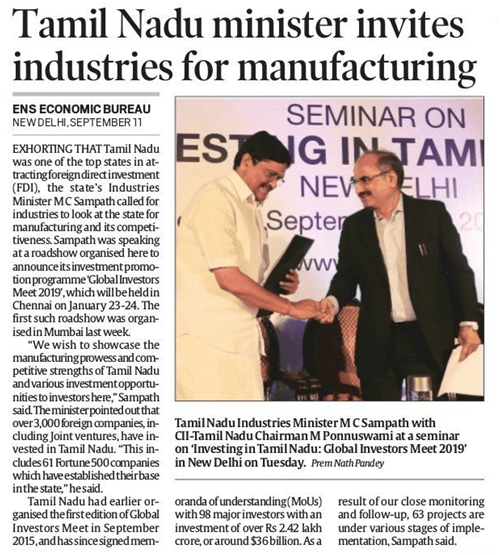
The move certainly reinforces the status of Tamil Nadu as a specialist manufacturing state, with cars, phones and IT on the list.

TN1

It was also announced in January that India remained ahead of China to retain the tag world’s fastest growing large economy withstanding several ups and downs, spike in oil prices and global trade war like situation during 2018.

According to Niti Aayog (national economic planning body) Vice-Chairman Rajiv Kumar, the focus of the government in 2019 will be to expedite reforms with a view to accelerate growth.

India will grow at around 7.8 per cent in the next calendar year and investment cycle that has already started picking-up will gather further strength and we will see more private investments,” Kumar said.

Looks like a good year to review your India engagement strategies, and put some energy into the Indian market.

indiagate

The Jamnalal Bajaj Awards promote the values of the great Mahatma Gandhi

Many things amaze me in India and one that both amazes and inspires is the Jamnalal Bajaj Awards – for the “unsung heroes” who inspire many through selfless effort in the tradition of Gandhian values.

gandhisatyagraha

My good friend eminent scientist and regular visitor to Australia, Dr R A Mashelkar, is Chairman of the Selection Committee of the Award for Application of Science and Technology for Rural Development and a Member of the Council of Advisors for the whole scheme.

Dr Mashelkar said: “The fundamental issue is about Gandhian values and creating an inclusive society by dismantling inequalities.”

ATT00012_

The Nobel Laureate Kailash Satyarthi is one of the trustees of the Jamnalal Bajaj Foundation and a jury member for the Awards: “Changemakers firstly need to understand the trend of the change and then change the direction to positivity, righteousness, justice, equality and humanity.”

My country – Australia – has seen a decline in the reputation of major institutions and corporate Australia is in the firing line as the Banking and Finance Commission finds unethical behaviour is rife. Beyond the so-called ethic of “building shareholder returns”, no Australian business leader has had anything constructive to say on corporate ethics. Very disappointing. We could learn much from this foundation and the great Mahatma Gandhi.

More information about this wonderful foundation and the awards is at http://www.jamnalalbajajfoundation.org/

Gandhi Salt