Values like friendship and tolerance play a role in building cultural sensitivity and harmony

Australian Foreign Minister Penny Wong is a role model in cross-cultural adaptation

When Australian Foreign Ministers from Julie Bishop through to Penny Wong wear a headscarf or adapt in other ways to the culture they are visiting, they are an example to all of us of being a good guest, showing respect and acting with tolerance and friendship. Whether we travel as tourists, traders or diplomats, the old maxim of “when in Rome do as the Romans do” contains an underlying value of adapting to the local culture while staying true to our own.

We take our values with us – some of the values I would pack when going overseas would be the great Australian traditions of friendliness, flexibility, tolerance and a fair go.

The world is not “like us” – much of the world is religious rather than secular, where dress codes and traditions run deep. When you think about travel, part of the excitement comes from this difference and with an open mind we can explore difference in a way beneficial to both.

Organisations like Asialink, the Centre for Australia-India Relations and the Australia India Institute are helping prepare us to become “Asia ready” as we embark on this Asian century, and that readiness is going to involve doing things and wearing things which are not our normal experience. Again, this is adapting to others while being true to ourselves.

At business meetings in India there is frequently the lighting of the lamp, a Hindu tradition which westerners are generally invited to join. In Indian Hindu tradition, light is taken to symbolise knowledge, so it is an auspicious start to an exchange of views and ideas. Lighting of lamps is not something we do in Australia, but doing it when in countries where it matters is an act of tolerance and respect.

In Japan a greeting might include a respectful bow, while in India a welcome greeting might include placing the palms of the hands together in front of the chest while saying “Namaste” which literally means “I bow to you”. It is simply friendly and nice to reciprocate – even though our own way would be to just shake hands.

Throughout Asia, business meetings will often involve a large team of locals from the very senior to the junior – and while our egalitarianism makes us want to reach out and chat to juniors as well as seniors, the locals are at least confused and often offended by this action because in their culture all discussion is to the most senior person. Even the junior person engaged in conversation by the willing Aussie is generally flustered and embarrassed to receive this attention. Egalitarianism is a value that needs to be balanced by tolerance and adaptability – balanced, not “sold out”.

In Southeast Asia at many political and business functions the locals and guests will wear batik shirts – not to everyone’s taste, but adapting to this is not a betrayal of something sacred back home.

When a local business person generously offers to take me to their temple, I am often asked to wear the sari cloth skirt as a form of covering – and happily do so because this is what my host wants and I have never felt that I was selling out some Australian value.

In homes and buildings throughout Asia, guests might be asked to remove their shoes and it is simply respectful to do so.

Australia has embraced the indigenous “welcome to country” at national ceremonies and even sporting events, and I would like to see this performed at more international business meetings, trade missions and diplomatic gatherings.

Underlying this and other culturally sensitive activity is a value which would go a long way towards creating global harmony – the value of tolerance.

Good news you probably didn’t hear about – poverty reduction in India is the “most under-reported story of our time”

From our good friends at FUTURE CRUNCH who are determined to tell us stuff the media overlooks.

The decline of poverty in India is the most underreported story of our time.

Two weeks ago, the country’s biggest public policy think tank released a new report, and the numbers are mind-blowing. 135 million people were lifted out of multi-dimensional poverty between 2015-16 and 2019-2021, easily putting the world’s most populous nation (and fastest growing major economy) on course to achieve its SDG targets.

India and Australia? The best analysis you can read

Former Australian diplomat, John McCarthy AO, continues to be by far our best analyst and writer on relations with India.

John is a Vice Chancellor’s Fellow at the University of Melbourne, an Adviser to the Asialink Board and a former High Commissioner to India.

It is worth revisiting an Asialink Insight he wrote in May of this year.

The Insight is titled “The Strategic Illusion of India” and in two short paragraphs he makes the case for closer diplomatic ties with India:

“Over the past two decades Australia has rightly recognized the rise of India. Its population at 1.4 billion exceeds China’s. It is the world’s third biggest economy in purchasing power parity terms and it should soon be third in nominal terms.

“We now have four diplomatic offices on the ground in India. It is our biggest source of immigrants. It is our fourth biggest export destination. Education links are burgeoning. All to the good.”

But John McCarthy’s enthusiasm for India comes with warnings.

His first was “India does not share our world view.”

His second was: “It does not expect others to come to its aid and it will not join someone else’s war.”

So, he recommends we build the relationship with patience and realism.

Great analysis. Top advice. Read more…

https://asialink.unimelb.edu.au/insights/the-strategic-illusion-of-india

Melbourne Business Schools partners with India’s top business school and shows the way

Breakthrough deal in education relations of India and Australia.

The Melbourne Business School at the University of Melbourne has announced a partnership with India’s top business school – the Indian School of Business (ISB).

Now, this partnership will give MBA students a truly global perspective of emerging business trends.

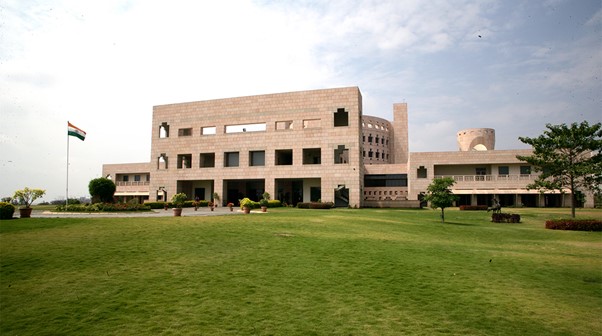
As part of the collaboration between the two schools, Executive MBA and Senior Executive MBA cohorts from Melbourne Business School will undertake immersion modules at ISB’s Hyderabad campus (pictured).

This is a brilliant deal and will contribute to the India-capability of Australian executives.

Read more:

https://mbs.edu/news/Indian-School-of-Business-MBS-partnership-2023

India will respond to China’s power on its own terms, not as a junior partner of the USA

Sometimes the shortest messages are the best.

Good friend and colleague Vinay Sarawagi is Senior Vice President Digital for the Times Network and is based in Delhi.

If you think India has shifted “our way” or is ready to follow “our friends” then here is some food for thought – so simply and elegantly put by Vinay.

🌍 India’s growing role in containing China’s power will be on its own terms, not as an appendage of the United States.

🤝 Collaborating with India in the Indian Ocean and developing niche military capabilities can strengthen the US-Indian partnership for regional security.

🔒 A realistic and resilient strategic partnership with India can contribute to stability without imposing unreasonable expectations, benefiting both nations and deterring potential crises.

Makes sense to me – INTO INDIA has long had reservations about the cheerleaders who think via the QUAD and other moves that India is somehow now part of the US alliance.

Not happening.

Lessons on doing business in India – from WALMART and APPLE

Apple’s new store in BKC, Mumbai

Lessons on doing business in India.

WALMART has a strong presence in India but has also actively pursued partnerships so it can export US$10 billion of Indian manufacturing – helping the Make In India campaign.

Notable it also has a Walmart Foundation there.

APPLE on the other hand wanted retail outlets there, so it is moving 25% of its global iPhone production to India.

And guess what?

It has just opened its first two India Apple stores – Mumbai and Delhi.

Lessons in partnerships, fitting in, investing, doing good and supporting Government programs.

Not saying they are perfect but we can learn from them.

6 big changes in India – and 5 reasons growth will boom

Only 8% of Indian households own a car – so big growth is ahead

INTO INDIA has consistently said India is the growth story of this century.

Now Anish Mathew, CEO and CIO of the very successful Sundaram Asset Management Singapore Pte Ltd, has found a unique way to describe why India is indeed THE growth story.

6 big changes in India

  • The number of income tax filers has increased by 57.5% between FY15 and FY21.  This is obviously the impact of the growing use of Aadhar (biometric unique identity card) as the preferred KYC document and the implementation of GST, both of which is pushing up the tax compliance in the country.  
  • Indirect (GST) tax base stood at 14mn in November 2022, a 2.3x increase from mid 2017.   
  • Number of PAN cards (unique tax identity number issued by the Income Tax Department) allotted has increased by 2.5x in the last 7 years.
  • 80% of the railway tracks were electrified as of end FY22 as compared to 31% in FY11.
  • Road infrastructure measured in number of kilometres has increased by 36.6% in the last 11 years.
  • Major port capacity has nearly doubled in the last 8 years.

5 reasons growth will boom

  • Only 8% of the households owned a car, 24% an air conditioner and 38% a refrigerator.
  • Only 1% of Indians account for 45% of all flights.
  • Only 3% of Indians make up all unique card holders.
  • Only 2.6% of Indians invest in mutual funds.
  • The Indian diaspora remitted USD 100bn into the country in 2022, eclipsing the gross FDI flow during the same period. 

Mathew advises that the three big growth drivers for the next decade are consumption (driven by the Demographic Dividend and rising incomes); manufacturing, and; digitisation (which is the formalisation of the Indian economy)

He makes a powerful case for investment and trade with India.

Indians becoming more influential in Australia as a leading source of migrants and students

Indian-Australian MP Daniel Mookhey takes oath on the Bhagavad Gita

As the UN releases data that India has become the most populous nation on the planet, our Indian diaspora in Australia also continues to grow in size and influence.

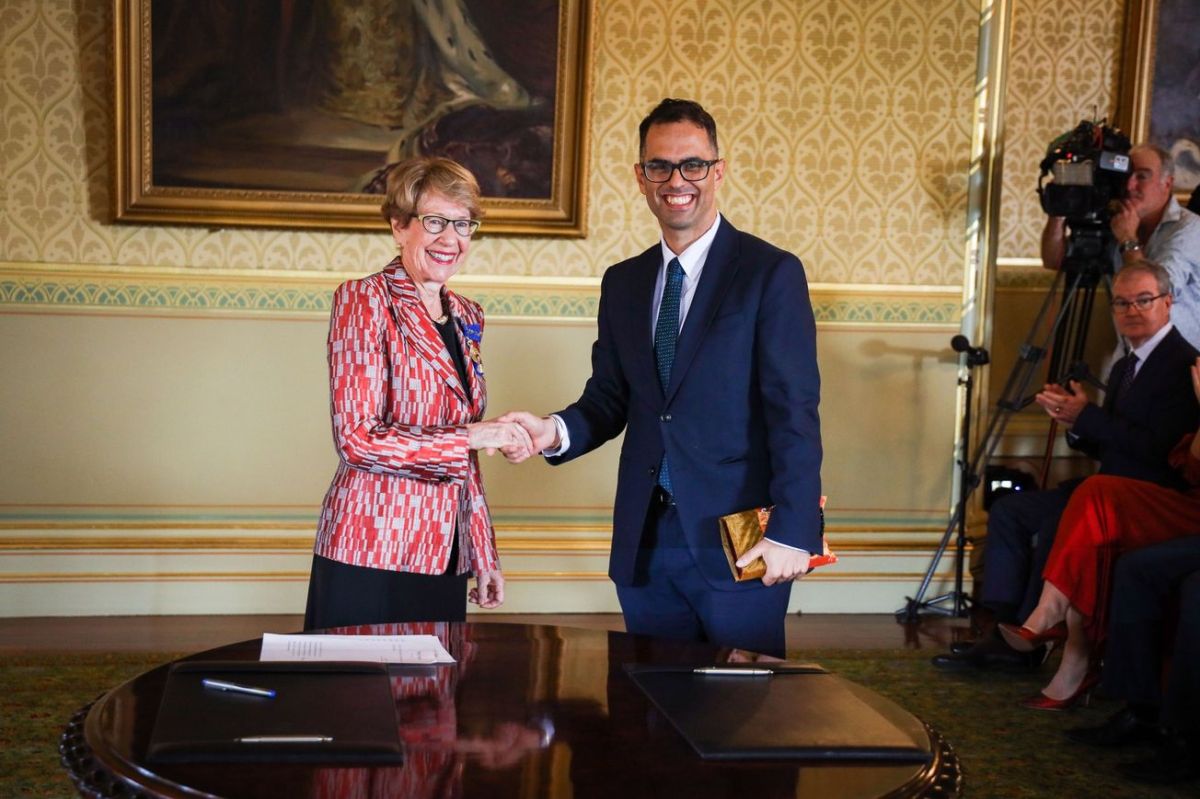
The recent NSW state election saw Indian-Australian MP Daniel Mookhey elevated to Treasurer, the first MP in Australia to take the oath on the Bhagavad Gita.

Pru Car, also of Indian origin, became Deputy Premier of NSW and Charishma Kaliyanda became the first Indian born Australian to be elected to the NSW Parliament’s Legislative Assembly.

The Australian Bureau of Statistics reported that India has become the leading source country for permanent migrants, overtaking China and the United Kingdom. The latest ABS figures reveal one in five skilled migrants were born in India (20%), highlighting the strong presence of Indian skilled workers in Australia’s workforce.

And India is now second in the top five countries of origin for international students in Australia in 2022 –  China (155,348 students), followed by India (99,739), Nepal (56,847) Vietnam (22,396), and Colombia (21,836). These students accounted for 58 percent of all international students in the country, Erudera.com reports.

The India-story in Australia continues to write new and better chapters.

(Special thanks to The Hon Lisa Singh, CEO, Australia India Institute, for most of the above data)

India and Australia share strategic interests in the Indian Ocean, not so much in the “Indo-Pacific”

Russian Deputy PM Denis Manturov this week in Delhi announced India and Russia are close to an FTA – further evidence of India’s “Multi-Alignment”

INTO INDIA was so pleased to see Economics Correspondent for The Age, Matt Wade, today writing about the shared Indian Ocean region strategic interests of India and Australia.

https://www.theage.com.au/world/asia/india-is-now-the-world-s-most-populous-nation-it-s-time-we-got-to-know-it-better-20230417-p5d15h.html

This is such a refreshing shift from the rhetoric about the QUAD (India, Australia< Japan and USA) so called strategic alignment for the “Indo-Pacific Region”.

One of the clumsiest terms of recent diplomacy has been the concept of an “Indo-Pacific Region”. A quick glance at a map shows this to be wide of the mark.

But the same glance at the map will quickly show why India and Australia worry about the Indian Ocean region – they both need this area to be safe and open for maritime activity and stable for economic development. It is also realistic for these two countries to combine for peace and stability in the Indian Ocean.

It is just not realistic to expect India to share in security interests for the Pacific.

India has traditionally been a “non-alignment” country, which happens to be close in defence to Russia.

It is now promoting the concept of “Multi-Alignment”. Of course, the USA (and Australia) do not understand this at all, believing in the power of taking sides.

That is why they have been so hopeful that India coming into the QUAD is a sign of India shifting towards “taking sides” and moving “our” way.

Not happening.

Here is one piece of evidence that India maintains an independent and “Multi-Alignment” program – at a time when the western alliance is condemning Russia, this week India and Russia have announced progress towards a free trade agreement, to build stronger trade and investment in both countries – according to Russia’s deputy prime minister Denis Manturov, speaking at an event in New Delhi with India’s foreign minister S Jaishankar on Monday.

There you go. Multi-alignment is the modern incarnation of India’s historic “Non-alignment”.

We will have to get used to it.

Vital connectivity for India depends on progress in the “north east states” region

India’s “north east region” has long been neglected and is little known among western leaders – but it has a crucial future because of the role it can play in India’s strategic and commercial connectivity in the surrounding region.

The role of China in the Indo-Pacific increases the focus on this sensitive region.

India is now giving the NER priority – there are around 30 major road and highway links under construction, a complex process when border crossings are involved. There are also around 10 major railway construction projects including bridges and new lines.

This has been so well described by Sreeparna Banerjee and Ambar Kumar Ghosh, “India’s Northeast: Gateway to Connectivity with Eastern Neighbours,” ORF Occasional Paper No. 395, March 2023, Observer Research Foundation.

India’s northeast consists of eight states—Arunachal Pradesh, Assam, Manipur, Tripura, Sikkim, Mizoram, Meghalaya, and Nagaland. It shares 5,812 km of international boundaries with the neighbouring countries of Myanmar, China, Bangladesh, Nepal, and Bhutan. It is landlocked; seven of the eight states are linked to the rest of India only through the Siliguri Corridor in North Bengal—a narrow strip of land (22-km wide) that is also called the ‘Chicken’s Neck’. The corridor is flanked by Nepal in the north and Bangladesh in the south.

This region can serve as a pivotal connecting space between India and its neighbours to the east in South Asia, as well as to East and Southeast Asia and beyond, enhancing the country’s diplomatic, infrastructural, and commercial engagements.

India’s foreign policy priorities, reflected in its ‘Act East’ and ‘Neighbourhood First’ policies, also bring the northeast into focus as a connectivity gateway to the wider Indo-Pacific.

Japan, with its long-standing expertise in the infrastructure sector, continues to play a significant role in developing physical connectivity projects within and across the northeast.

Australia shares many of the strategic goals of India, and now through the QUAD (India, Australia, Japan and USA) the countries are closer together through their commitment to democracy, open and free cultures and more.

The focus on this region will continue – India is crucially positioned within South Asia and in the broader Bay of Bengal region. It needs to play a more vibrant role in the region, and to do so, must engage more strongly with its East and Southeast Asian neighbours.

Watch this space…