IKEA plans 3 stores for Mumbai and broader India expansion

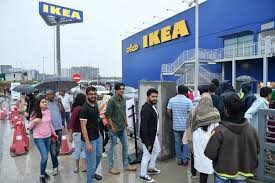
IKEA, the Swedish home furnishing retailer, intends to open three stores in Mumbai. This would consist of a flagship store in Navi Mumbai along with two smaller outlets. The company plans to recruit around 1,000 people, mainly for the Navi Mumbai store, which is planned to open within a year.

Ms. Jaxa Gohil, Store Manager, IKEA India, said India is massively significant for IKEA globally, adding that it is witnessing the company’s biggest expansion plans among new markets. IKEA is investing €1.5 billion (Rs 117.96 billion) in India.

ikeacustomers2

IKEA has identified Mumbai, Delhi and Bengaluru as cities that have potential and opportunities.

It also intends to expand through e-commerce channels for Bengaluru and Delhi soon and has started a pilot for e-commerce in Pune.

In August, IKEA started its e-commerce channel for Mumbai and has garnered 2 million visits so far, said Ms. Gohil. E-commerce for Hyderabad was also started, where it opened its only physical store in India in 2018.

IKEA is definite about 50% of employees being women, as well as adapting the offering for India with a focus on affordability and sustainability.

As a global iconic brand, IKEA has chosen the right cities to launch into India, but could focus more on tier two cities too.

Dalai Lama provides another insight into how India is very different

How is India different?

Last week the Tibetan spiritual leader the Dalai Lama delivering the 24th Dr Sarvepalli Radhakrishnan memorial lecture on “universal ethics” organised by the Indian Institute of Advanced Study, said India’s message of “ahimsa, kindness, love and compassion” spread even during religious conflicts and World Wars.

So, there is one guide to India’s difference – in my own words – despite having some internal conflicts of its own, the Indian starting point is non-violence, kindness, love and compassion. Not saying it always works out that way, but…

How many other cultures can we say this for? Think how strongly the concept of “revenge” has taken hold in the west – someone does wrong by us, we will “track them down”. Just one example of a different mindset.

The Dalai Lama has lived in India since 1959, and he also called for a “revolution” in India’s education system by combining its 3,000-year-old ancient tradition of high moral teachings with the modern education. This would be a good thing everywhere.

“Those mental quality subjects like non-violence, love, kindness and compassion should be included as an academic subject instead of religious teachings,” the 84-year-old said.

What do you think?

hhdl

Indian education market and Australia’s leading universities talking the same language

While I was in India working on the Genesis India Horticultural Collaboration Project 2019, our top universities (The Group of Eight) were in India with Federal Education Minister Hon Dan Tehan.

(Pictured above are, from left, Hon Dan Tehan, Australian Education Minister, Vicki Thomson Go8 Chief Executive and Dr Craig Jeffrey, Director, Australia India Institute).

This is an important mission – if we can get a deep understanding of what India is driving for, we will develop collaboration that will be for the good of both countries.

The concept of just taking in fee paying Indian students without some sense of balance and collaboration could have a short shelf life.

The visit was timely and served to reinforce Go8 commitment to supporting and assisting with India’s ambitious higher education policy priorities which were recently announced.

Go8 represents Australia’s leading research-intensive universities with seven of its eight members ranked in the world’s top 100 universities.

I was impressed with this summary from Vicki Thomson Go8 Chief Executive: “We understand that by working cooperatively we can best assist where we can, developing opportunities for quality students, graduates and researchers, and, critically the future academics who will lead the vital train-the-trainer work India requires.”

“There is potential for research intensive universities like the Go8 to partner with Indian institutions and Indian industry on projects with potential to be nation building on both sides. Success in these areas can capture public imagination and support and encourage further investment and commitment from both the Australian and Indian Government’s,” Ms Thomson said.

Three Go8 universities are already engaged in Indian partnerships at PhD level. Since 2008 the Monash-IITB Research Academy has been providing joint PhD training, the University of Queensland/IIT-Delhi collaboration uses a similar model and more recently the University of Melbourne has entered into a collaboration with three of the prestigious Indian Institutes of Technology to deliver a joint doctoral degree program.

I like the language of the Go8 – “Expanding this collaboration is key to our ongoing partnership with India.”

Now, that is the pathway to the future in education.

India’s “richer, younger urbanites” will demand more food choices

India is self-sufficient in wheat, rice, corn and milk.

But – it is becoming “richer, younger and more urban” which inevitably means consumption patterns will shift.

Just a very broad approach here – but after over two weeks in India these are the “big 6 food imports” of the next decade:

  • Nuts (almonds and walnuts)
  • Pulses (peas, chickpeas, lentils)
  • Apples, grapes and pears
  • Chocolate
  • Beverages (juice and wine)
  • Processed fruit (dried apricots, raisins, prunes and jam)

Be great to see the “Aussie Hamper” enter the gift giving market in India.

India has many remarkable achievements and hosting the Tibetans is one of them

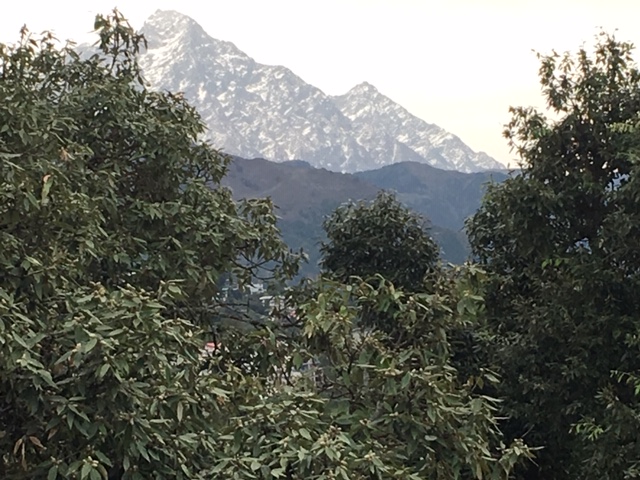
Today I am in Dharamshala, a town on the western end of the Himalayas. This picture is taken from my hotel.

In this area in the 1950’s something remarkable happened.

The Tibetans, fleeing their own country, came here in thousands along with their young leader, His Holiness the Dalai Lama.

I do not know the history too well, but I understand that India opened its arms and gave land and refuge here and in other parts of India for the Tibetans.

hhdl

Today the Dalai Lama is older and looking a little frail, but his contribution to the western knowledge of Buddhism and putting “kindness” ahead of any belief system is just amazing – thanks in part to the country that hosted him.

Just another side of this country which at the time was struggling itself.

Remarkable India.

Ambani leaps into the online retail space as he transforms Reliance Industries Ltd

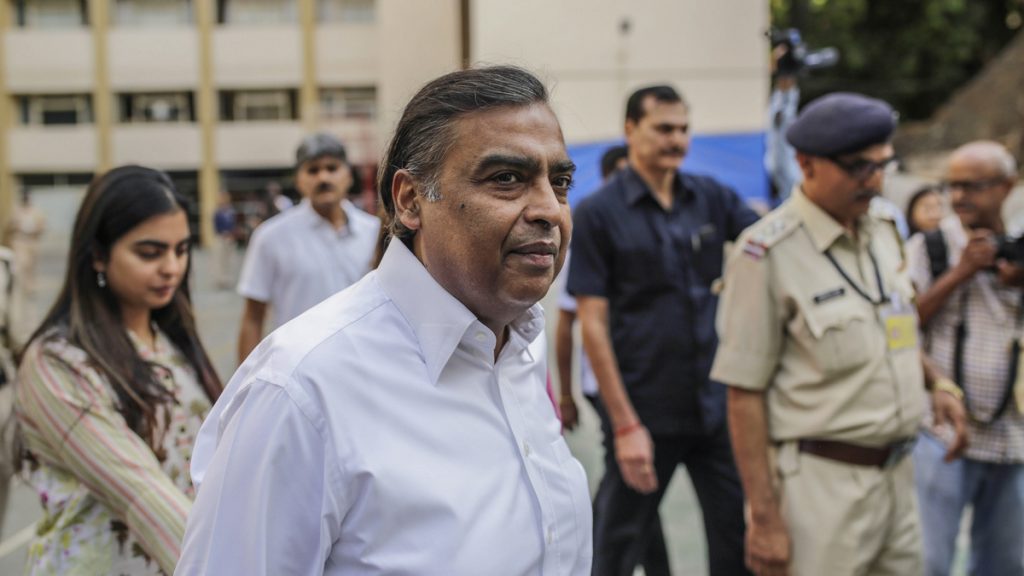
Indian billionaire Mukesh Ambani (pictured) moved a step closer to creating an e-commerce giant for India, unveiling plans to set up a $24 billion digital services holding company that would become the main vehicle in his ambition to dominate the country’s internet shopping space.

This is really hotting up as Ambani takes on Amazon and Flipkart (owned by Walmart).

The board of Ambani’s Reliance Industries Ltd. approved a proposal to place $15 billion into the fully owned subsidiary, which will in turn invest that amount in Reliance Jio Infocomm Ltd., the conglomerate’s telecommunications venture.

The move by Asia’s richest man is the latest sign of the oil-to-petrochemicals group’s pivot toward data and digital services for future growth. Ambani, 62, told shareholders in August that the new businesses, including retail, are likely to contribute half of Reliance’s earnings in a few years, versus about 32% now.

While former English teacher Jack Ma started Alibaba in 1999 from scratch, Ambani is using the heft of his empire to build something similar for India by connecting retailers and consumers.

Shares of Reliance Industries have rallied 28% this year, compared with an 8.8% gain in the benchmark S&P BSE Sensex index.

The tycoon, whose net worth is about $56 billion as per the Bloomberg Billionaires Index, has also revealed a plan to sell 20% of Reliance’s oil and chemicals business to Saudi Arabian Oil Co. at an enterprise value of $75 billion – he’s cleaning up the balance sheet and heading for a “debt free” target soon.

Watch this space!

Now India launches the worlds’ most expensive chocolate

I do love chocolate – but maybe not this much!

India’s ITC group has launched worlds’ most expensive chocolate that is priced at US$6152 per kg under its Fabelle brand name.

‘Trinity – Truffles Extraordinaire’, a limited-edition range of chocolate, that was introduced by ITC’s luxury chocolate brand Fabelle entered into Guinness World Records to become the world’s most expensive chocolate.

The chocolate is co-curated by France’s Michelin Star Chef Philippe Conticini and Fabelle’s Master Chocolatier.

fabelle3

ITC Chief Operating Officer – Chocolates, Confectionary, Coffee and New Categories – Food Division, Mr. Anuj Rustagi said, “We at Fabelle are extremely happy for setting new benchmarks not just in the Indian luxury chocolate market but also now in the world with achieving the Guinness World Records feat.”

The chocolates will be offered in a hand made wooden box that will contain 15 truffles, each weighing around 15 grams. The made-to-order box will be made available at an indulgent price of US$ 1,431 inclusive of taxes.

Place your order now!

fabelle1

India trade with USA given a boost while Australia is doing OK

This week USA-India trade grew to US$87 billion, as the demand from India for USA crude oil, LNG and coal took a big leap – energy imports from the USA have been around US$7 billion but this year will reach $10 billion.

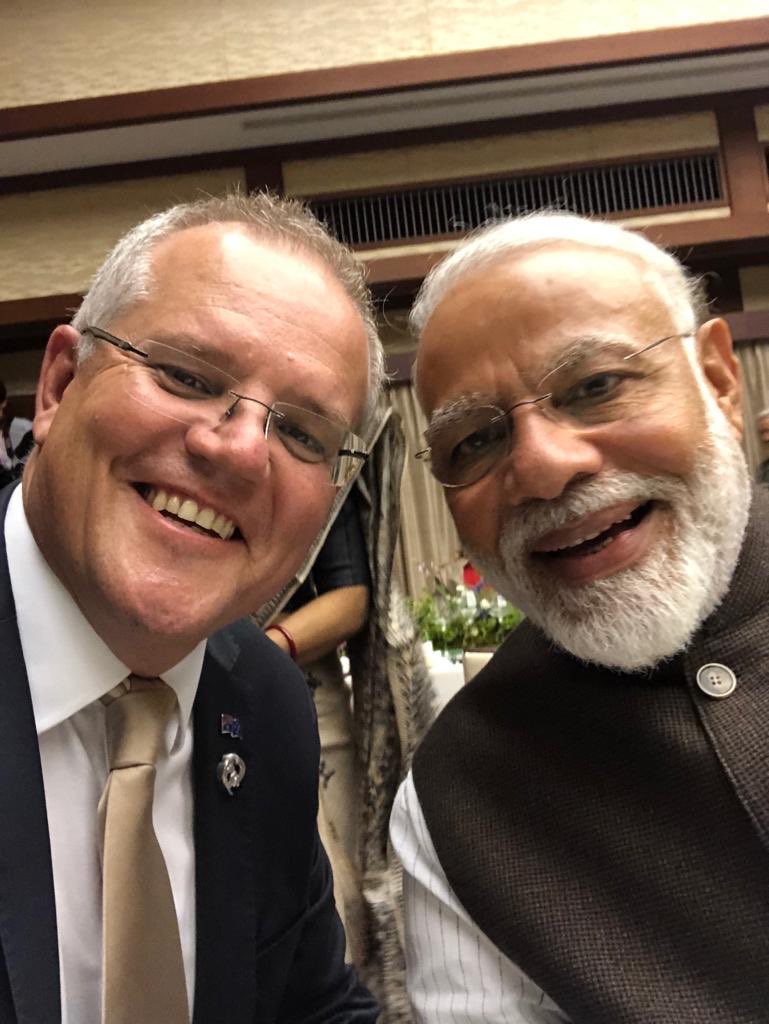
Australia-India trade sits at around A$30 billion with Aussie exports of goods and services reaching $21 billion. While it could do better, compared to global data perhaps Australia is OK.

ModiMorrisonSmile2

India’s top imports continue to be Crude Petroleum, gold, diamonds coal briquettes.

India’s main exports include rice, mica, orthopaedic devices, spices, jewellery and garments.

Both USA and Australia attract thousands of Indian university students and education has become a key segment of two-way trade – perhaps the future for it is “more two way”?

India’s PM Modi facing economic slowdown and needs a growth trigger

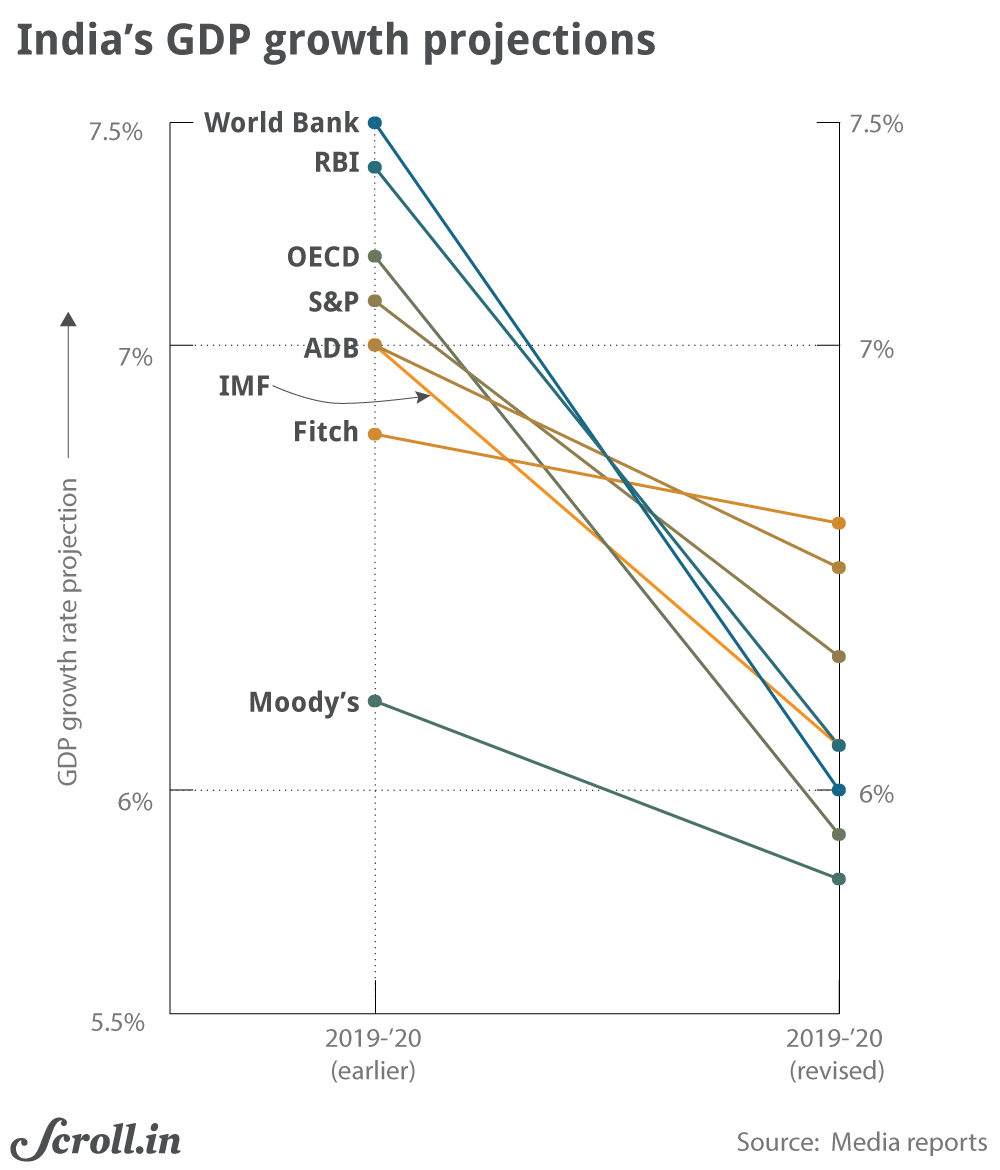
Moody’s is the most pessimistic, predicting Indian GDP to grow at just 5.8% for Financial Year 2020.

But s the above chart shows, many others are predicting declines.

This is a challenge for Indian PM Narendra Modi who has pinned his future on sustaining growth and lifting more out of poverty.

Citigroup has been optimistic on India, predicting that by 2050 India would be the world’s biggest economy. That was based on an annual growth rate of 6.5% over 40 years.

But 2019 has seen a slowdown to around 5% growth.

The one constant in India is population growth – around 20% per decade.

While the services and manufacturing sectors are seeing good growth, more can be achieve and infrastructure across the board still needs surgery. Daily power outages are common in major cities, education outcomes disappoint and healthcare is lagging. Not to mention roads and so on.

PM Modi needs a trigger – something that can draw the business and investment communities together to regain the excitement of the India growth story.

It is a major challenge.

Karnataka could lead India into global academic collaborations

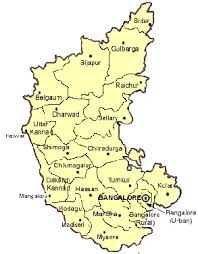
India’s state of Karnataka is currently looking at a proposal to establish a “Centre for International Strategic Academic Collaboration” which would actively generate linkages with international universities and students.

The proposal is the brainchild of Mr. Nanjundaiya Ramesh Kumar (pictured below), holder of two Masters’ degrees – Industrial Economics from Brussels University, Brussels, Belgium and in Business Administration from Boston University, Boston, US. He is an experienced international banker and advisor to Governments as well as a tireless promoter of Karnataka as a provider of quality university education – the state has 55 universities.

ramesh

INTO INDIA recently reported on an initiative of RMIT University in Melbourne to create a collaborative post graduate research model with India – universities and research institutes.

The Karnataka “Centre for International Strategic Academic Collaboration” would involve all 55 Universities (faculty, students and other stakeholders) in Karnataka and the professional community of learners internationally to achieve sharing of best and tested education practices via a mutually beneficial and collaborative international partnership.
karnatakauni3

The Centre would ensure that arrangements are in place at the University level for the effective management of overseas strategic academic collaborations, including procedures for the maintenance of academic standards and the assurance and enhancement of the student learning experience.

It would reach out to International Deans, College International Leads and College International Business Development Managers and key overseas University Services on the development and management of academic collaborations.

karnatakauni4

The Government of India since 2016 has been encouraging collaboration between Indian and overseas Universities.

Centrally this initiative has the full support of the Ministry of Human Resource Development and all States in India have been advised to look into this on priority basis.

Recommended areas of collaboration include Art and Design, Health, Higher Education, Creative writing & poetry, Literary criticism & English language, Sociology and Social Policy, Aviation, Transport and advanced Communication. Research Collaborations would be sought in Sensing & Imaging, Electrochemistry, graphene and carbon nanotubes, Mechanical Engineering, Biomedical Engineering and Sustainable Ecology and environment protection studies.

Education Hubs

One of the suggestion of the proposed Centre will be to Create ‘Education Hubs‘ or Centres of Excellences (CoEs) strategically in Bengaluru and allow reputable overseas institutions and universities to establish a presence in India, through joint initiatives (with any local university in Karnataka) in curriculum design and delivery, branch campuses, train the trainer initiatives and joint research and scholarly activities that could help build capacity, reduce the imbalance in student mobility and attract significant export earnings.

Karnataka is already strong in higher education – this proposal could see the state become a global higher education powerhouse and magnet.

This is definitely something the Australian Government and Australian universities should be actively looking at as pathways to collaboration in India become more open.