Vidhi is a young think tank becoming a key advisor for the Indian Government

The Vidhi Centre for Legal Policy (‘Vidhi’) is an independent think-tank doing legal research to make better laws and improve governance for the public good – and right now it is the Indian Government’s “go to” advisor on policy areas, research, drafting and other legal matters.

Vidhi is a combination of great brains but the one to watch is Arghya Sengupta, Founder and Research Director at Vidhi, Rhodes Scholar who spent time at Oxford and prior to founding Vidhi, he was at Oxford as a Lecturer in Administrative Law at Pembroke College.

His special areas include regulation of the digital economy – the hot topic of the day.

Vidhi is a strongly independent think tank.

But, just to give you some idea of their amazing achievements and output – Vidhi has produced 2 books, 87 blogs, 8 briefing books, 43 conferences, 1 film, gained 32 international partnerships, 30 journal articles, 411 Op-Ed pieces and 112 reports.

Vidhi has assisted the government in 29 draft statutes and in 35 rules and regulations drafts.

Vidhi Centre for Legal Policy is one to watch.

India trade policies and “self reliance” focus could be bad news for Australia

As China continues a trade war with Australia, news from India would be a concern to those who see India as an alternative market to China.

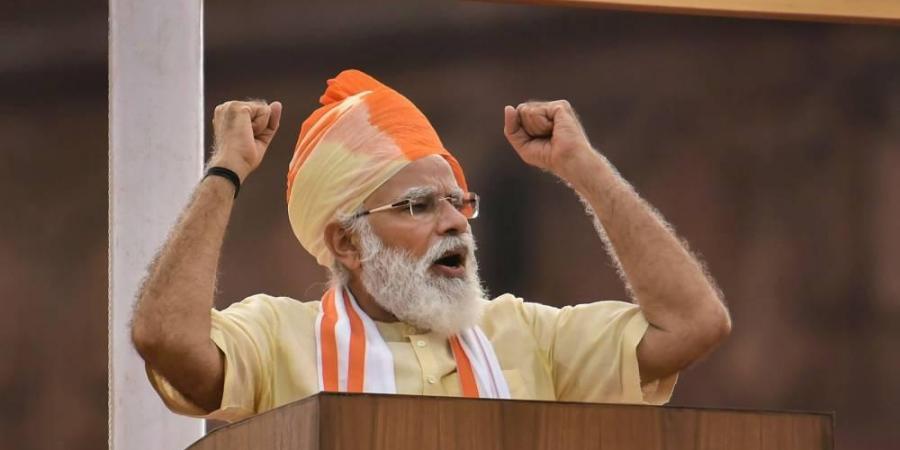
In his India Independence Day speech, Prime Minister Narendra Modi launched “Atma Nirbhar Bharat Abhiyan” (Indian self-reliance). This would have set the alarm bells ringing in Austrade and the Government.

It sounds like protectionism, looks like protectionism and seems impossible to achieve without protectionism – but everyone in India is busy telling us it is not protectionism.

Even so, the speech by PM Modi gave a call for reducing imports and pushing exports of finished products in place of raw material, saying the country will have to move forward with the mantra of ‘Make in India’ as well as ‘Make for World’.

External Affairs Minister (EAM) S Jaishankar later clarified, saying that Atma Nirbhar Bharat merges domestic production and consumption with global supply chains. He added that it’s not about being self-contained or being closed to the world rather being self-sustaining and self-generating.

China has imposed an 80 percent tariff on barley imports from Australia in retaliation for Canberra’s demand for an independent investigation into the origins of the COVID-19 pandemic. This will cost Australian farmers AU$500 million annually. It has also hit imports of Australian wines.

Can Australia turn to India as an alternative? For wines, probably not – Australia is seen as a source of non-premium cheap wines in India so our premium sales to China would not appeal there – at least not without a lot of marketing.

Here’s what I think Atma Nirbhar Bharat means India will do:

  1. Reduce its over-dependence on other countries for trade by focusing on inward manufacturing.
  2. Promote Indian products, brands and services by becoming “VOCAL FOR LOCAL”; and
  3. Continue to trade with other countries but aim to eliminate trade imbalances and, where possible, adopt a mercantilist approach to international trade.

So, Australia and other potential trading partners with India will have to make up their own minds. For for now, Atma Nirbhar Bharat does not look like good news for them.

How does Indian democracy work?

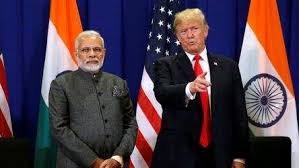
Pictured above is Indian Prime Minister Narendra Modi

I am often asked about India’s democracy – most people know of India as “the world’s biggest democracy” but few know the structure of it. Here is a short summary:

Indian government

The Republic of India is a federal democracy comprising 28 states and nine union territories. The Head of State is the President and the Head of Government is the Prime Minister – currently PM Narendra Modi.

Indian Parliament

loksabha

The Indian Parliament is bicameral, comprising the 545-member Lok Sabha (‘people’s’ or lower house) and the 245-member Rajya Sabha (‘states’ or upper house). Lok Sabha members are elected by universal adult suffrage every five years (except for two appointed Anglo-Indian members) using the ‘first past the post’ voting system. The Rajya Sabha is not subject to dissolution; one third of its members retire every second year. One third of Rajya Sabha members are elected every two years by the legislative assemblies of the Indian states.

BJP is the current Government

The 2019 Indian national election for the Lok Sabha saw the Bharatiya Janata Party (BJP) win a second consecutive term with 303 out of 543 seats.

bjp


India and Australia are perfectly placed to become closer allies in the post-Covid19 world

The relationship between India should flourish in strategic and defence areas plus trade and investment.

Both Australia and India are significant powers in the Indian Ocean region.

India, the world’s largest democracy, is a major power.

The trade relationship

India was Australia’s eighth-largest trading partner and fifth-largest export market in 2018-19, driven by coal and international education. Two-way goods and services trade with India was $30.3 billion in 2018-19, and the level of two-way investment was $30.7 billion in 2018.

Strategic relations much closer now

Australian Prime Minister Scott Morrison has worked hard on the India relationship and his personal connection with Indian PM Narendra Modi.

On 4 June 2020, Prime Minister Scott Morrison and Prime Minister of India, Narendra Modi, participated in the Australia-India Leaders’ Virtual Summit. At this meeting, the two Prime Ministers elevated the bilateral Strategic Partnership concluded in 2009 to a Comprehensive Strategic Partnership (CSP).

The CSP is based on mutual understanding, trust, common interests and the shared values of democracy and rule of law. Through the CSP, both countries have committed to work together across a range of areas.

The CSP also marks a step forward in the two countries’ ambitious agenda to expand our trade and economic relationship, as outlined in the India Economic Strategy (IES), which was released in July 2018 and endorsed by the Australian Government in November 2018.

India’s growing economy and young population need Australian goods and services

Over the next 20 years, a growing India will need many of Australia’s goods and services, including agriculture, education and skills training, and healthcare. There will of course be growth across most areas – but these are the standouts.

Since 2000, India’s GDP has grown seven-fold to reach USD3 trillion. India’s economy is forecast to become the third largest by 2030 (currently seventh) in market exchange rate terms. India already has the third largest economy in PPP terms and is set to maintain this ranking. The two-way stock of investment was valued at AUD30.7 billion in 2018. In 2018, Australia’s investment in India was valued at AUD15.6 billion and India’s investment in Australia was valued at AUD15.1 billion. India was Australia’s 18th largest investment destination.

The Aussie “India Economic Strategy”

Australia’s economic engagement with India is underpinned by the India Economic Strategy (IES), which was commissioned by the Australian Government in 2017 and led by Mr Peter Varghese, former Secretary of the Department of Foreign Affairs and Trade (2012-2016) and High Commissioner to India (2009-2012). This document is the guide for future growth.

Education is huge but facing challenges

Education is Australia’s largest service export to India, valued at AUD5.5 billion and accounting for around 85 per cent of the total. Indian students in Australia number almost 110, 000 (year to date September 2019), which marks a 33 per cent increase over the previous year. These students made 132,079 enrolments in Australia, comprising 15 per cent of international enrolments. As an education export market, India is second only to China, with exports valued at AUD12.1 billion in 2018-19 and 246,454 enrolments in Australia. Adapting to post-Covid19 education market changes will be a challenge for Australian universities.

Austrade is showing and creating the way

The Australia-India Business Exchange (AIB-X) is a new, Austrade-led, Australia-India business marketing platform that will build on the success of Australian Business Week in India, last held in 2017. This multi-month campaign included a coordinated program of activities and events. Minister Birmingham led a business mission to India in late February as part of AIB-X, with sectoral events and workshops to be held in five cities.

This will provide an opportunity to deepen trade and investment ties, focusing on small and medium across the IES’ priority sectors. Further information can be found on the Austrade website.

Plus Austrade has set up The Australian Store at Amazon India – primed to take off over the next few years.

amazon2

People-to-people links

Australia and India are building strong and lasting ties through our people-to-people links.

The Indian diaspora (comprising both Australians of Indian origin and Indians resident in Australia) is now Australia’s fastest growing large diaspora. According to the most recent (2016) Census, the number of people born in India amounts to 592,000, representing 2.4 per cent of the Australian population, or 1 in 50 people. Around 700,000 people claim Indian ancestry.

India remains Australia’s largest source of skilled migrants and the second largest source of international students. Hinduism is our fastest growing religion and Punjabi is our fastest growing language.

The Australia India Council

The Australia-India Council is also advancing Australia’s foreign and trade policy interests with India. Each year it provides grants for programs linking the two countries. I was fortunate to support the Genesis Horticulture Services research mission to India in November – part funded by AIC.

(Thanks to DFAT for lots of the above information)

world3


India’s Reliance second to Apple in “FutureBrand Index”

Who said India could not produce strong brands?

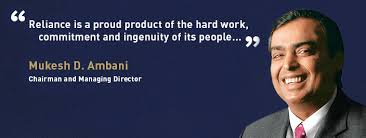
Billionaire Mukesh Ambani’s oil-to-telecom conglomerate Reliance Industries has been ranked second biggest brand after Apple on the FutureBrand Index 2020.

“This year’s highest entrant at number two, Reliance Industries excels on every attribute,” FutureBrand said, releasing its 2020 Index.

ril

“One of the most profitable companies in India, Reliance is, very well respected and is seen as behaving ethically as well as being associated with growth, innovative products and great customer service. People have a strong emotional connection with the organisation,” it added.

FutureBrand, a global brand transformation company, said part of Reliance’s success could be attributed to Mukesh Ambani’s recasting of the firm as a one-stop-shop for Indians.

“The chairman built on the existing petrochemicals business, transforming it into a digital behemoth designed to meet every customer need. Today, this company is engaged in several sectors including energy, petrochemicals, textiles, natural resources, retail, and telecommunications. Now that Google and Facebook are taking equity stakes in the firm, we may see Reliance jostling for the top spot in the next Index,” it said.

Britain’s invasion of India, the power of the Muslim rulers and Ayodhya

Indian PM Modi’s emotion in Ayodhya, “British” rule and the power of the Mughals – how can we understand what is happening today?

moditemple6

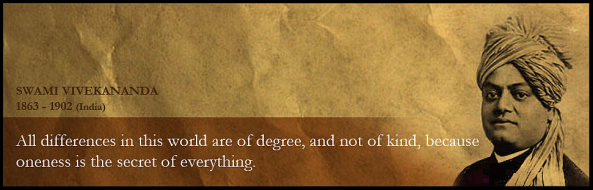
To understand modern India and even PM Modi, I feel we need to turn to Swami Vivekananda – who said:

swami-vivekananda

We talk about the British conquering India and this defines today, but as William Dalrymple writes in The Anarchy, the seizing of power in India was done by a private company – probably the first outsourced act of violence in history.

That company was the East India Company and as Dalrymple writes: “The Company’s conquest of India almost certainly remains the supreme act of corporate violence in world history.” Worth reading that line again!

It is hard to know and even relate to how my Indian friends feel about the two major invasions of their country in recent centuries – first, the Mughal empire and then this East India Company.

Which brings me to Ayodhya.

moditemple4

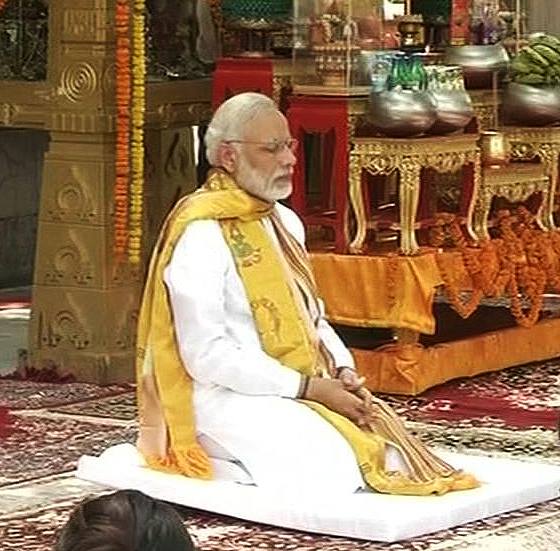
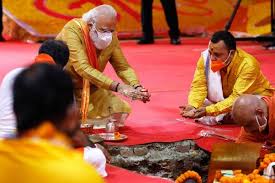
Indian Prime Minister Narendra Modi sprinkled sacred water and flowers into a small hole on Wednesday, part of a ritual marking the start of construction of a grand Hindu temple in the city of Ayodhya.

With emotion Modi said: “Today centuries of waiting are over.” For many of my Indian friends, this was a shared emotion.

Western media persists with the line that all this is “Hindu nationalism”. I am not so sure.

It will be up to Indians – and not to people like me or the media – to define what is happening under PM Modi and what the national motivation is. Most change is painful at first but in lifting people out of poverty and restoring confidence, he has brought great optimism to India.

Now India faces another struggle – Covid 19 – which makes arguments about history seem like something of an indulgence.

From our hearts to yours, we wish India success in this life and death battle against the virus.

With Covid19 we are seeing the vast and deep truth of that classic Indian saying Vasudhaiva Kutumbakam – meaning “the world is one family”.

vasudhaiva2

India attracting investment during the pandemic and USA is the largest trading partner for a second year

Since March, India has received over $20 billion of new investment from Western companies despite the pandemic.

Thanks to John Bell, Client Relations, Amritt, Inc, Malibu California for this information.

Here are  four examples of significant improvement in bilateral trade between the two countries (India and USA) during the pandemic:

Dozens of large and small organizations depend on Amritt as their trusted advisor to succeed in India, whether selling, sourcing or leveraging talent.

You can Email John Bell at johnb@amritt.com


Start your India journey with Chennai – and start your India outsourcing with Sundaram

Tamil Nadu has the second-largest economy in India and by area is the fourth largest state of India. The capital is Chennai and over 60% of the state is urbanised.

Chennai is one of my personal favourites – doing business there is good and there is plenty of tourism and activity to keep life interesting.

sundaram-financejpg

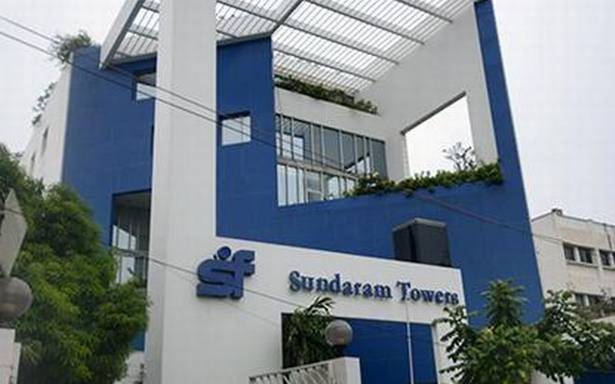
One of the leading firms is the Sundaram Finance group, led by Managing Director TT Srinivasaraghavan. The firm has a code of ethics and behaviour which it calls “The Sundaram Way” – an inspiring document worth looking up.

Within the Sundaram group is an outsourcing and business consulting arm, Sundaram Business Services (SBS).

SBS is strong in Australia and provides services to many leading brands, including a major superannuation outsourcing practice.

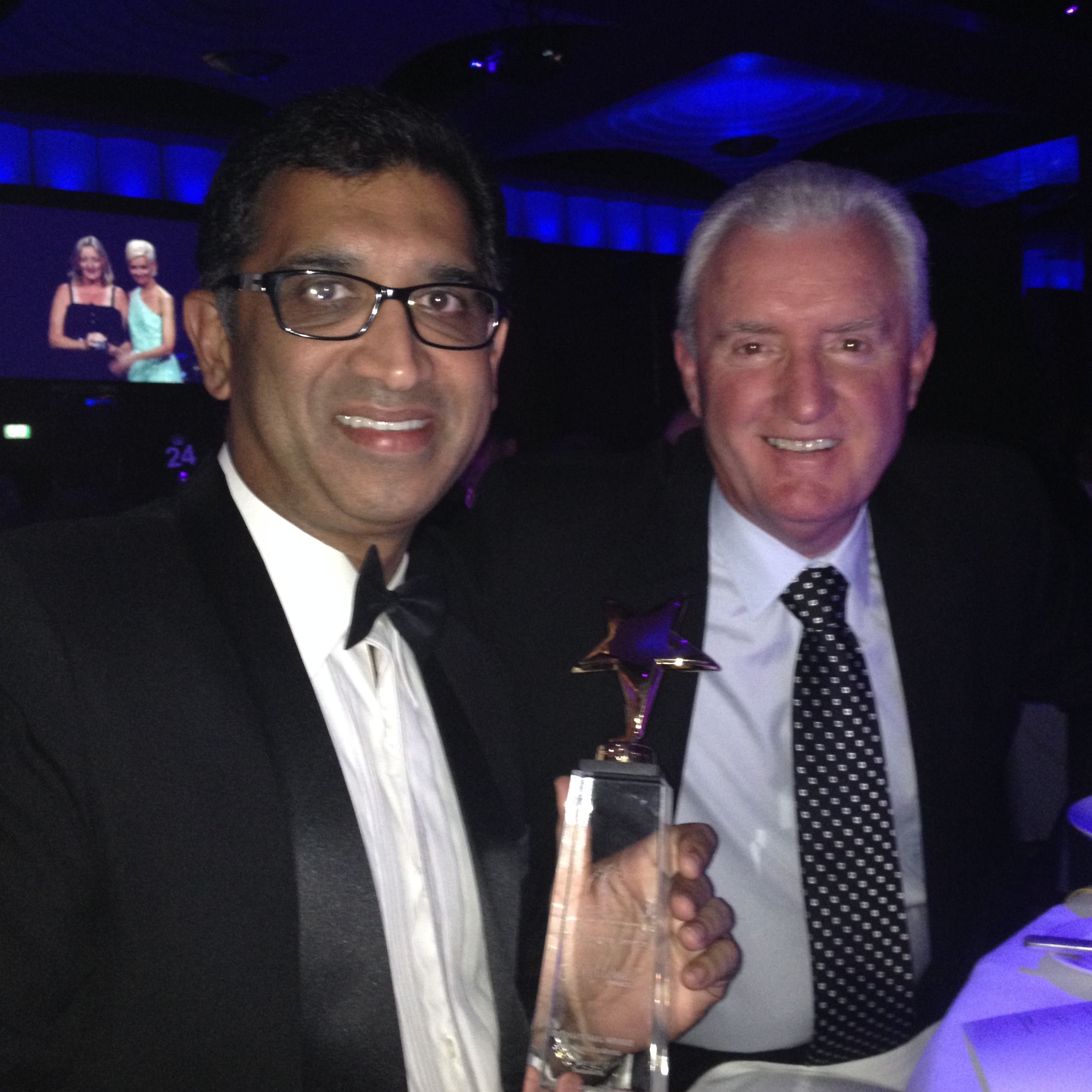
SBS is led here by Harish Rao who pioneered Australia’s superannuation outsourcing to India (pictured below, Harish Rao has won several awards in Australia).

IMG_0212

As a southern India state, it is highly courteous, very friendly, conservative in approach to business and a good starting place to find a trusted business partner.

Tamil Nadu has a diversified manufacturing sector and features among the leaders in several industries like automobiles and auto components, engineering, pharmaceuticals, garments, textile products, leather products, chemicals, plastics, etc.

chennai4

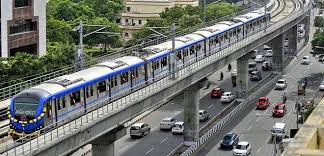
It has a well-developed infrastructure with an excellent road and rail network, three major ports, 15 minor ports, and seven airports across the state providing excellent connectivity.

As of February 2020, the state had 54 formally approved Special Economic Zone (SEZs), 50 notified SEZs and four with in- principle approval SEZs and has total 40 exporting SEZs.

For most of you, Chennai and the state of Tamil Nadu make a good starting point on your India journey.

Two Indian business giants are innovating during Covid19.

Expansion often means exploring the unexplored.

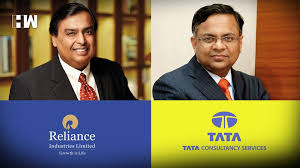
Two of India’s largest companies have done it.

Reliance Industries Ltd on Wednesday said it’s going to expand its food-and-grocery play in JioMart to include fashion, consumer electronics, and smartphones by this festive season. Tata Consulting Services (TCS) on July 8 launched Quartz smart solution to offer cryptocurrency trading.

jiomart

JioMart’s plan to revolutionise the e-grocery space involves the Kirana stores, the oldest form of local mum and dad retail in India.

JioMart has been bringing small stores online, thereby putting kirana store owners at the centre of its plans. What’s in it for Reliance? The Kirana stores become last point of delivery in the logistics trail, plus, by digitising a local store you open a minefield of hyperlocal information. With a larger size of kirana-store customers, B2B e-commerce platforms get a robust database of actual sales instead of estimates. This data can be sold to brand manufacturers. It’s one of the biggest revenue streams for any company taking kirana stores online. RIL is one smart business!

tcs

TCS is looking to get an early-mover advantage with Quartz, having a big impact in the global enterprise blockchain-solutions market. Its new product, Quartz, aims to make swift inroads into cryptocurrency trading in countries such as Switzerland and Singapore where it’s legal. TCS is eyeing high-net-worth investors, private banking, and wealth-management segments. However, Quartz may not find takers in India in the absence of regulatory clarity.

How India is different from China – insights from Asialink Business

Asialink Business has a wonderful Asian Market Update Series and a recent one focused on India.

One of the speakers was Mary Manning – Portfolio Manager at Ellerston Capital.

Dr Manning manages the Ellerston India Fund among other Asian investments.

She detailed why India is unique and not the next China. For example, the structures of the two economies are very different and beyond coal, exporting bulk commodities is not going to be the bedrock of Australia’s relationship with India.

India is also at a very different stage of economic development to China, with different consumer preferences, price points and distribution channels. These factors give rise to a completely different set of sectoral opportunities, that will most likely require capital investment on the ground – but one size does not fit all when it comes allocating capital in India.

podcast

Dr Manning cited several examples of successful investment in India by multi-national corporations that cut across geographies, sectors, time frames and business models, such as majority stakes in listed companies, through to unlisted joint ventures and distribution agreements. These companies include household names in Unilever, Suzuki, Prudential, Macquarie, Facebook, Alibaba, McDonalds, Walmart, and QBE.

Dr Manning said the higher returns on equity that could be achieved in India were a major reason why Australian companies should be considering investment opportunities there.

She said there was currently an investor scramble for ‘new economy’ assets in India in key areas such as healthcare and infrastructure and while good buying opportunities could present over the next six to 12 months for equity investors – with the Indian economy weakened by COVID-19 – a long-term view was needed.

India_At_a_Glance_Country_Starter_Pack