How did India miss out on being part of the world’s biggest trading bloc?

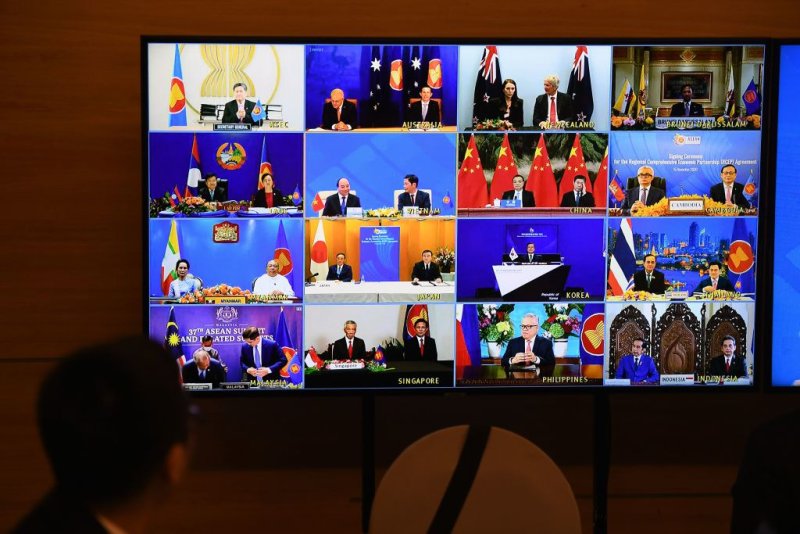
India is missing from the world’s biggest trade bloc which has just been formed – 15 countries representing 2.2 billion people have signed on to a Regional Comprehensive Economic Partnership (RCEP). Talks on RCEP began in 2012 and it has now created a bloc which accounts for about one third of the world economy.

This is a massive new initiative for global trade.

India and the USA have missed out – India because of concerns for farmers produce, and the USA because President Trump pulled the pin on the concept.

India is the mystery case in the region because opting out of RCEP is not going to help its economy. Concerns over lower tariffs hurting local producers won the day and India moved out of the deal.

Did India also withdraw because the relations between India and China are sour, with border disputes and other issues on the rise?

But India could ultimately join RCEP – the doors for India to join the bloc will remain open in future, according to the participant countries.

Otherwise, India looks like being one of the two big losers in this move.

The RCEP group is composed of the 10 Southeast Asian (ASEAN) countries along with China, South Korea, Japan, New Zealand and Australia.

Vietnam “hosted” the final deal online and said the deal will help to lower trade tariffs between the participant countries, over time, and is less comprehensive than the Trans-Pacific Partnership (TPP).

“RCEP will soon be ratified by signatory countries and take effect, contributing to the post-COVID pandemic economic recovery,” said Nguyen Xuan Phuc, prime minister of Vietnam.

The actual legacy of President Donald Trump’s “America First” withdrawal from multilateralism and deals like TPP and RCEP could be a declining US role in world trade.

In contrast, China could be the big winner – experts say that this pact is a testament of China’s strong influence in the region.

The RCEP will lower or eliminate tariffs on various goods and services, although the scope of the agreement—essentially an extension of free trade under existing frameworks—is limited.

So, what is the biggest benefit of RCEP? The pact will create so-called rules of origin, which make it easier for companies to set up supply chains spanning multiple countries.

This is super important – it will be much easier to manufacture and sell goods in the region once RCEP comes into force.


What is Diwali all about? Professor (Dr) Singh provides some inspiring thoughts

What is Diwali all about? Here are some thoughts from my friend the very distinguished Prof (Dr) Gurinder Singh, Group Vice Chancellor, Amity Universities:

Celebrations that invoke the blessings of the Almighty are very special. This is what makes our vibrant festivals a true symbol and universal propagator of our rich heritage, culture, customs & traditions.

The auspicious festival of Deepawali encourages us to celebrate the many lights in our lives.

It marks the triumph of good over evil, knowledge over ignorance, nobility over wickedness, virtue over vice, brilliance over obscurity and peace & harmony over discontent & conflicts.

‘Diyas’ can lighten our life with lot of affection, can remove the darkness in us, can ignite more spirituality, can bring us closer to each other, can add lots of sweetness in our relationships with everyone, can inspire us to achieve the highest limit during our journey of excellence of making our organization and our world most memorable, exciting & festive.

We are confident that together with you, we will fulfill our dreams of building Amity as a truly International brand with world class research, innovation, industry-academia linkages, international collaborations and exemplary best practices & governance standards in which all of us will feel satisfied, proud and blissful.

My addition – Amity University is one of the world’s great universities building a tradition of learning, entrepreneurship and research that will leave a lasting legacy for India and the world.

Pictured – Amity University campus, Noida

India and Australia have a trade relationship that can grow

A great source of information about Asia is ASIALINK here in Australia – and for those interested in India their INDIA STARTER PACK is valuable.

Australia’s economic relationship with India has expanded significantly in recent years – particularly exports of minerals and energy, as well as our provision of education services to tens of thousands of Indian students.

We now have the basis to do more. It will take some marketing creativity and a realisation that brand “Australia” goes down well in India.

Two-way goods and services trade between Australia and India totalled AUD 27.4 billion in 2017. Major Australian exports to India included coal (AUD 9.2 billion), education-related travel (AUD 3.4 billion) and vegetables (AUD 1.38 billion). Our main imports from India were refined petroleum (AUD 1.6 billion), medicines (AUD 335 million), pearls and gems (AUD 274 million) railway vehicles (AUD 199 million). 

The total value of Australian goods exports to India for 2017 was AUD 15.7 billion, making it our fifth-largest goods export market. We exported an additional AUD 4.4 billion in services to India, a figure primarily made up of education-related travel services and other personal travel.

Time to review your India market entry strategy? Let’s talk.

India stepping forward in regional security

Thirteen years can be a long time in regional security and diplomacy.

It is thirteen years since the Quadrilateral security dialogue (or the Quad) between the officials of Australia, India, Japan and the US, gave in to Chinese coercion.

This year it is back and potentially stronger.

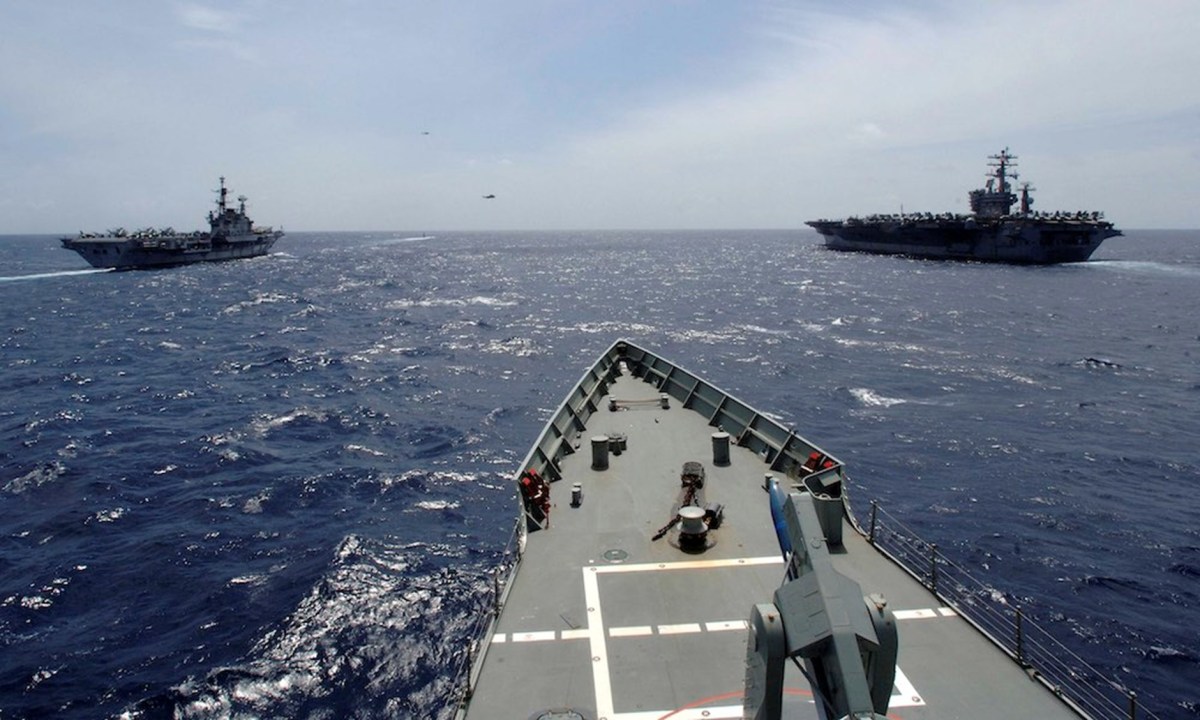
India has decided to stand strong, as it becomes a significant regional power. It is again leading the Quad in the Malabar series of naval exercises in the Bay of Bengal – the exercises aim to support an “open and prosperous Indo-Pacific”.

In 2007 countries like India and Australia gave in to Chinese pressure and pulled out of the exercises – China then described the Quad as an “Asian NATO” designed solely to contain China.

The Malabar series of naval exercises is a complex annual fixture with ships, aircraft and submarines of the Indian, US, Australia and Japanese navies exercising alternately in the Indian and the Western Pacific Oceans.

India is different from the other Quad members in that it shares a land border with China – so in that way, it has most at risk in stirring up the Chinese. To put it in perspective, this border is the world’s longest unsettled boundary. Recent military escalation along the border has caused global concern.

All four members of the Quad know that China might “punish” them in response to the Malabar exercises, but they are going ahead anyway.

One narrative is driving most of the strategic decisions and activities in the Indian Ocean region – and that is the need to respond to China. China is seen as the only major power acting to the detriment of the order and stability of the region.

Most feel that attempts to appease China have only led to increased belligerence and a disrespect for diplomatic avenues. Hence, the Quad. And hence, India is stepping forward.

India and Japan closely watching USA elections


India and Japan might feel better about regional affairs if Biden wins the Presidency of the USA next week.

Why? Because neither country feels comfortable with the bombast and cold war rhetoric emerging from the Trump Administration and US Secretary of State, Mike Pompeo.

Even Australia, which is often too keen to outdo the US, was cautious in response to Pompeo and alluded to our interest in a good relationship with China.

These are some of the key points I take from a recent very thoughtful analysis by John McCarthy AO, a Senior Advisor to Asialink and former Australian Ambassador to the United States, Indonesia, Japan, and High Commissioner to India.

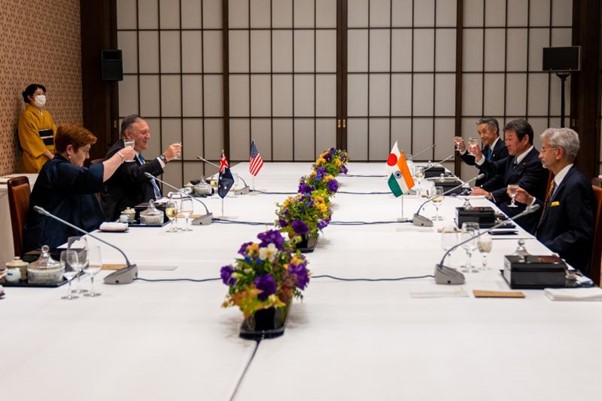
McCarthy makes the point that Pompeo went much further than Japan or India would like when he told the recent Quad meeting in Tokyo that they should “build out a true security framework”.

McCarthy wrote: “Apart from not sharing Pompeo’s buccaneer spirit, Japan continues to seek some equilibrium in its relations with China and has constitutional issues with security groupings. And while India continues to have serious border issues with China, it shows no inclination to veer from its doctrine of Strategic Autonomy.”

“If the Quad is to be in our interests, it has to be a cautious Quad. It is acknowledged—at least formally—by Quad members that ASEAN remains central to regional interstate architecture,” he said.

McCarthy also illustrated how “cause and effect” works in diplomacy: “The more the Quad develops a distinct identity, the greater the risk of growing regional fracturing between three groups—China, the Quad, and ASEAN—possibly with China pulling at Myanmar, Cambodia and Laos, and the Quad pulling at Vietnam. This will make it all the harder to develop even the loose regional approaches on managing China’s rise-particularly on the South China Sea.”

Important to note, as McCarthy does in his conclusion, that Biden’s main priority on election would be to get his own house in order.

That, at least, would yield positive outcomes for us all and be a relief from the bombast.

Modi pushing hard on reducing imports and increasing exports

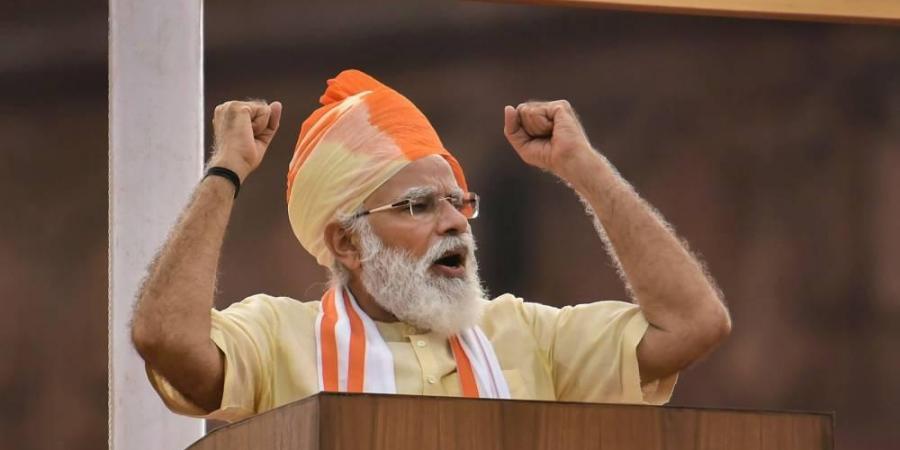
Indian Prime Minister Narendra Modi set out an ambitious plan to boost exports while reducing imports – and it is working.

According to data collected from the Centre Government, India’s exports to the USA amounted to USD 5.1 billion in September 2020, 15.5% more than the figures for the corresponding month (USD 4.4 billion) in 2019.

In addition, imports from the United States decreased by a substantial 34.3% to USD 1.8 billion in September 2020, compared to USD 2.8 billion in September 2019.

Similarly, in the period from April to September this year, imports from China, one of the largest producers of commodities across industries, decreased to USD 27.4 billion. Therefore, imports have decreased by 24.5% from the USD 36.3 billion amount for the same duration last year.

Meanwhile, Indian exports to China increased by 26.3% to hit USD 10.6 billion in the above-mentioned period, a substantial increase from USD 8.4 billion for the period April-September 2019.

It’s a stunning turnaround and more is to come…

Suzlon Group appoints new CEO for next stage of renewable energy

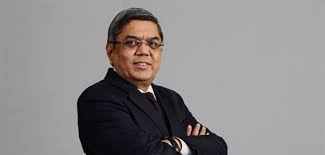
Suzlon Group, India’s largest renewable energy provider, has announced that it has appointed Mr. Ashwani Kumar as its Group CEO.

This is a significant announcement for sustainable energy and India in particular.

The Suzlon Group is one of the leading renewable energy solutions providers in the world with a global presence across 18 countries in Asia, Australia, Europe, Africa and Americas. Headquartered at Suzlon One Earth in Pune, India; the Group is comprised of Suzlon Energy Limited (NSE & BSE: SUZLON) and its subsidiaries.

Ashwani Kumar, with over three decades of experience in the areas of projects, business development and finance at leading Indian Power and Infrastructure companies is a Mechanical Engineer, and an alumnus of IIM Bangalore and The Harvard Business School.

Mr Tulsi Tanti

Mr Tulsi Tanti, Chairman and Managing Director, Suzlon Group, is the driving force who has built Suzlon into a major global wind energy player.

Mr Tanti is picture sixth from left when he presented the Australia India Address in Melbourne.

India boosts Quad naval cooperation as China hostility continues

New defence ties in the Indian Ocean region are rolling out on a regular basis – the latest one reports Australia will join three-way Malabar naval exercises – involving the United States, Japan and India.

Australia left the program after participating in 2007 – leaving following some strong criticism from China.

The move back by Australia shows how much regional attitudes to China have changed.

This new move could raise concerns in China, which has criticised similar joint drills as “destabilising”. China has been slamming import restrictions on Australian cola, cotton, wine and other products.

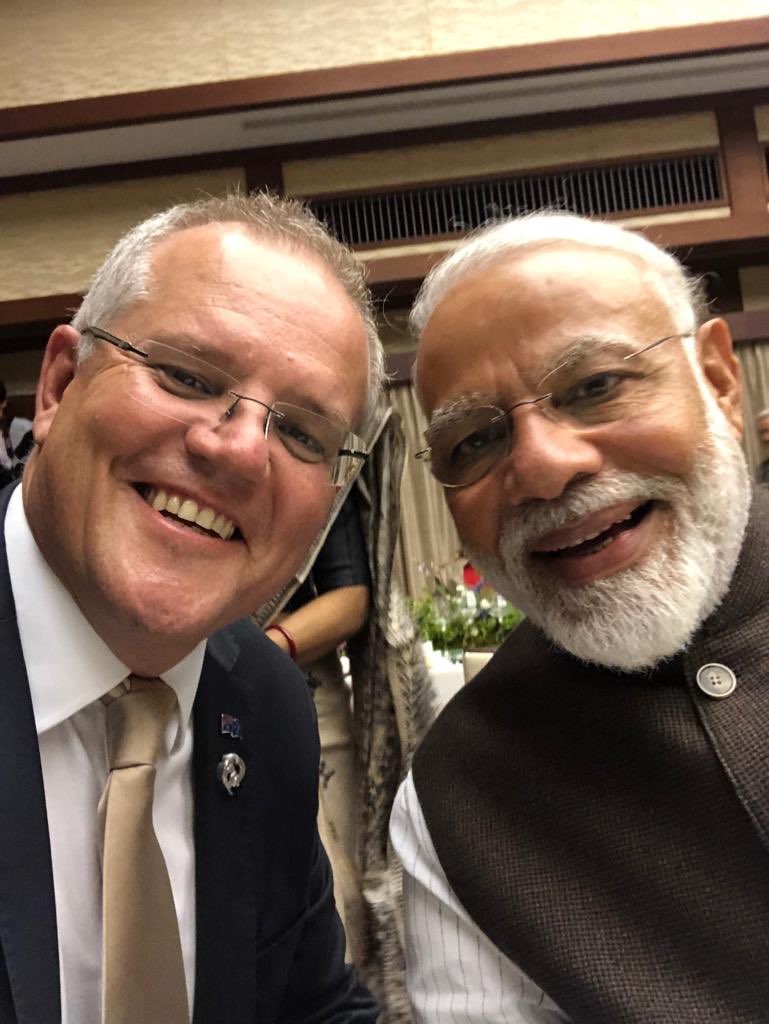
In contrast to declining relations with China, Australian PM Morrison and Indian PM Modi are working closely together.

India took the initiative of inviting Australia back in a sign of cooperation between the “Quad” countries.

The Malabar exercises are held in the Bay of Bengal.

The joint drills are super significant because they are the first concrete action of the Quad grouping.

China has denounced the Quad as an attempt to contain its development.

India’s decision on expanding the exercises comes at a time when it is locked in a military stand-off on the disputed land border with China.

Four Indian startups become unicorns during Covid19

Great Indian story of succeeding in tough times – four Indian startups, Postman, Nykaa, Unacademy and Razorpay, have become unicorns amid covid-19.

In the venture capital world, a “unicorn” is a startup with a value of $1 billion.

The nation is on track to have 8 unicorns in 2020, almost the same number of additions as in 2019.

According to a study titled ‘Covid-19 and the Antifragility of the Indian Startup Ecosystem,’ India is on its way to having 100 unicorns by 2025.

The study was launched by TiE-Delhi, a global non-profit organisation supporting entrepreneurship in collaboration with Zinnov, a global management and strategy consulting company.

It revealed that total funding fell by 50% compared to pre-covid levels during the lockdown. As a result, around 40% of start-ups have been adversely affected and 15% have been forced to discontinue operations.

The third largest start-up ecosystem in the world was jolted by the multi-dimensional pandemic and the effect was extreme during the lockdown period from March to June 2020. However, the rate of recovery, both in demand and in investor sentiment, was faster than anticipated as the economy opened.

Why is India doing so well in tough times?

During Covid19 there has been a big move to digital consumption – so startups in education, healthcare and trade have boomed.  

Indian PM Modi and Australian PM Morrison could create “Indian Ocean Food Bowl” – India exports up

Not many in the west think of India as a food exporter. But it is – and the numbers are going up.

This blog Into India has called for greater collaboration between India and Australia to become the “food bowls of the Indian Ocean Region”. The combination of the know-how in both countries could produce major agribusiness innovations, especially in horticulture and hydroponics.

Indian exports of essential agricultural commodities for the cumulative period of April-September, 2020 has increased by 43.4% to US$ 7.34 billion.

The major commodity groups doing well in export include Groundnut (35%), Refined Sugar (104%), wheat (206%), Basmati Rice (13%) and Non-Basmati Rice (105%).

It’s a great outcome for the Modi Government.

To boost agri exports, the Government created an Agriculture Export Policy, 2018 which, among other things, provides for a cluster-based approach for export-centric farming of cash crops like fruits, vegetables, spices, etc. It is working!

Recently, the Government has also announced an Agri Infra Fund of US$ 13.70 billion to improve the agri business environment – so more export growth is on the way.