India and the USA have very different world views – the 10 differences

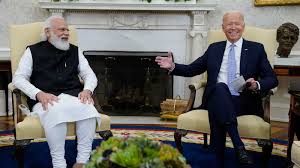
Indian PM Modi meets with US President Biden in the White House recently

There has been a lot of talk recently about India becoming part of some formal military alliance with the US – in response to the rise and actions of China.

But is this likely?

Here are 10 key differences in the world view of India and the USA

New Delhi is wary that any formal alliance with the US could draw it into almost constant military activity such as the Iraq war

India prefers to do its own strategic deals on a country by country basis – rather than manage these through a dominant US strategic alliance. For example, India and Australia have a Mutual Logistics Support Arrangement allowing each to uses each other’s bases

Historically India has never agreed to open-ended commitments that might lead to future military involvement

Of the four countries speculated to be invited to join the Five Eyes security arrangement (the four are Germany, India, South Korea and Japan) – India is the only one of these four to NOT have a treaty alliance with the US

An example of differences between India and the US is Iran and the Nuclear Non-proliferation Treaty (NPT) – the US attacks Iran on the nuclear issue, sees the NPT as something to be enforced – but India has not signed the NPT itself and sees it as discriminatory

There are differences on the “threat” from China – the US is most assertive on freedom of navigation in the South China Sea while India has been quite reserved on this issue

India is more concerned about its Himalayan border conflicts with China than the South China Sea

India generally has little or nothing to say about human rights issues in other countries. Whereas the US and its allies such as the UK and Australia are constantly calling out human rights abuses around the world

The US wants “all in” commitment from allies but India has always been non-aligned and refuses to get drawn into “us versus them” views of the world. One current example is India is finalising a logistics deal with the UK while also negotiating a similar deal with Russia

India is content to be “the world’s biggest democracy” but is not evangelical about it, accepting that all countries are different – a sharp contrast to the US wanting to remake countries in its own image and championing democracy for all
New “Business Champions” group to provide much needed top level links between India and Australia

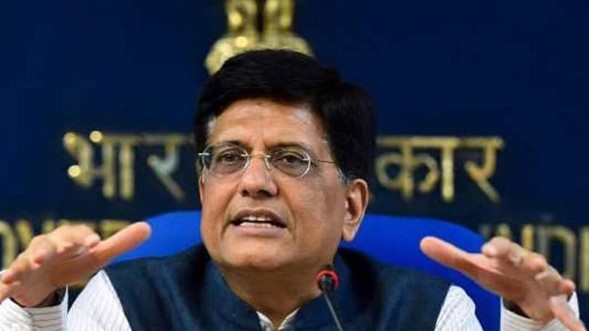
Indian Commerce Minister Mr Piyush Goyal

A new “Business Champions” group will lead top level business engagement between India and Australia – and it was launched last week in India.

INTO INDIA welcomes this move to bring the “top end” of both countries together. Business engagement at this level has not worked well in the past. Most of the business councils and chambers have provided lower level SME engagement – important as this is.

“Supply chains” is behind the enthusiasm of India for the new Australia-India Business Champions Group’s role. Mr. Piyush Goyal, Minister of Commerce & Industry, Consumer Affairs, Food & Public Distribution, Textiles, Government of India said this when addressing the Inaugural Meeting of the Australia India Business Champions.

The Minister is co-chairing the group with Australian Trade Minister, the Hon Dan Tehan.

“The Australia-India Business Champions Group’s key aim is to liberalise and deepen bilateral trade between both the nations and pave the way for collaborative economic growth.” stated Mr. Dan Tehan MP, Minister of Trade, Tourism and Investment, Government of Australia.

Major business organisations leading the group are the Confederation of Indian Industry (CII) and the Business Council of Australia (BCA). Both represent almost all the major business corporations in both countries.

Mr. Chandrajit Banerjee, Director General, CII, pointed to areas such as mining, education, defence, space and emerging sectors which the group can take forward.

Ms. Jennifer Westacott AO, CEO, BCA, highlighted that we must strengthen and reform regional and global institutions, so they deliver for our citizens.  She said the Business Champions would engage directly with the top tier of Australian and Indian Governments on matters critical to business. 

Other panelists at the meeting included H E Mr. Manpreet Vohra, High Commissioner of India to Australia, H E Mr. Barry O’ Farrell AO, High Commissioner of Australia to India, Dr. Anish Shah, MD & CEO, Mahindra & Mahindra Ltd, Ms. Julie Shuttleworth, CEO, FFI, Mr. Rakesh Bharti Mittal, Vice Chairman, Bharti Enterprises, Mr. Mike Cannon-Brookes, Co-Founder and Co-CEO, Atlassian, Mr. Nitish Jain, President, SP Jain School of Global Management, Ms. Verena Lim, Asia CEO, Macquarie Group, Mr. Girish Ramachandran, President, Tata Consultancy Services Asia Pacific, Professor Duncan Maskell, Vice Chancellor, University of Melbourne.

It’s his birthday today, so what does Gandhi say for our modern world?

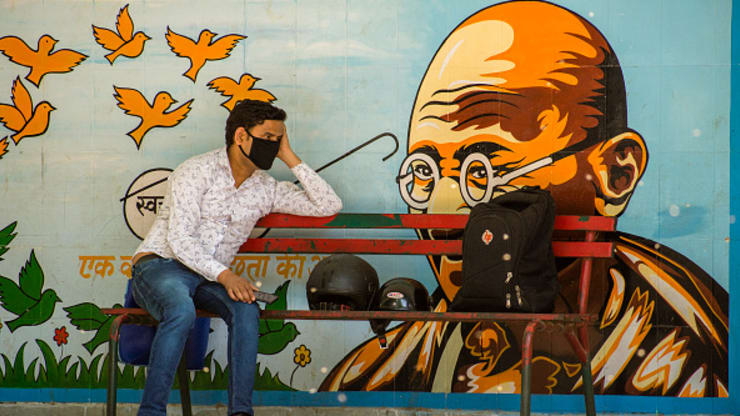
India’s Mahatma Gandhi was born on 2 October 1869 and died in 1948

The Mahatma Gandhi memorial in New Delhi, known as Raj Ghat, expresses his values – it is peaceful and quiet, a green open space with a marble tomb in the middle, marked by one word “Ram” – God, the word Gandhi uttered when shot on 30 January 1948. Here there are no lengthy accolades, just a simple and lasting tribute.

I first visited this on a warm afternoon with time alone – but you are not alone for long in India. I was soon joined by a family of four, there to show the children and pay their respects to this great human being. In doing so, their shining eyes invited me into their circle, we talked, laughed, turning back regularly to gaze at the marble tomb. The moment was defined by simplicity and love.

This was how he lived – you can see this in Mumbai at Mani Bhavan (Gandhi House), a three story home with shuttered windows, a residence that Mahatma Gandhi was able to use when in that bustling city. The house is in a leafy and relatively quiet street.

The austere dwelling seems a long way from our consumer society, for here in Mani Bhavan, the feeling is respectful and quiet. No one rushes. This was indeed the man who said there was enough in the world for everyone’s need but not for everyone’s greed.

Knowing this, it becomes redundant to ask what Gandhi means for our modern world. He means everything.

The world is nervously watching the rise of China, and the contest for leadership in a rapidly changing world. Believing that in situations like this, hatred is the real enemy, Gandhi urged us to hate the sin, love the sinner. His view on answering violence with violence was “An eye for an eye makes the whole world blind”.

Gandhi knew that around the world, people are different – and they see the world differently. He knew that much hostility began because we each tend to believe that our own world view is the correct one.

It was the pragmatist in Gandhi (which infuriated extremists) who accepted that all of our differing world views are neither right nor wrong – they are just differing world views.

There is a story that showed how different this person was – while boarding a moving train one day, one of Gandhi’s shoes slipped off and fell upon the track. As he was unable to retrieve it, Gandhi – to the astonishment of his fellow travelers – calmly removed his other shoe and threw it down the track to where the first had landed. “The poor man who finds the shoe lying on the track,” Gandhi explained, “will now have a pair he can use.”

Laughing in tough times

Karina Wegner is a psychologist in Australia’s sub-tropical Hervey Bay. Karina’s well-researched expert opinion is that “you should have as much fun as possible and laugh as much as you can. When you couple these together, you should be able to keep ‘depression’ (what they now call the disease of the 21st century) away.

“When you enjoy yourself and laugh, you will increase the serotonin levels in your body, thereby decreasing the risk of depression.

When my clients leave my office in Queensland’s Hervey Bay, my practice manager makes sure the client is laughing or at least smiling before they leave.

I have a waiting list of near three months and my clients travel long distances to see the “Optimistic Psychologist.”

University studies have shown laughter can improve your immune system. increase disease fighting antibodies and lower inflammation in the body.

Laughter increases heart rate and blood flow, and has similar health benefits to exercising. Endorphins are released during laughter, which helps to relieve pain, reduce cravings and stress, and slow the ageing process.

Humour can alleviate feelings of stress and depression.

It’s not always easy but when family and colleagues test your patience, put a smile on your face – even forced ones help. Try to find the humour in the situation and make a light-hearted comment. Not always easy, but give it a go!

INTO INDIA shares a few techniques to put a smile on your face:

Look at a photo of your favourite animal (hint – if you look at an Australian Koala you will definitely smile)

Listen to your favourite relaxing music

Sit quietly with no purpose, no agenda, just observe

Visit https://www.projectoptimism.com.au/

Visit https://www.centreforoptimism.com/

Best wishes to everyone and I hope you can find some smiles and laughter in these times – and if you do, share it with others?

Australian fund investing in India returns 69% in 12 months

Mugunthan Siva is CEO of India Avenue Investment Management

Thinking of investing in India? The India Avenue Equity Fund returned 69.4% over a year August 2020 ending 31 August 2021, outperforming its benchmark (MSCI India in AUD) by 14.4% in the same period.

India Avenue Investment Management (IAIM) is a boutique investment company focused on providing investment solutions for clients in Australia and New Zealand who seek exposure to India’s growth potential through its capital markets. Click here for their website:

Over the last month the India Avenue portfolio has started increasing exposure to companies leveraged to urban consumption thematics. Given India’s vaccination drive, it is anticipated that close to 100% of India’s urban population above the age of 20 will be vaccinated (currently vaccinating at a pace of more than 10m per day) by the end of 2021.

Recently they have added stocks to the portfolio which are focused on the food delivery model or restaurant chains and fast-food outlets that are likely to benefit from rising propensity to eat out of home. India’s food delivery market is expected to grow from around US$5bn to over US$20bn1 over the next five years. Factors which are propelling online delivery are:

• Changing lifestyles and eating habits, driven by the lack of availability of time and rising

wealth as well as the rising prominence of the change of household structure in cities.

• Rising digitization (internet and smart phone penetration), particularly amongst India’s

significant millennial population.

• Rising urbanisation of India

• Growing working population, particularly amongst young women.

• COVID-19 has propelled the urge to eat prepared food with contactless delivery points introduced by Zomato, McDonalds, Pizza Hut, KFC, Dominoes etc.

The number of times Indians eat out rose from 2-4 times per month in 2010 to 6.6 times by the end of the last decade. Additionally, the average spends of a consumer rose from Rs.1000 to Rs.2500 in a month2

This was especially prevalent amongst India’s millennials in Tier I and Tier II city locations. This trend has been accentuated by food technology, social media and marketing, health, and wellness and as well as the evolution of consumer palates for ethnic diversity in food choice.

INTO INDIA has consistently pointed to the large number of vibrant Tier 1 and Tier 2 cities for trade and investment.

The CEO of IAIM is Mugunthan Siva – Mugunthan.Siva@indiaavenueinvest.com

Business with India? Leave your ego behind and let Indians run the business

Pretty much every western company that has succeeded in India has done so on the support of a strong local Indian team across all levels. To do this, they have effectively left their ego behind.

Those who struggle typically want to transfer their “culture” to India so they put their expat team in charge of the local team. This is ego centred and mostly does not work. These are mainly companies that do not trust the locals and are over-confident about their own “head office culture”.

Being preoccupied with transferring “the way we do things in our company” to India makes them blind to “the way Indians do things there” which is the most important insight for future success.

So – local management teams are essential in India (and probably anywhere you go in Asia) and that team should lead and manage your enterprise throughout India. This does not mean you do not provide the support of some expats – of course good companies do, but this is to empower the local team. Expats can come and go as needed – but your business needs longevity in India and that is what an Indian management team can provide.

Smart companies that go into Asia also ensure they hire Asians into the HO team, so you have Asians running your enterprise on the ground in Asia and Asians at the right level in HO guiding and advising the HO team.

Real access to family and business networks in India (and probably all of Asia) is mostly only achieve by Indians.

Conclusion – if you want to succeed in business in India, rely on Indians to run your Indian business.

Affordability and lack of credit holding back India’s digital economy – but not for long

Nitin Jain is CEO and principal fund manager at Kotak Mahindra Asset Management (Singapore)

While predicting rapid growth, Nitin Jain of Kotak Mahindra Asset Management (Singapore) says there might be one catch – the India digital economy has to overcome one big hurdle – affordability. This is matched by a shortage of consumer credit.

Nitin Jain explains:

With per capita incomes of about $2,000 and large infrastructural challenges, to offer a value proposition at a mass level is extremely challenging, and requires large capital.

2021 has been a breakout year with more than $20bn in funding so far this year and almost $10bn in July 2021 alone. Prior to this the average was just $8bn-$10bn per year.

The future is looking bright for India to become a credit-rich country enabled and backed by data. Fintechs with buy mow pay later (BNPL) businesses will help fuel the data backed credit boom.

With one of the youngest economies with about 1.4 billion people, the highway to growth is long.

India already have more than 100 million users on Amazon, and travel, transport, ed tech, food tech, gaming, SaaS in enterprise and mass, are seeing millions getting added every month.

Traditional businesses tend to grow in an algebraic way, but digital businesses are growing at geometric scale and some potentially at logarithmic scale. 

We as investors are keenly analysing these changes and investing in upcoming opportunities and remain hawk-eyed on potential disruptions.

A vibrant digital ecosystem throws in immense possibilities of large capital coming to India.

Tens of billions have been invested by global investors in Chinese internet businesses and India is at a similar stage and with the recent chaos, potential realignments can accelerate the flows.

Y2K was a watershed moment for India IT services and 20 years later, Covid-19 will likely be a watershed moment for the Indian digital economy.

Indian economy primed for growth – old and new

Nitin Jain CEO and principal fund manager of Kotak Mahindra Asset Management (Singapore)

For investors, India is at a very interesting juncture, according to Nitin Jain of Kotak Mahindra Investment Management.

The old economy is set to make a comeback after a Covid-19 hiatus and the digital economy is primed for hyper growth – perfect combination!

Nitin Jain says: “The latter is becoming more pertinent when we see serious regulatory challenges emanating from the biggest new economy play in the world, China.”

On the day when the China ed-tech companies and other new economy stocks were reeling under the fear of profits being taken away, Zomato, a fast growing Indian food tech company had its listing day gains of more than 50%.

Close on the heels are many other digital businesses which are getting ready for listing.

Indians are already hooked to the internet and now we are seeing transaction-related internet businesses gaining mega scale. 

In fact, around 750 million have access to a mobile payment system tied with the Aadhar card, a biometric card which uniquely identifies an individual and is very easily accessible by any business, government services, and healthcare services securely, seamlessly and at almost no cost.

So – time to review your investment and business/market entry strategies?

Getting lost in Higginbothams – amazing bookshop in Chennai

You can get lost in Higginbothams – or, at least, I have!

On Chennai’s Mount Road, Higginbothams has stood tall and proud since 1844. Said to be the oldest bookstore in India, it was founded by Abel Joshua Higginbotham—an India-born Englishman.

After an unsatisfying career as a seamen, Higginbotham became the manager of a bookstore in the basement of a Methodist chapel. He bought and ran the store for 60 years with his youngest son, before switching to the current Mount Road location.

The bookshop is housed in a grand, colonial structure and still carries an old world charm with wooden furniture and tall stained-glass windows.


LIC Building, 116, Anna Salai, near Regional Passport Office, Chennai.

Tony Abbott might have overstated it – but he is more right than wrong on India

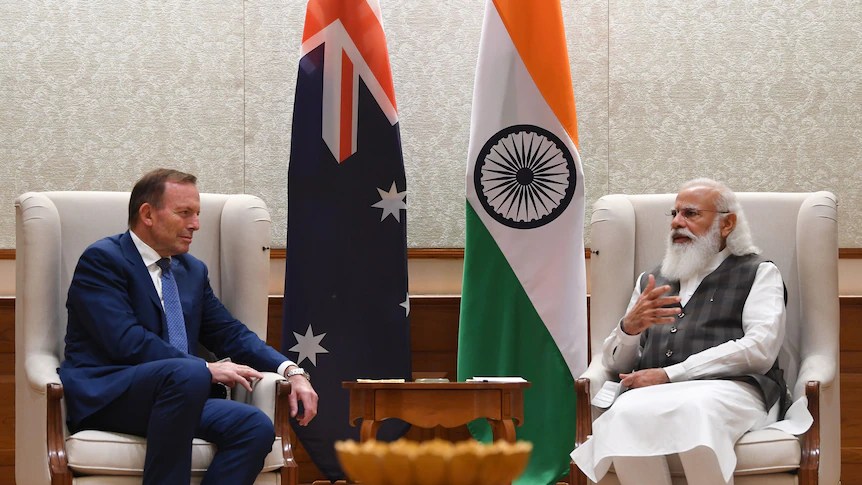
Tony Abbott wants Australia to make a big shift towards India and away from China.

Despite some hysterical responses from two former Aussie PM’s, Tony Abbott has by and large got it right on India and we should work towards the closer relationship he believes is possible – and necessary!

Consider this verbal stoush:

“The answer to almost every question about China is India. Although currently not as rich as China … India is perfectly placed to substitute for China in global supply chains … India has revived the Quadrilateral Security Dialogue, and the first in-person Quad summit is expected before the end of the year. Under Modi, India has invited Australia to join the annual Malabar naval exercises that will soon involve India, the US, Japan, Australia and also the UK … It will be an impressive show of strength, demonstrating the democracies’ commitment to a free and open Indo-Pacific … If Australian business and officialdom were to make the same effort with India that they’ve long made with China, there’s potential for a ‘family’ relationship with India that was never likely with China.”

– Former prime minister Tony Abbott in The Australian (10/8/21)

“No, (Abbott’s comment) is just wrong. We all agree our relationship with India has been underdone over the years … India has got a very deep longstanding protectionist political culture. They weren’t even prepared to sign up to RCEP … You have got to be realistic about what you can achieve in terms of trade. They are different countries, different economies. We should be aiming to have much stronger deeper relations with India …  Every prime minister should and will do that. But the idea that can sort of delete China and insert India is just nonsense.”

– Former prime minister Malcolm Turnbull at a La Trobe University webinar (10/8/21)

“We have got to be deeply realistic about one thing (about the Quad). Is it the assumption of future Australian governments, like Tony Abbott’s view in today’s press, that the Indian navy is going to go steaming into the South China Sea to defend Uncle Sam’s interest if the balloon goes up over Taiwan? I think not   …  We need to ask some very hard military questions about the core strategic utility of this (the Quad) for the longer term … We need to go into this with wide eyes open, not the blithering idiot remarks we’ve seen from Abbott in today’s newspapers.”

– Former prime minister Kevin Rudd also at La Trobe University

“The one thing we should not be doing is saying to India, this is to line you up to be the next member of ANZUS to take on China. I agree with what Kevin said, that equally just plays into the paranoia of China … We have to just move gently, avoid extravagant language (with India) …  Frankly, extravagant claims of the type we were talking about a moment ago are not helpful.”

– Malcolm Turnbull again

“India is the world’s emerging democratic superpower and my god don’t we need another democratic superpower in the world right now. Isn’t it so important that a country like Australia do everything it can to ensure India does take its rightful place up there at the head of the world’s great democracies.”

– Tony Abbott, Australia India Address (17/8/2021) 

Well, what do you think?