India’s richest man to target retail as a balance to energy investments

Mukesh Ambani, India’s richest man and boss of Reliance Industries Ltd (RIL), is launching an ambitious plan to boost retail revenue as a balance to his energy interests.

Mukesh Ambani

RIL will soon hire distributors to sell private-label brands owned by its retail unit through neighbourhood stores – across categories such as staples, food, home and personal care and general merchandise.

RIL sells these products through its retail stores under brand names such as Best Farms, Good Life, Masti Oye, Kaffe, Enzo, Mopz, Expelz and Home One.

Ambani expects the consumer businesses to contribute nearly as much to RIL’s overall earnings as the energy and refining businesses by 2025.

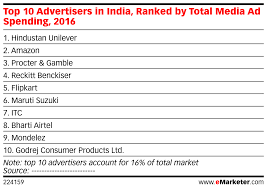
As part of this strategy, RIL is taking on online retailers such as Amazon and Flipkart in the e-commerce segment and the likes of Hindustan Unilever Ltd and ITC Ltd in the offline segment.

Watch this space!

Reliance Retail already operates neighbourhood stores, supermarkets, hypermarkets, wholesale, specialty and online stores.

Delhi’s Connaught Place 9th “most expensive” for offices

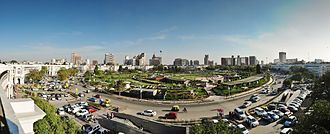
New Delhi’s Connaught Place is the ninth most expensive office location in the world with an annual rent of nearly USD 144 per sq ft, according to property consultant CBRE.

CP is located in the heart of India’s national capital.

In its annual Global Prime Office Occupancy Costs survey, CBRE tracks the cost of leasing prime office space globally.

For the second year, Hong Kong’s Central district retained the top spot as the world’s most expensive market for prime office rents, with the prime occupancy costs valued at USD 322 per sq.ft.

Mumbai’s Bandra Kurla Complex and Nariman Point CBD slipped to 27th and 40th positions.

BKC1

India-Australia trade relations set to grow at critical time

Many of us have championed closer economic ties between Australia and India. It is now more important than ever to get closer to India.

As Austrade expresses it – “With trade wars, powerful neighbours, and the odds on a recession narrowing within the next two years, considering Indian market entry has never been more mission-critical for Australian business.”

AusIndiaFlags

Some key statistics:

•In 2018, Australia’s total exports to India grew 10% to A$22.3 billion. India ranked number five in Australia’s export destinations.

•Two-way trade increased by a similar percentage to A$30.4 billion, making India Australia’s sixth largest two-way trade partner.1

•Australian investment in India increased almost 12% to A$15.6 billion, slightly ahead of India’s investment in Australia at A$15.1 billion.

However – and here is why Australia needs to balance trade – according to the Australian Bureau of Statistics, in 2016–17 (the latest year for which there is data), only 2,087 exporters engaged with India, compared to 7,214 for China.

Time to think India.

Family businesses in India are the world’s most upbeat

Family businesses in India are on a growth trajectory, with 89 per cent of them expecting to grow in the next two years, according to a survey.

The global survey, ‘Family Business Survey 2019’ by PwC, was done among 2,953 family leaders across 53 countries, including 106 family business leaders, between April 20 and August 10, 2018.

The survey has revealed that 89 per cent of family businesses in India expect to grow in the next two years, with 44 per cent of them looking at growing aggressively and 45 per cent expecting steady growth.

“Regulatory changes are getting family businesses to bring in order and professionalise the business, and disruptive technology is pushing them to transform. These new market dynamics are cultivating a renewed sense of ambition in family businesses, making them resilient in the face of change,” PwC India Partner and Leader, Entrepreneurial and Private Business, Ganesh Raju K said.

In terms of expansion, a little more than half of the family businesses are open to internationalisation, while 40 per cent are looking at diversification, the survey said.

Nearly half of the family businesses in India are open to mergers and acquisitions both within India and outside thus reinforcing the belief that inorganic growth will facilitate synergies and achieve incremental revenue, it said.

A lot of Indian family business owners are looking at private equity or venture capital funding or are looking at listing their business on stock exchanges.

Further, the survey said, more and more companies looking at professionalising their business functions are distinguishing between ownership and management as they feel partnering with the right talent might help family businesses to adapt to the changes.

About 73 per cent of Indian family businesses have the next generation working in the business and 60 per cent plan to pass on the management or ownership to the next generation.

It also found that 92 per cent of family businesses in India allow family members to work in the business. When it comes to spouses or partners, three-fourth of family businesses allow them to own shares and two-third allow them to work in the business.

BUT – there is some evidence the next generation of young Indians will want to branch out and create their own startups rather than the traditional path of joining the family firm.YoungIndians 2

Australia’s Cotton On enters India market

Cotton On, Australia’s largest fashion retailer, has made its entry into the Indian market through online shopping platform Myntra.

This is a smart move – low cost, quick results and great active market researh.

The brand plans to compete with the likes of H&M and Forever 21 in India, by opening its flagship store — either in Delhi or Mumbai — in the third or fourth quarter of 2020.

cotton3

AVS Global Network, a retailer of global fashion brands that focuses on retail through digital platforms, is responsible for launching Cotton On in the country.

AVS Global Network has managed to secure an exclusive contract with online retail platforms Flipkart, Myntra and Jabong to sell Cotton On products in India for the next year and a half.

Cotton On Group was established in 1991 and is present in 19 countries including New Zealand, South Africa and Singapore, with about 1,500 stores across the globe.

The Australian giant has eight brands in its kitty, namely — Cotton On, Cotton Kids, Cotton on Body, Factorie, Ruby, Typo, Supre and Lost. Each one of them caters to a different market segment.

Cotton On is testing the Indian waters by selling its products online before investing in stores.

I like this strategy for India, China and other South-East Asian countries – they are increasingly buying apparel online, compared to other Western markets.

Perhaps online is your starting point for India too?

What will PM Modi do for India in his second term?

What will Modi 2.0 do for India?

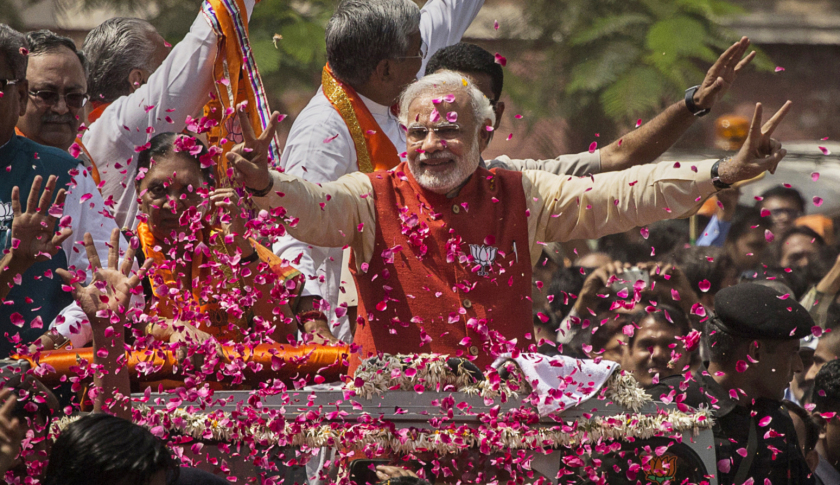
With the world’s biggest democracy opting for stability and returning the Narendra Modi Government for a second five-year term, all eyes are on what will Modi 2.0 do?

Here are some actions to look out for. As my friend Amith Karanth from India Australia Exchange Forum says: “Modi will also pull some surprises”.

modi2.0

Looking ahead at Modi’s priorities

Health – telemedicine, more doctors, increase immunisation

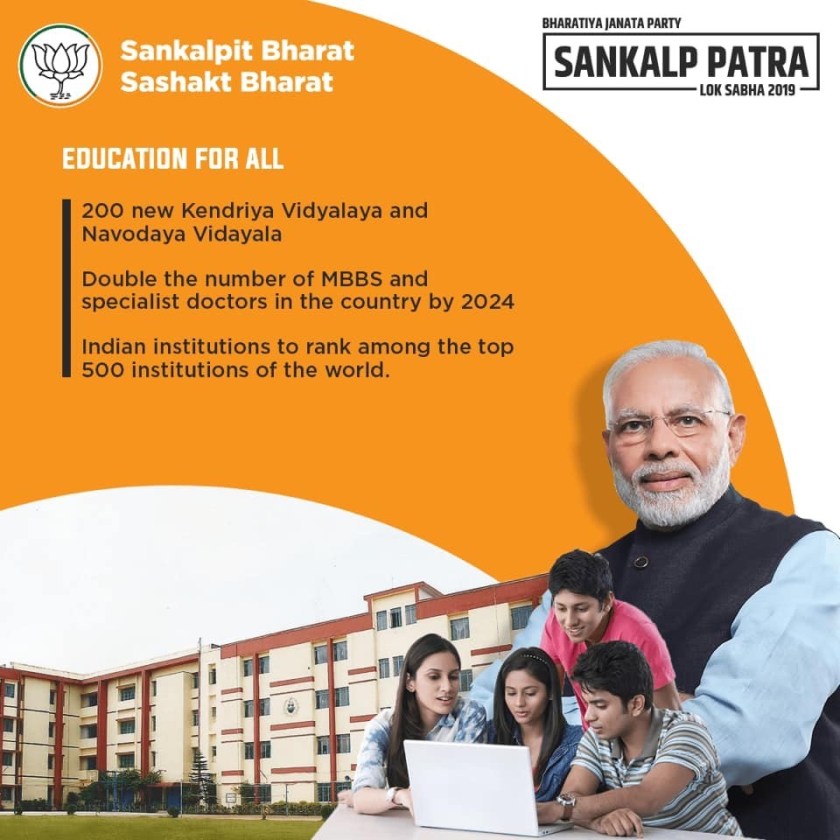
Education – Modi wants India to have a top 100 global university – he will deregulate many top universities to allow this improvement

Add 50 city metros

Inclusion – banking for all, reduce poverty to single digit

Employment creation and lifting farm/shopkeeper incomes will continue to be a focus

Building more infrastructure

Devolving more responsibility and power to the state governments, extending the level of competition between them and empowering local leaders

Streamlining the GST, which was a minor miracle itself, but has multiple complexities

While privatisation of government institutions such as banks and more is needed – this might remain in the “too hard basket” in term two

Modi2.02

Looking at what Modi has already achieved

Moves against corruption such as demonetisation (one of his major surprises), reduction in cash and movement towards digital payments

Introduction of a GST, arguably the world’s biggest tax reform – meaning the central and state governments are now awash with funds and can now do things

Focus on startups and cheaper loans for SME’s has created real growth in new enterprises

National campaigns such as “Clean India” have begun the big job – providing access for many millions to toilets is just one of the outcomes

Some reforms to the insolvency and bankruptcy has increased confidence in doing business

Modi has been a relentless global salesperson for India and attracted record foreign investment

India’s infrastructure has changed massively in five years – with more to do

Modi

Global Purchasing Power is moving to Asia

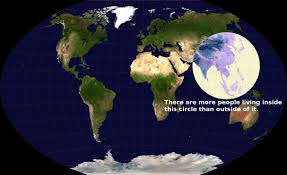
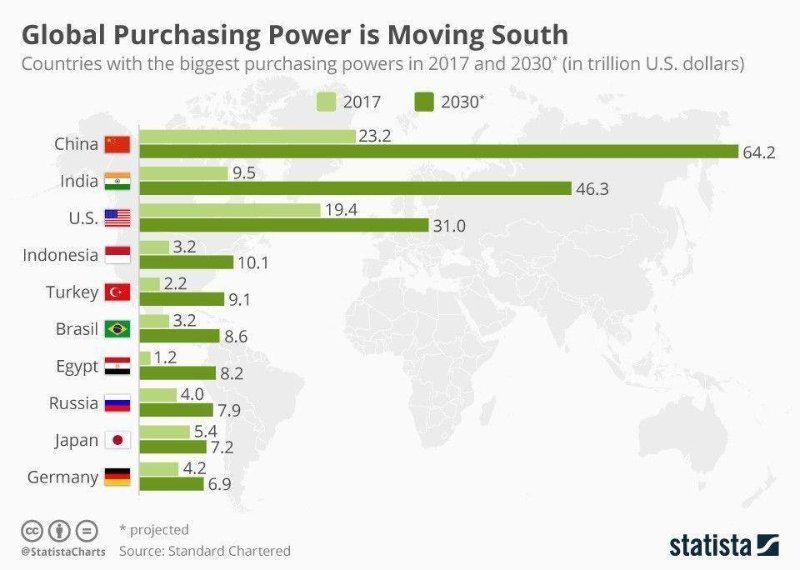
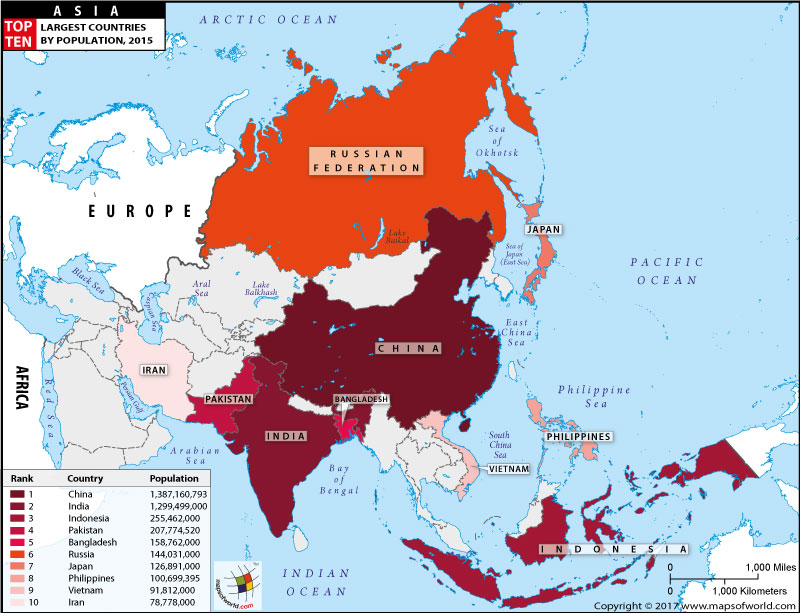
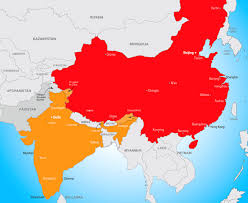
The biggest nation on Earth, China, is expected to keep its top spot as the country with the largest purchasing power on Earth and is on track to almost triple its purchasing power by 2030, according to an analysis by the British Bank, Standard Chartered.

India will almost quadruple its purchasing power, moving to rank 2.

China will double the USA while India will beat USA by approx 50%.

asia map

In the case of Japan, the country is expected to lose 5 ranks and emerge as the country with the 9th highest purchasing power worldwide.

Developing economies like Indonesia, Turkey, Brazil and Egypt are set to move into ranks four to seven respectively, toppling the reign of countries like Japan and Germany, which are still growing their purchasing power but at a much slower rate. The U.S. is expected to only drop one rank to position 3 but is grappling with slower growth.

In summary – an amazing outcome for Asia – especially China, India and Indonesia.

asia map 2

How is your Asia engagement strategy going? Time to begin, change or reinvigorate? Get good advice so you avoid the mistakes of many before you.

Are you ready for the facts on how much India has changed?

(Based on an article by Monika Halan, consulting editor at Mint and writer on household finance, policy and regulation)

Indian elections have just opened – so, how long does it take to find out if your name is on the Indian electoral role? Go to the Election Commission site, it asks you to SMS to check if your name is on the list—thirty seconds later, you will get a confirmation that your name is or is not there. Things move fast in modern India.

As Monika Halan writes – “Most people get their Provident Fund (PF) balance on SMS too. Also, the passport and visa processes are mostly all automated and keeps us well-informed about the progress of the process.”

So, what else works fast and well in India?

The metro network where it exists, in cities like Delhi and Kochi, is superb.

trains2

Getting or renewing a passport used to be a total nightmare a decade back. Enter private sector plus technology and the average time it takes for the passport application process is 30 minutes to under 4 hours. The passport reaches home by courier in a couple of days. At every stage, you get an SMS informing you what will happen next.

What about getting a driving licence? At least in Delhi, the process is mostly painless—online form filling, and 30 minutes to three hours of time in the local office. The licence reaches home in just a few days – according to Monika Halan.

Property registration used to be a nightmare. But Halan says “That again is a breeze. Again, a mix of technology and processes has reduced transaction time and pain hugely.”

Payments is the other huge success story of modern India. Forgetting your wallet at home is no big deal anymore. The money is in the phone. In a wallet, on an app or available through mobile banking. Riding on the backbone built by the National Payments Corp. of India (NPCI), transaction options and ease are both world-class.

payment

So how long does it take you to get a Wi-fi connection? How long does it take you to open a bank account? At least in the big metros, a Wi-fi connection happens within a day. Opening a bank account takes lesser time. The average time for these services in most developed countries is much longer. In most of Europe, for instance, it takes at least a month to get both these services.

Modern India is fast. Click on “buy” at 11pm and hear the doorbell ring at 9am the next morning.

A huge shift has happened in India and even Indians have failed to notice. The mix of technology, competition and cheap labour – plus reformist governments – means modern India has some of the simplest and fastest processes in the world.

All of this in just over a decade.

Time to catch up with what is really happening in modern India?

How China and India differ in the consumer goods market

India’s share in the consumption of consumer goods is expected to double by 2030 and favourable demographics (youth) will soon take it ahead of China in regional market dynamics, according to a report by Credit Suisse.

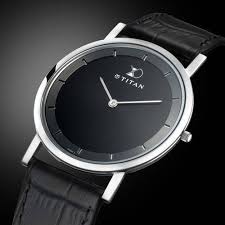
Interestingly, in India it is the home-grown brands like watchmaker Titan, hosiery company Rupa and another watchmaker Sonata which are gaining the most out of this propensity to spend in India.

consumer8

However, India is at a comparative disadvantage vis-a-vis China because of factors like less urbanisation, high concentration of urban pockets and lower enrolments in higher education.

It said in 2015, China had 150 million more people in working age than India, while by 2045, the northern neighbour will have 300 million less people than India in the bracket.

Additionally, China will also have to grapple with ageing related issues by 2045, it said, pointing out that the Communist country will have 350 million people aged over 65 as against 200 million in India.

consumer1

It marked out the apparel and meat sectors as the ones with ‘high’ growth potential as the per capital income of the country grows, followed by beverages, cars, cereals, personal computers, smart phones and education with ‘medium’ growth potential, while healthcare, consumer credit and tourism were the ones with ‘low’ potential.

consumer 4

From a consumption perspective, the Chinese prefer more of travel and entertainment-related options, it is staples that dominate the Indian story, the brokerage said.

India scores over China when it comes to spending intentions, the brokerage said, pointing out that the desire to spend is declining “more broadly” in China.

consumer3


India’s Bajaj Auto to jump into electric vehicles next year

Pune-based Bajaj Auto is planning to make a foray into electric vehicles (EV) next year and is hoping to build market share in India, its Managing Director Rajiv Bajaj said Monday. The new marketing slogan is “The World’s Favourite Indian”.

bajaj5

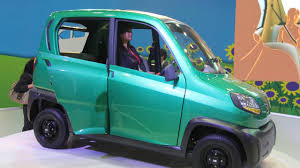
The company plans to launch electric version of its quadricycle Qute along with electric three-wheelers next year.

He also said the company would bring KTM-owned ‘Husqvarna’ motorcycle brand to the Indian market this year with “half a dozen” products in the pipeline.

bajaj1

Bajaj said the company has leadership positions in over 20 overseas markets such as 70 per cent share in Bangladesh and around 50 per cent in Nepal and Sri Lanka and it would like to replicate this in India.

“We would like to be a little more successful in the domestic market than we have been so far in the motorcycles market,” he said.

bajaj2

In India: “We have only 20-21 per cent share. We think now the time has also come that after having done a good job overseas, after having huge dominant position in India in three-wheelers, it is about time we make the same impact in the domestic motorcycle segment in India as we have done across the world.”

Other big motorcycle makers in India are Yamaha, TVS and Honda.

Bajaj also has a partnership with British niche bikemaker Triumph.