Indian startups raised $38 billion in 2021: Entrackr report

I want to thank my friend Gopi Shankar for drawing my attention to this stunning development for Indian startups. Gopi is based in Bangalore (Bengaluru) and is Director – Trade & Industry | Global Victoria, Victorian Government Trade and Investment.

Entrackr reports:

Money flowed into Indian startups in 2021 like never before. The ecosystem broke all the previous records in terms of fundraising and minting unicorns during the 12 month–period. According to data compiled by Fintrackr, total investments that flowed into Indian startups stood close to $38 billion in 2021. This is over three times more than the $11.1 billion in total funding that startups received during 2020.

Fintrackr’s data further shows that 1,391 startups mopped up $37.98 billion across 1,625 deals in 2021 which included 380 growth and late-stage startups and 948 early-stage startups. Among them, 297 startups, mainly early-stage, did not disclose their deal size.

Read the report here:

https://entrackr.com/2022/01/indian-startups-raised-38-billion-in-2021-entrackr-report/

Here are the top performers which gives you some guide to what is hot in India right now:

9 Key Factors to Winning in India

Follow the lead of successful businesses who have advanced by integrating Indian culture and values into their offering.

  1. Abandon the “quick sale” old mindset and adopt patience and a long-term view.
  2. Model your business on Macquarie Bank – this works whether you are a large or small enterprise. Their central plank for India was partnering is the key to success.
  3. Abhishek Poddar, Managing Director, Macquarie Infrastructure and Real Assets (MIRA) “India is one market where you need deep experience if you’re going to be successful. You have to take the time to appreciate and understand its unique culture and ways of working.”
  4. Be clear about what India wants. Macquarie saw infrastructure and clean energy opportunities and focused just on them.
  5. Most successful businesses in India have some philanthropic activity – this is highly worthwhile and well regarded in India.
  6. Establish good relations with Government at Central and State levels – this is vital to being accepted in India.
  7. Consider options such as acquisitions and partnerships which can speed up your market acceptance.   
  8. Be there for the long haul – Deakin University continues to make gains in India and has been present there for over 25 years.
  9. Develop a local Indian team and allow them to apply their own culture – within your larger business culture.

Indian retail business grows 10% in February this year: RAI

Retail growth in north and west India (Delhi and Mumbai) biggest increase

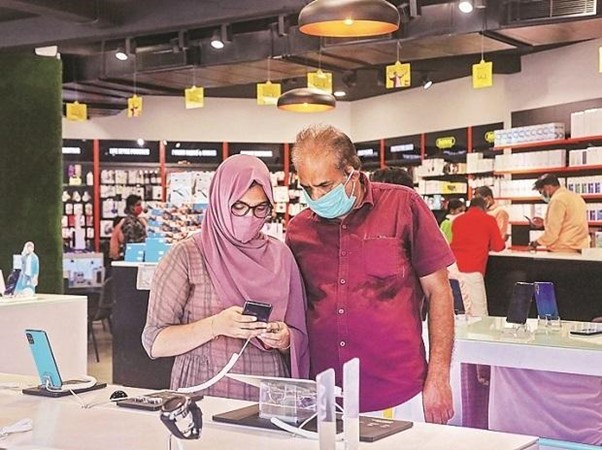
According to the Retailers Association of India’s (RAI) latest business survey, retail sales in India increased 10% in February this year compared to the same month last year, indicating that the industry is returning to normalcy. The increase is also a 6% increase over February 2020.

Growth in the regions might provide a guide on where your best brand opportunities are – Retail firms in all regions showed growth in February 2022, with sales in West India up 16% YoY, East India increased by 4%, North India increased by 17%, and South India had a 4% increase.

Consumer durables and electronics, food and grocery, and quick service restaurants (QSR) all saw strong YoY increase of 28%, 19%, and 16%, respectively.

The apparel and footwear categories have also shown double-digit increase.

Talking to your State Government India business offices and to Austrade is a good idea – and have a chat with those who have been there before you.

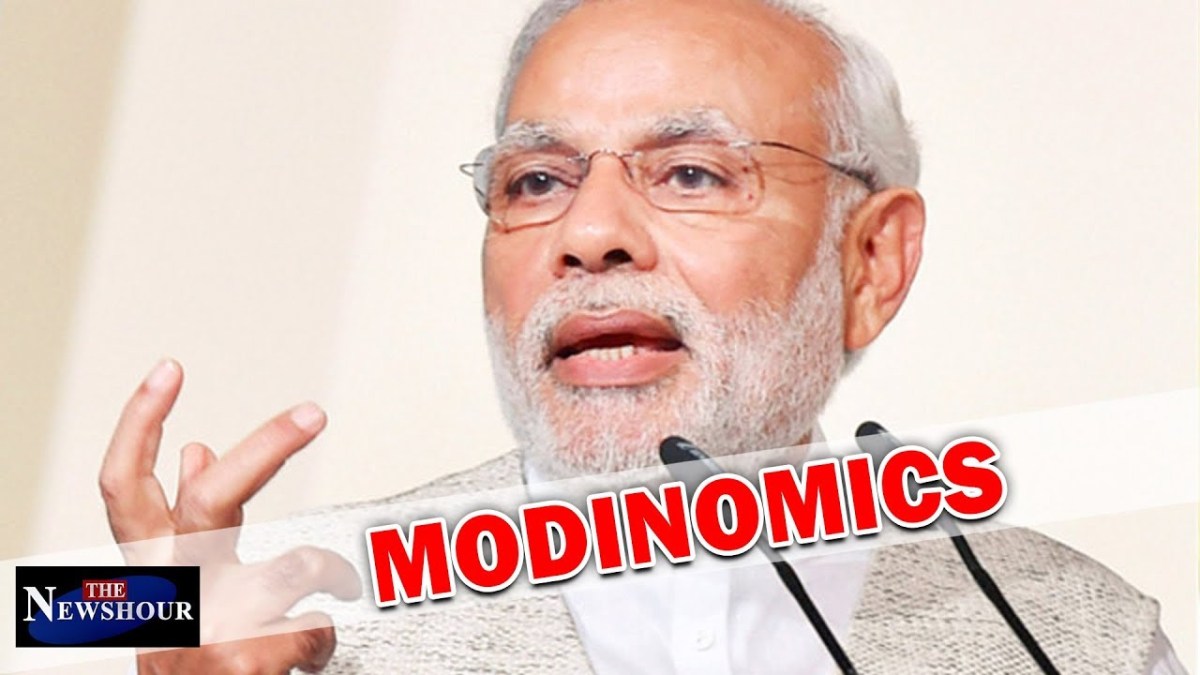
Well done on Modi deals, Scott Morrison – he “gets” India

Australian PM Scott Morrison at the virtual talks yesterday with Indian PM Modi.

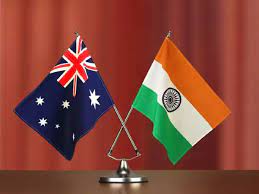
In a meeting yesterday with Indian PM Narendra Modi, Australian Prime Minister, Scott Morrison, cemented ties with India in a series of deals worth almost A$190 million. He gets (understands) India.

PM Modi is an “investment magnet”, but is also strongly wary of “multilateral” groupings and has a preference to do deals country by country.

So, PM Morrison did a country by country deal. He used some of the western rhetoric over Russia, Ukraine and China, but then got stuck into business.

What is there to “get” about India that matters in our region?

First, it wants investment.

Second, it stays away from promoting democracy as the ONLY future, instead seeing all countries as different and many having different forms of government – all accepted by India.

Third, it now buys most of its defence hardware from Russia and has a long standing close relationship with them.

Fourth, it wants to be in the QUAD (Australia, Japan, USA and India) but will only play on its own terms – that is, not condemning others and not championing democracy as the only solution.

Fifth, Modi is riding high, and he has numbers to back it up – India is the world’s fastest growing economy in 2020. You have to “get” his confidence levels, which are high.

Sixth, India is keen for more Indians to have access to Australia and to work here – PM Morrison “gets” this, and it was significant that the Monday night talks also included a taskforce to see if both countries could recognise the same education qualifications.

Seventh, India has a proud culture and history, feels rightly that much has been plundered by the west – so it was highly important that the National Gallery of Australia formalised the return of artefacts to India.

Future challenges?

There are plenty. The CECA (free trade deal) will soon announce “early harvest” deals and then plans to complete a full CECA some time this year. Good luck with that – especially as our own Aussie negotiators have always been averse to cherry picking. I think PM Morrison gets the need for flexibility and hope he is challenging his bureaucrats to do the same.

Relying more on our High Commission staff in Delhi would be a good step as we have outstanding people there.

But by and large, finally, it seems Australia is “getting” India.

Tata Sons chief to chair Air India

Natarajan Chandrasekaran

Mumbai-headquartered Tata Sons Chairman Natarajan Chandrasekaran has been appointed as the chairman of Air India, media reports said on Monday.

Tata Sons recently acquired debt-laden, state-run Air India in what was a homecoming for the airline that was founded by the Tatas in 1932 as Tata Airlines before being nationalised in 1953.

Tata Group is a huge conglomerate and the “jewel in the crown” is Tata Consulting Services (TCS). No doubt Air India will soon be a leader too.

Read more here:

https://www.peoplematters.in/news/appointments/tata-sons-chief-n-chandrasekaran-appointed-as-chairman-of-air-india-33178?fbclid=IwAR3uA8HLkv5ztTkA0hTpqelJefh8gr4mMDxMToDr6liS40atJFPIo_J4PCM

3 flights X 3 meetings strategy to engage with India

Engaging with India means building relationships – and although this is a bit quick, you can build relationships after 3 flights and 3 visits. Anything less places you at risk of misunderstanding both the opportunity and the pathway.

Here are 4 ways to make your 3 flights X 3 meetings introduction work well:

Adopt a patient long term view

One way to improve our cultural dexterity would be to take a long term view and apply lots of patience. Businesses should not start out on market entry unless they are prepared to commit at least five years to making it work.

Focus on relationships

India is not a short term transaction opportunity – to succeed there needs a longer term focus on building relationships. The first trade meeting in India can be exciting and positive, but from the India side this is just seen as an introduction and they will wait to see if the relationship grows.

Remember in Indian culture “no” is rarely said

Indians are among the most courteous and generous hosts on the planet. On top of this, their culture demands that they never provide an outright rejection or “no” statement, even when this is clearly the only answer. To succeed, our businesses and governments need to dig deeper and find the reality beyond the politeness. 

Adapt to indirect communications

Like most of Asia, Indians are indirect communicators. Problems are rarely addressed directly and unless you have an ear for indirectness, you will miss the warning signs. You can learn how indirect communication works.

INTO INDIA recommends you go to India asap – it could be the time of your life! (business and personal)

Digital retail set to boom in India as it leads the world in VC investment

According to research by London & Partners and its analysis of Dealroom.co investment data, India was the second-largest global venture capital investment hub for digital retail startups in 2022, increasing sharply by 175% from US$ 8 billion in 2020 to US$ 22 billion in 2021. Last year, India came in second to the United States, which attracted US$ 51 billion in investment, followed by China, which received US$ 14 billion, and the United Kingdom, which received US$ 7 billion. Bengaluru led the way in terms of worldwide Venture Capital (VC) investments in digital shopping in 2021, with US$ 14 billion, followed by Gurugram with US$ 4 billion and Mumbai with US$ 3 billion.

Bengaluru was a global leader in digital shopping investment last year. The metropolis nearly tripled its inflows of investments from US$ 5 billion in 2020 to take first place, ahead of New York City (second), San Francisco (third), London (fourth), and Berlin (fifth). Bengaluru was placed fifth among cities with the potential to produce future unicorns, just behind London, according to the research. Following a large consumer shift to e-commerce platforms during the pandemic, global venture capital investment in digital shopping more than doubled in 2021. In 2021, total worldwide venture capital investment is estimated to have reached a new high of US$ 140 billion, up from US$ 68 billion in 2020.

Aussie fund manager returns 52% last year from investing in India

Mugunthan Siva is the Managing Director of India Avenue Investment Management

You have got to hand it to the team at India Avenue Investment Management, with offices in Sydney and Mumbai.

Last year their leading fund made 52% for their Australian investors – and they specialise in India.

And they are about to launch another.

This group is “the avenue” for investors into India.

Is it time to have India in your portfolio?

https://www.afr.com/technology/how-india-helped-this-fundie-return-52pc-last-year-20220126-p59rfo

Great next era for India-Australia, says Hall Chadwick

Peter Pryn is a regular visitor to India and assists market entry for both India and Australia

As we approach Indian Republic Day and Australia Day – both on 26 January – here is a great message from my good friend Peter Pryn, Director of Hall Chadwick. This firm has a long commitment to building India-Australia business relations.

Change brings opportunity

This year, we see there to be great opportunities for international enterprises entering the Australian market. While there are niggling concerns about the Omicron variant, the post-COVID landscape is certainly one of rapid technological change, a transformational shakeup of global trading norms has occurred and there is an increasing focus on sustainable business. There is no doubt the way Australian business manage supply chains and source skilled staff has changed over the last two years. We see our clients, irrespective of scale, continue to look at ways to minimize supply chain interruptions to achieve an acceptable level of profitability.

Looking ahead: India – Australia relations

The Australian economy is very strong and the trend of high levels of foreign investment is forecast to continue. Along with a further easing of border restrictions in 2022, we are likely see a more aggressive migration program to catch up on lost population growth. This could be announced in the Federal Budget in May. We hope to see an expansive trade partnership (CECA) between India and Australia come to fruition before year-end. In a joint statement from Ministers Mr. Piyush Goyal and Mr. Dan Tehan last December, officials have been directed to speed up the negotiations.

These are all signs of a great next era in India – Australia business relations. We encourage you to start a conversation with us about opportunities to collaborate on business initiatives in 2022. 

We wish you all the best for your Republic Day and the year ahead.

Peter Pryn

Director

+61 3 9820 6400
  ppryn@hallchadwickmelb.com.au

India’s NSE world’s largest derivatives exchange

The National Stock Exchange in India’s finance capital, Mumbai

According to the Futures Industry Association (FIA), the National Stock Exchange of India has surpassed the New York Stock Exchange as the world’s largest derivatives exchange for the third year in a row in terms of the number of contracts traded in 2021. In addition, according to the World Federation of Exchanges (WFE) figures for 2021, the exchange placed fourth in terms of cash equities trading.

In the year 2021, the total number of registered investors on the NSE surpassed the 50 million milestone, reaching 55 million. The daily average turnover of equity futures has surged by 4.2 times in the recent decade, from US$ 4.47 billion in 2011 to US$ 18.98 billion in 2021. The daily average turnover of the cash market increased by 6.2 times within the same period, from US$ 1.50 billion in 2011 to US$ 9.3 billion in 2021.

The daily average turnover in currency derivatives surged by 83% from US$ 1.91 billion in 2011 to US$ 3.49 billion in 2021.

According to the exchange, academic research has demonstrated that a well-functioning derivatives market can provide a number of advantages, including greater liquidity and improved price discovery for the underlying assets.

The NSE recently announced that derivatives on the Nifty Midcap Select index will be available beginning January 24, 2022. With broad participation from all classes of investors in the current equity market rise, the midcap segment has come into focus, resulting in greater liquidity in these companies.