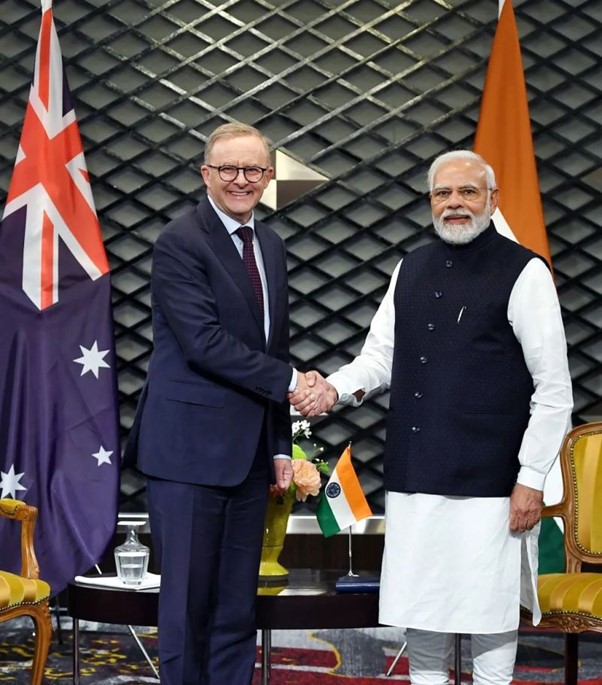
India and Australia share strategic interests in the Indian Ocean, not so much in the “Indo-Pacific”

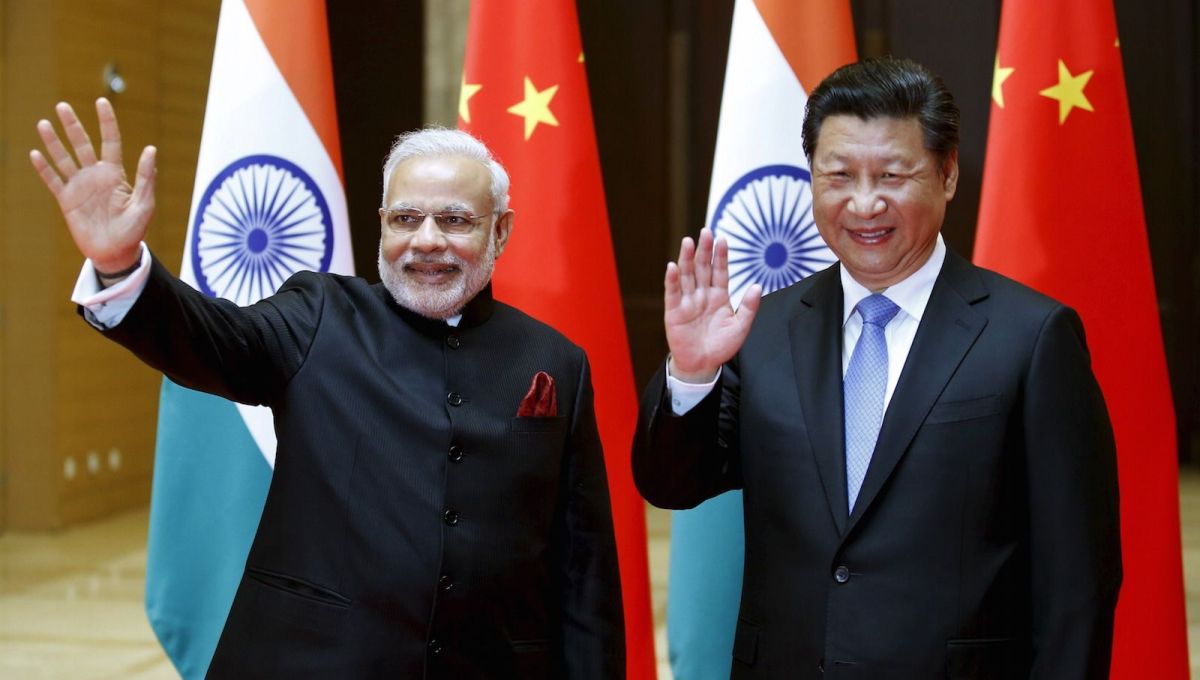
Russian Deputy PM Denis Manturov this week in Delhi announced India and Russia are close to an FTA – further evidence of India’s “Multi-Alignment”

INTO INDIA was so pleased to see Economics Correspondent for The Age, Matt Wade, today writing about the shared Indian Ocean region strategic interests of India and Australia.

https://www.theage.com.au/world/asia/india-is-now-the-world-s-most-populous-nation-it-s-time-we-got-to-know-it-better-20230417-p5d15h.html

This is such a refreshing shift from the rhetoric about the QUAD (India, Australia< Japan and USA) so called strategic alignment for the “Indo-Pacific Region”.

One of the clumsiest terms of recent diplomacy has been the concept of an “Indo-Pacific Region”. A quick glance at a map shows this to be wide of the mark.

But the same glance at the map will quickly show why India and Australia worry about the Indian Ocean region – they both need this area to be safe and open for maritime activity and stable for economic development. It is also realistic for these two countries to combine for peace and stability in the Indian Ocean.

It is just not realistic to expect India to share in security interests for the Pacific.

India has traditionally been a “non-alignment” country, which happens to be close in defence to Russia.

It is now promoting the concept of “Multi-Alignment”. Of course, the USA (and Australia) do not understand this at all, believing in the power of taking sides.

That is why they have been so hopeful that India coming into the QUAD is a sign of India shifting towards “taking sides” and moving “our” way.

Not happening.

Here is one piece of evidence that India maintains an independent and “Multi-Alignment” program – at a time when the western alliance is condemning Russia, this week India and Russia have announced progress towards a free trade agreement, to build stronger trade and investment in both countries – according to Russia’s deputy prime minister Denis Manturov, speaking at an event in New Delhi with India’s foreign minister S Jaishankar on Monday.

There you go. Multi-alignment is the modern incarnation of India’s historic “Non-alignment”.

We will have to get used to it.

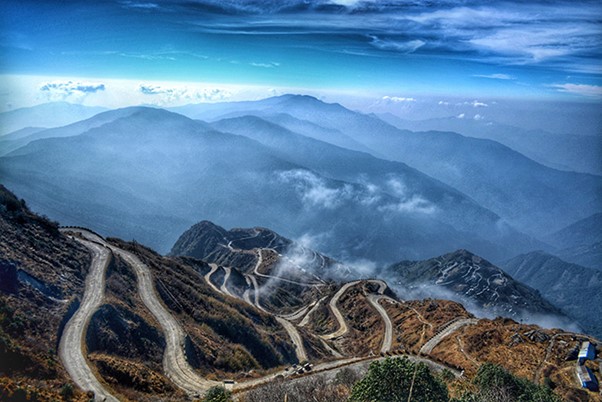
Vital connectivity for India depends on progress in the “north east states” region

India’s “north east region” has long been neglected and is little known among western leaders – but it has a crucial future because of the role it can play in India’s strategic and commercial connectivity in the surrounding region.

The role of China in the Indo-Pacific increases the focus on this sensitive region.

India is now giving the NER priority – there are around 30 major road and highway links under construction, a complex process when border crossings are involved. There are also around 10 major railway construction projects including bridges and new lines.

This has been so well described by Sreeparna Banerjee and Ambar Kumar Ghosh, “India’s Northeast: Gateway to Connectivity with Eastern Neighbours,” ORF Occasional Paper No. 395, March 2023, Observer Research Foundation.

India’s northeast consists of eight states—Arunachal Pradesh, Assam, Manipur, Tripura, Sikkim, Mizoram, Meghalaya, and Nagaland. It shares 5,812 km of international boundaries with the neighbouring countries of Myanmar, China, Bangladesh, Nepal, and Bhutan. It is landlocked; seven of the eight states are linked to the rest of India only through the Siliguri Corridor in North Bengal—a narrow strip of land (22-km wide) that is also called the ‘Chicken’s Neck’. The corridor is flanked by Nepal in the north and Bangladesh in the south.

This region can serve as a pivotal connecting space between India and its neighbours to the east in South Asia, as well as to East and Southeast Asia and beyond, enhancing the country’s diplomatic, infrastructural, and commercial engagements.

India’s foreign policy priorities, reflected in its ‘Act East’ and ‘Neighbourhood First’ policies, also bring the northeast into focus as a connectivity gateway to the wider Indo-Pacific.

Japan, with its long-standing expertise in the infrastructure sector, continues to play a significant role in developing physical connectivity projects within and across the northeast.

Australia shares many of the strategic goals of India, and now through the QUAD (India, Australia, Japan and USA) the countries are closer together through their commitment to democracy, open and free cultures and more.

The focus on this region will continue – India is crucially positioned within South Asia and in the broader Bay of Bengal region. It needs to play a more vibrant role in the region, and to do so, must engage more strongly with its East and Southeast Asian neighbours.

Watch this space…

Great appointment for new Chair of the Centre for Australia-India Relations

INTO INDIA was super pleased to see that Australia’s Minister for Foreign Affairs, Senator Penny Wong, has appointed Ms Swati Dave as the inaugural Chair of the Advisory Board to the Centre for Australia-India Relations (CAIR).

By all talks, the CAIR is going to be the new epicentre of Australia’s broad relationship with India.

It can take things to a new level. Much needed.

CAIR will open some time this year and will serve as a national platform to further strengthen our relationship with India.

Why is this such a strong appointment?

Ms Dave is currently Deputy Chair of the Asia Society Australia and as a member of the National Foundation for Australia-China Relations’ Advisory Board. She is also an Investment Committee member for QIC Global Infrastructure. Ms Dave has more than 30 years’ of experience in finance and banking across a range of sectors in both domestic and international markets.

She is the right person to guide the relationship to a higher level.

We need much more guidance on business relations, cross-cultural understanding and a broader cultural engagement with India. INTO INDIA has long called for more Australian investment in India -investment is a powerful basis for future trade.

CAIR will apparently work closely with the Australia India Council (AIC) and the Australia India Institute (AII).

Australia and India – stepping up with CAIR to a new, stronger relationship.

What a year! ECTA the radical change in relations between India and Australia

As this year comes to a close, INTO INDIA reflects on the game changer – the Economic Cooperation and Trade Agreement.

It surprised us all. Many did not expect it to be signed. Nobody expected it to be so vast in potential impact.

ECTA will save Australian exporters around $2 billion a year in tariffs, while consumers and business will save around $500 million in tariffs on imports of finished goods, and inputs to our manufacturing sector.

The tariff commitments provided by India in the agreement will open up access for Australia’s exporters of products including critical minerals, pharmaceuticals, cosmetics, lentils, seafood, sheepmeat, horticulture and wine.  

Australian service suppliers will benefit from full or partial access across more than 85 Indian services sectors and subsectors. Australian suppliers across 31 sectors and subsectors will be guaranteed the highest standard of treatment that India grants to any future free trade agreement partner. 

Australian services sectors to benefit include higher education and adult education, as well as business services such as tax, architecture and urban planning.

ECTA will support tourism and workforce needs in regional Australia by making 1000 Work and Holiday Program places available to young adventurous Indians. It maintains opportunities for Indian students graduating in Australia to undertake post-study work, with a bonus year of stay for high-performing STEM graduates.

Really looking forward to 2023!

Reade more here…

India and China – a simple comparison

The Indian economy is expected to grow by 7.3% in the current fiscal year, which ends in March.

China is expected to grow by 2%.

Population of China is 1.4 billion (approx), ageing and declining.

Population of India is 1.4 billion (approx), young and growing.

Indian economy is driven by supplying local demand as the youthful population and middle class growth increase demand.

Chinese economic growth has largely been driven by making and exporting.

India as a domestic demand-driven economy – is less sensitive to global downturns.

China is an export driven economy – highly sensitive to global downturns.

And we have not even got onto world’s largest democracy, innovative driven, attracting and welcoming western investment and more…

Compare the two – what do you think?

Putin, Xi and Modi likely meeting at the SCO starting today – is it a challenge to the QUAD?

India has always been skilled at dealing with both sides of diplomatic arguments – and it has an inclination towards “multilateral” and even “multi-bilateral” arrangements while western friends prefer “bilateral”.

So, it will be interesting to see what role Indian PM Modi will play at the 22nd leaders’ summit of the Shanghai Cooperation Organisation, to be held on 15–16 September – the first in-person gathering of the central Asian grouping since 2019.

While it might not make page one news, politicians and diplomats around the world will be closely watching this summit to be held in the ancient Uzbek Silk Road city Samarkand. Not only is it providing Xi Jinping and Vladimir Putin their first face-to-face meeting since the Russian invasion of Ukraine and declaration last year of a “forever partnership” – but it also comes after an interval where Indian PM Modi became closer and more impactful at the QUAD.

The members of SCO are China, India, Tajikistan, Russia, Kazakhstan, Kyrgyzstan, Pakistan, and Uzbekistan. Four Observer States were involved in granting full membership (Belarus, Iran, Afghanistan, and Mongolia) and six “Dialogue Partners” (Nepal, Armenia, Sri Lanka, Azerbaijan, Cambodia, and Turkey).

The QUAD nations are India, USA, Japan and Australia.

If he attends, Modi is expected to have meetings with Putin and Xi, giving a further glimpse as to how India is likely to map out its relationship with Eurasia’s great powers.

Modi has previously stood up to pressure from QUAD countries to condemn the Russian invasion of Ukraine, so as a leader he has a track record of combining non-confrontation with firm commitment to his own position.

Can Australia balance its Pacific Ocean strategy (USA) with an Indian Ocean strategy (India)? Seems it can.

The four leaders of the QUAD – a new closeness transforming this region

There’s a big change happening and it is spearheaded by the new dynamic of the Australia-India trade and security relationship – this is growing to provide a balance for Australia’s historic close alliance with the USA.

INTO INDIA has long felt that Australia has “looked north east” for too long and now is looking more “north west”.

For a while our diplomats and politicians talked about “the Indo-Pacific” as a way to introduce the change. But it is not a sustainable concept and there is no such region.

Australia has a Pacific Ocean strategy (USA) and is now building an Indian Ocean strategy (India). These relationship shifts affect our defence and security, as well as our trade and investment.

Matching that change, it is more than symbolic that an organisation such as the Australia India Chamber of Commerce is focussing on the key industry areas of greatest potential under the deal – and moving away from the old “federal” and state based approaches. Great! Under the old structures, outcomes were often lost in rivalries and politics.

The AICC model has one national organisation – supported by National Industry Groups. This frees up resources to make a difference.

So far the NIG’s include Education, Power and Renewables, Critical Minerals, Defence and Security, and Technology and Innovation. Small steps, but steps they are!

One step at a time, one change at a time, at so many levels, Australia is looking “north west” and taking a role in the Indian Ocean region by a close relationship with the new regional and global power, India.

The new strength of the QUAD (India, Japan, USA and Australia) is also part of the change and the new world of moving alliances.

If the move keeps going, Australia will have strength in two main regions and close relations with two major powers – India and the USA.

Some straight talking on climate change and public policy

Patrick Suckling presents the clearest short paper on climate change and what we urgently need to do

Patrick Suckling is a non-resident Senior Fellow of Asia Society Policy Institute and former Australian Ambassador for the Environment – and former Australian High Commissioner to India.

He has written one of the clearest – and briefest – papers on the importance of climate change and how we need to respond.

Highly recommended reading –

Does India have a different world view?

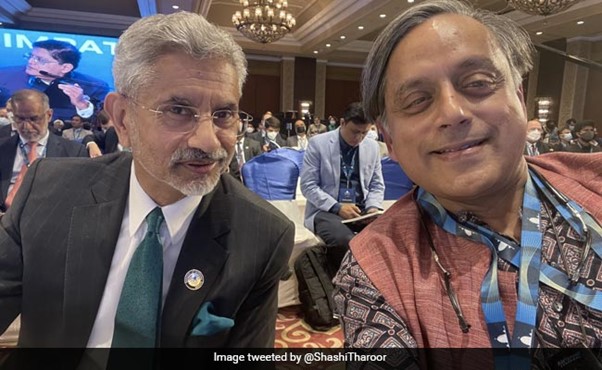
A selfie at the Raisina Dialogue for Tharoor and Jaishankar – endorsing “multi-alignment”

From the west we often hear business leaders say “India wants to be more western” – but does it? Or is there a different world view in India?

Three points stand out for me:

FIRST, PM Narendra Modi recently stated that, while many countries have strayed from spirituality and towards consumerism, India should not do so.

SECOND, laying the foundation for the World Health Organization’s (WHO) Global Centre for Traditional Medicine (GCTM) in Jamnagar, Gujarat, PM Modi stated that countries all over the world are focusing on traditional herbal systems to combat the COVID-19 pandemic, and that Yoga has helped people all around the world establish mental balance by reducing stress.

THIRD, in an increasingly divided world with an “us vs them” view, India is an exception. Senior Congress leader Shashi Tharoor on Tuesday thanked External Affairs Minister S Jaishankar for publicly giving him credit for the term “multi-alignment” and posted a selfie of them together at the ongoing Raisina Dialogue. There is a very conscious policy of engaging all the major powers simultaneously in a world. Who else is doing this?

What do you think?

3 flights X 3 meetings strategy to engage with India

Engaging with India means building relationships – and although this is a bit quick, you can build relationships after 3 flights and 3 visits. Anything less places you at risk of misunderstanding both the opportunity and the pathway.

Here are 4 ways to make your 3 flights X 3 meetings introduction work well:

Adopt a patient long term view

One way to improve our cultural dexterity would be to take a long term view and apply lots of patience. Businesses should not start out on market entry unless they are prepared to commit at least five years to making it work.

Focus on relationships

India is not a short term transaction opportunity – to succeed there needs a longer term focus on building relationships. The first trade meeting in India can be exciting and positive, but from the India side this is just seen as an introduction and they will wait to see if the relationship grows.

Remember in Indian culture “no” is rarely said

Indians are among the most courteous and generous hosts on the planet. On top of this, their culture demands that they never provide an outright rejection or “no” statement, even when this is clearly the only answer. To succeed, our businesses and governments need to dig deeper and find the reality beyond the politeness. 

Adapt to indirect communications

Like most of Asia, Indians are indirect communicators. Problems are rarely addressed directly and unless you have an ear for indirectness, you will miss the warning signs. You can learn how indirect communication works.

INTO INDIA recommends you go to India asap – it could be the time of your life! (business and personal)