India offered flexibility on RCEP – the world’s biggest trading bloc

RCEP – the initials that describe potentially the world’s biggest trading bloc.

RCEP needs India back – it walked out during earlier negotiations.

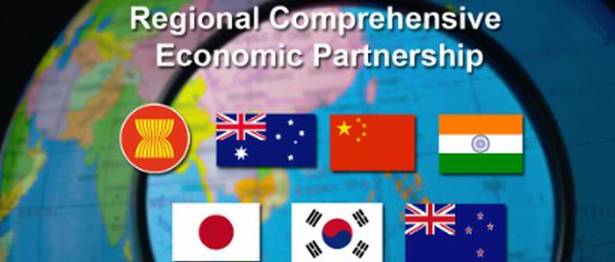
To urge India back to the negotiations for the Regional Comprehensive Economic Partnership (RCEP), its 15 member countries have offered New Delhi the option of deferring commitments related to opening up its market.

Reports on the RCEP move come on the eve of online discussions between Indian PM Modi and Australian PM Morrison. I hope they can advance the talks.

ModiMorrisonSmile2

The move was reported in The Hindu Business Line.

According to some diplomatic sources, the deferral means that India does not need to worry about RCEP’s impact on the broadening of its trade deficit with China and other member countries when it signs the RCEP agreement.

India quit talks with the RCEP — which includes the 10-member ASEAN, China, Japan, Australia, South Korea and New Zealand — in November 2019, as it could not agree on crucial issues including the level of market opening being demanded by the members, especially China.

“If India agrees to the package then it can enjoy the benefits of all other aspects of the RCEP pact such as investments, services and intellectual property rights, without having to worry about the fate of industry and farmers,” the diplomat further said.

The RCEP, once completed, could be the largest trading bloc in the world, accounting for 45 per cent of the world’s population and 40 per cent of world trade.


Australia should join with India to become the “food bowls” of the Indian Ocean

India and Australia can become the major “food bowls” of the Indian Ocean region, if the two countries can find a way to collaborate in horticulture  The region includes some of the world’s fastest growing middle classes, including much of Africa, the Middle East, India and its neighbours and Southeast Asia.

This is one of the conclusions of our study of “India-Australia Horticulture Collaboration” which was part funded by the Australia India Council, DFAT.

The Indian horticulture sector already faces pressure for change, presenting Australia with a once in a lifetime opportunity to build a collaborative commercial relationship with India.
horti2

Pressures for change in India are market driven as the middle class grows, Government driven with a push to bigger farms, mining industry driven as it seeks to play a positive community development role and horticulture industry driven, as farmers want innovation as a pathway to better incomes.

Indian market becoming health conscious

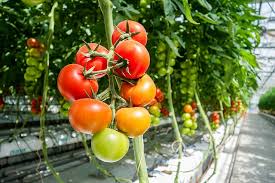
Market driven changes result from a growing middle class anxious about the content, health outcomes and quality of the vegetables and fruits they buy. Plus, a whole range of vegetables labelled as “exotic” in India now face rapidly rising demand – broccoli, cherry tomatoes, capsicums, parsley, celery, cabbages, zucchini and asparagus. Berries are becoming sought after, especially blueberries and strawberries.

Government driven changes are creating one of the biggest historical shifts in rural India – the new Farmer Product Organisations (FPO).  The Government has set an aim for 10,000 of these collaborative ventures. An FPO is a grouping of at least 10 and up to 500 farmers into a collective including marketing. The Government will fund these FPO’s and possibly farm subsidies will be distributed via them.

horti4

The FPO structure is currently in need of support services to enable them to secure business acumen, market linkages, better insurance terms, quality assessment infrastructure, precision agriculture solutions for better crop management, access to finance, IoT based applications and more.

At the same time India’s agricultural research centres (Central, State and private) are very keen to be part of the solution and become a focus for knowledge and training in horticulture techniques new to India. Their demand for displays and services around hydroponics and protected cropping is very high.

Miner driven changes result from delays and obstruction from farmers, and awareness that by supporting horticulture innovation around mines, they can contribute to increasing the income of farmers and provide new income for rural women – thereby making a contribution to the livelihoods of the communities they operate in.

Indian farmer driven changes follow complaints of declining incomes and knowing they have an inability to meet the needs of the new middle class, at home and in the Indian Ocean region. Women in rural communities are seeking new ways to add income to households.

citruspic

While farmers are traditionally conservative, there is growing awareness in India of the need for “new skills and innovations for new products”.

India will want collaboration, not high pressure selling

Facing these demands for change, India is not inclined to simply import and adopt western approaches – rather, it seeks to create Indian style innovations with global partners who can adapt to this demand. The Israel and Netherlands governments have established free standing centres of horticulture excellence, with low levels of interest and participation. Australia can move into this space if it is prepared to adapt to what India wants.
horti6

What will be needed for these changes? Skills training and train the trainer programs, IT systems, adapted hydroponics and adapted protected cropping systems and products, post-harvest storage and to market systems and a combination of displays and training at Government and private research centres (not free standing).

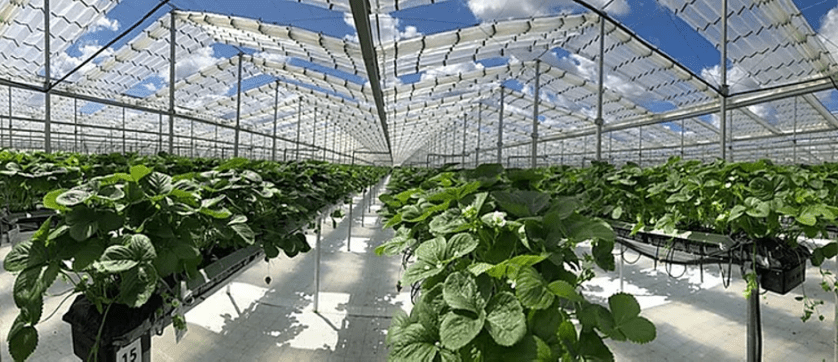
Protected Cropping (PC) opportunities are huge but need to be tailored for India – including shelter by artificial structures and materials, enabling modified growing conditions and protection from pests and adverse weather. In the mix here are greenhouses and glasshouses, shade houses, screen houses and crop top structures.

Hydroponics and Controlled Environment Horticulture (CEH)
horti7

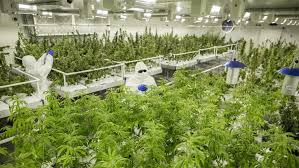
The most modern and sophisticated form of protected cropping have been developed in Australia and we should be able to export this knowledge – might be relevant to corporate farms in India with some key adaptions, creating “modified hydroponics”. CEH combines high technology greenhouses with hydroponic (soil-less) growing systems. CEH makes it possible to consistently and reliably control or manipulate the growing environment and effectively manage nutrition, pests and diseases in crops.

Hydroponics in Australia and the west is crop production using a soilless growing medium with nutrients supplied in a liquid form. The choice of substrate can be varied to suit the crop and climatic requirements. Hydroponic growing also includes growing in a flowing nutrient stream without utilising a solid medium. This is known as nutrient film technique. For India, some adaptation of drip irrigation, soil and non-soil bases leads to “modified hydroponics” and would meet demand over there.

Agricultural research centres in India play a major role in supporting farmer innovation and skills upgrades. There is an opportunity for an Australian Centre of Protected Cropping and Hydroponics to be embedded in at least one of the Indian Government agricultural research centres, another with the State of Tamil Nadu and in a private research centre. These could be supported by a “virtual centre” with farmers accessing it via mobile phones.

This would be a major step forward in building a genuine India-Australia collaboration in horticulture, enhancing the capacity of both countries to become the food bowls of the Indian Ocean.


The “Developing India-Australia Collaboration in Horticulture” research project by Genesis Horticulture Solutions was part funded by the Australia India Council, Australian Government

 

Indian PM Modi announces A$400 billion stimulus policy

Indian prime Minister Narendra Modi has announced a A$400 billion stimulus package, one of the biggest in the world’s responses to Covid19.

The package is approximately 10% of India’s GDP.

The stimulus package is called “Atmanirbhar Bharat Abhiyaan” and aims to make India self reliant and to revive the stalled economy.

Details are still coming out but part of the program will be major reforms across areas such as land, labour and liquidity laws to underpin a boost to the “Make in India” campaign.

Other areas will likely include supply chain for agriculture, reforms to national taxation, simplification of some laws, build capable human resources and strengthening the financial system.

It is typical Modi – ambitious, unexpected in magnitude and investors are already reacting with enthusiasm.

India wine harvest down this year – opportunity for Australia?

India’s wine grape harvest is well down this year. A spell of unseasonal rain in October and November has spoiled grapes sown in Sangli and Nashik – both are in the State of Maharashtra in the “cooler” areas near the Western Ghats mountain range.

Sula_Vineyards

Pictured above – Sula vineyards – dominant Indian wine brand

On average, the state of Maharashtra crushes 20,000 tonnes of grapes and produces 1.2 million litres of wine – this year, however, just 12,000 to 15,000 tonnes of grapes will be crushed, resulting in the production of 700,000 litres of wine.

I first heard about this from the Trade Promotion Council of India who produce terrific information about trade with India – well worth having a look at their website.

But the figures hide another reality – quality will be down.

Commenting on the issue, Mr. Rajesh Jadhav, secretary of All India Wine Production Association, said, “There will be a 25% reduction in wine production and due to poor quality of the fruit, it will be difficult to maintain quality.”

India’s millennials (there are 450 million of them) are drinking wine – not in quantity but definitely chasing quality.

The Australian wine industry has a presence in India but mostly at the lower end – cheaper or good value wines led by Jacobs Creek.

Time for Australian wines to pursue sales channels in India!

Melbourne seminar on India has best expert panel

BDO has assembled Melbourne’s best India panel to speak on Tuesday 3 March – book now – free event. Email michaelm@eastwestadvisers.net

They have a great line-up of speakers:
Michelle Wade, Victorian Trade Commissioner for India, Bengaluru
Susan Coles, Deputy State Director, Victoria, Department of Foreign Affairs and Trade
Bill Cole, Partner International, BDO
Sandeep Khurana, Director, EastWest Advisers
Michael Moignard, Director, EastWest Advisers

I am proud to be the MC of this one.

Venue: BDO, 727 Collins Street Melbourne
Date: Tuesday 3 March 2020
Time: 12 noon start (lunch will be provided)
Email michaelm@eastwestadvisers.net

Pictured below: Bill Cole, Partner International, BDO

billcole2

Online food consumers fastest growing sector in India

In the next two years, the Indian food-tech industry is expected to reach the US$8 billion mark, according to a report by Google and Boston Consulting Group (BCG).

The food tech space has been the fastest growing e-commerce segment in terms of reach and engagement, on the back of the rapid advancement in internet adoption and continued investments on consumer trials and delivery satisfaction.

According to the report, titled ‘Demystifying the online food consumer’, the major reasons for growth in the use of online food ordering apps includes a large variety of cuisines, good discounts and convenience.

food7

It said, “In fact, once users are satisfied with the service and start becoming habitual, they become more discerning about value – this behaviour is observable independent of town, class, social status, age and gender.”

Food tech is now in more than 500 cities in India.

Mr Rachit Mathur, MD and Partner, India Lead of BCG’s Consumer & Retail Practice added, “Overall online spending in India is rising rapidly and expected to grow at 25 per cent over the next five years to reach over US$ 130 billion.

“Riding on the wave of rapid digitization and steadily growing consumption, the reach of food-tech companies has grown six times over the last couple of years and will continue to increase further.”

The report is based on feedback of about 1,500 respondents across 12 cities.

food11

India’s FMCG market to grow 9-10% this year

Are you an FMCG exporter? Is India part of your plan?

According to market researcher Nielsen, India’s fast-moving consumer goods (FMCG) market is expected to grow 9-10 per cent in the January-December period, matching the expansion rate in 2019.

fmcg33

There are two shifts in the Indian FMCG market – one is to branded products and the other is to online e-commerce.

A shift towards branded products has been driven by the GST.

“Following the implementation of GST (Goods and Services Tax), a lot of unorganised players have exited the market across different FMCG categories,” said Mr B Sumant, ITC executive director of FMCG. “As a result, there has been a clear shift in consumption trend from unbranded to branded products.”

fmcg66

Pictured above – the top Indian FMCG stocks

FMCGs can be divided into several different categories including:

Processed foods: Cheese products, cereals, and boxed pasta

Prepared meals: Ready-to-eat meals

Beverages: Bottled water, energy drinks, and juices

Baked goods: Cookies, croissants, and bagels

Fresh, frozen foods, and dry goods: Fruits, vegetables, frozen peas and carrots, and raisins and nuts

Medicines: Aspirin, pain relievers, and other medication that can be purchased without a prescription

Cleaning products: Baking soda, oven cleaner, and window and glass cleaner

Cosmetics and toiletries: Hair care products, concealers, toothpaste, and soap

Office supplies: Pens, pencils, and markers

Shoppers in India are leaping from buying unbranded at “mum and dad” stores to online purchasing.  

The most popular e-commerce categories, not surprisingly, are non-consumable goods—durables and entertainment-related products. The online market for buying groceries and other consumable products is growing, as companies redefine the efficiency of delivery logistics which shorten delivery times. While non-consumable categories may continue to lead consumable products in sheer volume, gains in logistics efficiency have increased the use of e-commerce channels for acquiring FMCGs.

10 reasons to look again at India in 2020

Dr Mark Morley is an Australian Trade Commissioner in India. In the last twelve months, like many of us, he has changed his view of Australia’s prospects in India. Why?

Here are 10 reasons to change – taken from his writings:

  1. Indian tourists coming to Australia has for the first time beaten the number of Aussies going to India – there were about 350,000 and each of them sees “clean and green” and innovative Australia first-hand. Plus, more than 700,000 Indians live down under.
  2. Across India, Australia has a great reputation for clean, safe and reliable supply. We are well known as a premium supplier of produce, and we have a global reputation for our quality brands.
  3. India’s ease of doing business and transparency has improved, its regional infrastructure – including roads and airports, as well as its cold chain – is improving, it now has a national GST alongside unified regulations around food importation and labelling, and a hungry entrepreneurial scene that is looking for international brands.
  4. Most importantly, and this is the game-changer for Australian FMCG producers, it has unified, national (or near national) platforms for Australian companies to connect their products with consumers. Can you believe this change? India now has a platform for Australian companies to connect their products directly with consumers.
  5. Amazon, as well as other platforms such as FlipKart and niche online marketplaces such as NetMeds, have turned the retail environment on its head.
  6. The scale and scope of the opportunity in India is now hard to ignore: Amazon India can deliver to 50% of all postcodes in India within 3 days of order, and 100% within 5 days.
  7. The Amazon platform is currently adding 200k+ Stock Keeping Units (SKU) every day, joining the 170 million SKUs already present on the site.
  8. With the cheapest mobile data accessibility in the world, 85% of Indians access online platforms via their mobile devices. This has huge implications for a market of more than 1.3b people.millennialsphones
  9. Mobile accessibility has meant that the modern retail format in India has been largely leap-frogged. Greater connectivity, greater receptivity to international brands, and greater opportunity for Australian exporters.
  10. India is a global player. But it’s not China (and that’s important for many of you with lots of eggs in the one basket). So, hasten slowly.

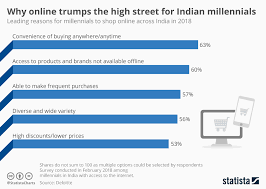
I would add to this list that India has 450 million millennials (those aged around 21 to 37), more than any other country and they will not live, learn, watch, listen, consume, travel, drive or behave like the previous generation.

millennialsonline

Why not start a conversation with Mark? Email  mark.morley@austrade.gov.au

austrade1

Anil Wadhwa could be reviving Australia-India trade relations – Lowy Institute – but health, agri and sport could be the key

So good to read on the Lowy Institute daily publication “The Interpreter” that India is doing something unusual in response to Australia’s Peter Varghese report – it is responding with an Australian Economic Strategy (AES). By the way, well done Lowy Institute for powering this and other national discussions.

The AES is led by former Ambassador and Secretary (East) in the Ministry of External Affairs in India, Anil Wadhwa (pictured).

Let’s not get bogged down on the failed Free Trade Agreement with India – let’s not wait forever, and, by the way, trade is progressing without it. We would prefer to have one, but we can make mutual gains without it.

The key is that the AES from India means for the first time we will have a blueprint for economic engagement with another nation – this is the view of Mukund Narayanamurthy and Danielle Rajendram writing for Lowy Institute. Well done to you both!

They point out that unlike India’s engagement with the US, Canada, UK, and Japan, our relative size means that it is highly unlikely that Australia will have a similar scale of engagement with India. So, they say the crux of the relationship, certainly from a materiality perspective for both sides, will lie in mining, energy, infrastructure, education, and tourism.

This where I differ. They see healthcare, agribusiness, and sport having relevance but “may not be as material in absolute dollar terms” – my view is that these could be the areas that unlock the “India code” and get Australia into the big game with India.

India’s “richer, younger urbanites” will demand more food choices

India is self-sufficient in wheat, rice, corn and milk.

But – it is becoming “richer, younger and more urban” which inevitably means consumption patterns will shift.

Just a very broad approach here – but after over two weeks in India these are the “big 6 food imports” of the next decade:

  • Nuts (almonds and walnuts)
  • Pulses (peas, chickpeas, lentils)
  • Apples, grapes and pears
  • Chocolate
  • Beverages (juice and wine)
  • Processed fruit (dried apricots, raisins, prunes and jam)

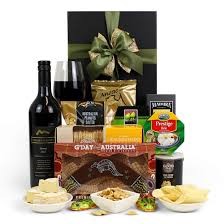
Be great to see the “Aussie Hamper” enter the gift giving market in India.