
Australia India two-way trade now over A$50 billion

Great news from Austrade – two-way trade between Australia and India has reached around AUD 50 billion!

INTO INDIA has been active in this space over 20 years, and for most of this time our trade remained stagnant.

This recent growth is a tribute to the folks at Austrade, as well as State Government offices and all the organisations promoting the relationship. And of course highest praise goes to the brave companies that are finding a way in the Indian growth market.

Healthcare is a good example of the opportunities ahead.

The recent Indian budget 2024 signals the Indian government’s resounding commitment to provide equitable healthcare services across socio-economic spectrum with special coverage of “missing” middle class.

The Indian government is scaling up their focus on digitalisation of the public healthcare system, tariff reductions on some critical pharmaceutical drugs and MedTech devices.

Good news across the board – the budget also involves notable reductions in corporate taxes for foreign companies.

As India continues to grow as a preferred commercial destination, connect with organisations such as the Australia India Chamber of Commerce, with Austrade and with State Government offices – they can all help with the pathway to India.

Jasmine Batra and AICC outlining a thoughtful way to enter the India market

Two organisations that advocate a “more thoughtful” way to enter the Indian market came together last week in a wonderful seminar providing some super advice.

First was the Australia India Chamber of Commerce (AICC) which hosted the event and their Chair, Chris Mooney, put the case for the chamber’s National Industry Groups doing well researched and sequenced steps to engage with India. Each group does research for a white paper, builds a community and knowledge group around it and leads to well prepared India missions.

Second was the keynote speaker, Jasmine Batra from Arrow Digital, who have a program called “The Big Leap” taking clients through a 12 month program of understanding and entering India. INTO INDIA has long advocated that slower market entry produces superior long term results – a strong alternative to the traditional Aussie hasty transactional approach. We love “The Big Leap” concept.

There are three major factors that make India today a very special market – first, the young population with an average age of 28; second, the rise of the tier 2 and 3 cities, including their specialisation, three, India’s global leadership in rolling out digital infrastructure that is transforming business and society.

Jasmine talked about importance of Food, Festivals and Family when thinking about India. “Family” includes what she called “the crazy rich” such as Tata, Ambani and many more. But it also goes right down to small community business families. Your journey will interact at all levels at some time.

Reducing risk is vital. There are three steps you can take. First, understand the cultural context. Second, do market research and find local partners. Third, network community and do due diligence.

In conclusion Jasmine Batra said you should get over there, get around and get partners. By research and regular visits, your more thoughtful engagement with India will produce results.

La Trobe University very kindly provided the venue.

CONTACT AICC

Contact Jasmine Batra

About Us

What a year! ECTA the radical change in relations between India and Australia

As this year comes to a close, INTO INDIA reflects on the game changer – the Economic Cooperation and Trade Agreement.

It surprised us all. Many did not expect it to be signed. Nobody expected it to be so vast in potential impact.

ECTA will save Australian exporters around $2 billion a year in tariffs, while consumers and business will save around $500 million in tariffs on imports of finished goods, and inputs to our manufacturing sector.

The tariff commitments provided by India in the agreement will open up access for Australia’s exporters of products including critical minerals, pharmaceuticals, cosmetics, lentils, seafood, sheepmeat, horticulture and wine.  

Australian service suppliers will benefit from full or partial access across more than 85 Indian services sectors and subsectors. Australian suppliers across 31 sectors and subsectors will be guaranteed the highest standard of treatment that India grants to any future free trade agreement partner. 

Australian services sectors to benefit include higher education and adult education, as well as business services such as tax, architecture and urban planning.

ECTA will support tourism and workforce needs in regional Australia by making 1000 Work and Holiday Program places available to young adventurous Indians. It maintains opportunities for Indian students graduating in Australia to undertake post-study work, with a bonus year of stay for high-performing STEM graduates.

Really looking forward to 2023!

Reade more here…

India agricultural, processed food products exports up 30% to US$ 9.6 billion in April-July

INTO INDIA has written regularly on agribusiness growth in India – and the opportunities this presents. The story is gathering pace…

India’s exports of processed food and agricultural products increased by 30% to US$ 9.6 billion from April-July of this fiscal year. Fruit and vegetable exports increased by 4% during the time period, according to data from the Directorate General of Commercial Intelligence and Statistics (DGCI&S).

According to a statement released by the Ministry of Commerce & Industry, an export goal of US$ 23.56 billion has been set for the basket of agricultural and processed food goods for 2022–2023.

The first four months of the current fiscal saw a growth of 61.91% in the export of dairy products, reaching US$ 247 million. Basmati rice exports climbed by 29.13%, rising from US$ 1.21 billion in April–July 2021 to US$ 1.56 billion in April–July 2022. Non-Basmati rice exports increased by 9.24% to US$ 2.08 billion in the same time period.

There is a lot happening in the agriculture sector in India – time for you to upgrade your India engagement strategy?

Read more here:

https://www.livemint.com/economy/indias-agricultural-and-processed-food-products-exports-up-by-30-to-9-598-mn-11662993250147.html

Find the right business partner in India

 One of the most frequent questions for INTO INDIA is how do we find the right business partner in India? Most case studies of Australian businesses succeeding in India reveal one key element – finding the right local partner.

What is the right local partner?

It is much more than someone who says “yes”. Too many have been frustrated in Indian market entry because they forged alliances with any and everyone who said “yes” – which means everyone they meet. India is a culture that cannot say no, so be wary of the yes answer.

The right partner is already active and successful in your field. They can show you their track record.

Your right partner will have connections among suppliers and customers, and will be keen to introduce you to them so you can form your own judgement.

In the collective culture of India, your right partner will be well connected in the various business chambers and will have good connections in government – central and state. This right partner will demonstrate these connections by organising meetings for you, rather than just saying “yes” we are connected.

Your right partner will be someone you double check with Austrade and with other reliable connections you have in India or Australia.

Your right partner could ultimately become an agent, a joint venture or more. They might just be a trusted individual who willingly offers to make connects for you – this freely opening doors does occur in India.

Your right partner might be a talented individual who you hire into your business. Or it might be a combination of external and internal. Patience will be your best friend as you make these choices.

Finally, your right partner will develop relationships for you – because in Indian culture relationships matter. Relationships first, business second is the path to long term business in India. Quick deals are just that – one transaction that might not lead to anything.

So, how are you going finding the right partner in India?
 

Australian exports of citrus and other horticulture produce to India set to grow

Citrus exports from Australia to India are expected to boom following the trade deal – from 2019 –21, Australian growers exported more than $18 million of oranges and mandarins to India. This rates India as a key market for Australian horticulture exports.

Australian Fresh Produce Alliance CEO, Michael Rogers is upbeat about the trade deal and said: “The opportunities presented by the agreement will enable a number of existing exporters, like those in the citrus industry, to capitalise immediately.”

INTO INDIA has advocated setting up some form of horticulture centre in India for knowledge sharing, skills training and more – good timing now!

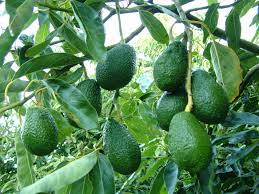
The interim agreement will see tariff elimination over 7 years on a variety of Australian horticulture products including blueberries, avocados, onion, cherries, asparagus, lettuce and celery. Other significant gains for the sector include an immediate halving of the tariff within the tariff rate quota for oranges and mandarins.

Despite the interruptions caused by the COVID19 pandemic, Australian horticulture exports continue to grow, with exports in 2021 reaching $2.65 billion.

Future growth of horticulture exports to India is definitely on the way!

Click here for the AFPA Media Statement:

http://www.freshproduce.org.au/media-releases/india-interim-agreement-is-a-fruitful-opportunity-for-australian-growers/

Agribusiness and horticulture big winners in India-Australia trade deal

The Australia-India Economic Cooperation and Trade Agreement signed on 2 April has some big winners for Aussie agribusiness:

Sheep meat tariffs of 30 per cent will be eliminated on entry into force, providing a boost for Australian exports that already command nearly 20 per cent of India’s market

Wool will have the current 2.5 per cent tariffs eliminated on entry into force, supporting Australia’s second-largest market for wool products.

Tariffs on wine with a minimum import price of US$5 per bottle will be reduced from 150 per cent to 100 per cent on entry into force and subsequently to 50 per cent over 10 years (based on Indian wholesale price index for wine).

Tariffs on wine bottles with minimum import price of US$15 will be reduced from 150 per cent to 75 per cent on entry into force and subsequently to 25 per cent over 10 years (based on Indian wholesale price index for wine).

Tariffs up to 30 per cent on avocados, onions, broad, kidney and adzuki beans, cherries, shelled pistachios, macadamias, cashews in-shell, blueberries, raspberries, blackberries, currants will be eliminated over seven years.

Tariffs on almonds, lentils, oranges, mandarins, pears, apricots and strawberries will be reduced, improving opportunities for Australia’s horticulture industry to supply India’s growing food demand.

India-Australia trade deal – a handy list of features

Indian Commerce Minister Piyush Goyal is negotiating multiple trade deals

Benefits of AI Economic Cooperation and Trade Agreement include:

  • Sheep meat tariffs of 30 per cent will be eliminated on entry into force, providing a boost for Australian exports that already command nearly 20 per cent of India’s market
  • Wool will have the current 2.5 per cent tariffs eliminated on entry into force, supporting Australia’s second-largest market for wool products.
  • Tariffs on wine with a minimum import price of US$5 per bottle will be reduced from 150 per cent to 100 per cent on entry into force and subsequently to 50 per cent over 10 years (based on Indian wholesale price index for wine).
  • Tariffs on wine bottles with minimum import price of US$15 will be reduced from 150 per cent to 75 per cent on entry into force and subsequently to 25 per cent over 10 years (based on Indian wholesale price index for wine).
  • Tariffs up to 30 per cent on avocados, onions, broad, kidney and adzuki beans, cherries, shelled pistachios, macadamias, cashews in-shell, blueberries, raspberries, blackberries, currants will be eliminated over seven years.
  • Tariffs on almonds, lentils, oranges, mandarins, pears, apricots and strawberries will be reduced, improving opportunities for Australia’s horticulture industry to supply India’s growing food demand.
  • The resources sector will benefit from the elimination of tariffs on entry into force for coal, alumina, metallic ores, including manganese, copper and nickel; and critical minerals including titanium and zirconium.
  • LNG tariffs will be bound at 0 per cent at entry into force.
  • Tariffs on pharmaceutical products and certain medical devices will be eliminated over five and seven years.

Wow! India Australia trade deal much bigger than we thought

These two Ministers are transforming the Australia-India relationship

Wow! The Australia-India Economic Cooperation and Trade Agreement signed yesterday is a whopper.

Get on the plane now if you are in business or education! The trade and investment doors are open for you.

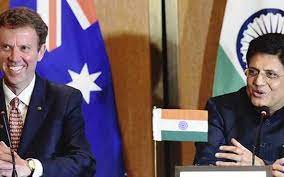
The two trade ministers, Australian Dan Tehan and Indian Piyush Goyal, are transforming the economic relationship and created a platform for decades of growth for India and Australia. Well done.

READ MORE DETAIL HERE:

https://www.trademinister.gov.au/minister/dan-tehan/media-release/historic-trade-deal-india

India riding high – exports pass US$400 billion for the first time

Prime Minister Mr. Narendra Modi has announced that India had passed the US$ 400 billion mark in goods exports for the first time, calling it a “key milestone” for his government’s Aatmanirbhar Bharat (Made in India) initiative for manufacturing self-sufficiency.

He made the statement as India’s services and industrial activities remained stable in February, despite the fact that the crisis in Ukraine has clouded the outlook for prices and growth in the consumer-driven economy.

“India set an ambitious target of US$ 400 billion of goods exports & achieves this target for the first time ever. I congratulate our farmers, weavers, MSMEs, manufacturers, exporters for this success,” he said posting a graphic showing the target being met nine days ahead of the deadline.

Time to upgrade your India market entry strategy?

https://timesofindia.indiatimes.com/business/india-business/explained-in-charts-how-india-achieved-400-billion-export-target/articleshow/90398092.cms