Australia Day honours for Robert Johanson – still changing relations of India and Australia for the better

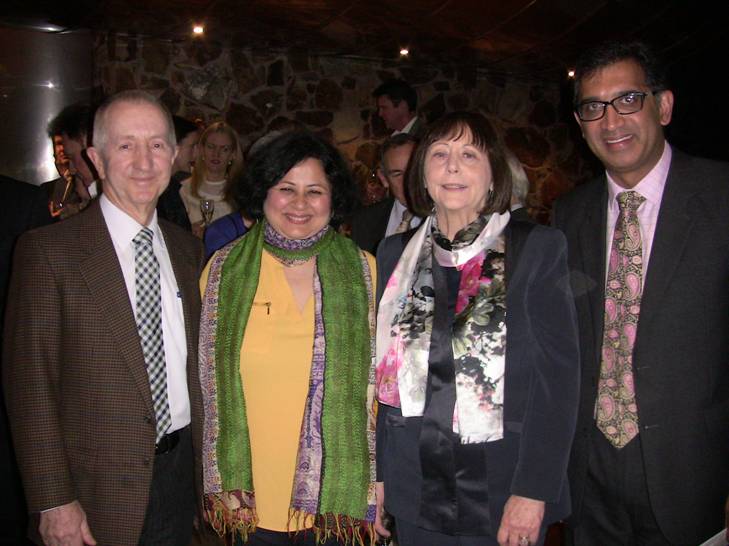
Below (L-R) Robert Johanson, Chairman Bendigo Bank and Australian Friends of Asha Slums; Dr Kiran Martin; Anne Rathbone, Owner of Yering Station Winery, and Harish Rao from Friends of Asha Australia

Robert Johanson AO was honoured in the Australia Day honours by appointment as an Officer of the Order of Australia. This recognises his distinguished service to the banking sector, to relations between Australia and India, and to tertiary education governance and financial administration.  
Robert has brought respect for all and considered commentary to his many roles and especially as Chair of the Australia India Institute – from 2010 to 2019.   He served for 31 years on the board of the Bendigo and Adelaide Bank, 13 of which were as Chair of the bank’s board.
 
Robert was also Deputy Chancellor of University of Melbourne from 2007 to 2017.   He has also been the Chair of the Board of the Australia India Institute in Delhi since its inception in 2015, a role which thankfully he continues to hold – this continues his relationship with India and ongoing support of Australia India connections. 
 
Robert has a strong personal commitment to making a difference for those in need and has served as the Chair of the Australian Friends of Asha, the Australian branch of Asha India. Asha is a charitable organisation created by Dr Kiran Martin in 1988 which works with people in India residing in slums and benefiting more than 700,000 people from over 91 slum colonies of Delhi. Australian Friends of Asha was launched by former Governor of Victoria The Honourable Alex Chernov AC QC in November 2012 and aims to provide support to Asha and promulgate its work throughout Australia.

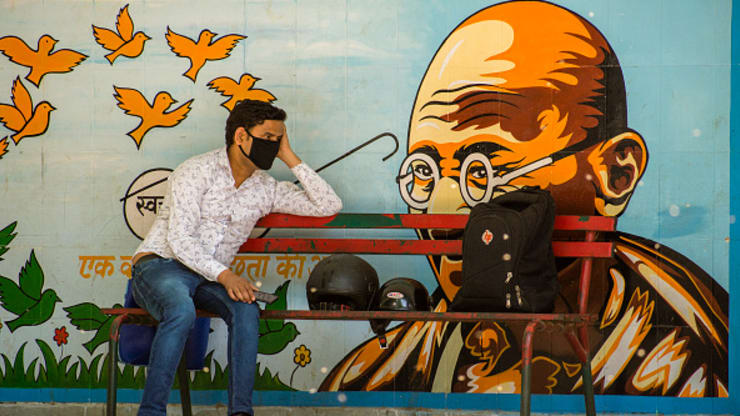
Gandhi exhorted us to “be the change you want to see in the world” and Robert has contributed more than any other to the positive change in the relationship between Australia and India.  
Below is Robert Johanson with Mahinder Shrivas who thanks to Asha went from a Delhi slum to Trinity College at Melbourne University

Will your “reset” include new approaches to India?

Australia and India have never been closer. The last year has seen major advances in strategic and defence engagement and cooperation.

Now, as business and organisations reset, does India play a role in your future plans?

Growth in India is outstanding and assured – largely because of a young population boosting domestic demand.

It is a complex and very different market, but one which rewards the right entry strategy and long term engagement plans.

Time for India to be part of your reset?

Business and investment can ride the wave of closer relations between India and Australia

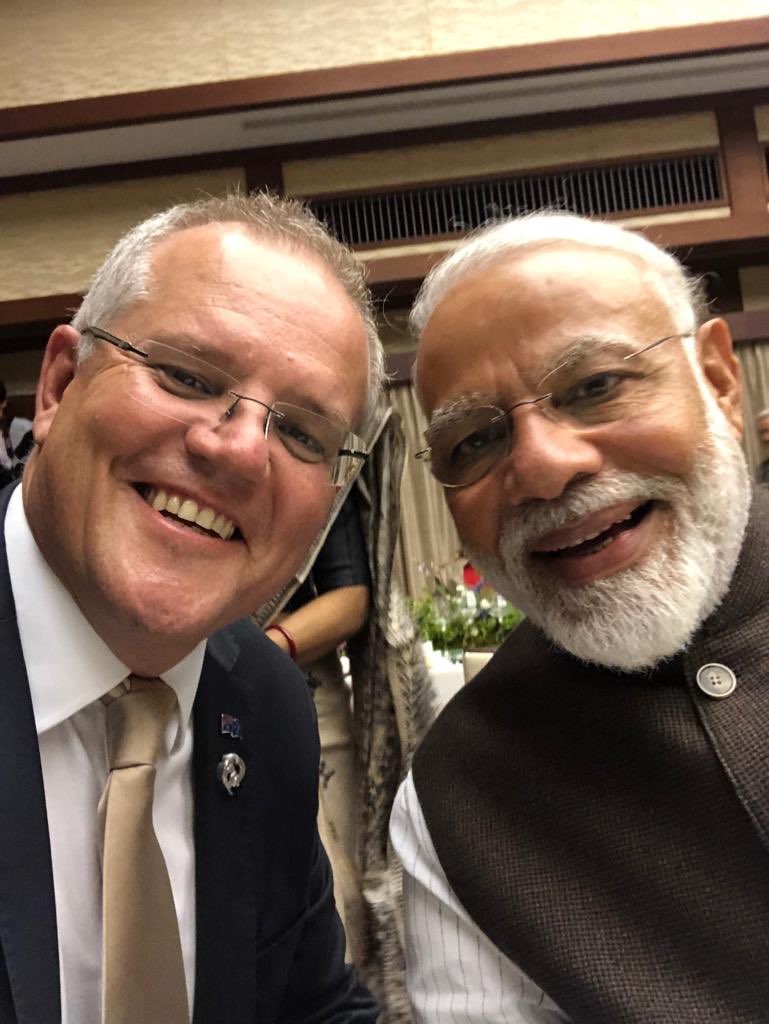
Yesterday was both Indian Republic Day and Australia Day – and in these times the closeness of the two countries makes us more aware of what we have in common.

Australia’s Prime Minister Morrison wrote yesterday that: “While, for now, our people are separated, the truth is that Australia and India are closer than we have ever been. Our progress is unchecked. We’ve taken huge strides in the last year, and, despite its enormous hardship and loss, 2020 will be remembered as a pivotal moment in our friendship.”

Business and investment can become the next step in the “huge strides” in the friendship of the two great democracies.

India’s growth and demand right now means that every sector of Australian business should have an “India strategy” and become part of this amazing growth story – and the future closeness of the two countries.

Here is the link to his article:

https://timesofindia.indiatimes.com/blogs/toi-edit-page/what-we-have-in-common-wonderful-coincidence-of-republic-day-and-australia-day-indicates-our-natural-partnership/

First INTO INDIA blog for the year 2021 – and it has to be against racism

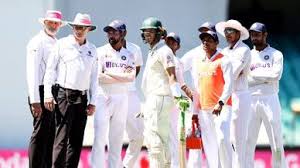
The disturbing instances of racism against an Indian cricketer are a reminder that racism is always there and we need to oppose it. It was good to see 6 people ejected from the ground and well done by the Indian cricketer for calling it out.

Racism hurts individuals and communities.

Individuals

A study of over 800 Australian secondary school students found that racism had huge mental health impacts on young people who experience it, including:

  • ongoing feelings of sadness, anger, depression and being left out
  • headaches, increased heart rate, sweating, trembling and muscle tension
  • a constant fear of being verbally or physically attacked
  • not wanting to go to school
  • having little or no trust in anybody apart from family. 1

Communities

Australia is now a very culturally diverse country – about half of us were born overseas or had one or more parents born overseas. When racial tensions develop, they don’t just affect one or two of us – they affect us all… as neighbours, workmates, friends and fellow Australians.

Racism creates a society where people don’t trust and respect each other.

When it’s allowed to flourish, it lessens us as a people.

Let’s all take a strong stand against racism.

(Thanks to the Australian Human Rights Commission for some of the above)

7 fatal mistakes in Indian market entry

India is super exciting, vibrant, colourful and amazingly friendly. People are accessible and available. Deals can be signed and MOU’s are much loved. The population of over 1.2 billion is soon to become the largest in the world and is soon to overtake China.

While India will probably not be “another China”, it is becoming a global power in its own right and an economy that will soon not be too far behind the USA and China.

So, it makes sense to be there real quick, yes?

YES be there – but watch out for these fatal mistakes

  1. Trying to do the whole country at once will exhaust and confuse you – even Indian companies take years to cover it. Select your best one or two points of entry and the rest will follow.

2. Going in quick on price might seem exciting – but who is actually winning out of this deal? You become a disposable and cheaper provider – so your future is very short term.

3. Appointing the first person who says “yes” seems exciting and then nothing happens. Later you might work out every Indian says “yes” – in their culture, they have to. It takes time to find a “yes” that is real.

4. Focusing on injustice, slums, inequality and the Indian way might be something you think is important but of course it is pretty offensive to your hosts. Sure the traffic is diabolical, but there is no benefit in whinging.

5. A short time frame such as one year is a real killer for Indian market entry. It needs to be a minimum 3 years. If you cannot give it time, go somewhere else.

6. Going it alone sounds brave – but is stupid and wasteful. India is all about relationships and collaborations. And you will need “hand holding” by someone who knows the ropes.

7. Ignoring cultural differences is a recipe for misunderstanding and disappointment. Cultural differences between India and the west are massive – and what we have in common is also massive. You need to understand them both.

How did India miss out on being part of the world’s biggest trading bloc?

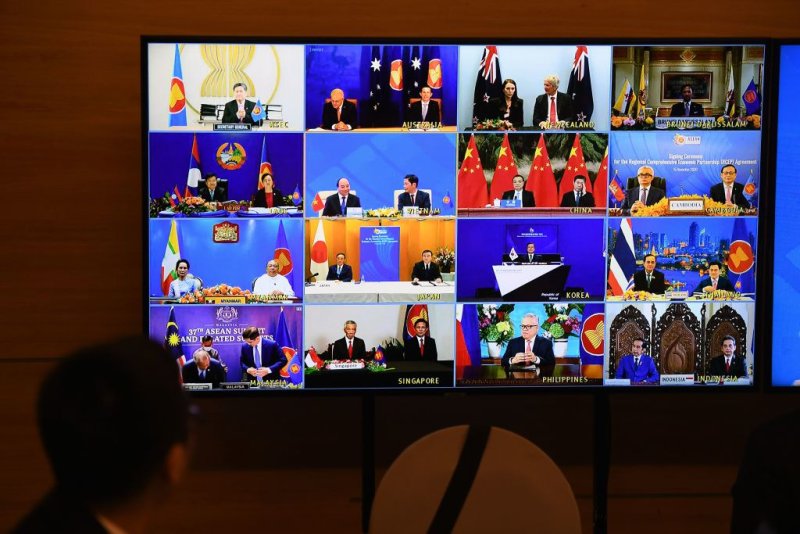
India is missing from the world’s biggest trade bloc which has just been formed – 15 countries representing 2.2 billion people have signed on to a Regional Comprehensive Economic Partnership (RCEP). Talks on RCEP began in 2012 and it has now created a bloc which accounts for about one third of the world economy.

This is a massive new initiative for global trade.

India and the USA have missed out – India because of concerns for farmers produce, and the USA because President Trump pulled the pin on the concept.

India is the mystery case in the region because opting out of RCEP is not going to help its economy. Concerns over lower tariffs hurting local producers won the day and India moved out of the deal.

Did India also withdraw because the relations between India and China are sour, with border disputes and other issues on the rise?

But India could ultimately join RCEP – the doors for India to join the bloc will remain open in future, according to the participant countries.

Otherwise, India looks like being one of the two big losers in this move.

The RCEP group is composed of the 10 Southeast Asian (ASEAN) countries along with China, South Korea, Japan, New Zealand and Australia.

Vietnam “hosted” the final deal online and said the deal will help to lower trade tariffs between the participant countries, over time, and is less comprehensive than the Trans-Pacific Partnership (TPP).

“RCEP will soon be ratified by signatory countries and take effect, contributing to the post-COVID pandemic economic recovery,” said Nguyen Xuan Phuc, prime minister of Vietnam.

The actual legacy of President Donald Trump’s “America First” withdrawal from multilateralism and deals like TPP and RCEP could be a declining US role in world trade.

In contrast, China could be the big winner – experts say that this pact is a testament of China’s strong influence in the region.

The RCEP will lower or eliminate tariffs on various goods and services, although the scope of the agreement—essentially an extension of free trade under existing frameworks—is limited.

So, what is the biggest benefit of RCEP? The pact will create so-called rules of origin, which make it easier for companies to set up supply chains spanning multiple countries.

This is super important – it will be much easier to manufacture and sell goods in the region once RCEP comes into force.

What is Diwali all about? Professor (Dr) Singh provides some inspiring thoughts

What is Diwali all about? Here are some thoughts from my friend the very distinguished Prof (Dr) Gurinder Singh, Group Vice Chancellor, Amity Universities:

Celebrations that invoke the blessings of the Almighty are very special. This is what makes our vibrant festivals a true symbol and universal propagator of our rich heritage, culture, customs & traditions.

The auspicious festival of Deepawali encourages us to celebrate the many lights in our lives.

It marks the triumph of good over evil, knowledge over ignorance, nobility over wickedness, virtue over vice, brilliance over obscurity and peace & harmony over discontent & conflicts.

‘Diyas’ can lighten our life with lot of affection, can remove the darkness in us, can ignite more spirituality, can bring us closer to each other, can add lots of sweetness in our relationships with everyone, can inspire us to achieve the highest limit during our journey of excellence of making our organization and our world most memorable, exciting & festive.

We are confident that together with you, we will fulfill our dreams of building Amity as a truly International brand with world class research, innovation, industry-academia linkages, international collaborations and exemplary best practices & governance standards in which all of us will feel satisfied, proud and blissful.

My addition – Amity University is one of the world’s great universities building a tradition of learning, entrepreneurship and research that will leave a lasting legacy for India and the world.

Pictured – Amity University campus, Noida

India and Australia have a trade relationship that can grow

A great source of information about Asia is ASIALINK here in Australia – and for those interested in India their INDIA STARTER PACK is valuable.

Australia’s economic relationship with India has expanded significantly in recent years – particularly exports of minerals and energy, as well as our provision of education services to tens of thousands of Indian students.

We now have the basis to do more. It will take some marketing creativity and a realisation that brand “Australia” goes down well in India.

Two-way goods and services trade between Australia and India totalled AUD 27.4 billion in 2017. Major Australian exports to India included coal (AUD 9.2 billion), education-related travel (AUD 3.4 billion) and vegetables (AUD 1.38 billion). Our main imports from India were refined petroleum (AUD 1.6 billion), medicines (AUD 335 million), pearls and gems (AUD 274 million) railway vehicles (AUD 199 million). 

The total value of Australian goods exports to India for 2017 was AUD 15.7 billion, making it our fifth-largest goods export market. We exported an additional AUD 4.4 billion in services to India, a figure primarily made up of education-related travel services and other personal travel.

Time to review your India market entry strategy? Let’s talk.

Australia shows what happens when you get the Chinese offside

There is a covert diplomatic trade war between Australia and China, and it is showing the world how China responds when it takes offence or simply does not like your diplomatic stance.

First, responses from China are random and arbitrary – making it hard to respond.

Second, communication about trade bans is always informal and difficult to clarify.

Third, unexplained checks on products slow trade down or lead to damaged goods.

Examples of this use of checks to pursue trade reprisals include looking for weeds in barley, questionable metallic levels in lobsters, or bugs in timber. An aligned strategy includes the Chinese allegations of Australian producers dumping wine, tariff threats on cotton and talk of curbs on Australian copper and coal.

Iron ore – Australia’s major export – is so far not involved.

For Australia, exports to China dominate the economy. Consider these figures of “the top 5” where Australia exports:

China A$150 billion

Japan $52 billion

South Korea $25 Billion

USA $17 billion

UK $15 billion

The world is watching this trade dispute – and learning how China goes about it.

Four Indian startups become unicorns during Covid19

Great Indian story of succeeding in tough times – four Indian startups, Postman, Nykaa, Unacademy and Razorpay, have become unicorns amid covid-19.

In the venture capital world, a “unicorn” is a startup with a value of $1 billion.

The nation is on track to have 8 unicorns in 2020, almost the same number of additions as in 2019.

According to a study titled ‘Covid-19 and the Antifragility of the Indian Startup Ecosystem,’ India is on its way to having 100 unicorns by 2025.

The study was launched by TiE-Delhi, a global non-profit organisation supporting entrepreneurship in collaboration with Zinnov, a global management and strategy consulting company.

It revealed that total funding fell by 50% compared to pre-covid levels during the lockdown. As a result, around 40% of start-ups have been adversely affected and 15% have been forced to discontinue operations.

The third largest start-up ecosystem in the world was jolted by the multi-dimensional pandemic and the effect was extreme during the lockdown period from March to June 2020. However, the rate of recovery, both in demand and in investor sentiment, was faster than anticipated as the economy opened.

Why is India doing so well in tough times?

During Covid19 there has been a big move to digital consumption – so startups in education, healthcare and trade have boomed.