Might change your life – or you might just have fun. Gurudev coming to Australia in October

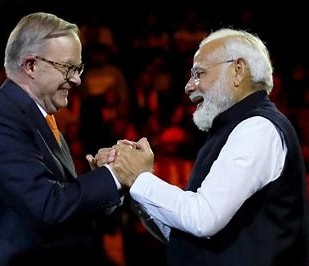
“An Evening with Gurudev Sri Sri Ravi Shankar” is coming to Melbourne, Sydney and Perth in October.

I love this Art of Living program.

If you can get tickets – go! For Melbourne:

For me, it involves breathing techniques that lead to such a relaxed state of bliss. And attendees are fun people to be around.

At second level of what I like, Gurudev does not ever complicate things – he provides simple wisdom.

A Life Changed – think about this quote:

In my 20s, I was consumed by depression and everything felt hopeless. One day, my sister told me about a nearby event featuring a talk and meditation session with Sri Sri Ravi Shankar. As soon as I walked in, I felt something shift inside me. His words seemed to answer the questions in my mind, and I was filled with peace I had never known before.

After the session, meeting Gurudev in person was an experience beyond words. It was as if a heavy burden had been lifted off my shoulders. The bliss and boundless energy I experienced stayed with me for months. When this initially faded, I began addressing my depression, but this time with a much calmer and more peaceful approach. Because I learnt the SKY breathing practice with the Art of Living, it has changed my life for the better. I have accomplished things I once thought impossible and have found inner peace.

https://www.artofliving.org/au-en

Australia India two-way trade now over A$50 billion

Great news from Austrade – two-way trade between Australia and India has reached around AUD 50 billion!

INTO INDIA has been active in this space over 20 years, and for most of this time our trade remained stagnant.

This recent growth is a tribute to the folks at Austrade, as well as State Government offices and all the organisations promoting the relationship. And of course highest praise goes to the brave companies that are finding a way in the Indian growth market.

Healthcare is a good example of the opportunities ahead.

The recent Indian budget 2024 signals the Indian government’s resounding commitment to provide equitable healthcare services across socio-economic spectrum with special coverage of “missing” middle class.

The Indian government is scaling up their focus on digitalisation of the public healthcare system, tariff reductions on some critical pharmaceutical drugs and MedTech devices.

Good news across the board – the budget also involves notable reductions in corporate taxes for foreign companies.

As India continues to grow as a preferred commercial destination, connect with organisations such as the Australia India Chamber of Commerce, with Austrade and with State Government offices – they can all help with the pathway to India.

Melbourne ranked 5th best global city for international students

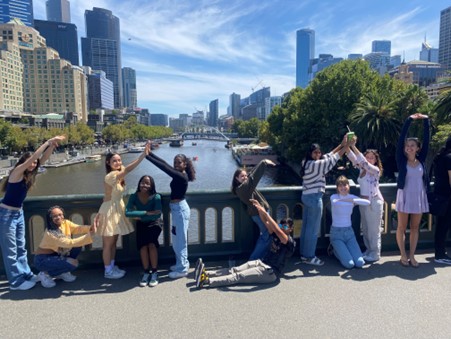
My home town – Melbourne – is number 5 on the list of best global cities for international students. It’s quite and achievement! At the same time, international students make our city even better.

The ranking was according to the QS Best Student Cities 2025, and is a testament to its vibrant cultural scene, exceptional academic institutions, and inclusive atmosphere.

University of Melbourne Deputy Vice-Chancellor (Global, Culture and Engagement) Michael Wesley has become a real champion of the vital role international students play in the life of our cities.

He noted, ‘Melbourne being ranked as the 5th best student city globally is a remarkable endorsement of our vibrant, inclusive, and culturally rich environment. It reflects the University of Melbourne’s commitment to providing world-class education that is deeply integrated with diverse global perspectives. This ranking affirms our commitment to fostering a diverse and dynamic community that prepares students to thrive in a globalised world’.

Ranked among the best

At the core of this thriving educational landscape is the University of Melbourne, which continues to set the benchmark for excellence and global engagement.

The University has a great appeal – it is the highest-ranked Australian university across three major global rankings. Currently, it is ranked number 13 in the world according to the Quacquarelli Symonds (QS) World University Rankings, 37 in the Times Higher Education World University Rankings, and 35 in the Academic Ranking of World Universities. The University’s efforts to tackle the world’s greatest environmental and social issues saw it jump 42 places to be ranked ninth best in the world in the 2023 QS Sustainability Rankings.

International student community

A significant factor contributing to Melbourne’s high ranking as a student city is its vibrant international student community. At the University of Melbourne, international students constitute 45% of the total student population, representing over 150 nationalities. The largest cohorts hail from China, Indonesia, India, and Malaysia, reflecting the University’s appeal to top-tier students from the Asia and Pacific region.

We all benefit from having international students!

These international students enrich the cultural fabric our campuses and enhance the educational experience for all students. Domestic students benefit from the diverse perspectives and global networks that their international peers bring, preparing all students for success in a global economy.

READ MORE:

https://about.unimelb.edu.au/news-resources/awards-and-achievements/announcements/melbourne-top-5-global-destination-for-studying-abroad/_recache

Learning a lot about networking within different countries

Andy Molinsky is a professor of organizational behaviour at Brandeis University’s International Business School. He regularly writes for the Harvard Business Review, and his work has been featured in the Economist, Fast Company, Fortune, the Financial Times, the Boston Globe, NPR, and the Voice of America. 

He recently did some simple research which put a spotlight on how networking varies across cultures.

– Kanya is an MBA student in the United States who grew up in Thailand. She works in the construction industry and is 26 years old.

– Sandeep is an IT professional from India with an MBA degree from the United States. He is 28 years old.

– Mohamed is a security professional from Egypt pursuing an MBA degree in the United States. He is 24 years old.

Here are their answers:

1. Is networking common in your culture?

Kanya (Thailand): “No – it’s not common at all in Thailand. I have never been to networking events in my country before, other than a specific career fair. We don’t have any organizations that set up networking events.”

Sandeep (India): “Yes, it’s somewhat common, but only in certain situations. Indian culture is opening up to the idea of socializing and partaking in networking activities. As there is an influence of the western culture and the emergence of multinational companies is becoming evident, more and more Indian students and employees are making themselves available for networking events.”

Mohamed (Egypt): “The Arab culture is one that is more personal. You typically do business with those you know personally or have at least met. This makes networking vital in the Arab world. Networking is done in both business and non-business settings much like the West.”

2. Where does networking happen in your culture?

Kanya (Thailand): “Only career fairs provide us with the chance to meet with employers.”

Sandeep (India): “It can happen in many different places – career fairs, conferences, and even at unexpected places like parties or other informal get-together. Social parties, charities, functions are hot spots for youngsters and experienced employees alike to mingle with representatives from companies. I saw it happening in my workplace!”

Mohamed (Egypt): “There are both formal and informal settings to network. I have personally found that connections made through informal networking are more beneficial than those made in a career fair. This could be at a social outing or the informal portion of a conference.”

3. In your culture, what matters most: your resume and skills, the way you present yourself during a networking conversation, or both?

Kanya (Thailand): “When we meet employers at a career fair, they are not usually interested in our resumes. They want to talk with us about our experiences.”

Sandeep (India): “A lot of companies pay special interest to the resume of an individual, encompassing all the skills and expertise he or she has in his or her previous assignments. But at the same time, a lot of companies also look at how an individual carries himself or herself. Confidence is a big positive sign for many employers who are looking forward to hiring someone who can meet expectations without breaking a sweat; a fast learner perhaps.”

Mohamed (Egypt): “Both are crucial, but I believe the way you present yourself is more important. The personal presentation isn’t just a foot in the door; it’s a first interview. Your resume and skills are the second round interviews.”

4. If you are talking with a potential employer at a networking situation in your culture, how appropriate is it to talk about yourself and your background?

Kanya (Thailand): “It is not wrong to talk about yourself at career fair because that is why you are there. But it’s different than in the United States. In the US, you promote yourself and talk about your positive qualities. In Thailand, we’re not used to that. We don’t promote ourselves like in the United States. Instead, we just share our experiences and provide additional details if the employer asks about it.”

Sandeep (India): “You can mention something about your background, even if the employer doesn’t ask, as long as you do not sound too conceited. In the contemporary work environment in India, employees are becoming smart and impromptu in their demeanor. They like to boast, if I can say, a bit about their past jobs, their skills sets. But some overconfident employees and students blow it!”

Mohamed (Egypt): “This depends on the context. Given the right employer, job, and situation you can talk about yourself. I think it is more common for those coworkers to discuss personal matters amongst one another than with your supervisor.”

INTO INDIA comment – Networking varies across cultures – everything about communicating and doing business varies across cultures. It pays to be ready!

https://www.andymolinsky.com/

CSIRO brilliant programs of collaboration and innovation with India

The CSIRO is showing the way into India – and INTO INDIA congratulates them.

Under the updated India Economic Strategy (IES) released in 2022, CSIRO and India have made a commitment to draw on complementary capabilities and resource to solve shared global challenges.

They have three partnerships:

  • India-Australia Rapid Innovation and Startup Expansion Accelerator.
  • India-Australia Critical Minerals Research Partnership.
  • India-Australia Green Steel Partnership.

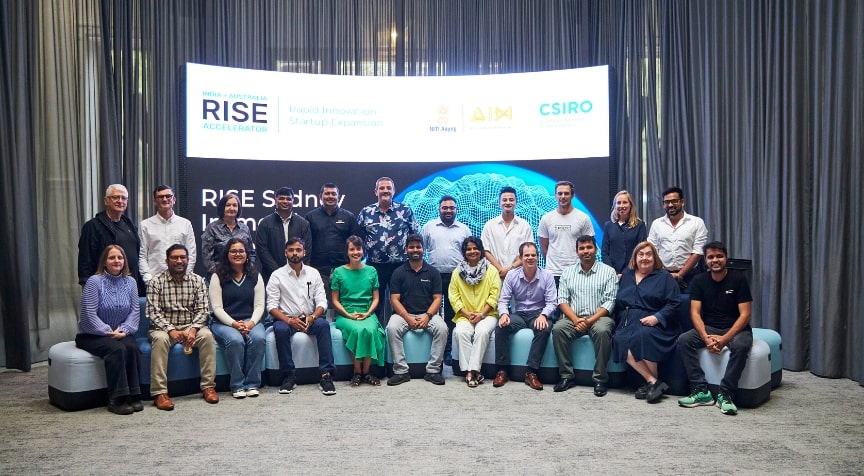
The inaugural cohort of the India Australia Rapid Innovation and Startup Expansion (RISE) Accelerator has been announced, with 15 Australian and Indian startups and small- to medium-sized enterprises (SMEs) selected to participate in Round 1 of the Program. 

India-Australia Rapid Innovation and Startup Expansion Accelerator

India-Australia Rapid Innovation and Startup Expansion Accelerator (RISE) is an exciting and unique bilateral innovation program that will support Indian and Australian entrepreneurs and SMEs on their commercialisation pathways to launch innovative technology solutions to market that tackle our shared national challenges and priorities – such as the circular economy, the energy transition and food system resilience.

A partnership between CSIRO and Atal Innovation Mission (AIM), and supported by the Australian and Indian Governments.

India-Australia Critical Minerals Research Partnership

The India-Australia Critical Minerals Research Partnership (IACMRP) will work with Indian and Australian researchers, industry and government to deliver a range of projects over a 3.5-year period that aims to unlock commercial benefits of commencing, improving and integrating Indian and Australian critical minerals value chains.

India-Australia Green Steel Partnership

The India-Australia Green Steel Partnership (IAGSP) will deliver a range of research, technology and commercialisation projects over a 3.5-year period that aim to accelerate the decarbonisation of the iron-steel value chain in India and Australia.

These Partnerships have gained momentum and the India-Australia Minerals Scholars Network has been identified as a specific initiative that sits under both the IACMRP and IAGSP partnerships.

India-Australia Minerals Scholars Network

The India-Australia Minerals Scholars Network (the Scholars Network) will focus on enhancing Green Steel and Critical Minerals capabilities and connections. It is intended to be a 3.5-year initiative co-funded by the India-Australia Green Steel Partnership (IAGSP) and the India-Australia Critical Minerals Research Partnership (IACMRP).

INTO INDIA can only say – keep up the great work CSIRO.

Jasmine Batra and AICC outlining a thoughtful way to enter the India market

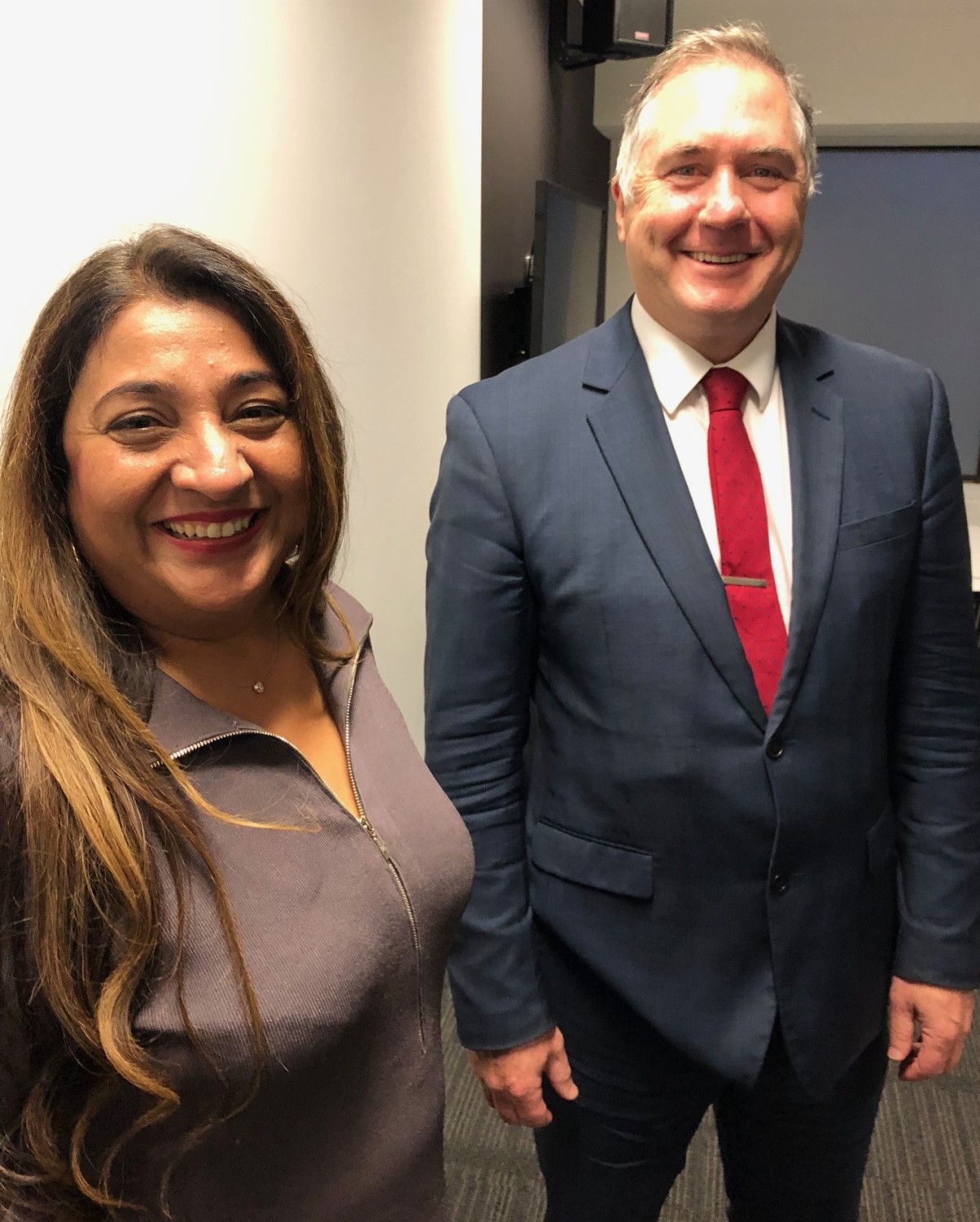
Two organisations that advocate a “more thoughtful” way to enter the Indian market came together last week in a wonderful seminar providing some super advice.

First was the Australia India Chamber of Commerce (AICC) which hosted the event and their Chair, Chris Mooney, put the case for the chamber’s National Industry Groups doing well researched and sequenced steps to engage with India. Each group does research for a white paper, builds a community and knowledge group around it and leads to well prepared India missions.

Second was the keynote speaker, Jasmine Batra from Arrow Digital, who have a program called “The Big Leap” taking clients through a 12 month program of understanding and entering India. INTO INDIA has long advocated that slower market entry produces superior long term results – a strong alternative to the traditional Aussie hasty transactional approach. We love “The Big Leap” concept.

There are three major factors that make India today a very special market – first, the young population with an average age of 28; second, the rise of the tier 2 and 3 cities, including their specialisation, three, India’s global leadership in rolling out digital infrastructure that is transforming business and society.

Jasmine talked about importance of Food, Festivals and Family when thinking about India. “Family” includes what she called “the crazy rich” such as Tata, Ambani and many more. But it also goes right down to small community business families. Your journey will interact at all levels at some time.

Reducing risk is vital. There are three steps you can take. First, understand the cultural context. Second, do market research and find local partners. Third, network community and do due diligence.

In conclusion Jasmine Batra said you should get over there, get around and get partners. By research and regular visits, your more thoughtful engagement with India will produce results.

La Trobe University very kindly provided the venue.

CONTACT AICC

Contact Jasmine Batra

About Us

9 Rules for Thriving in India

Rules compiled from my personal experience – and with some reference to “Rules for Living” by the School of Life…

1. ACCEPTING IMPERFECTION

You will never be happy in India if you seek perfection. Hang on…maybe seeking perfection anywhere is a flawed idea. Is it possible we humans are inherently flawed and broken? Is perfection beyond us? Even the west with its “belief” in science has not stamped out stupidity and pain. Life will always include suffering – this is a big Indian idea. Accepting this makes everything so much better.

2. VULNERABILITY & COMPASSION MAKE LIFE SHINE

This follows from “Accepting Imperfection”. We are all in the same boat, and recognising that we all share weaknesses, fears and mistakes can make us feel generous towards others who are also imperfect – and feel compassion for ourselves.  I learnt in India that sharing your vulnerability, talking about it to people you have just met, can lead to amazing connections.

3. ALWAYS BE KIND

To be kind to others is a choice. Being kind is a form of respect in action. In India many people accept that what happen to us is mostly out of our control, so stop struggling and find a way to live. It also acknowledges that terrible things can happen anywhere, anytime to anyone – so we can be scared or even resentful, or we can just be kind instead. It feels good.

4. HAVE A GOOD LAUGH

I seem to smile and laugh more when in India. There is a kind of blanket acceptance that life is weird, and humans are pretty funny, so have a good laugh. Accepting all of this with good grace goes a long way to easing our frustrations at our own stupidity. Back home we often see acceptance as just doing nothing – but in India acceptance becomes the first step to boldly trying your best, knowing that any outcomes will not be perfect. Why would you expect a planet of 7.8 billion people just as foolish as you to run smoothly, why expect it to be better, why look for “it SHOULD be better”? Just have a chuckle.

5. WE ARE GOOD ENOUGH – AND NOT

I dropped my obsession with “perfection” on my first arrival in India. Sure, the luggage system looked a bit messy, but they never seemed to lose my luggage. I found that the alternative to perfection is not failure, This small thing (luggage) can lead to a greater idea – rough and flawed as we all are, we can make our peace with the idea that we are, each of us, ‘good enough’. We in the west are way too quick to call out “failure”, especially in ourselves. But being ordinary or not measuring up to someone’s standards is not failure – it is just how things are.

6. FINDING WHY ROMANTICISM IS A WASTE OF SPACE

I have learnt a lot from young Indians here in Melbourne and in India. In India there is much to learn about the gradual growth of friendship into love, as a more stable approach than “falling head over heels in love”. But even that is not perfect.  I learn that love grows out of friendship, and that compatibility grows out of love – while in the west we see it as a prerequisite for love. But I also learned that having said all of this, no one is ever wholly ‘right’ nor wholly wrong. We are just learners, or as Gandhi said, seekers.

7. ACCEPTANCE IS BETTER THAN CONSTANT STRUGGLE

When the great Indian philosopher Krishnamurti was on his death bed, he was asked how he maintained such a composted and happy mind. His reply was a teaching for me. He said: “I don’t mind what happens”. It made me realise that almost all of the time, with whatever is happening, my mind made up stories or created ideas – most of which were not helpful because they led to struggle or resistance to what was happening. Things might be bad, but we can still be cheerful. Don’t mind what happens.

8. CLEARLY SEE WHAT IS HAPPENING

Despite our seeming importance, we are not at the centre of the universe – probably not at the centre of anything. Seeing ourselves at the centre means we do not really see as it is, we see as we are. Back to the baggage at the first airport I visited in India – I did not see what was happening, I saw it as I was – impatient, not trusting, agitated and emotional. Putting myself at the centre, when I meet people, I meet them where I am at. With wisdom from India (“I am not the centre”) – I can meet people where they are at. It is a clearer vision.

9, YOU WILL FORGET ALL THIS

I can forget anything – and probably you can too. Our minds might be amazing but they also just – forget stuff. So, any big ideas need to be revisited, again and again, almost so they become a habit. Even if only one of these ideas works for you, go over it and keep it for your next visit to India.

Australia risking major reputational damage over education visas mess

Something weird is happening in denying visas for education study in Australia.

Students from India, Pakistan and Nepal are most impacted by the visa denials.

“The unequivocal message this sends… is both unfair and unbecoming”

The Independent Tertiary Education Council Australia (ITECA) is a membership-based peak body bringing together independent providers in the higher education, vocational education and training sectors. It has made some comments which are sensible and powerful.

“This situation not only undermines the aspirations of Indian nationals with the genuine intention to pursue educational opportunities in Australia, but also casts a shadow over the nation’s reputation as a welcoming and inclusive study destination,” ITECA chief executive, Troy R Williams, said.

“The unequivocal message this sends — that Indian students are somehow less desirable or unwelcome in the eyes of the Australian government — is both unfair and unbecoming of Australia’s long-standing values of diversity and inclusivity.”

ITECA – which has previously voiced concern about the migration strategy – also said that the government’s actions “seem to be at odds with broader governmental efforts to strengthen economic and security relationships with India”.

Read more here:

How to Create an Effective Cross-Cultural Training Program

As Australia builds closer relations in Asia while India strides into the western world, it becomes more important than ever that employees have cross cultural knowledge.

My reading on cross cultural training programs is that the best focus on the assimilation of workers from a variety of cultures into a common corporate culture (sometimes called “cultural congruence”). The best also teach “cultural differentiation” – how to maintain your own culture while recognizing the value of others. That has been my mantra – stay true to your culture while adapting where you can.

This messaging has to start from the CEO and flow down, improving internal and external cross-cultural communications.

But beware – many existing programs are basically just etiquette training—such as whether you should bow or shake hands—and do not deal with the bigger issues.

Also beware of just training people in the basics such as Americans do this, Indian do that, Aussies do something else. Interesting and useful – but does not prepare your ream for behaving in cross culturally different situations. This takes many employees outside of their comfort zone.

Boeing: A Mixed Approach

At Boeing, the world’s largest aerospace company with 330,000 employees in 28 countries, leaders use a mix of approaches and tools—from online modules to afternoon seminars to one-on-one training—to help staff become more culturally aware. All employees are trained using GlobeSmart, an online resource developed by Portland-based Aperian Global. Workers and their families embarking on overseas assignments are given one-on-one sensitivity training and cultural orientation sessions.

The goal is to make sure employees are “not just landing in a country and getting introduced for the first time,” says Lisa-Marie Gustafson, SPHR, a talent manager for Boeing’s supplier management group.

Boeing also arranges “lunch and learn” cultural talks, employee rotation programs to allow overseas staff to work for nine to 18 months in the U.S., and diversity summits twice a year in U.S. locations.

Good training programs address subtle differences between people of different cultures. How is trust built differently in this culture? What is the most constructive way to provide criticism?

SAP: One Size Doesn’t Fit All

SAP is a software giant based in Walldorf, Germany, with locations in 130 countries. It has an elaborate diversity program, which includes cultural sensitivity training.  

Employees embarking on overseas business trips can access online cultural briefings. All SAP employees can take classroom-based training and receive interactive instruction. The company uses a mix of internal and external trainers and customizes its training depending on the location destination and employees’ needs.

Professor Andy Molinsky and “Global Dexterity”

I am a big fan and user of programs from Professor Andy Molinsky from Brandeis University – he claims the best training programs should also teach employees how to act in cultural situations that make them uncomfortable. That is, training would ideally teach employees “global dexterity”—which is also the title of Molinsky’s book.

In his programs, a student from Asia who may be culturally programmed to remain quiet unless she’s asked to speak, would practice speaking out at meetings without being prompted. Or an American who’s uncomfortable giving blunt feedback could practice that skill. Molinsky says the idea is for students to be put in realistic situations and to benefit from feedback and analysis in a supportive environment.

Making a start

Of course, for most corporations the first steps in building effective cross cultural training come from knowing your employees and assessing current attitudes.

You can choose to start with a simple program – creating a workplace committed to treating every employee, customer and client with respect. Of course, the program should define what that means—such as using no racial terms, jokes or language, even if such conduct is legally permissible in a particular country.

Can kinder communication restore respect and civility?

Something has changed in how we communicate with each other. Like the pandemic, it has infected Australia and might have spread to India.

Just for ease, some commentators call this change “Trumpification” of our public conversations. Of course, it is not just Trump, it is also an outcome of spiteful and hateful social media. We have forgotten how to be respectful and kind.

It is too easy to blame America for our own problems, but we have seen over there that trading in hate and fear – combined with deliberate misinformation – creates divisions that might be hard to heal.

Social media has encouraged and built extremism, has destroyed much of our civility and is weakening respect, integrity, trust and social cohesion.

It is a stretch to blame Trump for all of this – much as he has deliberately practised anger and misinformation – and we must acknowledge that what we are seeing publicly now is what has laid dormant in our cultures probably for all time. Extremism and hatred are now empowered and public.

Long term, it will be difficult to turn around the negativity unleashed mainly by social media. It is hard to stop the toxic infection of how we treat each other. But it is worth having a go.

Mallika Bajaj and her company, Little Yellow Beetle, based in New Delhi, is helping clients create kinder content. It is one step in the right direction and might just restore respect, thoughtfulness and caring to our public discourse. I hope so.

https://www.littleyellowbeetle.com/

Here is an earlier discussion I had with Mallika Bajaj.