Breathing program making Yale students happy coming to Australia in September

Art of Living – quick, simple program for happiness in tough times

A program from India that is being used at Yale University and many other American universities to improve wellbeing of students – is coming to Australia online.

Starting on 30 September, this short Pan Australia Happiness Program will be held in the Presence of Gurudev Sri Sri Ravi Shankar who creating the breathing technique that changes lives. INTO INDIA has been doing this program for many years and loves the energy and simplicity of it.

This is a super simple, quick and unbelievably powerful way to have a good day!

If you are feeling alone.

If covid is dominating your mind.

If your breathing is shallow.

If you feel anxiety and stress.

Step in and join a big and strong group of like-minded people who believe in contributing and creating waves of happiness, sharing, and caring that are so much required right now.   

Registration link: www.artofliving.org/au-en/program/6401

Videos: The videos below showcase how Breathing and Meditation can help us become stress-free

James Nestor, author of Breath, on his research & the power of SKY (Sudarshan Kriya)

Take a breath: What a new study from Yale reveals about stress and mental health

Art of Living Australia Foundation is looking forward to sharing this beautiful program with you and your friends and colleagues.

Contact for further information – Rohit 

Art of Living Happiness Program and Sri Sri Yoga Facilitator

0423 531 787

“Make others comfortable and you will see that Nature will take care of your comfort” Sri Sri Ravi Shankar

Getting lost in Higginbothams – amazing bookshop in Chennai

You can get lost in Higginbothams – or, at least, I have!

On Chennai’s Mount Road, Higginbothams has stood tall and proud since 1844. Said to be the oldest bookstore in India, it was founded by Abel Joshua Higginbotham—an India-born Englishman.

After an unsatisfying career as a seamen, Higginbotham became the manager of a bookstore in the basement of a Methodist chapel. He bought and ran the store for 60 years with his youngest son, before switching to the current Mount Road location.

The bookshop is housed in a grand, colonial structure and still carries an old world charm with wooden furniture and tall stained-glass windows.


LIC Building, 116, Anna Salai, near Regional Passport Office, Chennai.

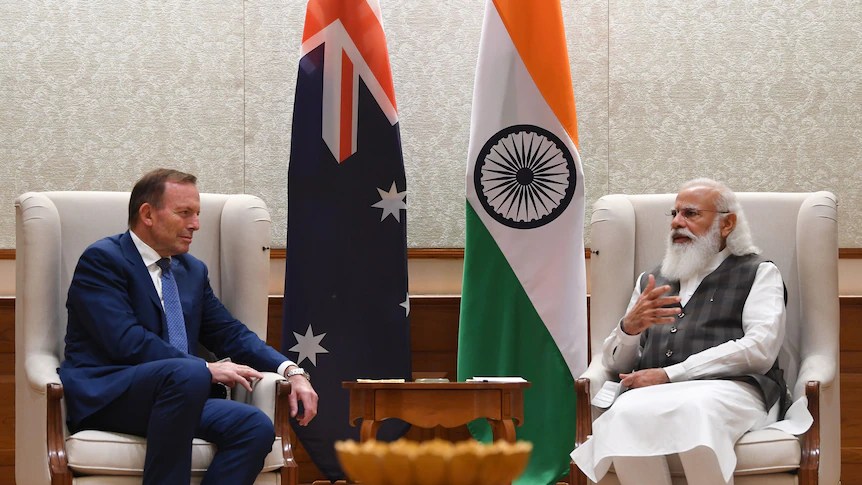
Tony Abbott might have overstated it – but he is more right than wrong on India

Tony Abbott wants Australia to make a big shift towards India and away from China.

Despite some hysterical responses from two former Aussie PM’s, Tony Abbott has by and large got it right on India and we should work towards the closer relationship he believes is possible – and necessary!

Consider this verbal stoush:

“The answer to almost every question about China is India. Although currently not as rich as China … India is perfectly placed to substitute for China in global supply chains … India has revived the Quadrilateral Security Dialogue, and the first in-person Quad summit is expected before the end of the year. Under Modi, India has invited Australia to join the annual Malabar naval exercises that will soon involve India, the US, Japan, Australia and also the UK … It will be an impressive show of strength, demonstrating the democracies’ commitment to a free and open Indo-Pacific … If Australian business and officialdom were to make the same effort with India that they’ve long made with China, there’s potential for a ‘family’ relationship with India that was never likely with China.”

– Former prime minister Tony Abbott in The Australian (10/8/21)

“No, (Abbott’s comment) is just wrong. We all agree our relationship with India has been underdone over the years … India has got a very deep longstanding protectionist political culture. They weren’t even prepared to sign up to RCEP … You have got to be realistic about what you can achieve in terms of trade. They are different countries, different economies. We should be aiming to have much stronger deeper relations with India …  Every prime minister should and will do that. But the idea that can sort of delete China and insert India is just nonsense.”

– Former prime minister Malcolm Turnbull at a La Trobe University webinar (10/8/21)

“We have got to be deeply realistic about one thing (about the Quad). Is it the assumption of future Australian governments, like Tony Abbott’s view in today’s press, that the Indian navy is going to go steaming into the South China Sea to defend Uncle Sam’s interest if the balloon goes up over Taiwan? I think not   …  We need to ask some very hard military questions about the core strategic utility of this (the Quad) for the longer term … We need to go into this with wide eyes open, not the blithering idiot remarks we’ve seen from Abbott in today’s newspapers.”

– Former prime minister Kevin Rudd also at La Trobe University

“The one thing we should not be doing is saying to India, this is to line you up to be the next member of ANZUS to take on China. I agree with what Kevin said, that equally just plays into the paranoia of China … We have to just move gently, avoid extravagant language (with India) …  Frankly, extravagant claims of the type we were talking about a moment ago are not helpful.”

– Malcolm Turnbull again

“India is the world’s emerging democratic superpower and my god don’t we need another democratic superpower in the world right now. Isn’t it so important that a country like Australia do everything it can to ensure India does take its rightful place up there at the head of the world’s great democracies.”

– Tony Abbott, Australia India Address (17/8/2021) 

Well, what do you think?

Winning in India – less about sales and more about culture and relationships  

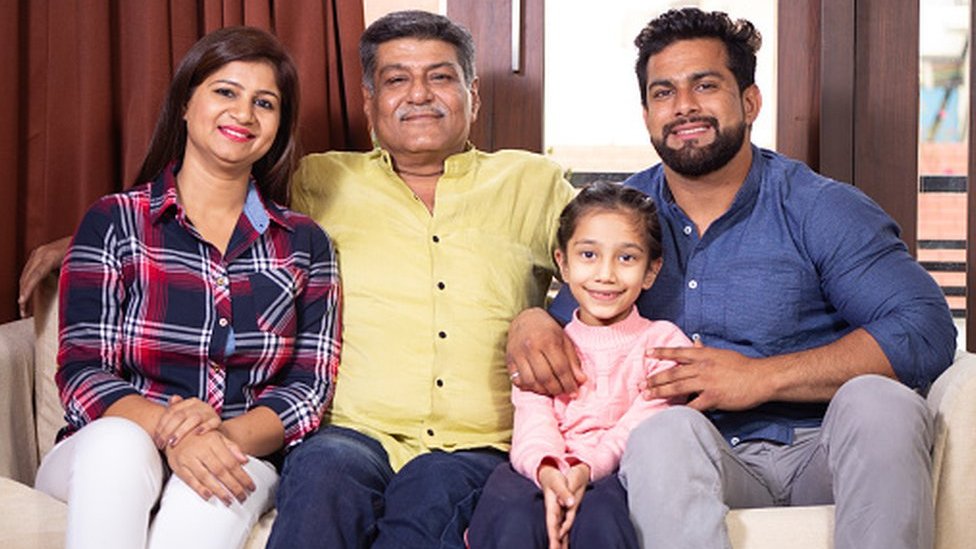
Most Indians continue to live in joint families – your business host might be the same so be curious about their life and culture

When a company sends a salesperson into the Indian market, the goal is to fill the order book as quickly as possible – there is no time for that person to build ongoing relationships.

The result at best is a quick transaction based on price.

It rarely lasts.

India is a country where relationships drive and impact all aspects of business. That is “how they do things there” and expect us to be the same.

Some tips for relationship building in these tough times:    

You can build good relationships during Covid by hosting a zoom or similar catchup to see how things are going – no big agenda, share experiences and listen.     

You can join groups and chambers and be seen as a player.  
     
You can accept the intangibility of relationships and give your key executives time and resources to build them.      

You can look up Indian culture, architecture and history so you can have informal conversations about things close to their heart.

You will need strong curiosity and listening skills.

Really, decisions about future business with India need to be C-Suite and Boardroom driven, based around a minimum three-year strategy. And giving your people the right to spend time on the intangible of relationships is the best first step.  

If India’s tier 1, 2 and 3 cities attract Mercedes, maybe they should attract you?

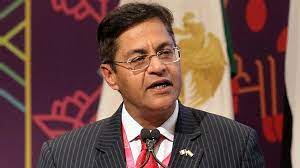
India’s High Commissioner to Australia, HE Mr Manpreet Vohra, spoke at a recent Australia India Chamber of Commerce function

Really interesting comments made recently by the outstanding Indian High Commissioner in Canberra – His Excellency Mr Manpreet Vohra:

We all know the mega cities of India such as Mumbai, and everyone wants to be there, but what about the tier 1, 2 and 3 cities which account for:

50% of all Mercedes Benz sales in India

60% of Amazon sales

50% of the entire digital economy

You can see why India is set to be the world’s fastest growing large economy in the years 2021 and 2022.

Well done to the Australia India Chamber of Commerce for this event.

Indian Independence Day is joyful and optimistic

Have you been in India on Independence Day, 15 August? It is a most joyful and optimistic day, in a country which has many joyful and optimistic celebrations.

India proudly celebrates Independence Day to cherish the idea of oneness and remember the sacrifices that freedom fighters made during their struggle against the British empire.

What really hits me about this day is the feeling people have about the glory of India’s struggle. It is a kind of mindset that “if we can do this, then anything is possible”.

Well done India – have a great celebration.

Tech innovation is not just about tech – it needs a basis of deep understanding of your business

Sundaram Business Services has a deep understanding of Australian business.

Indian firms like Sundaram Business Services in Chennai and Australia should be on your radar for tech innovation – in addition to their tech innovation capabilities, SBS has been active in Australian business for many years and knows the business environment very well.

A KPMG survey ranks India third among countries that show the most promise for tech innovation.

Tech innovation is most successful when the supplier has a deep understanding of your business. This is like a mantra for the SBS group – building innovation on the sound basis of business understanding.

There has to be cross cultural understanding and good communication.

Whether it is Artificial Intelligence, Machine Learning or other innovation, success is gained when the supplier has the capacity to how your business works and what your needs are in the market.

More than 800 industry leaders were surveyed for the report which said 39 per cent believe global ‘hub’ cities such as London, Singapore, and Tel Aviv will continue to play a vital role, enabling talent to coalesce and collaborate in communities with a solid digital infrastructure.

There are so many great Indian startup stories – and much more to come

Mr. Girish Mathrubootham started Freshworks without any special help, nor did he come from wealth.

There are so many startup and unicorn stories in India today – and we know there will be more tomorrow.

Consider Freshworks which began eleven years ago and is now a huge firm with more than 3,800 team members and offices all over the world.

Mr. Girish Mathrubootham started Freshworks without any special help, nor did he come from wealth.

“We were only a six-person company operating out of a tiny garage in Chennai over eleven years ago. I didn’t have a gilded CV or come from a wealthy household, but that didn’t stop me from dreaming big.”

“I recognise that not every creator is as lucky, which is why as an angel investor, I have funded more than sixty startups,” he continued.

Now Girish Mathrubootham of Freshworks, Mr. Manav Garg of Eka Software, Mr. Shubham Gupta ex-Matrix, and Mr. Avinash Raghava ex-Accel have teamed together to establish a founders-first company called Together Fund in an effort to boost entrepreneurial enthusiasm in India.

The fund, which has a US$ 85 million initial capital, aims to assist India’s finest SaaS entrepreneurs in building, scaling, and winning together, therefore creating India as a true product country. Together Fund is India’s first and only venture capital fund run by founders. They operate some of India’s most well-known SaaS businesses in addition to being founding partners of Together.

The future of startups and innovation is looking good for India.

Doing Business in India – Finding the Right Local Partner


 One of the most frequent questions for INTO INDIA is how do we find the right business partner in India? Most case studies of Australian businesses succeeding in India reveal one key element – finding the right local partner.

What is the right local partner?

It is much more than someone who says “yes”. Too many have been frustrated in Indian market entry because they forged alliances with any and everyone who said “yes” – which means everyone they meet. India is a culture that cannot say no, so be wary of the yes answer.

The right partner is already active and successful in your field. They can show you their track record.

Your right partner will have connections among suppliers and customers, and will be keen to introduce you to them so you can form your own judgement.

In the collective culture of India, your right partner will be well connected in the various business chambers and will have good connections in government – central and state. This right partner will demonstrate these connections by organising meetings for you, rather than just saying “yes” we are connected.

Your right partner will be someone you double check with Austrade and with other reliable connections you have in India or Australia.

Your right partner could ultimately become an agent, a joint venture or more. They might just be a trusted individual who willingly offers to make connects for you – this freely opening doors does occur in India.

Your right partner might be a talented individual who you hire into your business. Or it might be a combination of external and internal. Patience will be your best friend as you make these choices.

Finally, your right partner will develop relationships for you – because in Indian culture relationships matter. Relationships first, business second is the path to long term business in India. Quick deals are just that – one transaction that might not lead to anything.

So, how are you going finding the right partner in India?
 

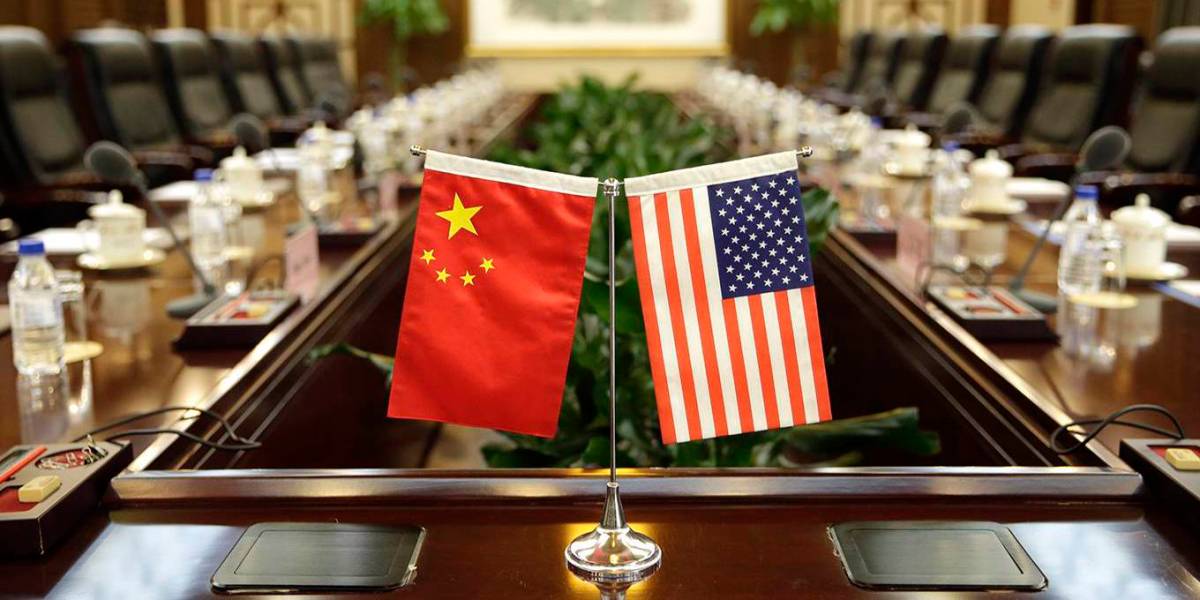
Can India teach the west and China about co-existence?

With India’s role as a rising power, plus its long record of peaceful co-existence with multiple countries, can it help the west and China live together?

Here is the situation as outlined by Michael Spence, a Nobel laureate in economics, Professor of Economics Emeritus and a former dean of the Graduate School of Business at Stanford University:

“At the recent G7 and NATO gatherings, China was singled out as a strategic competitor, a calculating trading partner, a technological and national-security threat, a human-rights violator, and a champion of authoritarianism globally.”

Not a great recipe for co-existence.

Spence continues: “China denounced these characterizations, which its embassy in the United Kingdom called “lies, rumors, and baseless accusations.” The risks that such rhetoric poses should not be underestimated.”

Also not a recipe for co-existence.

He concludes: ” The real danger, however, is that officials on both sides seem to have embraced a zero-sum framework, according to which the two sides cannot simply co-exist; one side must “win.”

But India has long experience of getting along with all sorts of regimes and managing to see both sides of the argument.

As India plays a bigger role in global groupings, can it influence both the west and China to drop “zero sum” thinking and work to co-exist?