Welcome back as Indian and international students return to Melbourne

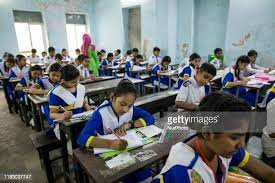
Indian students are coming back to Melbourne at the rate of 4,000 per week

India is now the number one country of origin for foreign students in Victoria, and the students are back!

Welcome back – international students contribute to making Melbourne the diverse and active city that we love!

About 4000 international students are still arriving each week, as some students report delays in having their visa approved.

Universities and student accommodation providers are preparing for a “better-than-expected” return of internationals arriving to study in Melbourne.

People from India make up a quarter of the 96,300 international student visa holders currently in Victoria, followed by those from China on 19 per cent and Nepal on 7 per cent.

Victoria’s international student contingent has risen to 96,300 this month, after dropping from 151,500 before the pandemic to a low of 68,400 in December 2021.

9 Key Factors to Winning in India

Follow the lead of successful businesses who have advanced by integrating Indian culture and values into their offering.

  1. Abandon the “quick sale” old mindset and adopt patience and a long-term view.
  2. Model your business on Macquarie Bank – this works whether you are a large or small enterprise. Their central plank for India was partnering is the key to success.
  3. Abhishek Poddar, Managing Director, Macquarie Infrastructure and Real Assets (MIRA) “India is one market where you need deep experience if you’re going to be successful. You have to take the time to appreciate and understand its unique culture and ways of working.”
  4. Be clear about what India wants. Macquarie saw infrastructure and clean energy opportunities and focused just on them.
  5. Most successful businesses in India have some philanthropic activity – this is highly worthwhile and well regarded in India.
  6. Establish good relations with Government at Central and State levels – this is vital to being accepted in India.
  7. Consider options such as acquisitions and partnerships which can speed up your market acceptance.   
  8. Be there for the long haul – Deakin University continues to make gains in India and has been present there for over 25 years.
  9. Develop a local Indian team and allow them to apply their own culture – within your larger business culture.

Well done on Modi deals, Scott Morrison – he “gets” India

Australian PM Scott Morrison at the virtual talks yesterday with Indian PM Modi.

In a meeting yesterday with Indian PM Narendra Modi, Australian Prime Minister, Scott Morrison, cemented ties with India in a series of deals worth almost A$190 million. He gets (understands) India.

PM Modi is an “investment magnet”, but is also strongly wary of “multilateral” groupings and has a preference to do deals country by country.

So, PM Morrison did a country by country deal. He used some of the western rhetoric over Russia, Ukraine and China, but then got stuck into business.

What is there to “get” about India that matters in our region?

First, it wants investment.

Second, it stays away from promoting democracy as the ONLY future, instead seeing all countries as different and many having different forms of government – all accepted by India.

Third, it now buys most of its defence hardware from Russia and has a long standing close relationship with them.

Fourth, it wants to be in the QUAD (Australia, Japan, USA and India) but will only play on its own terms – that is, not condemning others and not championing democracy as the only solution.

Fifth, Modi is riding high, and he has numbers to back it up – India is the world’s fastest growing economy in 2020. You have to “get” his confidence levels, which are high.

Sixth, India is keen for more Indians to have access to Australia and to work here – PM Morrison “gets” this, and it was significant that the Monday night talks also included a taskforce to see if both countries could recognise the same education qualifications.

Seventh, India has a proud culture and history, feels rightly that much has been plundered by the west – so it was highly important that the National Gallery of Australia formalised the return of artefacts to India.

Future challenges?

There are plenty. The CECA (free trade deal) will soon announce “early harvest” deals and then plans to complete a full CECA some time this year. Good luck with that – especially as our own Aussie negotiators have always been averse to cherry picking. I think PM Morrison gets the need for flexibility and hope he is challenging his bureaucrats to do the same.

Relying more on our High Commission staff in Delhi would be a good step as we have outstanding people there.

But by and large, finally, it seems Australia is “getting” India.

3 flights X 3 meetings strategy to engage with India

Engaging with India means building relationships – and although this is a bit quick, you can build relationships after 3 flights and 3 visits. Anything less places you at risk of misunderstanding both the opportunity and the pathway.

Here are 4 ways to make your 3 flights X 3 meetings introduction work well:

Adopt a patient long term view

One way to improve our cultural dexterity would be to take a long term view and apply lots of patience. Businesses should not start out on market entry unless they are prepared to commit at least five years to making it work.

Focus on relationships

India is not a short term transaction opportunity – to succeed there needs a longer term focus on building relationships. The first trade meeting in India can be exciting and positive, but from the India side this is just seen as an introduction and they will wait to see if the relationship grows.

Remember in Indian culture “no” is rarely said

Indians are among the most courteous and generous hosts on the planet. On top of this, their culture demands that they never provide an outright rejection or “no” statement, even when this is clearly the only answer. To succeed, our businesses and governments need to dig deeper and find the reality beyond the politeness. 

Adapt to indirect communications

Like most of Asia, Indians are indirect communicators. Problems are rarely addressed directly and unless you have an ear for indirectness, you will miss the warning signs. You can learn how indirect communication works.

INTO INDIA recommends you go to India asap – it could be the time of your life! (business and personal)

Can Indian Ocean nations move towards OPTIMISM and away from fear and negativity?

Could the nations of the Indian Ocean region combine to put their focus on OPTIMISM as a replacement for rampant negativity, fear politics and division?

What a contrast this would be to the so-called “Indo-Pacific Region” which seems to have one negative driver – containment of China.

Debate has started in Australia which “needs a new narrative and new thinking from the top,” according to the Centre for Optimism which has released a six-point plan for government and industry to adopt to boost their capabilities with a positive, uplifting mindset and optimistic leadership focused on collaboration, participation, and transparency.

What is wrong with the current narrative?

The Centre’s founder Victor Perton said the current national narrative is framed in old behaviours – state-federal squabbling over policy and service responsibility, hand-outs addressing market failures, institutional inertia, and short-run responses to crises.

I would add that our politicians are disconnected, use fear and manipulate the electorate through division and hostility.

The World Economic Forum recently warned its members, including Australia, that the contemporary “lack of optimism could create a vicious cycle of disillusionment and social unrest.”

Mr. Perton said that with Australia coming out of COVID lockdowns, people’s lives have changed, and people expect their governments to learn the lessons too. “They want positivity, not an aggressive fear-driven narrative,” he said.

Victor Perton was a Victorian MP for 18 years, a former Victorian Government’s Commissioner to the Americas, and the Federal Government’s Senior Engagement Adviser for the Brisbane G20 Leaders’ Summit of Finance Ministers & Central Bank Governors.

The six (6) point-plan proposed to government and political leaders is:

Collaboration – as a primary goal – Federal Cabinet should create a National Collaboration Commission to exist alongside the ACCC and National Competition Council.

Vision focus – Government Agencies should establish teams in each Department whose core purpose is to develop a vision, a long-run view of the future.

Active community engagement – through the establishment of citizen juries, in which citizens can assess policies, or plans that are either prospective, or already in place.

Reframe measurement (evaluation) – Replace the preoccupation with GDP and introduce a new Optimism indicator…increasing attention on (a) volunteerism, (b) community engagement, (c) non-market work, (d) care for disadvantaged segments, (e) satisfaction with life, and (f) confident and optimistic outlooks.

Reframe economic development – Move from a focus on size of Government to broader based policies. This to include policies on care and health sectors, innovation, education, green capabilities, and supporting them through “needs clusters”. This would involve the establishment of more public-private partnerships and socially responsible funds, including social impact funding.

Broader institutional change – The inclusion of Opposition party members in the National Cabinet to promote bipartisanship and a collective long-term view on national issues which have been clearly delineated, such as those covering climate change and immigration. The Cabinet would have pre-determined flexibility to add issues or remove them from the agenda.

Is this the optimism lens we need?

I think so, and am keen to hear your views and ideas.

https://www.centreforoptimism.com/AustraliaPositiveNarrative/

Are QUAD cracks showing? My article in India’s News18

India at the QUAD was being squeezed more than a little by the USA wanting the QUAD to condemn Russia over Ukraine. Russia is a long-standing friend of India (since 1947 independence).

And behind the scenes there are questions about the commitment of the USA to the region and specifically to South East Asia and the Indian Ocean.

The four QUAD countries (India, Australia, Japan and USA) are closer than ever before and doing positive things in supply chains, emergency relief and vaccines for poor countries.

But, are the cracks beginning to show?

My article in India’s biggest media group, Network 18 News:

https://www.news18.com/news/opinion/cracks-in-quad-are-showing-from-doubts-over-us-pledge-to-indo-pacific-to-differences-over-ukraine-4763273.html

Is “busyness” destroying your creativity and leadership?

It has been called a cult.

For around 200 years, the power of this cult has been growing.

That cult is dedicated to one seductive idea – busyness.

This cult insists that a good life is one of constant activity and application, where every hour of the day must be filled with intense activity.

The cult is making us tired and stressed.

Worse, it is based on flawed thinking.

To be truly productive and reach our potential, we actually need breaks, time away, inactivity and normal time for the mind.

Albert Einstein hated “busyness” and was a big advocate of taking a walk or a swim when he encountered a problem – and he always came back with the solution.

Do you have time for this? If you are a fully signed up member of the “busyness cult”, no doubt you do not have time.

Feeling exhausted? Have a quiet, slow day and turn away from the drug of busyness. You might be amazed.

Happy 26 January – national days for Australia and India

Among the many shared interests of India and Australia, on 26 January both countries celebrate national days.

For Australia, 26 January is AUSTRALIA DAY and the date was chosen for the 1788 arrival of the first fleet and the raising of the British flag.

The Commonwealth of Australia was born in 1901 with Britain controlling Australia’s foreign policy. Independence was offered in 1931 and taken up in late 1942. From federation until World War 2, foreign policy was controlled by Britain, and Australia was expected to fight alongside Britain (as it did so in both world wars). 

For India, 26 January is REPUBLIC DAY, the date of the adoption of the India constitution. Each year, India celebrates three national festivals : Republic Day on 26 January, Independence Day on 15 August and Gandhi Jayanti on 2 October.

As the two nations – Australia and India – come closer together, this day provides part of the shared heritage.

Wishing much happiness to both countries today!

5 essential tips for doing business with India in 2022

Generation change is seen in shopping malls across India

Growing at around 9 per cent this year, India is well on track to be number 3 or 4 economy in the world. It is also one of the youngest countries on earth – with around 50% of the population aged under 25. Demand outstrips supply – for everything.

Here are some tips that might help your experience, but keep in mind you will find many variations and contradictions of these points in the very diverse and exciting India market:

India is many countries in one

Differences are not just seen in the North, South, East and West, India is truly many countries in one and you need to be ready for cultural diversity. While Mumbai is the fast and flashy financial capital, it is also a tough place because everything is done on grand scale and at great speed. New Delhi is more formal, also more liveable, and is more than a political capital – it is a powerful business city. Chennai is one of my favourites, embracing that slower southern pace and the values that shine in southern businesses. Pune is sophisticated and a major player across many sectors. Bengaluru is technology but much more as well. Regions have varying strengths, so research is the key.

Market entry strategies should think longer term

India is looking for more than a quick sale – it looks to build relationships and create trust that can last a lifetime. India is what we call a “collective” culture – everything is done within the group and if you make it into the group, you will make it there. This means your first venture should probably not be to send the sales and business development team over there is search of deals. Rather, lead from the top to create relationships – deals will follow.

Find your local Indian team and culture

Companies that have tried to impose their Head office teams and cultures on India operations rarely succeed. A priority should be to identify Indians who can lead locally – with your support. Accepting that the corporate culture might not be an exact mirror of your HQ culture is also vital – with care and guidance over time, your Indian operations will reflect key elements of central culture but will bring added value too.

“Yes” can mean “maybe” or “no”

Indians are among the most courteous and generous hosts on the planet. On top of this, their culture demands that they never provide an outright rejection or “no” statement, even when this is clearly the only answer. The dumbest question for a business to ask in India is “can you help me with market entry for my products?” The answer will always be “yes” and you will sit idle for a long time back home until you realise this is not the right question. Within Indian culture built so solidly on relationship above all else, the word “no” is a real relationship breaker and is rarely or never used. “Yes” can in fact mean “maybe” or even “no” and you need to look for the signs. Like most of Asia, Indians are indirect communicators. If that is not complex enough, consider that India has 26 major languages.

Learn the art of flexibility and patience

Being patient and flexible is an asset, even if you come from a country that likes to be blunt, direct and structured. Most Indian communication is indirect, so it can take some time to work out what the real issues are. India is full of surprises and you cope best through being flexible. Dropping any “one rule for all” approach is a good start.

Indian consumers going online

More good news! Consider Bangladesh – which for many symbolises everything wrong with the world – take another look

Literacy in Bangladesh jumped from 35% to 74%

Bangladesh, home to 160 million people, for many people in the west is a symbol of everything wrong with the unequal world.

But take another look.

It celebrated a ‘development miracle’ in 2021, its 50th year of independence. In the last three decades, GDP per capita has increased seven fold, 24 million people have been lifted out of poverty, life expectancy has risen to 73 years, infant and maternal mortality rates have fallen by a factor of five, the literacy rate has increased from 35% to 74%, and more than 97% of the population now has access to electricity, up from 62% in 2014.

Worth going over that again – it is genuine good news.