
Jasmine Batra and AICC outlining a thoughtful way to enter the India market

Two organisations that advocate a “more thoughtful” way to enter the Indian market came together last week in a wonderful seminar providing some super advice.

First was the Australia India Chamber of Commerce (AICC) which hosted the event and their Chair, Chris Mooney, put the case for the chamber’s National Industry Groups doing well researched and sequenced steps to engage with India. Each group does research for a white paper, builds a community and knowledge group around it and leads to well prepared India missions.

Second was the keynote speaker, Jasmine Batra from Arrow Digital, who have a program called “The Big Leap” taking clients through a 12 month program of understanding and entering India. INTO INDIA has long advocated that slower market entry produces superior long term results – a strong alternative to the traditional Aussie hasty transactional approach. We love “The Big Leap” concept.

There are three major factors that make India today a very special market – first, the young population with an average age of 28; second, the rise of the tier 2 and 3 cities, including their specialisation, three, India’s global leadership in rolling out digital infrastructure that is transforming business and society.

Jasmine talked about importance of Food, Festivals and Family when thinking about India. “Family” includes what she called “the crazy rich” such as Tata, Ambani and many more. But it also goes right down to small community business families. Your journey will interact at all levels at some time.

Reducing risk is vital. There are three steps you can take. First, understand the cultural context. Second, do market research and find local partners. Third, network community and do due diligence.

In conclusion Jasmine Batra said you should get over there, get around and get partners. By research and regular visits, your more thoughtful engagement with India will produce results.

La Trobe University very kindly provided the venue.

CONTACT AICC

Contact Jasmine Batra

About Us
Can renewable energy vastly improve incomes and jobs for Australia’s First Nations people?

Can renewable energy vastly improve incomes and jobs for Australia’s First Nations people?

It seems the two might be about to come together.

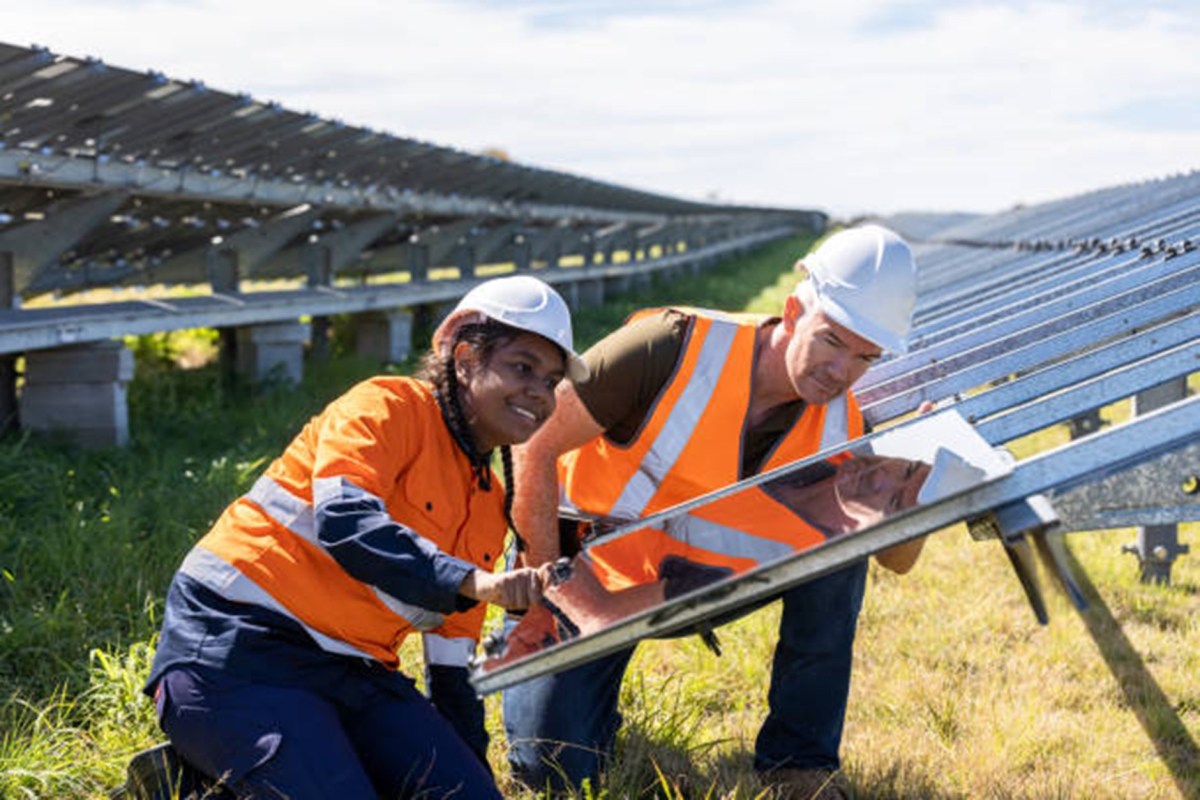
Australia’s plentiful solar and wind resources and proximity to Asia means it can become a renewable energy superpower. As the renewable energy rollout continues, Aboriginal and Torres Strait Islander people could benefit.

Renewables projects can provide income and jobs to Aboriginal landowners. Access to clean energy can also help First Nations people protect their culture and heritage, and remain on Country.

It seems Canada and the United States are already on this path.

The Australian government is developing a First Nations Clean Energy Strategy and has sought comment on a consultation paper. Submissions have closed, but If, like me, you feel strongly about the issue, have your say to Government and to MP’s.

This could be a gamechanger for Australia.

As an “energy superpower”, selling power to India and Asian neighbours, we make a difference for them, gain new export markets and create a big shift in how Australia is perceived in the region.

By speaking up, you can help our government do what is so obviously the right thing.

What a year! ECTA the radical change in relations between India and Australia

As this year comes to a close, INTO INDIA reflects on the game changer – the Economic Cooperation and Trade Agreement.

It surprised us all. Many did not expect it to be signed. Nobody expected it to be so vast in potential impact.

ECTA will save Australian exporters around $2 billion a year in tariffs, while consumers and business will save around $500 million in tariffs on imports of finished goods, and inputs to our manufacturing sector.

The tariff commitments provided by India in the agreement will open up access for Australia’s exporters of products including critical minerals, pharmaceuticals, cosmetics, lentils, seafood, sheepmeat, horticulture and wine.  

Australian service suppliers will benefit from full or partial access across more than 85 Indian services sectors and subsectors. Australian suppliers across 31 sectors and subsectors will be guaranteed the highest standard of treatment that India grants to any future free trade agreement partner. 

Australian services sectors to benefit include higher education and adult education, as well as business services such as tax, architecture and urban planning.

ECTA will support tourism and workforce needs in regional Australia by making 1000 Work and Holiday Program places available to young adventurous Indians. It maintains opportunities for Indian students graduating in Australia to undertake post-study work, with a bonus year of stay for high-performing STEM graduates.

Really looking forward to 2023!

Reade more here…

Time for Australian business and education to find a way to increase trade with India

Dr Ashok Sharma has written about the increasingly close relations of India and Australia – for example, we are now the number 2 education market behind the USA and just ahead of the UK. Dr Sharma pointed to the Comprehensive Strategic Partnership and the New Education Policy which should “bring the current education partnership to the next level”.

But what about other areas of trade?

We know that the increasing activity in education has many spin offs – increased tourism, professional exchanges and more.

Education might be the “trade flagship” that drags other industries into the trade mix.

But we cannot be sure.

It is time for a new national conversation about Australia-India trade, with a close examination on what blockages might exist and what steps would increase two-way trade.

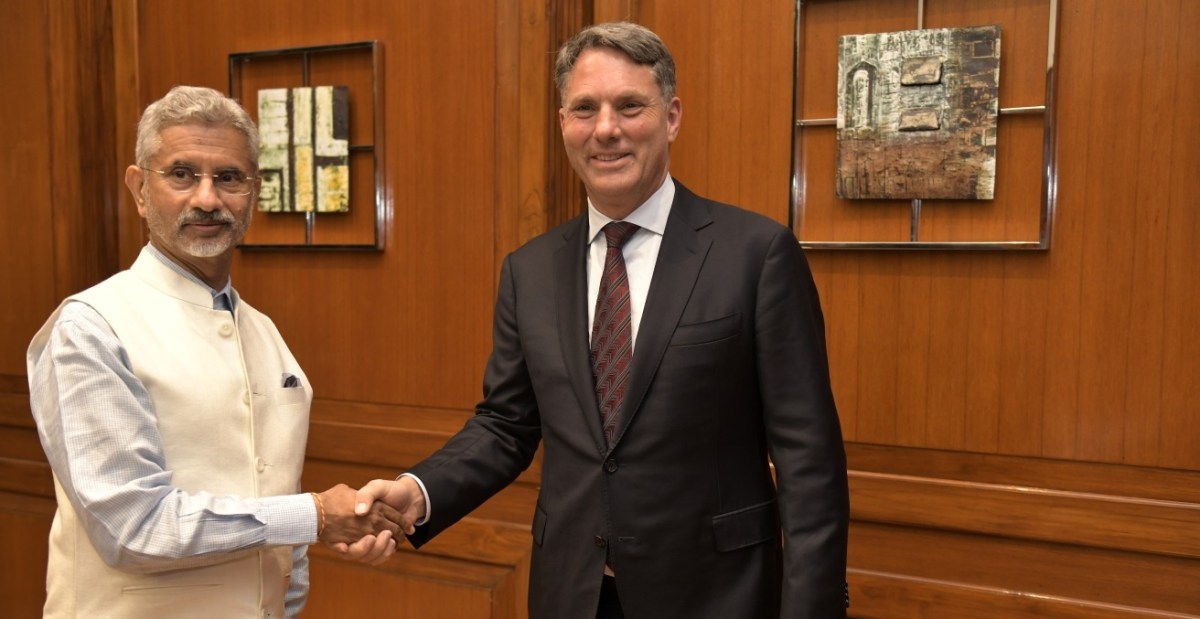
India’s External Affairs Minister Dr. S. Jaishankar (pictured with Acting Prime Minister Richard Marles) came to Australia in October for the annual Foreign Ministers’ Framework Dialogue – where these matters were discussed.

The two foreign ministers discussed “accelerating and deepening economic ties, including through our Economic Cooperation and Trade Agreement.”

Sounds good.

But what is next?

Can the Australian Trade Minister, the Hon Don Farrell, bring business and education at all levels together in a national dialogue?

Remember – India is not just the second most populous nation on earth, it is also the YOUNGEST – which makes it the global growth centre. We cannot afford to miss this opportunity.

We have to find a way.

How fast is India changing? It is about to become the largest producer of steel on the planet

INTO INDIA has written about the extraordinary transformation that is happening in the “New India” – airports, roads, ports, urban renewal, smart cities, shopping malls, digitisation and online shopping.

But is is truly stunning to hear that India is right on the verge of being the biggest steel producer in the world.

On August 23, Minister of Civil Aviation and Steel, Mr. Jyotiraditya Scindia, stated that India would soon become the world’s top steel producer. The Minister was addressing an NMDC and FICCI-organized conference on the Indian minerals and metals business. After China, India is the second-largest producer of crude steel worldwide.

He believed that India had switched from being a net steel importer to an exporter of steel. According to him, India now consumes 78 kg of steel per person, up from 57.8 kg in 2013–14. By 2030, the government wants to produce 300 million tonnes (MT) of steel, according to Mr. Scindia.

READ MORE:

https://www.ndtv.com/business/india-to-become-worlds-number-one-producer-of-steel-union-minister-jyotiraditya-m-scindia-3278800

Some straight talking on climate change and public policy

Patrick Suckling presents the clearest short paper on climate change and what we urgently need to do

Patrick Suckling is a non-resident Senior Fellow of Asia Society Policy Institute and former Australian Ambassador for the Environment – and former Australian High Commissioner to India.

He has written one of the clearest – and briefest – papers on the importance of climate change and how we need to respond.

Highly recommended reading –

India-Australia trade deal – a handy list of features

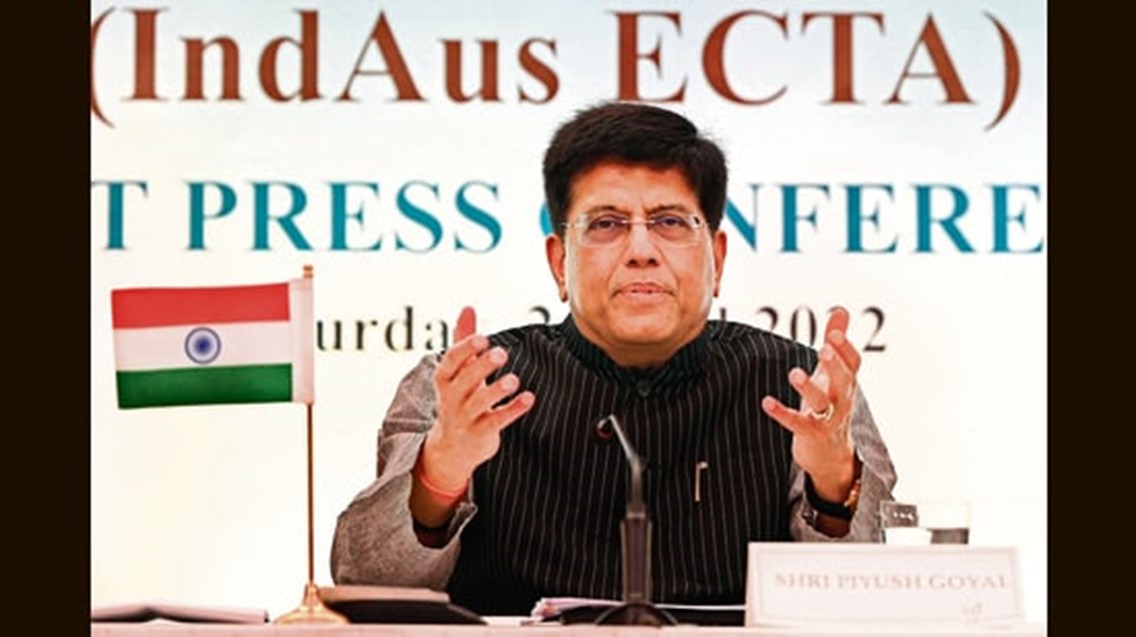
Indian Commerce Minister Piyush Goyal is negotiating multiple trade deals

Benefits of AI Economic Cooperation and Trade Agreement include:

  • Sheep meat tariffs of 30 per cent will be eliminated on entry into force, providing a boost for Australian exports that already command nearly 20 per cent of India’s market
  • Wool will have the current 2.5 per cent tariffs eliminated on entry into force, supporting Australia’s second-largest market for wool products.
  • Tariffs on wine with a minimum import price of US$5 per bottle will be reduced from 150 per cent to 100 per cent on entry into force and subsequently to 50 per cent over 10 years (based on Indian wholesale price index for wine).
  • Tariffs on wine bottles with minimum import price of US$15 will be reduced from 150 per cent to 75 per cent on entry into force and subsequently to 25 per cent over 10 years (based on Indian wholesale price index for wine).
  • Tariffs up to 30 per cent on avocados, onions, broad, kidney and adzuki beans, cherries, shelled pistachios, macadamias, cashews in-shell, blueberries, raspberries, blackberries, currants will be eliminated over seven years.
  • Tariffs on almonds, lentils, oranges, mandarins, pears, apricots and strawberries will be reduced, improving opportunities for Australia’s horticulture industry to supply India’s growing food demand.
  • The resources sector will benefit from the elimination of tariffs on entry into force for coal, alumina, metallic ores, including manganese, copper and nickel; and critical minerals including titanium and zirconium.
  • LNG tariffs will be bound at 0 per cent at entry into force.
  • Tariffs on pharmaceutical products and certain medical devices will be eliminated over five and seven years.

Wow! India Australia trade deal much bigger than we thought

These two Ministers are transforming the Australia-India relationship

Wow! The Australia-India Economic Cooperation and Trade Agreement signed yesterday is a whopper.

Get on the plane now if you are in business or education! The trade and investment doors are open for you.

The two trade ministers, Australian Dan Tehan and Indian Piyush Goyal, are transforming the economic relationship and created a platform for decades of growth for India and Australia. Well done.

READ MORE DETAIL HERE:

https://www.trademinister.gov.au/minister/dan-tehan/media-release/historic-trade-deal-india

Will India and Australia achieve “early harvest” trade deals and lay groundwork for a CECA?

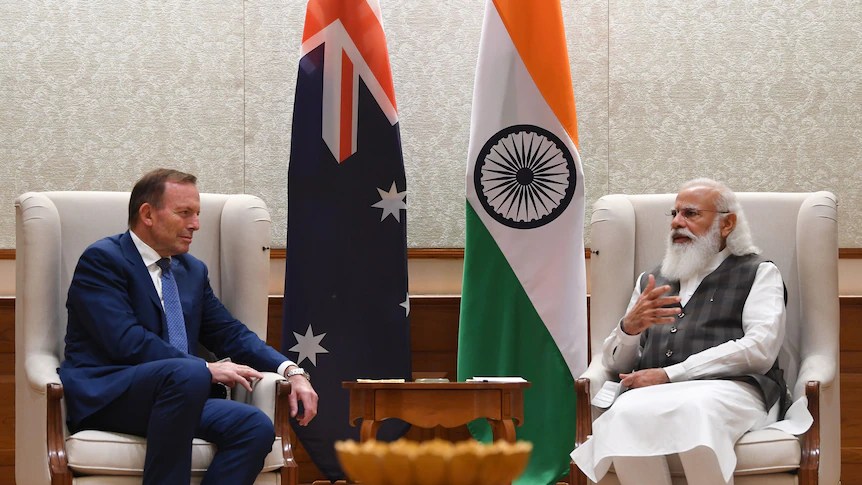
Former PM Tony Abbott was instrumental in getting trade talks going again

INTO INDIA believes the two big issues facing Australia are allowing greater people movement from India to Australia, and directing more of our massive A$ 2.3 trillion pension fund sector that could be a regular source of investments in the Indian infrastructure and disinvestment story.

The key for Australia is to see India as more than a “quick sale” – Indian negotiators will be looking to push the two countries to become partners, adopting policies that streamline physical movement, including, on-arrival visas, multiple entry long term business visas, etc.

From India’s perspective, it will want to ensure that trade deficits in the post agreement period do not widen. And two, non-tariff barriers and differences in standards or recognition of qualifications do not offset higher access through the trade deal. As an Indian report recently wrote: “This is the crux of the matter.”

In the larger CECA agreement, investments from Australia will play a big role in the growth of bilateral trade between the two countries, because the growth trajectory of India will create new opportunities for Australian companies, including in areas like water management and up in future, for which Australia can be a long term reliable supplier.

In the early harvest agreement, Australia wants services included with goods – an area where India has not performed well in earlier trade deals such as with ASEAN.

Australia however just needs to accept the sensitivity of the agribusiness sector in India – the deal will fall over if Australia demands substantially lower tariffs across the board for fruits, dairy, agriculture and processed food items.

INTO INDIA RECOMMENDS Australia narrow its ambitions down to selected niche items in the agriculture sector. Finding ways that Australian expertise, technology innovation and scale can actually transform Indian agriculture sector towards value addition would give Australia a big advantage.

Finally, you can expect India could show flexibility in tariff lines related to commodities and minerals, which are needed for its growing economy and the e-mobility program. In turn, Australia could be accommodative in tariff lines related to refined petroleum, medicaments, railway vehicles, gems and jewellery, auto components and made up textile items, which it imports in any case from countries around the world, in addition to India.

Thanks to Confederation of Indian Industry (CII), in collaboration with KPMG and led by Amb Anil Wadhwa, who is Former Secretary (East), Ministry of External Affairs, Government of India.

How is India travelling? Some developments for investors and exporters

Some developments for investors and exporters

  • One billion vaccines: The cumulative coronavirus (Covid-19) vaccine doses administered across the country surpassed the 1-billion milestone, today. Over 700 million people have been administered the first dose of Covid-19 vaccine, while 290 million have been fully vaccinated, according to the government’s CoWin website. The government has set a target to vaccinate all adults by the end of 2021.
  • Moody’s banking rating: Moody’s Investors Service has upgraded the outlook for the Indian banking system to ‘stable’ from ‘negative’. It believes that the deterioration of asset quality since the onset of Covid-19 pandemic has been moderate and an improving operating environment will support asset quality. Moody’s expects asset quality to further improve, leading to decline in credit costs, as economic activity normalises. The rating agency has projected India’s real GDP growth for 2021-22 at 9.3 per cent.
  • Tax targets overshoot: The Centre is likely to exceed the budgeted tax collection target of Rs.22.2 trillion for the current fiscal year by Rs.2.5 trillion, according to experts. This is driven by better indirect tax mop-up, compliance measures and recovery in most sectors following the second wave of the pandemic. Personal income and corporate tax collections grew by 74 per cent to Rs.5.7 trillion in the first half of the current financial year, mainly due to advance tax and tax deduction at source (TDS) payments.
  • Power deficit: The power shortage situation in the country is improving as per the data released by the Central Electricity Authority. Power shortage came down to 1,456 MW on 17 October 2021 from 2,714 MW a week back. Peak power shortage stood at a massive 11,626 MW on 7 October 2021. According to power sector experts, demand has moderated due to the onset of autumn and heavy rains in many parts of the country. Moreover, an improvement in coal supplies would further bring down the power deficit.
  • Data consumption: India has the highest mobile data consumption in the world which is about 11 to 12 GB per user a month. The country is adding as much as 25 million new smartphone users every quarter making it a flourishing ground to launch digital initiatives, Ram Sewak Sharma, chief executive of the National Health Authority of India said. By 2025, India’s data consumption is likely to be doubled to nearly 25 GB per person a month, driven by affordable mobile broadband services and changing video viewing habits, Swedish gear maker Ericsson said.
  • E-Commerce sales: The share of e-commerce in the overall sales pie has touched new highs in the first fortnight of October 2021, according to market trackers and companies. Several categories, including smartphones, consumer electronics, apparel and daily necessities are growing faster than last year. The share of smartphone sales online surged to around 60 per cent in the first fortnight of Navratri-Dussehra from around 55 per cent, early estimates by market tracker Counterpoint Research showed. Televisions grew to 40 per cent from 31 per cent in the same period last year, while refrigerators, air-conditioners, washing machines and kitchen appliances rose to 9-10 per cent from 6-8 per cent. Market research firm RedSeer Consulting said the overall online shopper base has grown by around 20 per cent this festive season compared to last year, with tier II markets contributing to almost 61 per cent of all shoppers
  • Foreign investment: India witnessed net foreign investment inflows of USD 8.3 billion in August 2021, as compared to net inflows of USD 649 million in the preceding month. Net inflows of foreign direct investment (FDI) rose to USD 5 billion from nearly USD 3 billion in July 2021. Net inflows of foreign portfolio investment (FPI) worth USD 3.3 billion were seen in August 2021, after witnessing net outflows of USD 1.6 billion in July 2021.

Thanks to ASK Capital Management Pte Ltd for the above information.