CSIRO brilliant programs of collaboration and innovation with India

The CSIRO is showing the way into India – and INTO INDIA congratulates them.

Under the updated India Economic Strategy (IES) released in 2022, CSIRO and India have made a commitment to draw on complementary capabilities and resource to solve shared global challenges.

They have three partnerships:

  • India-Australia Rapid Innovation and Startup Expansion Accelerator.
  • India-Australia Critical Minerals Research Partnership.
  • India-Australia Green Steel Partnership.
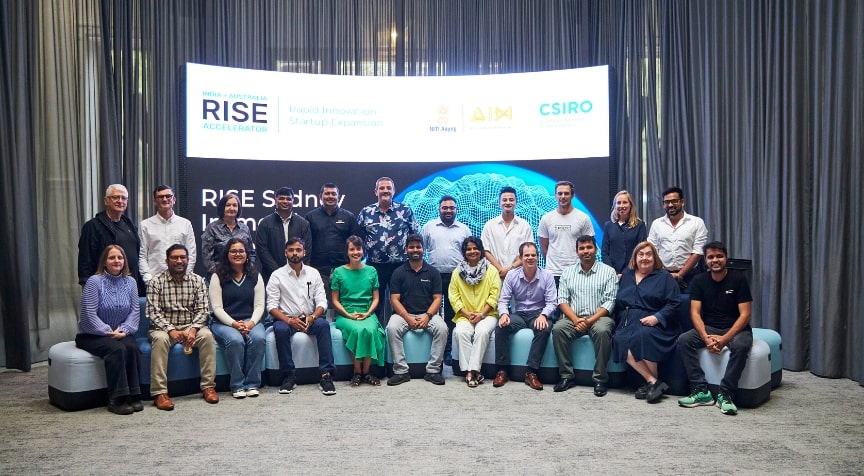
The inaugural cohort of the India Australia Rapid Innovation and Startup Expansion (RISE) Accelerator has been announced, with 15 Australian and Indian startups and small- to medium-sized enterprises (SMEs) selected to participate in Round 1 of the Program. 

India-Australia Rapid Innovation and Startup Expansion Accelerator

India-Australia Rapid Innovation and Startup Expansion Accelerator (RISE) is an exciting and unique bilateral innovation program that will support Indian and Australian entrepreneurs and SMEs on their commercialisation pathways to launch innovative technology solutions to market that tackle our shared national challenges and priorities – such as the circular economy, the energy transition and food system resilience.

A partnership between CSIRO and Atal Innovation Mission (AIM), and supported by the Australian and Indian Governments.

India-Australia Critical Minerals Research Partnership

The India-Australia Critical Minerals Research Partnership (IACMRP) will work with Indian and Australian researchers, industry and government to deliver a range of projects over a 3.5-year period that aims to unlock commercial benefits of commencing, improving and integrating Indian and Australian critical minerals value chains.

India-Australia Green Steel Partnership

The India-Australia Green Steel Partnership (IAGSP) will deliver a range of research, technology and commercialisation projects over a 3.5-year period that aim to accelerate the decarbonisation of the iron-steel value chain in India and Australia.

These Partnerships have gained momentum and the India-Australia Minerals Scholars Network has been identified as a specific initiative that sits under both the IACMRP and IAGSP partnerships.

India-Australia Minerals Scholars Network

The India-Australia Minerals Scholars Network (the Scholars Network) will focus on enhancing Green Steel and Critical Minerals capabilities and connections. It is intended to be a 3.5-year initiative co-funded by the India-Australia Green Steel Partnership (IAGSP) and the India-Australia Critical Minerals Research Partnership (IACMRP).

INTO INDIA can only say – keep up the great work CSIRO.

Australia’s sister-city relationships with India and the diaspora here – asleep but huge potential

The growing Indian diaspora in Australia could add real energy to our relations with India – and the sister-city program could be an ideal vehicle.

My desk research suggests that only Brisbane and Ipswich have formal sister-city relations, both with Hyderabad. I also believe Perth has begun searching for an Indian sister-city.

This is pathetically small when compared to our large numbers with Japan, USA, Canada and China. It is time to catch up with India.

Global sister-city relationships, also known as city twinning, started after World War 2 with the ideal of fostering international cooperation, cultural exchange, economic development and disaster preparedness.

Worldwide sister-city relationships right now have almost stalled, yet offer immense potential.

There is a growing need for comprehensive research to assess the effectiveness of existing collaborations, identify challenges, and formulate evidence-based policies that can enhance the outcomes of these bonds.

We should reinvent sister-city relations with India and focus on helping with challenges such as climate change and pandemics, along with development and economic links. The Indian diaspora in Australia is well placed to lead this.

Modern technology makes sister-cities highly attractive via the improved and cheap communication channels. Knowledge exchange is now easier than ever. Economic collaboration and trade between twin cities can go through the roof if the local diaspora is heavily involved.

People to people connection is the sleeping giant of Australia-India relations and it can wake up and energise via the Australian Indian diaspora.

How can we apply digital platforms, data analytics and smart city technologies to create highly effective sister cities with India? We need answers in order for sister cities to be a wise investment of time and money.

Successful sister-city relationships must be characterised by a commitment to mutual understanding, effective communication, and a focus on shared goals.

Anusha Kesarkar Gavankar, a Senior Fellow at the Observer Research Foundation, recently wrote: “Policymakers could focus on enhancing communication channels between sister cities by utilising modern technology, establishing regular forums, and promoting language exchange programmes. Developing dedicated online platforms and mobile applications can facilitate real-time communication, allowing cities to share experiences, best practices, and innovative solutions to shared challenges.

“Furthermore, establishing annual forums or conferences where representatives from sister cities can meet and discuss collaborative opportunities can strengthen ties and foster a sense of community.”

In addition to the economic potential, I would love to see sister-city scholarships for Indian students to study in Australia, as well as cultural events that showcase the rich diversity and indigenous knowledge of each city can strengthen the bond between communities.

Many of our universities now have formal links and presence in Indian cities, so it would make sense for sister city deals to focus on this groundwork.

I would also like our sister city deals with India to include “great challenges” so the two come together for problem solving and common goals. This adds real energy to the relationship.

The Indian diaspora in Australia can provide the real energy to make this work. We already know External Affairs Minister Dr S Jaishankar is a big fan.

Read more from Observer Research Foundation here:

https://www.orfonline.org/expert-speak/the-twin-connection-revitalising-sister-city-relationships

Can renewable energy vastly improve incomes and jobs for Australia’s First Nations people?

Can renewable energy vastly improve incomes and jobs for Australia’s First Nations people?

It seems the two might be about to come together.

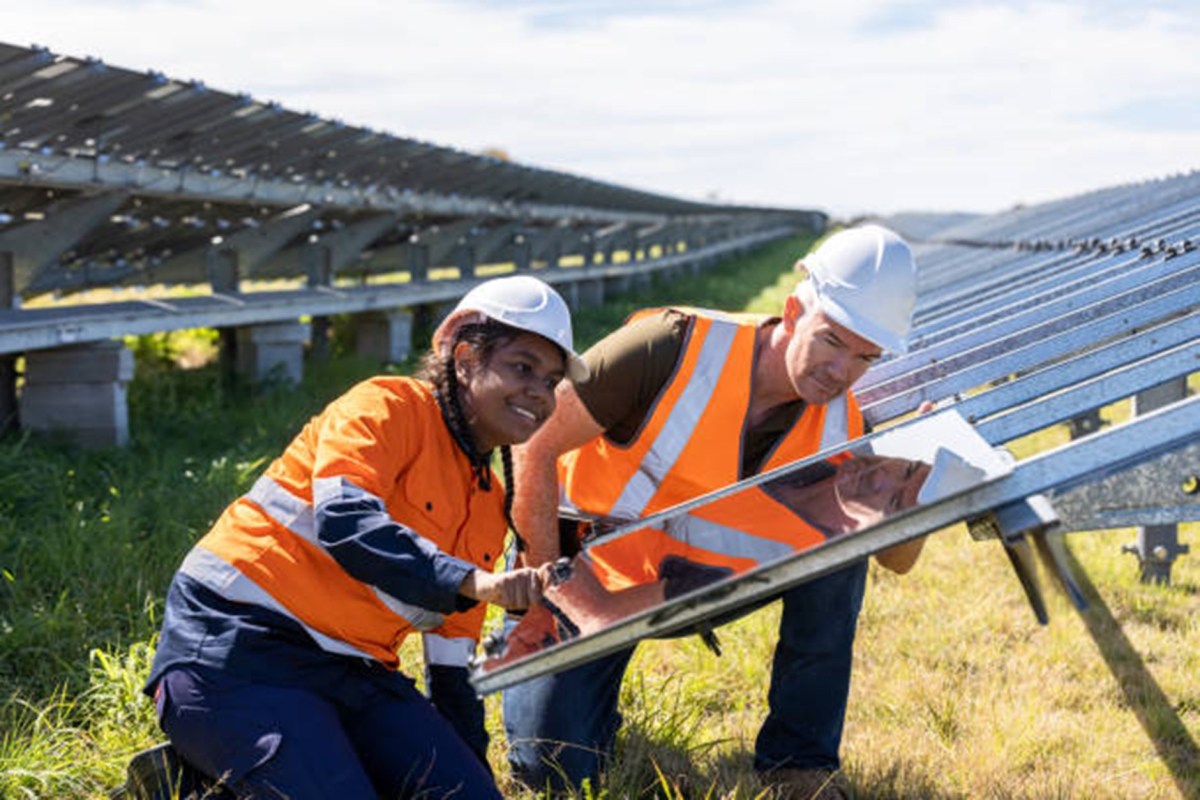
Australia’s plentiful solar and wind resources and proximity to Asia means it can become a renewable energy superpower. As the renewable energy rollout continues, Aboriginal and Torres Strait Islander people could benefit.

Renewables projects can provide income and jobs to Aboriginal landowners. Access to clean energy can also help First Nations people protect their culture and heritage, and remain on Country.

It seems Canada and the United States are already on this path.

The Australian government is developing a First Nations Clean Energy Strategy and has sought comment on a consultation paper. Submissions have closed, but If, like me, you feel strongly about the issue, have your say to Government and to MP’s.

This could be a gamechanger for Australia.

As an “energy superpower”, selling power to India and Asian neighbours, we make a difference for them, gain new export markets and create a big shift in how Australia is perceived in the region.

By speaking up, you can help our government do what is so obviously the right thing.

Women, the Global South and inclusive development clear winners of India leading the G20

In the sense that the G20 is mainly about global conversations and agendas, India succeeded in directing those conversations and setting out an agenda which will be picked up by the next G20 presidency country – Brazil.

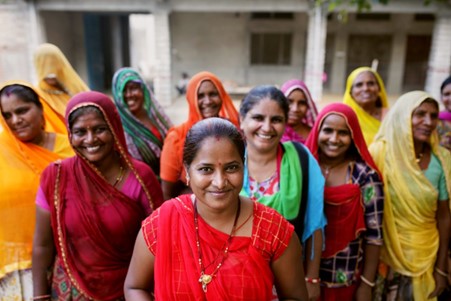
India’s G20 presidency was focused on sustainable and inclusive growth, including women-led development initiatives.

India also shifted the G20 somewhat from a fundamental economic platform, to addressing the challenges of climate change, disasters, growing water and energy insecurity, democratic backsliding and gender inequality.

India was also successful in building consensus – something which has been a challenge over the years. It welcomed the African Union as the newest member and signalled the need for great inclusion of countries, including the Global South.

Drawing women-led development into the mainstream was a priority of India’s presidency, resulting in the G20 announcing the creation of a new Working Group on Empowerment of Women to support the G20 Women’s Ministerial that will start during Brazil’s term.

Indians embraced and celebrated the G20 – and India as president clearly made a positive difference.

Vital connectivity for India depends on progress in the “north east states” region

India’s “north east region” has long been neglected and is little known among western leaders – but it has a crucial future because of the role it can play in India’s strategic and commercial connectivity in the surrounding region.

The role of China in the Indo-Pacific increases the focus on this sensitive region.

India is now giving the NER priority – there are around 30 major road and highway links under construction, a complex process when border crossings are involved. There are also around 10 major railway construction projects including bridges and new lines.

This has been so well described by Sreeparna Banerjee and Ambar Kumar Ghosh, “India’s Northeast: Gateway to Connectivity with Eastern Neighbours,” ORF Occasional Paper No. 395, March 2023, Observer Research Foundation.

India’s northeast consists of eight states—Arunachal Pradesh, Assam, Manipur, Tripura, Sikkim, Mizoram, Meghalaya, and Nagaland. It shares 5,812 km of international boundaries with the neighbouring countries of Myanmar, China, Bangladesh, Nepal, and Bhutan. It is landlocked; seven of the eight states are linked to the rest of India only through the Siliguri Corridor in North Bengal—a narrow strip of land (22-km wide) that is also called the ‘Chicken’s Neck’. The corridor is flanked by Nepal in the north and Bangladesh in the south.

This region can serve as a pivotal connecting space between India and its neighbours to the east in South Asia, as well as to East and Southeast Asia and beyond, enhancing the country’s diplomatic, infrastructural, and commercial engagements.

India’s foreign policy priorities, reflected in its ‘Act East’ and ‘Neighbourhood First’ policies, also bring the northeast into focus as a connectivity gateway to the wider Indo-Pacific.

Japan, with its long-standing expertise in the infrastructure sector, continues to play a significant role in developing physical connectivity projects within and across the northeast.

Australia shares many of the strategic goals of India, and now through the QUAD (India, Australia, Japan and USA) the countries are closer together through their commitment to democracy, open and free cultures and more.

The focus on this region will continue – India is crucially positioned within South Asia and in the broader Bay of Bengal region. It needs to play a more vibrant role in the region, and to do so, must engage more strongly with its East and Southeast Asian neighbours.

Watch this space…

What a year! ECTA the radical change in relations between India and Australia

As this year comes to a close, INTO INDIA reflects on the game changer – the Economic Cooperation and Trade Agreement.

It surprised us all. Many did not expect it to be signed. Nobody expected it to be so vast in potential impact.

ECTA will save Australian exporters around $2 billion a year in tariffs, while consumers and business will save around $500 million in tariffs on imports of finished goods, and inputs to our manufacturing sector.

The tariff commitments provided by India in the agreement will open up access for Australia’s exporters of products including critical minerals, pharmaceuticals, cosmetics, lentils, seafood, sheepmeat, horticulture and wine.  

Australian service suppliers will benefit from full or partial access across more than 85 Indian services sectors and subsectors. Australian suppliers across 31 sectors and subsectors will be guaranteed the highest standard of treatment that India grants to any future free trade agreement partner. 

Australian services sectors to benefit include higher education and adult education, as well as business services such as tax, architecture and urban planning.

ECTA will support tourism and workforce needs in regional Australia by making 1000 Work and Holiday Program places available to young adventurous Indians. It maintains opportunities for Indian students graduating in Australia to undertake post-study work, with a bonus year of stay for high-performing STEM graduates.

Really looking forward to 2023!

Reade more here…

Can Australia balance its Pacific Ocean strategy (USA) with an Indian Ocean strategy (India)? Seems it can.

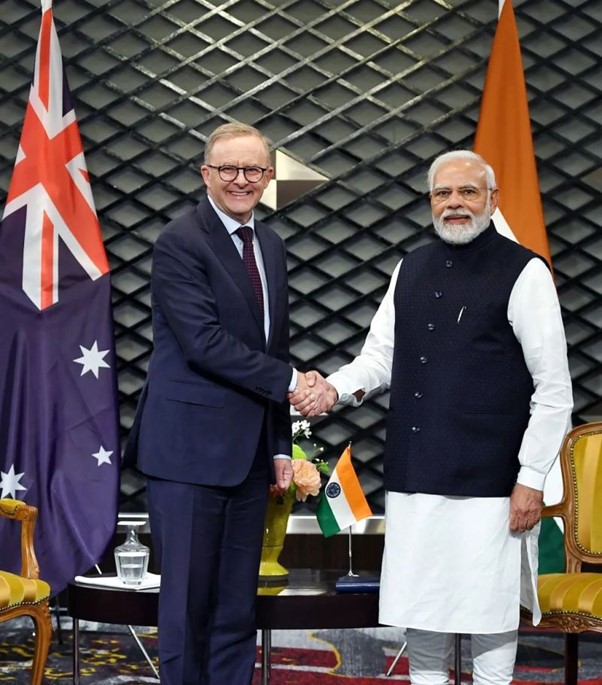
The four leaders of the QUAD – a new closeness transforming this region

There’s a big change happening and it is spearheaded by the new dynamic of the Australia-India trade and security relationship – this is growing to provide a balance for Australia’s historic close alliance with the USA.

INTO INDIA has long felt that Australia has “looked north east” for too long and now is looking more “north west”.

For a while our diplomats and politicians talked about “the Indo-Pacific” as a way to introduce the change. But it is not a sustainable concept and there is no such region.

Australia has a Pacific Ocean strategy (USA) and is now building an Indian Ocean strategy (India). These relationship shifts affect our defence and security, as well as our trade and investment.

Matching that change, it is more than symbolic that an organisation such as the Australia India Chamber of Commerce is focussing on the key industry areas of greatest potential under the deal – and moving away from the old “federal” and state based approaches. Great! Under the old structures, outcomes were often lost in rivalries and politics.

The AICC model has one national organisation – supported by National Industry Groups. This frees up resources to make a difference.

So far the NIG’s include Education, Power and Renewables, Critical Minerals, Defence and Security, and Technology and Innovation. Small steps, but steps they are!

One step at a time, one change at a time, at so many levels, Australia is looking “north west” and taking a role in the Indian Ocean region by a close relationship with the new regional and global power, India.

The new strength of the QUAD (India, Japan, USA and Australia) is also part of the change and the new world of moving alliances.

If the move keeps going, Australia will have strength in two main regions and close relations with two major powers – India and the USA.

4 Indian cities rank in top 20 sustainability index for Asia Pacific

Pictured is Bengaluru (Bangalore) among the top Indian cities for sustainability

According to the Asia Pacific Sustainability Index 2021, the top 20 sustainable cities include four Indian cities: Bangalore, Delhi, Hyderabad, and Mumbai.

36 cities were ranked according to the APAC Sustainably Led Cities Index by global real estate firm Knight Frank based on urbanisation pressure, climate risk, carbon emissions, and government activities.

Singapore, Sydney, Wellington, Perth, and Melbourne were the top five green-rated cities in commercial real estate in the Asia-Pacific region.

Some straight talking on climate change and public policy

Patrick Suckling presents the clearest short paper on climate change and what we urgently need to do

Patrick Suckling is a non-resident Senior Fellow of Asia Society Policy Institute and former Australian Ambassador for the Environment – and former Australian High Commissioner to India.

He has written one of the clearest – and briefest – papers on the importance of climate change and how we need to respond.

Highly recommended reading –

Indian Budget 2022 – 6 takeaways

Finance Minister Nirmala Sitharaman delivers the 2022 Indian Budget

Finance Minister, Nirmala Sitharaman has delivered the 2022 Indian Budget – here are my 6 takeaways:

India is the fastest-growing large economy

At 9.2% for 2021-2022, India’s GDP growth will be the fastest of all the large economies.

Launching a digital currency

Indian minister’s 2022 budget speech focused on various incentives to boost India’s digital economy, including the launch of a digital rupee within 2022. Minister Sitharaman noted that the central bank digital currency will “give a big boost to the digital economy and lead to a more efficient and cheaper currency management system.”

India is going green

Calling climate change one of the highest external risks facing the country and the green economy a sunrise economy, the finance minister presented multiple proposals and pathways to climate action across different sectors. These include raising climate finance and developing greener public transportation.

Emphasizing inclusive development

The pandemic financially hurt millions of Indian families and analysts have warned against the threat of growing inequality amidst the pandemic. Prime Minister Modi’s government has, since 2014, laid a strong focus on citizen empowerment. India 2022 budget aims to expand its support for Indians, particularly vulnerable groups such as girls, women, senior citizens and farmers. The budget expands social welfare support, while economically empowering marginalised groups through job creation.

Expanding education and mental health care

The pandemic has meant that many Indian school children have lost up to 2 years of valuable schooling. Major educational programs include expanded digital tools for schools in remote regions.

In a significant move, Minister Sitharaman announced the launch of a National Tele-Mental Health Programme, which, built around 23 core health centres, will provide citizens with access to quality mental health counselling and care services.

But Covid is the big concern this year

With a new growth in Covid numbers, there is growing concern that the pandemic could hit India big again this year and could impact the budget numbers.