Is India really growing? Hyatt Hotels think so, adding 11 new hotels in 2020

Hyatt Hotels is bullish on India and plans to open 11 new hotels across India by the end of 2020.

Hyatt now has 32 hotels across 20 destinations under its eight brands in India – I recently stayed at Hyatt Regency in Chandigarh and it was an outstanding hotel – well located, good food and beverage service and everything went smoothly.

The hotels at Thrissur, Kochi, Jaipur, Dehradun, Trivandrum and Udaipur will be under the Hyatt Regency brand.

India is a very important market for Hyatt. It is one of the top three global growth markets for the company after the US and China and there is a huge scope of growth as the demand still exceeds the supply.

So, for Hyatt, in 2020 India is a growth story.

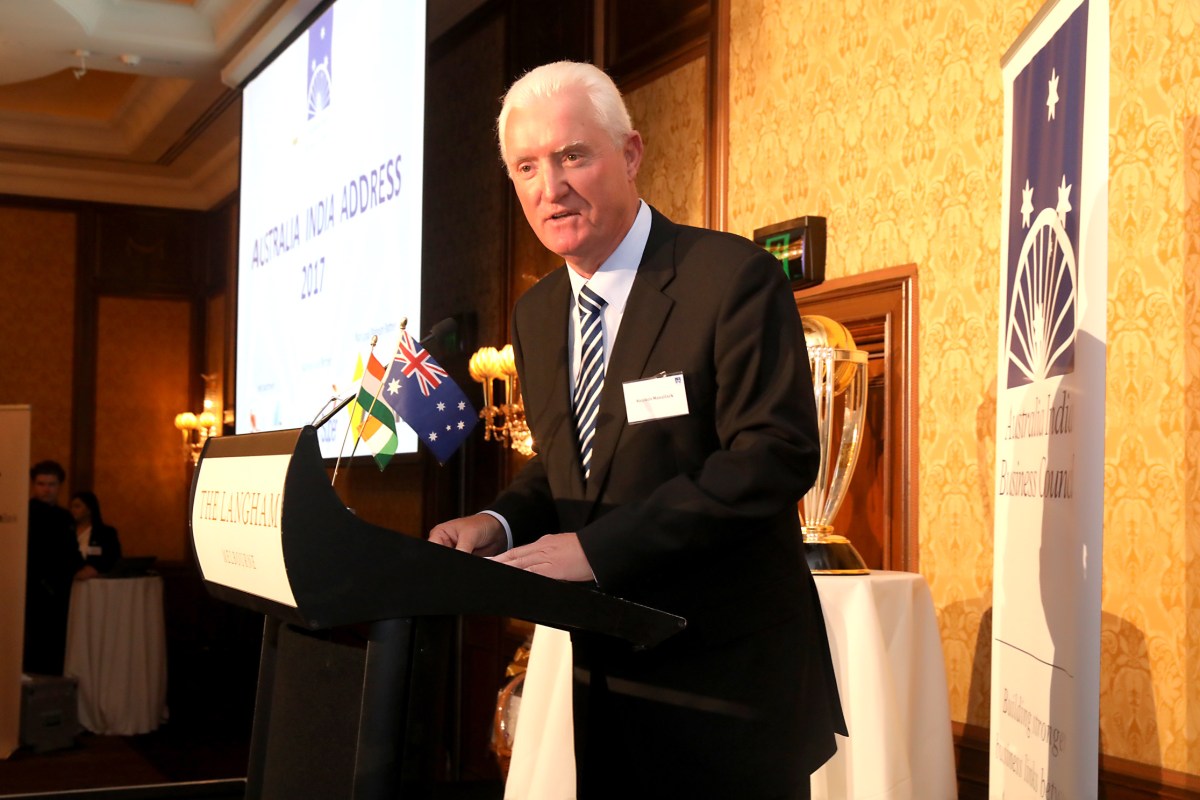
How should you start a speech?

I have just had three wonderful weeks in India. I made some speeches. I listened to a lot of speeches.

I was asked: “What is the best way to start a speech?”

We all know the bad ways. For example, someone just reads from their powerpoint. Or someone is checking the microphone.

But from Conor Neill from Ireland I have long applied these three ways to start a speech:

Ask a QUESTION

My recent topic has been How to Communicate and Survive during Industrial Revolution 4.0. So some times I start with “How will you keep your job when robots take over?” The question should be about a problem your audience faces.

State a FACT

Find some amazing fact that leads to your topic. One of Conor’s favourites is “There are more people alive today than have ever died”. If the fact shocks, even better. With my topic I use “over 65% of the kids in school right now will find jobs that have not even yet been invented.”

Begin a STORY

“I was in India recently and I met a person who said something which changed how I think about communication and leadership”. The audience is keen to hear what that “something” was. It should connect to your topic.

So, that’s the beginning.

Then, I suggest you have a long pause every 5 minutes or so (shorter if you like) and use another beginning and bring the audience along again using one of these three starters.

Good luck! (equals good preparation).

The harsh truth about how Australia has made a mess of relations with India

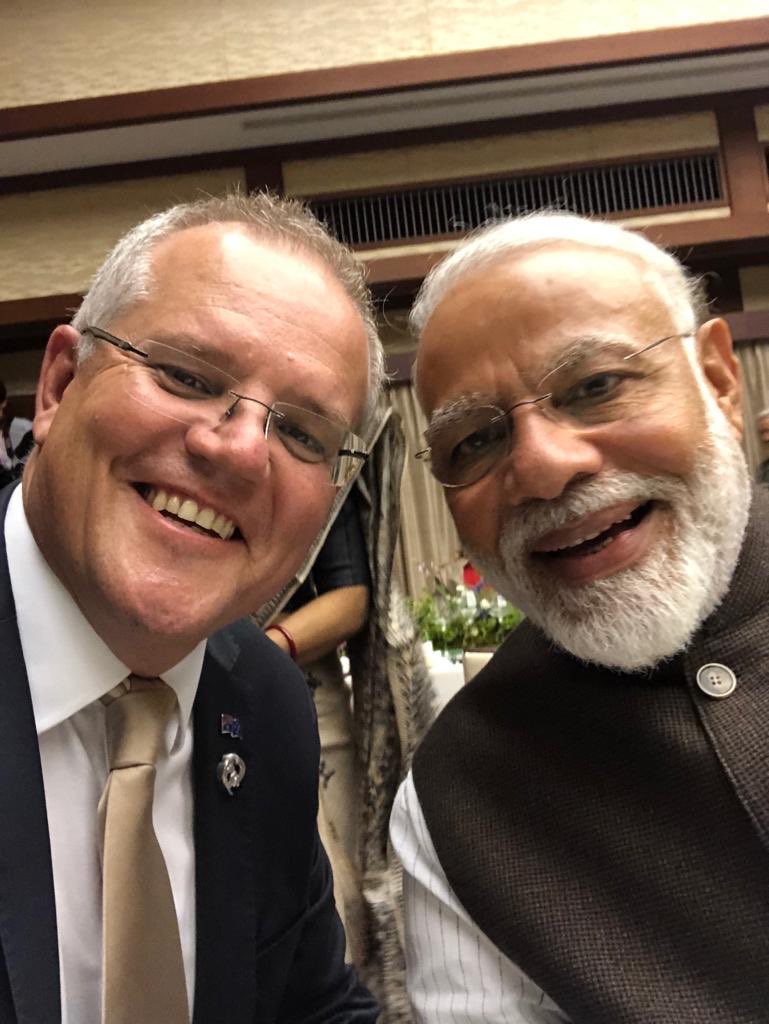
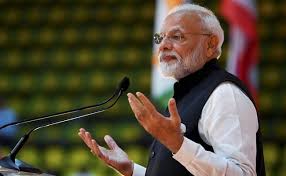
Scott Morrison has a huge challenge ahead as he travels to India. As leading Asia commentator, Greg Sheridan, has written in The Australian, Morrison “needs to fundamentally reset the relationship.”

In my almost two decades now of connection with India, I have seen first-hand how badly Australia has dealt with India – and this goes for government, education and business. You could possibly put in the arts and culture too.

As Sheridan says: “There is no relationship of such importance that Australia, historically, has managed so badly.”

ModiMorrisonSmile2

Check out how Sheridan describes India – “By 2035 India will have more people than China. All forecasts are fallible, but it is widely thought that by 2030 India will be the world’s third largest economy. India commands ­immense soft power and cultural richness. In any bookshop there are novels written by Indians from India, and Indians in the diaspora. A chunk of the British and Canadian cabinets are of Indian origin. The US has had two ethnic Indian state governors, Bobby Jindal and Nikki Haley. Both became nat­ional figures. The best Australian film this year was Hotel Mumbai.”

One big hurdle for Aussies is that since independence India has been very close to Russia (and still is) and has the capacity to maintain close relations with countries we do not like.

Australia has a “goodies and baddies” approach to the world – whereas India does not make the same judgements. We need to work with this.

Sheridan provides the first accurate statement of how bad things have been – “…over many decades, Canberra comprehensively messed up the Indian relationship and achieved radically sub-par outcomes in our own interests. The three great non-Chinese Asian powers are India, Japan and Indonesia. They are critical to geo-strategic and economic balance in the Indo-Pacific. We have a deep relationship with Japan. We pay a lot of attention to Indonesia. But the work with India is almost all ahead.”

Are we up for this challenge? I am not sure. Canberra is so Washington focused, and China preoccupied, that India does not rate enough.

Sheridan wants Australia to try again for a free trade agreement with India. I love the idea, but I have little confidence we can achieve it. In my time with India, Australian diplomats have blamed India for every delay and the fact that we did not get a deal. I have talked to the Indians and am not so sure the blame was so one sided. The question is – can Australia adapt and become more flexible with India? If we can, we might just snare an FTA.

Well done Greg Sheridan for such insights in Australia’s relations with India.

More Australian university students going abroad during studies

The 2018 Australian Universities Learning Abroad report, released in November and undertaken by i-Graduate, found more than 52,000 Australian domestic students went abroad during their studies last year, representing 19% of the entire graduating cohort.

By level of study, however, one in four undergraduates went abroad, at just 36,500 students.

Students are also starting to recognise that this is an opportunity that can help differentiate them as a graduate,” explained Jo Byng (pictured), member of the Australian Universities International Directors Forum Executive.

jo bing3

“Many of their peers are engaging in it… and so I think they recognise it’s got a lot of value and it’s becoming a rite of passage for students.”

According to the report, 2018 was the first time ever the number of domestic outbound students surpassed the 50,000 marks, and saw the proportion of students almost doubled from 17% in 2014.

Speaking with The PIE News, Byng, who is also director of international strategy, mobility and operations at Western Sydney International, said substantial government backing had also helped encourage more Australian students to consider mobility programs.

“The Australian government has given an immense amount of support, particularly to promote undergraduate mobility, through New Colombo grants and scholarships,” she said.

“That would be one of the big factors, but then also loans that have been available to students, undergraduates, for over a decade now, that I think are taken up in fairly significant numbers by students.”

“Universities have really started to recognise the benefits to students in undertaking overseas mobility experiences,” she continued, adding benefits were experienced both academically and post-graduation when finding employment.

Of those that went abroad, the majority did so on a short-term program, with 24% going on a study tour, 21% as part of a work-integrated learning experience, internship, or practical placement, and 16% to undertake a class at a partner institution.

RMIT University is one of the institutions that has seen a substantial rise in the number of domestic students participating in some form of international study experience.

“Students are increasingly taking up the unique experiences we offer in person, online, onshore and offshore to help develop global perspectives, so they are ready for the ever-changing world of work,” a spokesperson said.

“More than 3,500 students participated in a global mobility program (traditional exchanges or study abroad programs) through RMIT in 2018, an increase of 21.5% since 2017.”

According to the study, 49% of Australian outbound students studied in the Indo-Pacific, an area of focus for the New Colombo Plan. China, meanwhile, represented the biggest single country with 14% of students.

Byng said the next aim for AUIDF was to ensure demographics underrepresented in the study could take up an outbound experience.

Macquarie on a winner with toll road investments in India

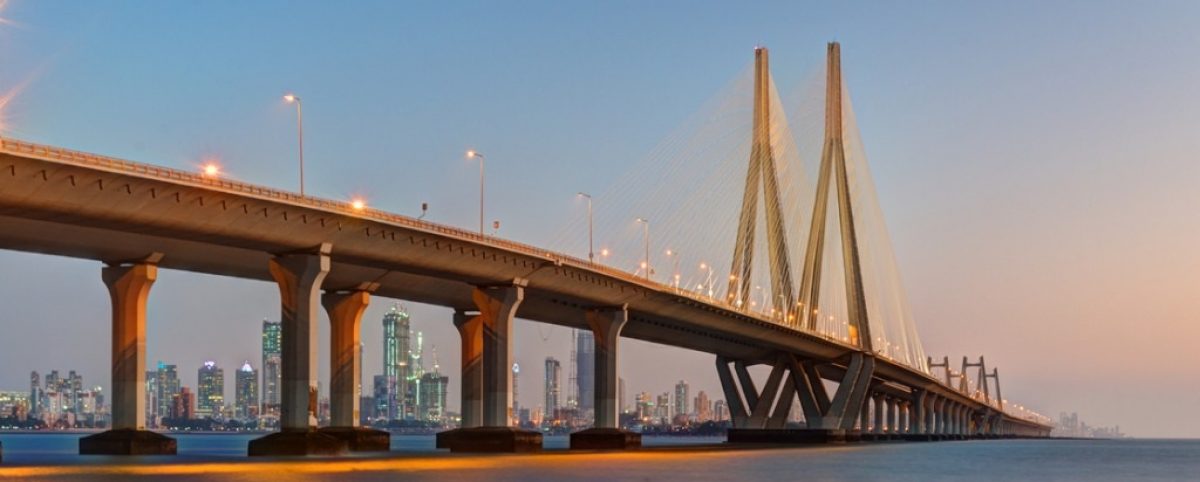
In March 2018, an Australian institutional investor walked away with some prized toll-road assets in India – on the Golden Quadrilateral in the first auction for toll-operate-transfer (TOT) bundles.

MIRA – Macquarie Infrastructure and Real Assets – had bid aggressively, almost 55% over the base price, and many thought it was a flawed decision. But not anymore.

MIRA’s portfolio is relied on by more than 100 million people every day. Their team of over 800 people invests in businesses that underpin economies and communities – aiming to add real and lasting value for our clients and the people these assets serve. MIRA manages $US129 billion in assets, including: 155 portfolio businesses, approximately 600 properties and 4.7 million hectares of farmland.

MIRA is part of Macquarie Asset Management (MAM) – the asset management arm of Macquarie Group.  As at 31 March 2019, MAM had more than $US385 billion of assets under management.

It may just have picked up some of National Highways Authority of India’s best assets. Toll collections are likely to exceed expectations, reveals an analysis of FY19 figures.

In India, MIRA has found a way to participate in the “growth story”.

Solar is getting really interesting as Australia to build world’s biggest solar farm – energy for Asian neighbours

Plans to build a giant solar power and battery facility in central Australia to supply electricity to Singapore will go ahead thanks to backing from tech and mining billionaires Mike Cannon-Brookes and Andrew ‘Twiggy’ Forrest.

The duo are co-leads on an investment round for Singapore-based Sun Cable‘s $22 billion proposal for a 10-gigawatt (GW) solar farm and 22GWh battery storage near Tennant Creek, in the Northern Territory.

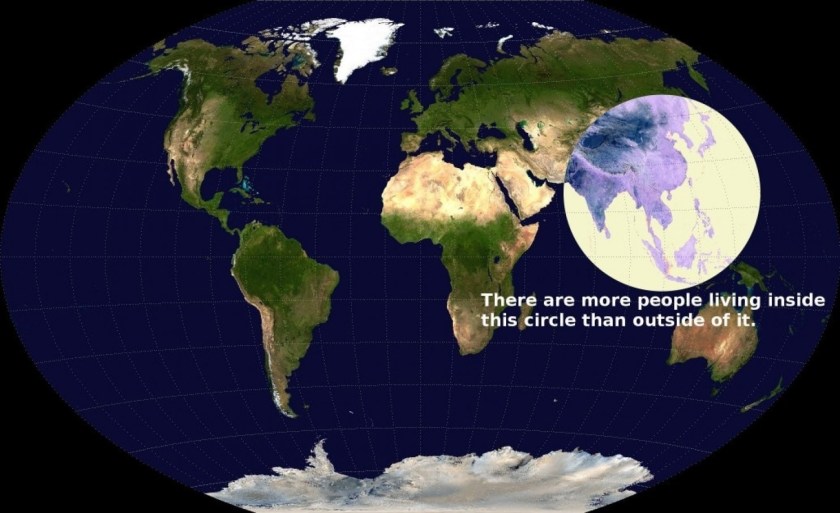
asiamap8circle

Solar is stepping up while the Australian Government continues to step back – locked into an ideological stance of opposing any alternative to coal and denying any impact on the climate. Sad to see this continue.

Singapore gets 95% of its electricity from imported LNG and Sun Cable hopes running a 4500km high voltage direct current cable from the 15,000 hectare site – around a quarter of the size of Singapore itself – via Darwin to the island state will supply up to one-fifth of the city’s power needs. It will be the world’s largest solar farm and also supply the NT capital.

The 10GW plant is nearly double the 5,500 megawatts Snowy Hydro scheme, which generates around 4500GWh anually. The Australia-Singapore Power Link (APSL) plant’s generation capacity is four times more than Australia’s largest coal-fired power station.

Central to the project is Sydney solar energy startup 5B, founded by Chris McGrath and Eden Tehan in 2013.

The business developed new technology for portable, prefabricated solar arrays, re-engineering the supply chain and simplifying how solar projects are delivered, using fewer materials, rapid deployment and streamlined logistics.

If Australia makes this happen, we can become the biggest energy supplier to the Asian region – Indonesia, Malaysia and more.

The project is expected to take six to seven years to complete.

Big Battery gets bigger too

News of Sun Cable’s progress comes in the same week that South Australia’s Hornsdale Power Reserve, dubbed the Tesla Big Battery, announced plans to expand the world’s largest battery by 50% by mid 2020.

The 50 MW/64.5 MWh expansion, supported by Tesla, will be the first grid-scale battery in Australia to provide inertia benefits to the National Electricity Market (NEM), which is critical to grid stability and the future integration of renewable energy.

Solar looks set to change history – for the better.

solar2

India has many remarkable achievements and hosting the Tibetans is one of them

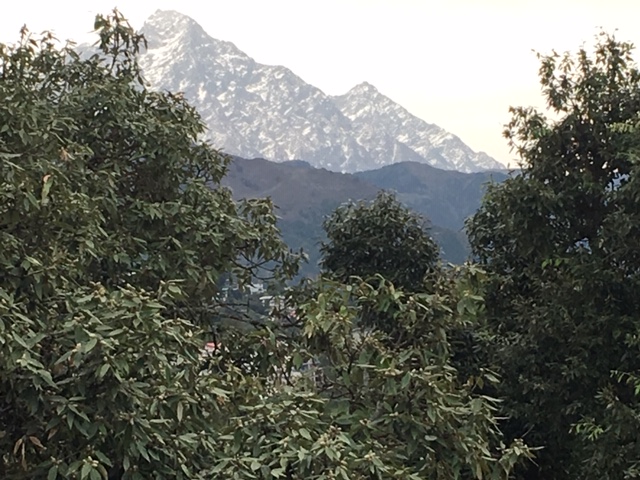
Today I am in Dharamshala, a town on the western end of the Himalayas. This picture is taken from my hotel.

In this area in the 1950’s something remarkable happened.

The Tibetans, fleeing their own country, came here in thousands along with their young leader, His Holiness the Dalai Lama.

I do not know the history too well, but I understand that India opened its arms and gave land and refuge here and in other parts of India for the Tibetans.

hhdl

Today the Dalai Lama is older and looking a little frail, but his contribution to the western knowledge of Buddhism and putting “kindness” ahead of any belief system is just amazing – thanks in part to the country that hosted him.

Just another side of this country which at the time was struggling itself.

Remarkable India.

The problem with RCEP is it has forgotten to walk in India’s shoes

Many of us had “high hopes” for the Regional Comprehensive Economic Partnership (RCEP). In a world of “trade wars” this seemed a way to create the world’s largest trade pact. Exciting stuff.

RCEP wanted to cover the 10 member countries of the Association of Southeast Asian Nations (ASEAN), and the six countries with which the ASEAN bloc has free trade agreements (FTA). These included Australia, China, South Korea, Japan and New Zealand.

rcep5

But now it seems to have gone. India has called a halt to it. Or, to be more accurate, inflexible negotiations on India’s concerns have pushed India out.

Here is a problem for RCEP – under their proposed deal, India faced a potential flood of Chinese imports.

Just look at the current global situation and you might understand the Indian approach.

The Indian Government of Prime Minister Narendra Modi has rightly highlighted that “India’s farmers, traders, professionals and industries have stakes in such decisions.” Seems RECP negotiators were not listening.

We have to “walk in India’s shoes” to fully understand this – a decision to safeguard the interests of poor and effort to give an advantage to India’s service sector while not shying away from opening up to global competition across sectors. That is the Indian view.

The view from India was they would have been required to eliminate tariffs on 74% of goods from China, Australia and New Zealand, and 90% goods from Japan, South Korea and ASEAN. In the midst of an economic slowdown, India “faced the risk of becoming a dumping ground for cheap Chinese goods.”

There was a special concern of Chinese agricultural products hurting Indian farmers.

RCEP advocates have hurt themselves by refusing to “walk in India’s shoes”. That’s no way to negotiate.

rcep3


Ambani leaps into the online retail space as he transforms Reliance Industries Ltd

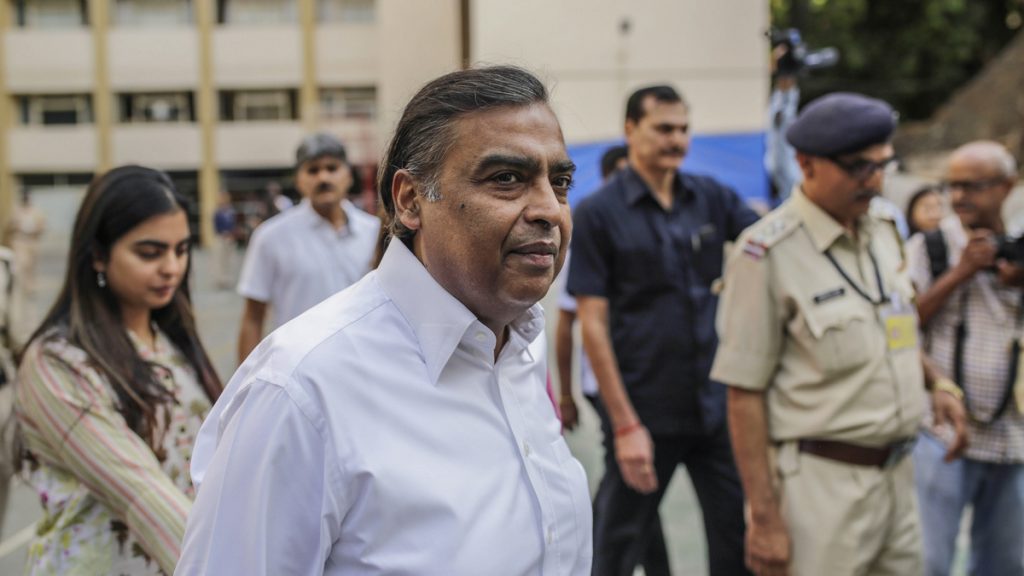
Indian billionaire Mukesh Ambani (pictured) moved a step closer to creating an e-commerce giant for India, unveiling plans to set up a $24 billion digital services holding company that would become the main vehicle in his ambition to dominate the country’s internet shopping space.

This is really hotting up as Ambani takes on Amazon and Flipkart (owned by Walmart).

The board of Ambani’s Reliance Industries Ltd. approved a proposal to place $15 billion into the fully owned subsidiary, which will in turn invest that amount in Reliance Jio Infocomm Ltd., the conglomerate’s telecommunications venture.

The move by Asia’s richest man is the latest sign of the oil-to-petrochemicals group’s pivot toward data and digital services for future growth. Ambani, 62, told shareholders in August that the new businesses, including retail, are likely to contribute half of Reliance’s earnings in a few years, versus about 32% now.

While former English teacher Jack Ma started Alibaba in 1999 from scratch, Ambani is using the heft of his empire to build something similar for India by connecting retailers and consumers.

Shares of Reliance Industries have rallied 28% this year, compared with an 8.8% gain in the benchmark S&P BSE Sensex index.

The tycoon, whose net worth is about $56 billion as per the Bloomberg Billionaires Index, has also revealed a plan to sell 20% of Reliance’s oil and chemicals business to Saudi Arabian Oil Co. at an enterprise value of $75 billion – he’s cleaning up the balance sheet and heading for a “debt free” target soon.

Watch this space!

Now India launches the worlds’ most expensive chocolate

I do love chocolate – but maybe not this much!

India’s ITC group has launched worlds’ most expensive chocolate that is priced at US$6152 per kg under its Fabelle brand name.

‘Trinity – Truffles Extraordinaire’, a limited-edition range of chocolate, that was introduced by ITC’s luxury chocolate brand Fabelle entered into Guinness World Records to become the world’s most expensive chocolate.

The chocolate is co-curated by France’s Michelin Star Chef Philippe Conticini and Fabelle’s Master Chocolatier.

fabelle3

ITC Chief Operating Officer – Chocolates, Confectionary, Coffee and New Categories – Food Division, Mr. Anuj Rustagi said, “We at Fabelle are extremely happy for setting new benchmarks not just in the Indian luxury chocolate market but also now in the world with achieving the Guinness World Records feat.”

The chocolates will be offered in a hand made wooden box that will contain 15 truffles, each weighing around 15 grams. The made-to-order box will be made available at an indulgent price of US$ 1,431 inclusive of taxes.

Place your order now!

fabelle1