Breakthrough deal in education relations of India and Australia.
The Melbourne Business School at the University of Melbourne has announced a partnership with India’s top business school – the Indian School of Business (ISB).
Now, this partnership will give MBA students a truly global perspective of emerging business trends.
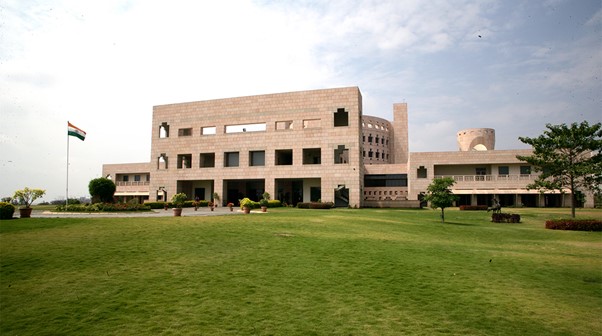
As part of the collaboration between the two schools, Executive MBA and Senior Executive MBA cohorts from Melbourne Business School will undertake immersion modules at ISB’s Hyderabad campus (pictured).
This is a brilliant deal and will contribute to the India-capability of Australian executives.
Good friend and colleague Vinay Sarawagi is Senior Vice President Digital for the Times Network and is based in Delhi.
If you think India has shifted “our way” or is ready to follow “our friends” then here is some food for thought – so simply and elegantly put by Vinay.
🌍 India’s growing role in containing China’s power will be on its own terms, not as an appendage of the United States.
🤝 Collaborating with India in the Indian Ocean and developing niche military capabilities can strengthen the US-Indian partnership for regional security.
🔒 A realistic and resilient strategic partnership with India can contribute to stability without imposing unreasonable expectations, benefiting both nations and deterring potential crises.
Makes sense to me – INTO INDIA has long had reservations about the cheerleaders who think via the QUAD and other moves that India is somehow now part of the US alliance.
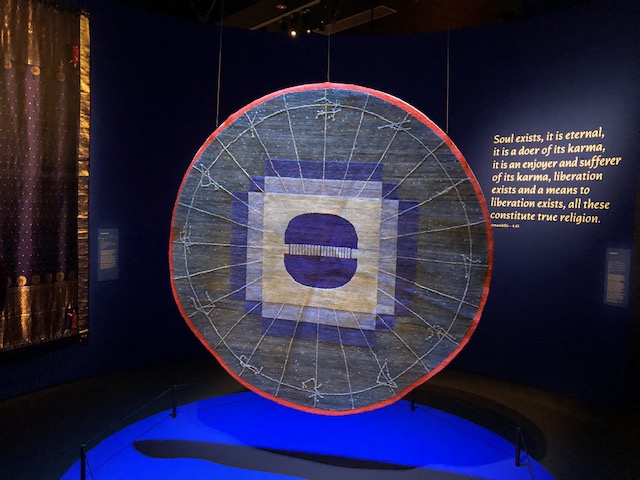
Art in both traditional and contemporary form is alive and thriving in India, judging by a beautiful exhibition at the Melbourne Museum.
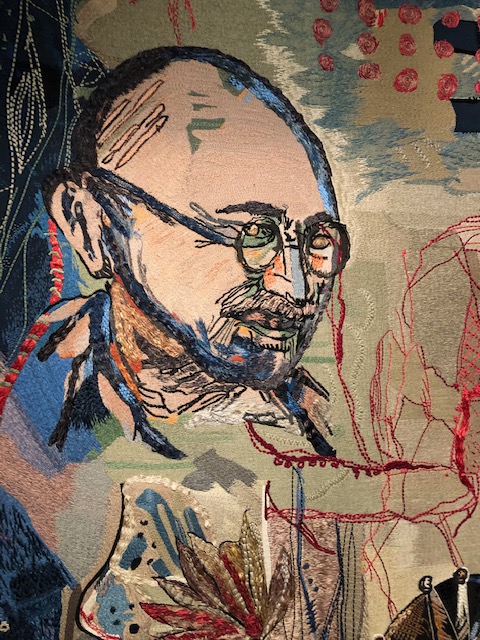
Sutr Santati curated by Lavina Baldota of the Abheraj Baldota Foundation is worth seeing for the quality and innovation of the objects, which is matched by the display which adds to the beauty.
I was enthralled – but when I saw the great Mahatma Gandhi featured in one of the pieces, I just stopped and admired the way this exhibition pays homage to the history of free India and yet celebrates modern innovation.
It made me realise that it is only a little over 75 years when India had some of the finest FREEDOM FIGHTERS in the history of human struggle to be free.
Make sure you see this soon!
Celebrating 75 years of India’s independence, Sutr Santati showcases 75 hand-woven textiles created by contemporary Indian designers.
In May 2023, Melbourne Museum welcomes international exhibition Sutr Santati: Then. Now. Next. Stories of India woven in thread. Conceived and curated by Lavina Baldota of the Abheraj Baldota Foundation, the exhibition brings together diverse textile traditions of the country, conceived and created by some of its most prominent artisans, craftspeople and designers.
Sutr Santati means ‘continuity of thread’ in Hindi. As the exhibition title, it is a metaphor for ongoing dialogues in Indian culture and society, which shape its evolution, bridging the past with the future. The exhibition’s curatorial vision seeks to promote the ideals of organic and slow consumerism in reflecting India’s identity and the inherent collective, collaborative efforts which are required to push towards such goals.
The themes, techniques and materials of specially commissioned fabrics in the exhibition are viewed through the lens of innovation. In doing so, they reinforce the value of fabric – an important legacy of Indian independence – to define the country’s contemporary artistic landscape, and to push its creativity into the future.
Heartiest congratulations to Lynley Crosswell, CEO, Museums Victoria, and Rohini Kappadath, General Manager, Immigration Museum – you have given us a special opportunity to gain insights into India.
WALMART has a strong presence in India but has also actively pursued partnerships so it can export US$10 billion of Indian manufacturing – helping the Make In India campaign.
Notable it also has a Walmart Foundation there.
APPLE on the other hand wanted retail outlets there, so it is moving 25% of its global iPhone production to India.
And guess what?
It has just opened its first two India Apple stores – Mumbai and Delhi.
Lessons in partnerships, fitting in, investing, doing good and supporting Government programs.
Not saying they are perfect but we can learn from them.
Only 8% of Indian households own a car – so big growth is ahead
INTO INDIA has consistently said India is the growth story of this century.
Now Anish Mathew, CEO and CIO of the very successful Sundaram Asset Management Singapore Pte Ltd, has found a unique way to describe why India is indeed THE growth story.
6 big changes in India
The number of income tax filers has increased by 57.5% between FY15 and FY21. This is obviously the impact of the growing use of Aadhar (biometric unique identity card) as the preferred KYC document and the implementation of GST, both of which is pushing up the tax compliance in the country.
Indirect (GST) tax base stood at 14mn in November 2022, a 2.3x increase from mid 2017.
Number of PAN cards (unique tax identity number issued by the Income Tax Department) allotted has increased by 2.5x in the last 7 years.
80% of the railway tracks were electrified as of end FY22 as compared to 31% in FY11.
Road infrastructure measured in number of kilometres has increased by 36.6% in the last 11 years.
Major port capacity has nearly doubled in the last 8 years.
5 reasons growth will boom
Only 8% of the households owned a car, 24% an air conditioner and 38% a refrigerator.
Only 1% of Indians account for 45% of all flights.
Only 3% of Indians make up all unique card holders.
Only 2.6% of Indians invest in mutual funds.
The Indian diaspora remitted USD 100bn into the country in 2022, eclipsing the gross FDI flow during the same period.
Mathew advises that the three big growth drivers for the next decade are consumption (driven by the Demographic Dividend and rising incomes); manufacturing, and; digitisation (which is the formalisation of the Indian economy)
He makes a powerful case for investment and trade with India.
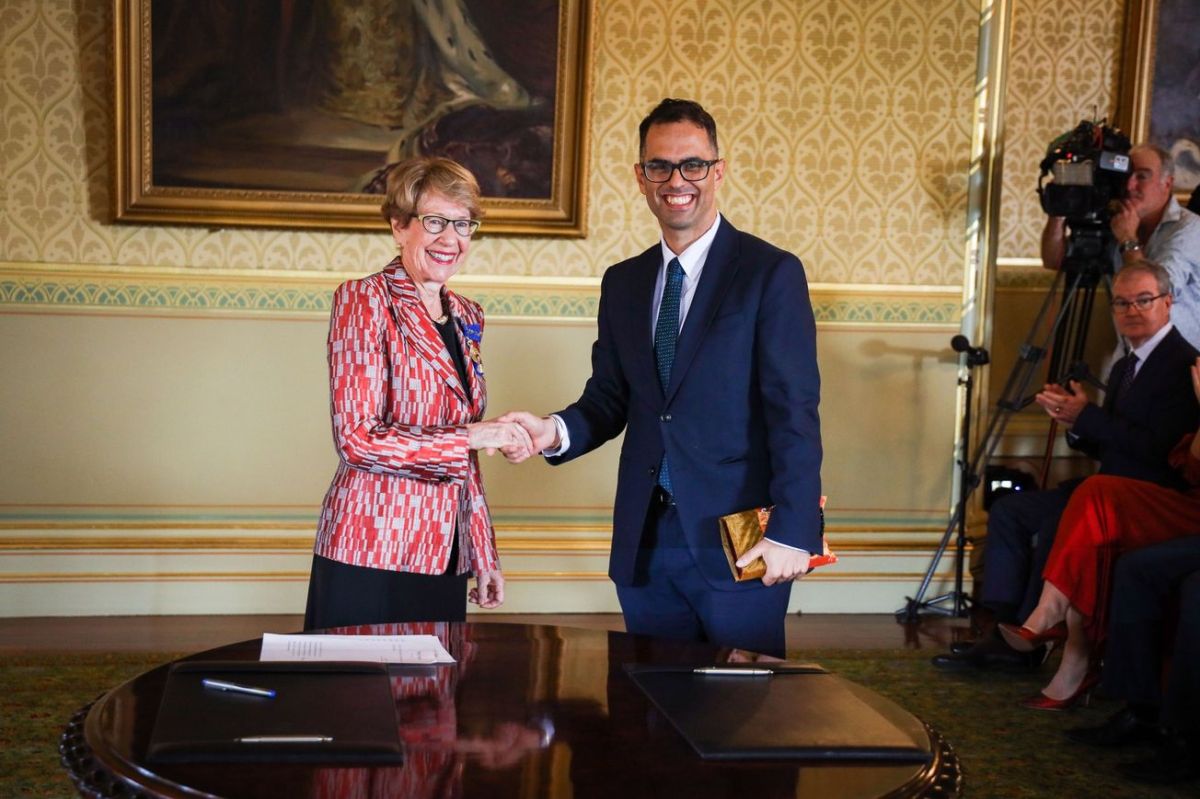
Indian-Australian MP Daniel Mookhey takes oath on the Bhagavad Gita
As the UN releases data that India has become the most populous nation on the planet, our Indian diaspora in Australia also continues to grow in size and influence.
The recent NSW state election saw Indian-Australian MP Daniel Mookhey elevated to Treasurer, the first MP in Australia to take the oath on the Bhagavad Gita.
Pru Car, also of Indian origin, became Deputy Premier of NSW and Charishma Kaliyanda became the first Indian born Australian to be elected to the NSW Parliament’s Legislative Assembly.
The Australian Bureau of Statistics reported that India has become the leading source country for permanent migrants, overtaking China and the United Kingdom. The latest ABS figures reveal one in five skilled migrants were born in India (20%), highlighting the strong presence of Indian skilled workers in Australia’s workforce.
And India is now second in the top five countries of origin for international students in Australia in 2022 – China (155,348 students), followed by India (99,739), Nepal (56,847) Vietnam (22,396), and Colombia (21,836). These students accounted for 58 percent of all international students in the country, Erudera.com reports.
The India-story in Australia continues to write new and better chapters.
(Special thanks to The Hon Lisa Singh, CEO, Australia India Institute, for most of the above data)
Russian Deputy PM Denis Manturov this week in Delhi announced India and Russia are close to an FTA – further evidence of India’s “Multi-Alignment”
INTO INDIA was so pleased to see Economics Correspondent for The Age, Matt Wade, today writing about the shared Indian Ocean region strategic interests of India and Australia.
This is such a refreshing shift from the rhetoric about the QUAD (India, Australia< Japan and USA) so called strategic alignment for the “Indo-Pacific Region”.
One of the clumsiest terms of recent diplomacy has been the concept of an “Indo-Pacific Region”. A quick glance at a map shows this to be wide of the mark.
But the same glance at the map will quickly show why India and Australia worry about the Indian Ocean region – they both need this area to be safe and open for maritime activity and stable for economic development. It is also realistic for these two countries to combine for peace and stability in the Indian Ocean.
It is just not realistic to expect India to share in security interests for the Pacific.
India has traditionally been a “non-alignment” country, which happens to be close in defence to Russia.
It is now promoting the concept of “Multi-Alignment”. Of course, the USA (and Australia) do not understand this at all, believing in the power of taking sides.
That is why they have been so hopeful that India coming into the QUAD is a sign of India shifting towards “taking sides” and moving “our” way.
Not happening.
Here is one piece of evidence that India maintains an independent and “Multi-Alignment” program – at a time when the western alliance is condemning Russia, this week India and Russia have announced progress towards a free trade agreement, to build stronger trade and investment in both countries – according to Russia’s deputy prime minister Denis Manturov, speaking at an event in New Delhi with India’s foreign minister S Jaishankar on Monday.
There you go. Multi-alignment is the modern incarnation of India’s historic “Non-alignment”.
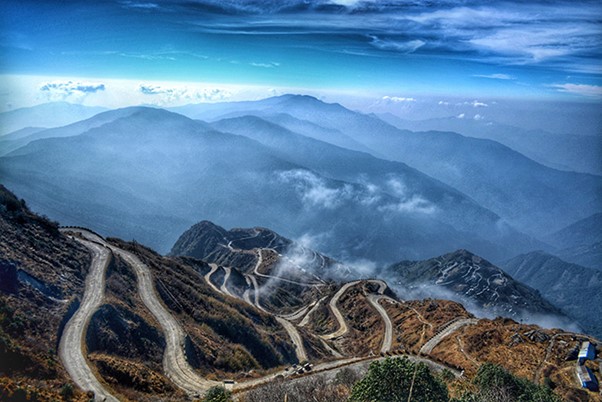
India’s “north east region” has long been neglected and is little known among western leaders – but it has a crucial future because of the role it can play in India’s strategic and commercial connectivity in the surrounding region.
The role of China in the Indo-Pacific increases the focus on this sensitive region.
India is now giving the NER priority – there are around 30 major road and highway links under construction, a complex process when border crossings are involved. There are also around 10 major railway construction projects including bridges and new lines.
This has been so well described by Sreeparna Banerjee and Ambar Kumar Ghosh, “India’s Northeast: Gateway to Connectivity with Eastern Neighbours,” ORF Occasional Paper No. 395, March 2023, Observer Research Foundation.
India’s northeast consists of eight states—Arunachal Pradesh, Assam, Manipur, Tripura, Sikkim, Mizoram, Meghalaya, and Nagaland. It shares 5,812 km of international boundaries with the neighbouring countries of Myanmar, China, Bangladesh, Nepal, and Bhutan. It is landlocked; seven of the eight states are linked to the rest of India only through the Siliguri Corridor in North Bengal—a narrow strip of land (22-km wide) that is also called the ‘Chicken’s Neck’. The corridor is flanked by Nepal in the north and Bangladesh in the south.
This region can serve as a pivotal connecting space between India and its neighbours to the east in South Asia, as well as to East and Southeast Asia and beyond, enhancing the country’s diplomatic, infrastructural, and commercial engagements.
India’s foreign policy priorities, reflected in its ‘Act East’ and ‘Neighbourhood First’ policies, also bring the northeast into focus as a connectivity gateway to the wider Indo-Pacific.
Japan, with its long-standing expertise in the infrastructure sector, continues to play a significant role in developing physical connectivity projects within and across the northeast.
Australia shares many of the strategic goals of India, and now through the QUAD (India, Australia, Japan and USA) the countries are closer together through their commitment to democracy, open and free cultures and more.
The focus on this region will continue – India is crucially positioned within South Asia and in the broader Bay of Bengal region. It needs to play a more vibrant role in the region, and to do so, must engage more strongly with its East and Southeast Asian neighbours.
“India much more straight-forward long term story than China” – Christopher Wood, Equities Analyst, Jefferies
For business and investment, India is now a more straightforward, long-term option than China.
But it is really smart to think BOTH India and China, not one or the other.
The equity strategists are saying it. All the trade commentators are saying get your product or service into India – now.
One equity analyst, Christopher Wood, the global head of equity strategy at Jefferies, said in the latest edition of his immensely popular newsletter to investors called ‘GREED & fear’: “India remains a much more straightforward long-term story than China, which is why GREED & fear has 39 percent of the Asia ex-Japan long-only portfolio, long-term in its focus invested in India and “only” 25 percent in China.”
INTO INDIA points to the incredibly high number of young Indians coming through – called the demographic dividend” – as the big reason to be there.
Time to begin or upgrade with an Indian investment and market entry strategy?







 Into India