Blog

Time for my confession

Time for a confession. For most of the time that I have been consulting on India, my advice for those entering the market has been “don’t go to West Bengal and Kolkata – nothing is happening there”. I can say that 100% of my colleagues in this advisory industry have said the same.

But it might be time to change our tune.

I saw the beginning of change when I visited Kolkata three or so years ago.

Bengal has always had what it takes, and I could see it emerging again – a large educated workforce, abundant raw materials, good road, rail and air connectivity with the rest of India and the world and a strategic location as the gateway to the largely untapped markets of the North East of India.

But decades of lethargy at the top, union activity, civil unrest and downright complacency took its toll.

Now leading a new charge into West Bengal are the big names of Indian and global industry such as Mukesh Ambani, Sajjan Jindal, DP World, Coca Cola, Ikea and ITC.

Indian Ocean

Ambani’s Reliance Industries is investing in the state’s digital sector through Reliance Jio, with a very successful foray into 4G telephony in the country. They will connect small merchants with their retail network and warehouses to increase their reach several folds. His group already has more than 500 retail stores in West Bengal.

You can see the results of change – West Bengal’s Gross State Domestic Product (GSDP) was $158 billion in 2017-18 while its average annual growth rate from 2011-12 to 2017-18 was about 11.88 per cent. The state is sixth-largest contributor to India’s manufacturing GDP and fourth-largest contributor to the country’s services GDP.

Moreover, West Bengal is also a major producer of petroleum and petrochemical products. Production of natural gas in the state is projected to touch 410.30 million cubic metres in 2018-19.

It is also an increasingly important centre for India’s massive information technology sector. Total IT exports from West Bengal is about $3 billion – the Big Three of Indian IT – TCS, Infosys and Wipro – all have a large presence there.

Food is booming – Bengal is India’s largest rice producer, second-largest producer of potatoes and among the country’s biggest fish producers. The world-famous Darjeeling tea is also grown in the state, which is India’s second-largest tea producer.

Hence my confession.

Time for all of us to take another look at West Bengal and Kolkata.

Bengaluru and New Delhi 3rd and 4th fastest growing office markets in world

Bengaluru (Bangalore) is the third fastest growing office market globally in terms of prime rental values for office space, mainly due to continued supply crunch, a recent survey found.

According to a global study by property consultant Knight Frank, the estimated growth in office rental values in Bengaluru by end of 2019 is expected to be 6.6 percent.

Bengaluru is the “Silicon Valley” of India, employing 35% of India’s 2.5 million IT professionals. But it is also big in food (Cafe Coffee Day), pharma and biotechnology, aerospace, cars, and is home to Ola Cabs (competitor to Uber).

The report evaluates 33 global cities and gives insight on office rental growth – it noted that New Delhi, in fourth position, is expected to see a rise of 6.5 percent in prime rental values in 2019. Delhi is more than a government centre – it is big in consumer goods manufacturing, IT, telecoms, banking, construction, retail and tourism.

connaughtplace

Delhi’s Connaught Place

Bengaluru is impacted by demand from the IT/ITeS and the start-up sectors, so the lack of quality space in key markets is pushing the rentals up.

BangaloreInfosys

Infosys headquarters in Bengaluru

Mumbai is however expected to see stable rentals in 2019 with an outlook of marginal rental growth due to anticipated supply for 2019 in the prime market.

Where would you locate your India headquarters? One challenge is that with so much regulation and the need to deal with government, wherever your HQ is based, your people will have to travel often to New Delhi.

But options exist outside of these three major cities and it is worth evaluating tier two cities.

Please share your thoughts and experiences…

PM Modi an achiever for India – whether he wins or loses this week

Prime Minister Narendra Modi swept into power in 2014 with the first single-party majority government in over three decades – thus holding out the promise that “things would happen”. With results to come in this week for Indian elections, it is time to ask: Have things happened?

PM Modi has been an achiever for India and his legacy will continue whether he wins or loses this week – with higher expectations from governments, more revenue for governments, increasing digitisation and anti-corruption – and an expectation that India is a global player and needs global political leaders like Modi.

Modi

There are four achievements of Modi that have changed and are changing India forever – and for the better.

The first was to show he was serious about ending corruption – his Demonetisation move shocked many, hurt the economy short term but sent a clear signal. Indians had been used to governments paying lip service on corruption – Modi took action. Increasing digitisation of government means less opportunity for corruption.

Second, the world’s biggest tax reform was his Goods and Services Tax (GST), long talked about in Indian politics but it took the skills of Modi to make it happen. Modi was outstanding in gaining state government support, essential to the process. Government revenue is now getting to where it should be. As a result, governments in India are awash with money and can now do things.

Third, Modi knew that the key to improving India’s attractiveness to global investors and businesses was reform of the Bankruptcy law. Since Modi, business leaders who had run their businesses into the ground would be called to order and stripped of control. He was also a global sales person for India – vital in the global economy.

Fourth, Modi has also activated the 29 state governments by financing and introducing competition. Indices, which rank states on the ease of doing business, health, education and water, already creating energy and activity in every state capital.

I am not saying each of these were done flawlessly but given the history of India it is amazing that they were done at all. Yes, there is a lot to be done. But against the odds and expectations, Modi has made significant change to India that will last for decades or more. Win or lose, he has earned his place in history.

IndependenceDay


“We need to build skills, not walls.” – Telstra Boss

The need for Australian companies to source ICT talent from overseas is stronger than ever, with the local pipeline continuing to fall short.

That was the message from Telstra CEO Andy Penn, who delivered a strongly-worded address at the Committee for Economic Development Australia in Melbourne on Wednesday.

andy penn

“We need to build new skills and capabilities in new areas,” he said.

“We need these capabilities now, but the fact is we cannot find in Australia enough of the skills that we need on the scale that we need them, such as software engineers.

“Why? There simply are not enough of them. The pipeline is too small.”

In anticipation of the impending local ICT talent shortfall – which Penn said he expects to be 60,000 skilled workers short in the next five years – Telstra will this year open a new ‘Innovation and Capability Centre’ in Bangalore, India.

Labelling Bangalore as “India’s ‘Silicon Valley’”, Penn said the move would consolidate Telstra’s presence in India, where it has been operating since 2011.

Immigration negativity

Penn also called for a cease to the “negative commentary around immigration”.

“We need to build skills, not walls.”

He pointed to the associated benefits that come with “a well-targeted skilled migration policy”, arguing this would create – not take away – jobs.

“Skilled migrants also add to Australia’s wealth,” he explained.

“Research by the International Monetary Fund estimated Australia’s migration program would add up to 1% to annual average GDP growth from 2020 to 2050 because it focused on skilled migrants of working age and would limit the economic impact of Australia’s ageing population.”

PM Modi leads India to 6th largest economy in the world with high growth

Things are happening fast under the leadership of the Prime Minister,  Shri Narendra Modi – India is having its best phase of macro-economic stability, becoming the sixth largest economy in the world from being the 11th in the World in 2013-14.

Presenting the Interim Budget for the year 2019-20 in Parliament this week, the Union Minister for Finance, Corporate Affairs, Railways & Coal, Shri  Piyush Goyal said “India is the fastest growing major economy in the world” with an average GDP growth  of 7.3% per annum, the highest ever achieved by any Government since economic reforms began in 1991.

Shri Goyal said  under the leadership of Prime Minister, Shri Narendra Modi, a clean, decisive and stable Government reversed the policy paralysis, laid the foundation for sustainable growth  and restored the image of the country.

New India by 2022

Shri Goyal said that a New India would celebrate its 75th Independence year in 2022 when every family would have a house with access to water, electricity and toilets; farmers income would have doubled; and the country would be free from terrorism, communalism, corruption and nepotism.

This is clearly an ambitious government, and the track record so far proves that Modi does get things done.

blackstone

Can you name India’s biggest hotel chain?

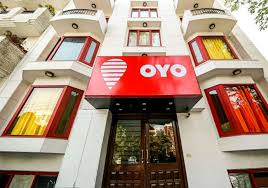
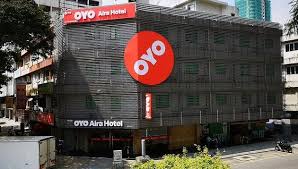
This chain started in India, expanded to China and has now invested heavily in Indonesia. It is called OYO (On Your Own) and was started in 2011 by then 18-year old Ritesh Agarwal. It is like the “Uber” of hotels – acquiring and setting standards for previously struggling hotels.

oyo

The group now has more hotel rooms in India than Taj Hotels – of course, Taj is at the top end while OYO has been a big provider of budget rooms.

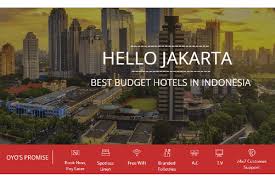
Within three months of its foray into Indonesia, the company has launched the first phase of expansion in 16 cities and witnessed a 5x growth. It aims to expand to 100 cities by the end of the year.

oyo4

The company is adding on an average 70 hotels in Indonesia every month.

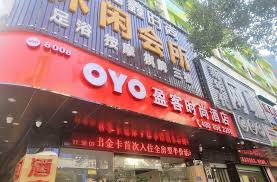
OYO created a uniquely Chinese identity for its local Chinese business and is localising in Indonesia.

oyo1

OYO is in over 280 cities in China, with about 5,000 hotels, and over 260,000 rooms.

The company has already started operations in Malaysia and will enter Philippines soon.

oyo3

It plans to have a pan-southeast Asian presence by the end of the year, before it starts making a move towards Europe.

The Labor Market in India: Structure and Costs

Something different today – I am posting a complete piece from a reputable source (see bottom of article) on a specialist topic – the labor market. Hope you find it useful.

India possesses a large labor pool as almost half its population of 1.2 billion is of working age. Naturally, the structure of India’s labor market is diverse; foreign companies need to understand this structure to benefit from India’s demographic dividend.

A majority of the working population is engaged in the unorganized, or informal sector, working for small businesses or manufacturing units that employ less than ten individuals. Businesses that don’t need skilled labor can source employees with some ease.

The expansion of higher education has created a larger skilled talent pool, but it still only amounts to about ten percent of the country’s overall labor market. Companies seeking skilled labor need to be prepared to compete to recruit from this comparatively small pool.

Structure of labor in India

The government’s labor laws usually classify employees on the basis of skill and area of operation. In terms of skill, employees are categorized as unskilled, semi-skilled, skilled, and highly skilled. In terms of area of operation, employees are categorized as managerial personnel and workmen. This defines their job roles, wages, disbursal of benefits, and their rights and obligations.

Labor costs in India

Firms entering the Indian market often choose to make the decision after assessing the comparative costs of labor. India offers competitive advantages with its lower wage structure and access to a vast labor market. For instance, the average minimum wage for contract workers in India is US$148 per month (Rs 10,000) and US$234 in China.

labor2

Employers should note that the minimum wage in India is indicative; it is often utilized as a benchmark, especially in the employment of unskilled and semi- skilled labor in the manufacturing sector.

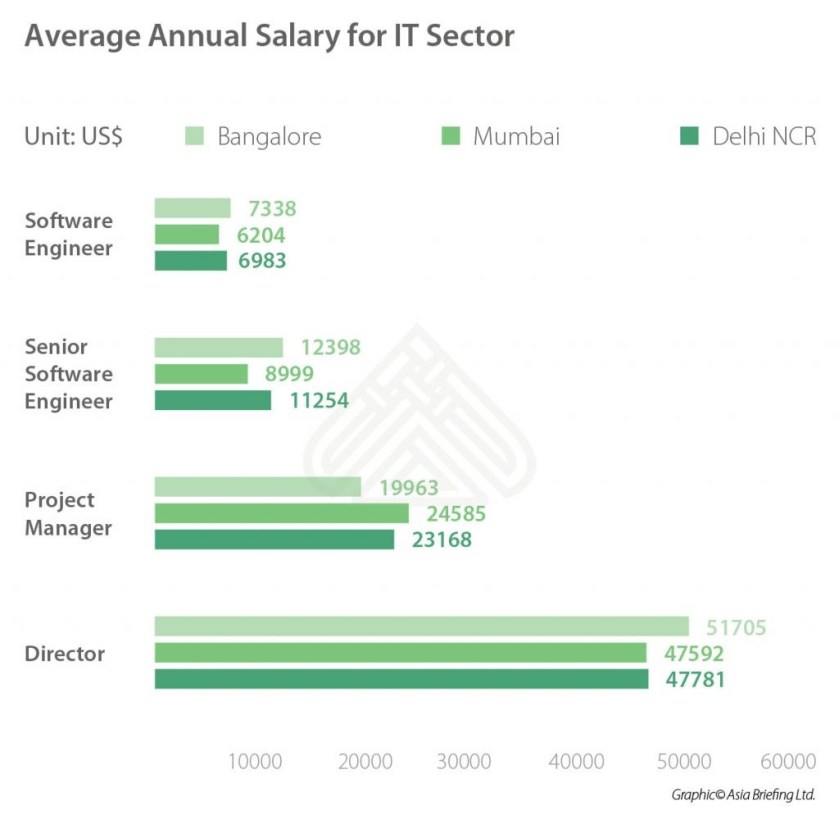
Labor costs also vary by region in India; wages in tier two and three cities are much lower than tier one due to lower costs of living and affordable real estate. The difference in salary pay scale can be up to 25 percent as the city compensatory allowance and employee conveyance allowance is a much smaller portion of paychecks in tier two and three cities when compared with tier one cities. This is why, for instance, the average salary of a software engineer in New Delhi is US$7,632.53 while in Mysore it is US$6,621.47.

Hiring costs in IT and auto manufacturing

Information technology (IT) and auto manufacturing are the two most prominent sectors in India’s organized economy – they receive the bulk of foreign investment and are the biggest employers. The IT sector in India accounts for 67 percent of the global outsourcing market. While the overall manufacturing sector constitutes about 17 percent of India’s economy, automotive manufacturingis the largest contributor at 22 percent of the manufacturing GDP and seven percent of India’s overall GDP.
labor3

Within the IT sector, new technology segments like artificial intelligence (AI), data analytics, and machine learning are changing the nature of jobs and professional service capabilities. Firms are ready to pay higher salaries to software developers and engineers with skills in these new technology areas, but the competition to recruit is intense as the majority of the labor market is educated in the use of legacy technologies. As such, the sector is witnessing some disruption due to lay-offs and reskilling drives, which in turn may benefit foreign firms looking to hire labor at competitive rates in legacy industries like business process outsourcing (BPOs).

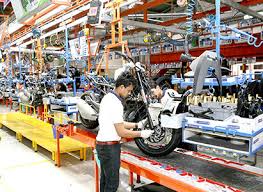
In the manufacturing sector, the federal Make in India initiative anticipates expanding industrial investments and domestic operations, which will boost the creation of technical jobs and factory and assembly work.
labor 4

Regional manufacturing hubs are centered on major tier two and three cities in the northern, western, and southern parts of the country, where a majority of India’s skilled labor resides. For instance, Pune (Maharashtra) in the west, Gurgaon (Haryana) in the east, and Chennai (Tamil Nadu) in the south.

Proximity to large urban cities allows companies to tap into skilled talent located nearby, while also reducing operational costs due to reliable logistics networks.

In the IT sector, lower tier cities such as Ahmedabad (Gujarat), Chandigarh (Punjab), and Mangalore (Karnataka) are emerging as prominent hubs besides the tier one cities of Mumbai (Maharashtra), Bangalore (Karnataka), and Gurgaon (Haryana). In the automotive sector, hubs have emerged in the states of Gujarat, Maharashtra, Haryana, Tamil Nadu, and Andhra Pradesh.

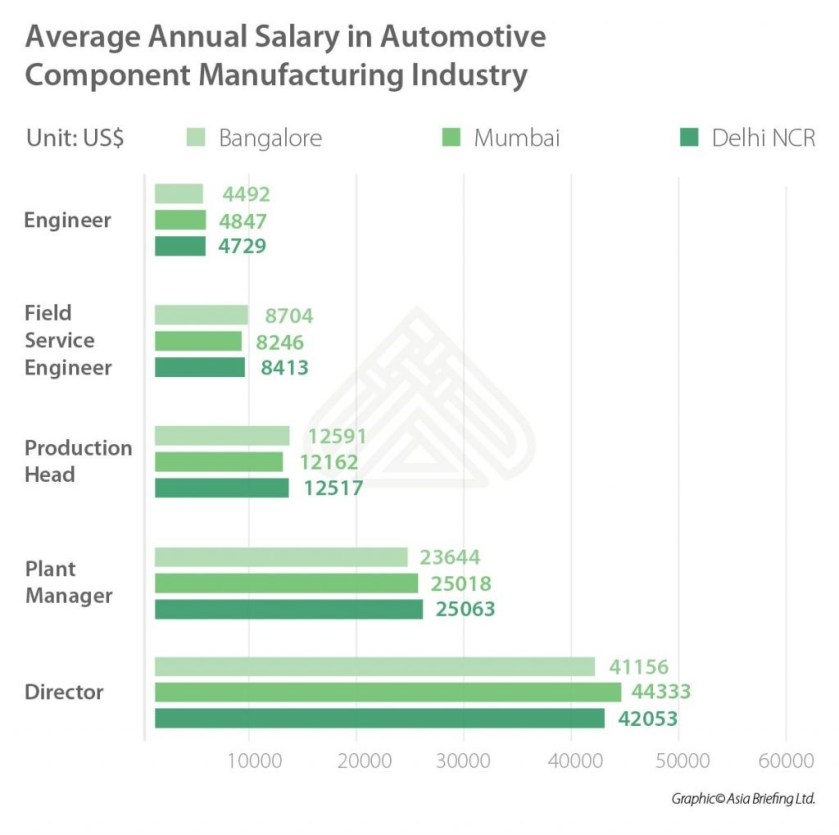
Industry experts note that the average salary increment in the IT and manufacturing sector for 2017-18 was projected at seven and 10.1 percent, respectively. We highlight the average annual remuneration for skilled positions in the IT sector and the auto component manufacturing industry.

About the Source

India Briefing is produced by Dezan Shira & Associates. The firm assists foreign investors throughout Asia from offices across the world, including in Delhi and Mumbai. Readers may write india@dezshira.com for more support on doing business in India


Happy Republic Day for all in India, land of the “freedom fighters”

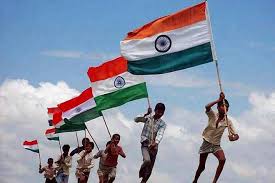
Today is Republic Day in India, celebrating 26 January, 1950, when the Indian Constitution came into effect.

India’s other major national event is Independence Day, a celebration of 15 August, 1947, when India became independent of the United Kingdom.

republic

The two days that created the “world’s largest democracy” really came about because of hundreds of years of “freedom fighters”. I am going to list some names – and apologies for all the great names I have not been able to include.

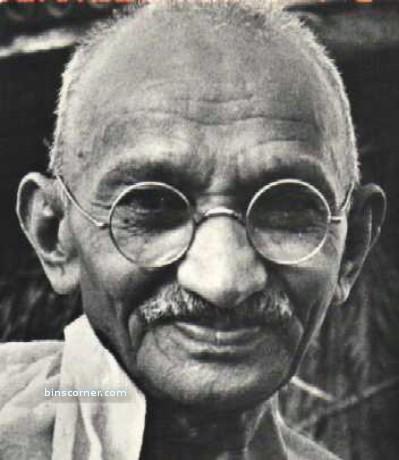
Most of us would think of Mahatma Gandhi (Mohandas Karamchand Gandhi 1869-1948) who became an inspiration to many around the world – including Martin Luther King, Nelson Mandela and The Dalai Lama.

att00036_

But other greats include Pandit Jawaharlal Nehru (India’s first Prime Minister), Subhas Chandra Bose and Sardar Vallabhbhai Patel.

republic7

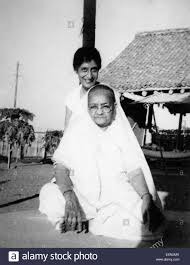
Picture above – Rajkumar Amrit Kaur

Indian women played a strong and vital role for freedom, including Sarojini Naidu, Rajkumar Amrit Kaur and Kasturba Gandhi.

republic8

Above – Kasturba Gandhi

Inspirational for many of these was the example of courage and self sacrifice shown by the young Bhagat Singh who lost his life in the cause.

republic 5

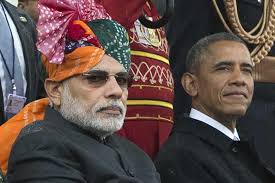
Above – Indian Prime Minister Modi hosts USA President Obama in 2018 at Republic Day celebrations in New Delhi

India – you have earned the right to celebrate! Have a great day.

India’s Bajaj Auto to jump into electric vehicles next year

Pune-based Bajaj Auto is planning to make a foray into electric vehicles (EV) next year and is hoping to build market share in India, its Managing Director Rajiv Bajaj said Monday. The new marketing slogan is “The World’s Favourite Indian”.

bajaj5

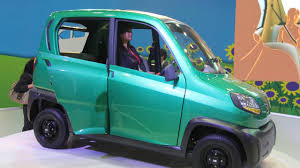
The company plans to launch electric version of its quadricycle Qute along with electric three-wheelers next year.

He also said the company would bring KTM-owned ‘Husqvarna’ motorcycle brand to the Indian market this year with “half a dozen” products in the pipeline.

bajaj1

Bajaj said the company has leadership positions in over 20 overseas markets such as 70 per cent share in Bangladesh and around 50 per cent in Nepal and Sri Lanka and it would like to replicate this in India.

“We would like to be a little more successful in the domestic market than we have been so far in the motorcycles market,” he said.

bajaj2

In India: “We have only 20-21 per cent share. We think now the time has also come that after having done a good job overseas, after having huge dominant position in India in three-wheelers, it is about time we make the same impact in the domestic motorcycle segment in India as we have done across the world.”

Other big motorcycle makers in India are Yamaha, TVS and Honda.
Bajaj also has a partnership with British niche bikemaker Triumph.

Indian economy to pass the UK in 2019 to become 5th in the world – PwC

India is likely to pass the United Kingdom in the world’s largest economy rankings in 2019, becoming number 5, according to a report by global consultancy firm PwC.

The report said: “While the UK and France have regularly switched places owing to similar levels of development and roughly equal populations, India’s climb up the rankings is likely to be permanent.”

PwC’s report projects real GDP growth of 1.6 per cent for the UK, 1.7 per cent for France and 7.6 per cent for India in 2019.

PwC’s Global Economy Watch is a short publication that looks at the trends and issues affecting the global economy and details its latest projections for the world’s leading economies.

Really engaging with India becomes a smart step for anyone in business, politics or education – but start with the right strategy.

blackstone