
Austrade steps up promotion of Australia as an education destination

During 2022, Austrade stepped up the promotion of Australia as an education destination for young Indians – and has just completed a highly successful month of activity over there.

The India campaign has included:

  • The Study Australia Showcase in India ran 12-22 September 2022, with an accompanying campaign delivering 69.2 million impressions and attracting 3,420 event registrations. PR activity delivered 275 media articles with a readership of 13 million. The event covered six cities, and involved 26 Australian institutions, Australian Government and all state and territory Study Australia Partnership (SAP) members. Nearly 95% of attendees were satisfied or highly satisfied.
  • The Study Australia Entrepreneurship Challenge engaged 18 Indian institutions, 36 student teams and 36 academic and industry mentors across four Challenge themes: creative industries, cybersecurity, digital health, circular economy.
  • Shine with Australia: Discover your Brilliant Future Self (Phase III) ran in-market in India between 19 Sept – 17 Oct, resulting in a 122% increase in leads generated via the Study Australia website Course Search tool over the four-week period prior.

Read more here:

https://www.austrade.gov.au/australian/education/news/austrade-update/austrade-international-education-update-2022

The Department of Education has released year-to-date (YTD) September 2022 international student data. There were 569,204 international students on student visas for September 2022, 1% more than January-September 2021. The top 5 countries account for 59% of international students: China (26%), India (16%), Nepal (9%), Vietnam (4%) and Colombia (3%).

There were 669,958 enrolments between January-September 2022, composed of 52% higher education (346,451), 36% VET (241,203), 8% ELICOS (52,650), 3% non-award (18,516) and 2% schools (11,138). Compared to the January-September 2021 period, enrolments were up for ELICOS (45%) and non-award (46%) but down for higher education (-4%), VET (-7%), and schools (-14%).
What a year! ECTA the radical change in relations between India and Australia

As this year comes to a close, INTO INDIA reflects on the game changer – the Economic Cooperation and Trade Agreement.

It surprised us all. Many did not expect it to be signed. Nobody expected it to be so vast in potential impact.

ECTA will save Australian exporters around $2 billion a year in tariffs, while consumers and business will save around $500 million in tariffs on imports of finished goods, and inputs to our manufacturing sector.

The tariff commitments provided by India in the agreement will open up access for Australia’s exporters of products including critical minerals, pharmaceuticals, cosmetics, lentils, seafood, sheepmeat, horticulture and wine.  

Australian service suppliers will benefit from full or partial access across more than 85 Indian services sectors and subsectors. Australian suppliers across 31 sectors and subsectors will be guaranteed the highest standard of treatment that India grants to any future free trade agreement partner. 

Australian services sectors to benefit include higher education and adult education, as well as business services such as tax, architecture and urban planning.

ECTA will support tourism and workforce needs in regional Australia by making 1000 Work and Holiday Program places available to young adventurous Indians. It maintains opportunities for Indian students graduating in Australia to undertake post-study work, with a bonus year of stay for high-performing STEM graduates.

Really looking forward to 2023!

Reade more here…

India’s YOUTH BOOM will reshape the world

These are the priorities of Indian Gen Z and Millennials.

Most of the world’s young people live in India.

And India next month becomes the most populous nation on earth, passing China.

India’s YOUTH BOOM looks like this:

440 million Millennials (born between 1981 and 1996)

375 million Gen Z (born between 1997 and 2012)

There are two things we need to know about these generations.

First, they are hard working and earning better than their elders. A high percentage of them have a second job.

Second, they are big spenders, so their capacity to shape and influence us all is enormous.

So, getting your product or service into India right now would make great business sense.

And countries, like Australia, are busy building closer political and strategic ties with India. Makes sense – it will be the economic (and therefore cultural etc) driver of the future.

Time for Australian business and education to find a way to increase trade with India

Dr Ashok Sharma has written about the increasingly close relations of India and Australia – for example, we are now the number 2 education market behind the USA and just ahead of the UK. Dr Sharma pointed to the Comprehensive Strategic Partnership and the New Education Policy which should “bring the current education partnership to the next level”.

But what about other areas of trade?

We know that the increasing activity in education has many spin offs – increased tourism, professional exchanges and more.

Education might be the “trade flagship” that drags other industries into the trade mix.

But we cannot be sure.

It is time for a new national conversation about Australia-India trade, with a close examination on what blockages might exist and what steps would increase two-way trade.

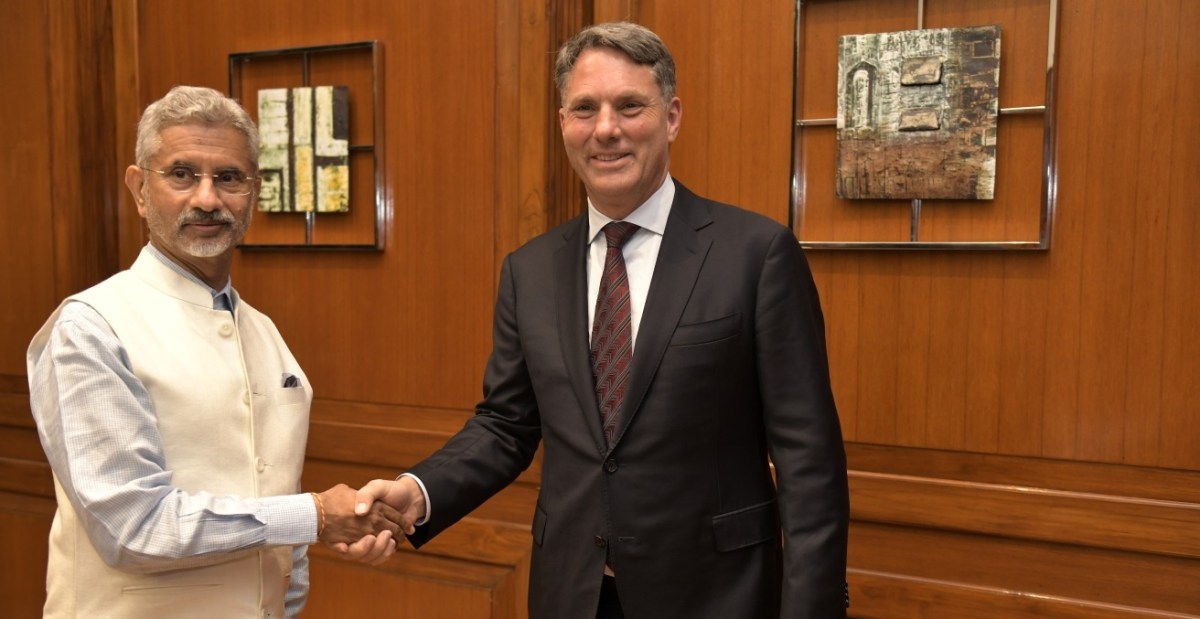
India’s External Affairs Minister Dr. S. Jaishankar (pictured with Acting Prime Minister Richard Marles) came to Australia in October for the annual Foreign Ministers’ Framework Dialogue – where these matters were discussed.

The two foreign ministers discussed “accelerating and deepening economic ties, including through our Economic Cooperation and Trade Agreement.”

Sounds good.

But what is next?

Can the Australian Trade Minister, the Hon Don Farrell, bring business and education at all levels together in a national dialogue?

Remember – India is not just the second most populous nation on earth, it is also the YOUNGEST – which makes it the global growth centre. We cannot afford to miss this opportunity.

We have to find a way.

Space, satellites and security – now India and Australia collaborating

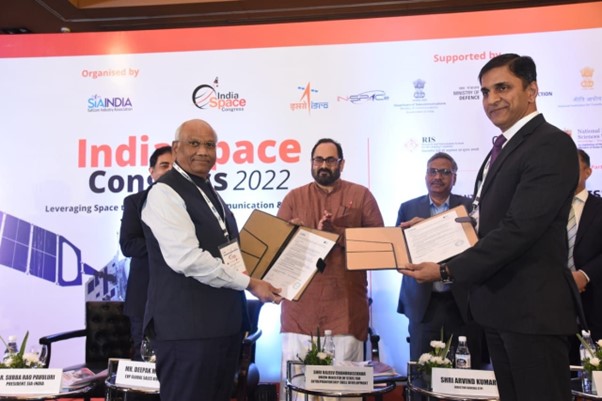
AICC’s Mahadevan Shankar (right) with SatCom President Dr Subba Rao Pavaluri in presence of Minister The Hon Shri Rajeev Chandrasekhar

India is a major centre for all aspects of satellites – the rockets are flying, the satellites launching and this is becoming a big industry.

There’s some good news in this for Australia. The Australia India Chamber of Commerce has driven this good news.

Thanks to the efforts of AICC’s Mahadevan Shankar, Convenor, Defence and Security National Industry Group – we now have super good news out of India – an MOU has been signed yesterday between the AICC and the SatCom Industry Association, India.

The signing was in the presence of Hon Shri Rajeev Chandrasekhar, Union Minister of State for Entrepreneurship, Skill Development, Electronics & Information Technology. Pictured with the documents in front of the Minister are (left) the President of SatCom Industry Association Dr. Subba Rao Pavaluri and AICC’s Mahadevan Shankar, Convenor, Defence and Security National Industry Group.

This bilateral partnership will lead to growing collaborations – and opportunities for Australian companies to engage directly with this growth sector of India.

SatCom Industry Association represents satellite operators, satellite systems, launch vehicles, ground and terminal equipment manufacturers and suppliers, satellite-based IOT/M2M solution providers, space startups, innovation hubs, academic institutions, law firms and provides interface with Government, Regulators, Policymakers and domestic & international standards’ bodies.

It has been a dynamic year for the AICC.

Members of AICC have been contributing extensively in this area past year, which has significantly motivated the progress of this bilateral 🇦🇺🇮🇳 partnership towards growing collaborations into the future.

Mahadevan Shankar says: “Sky is the limit and truly the exponential growth in space sector globally, and in particular in India, has opened up significant opportunities for Australian companies to engage directly and share in the rapid growth!”

“Big opportunities for next generation leaders, innovators & entrepreneurs to enter civilian and military use satellites and participate in the booming digital economies of future!” he said.

https://www.linkedin.com/feed/update/urn:li:activity:6991554366621061120

DEAKIN UNIVERSITY HUBS – the new way in India

Deakin University set to lead in new education era for India – at JGU are Professor Iain Martin, VC, Deakin, and Ravneet Pahwa, VP and CEO South Asia

These “HUBS” are a great innovation by Deakin University – giving it a great advantage in the Indian era of the New Education Policy.

Deakin Vice-Chancellor Professor Iain Martin visiting New Delhi, India, announcing the launch of partner-institutions so that students can commence the first part of their studies in their home country.

“I am excited to be back in India and it couldn’t have been for a better occasion than the launch of the DEAKIN UNIVERSITY HUBS at OP Jindal Global University, Symbiosis International University and Chitkara University,” said Professor Martin.

Here is why this is a big idea!

Indian students can now commence the first part of their studies with a Deakin partner institution in India and then transfer to a Deakin campus in Australia for the second part of their educational journey.

But that’s just the early stage of the HUBS.

“These hubs will provide valuable opportunities for growth, student mobility and joint research. They will promote enhanced collaboration between Indian institutes and Deakin, leading to academic and research excellence that will be highly beneficial for both countries,” said Professor Martin.

It gets better!

Deakin has established similar hubs with corporates – Infosys, TCS and more.

Deakin was the first international university to establish its presence in India in 1994.

CONGRATULATIONS to Ravneet Pawha, Vice-President (Global Alliances) and CEO (South Asia) at Deakin and the whole Deakin team in India.

Deakin is a role model in how to do business in India:

  • Establish a presence for the long haul
  • Be visible in India
  • Develop relationships over time
  • As India further liberalises, build stronger engagement
  • Use Indians to head up your presence in India
  • Ensure your leadership (V-C) is a regular visitor to India

6 tips for doing business with India

You have to establish a presence to do well in India

Be There

Fly in Fly Out does not work long term in India – naturally, Indians like to see that you are serious and that means having a local presence. Does not have to be big, but it has to be local.

Be Indian

As soon as you can, find a local Indian leader or team that can do two things – work with you plus take you into the Indian market.

Blend with Indian culture

We all love our “corporate culture”, but you might need to bend a little, blend a little to produce something right for India.

“Indianise” your product or service

Innovate, repackage, find new markets for what you do, accept technical innovations from within India – “Indianise”.

Be a Presence

Participate in local chambers and industry groups – the collective is so much more important in India and you need to find a way to “be a presence”.

Get support in India

Australia has some of the best people ready to help you – State Government Business Offices, Austrade – start talking to them early and keep the links going. They can be your best resource.

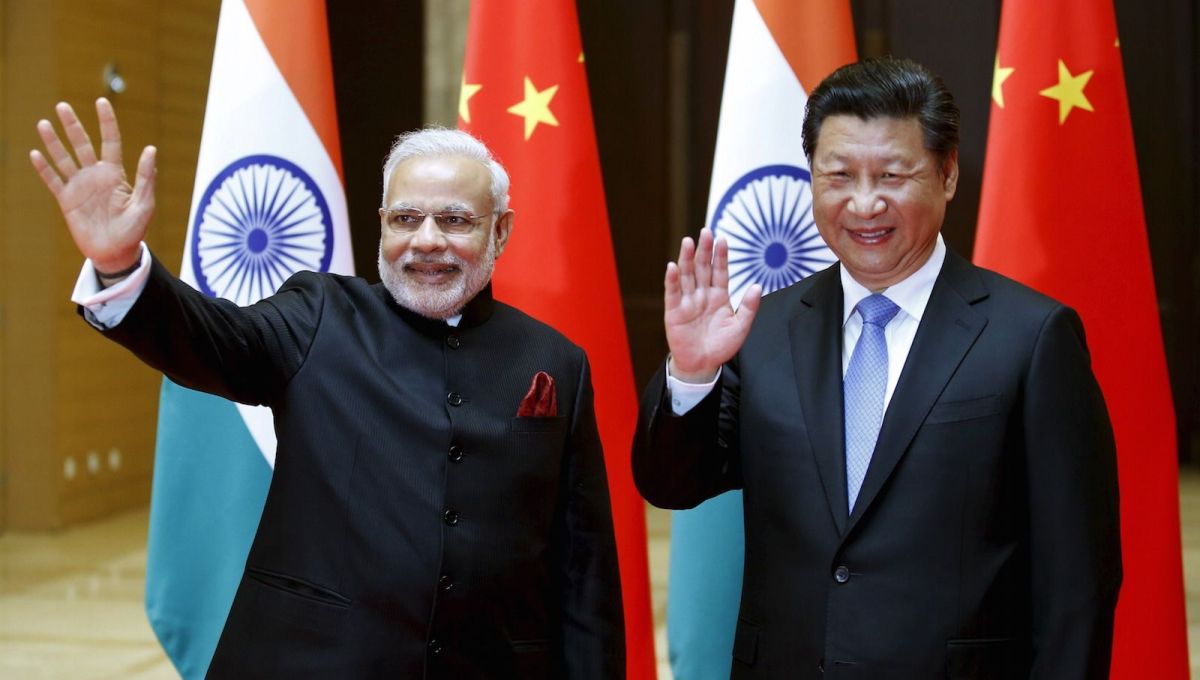
India and China – a simple comparison

The Indian economy is expected to grow by 7.3% in the current fiscal year, which ends in March.

China is expected to grow by 2%.

Population of China is 1.4 billion (approx), ageing and declining.

Population of India is 1.4 billion (approx), young and growing.

Indian economy is driven by supplying local demand as the youthful population and middle class growth increase demand.

Chinese economic growth has largely been driven by making and exporting.

India as a domestic demand-driven economy – is less sensitive to global downturns.

China is an export driven economy – highly sensitive to global downturns.

And we have not even got onto world’s largest democracy, innovative driven, attracting and welcoming western investment and more…

Compare the two – what do you think?

Read the best short summary of why India is the bright spot economically

This is one of the best summaries of why India should be on your business and trade radar.

My good friend Hareesh Tibrewala provides the great summary – he is the Author of ‘If I Had To Do It Again’, a Social Media Strategist and Internet Entrepreneur – currently Joint CEO of Mirum India.  

“Right now the Indian economy seems like the brightest spot among all large economies.

“One one hand, the whole of Europe is suffering the brunt of the Ukraine war. And irrespective of sanctions against Russia, and who is winning or losing the war, the brunt is actually being faced by Europe in form of inflation and energy issues.

“On the other hand, the US seems to be struggling to come out of Covid. There are just no people anywhere to fill in the job vacancies. Every shop or outlet has “Hiring” signs in their window. And salary levels, even for minimum wage kind of jobs seems to have increased dramatically.

“And finally China, who was powering the world economy for the past few decades seems to be floundering thanks to zero-covid policy and an unprecendented drought.

“Overall the APAC region, and specifically India, seem to be comparatively doing much better and seem stable.”

Thanks Hareesh – well said!

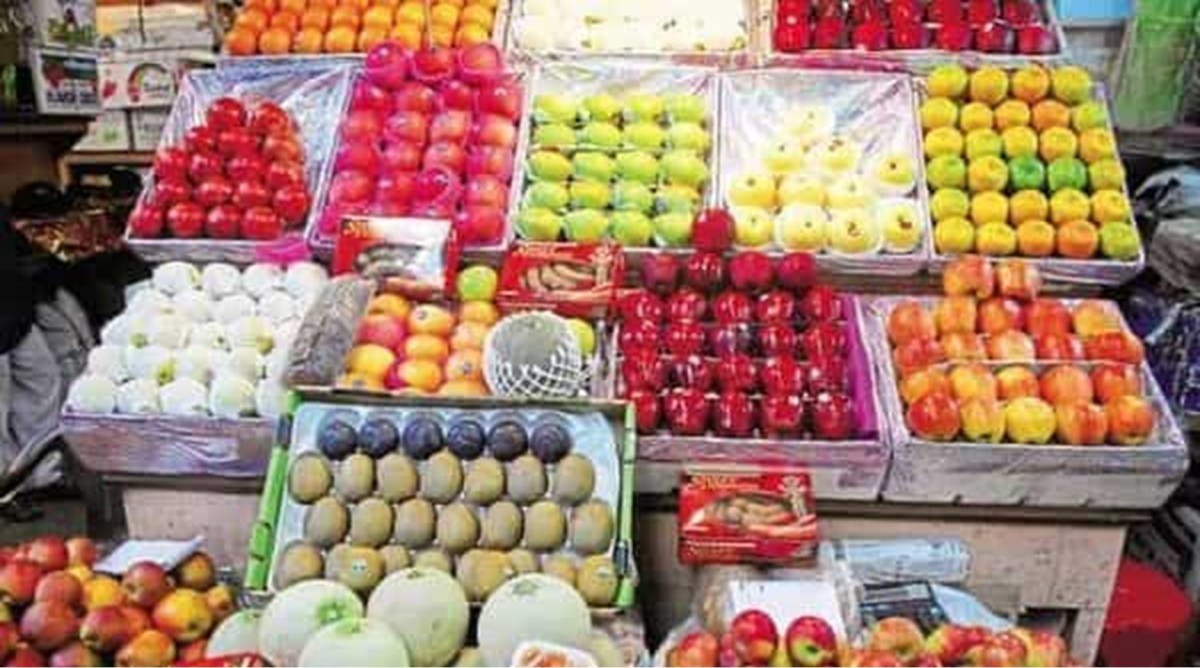
India agricultural, processed food products exports up 30% to US$ 9.6 billion in April-July

INTO INDIA has written regularly on agribusiness growth in India – and the opportunities this presents. The story is gathering pace…

India’s exports of processed food and agricultural products increased by 30% to US$ 9.6 billion from April-July of this fiscal year. Fruit and vegetable exports increased by 4% during the time period, according to data from the Directorate General of Commercial Intelligence and Statistics (DGCI&S).

According to a statement released by the Ministry of Commerce & Industry, an export goal of US$ 23.56 billion has been set for the basket of agricultural and processed food goods for 2022–2023.

The first four months of the current fiscal saw a growth of 61.91% in the export of dairy products, reaching US$ 247 million. Basmati rice exports climbed by 29.13%, rising from US$ 1.21 billion in April–July 2021 to US$ 1.56 billion in April–July 2022. Non-Basmati rice exports increased by 9.24% to US$ 2.08 billion in the same time period.

There is a lot happening in the agriculture sector in India – time for you to upgrade your India engagement strategy?

Read more here:

https://www.livemint.com/economy/indias-agricultural-and-processed-food-products-exports-up-by-30-to-9-598-mn-11662993250147.html