India adopting digital payments as Covid spurs rapid move away from cash

I am a big fan of The Hindu Business Line and one of their recent reports shows a big shift in India to digital payments – the cash economy, so long a burden for India, is dying out as a result of Covid and long-term Modi Government efforts.

This has massive positive implications for GST income for government.

Business Line reported that ACI Worldwide released a new report that indicated more than 70.3 billion real-time payments transactions were processed globally in 2020, a surge of 41 per cent compared to the previous year.

This comes as the Covid-19 pandemic dramatically accelerated trends away from cash and cheques towards greater reliance on real-time and digital payments, according to the study.

According to the report, India retained the top spot with 25.5 billion real-time payments transactions, followed by China with 15.7 bn transactions.

In 2020, the transaction volume share in India stood at 15.6 per cent and 22.9 per cent for instant payments and other electronic payments respectively, while paper-based payments had a considerable share of 61.4 per cent.

The report speculated that by 2024 the share of real-time payments volume in overall electronic transactions will exceed 50 per cent. This will further touch 71.7 per cent by 2025.

“India’s journey of creating a digital financial infrastructure has been characterized by collaboration between the government, the regulator, banks, and fintech. This has helped to advance the country’s goal of enabling financial inclusion and also provided rapid payment digitization for citizens. The pandemic has further accelerated the adoption of digital payments with many first-time users adopting digital payments and significant uplift by merchants,” said Kaushik Roy, VP, and head of product management, Asia, ME, and Africa, ACI Worldwide.

Melbourne edtech firm TALi launches learning app in India

Pictured is Glenn Smith, MD, TALi Digital

I was pleased to hear from Michelle Wade, Commissioner South Asia at Global Victoria, that Victorian edtech and digital wellness company TALi Digital this week launched their Indian platform via the Times of India. The two apps — the TALi app and TALi TRAIN — are designed to improve children’s attention skills, which are so important for their ability to listen, learn and focus on tasks at home and at school. Targeting children aged 3-8.

As Michelle wrote on Linked In – “Very proud of our team, and particularly Annie SanthanaGopi Shankar and Stuart Bland for the many months’ work and continued support to Tali Digital.”

Well done!

India to become the 3rd largest economy and “sweet spot” for investors over next decade

Indranil Sen Gupta, BofA Securities

Indranil Sen Gupta, BofA Securities, recently expressed the view that India is likely to become the 3rd largest economy over this decade. This will be driven by:
– sweetspot for the demographic dividend
– significant FX reserves to protect the economy
– 9-10% nominal GDP growth over the decade
– Low interest rates will lead to the next capex cycle, earnings growth

He said: “We see the economy growing at 9% nominal, that is 6% growth, 5% inflation, and 2% depreciation for the next two years. There are three drivers. The demographic dividend which we have all been talking about for the last 15 to 20 years is actually going to kick in from 2020 and help savings and investments. Secondly, there is financial deepening. Compare it to GDP ratio, which is around 40 to 50 per cent of GDP, should jump almost 100%. And thirdly, there is the emergence of mass markets, which the US probably saw 100 years ago. For example, the price of an entry level car today is 2.5x down from 14x 20 years ago. We think that is close to 1x on export basis.”

Read more at:
https://economictimes.indiatimes.com/news/economy/indicators/india-to-be-the-third-largest-economy-in-10-years-bofa-securities/articleshow/81685020.cms?utm_source=contentofinterest&utm_medium=text&utm_campaign=cppst

Why is the Indian American diaspora so successful and now influential in the US?

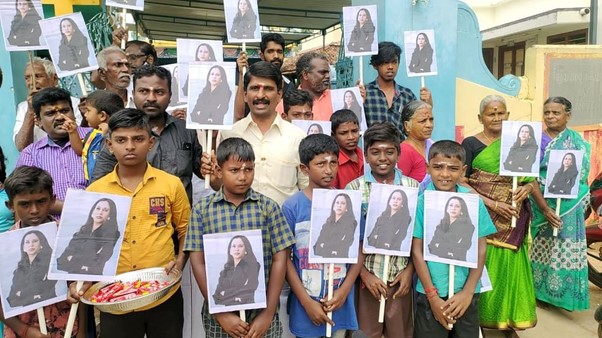
The power of India in the US. People hold placards of Kamala Harris, as she prepares to take her oath as vice-president of America, at her ancestoral village in Thulasendrapuram.

Migrants from India are the most successful migrant group in the USA and now they are becoming influential and leading in politics. Even President Joe Biden recently quipped that “Indian Americans are taking over the country”.

These Indian Americans have played a “stellar role” in education, technology and entrepreneurship. Now public administration and politics.

Companies in the US headed up by Indian American CEO’s right now include Google, Microsoft, Albertsons, Micron Technology, Mastercard and Adobe Inc.

Biden should feel close to the Indian migrants – his speech writer (Vinay Reddy), Vice President (Kamala Harris) and the leadership of NASA’s Mars Mission (Swati Mohan) all have Indian heritage. But this is just the tip of the iceberg.

Indians are a small migrant group – around 3.8 million migrated making up 1.2 per cent of the US population.

But this diaspora is the richest, most educated and among the most successful ethnic groups in the USA.

Why?

Indian entrepreneurial drive makes them unique among migrants

The National Academies of Science, Engineering and Medicine of the US in its report titled The Economic and Fiscal Consequences of Immigration had said in 2015-16 that “Indian immigrants are the most entrepreneurial of any group including natives, and immigrant businesses represent more than a quarter of businesses in the transportation, accommodation, and recreation and entertainment sectors.”

Indians have chased better education

According to Pew Research Center data from September 2017, about 32 per cent of Indian Americans have a bachelor’s degree and 40 per cent are post-graduates. The comparable figures for all Asian Americans are 30 per cent and 21 per cent, respectively. If all Americans are considered, Indians stand out even more as only 19 per cent of Americans have undergraduate degrees and 11 per cent have post-graduate education.

Indians make more money

The Indian community in the US earn a lot more than all other ethnic groups, white Americans included. A recent survey by Coalition for Asian Pacific American Community Development found that the average income of Indian American families is $120,000, compared to the overall US average of $88,000.

So, why are Indians the most successful?

A recent book titled The Other One Percent: Indians in America bySanjoy Chakravorty, Devesh Kapur and Nirvikar Singh found some answers.

Singh hypothesises that “There is no ‘secret sauce’. There are no peculiarly Indian cultural traits (that make Indian Americans more successful than others)…. They came very carefully selected. They were not coming from poverty. The simplest policy prescription may be this: Make sure everyone has access to education,” he told the media.

The immigration of Indian Americans really began in 1965 when the US lifted caps it had placed on immigrants from some countries. Since then, the visa process has favoured the entry of mostly upper class, educated Indians, their close relatives, students with very high scores and skilled workers.

Summarising why Indians succeed in America

They are a migrant group with access to educational resources and having a stable financial background. Without these two, migrants generally stay at lower levels of income and influence.

You have not seen the best yet!

80 per cent of second-generation Indian Americans are under the age of 25 years. This means their political influence and commercial success is likely to grow further in the years and decades to come. The Indian American population is expected to almost double to 2 per cent of the US population by 2030. They are mostly concentrated in New York, New Jersey, Washington DC, California and Texas.

Indians now standing out in public service

President Biden has appointed significant numbers of Indian Americans to his team – Uzra Zeya, Under Secretary of State for Civilian Security, Democracy, and Human Rights, State Department; Mala Adiga, Policy Director to Dr Jill Biden; Aisha Shah, Partnership Manager, White House Office of Digital Strategy; Sameera Fazili, Deputy Director, US National Economic Council (NEC); Sumona Guha: Senior Director for South Asia at the National Security Council, White House; and Sabrina Singh: Deputy Press Secretary, Vice President White House.

In addition, two Indian Americans, Nikki Haley and Bobby Jindal, have already ruled states such as Louisiana and South Carolina as governors.

The story of Indian Americans is amazing right now – and will continue to grow.

Deakin University shows how to attract Indian students in the Covid era

Iain Martin, President and Vice-Chancellor of Deakin University

Australia is a leading destination for Indian students going overseas for education – and Deakin University has been a pioneer and leader in building a strong presence in the Indian market.

The coronavirus outbreak has impacted plans for many. However, some universities have started offering scholarships and fee cuts to attract Indians.

Iain Martin, President and Vice-Chancellor of Deakin University spoke to Careers360 about the impact and the measures taken.

Q. How many Indian students have applied to Deakin in 2020? Has COVID-19 impacted the admissions?

 A. Over the three intakes in 2020, over 8,500 applications have been received from Indian students. Yes, the COVID-19 pandemic has had a huge impact, especially with the closed borders prohibiting international students to travel. However, we are working very closely with our Indian partners and networks on innovative opportunities for students to begin their studies online and transition to on-campus study once travel restrictions ease. Deakin is a leader in digital education and we are well-positioned to offer our international students an excellent experience.

Q. Is Deakin offering financial sup-port to Indian students?

A. Deakin University is offering a 30 percent bursary to all Indian students enrolling during these times. Deakin has also awarded 100 percent meritorious scholarships to four deserving Indian students who will be commencing studies in November 2020.

Q. How is Deakin working on blended learning?

A. The university is offering students the opportunity to start their studies online at home through Deakin’s innovative Cloud Campus and then transfer on-campus once the borders are open for travel. Deakin has an inclusive and student-focused culture and a reputation for using innovative digital solutions to provide an engaging and personalised learning experience. One of the benefits of joining a huge online community is the incredible support students get every step of the way.

Students are able to connect with Deakin’s teachers, study mentors, student success coaches and tutors whenever they need to so that they never lose momentum on the way to achieving their study goals. Our dedicated IT support staff are available out-side regular hours, plus you can access our online library 24/7.

Q. What are the challenges and opportunities for international universities in India with the introduction of New Education Policy 2020? Is Deakin planning to set-up a cam-pus in India?

A. The NEP 2020 provides an exciting opportunity for international universities to facilitate ‘knowledge exchange’ with India. The National Education Policy 2020 allowing international education providers to come to India is a step ahead in developing its higher education ecosystem. It will definitely assist in fostering the ‘study in India’ campaign of the Indian government.

The challenges will be clear once we understand the modalities and implementation of these opportunities. Deakin has been engaging in India over the last 26 years and continues its future-focused journey of “in India, with India, for India”. The National Education Policy 2020 has helped propel our strategic vision in this new normal and we will continue to work with our existing partnerships through hybrid models of engagement including digital and face-to-face learning environments.

Thanks to Careers 360 for this information.

https://news.careers360.com/deakin-university-covid-plan-blended-learning-and-scholarships

Thanks also to Ravneet Pawha, Deputy Vice President Global and CEO India for Deakin University.

You’ve gotta love Jacob’s Creek wines – consumers in India are loving it!

Despite a tariff as high as 150% plus state taxes, Australia’s Jacob’s Creek is a standout leader in the imported wine market of India. This Aussie winemaker is owned by global giant Pernod Ricard.

Here are some stunning statistics – imported wine accounts for 40% of wines sales in India. 70% of that 40% is Jacob’s Creek. This means Jacob’s Creek accounts for over 20% of the wine market in India.

Another stat – every year 19 million Indians reach legal drinking age.

Wine is mainly an urban success story in India, with three cities dominating the consumption – Mumbai, Delhi and Bengaluru. Apparently women are driving demand for wine – while men stick to whiskey and beer, women have become major consumers of red wine.

Jacob’s Creek has succeeded despite stiff competition from local winemakers, including Sula and Fratelli.

In the context of exporters urgently seeking alternatives to China, Jacob’s Creek is a success story that should be studied by those seeking to succeed in India.

Now – about those tariffs. Australia needs a coordinated campaign to get some relief for wine. This campaign needs to encompass governments, industry and culture/education. My advice – don’t go head-on against the tariff. Subtle approaches are best. Work out what we can offer India and how some reduction in tariff therefore becomes mutually beneficial.

Wow – this is a scene from the South Australian vineyards of Jacob’s Creek

Australia Day honours for Robert Johanson – still changing relations of India and Australia for the better

Below (L-R) Robert Johanson, Chairman Bendigo Bank and Australian Friends of Asha Slums; Dr Kiran Martin; Anne Rathbone, Owner of Yering Station Winery, and Harish Rao from Friends of Asha Australia

Robert Johanson AO was honoured in the Australia Day honours by appointment as an Officer of the Order of Australia. This recognises his distinguished service to the banking sector, to relations between Australia and India, and to tertiary education governance and financial administration.  
Robert has brought respect for all and considered commentary to his many roles and especially as Chair of the Australia India Institute – from 2010 to 2019.   He served for 31 years on the board of the Bendigo and Adelaide Bank, 13 of which were as Chair of the bank’s board.
 
Robert was also Deputy Chancellor of University of Melbourne from 2007 to 2017.   He has also been the Chair of the Board of the Australia India Institute in Delhi since its inception in 2015, a role which thankfully he continues to hold – this continues his relationship with India and ongoing support of Australia India connections. 
 
Robert has a strong personal commitment to making a difference for those in need and has served as the Chair of the Australian Friends of Asha, the Australian branch of Asha India. Asha is a charitable organisation created by Dr Kiran Martin in 1988 which works with people in India residing in slums and benefiting more than 700,000 people from over 91 slum colonies of Delhi. Australian Friends of Asha was launched by former Governor of Victoria The Honourable Alex Chernov AC QC in November 2012 and aims to provide support to Asha and promulgate its work throughout Australia.

Gandhi exhorted us to “be the change you want to see in the world” and Robert has contributed more than any other to the positive change in the relationship between Australia and India.  
Below is Robert Johanson with Mahinder Shrivas who thanks to Asha went from a Delhi slum to Trinity College at Melbourne University

Will your “reset” include new approaches to India?

Australia and India have never been closer. The last year has seen major advances in strategic and defence engagement and cooperation.

Now, as business and organisations reset, does India play a role in your future plans?

Growth in India is outstanding and assured – largely because of a young population boosting domestic demand.

It is a complex and very different market, but one which rewards the right entry strategy and long term engagement plans.

Time for India to be part of your reset?

Bill Gates says India is one to watch for tech innovation

Tech pioneer Bill Gates praised India’s policies for financial innovation and inclusion, saying his philanthropic foundation is working with other countries to roll out open-source technologies modeled on the country’s implementation.

“If people are going to study one country right now, other than China, I’d say they should look at India,” Gates said at the Singapore Fintech Festival on Tuesday. “Things are really exploding there and innovation around that system is phenomenal.”

India has built ambitious platforms for universal identification and digital payments, including the world’s largest biometric database and a system for sending rupees between any bank or smartphone app. Gates said those policies have drastically reduced the cost and friction of distributing aid to the poor, especially during the pandemic.

6 steps to bring India and Australia closer in 2021

6 steps to strong India-Australia ties in 2021

  1. Australian Prime Minister Scott Morrison and Indian Prime Minister Narendra Modi get on well – they can turn that into specific outcomes by continuing the close dialogue.
  2. PM Modi is a politician who likes to think outside the square, so innovative ideas from Australia will be welcome in Delhi.
  3. Two-way trade is at around A$30 billion and can grow – aiming for slow and steady rather than dramatic boosts will work well for both sides.
  4. Food security and food quality provide collaboration opportunities for both countries. India offers the advantage of diversifying Australian global agricultural exports away from wheat and beef and towards vegetables and fruit.
  5. More interaction at all levels of politics (State and Federal, Ministers and Members) will help because India is a complicated political puzzle with Modi pushing more decision making down to state level and competition between states is increasing – and there are 29 of those!
  6. Creatively looking for ways to collaborate will work well and move our trade from “transactional” to “relationship”.

With these steps we will see strong India-Australia ties in 2021.