Indian Budget 2022 – 6 takeaways

Finance Minister Nirmala Sitharaman delivers the 2022 Indian Budget

Finance Minister, Nirmala Sitharaman has delivered the 2022 Indian Budget – here are my 6 takeaways:

India is the fastest-growing large economy

At 9.2% for 2021-2022, India’s GDP growth will be the fastest of all the large economies.

Launching a digital currency

Indian minister’s 2022 budget speech focused on various incentives to boost India’s digital economy, including the launch of a digital rupee within 2022. Minister Sitharaman noted that the central bank digital currency will “give a big boost to the digital economy and lead to a more efficient and cheaper currency management system.”

India is going green

Calling climate change one of the highest external risks facing the country and the green economy a sunrise economy, the finance minister presented multiple proposals and pathways to climate action across different sectors. These include raising climate finance and developing greener public transportation.

Emphasizing inclusive development

The pandemic financially hurt millions of Indian families and analysts have warned against the threat of growing inequality amidst the pandemic. Prime Minister Modi’s government has, since 2014, laid a strong focus on citizen empowerment. India 2022 budget aims to expand its support for Indians, particularly vulnerable groups such as girls, women, senior citizens and farmers. The budget expands social welfare support, while economically empowering marginalised groups through job creation.

Expanding education and mental health care

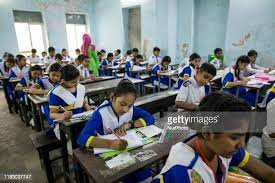
The pandemic has meant that many Indian school children have lost up to 2 years of valuable schooling. Major educational programs include expanded digital tools for schools in remote regions.

In a significant move, Minister Sitharaman announced the launch of a National Tele-Mental Health Programme, which, built around 23 core health centres, will provide citizens with access to quality mental health counselling and care services.

But Covid is the big concern this year

With a new growth in Covid numbers, there is growing concern that the pandemic could hit India big again this year and could impact the budget numbers.


Is “busyness” destroying your creativity and leadership?

It has been called a cult.

For around 200 years, the power of this cult has been growing.

That cult is dedicated to one seductive idea – busyness.

This cult insists that a good life is one of constant activity and application, where every hour of the day must be filled with intense activity.

The cult is making us tired and stressed.

Worse, it is based on flawed thinking.

To be truly productive and reach our potential, we actually need breaks, time away, inactivity and normal time for the mind.

Albert Einstein hated “busyness” and was a big advocate of taking a walk or a swim when he encountered a problem – and he always came back with the solution.

Do you have time for this? If you are a fully signed up member of the “busyness cult”, no doubt you do not have time.

Feeling exhausted? Have a quiet, slow day and turn away from the drug of busyness. You might be amazed.

5 essential tips for doing business with India in 2022

Generation change is seen in shopping malls across India

Growing at around 9 per cent this year, India is well on track to be number 3 or 4 economy in the world. It is also one of the youngest countries on earth – with around 50% of the population aged under 25. Demand outstrips supply – for everything.

Here are some tips that might help your experience, but keep in mind you will find many variations and contradictions of these points in the very diverse and exciting India market:

India is many countries in one

Differences are not just seen in the North, South, East and West, India is truly many countries in one and you need to be ready for cultural diversity. While Mumbai is the fast and flashy financial capital, it is also a tough place because everything is done on grand scale and at great speed. New Delhi is more formal, also more liveable, and is more than a political capital – it is a powerful business city. Chennai is one of my favourites, embracing that slower southern pace and the values that shine in southern businesses. Pune is sophisticated and a major player across many sectors. Bengaluru is technology but much more as well. Regions have varying strengths, so research is the key.

Market entry strategies should think longer term

India is looking for more than a quick sale – it looks to build relationships and create trust that can last a lifetime. India is what we call a “collective” culture – everything is done within the group and if you make it into the group, you will make it there. This means your first venture should probably not be to send the sales and business development team over there is search of deals. Rather, lead from the top to create relationships – deals will follow.

Find your local Indian team and culture

Companies that have tried to impose their Head office teams and cultures on India operations rarely succeed. A priority should be to identify Indians who can lead locally – with your support. Accepting that the corporate culture might not be an exact mirror of your HQ culture is also vital – with care and guidance over time, your Indian operations will reflect key elements of central culture but will bring added value too.

“Yes” can mean “maybe” or “no”

Indians are among the most courteous and generous hosts on the planet. On top of this, their culture demands that they never provide an outright rejection or “no” statement, even when this is clearly the only answer. The dumbest question for a business to ask in India is “can you help me with market entry for my products?” The answer will always be “yes” and you will sit idle for a long time back home until you realise this is not the right question. Within Indian culture built so solidly on relationship above all else, the word “no” is a real relationship breaker and is rarely or never used. “Yes” can in fact mean “maybe” or even “no” and you need to look for the signs. Like most of Asia, Indians are indirect communicators. If that is not complex enough, consider that India has 26 major languages.

Learn the art of flexibility and patience

Being patient and flexible is an asset, even if you come from a country that likes to be blunt, direct and structured. Most Indian communication is indirect, so it can take some time to work out what the real issues are. India is full of surprises and you cope best through being flexible. Dropping any “one rule for all” approach is a good start.

Indian consumers going online

More good news! Consider Bangladesh – which for many symbolises everything wrong with the world – take another look

Literacy in Bangladesh jumped from 35% to 74%

Bangladesh, home to 160 million people, for many people in the west is a symbol of everything wrong with the unequal world.

But take another look.

It celebrated a ‘development miracle’ in 2021, its 50th year of independence. In the last three decades, GDP per capita has increased seven fold, 24 million people have been lifted out of poverty, life expectancy has risen to 73 years, infant and maternal mortality rates have fallen by a factor of five, the literacy rate has increased from 35% to 74%, and more than 97% of the population now has access to electricity, up from 62% in 2014.

Worth going over that again – it is genuine good news.

Yes, it’s already time to revisit your “new year resolutions”!

We are now a few weeks into 2022 so this is a good time to revisit your “new year resolutions” and perhaps take a different view.

This is from a friend and colleague Debashish Chatterjee who is a Director of Indian Institute of Management in Kozhikode, India:

3 Unusual Insights for 2022

#1. We begin the year with resolutions. They are often a laundry list of personal desires. A desire is an energy formation. When your desires are woven around a web personal pleasures, the energy they receive comes from your ego. This energy is limited. When your desires are for the greater good, the whole universe supports your desires. Enhance the circumference of your desires, you are bound to succeed.

#2. You do not have a busy life. You only have a busy mind. The world out there is nothing but a projection of the mind. Slow down the mind. Your world will transform around you. You will begin to see things that you had overlooked earlier. You will fumble less and create more.

#3. That which has a beginning also has an end. This was Buddha’s insight into the impermanence of life. Begin with the end in mind. Ask where are my actions and thoughts eventually leading me?

From INTO INDIA and Debashish, have a great 2022!

Happy New Year and a tolerant, multicultural future

A significant majority of people in wealthy countries now believe that having people of different ethnic, religious, and racial backgrounds improves society.

In the US, Canada, UK, Australia, New Zealand and Taiwan, 8 out of 10 people believe greater diversity is a benefit, and even in relatively culturally homogenous countries like Japan and Greece, the share has increased by double digits in the last four years.

Source – Future Crunch

Indians are among lots of reasons to love Melbourne

Melbourne’s Federation Square is the focus of the annual Diwali celebrations

Born here, I naturally love Melbourne.

But in my lifetime the city has been transformed via migration and especially by the increase in local Indians and students. It is now an exciting place – for example, in normal non-covid times, the city centre and Federation Square is taken over by Diwali celebrations.

India accounted for around 178,000 visitors to Victoria every year.

More than 67,000 international students were here before the COVID-19 outbreak in Australia – and now we can welcome them back!

We have the largest Indian population in Australia, with more than 209,000 Victorians reporting Indian heritage at the 2016 census. Since 2001 the number of Indian-born migrants in Melbourne has more than tripled.

Indians living in Melbourne love:

  • living in Melbourne’s suburbs with safe, accessible transport
  • local supermarkets, Indian grocery stores and restaurants
  • Melbourne’s festivals, museums and cultural events (including Diwali, Holi and more)
  • Victoria’s world-class education system
  • dining out in Melbourne’s renowned restaurants.

If you’re thinking about migrating to Australia from India, Melbourne could be the perfect home for you.

Melbourne has the 10th largest immigrant population among world metropolitan areas. In Greater Melbourne at the 2016 census, 37% of residents were born outside of Australia.

Qantas’ Melbourne-Delhi service starts will start on December 22 and operate four times a week year-round.

Just another reason we love Melbourne.

Launching your startup into India – my 5 key tips

The team that have taken Australian startup CANVA global – India is a market for almost every startup

Launching your startup into India – 5 key tips

Here’s a big generalisation – almost every startup can find an eager market in India.

I say that with confidence, because the Indian economic growth story means demand for everything cannot be met – demand is huge, so that means opportunity for your startup.

But how to approach India?

First – think longer term than you normally do, but keep in mind modern India can be either fast or slow and there is no way of predicting.

Second – leave your ego behind. Pretty much every western company that has succeeded in India has done so on the support of a strong local Indian team across all levels. To do this, they have effectively left their ego behind.

Third – India wants your startup, NOT your culture. Those who struggle typically want to transfer their “culture” to India, so they put their expat team in charge of the local team.

Being preoccupied with transferring “the way we do things in our company” to India makes them blind to “the way Indians do things there” which is the most important insight for future success.

Fourth – use your expat team wisely. Expats can come and go as needed – but your business needs longevity in India and that is what an Indian management team can provide.

Fifth – Smart companies that go into Asia also ensure they hire Asians into the Head Office team, so you have Asians running your enterprise on the ground in Asia and Asians at the right level in HO guiding and advising the HO team.

The future of startups and innovation is looking good for India.


Message to Vir Das – is bagging your country wise when overseas?

Pictured is Indian comedian Vir Das who recently publicly criticised India

I love India. I do not think it is perfect – just like every other country, it of course is not perfect.

India is many cultures, many languages and with powerful regional differences.

It is experiencing massive generational change with Millennials and Gen Z changing the landscape from “born something” to “become something”.

This change is happening at a rapid rate – even with an “old” leader, PM Narendra Modi. Funny you chose to be critical of septuagenarian leaders in India when you were in a country with a 78 year old President who replaced a 75 year old. By contrast, Modi is a “youthful” 71.

Having said all that, I would not criticise India in any global forum or in any other country. Why not? I just don’t like negativity and especially not on the international stage. Since you are an Indian you might feel that you can make these criticisms.

So my message to Vir Das is simple – I am sorry you chose to focus on the negative, especially on the international stage. Of course, I believe you have a right to your view. But consider building your comedy with respect and care. India is not perfect – but it is changing fast.

Emerging Markets Guru Mark Mobius – India a 50-year rally

Emerging Markets guru Mark Mobius is bullish on India

Thanks to my friend Mugunthan Siva, Managing Director, India Avenue Investment Management for spotting this one!

“India is on a 50-year rally,” even when there are quick bouts of bear markets, veteran Emerging Markets investor Mark Mobius mentioned in an interview on Bloomberg Tv. “India is possibly the place China was once 10 years in the past,” he said.

A man of his word, Mark Mobius has allotted nearly half of his emerging-markets fund to India and Taiwan to assist offset a slide in China shares that has dragged down returns from creating nations as an entire.

Mobius’ bullish view on India clashes with these of analysts at Morgan Stanley and Nomura Holdings Inc, who’ve downgraded the inventory market after the benchmark S&P BSE Sensex Index greater than doubled from a March 2020 low.

“Individuals say emerging-markets look unhealthy as a result of China is dragging down the index, however they’ve got to have a look at different areas similar to India which can be going up,” mentioned Mobius, who created Mobius Capital Companions LLP after a profession at Franklin Templeton Investments.

The Mobius Rising Markets Fund has a mixed 45% of its portfolio allotted to India and Taiwan, with tech {hardware} and software program the largest holdings in these markets. Indian software program companies supplier Persistent Techniques Ltd. and eMemory Know-how Inc, a Taiwanese chip know-how supplier, have been amongst its largest stakes as of end-September. The shares have each greater than doubled this year.