
Can kinder communication restore respect and civility?

Something has changed in how we communicate with each other. Like the pandemic, it has infected Australia and might have spread to India.

Just for ease, some commentators call this change “Trumpification” of our public conversations. Of course, it is not just Trump, it is also an outcome of spiteful and hateful social media. We have forgotten how to be respectful and kind.

It is too easy to blame America for our own problems, but we have seen over there that trading in hate and fear – combined with deliberate misinformation – creates divisions that might be hard to heal.

Social media has encouraged and built extremism, has destroyed much of our civility and is weakening respect, integrity, trust and social cohesion.

It is a stretch to blame Trump for all of this – much as he has deliberately practised anger and misinformation – and we must acknowledge that what we are seeing publicly now is what has laid dormant in our cultures probably for all time. Extremism and hatred are now empowered and public.

Long term, it will be difficult to turn around the negativity unleashed mainly by social media. It is hard to stop the toxic infection of how we treat each other. But it is worth having a go.

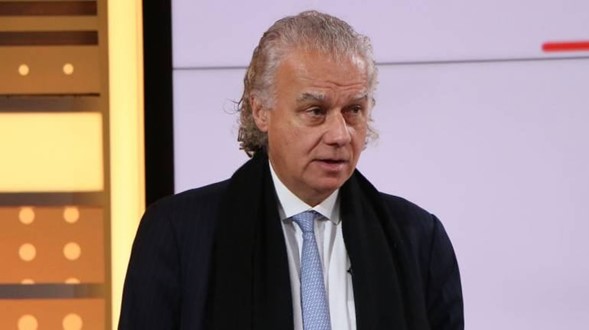
Mallika Bajaj and her company, Little Yellow Beetle, based in New Delhi, is helping clients create kinder content. It is one step in the right direction and might just restore respect, thoughtfulness and caring to our public discourse. I hope so.

https://www.littleyellowbeetle.com/

Here is an earlier discussion I had with Mallika Bajaj.
India now wants to lead development in the “Global South”

For several years we have speculated about India’s foreign policy agenda – fuelled by its multi-alignment strategy – where does India stand, ask many western commentators.

But just quietly India has gradually revealed its priority.

Of course, part of this is a response to China – a country which shares contested borders with India.

Many western leaders hoped to “bring India into the fold”, becoming an alliance partner of the USA and others in the west.

But India has made its own choices.

New Delhi plays an active role in multiple organisations – the QUAD (Japan, USA, Australia and India), the SCO (Shanghai Cooperation Organisation) and the BRICS (Brazil, Russia, India, China and South Africa) and remains in these in part to prevent China dominating.

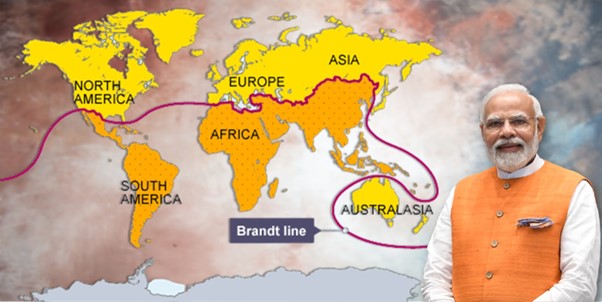
But the “Global South” is now a top priority for Delhi.

India is building a unique bond between the developed and the developing world of the “Global South”. India alone can help the west engage and truly contribute to economic development in the region. For the USA, India can help Washington as it struggles to define and commit to the “Global South”.

It’s an exciting vision, put together by Prime Minister Modi and Foreign Minister Jaishankar.

This “Global South” vision of India does not stop its connections with the west – which remains an important source of technology and capital for India’s growth. It is a great balancing act by the Indian Government.

Since Australia shares its future with many of these “Global South” countries, where can Australia support India in this emerging vision?

Read a more detailed Lowy Institute analysis of India and “Global South” here:

https://www.lowyinstitute.org/the-interpreter/why-india-keeps-foot-both-camps#msdynttrid=FB8Fb-XPrVU8xav4ltaVW09Lm0iwxwP8NNavfmZ3oew

Good news you probably didn’t hear about – poverty reduction in India is the “most under-reported story of our time”

From our good friends at FUTURE CRUNCH who are determined to tell us stuff the media overlooks.

The decline of poverty in India is the most underreported story of our time.

Two weeks ago, the country’s biggest public policy think tank released a new report, and the numbers are mind-blowing. 135 million people were lifted out of multi-dimensional poverty between 2015-16 and 2019-2021, easily putting the world’s most populous nation (and fastest growing major economy) on course to achieve its SDG targets.

6 big changes in India – and 5 reasons growth will boom

Only 8% of Indian households own a car – so big growth is ahead

INTO INDIA has consistently said India is the growth story of this century.

Now Anish Mathew, CEO and CIO of the very successful Sundaram Asset Management Singapore Pte Ltd, has found a unique way to describe why India is indeed THE growth story.

6 big changes in India

  • The number of income tax filers has increased by 57.5% between FY15 and FY21.  This is obviously the impact of the growing use of Aadhar (biometric unique identity card) as the preferred KYC document and the implementation of GST, both of which is pushing up the tax compliance in the country.  
  • Indirect (GST) tax base stood at 14mn in November 2022, a 2.3x increase from mid 2017.   
  • Number of PAN cards (unique tax identity number issued by the Income Tax Department) allotted has increased by 2.5x in the last 7 years.
  • 80% of the railway tracks were electrified as of end FY22 as compared to 31% in FY11.
  • Road infrastructure measured in number of kilometres has increased by 36.6% in the last 11 years.
  • Major port capacity has nearly doubled in the last 8 years.

5 reasons growth will boom

  • Only 8% of the households owned a car, 24% an air conditioner and 38% a refrigerator.
  • Only 1% of Indians account for 45% of all flights.
  • Only 3% of Indians make up all unique card holders.
  • Only 2.6% of Indians invest in mutual funds.
  • The Indian diaspora remitted USD 100bn into the country in 2022, eclipsing the gross FDI flow during the same period. 

Mathew advises that the three big growth drivers for the next decade are consumption (driven by the Demographic Dividend and rising incomes); manufacturing, and; digitisation (which is the formalisation of the Indian economy)

He makes a powerful case for investment and trade with India.

Vital connectivity for India depends on progress in the “north east states” region

India’s “north east region” has long been neglected and is little known among western leaders – but it has a crucial future because of the role it can play in India’s strategic and commercial connectivity in the surrounding region.

The role of China in the Indo-Pacific increases the focus on this sensitive region.

India is now giving the NER priority – there are around 30 major road and highway links under construction, a complex process when border crossings are involved. There are also around 10 major railway construction projects including bridges and new lines.

This has been so well described by Sreeparna Banerjee and Ambar Kumar Ghosh, “India’s Northeast: Gateway to Connectivity with Eastern Neighbours,” ORF Occasional Paper No. 395, March 2023, Observer Research Foundation.

India’s northeast consists of eight states—Arunachal Pradesh, Assam, Manipur, Tripura, Sikkim, Mizoram, Meghalaya, and Nagaland. It shares 5,812 km of international boundaries with the neighbouring countries of Myanmar, China, Bangladesh, Nepal, and Bhutan. It is landlocked; seven of the eight states are linked to the rest of India only through the Siliguri Corridor in North Bengal—a narrow strip of land (22-km wide) that is also called the ‘Chicken’s Neck’. The corridor is flanked by Nepal in the north and Bangladesh in the south.

This region can serve as a pivotal connecting space between India and its neighbours to the east in South Asia, as well as to East and Southeast Asia and beyond, enhancing the country’s diplomatic, infrastructural, and commercial engagements.

India’s foreign policy priorities, reflected in its ‘Act East’ and ‘Neighbourhood First’ policies, also bring the northeast into focus as a connectivity gateway to the wider Indo-Pacific.

Japan, with its long-standing expertise in the infrastructure sector, continues to play a significant role in developing physical connectivity projects within and across the northeast.

Australia shares many of the strategic goals of India, and now through the QUAD (India, Australia, Japan and USA) the countries are closer together through their commitment to democracy, open and free cultures and more.

The focus on this region will continue – India is crucially positioned within South Asia and in the broader Bay of Bengal region. It needs to play a more vibrant role in the region, and to do so, must engage more strongly with its East and Southeast Asian neighbours.

Watch this space…

India now the straight-forward long term story, not China, but go both!

“India much more straight-forward long term story than China” – Christopher Wood, Equities Analyst, Jefferies

For business and investment, India is now a more straightforward, long-term option than China.

But it is really smart to think BOTH India and China, not one or the other.

The equity strategists are saying it. All the trade commentators are saying get your product or service into India – now.

One equity analyst, Christopher Wood, the global head of equity strategy at Jefferies, said in the latest edition of his immensely popular newsletter to investors called ‘GREED & fear’: “India remains a much more straightforward long-term story than China, which is why GREED & fear has 39 percent of the Asia ex-Japan long-only portfolio, long-term in its focus invested in India and “only” 25 percent in China.”

INTO INDIA points to the incredibly high number of young Indians coming through – called the demographic dividend” – as the big reason to be there.

Time to begin or upgrade with an Indian investment and market entry strategy?

International students welcome in friendly Melbourne

Walking this week along Swanston Street past the Victoria Library and the feeling was like pre-covid. The international students are back in Melbourne.

It was the same up and around Melbourne University, then in Glenferrie Road near Swinburne and education locations across our city.

International students add so much to the life of Melbourne.

And it seems Melbourne works hard to ensure these visiting students have a good welcome into our city – as this article explains…

https://news.melbourne.vic.gov.au/five-reasons-why-melbourne-is-a-great-student-city/

Total honesty in new book by Indian Australian, Nandita Chakraborty

The level of honesty in this new memoir, “Dirty Little Secrets” by Nandita Chakraborty, is at times confronting but always refreshing in a genre where so many writers gloss over the difficult parts.

There is no glossing over. This memoir tells it all. It is brave, meaning she is brave, and she will need to be for the future, as this memoir reports. The book includes accounts of being scammed by a man she “loves” but has never physically met. At first this is hard to understand, but gradually we can see how scammers have the ability to trap us.

It is finally a painful story of the quest for love, the yearning for relationship and the impact of a serious climbing fall, leaving the author with acquired brain injury.

The writing style makes the text more powerful – there is no attempt at embellishment or covering up – the style is direct and allows the reader to make up their own mind.

This is also a story about India and Australia. About the different lives of both countries and of the tough times that migrants experience – not the least being their distance from family and the security of home.

This adventurer has left everything behind. Not surprising, then, that the adventurer stumbles again and again.

Her biggest stumble is found in her lasting views that “love is instant” and that “love conquers everything” – both of which leave her vulnerable to some of the nastiest men you will meet in literature.

But for all that, meeting Nandita is to be in touch with joy, smiles, laughter and the spirit that a good life is ahead.

I for one am looking forward to the second instalment.

Australian Vintage Ltd needs to rethink India strategy – it is not “just like China”

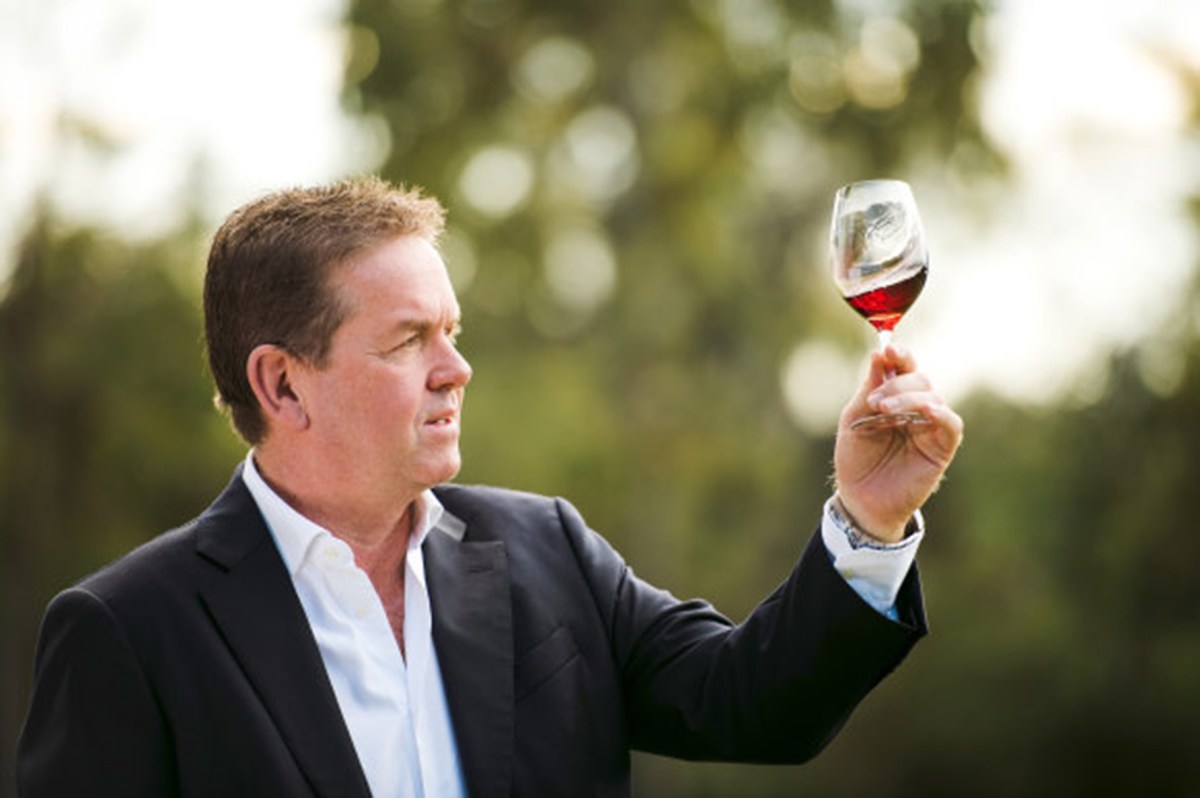
Craig Garvin, CEO, Australian Vintage, is right to enter the India market but needs to find the right way

The company behind McGuigan, Tempus Two and Nepenethe wines has set its sights set on affluent Indian consumers – but it might need to take a second look.

Australian Vintage Limited chief executive Craig Garvin believes the world’s second-most populous country, is “just like China”.

Yes, he is right that there are a million millionaires in Delhi and Mumbai – but does that equate to your market? These are the established wealthy, mainly male, and many are set in their ways.

Is a better market for Australian wines the young emerging wealthy of the future?

India is not “like China” – the Chinese population is much older and India has the youngest population on earth. Millennials and Gen Z are said to amount to around 750 million of India’s population. Known in India as the “demographic dividend”, this young population is the key to market entry for products like wine.

Already we know that sales of red wine are up in major urban centres, driven by demand from young women, educated and in the ranks of professionals and executives.

What distinguishes India for “premium” consumer products is that the market is young, it is emerging, it is a generation that instead of being “born someone” want to “become someone” and females are leading much of the consumer preferences of this young group. That is, it is ripe for change.

There is probably no other market like it in the world.

Other than its four main wine brands McGuigan, Tempus Two, Nepenethe and Barossa Valley Wine Company, Australian Vintage Limited also produces ready-made cocktail mixes under its Mr Stubbs brand, a range of gins under its Tempus Two brand, and a juice concentrate called Austflavour.

Australian Vintage is a strong company with some fabulous brands which will be just right for India – so long as the thinking and strategy is right.

INTO INDIA wishes them every success.

Austrade steps up promotion of Australia as an education destination

During 2022, Austrade stepped up the promotion of Australia as an education destination for young Indians – and has just completed a highly successful month of activity over there.

The India campaign has included:

  • The Study Australia Showcase in India ran 12-22 September 2022, with an accompanying campaign delivering 69.2 million impressions and attracting 3,420 event registrations. PR activity delivered 275 media articles with a readership of 13 million. The event covered six cities, and involved 26 Australian institutions, Australian Government and all state and territory Study Australia Partnership (SAP) members. Nearly 95% of attendees were satisfied or highly satisfied.
  • The Study Australia Entrepreneurship Challenge engaged 18 Indian institutions, 36 student teams and 36 academic and industry mentors across four Challenge themes: creative industries, cybersecurity, digital health, circular economy.
  • Shine with Australia: Discover your Brilliant Future Self (Phase III) ran in-market in India between 19 Sept – 17 Oct, resulting in a 122% increase in leads generated via the Study Australia website Course Search tool over the four-week period prior.

Read more here:

https://www.austrade.gov.au/australian/education/news/austrade-update/austrade-international-education-update-2022

The Department of Education has released year-to-date (YTD) September 2022 international student data. There were 569,204 international students on student visas for September 2022, 1% more than January-September 2021. The top 5 countries account for 59% of international students: China (26%), India (16%), Nepal (9%), Vietnam (4%) and Colombia (3%).

There were 669,958 enrolments between January-September 2022, composed of 52% higher education (346,451), 36% VET (241,203), 8% ELICOS (52,650), 3% non-award (18,516) and 2% schools (11,138). Compared to the January-September 2021 period, enrolments were up for ELICOS (45%) and non-award (46%) but down for higher education (-4%), VET (-7%), and schools (-14%).