The population paradox in India

Wonderful article by Sunaina Kumar in THE INTERPRETER for the Lowy Institute.

https://www.lowyinstitute.org/the-interpreter/population-paradox-india#msdynttrid=JLdBTs_-HnNZRPTGkUBRWQGZleYD6CL9EmGS-LibtvE

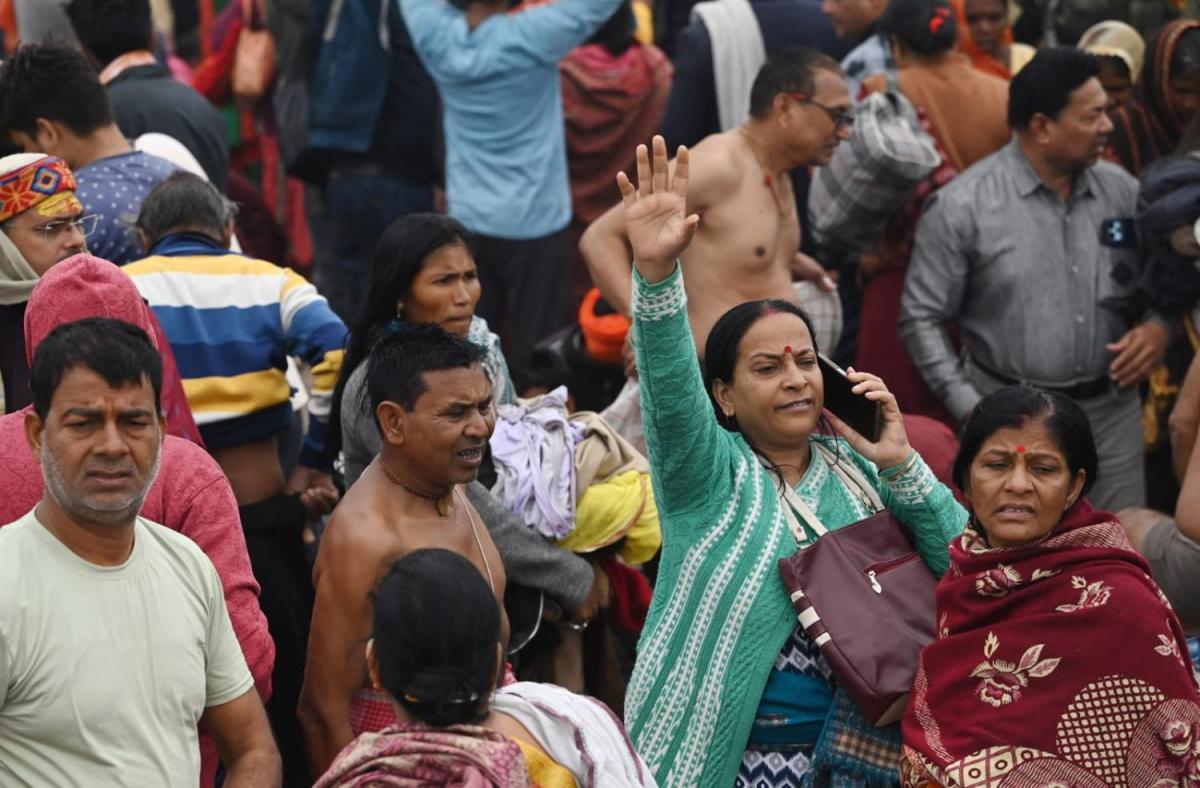
India is growing in some states, declining in others – but rapidly ageing all over. Here are some elements of the “population paradox”:

1. In April 2023 when India reached 1,425,775,850 people, it surpassed China’s population to become the most populous country in the world.

2. India’s population is expected to grow for several decades and could peak at 1.7 billion by the 2060s, while China’s population is already in decline, according to UN estimates.

3. The total fertility rate in India has declined from 3.4 children per woman in 1992-93 to 2.0 children per woman in 2019-21.

4. Population in India will however continue to grow, concentrated mostly in the northern states of the country on the basis of demographic momentum, a phenomenon that results from a large number of young adults in childbearing years.

5. A north-south divide – population is growing in the north and declining in the south.

6. Compared to the north, the five southern states of India are economically more advanced and have been highly successful in slowing population growth by focusing on development and women’s empowerment.

7. India has one of the youngest populations in the world: 65 per cent of the country is under the age of 35.

8. By 2030 one out of every five working-age people in the world is projected to be Indian.

9. To reap the demographic dividend, India will need to add 7.85 million jobs every year until 2030.

10. Alongside this phenomenon, India like China is rapidly ageing, which is linked with declining fertility, falling mortality risks and higher life expectancy in both countries.

The speed and scale of ageing is a global concern but in a country like India, it is a race against time, as the country will need to get richer before it gets older.

Sorting out priorities given the many levels of this “paradox” is a task for Governments and policymakers.

Indians shaping as the big thing in Aussie tourism

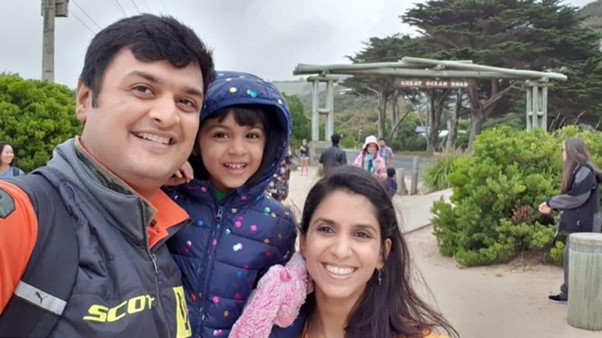
Indian tourists to Australia on the rise, spending more and trending to younger

Australia is now the second highest in India for awareness, consideration and active planning for touring Australia, just below Dubai and surrounds. The “big three” for Indians are Dubai, USA and Australia.

What is exciting about the Indian traveller market is that there is an attitudinal shift – from saving to spending.

Arrivals from India for the year 2023 were at 396,000; which were on par with 2019 levels.

Indian travellers are spending more – spending A$2.2 bn on their Australia trips (an increase of 20% when compared with 2019).

In addition to the shift to spending, there is a generational shift: Indians are travelling at a much younger age.

In my home state of Victoria and the city of Melbourne, India was Victoria’s second largest tourism market by value in 2019 and is the fastest growing international visitor market to return to Victoria following the reopening of Australia’s international borders.

Factors of greatest importance to Indian travellers are safety/ security, beautiful natural environments and value for money.

Seven in ten Indian travellers are aware of Australia as a holiday destination, with half considering travelling to Australia within the next four years and one in five who are actively planning their holiday.

Australia is strongly associated by Indians with world class beaches/ coastlines/ marine wildlife, having different and interesting wildlife, having a good range of accommodation, being family friendly and having good infrastructure.

That’s why our tourism organisations, Austrade and State Government trade offices are placing such focus on promoting Australian tourism.

It’s and exciting future for Australia.

Might change your life – or you might just have fun. Gurudev coming to Australia in October

“An Evening with Gurudev Sri Sri Ravi Shankar” is coming to Melbourne, Sydney and Perth in October.

I love this Art of Living program.

If you can get tickets – go! For Melbourne:

For me, it involves breathing techniques that lead to such a relaxed state of bliss. And attendees are fun people to be around.

At second level of what I like, Gurudev does not ever complicate things – he provides simple wisdom.

A Life Changed – think about this quote:

In my 20s, I was consumed by depression and everything felt hopeless. One day, my sister told me about a nearby event featuring a talk and meditation session with Sri Sri Ravi Shankar. As soon as I walked in, I felt something shift inside me. His words seemed to answer the questions in my mind, and I was filled with peace I had never known before.

After the session, meeting Gurudev in person was an experience beyond words. It was as if a heavy burden had been lifted off my shoulders. The bliss and boundless energy I experienced stayed with me for months. When this initially faded, I began addressing my depression, but this time with a much calmer and more peaceful approach. Because I learnt the SKY breathing practice with the Art of Living, it has changed my life for the better. I have accomplished things I once thought impossible and have found inner peace.

https://www.artofliving.org/au-en

Xentrix Studios Australia Animated Cricket Series ‘Snick and Willow’ to add real spin to our India relations

Xentrix Studios Australia has created a brilliant animated cricket series which will score big runs in both India and Australia – bringing us closer together on our favourite topic, cricket.

Don’t read what I say – watch this and be impressed…

The whole project is championed by famous cricketer Lord Ian Botham and was developed in collaboration with parent company, Xentrix Studios India.

Ken Cantrill, Head of Creative of Xentrix Studios Australia and Co-Creator of Snick and Willow. “The series is destined to be a massive success.”

Lord Ian Botham
Lord Ian Botham

This series is more than cricket, bridging cultures and inspiring young audiences worldwide. That is why INTO INDIA is so excited.

It educates about teamwork, courage, and the spirit of sportsmanship.

Can’t wait for it to come out – rumour is it will be launched during the Australia vs India Boxing Day Test this summer in Melbourne.

Want to know more about Xentrix?

https://www.xentrixstudios.com/

Jasmine Batra and AICC outlining a thoughtful way to enter the India market

Two organisations that advocate a “more thoughtful” way to enter the Indian market came together last week in a wonderful seminar providing some super advice.

First was the Australia India Chamber of Commerce (AICC) which hosted the event and their Chair, Chris Mooney, put the case for the chamber’s National Industry Groups doing well researched and sequenced steps to engage with India. Each group does research for a white paper, builds a community and knowledge group around it and leads to well prepared India missions.

Second was the keynote speaker, Jasmine Batra from Arrow Digital, who have a program called “The Big Leap” taking clients through a 12 month program of understanding and entering India. INTO INDIA has long advocated that slower market entry produces superior long term results – a strong alternative to the traditional Aussie hasty transactional approach. We love “The Big Leap” concept.

There are three major factors that make India today a very special market – first, the young population with an average age of 28; second, the rise of the tier 2 and 3 cities, including their specialisation, three, India’s global leadership in rolling out digital infrastructure that is transforming business and society.

Jasmine talked about importance of Food, Festivals and Family when thinking about India. “Family” includes what she called “the crazy rich” such as Tata, Ambani and many more. But it also goes right down to small community business families. Your journey will interact at all levels at some time.

Reducing risk is vital. There are three steps you can take. First, understand the cultural context. Second, do market research and find local partners. Third, network community and do due diligence.

In conclusion Jasmine Batra said you should get over there, get around and get partners. By research and regular visits, your more thoughtful engagement with India will produce results.

La Trobe University very kindly provided the venue.

CONTACT AICC

Contact Jasmine Batra

About Us

9 Rules for Thriving in India

Rules compiled from my personal experience – and with some reference to “Rules for Living” by the School of Life…

1. ACCEPTING IMPERFECTION

You will never be happy in India if you seek perfection. Hang on…maybe seeking perfection anywhere is a flawed idea. Is it possible we humans are inherently flawed and broken? Is perfection beyond us? Even the west with its “belief” in science has not stamped out stupidity and pain. Life will always include suffering – this is a big Indian idea. Accepting this makes everything so much better.

2. VULNERABILITY & COMPASSION MAKE LIFE SHINE

This follows from “Accepting Imperfection”. We are all in the same boat, and recognising that we all share weaknesses, fears and mistakes can make us feel generous towards others who are also imperfect – and feel compassion for ourselves.  I learnt in India that sharing your vulnerability, talking about it to people you have just met, can lead to amazing connections.

3. ALWAYS BE KIND

To be kind to others is a choice. Being kind is a form of respect in action. In India many people accept that what happen to us is mostly out of our control, so stop struggling and find a way to live. It also acknowledges that terrible things can happen anywhere, anytime to anyone – so we can be scared or even resentful, or we can just be kind instead. It feels good.

4. HAVE A GOOD LAUGH

I seem to smile and laugh more when in India. There is a kind of blanket acceptance that life is weird, and humans are pretty funny, so have a good laugh. Accepting all of this with good grace goes a long way to easing our frustrations at our own stupidity. Back home we often see acceptance as just doing nothing – but in India acceptance becomes the first step to boldly trying your best, knowing that any outcomes will not be perfect. Why would you expect a planet of 7.8 billion people just as foolish as you to run smoothly, why expect it to be better, why look for “it SHOULD be better”? Just have a chuckle.

5. WE ARE GOOD ENOUGH – AND NOT

I dropped my obsession with “perfection” on my first arrival in India. Sure, the luggage system looked a bit messy, but they never seemed to lose my luggage. I found that the alternative to perfection is not failure, This small thing (luggage) can lead to a greater idea – rough and flawed as we all are, we can make our peace with the idea that we are, each of us, ‘good enough’. We in the west are way too quick to call out “failure”, especially in ourselves. But being ordinary or not measuring up to someone’s standards is not failure – it is just how things are.

6. FINDING WHY ROMANTICISM IS A WASTE OF SPACE

I have learnt a lot from young Indians here in Melbourne and in India. In India there is much to learn about the gradual growth of friendship into love, as a more stable approach than “falling head over heels in love”. But even that is not perfect.  I learn that love grows out of friendship, and that compatibility grows out of love – while in the west we see it as a prerequisite for love. But I also learned that having said all of this, no one is ever wholly ‘right’ nor wholly wrong. We are just learners, or as Gandhi said, seekers.

7. ACCEPTANCE IS BETTER THAN CONSTANT STRUGGLE

When the great Indian philosopher Krishnamurti was on his death bed, he was asked how he maintained such a composted and happy mind. His reply was a teaching for me. He said: “I don’t mind what happens”. It made me realise that almost all of the time, with whatever is happening, my mind made up stories or created ideas – most of which were not helpful because they led to struggle or resistance to what was happening. Things might be bad, but we can still be cheerful. Don’t mind what happens.

8. CLEARLY SEE WHAT IS HAPPENING

Despite our seeming importance, we are not at the centre of the universe – probably not at the centre of anything. Seeing ourselves at the centre means we do not really see as it is, we see as we are. Back to the baggage at the first airport I visited in India – I did not see what was happening, I saw it as I was – impatient, not trusting, agitated and emotional. Putting myself at the centre, when I meet people, I meet them where I am at. With wisdom from India (“I am not the centre”) – I can meet people where they are at. It is a clearer vision.

9, YOU WILL FORGET ALL THIS

I can forget anything – and probably you can too. Our minds might be amazing but they also just – forget stuff. So, any big ideas need to be revisited, again and again, almost so they become a habit. Even if only one of these ideas works for you, go over it and keep it for your next visit to India.

Australia risking major reputational damage over education visas mess

Something weird is happening in denying visas for education study in Australia.

Students from India, Pakistan and Nepal are most impacted by the visa denials.

“The unequivocal message this sends… is both unfair and unbecoming”

The Independent Tertiary Education Council Australia (ITECA) is a membership-based peak body bringing together independent providers in the higher education, vocational education and training sectors. It has made some comments which are sensible and powerful.

“This situation not only undermines the aspirations of Indian nationals with the genuine intention to pursue educational opportunities in Australia, but also casts a shadow over the nation’s reputation as a welcoming and inclusive study destination,” ITECA chief executive, Troy R Williams, said.

“The unequivocal message this sends — that Indian students are somehow less desirable or unwelcome in the eyes of the Australian government — is both unfair and unbecoming of Australia’s long-standing values of diversity and inclusivity.”

ITECA – which has previously voiced concern about the migration strategy – also said that the government’s actions “seem to be at odds with broader governmental efforts to strengthen economic and security relationships with India”.

Read more here:

How to Create an Effective Cross-Cultural Training Program

As Australia builds closer relations in Asia while India strides into the western world, it becomes more important than ever that employees have cross cultural knowledge.

My reading on cross cultural training programs is that the best focus on the assimilation of workers from a variety of cultures into a common corporate culture (sometimes called “cultural congruence”). The best also teach “cultural differentiation” – how to maintain your own culture while recognizing the value of others. That has been my mantra – stay true to your culture while adapting where you can.

This messaging has to start from the CEO and flow down, improving internal and external cross-cultural communications.

But beware – many existing programs are basically just etiquette training—such as whether you should bow or shake hands—and do not deal with the bigger issues.

Also beware of just training people in the basics such as Americans do this, Indian do that, Aussies do something else. Interesting and useful – but does not prepare your ream for behaving in cross culturally different situations. This takes many employees outside of their comfort zone.

Boeing: A Mixed Approach

At Boeing, the world’s largest aerospace company with 330,000 employees in 28 countries, leaders use a mix of approaches and tools—from online modules to afternoon seminars to one-on-one training—to help staff become more culturally aware. All employees are trained using GlobeSmart, an online resource developed by Portland-based Aperian Global. Workers and their families embarking on overseas assignments are given one-on-one sensitivity training and cultural orientation sessions.

The goal is to make sure employees are “not just landing in a country and getting introduced for the first time,” says Lisa-Marie Gustafson, SPHR, a talent manager for Boeing’s supplier management group.

Boeing also arranges “lunch and learn” cultural talks, employee rotation programs to allow overseas staff to work for nine to 18 months in the U.S., and diversity summits twice a year in U.S. locations.

Good training programs address subtle differences between people of different cultures. How is trust built differently in this culture? What is the most constructive way to provide criticism?

SAP: One Size Doesn’t Fit All

SAP is a software giant based in Walldorf, Germany, with locations in 130 countries. It has an elaborate diversity program, which includes cultural sensitivity training.  

Employees embarking on overseas business trips can access online cultural briefings. All SAP employees can take classroom-based training and receive interactive instruction. The company uses a mix of internal and external trainers and customizes its training depending on the location destination and employees’ needs.

Professor Andy Molinsky and “Global Dexterity”

I am a big fan and user of programs from Professor Andy Molinsky from Brandeis University – he claims the best training programs should also teach employees how to act in cultural situations that make them uncomfortable. That is, training would ideally teach employees “global dexterity”—which is also the title of Molinsky’s book.

In his programs, a student from Asia who may be culturally programmed to remain quiet unless she’s asked to speak, would practice speaking out at meetings without being prompted. Or an American who’s uncomfortable giving blunt feedback could practice that skill. Molinsky says the idea is for students to be put in realistic situations and to benefit from feedback and analysis in a supportive environment.

Making a start

Of course, for most corporations the first steps in building effective cross cultural training come from knowing your employees and assessing current attitudes.

You can choose to start with a simple program – creating a workplace committed to treating every employee, customer and client with respect. Of course, the program should define what that means—such as using no racial terms, jokes or language, even if such conduct is legally permissible in a particular country.

Tesla shows why India is the number one market right now and for many decades

The beauty of scale and economic dichotomy. 20% of Indians are growing their incomes and about to increase discretionary purchases – this 20% is a great market of 280 million people.

Mugunthan Siva, Co-Founder of India Avenue Investment Management gives some valuable insights into how this scale and dichotomy works.

The other 80% of the population of 1.4 billion is the “factory of India”, which allows companies like Tesla to manufacture more cheaply out of India. Plus of course the rural population with increasing productivity.

The real beauty of this – as employment and skilling in this segment increases, it will also start participating in more consumption.

A beautiful summary of why India today is the market of choice.

Read more detail here:

https://www.businesstoday.in/technology/news/story/tesla-to-set-up-factory-in-india-within-2-yrs-start-ev-imports-next-year-406499-2023-11-21

Searching for India – during the joyous explosions of Diwali

I did not know about the Diwali Festival – this is one of my first visits to New Delhi and I am staying in the beautiful old art deco Taj Ambassador Hotel, close by to the Khan Market and, these days, to a Delhi Metro station. The hotel is an oasis of calm.

It’s the end of a busy day and I retire early, drifting off and then sitting up startled by the massive explosion outside – it seems to be on the road in front of the hotel.

I put on some clothes and race down to reception and breathlessly ask: “did you hear that! What is it?” The reception staff are beaming, their joy is obvious. “Sir, happy Diwali – Indians let off firecrackers to celebrate.” I ask: “At this time of night?” She replies: “Sir, it could be at any time, day or night, we never know – but there will probably be more tonight.”

Since I cannot sleep, I check out this Diwali festival. It is beautiful – if a bit loud.

There is nothing in India more joyous than the annual Diwali “Festival of Lights” celebrating the triumph of good over evil, light over dark and knowledge over ignorance. Surely this optimistic and hopeful theme is relevant to our world today?

Families come together for meals and exchange of gifts such as sweets and dried fruits. Children look forward to Diwali in India in much the same way as they look forward to Christmas in the west – with great excitement and anticipation.

In towns and cities, public buildings are lit up and throughout India homes are surrounded by candles (diya), while people wear their smartest new clothes, and the atmosphere is one of hope. At the end of the day, the sky is lit up by firecrackers and sparklers.

People express their thanks for things like good health, wealth, knowledge and peace.

At heart, Diwali is an expression of goodwill to all people, and so its public face is not about the voice of one religion. One of the few festivals to be held across the whole of India and touching all 1.4 billion people, Diwali cuts across religions and is celebrated by Hindus, Jains, Sikhs and Buddhists.

Diwali is really a reminder of the beauty of this world and all things in it – what a great message of hope and optimism this is for all our children.

A final note on Diwali

Although my first encounter with Diwali – that explosion in Delhi – filled me with feat in this era of terrorism, yet with all that, Indians freely continue to celebrate as they always have. I admire that.

I was in Jaipur (the pink city) during one Diwali and vendors were selling firecrackers on the pavement – they were stacked about a metre high, and one vendor had about 10 metres of these giant explosives. Bigger than you would have seen when firecrackers were legal in the west. The vendor was happily sitting on top of the lethal pile, smoking a cigarette! Nobody but us noticed or cared. As I learn about India in my search, I am not suggesting selling firecrackers on the footpath, but maybe we can learn again to relax a little in the way Indians do.

As the influence of India grows and as the Indian diaspora in many countries also expands, I hope that the beautiful Diwali might become a truly global celebration of all that is good in us.

This is one of my first lessons as I continue my search for India.