
The Belt and Road Initiative and the Geopolitics of the Indo-Pacific Region

David Morris is a former Australian diplomat and current expert/advisor on regional issues, risk and international relations. He recently wrote on “The Belt and Road Initiative and the Geopolitics of the Pacific Region” published in Research on Pacific Island Countries, Social Sciences Academic Press (China), 2019.

The Belt and Road Initiative has become associated with a geopolitical “China threat” discourse in the South Pacific, he writes.

Are China and Australia, the dominant regional player in the South Pacific, driven by geopolitical imperatives to compete for power? Or do their different geopolitical needs provide opportunity for cooperation that is mutually beneficial and manages risks in the region?

As a commentator on India and the Indian Ocean, I can see much of what David Morris writes could be applied to the Indian Ocean rim countries.

Morris analyses supposed Chinese “threats” as well as risks to China, including fears of a military base in Vanuatu, Chinese debt-funded projects in Tonga and closer economic cooperation with Papua New Guinea.

He concludes that it is feasible for Australia to meet its geopolitical imperatives if its regional security leadership can be maintained.

A geopolitical analysis of China in the South Pacific concludes that China is unlikely to seek regional security leadership if it can ensure access to trade routes and markets.

If Australia could move beyond geopolitical rhetoric, it should therefore be possible for Australia to partner with China to support sustainable development, mitigate risks and ensure broader stability of the South Pacific region, he writes.

With large doses of common sense, Morris writes that Australian activity could be complementary to China’s BRI, and that while there are political risks, the two countries could cooperate to reduce risk and ensure projects are sustainable.

This would be great – but my view is a big barrier to anything Australia does in our region is always its world view of “goodies and baddies” with the USA as the major “goody” and China the current “baddy”.

It would be great if influential countries like India, Australia and China could create a new collaborative model that brings real development to those poor communities in our region.

Is this possible?
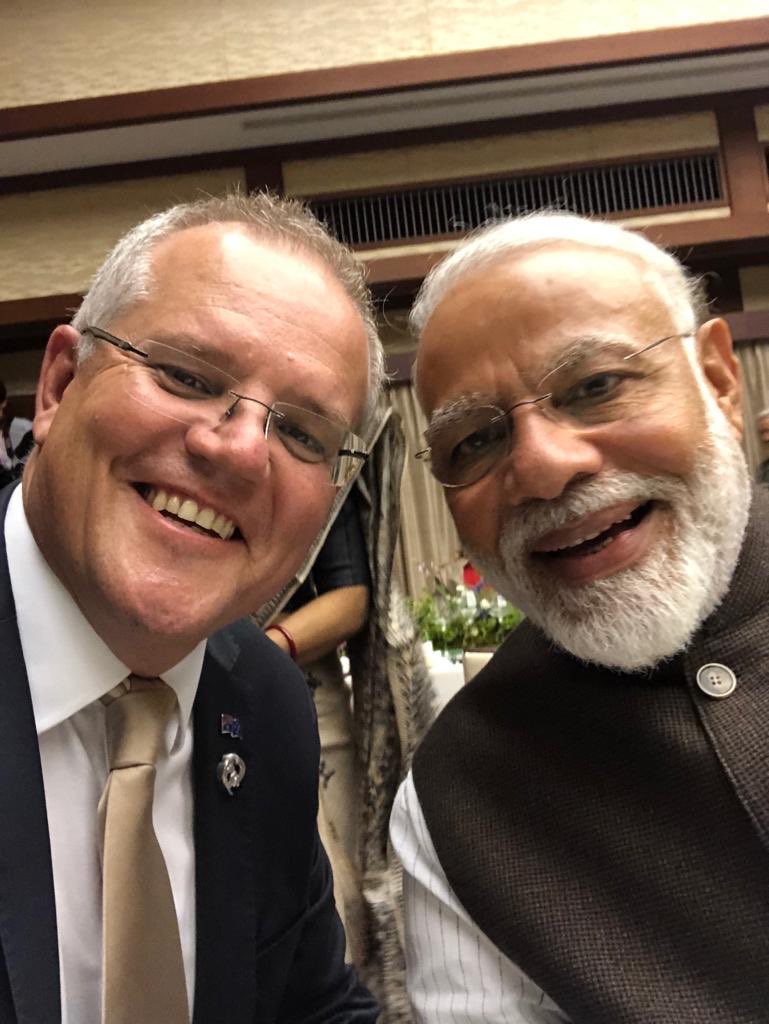
ModiMorrisonSmile2

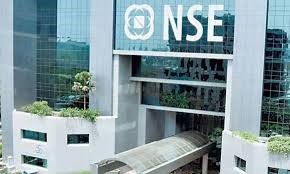
India launches Artificial Intelligence knowledge centre for NSE

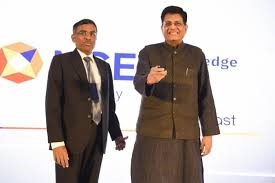
India’s National Stock Exchange (NSE) has launched a Knowledge Hub in New Delhi, an Artificial Intelligence (AI) powered learning ecosystem that will assist the banking, financial services and insurance (BFSI) sector.

India has two major stock exchanges – the NSE and the Bombay Stock Exchange.

nse6

Speaking on this occasion Commerce & Industry Minister Mr Piyush Goyal (pictured above right) said that although India has developed as the second largest fintech hub in the world, a lot of work still needs to be done in the BFSI sector. He hoped that the Knowledge Hub created by NSE will fill in these gaps and help the financial sector to move into the future.

The NSE Knowledge Hub will enhance skills and help academic institutions in preparing future-ready talent for the financial service industry. It is also available on mobile and attempts to bring together world class content and learners through this state-of-the-art and future-ready platform.

The use of AI will ensure that the skill upgrade is affordable and accessible. Piyush Goyal said AI and Machine Learning will contribute US$ 1 trillion to the Indian economy by 2035.

Industry4.0 2

Is India really growing? Hyatt Hotels think so, adding 11 new hotels in 2020

Hyatt Hotels is bullish on India and plans to open 11 new hotels across India by the end of 2020.

Hyatt now has 32 hotels across 20 destinations under its eight brands in India – I recently stayed at Hyatt Regency in Chandigarh and it was an outstanding hotel – well located, good food and beverage service and everything went smoothly.

The hotels at Thrissur, Kochi, Jaipur, Dehradun, Trivandrum and Udaipur will be under the Hyatt Regency brand.

India is a very important market for Hyatt. It is one of the top three global growth markets for the company after the US and China and there is a huge scope of growth as the demand still exceeds the supply.

So, for Hyatt, in 2020 India is a growth story.

Reflections for the New Year – from Ram Dass

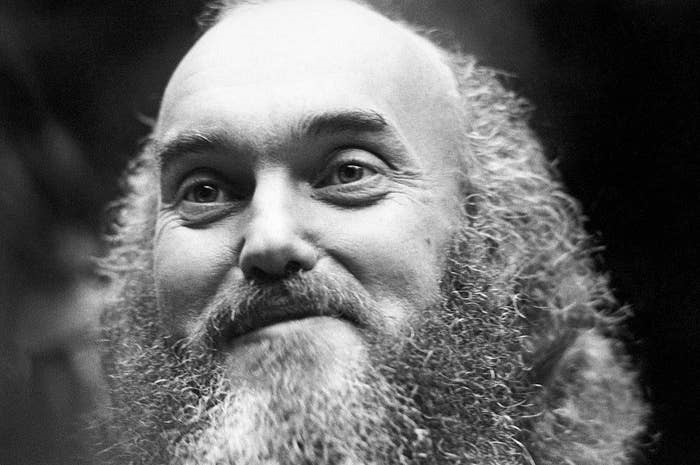
From his beginnings as Harvard Professor Richard Alpert, he became Ram Dass in India and is now at the age of eighty-eight. Here, for the New Year, are some of his quotes.

“Everybody is playing with their stories; who they think they are. It’s more fun to just witness it all. To be in the environment in which it’s all happening.”

“Treat everyone you meet like God in drag.”

“You walk down the street and you’re somebody; you dress like somebody; your face looks like somebody. Everybody is reinforcing their structure of the universe over and over again and you meet [each other] like two huge things meeting. We enter into these conspiracies. You say, I’ll make believe you are who you think you are if you make believe I am who I think I am.

“How do we know who we are? We might be one breath away from enlightenment or death or who knows? The uncertainty is great. It keeps it wide open.”

“Give up the anger. Working it through is making it something. Just give it up.”

“When you go out into the woods, and you look at trees, you see all these different trees. And some of them are bent, and some of them are straight, and some of them are evergreens, and some of them are whatever. And you look at the tree and you allow it. You see why it is the way it is. You sort of understand that it didn’t get enough light, and so it turned that way. And you don’t get all emotional about it. You just allow it. You appreciate the tree. The minute you get near humans, you lose all that. And you are constantly saying ‘You are too this, or I’m too this.’ That judgement mind comes in. And so I practice turning people into trees. Which means appreciating them just the way they are.”

“The game is to be where you are. Be it honestly and as consciously as you know how.”

And from me – wishing you a happy and healthy New Year.


How should you start a speech?

I have just had three wonderful weeks in India. I made some speeches. I listened to a lot of speeches.

I was asked: “What is the best way to start a speech?”

We all know the bad ways. For example, someone just reads from their powerpoint. Or someone is checking the microphone.

But from Conor Neill from Ireland I have long applied these three ways to start a speech:

Ask a QUESTION

My recent topic has been How to Communicate and Survive during Industrial Revolution 4.0. So some times I start with “How will you keep your job when robots take over?” The question should be about a problem your audience faces.

State a FACT

Find some amazing fact that leads to your topic. One of Conor’s favourites is “There are more people alive today than have ever died”. If the fact shocks, even better. With my topic I use “over 65% of the kids in school right now will find jobs that have not even yet been invented.”

Begin a STORY

“I was in India recently and I met a person who said something which changed how I think about communication and leadership”. The audience is keen to hear what that “something” was. It should connect to your topic.

So, that’s the beginning.

Then, I suggest you have a long pause every 5 minutes or so (shorter if you like) and use another beginning and bring the audience along again using one of these three starters.

Good luck! (equals good preparation).

The harsh truth about how Australia has made a mess of relations with India

Scott Morrison has a huge challenge ahead as he travels to India. As leading Asia commentator, Greg Sheridan, has written in The Australian, Morrison “needs to fundamentally reset the relationship.”

In my almost two decades now of connection with India, I have seen first-hand how badly Australia has dealt with India – and this goes for government, education and business. You could possibly put in the arts and culture too.

As Sheridan says: “There is no relationship of such importance that Australia, historically, has managed so badly.”

ModiMorrisonSmile2

Check out how Sheridan describes India – “By 2035 India will have more people than China. All forecasts are fallible, but it is widely thought that by 2030 India will be the world’s third largest economy. India commands ­immense soft power and cultural richness. In any bookshop there are novels written by Indians from India, and Indians in the diaspora. A chunk of the British and Canadian cabinets are of Indian origin. The US has had two ethnic Indian state governors, Bobby Jindal and Nikki Haley. Both became nat­ional figures. The best Australian film this year was Hotel Mumbai.”

One big hurdle for Aussies is that since independence India has been very close to Russia (and still is) and has the capacity to maintain close relations with countries we do not like.

Australia has a “goodies and baddies” approach to the world – whereas India does not make the same judgements. We need to work with this.

Sheridan provides the first accurate statement of how bad things have been – “…over many decades, Canberra comprehensively messed up the Indian relationship and achieved radically sub-par outcomes in our own interests. The three great non-Chinese Asian powers are India, Japan and Indonesia. They are critical to geo-strategic and economic balance in the Indo-Pacific. We have a deep relationship with Japan. We pay a lot of attention to Indonesia. But the work with India is almost all ahead.”

Are we up for this challenge? I am not sure. Canberra is so Washington focused, and China preoccupied, that India does not rate enough.

Sheridan wants Australia to try again for a free trade agreement with India. I love the idea, but I have little confidence we can achieve it. In my time with India, Australian diplomats have blamed India for every delay and the fact that we did not get a deal. I have talked to the Indians and am not so sure the blame was so one sided. The question is – can Australia adapt and become more flexible with India? If we can, we might just snare an FTA.

Well done Greg Sheridan for such insights in Australia’s relations with India.

Anil Wadhwa could be reviving Australia-India trade relations – Lowy Institute – but health, agri and sport could be the key

So good to read on the Lowy Institute daily publication “The Interpreter” that India is doing something unusual in response to Australia’s Peter Varghese report – it is responding with an Australian Economic Strategy (AES). By the way, well done Lowy Institute for powering this and other national discussions.

The AES is led by former Ambassador and Secretary (East) in the Ministry of External Affairs in India, Anil Wadhwa (pictured).

Let’s not get bogged down on the failed Free Trade Agreement with India – let’s not wait forever, and, by the way, trade is progressing without it. We would prefer to have one, but we can make mutual gains without it.

The key is that the AES from India means for the first time we will have a blueprint for economic engagement with another nation – this is the view of Mukund Narayanamurthy and Danielle Rajendram writing for Lowy Institute. Well done to you both!

They point out that unlike India’s engagement with the US, Canada, UK, and Japan, our relative size means that it is highly unlikely that Australia will have a similar scale of engagement with India. So, they say the crux of the relationship, certainly from a materiality perspective for both sides, will lie in mining, energy, infrastructure, education, and tourism.

This where I differ. They see healthcare, agribusiness, and sport having relevance but “may not be as material in absolute dollar terms” – my view is that these could be the areas that unlock the “India code” and get Australia into the big game with India.

The “India growth story” is a long-term one for investors and business

India remains a compelling long-term investment and business story – despite a lot of negative talk about the Indian economy (mostly politically motivated but also buoyed by a slow down in growth).

blackstone5

Most commentators expect the slowing to be temporary.

Take a look at the MSCI India index which has comfortably outperformed the MSCI Emerging Markets index (697.7 per cent vs. 485.1 per cent). Not too bad.

Favourable demographics is another driver with India having the world’s largest population of millennials – those aged between 21 and 38 – India has 450 million and these people will transform India. What it eats, drinks, how and where it travels, fashion, what it watches and listens to – life will change fundamentally.

More than 50 per cent of the population is under 25 years of age – a total of 600 million – with 1 million new people entering the workforce each month. Contrast this with China, which is ageing faster than any other country, with the over 60’s expected to account for 35 per cent of the population by 2050. Europe, the US and Japan face similar demographic challenges.

Urbanisation is another driver of growth – a third (34 per cent) of India’s population is urban, but it’s rising fast. Compare this to China (58 per cent) and Japan (92 per cent) – you can see the long-term growth story of India.

Then there is structural and economic change, with pro-business Prime Minister Narendra Modi – let’s steer clear of short-term politics but acknowledge that change has happened, and more is to come.

Visitors to India notice rapid improvement in infrastructure – road construction, plus 27 km of railway built per day, while India’s metro system is growing again, new airports and more.

Investors and businesses should be finding a way to participate in and benefit from the long-term India growth story.

Macquarie on a winner with toll road investments in India

In March 2018, an Australian institutional investor walked away with some prized toll-road assets in India – on the Golden Quadrilateral in the first auction for toll-operate-transfer (TOT) bundles.

MIRA – Macquarie Infrastructure and Real Assets – had bid aggressively, almost 55% over the base price, and many thought it was a flawed decision. But not anymore.

MIRA’s portfolio is relied on by more than 100 million people every day. Their team of over 800 people invests in businesses that underpin economies and communities – aiming to add real and lasting value for our clients and the people these assets serve. MIRA manages $US129 billion in assets, including: 155 portfolio businesses, approximately 600 properties and 4.7 million hectares of farmland.

MIRA is part of Macquarie Asset Management (MAM) – the asset management arm of Macquarie Group.  As at 31 March 2019, MAM had more than $US385 billion of assets under management.

It may just have picked up some of National Highways Authority of India’s best assets. Toll collections are likely to exceed expectations, reveals an analysis of FY19 figures.

In India, MIRA has found a way to participate in the “growth story”.