Australia Day honours for Robert Johanson – still changing relations of India and Australia for the better

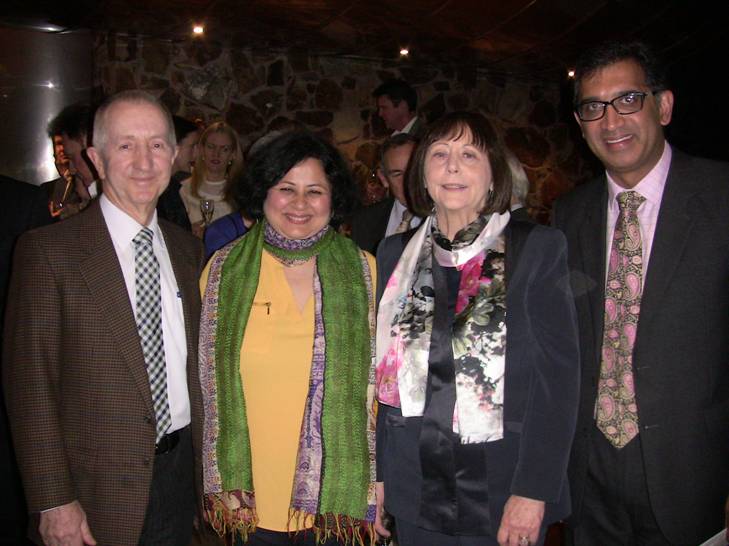
Below (L-R) Robert Johanson, Chairman Bendigo Bank and Australian Friends of Asha Slums; Dr Kiran Martin; Anne Rathbone, Owner of Yering Station Winery, and Harish Rao from Friends of Asha Australia

Robert Johanson AO was honoured in the Australia Day honours by appointment as an Officer of the Order of Australia. This recognises his distinguished service to the banking sector, to relations between Australia and India, and to tertiary education governance and financial administration.  
Robert has brought respect for all and considered commentary to his many roles and especially as Chair of the Australia India Institute – from 2010 to 2019.   He served for 31 years on the board of the Bendigo and Adelaide Bank, 13 of which were as Chair of the bank’s board.
 
Robert was also Deputy Chancellor of University of Melbourne from 2007 to 2017.   He has also been the Chair of the Board of the Australia India Institute in Delhi since its inception in 2015, a role which thankfully he continues to hold – this continues his relationship with India and ongoing support of Australia India connections. 
 
Robert has a strong personal commitment to making a difference for those in need and has served as the Chair of the Australian Friends of Asha, the Australian branch of Asha India. Asha is a charitable organisation created by Dr Kiran Martin in 1988 which works with people in India residing in slums and benefiting more than 700,000 people from over 91 slum colonies of Delhi. Australian Friends of Asha was launched by former Governor of Victoria The Honourable Alex Chernov AC QC in November 2012 and aims to provide support to Asha and promulgate its work throughout Australia.

Gandhi exhorted us to “be the change you want to see in the world” and Robert has contributed more than any other to the positive change in the relationship between Australia and India.  
Below is Robert Johanson with Mahinder Shrivas who thanks to Asha went from a Delhi slum to Trinity College at Melbourne University

India Budget 2021 – analysis by Nangia Andersen India

Rakesh Nangia, Chairman, Nangia Andersen India

Easy to use and understand analysis of the India Budget by our friends at Nangia Andersen India:

“The Finance Minister delivered a growth oriented reformative budget giving due thrust on capital investment.  Amidst the high expectations of a pandemic-struck India, FM treaded the tightrope successfully, maintaining a balance between revenue gap and government’s commitment to the pained sectors of the economy, viz. infrastructure, healthcare, public transport system, auto, textiles, digital India. While the budget maintained the status quo on tax rates, incentives were accorded to units of IFSC and start-ups. Additionally,  steps have been taken to improve the efficiency of tax administration system, rationalization of MAT, equalization levy, etc”

We hereby present the ‘India Budget 2021: Snapshot with Industry Experts’ Take

Will your “reset” include new approaches to India?

Australia and India have never been closer. The last year has seen major advances in strategic and defence engagement and cooperation.

Now, as business and organisations reset, does India play a role in your future plans?

Growth in India is outstanding and assured – largely because of a young population boosting domestic demand.

It is a complex and very different market, but one which rewards the right entry strategy and long term engagement plans.

Time for India to be part of your reset?

Business and investment can ride the wave of closer relations between India and Australia

Yesterday was both Indian Republic Day and Australia Day – and in these times the closeness of the two countries makes us more aware of what we have in common.

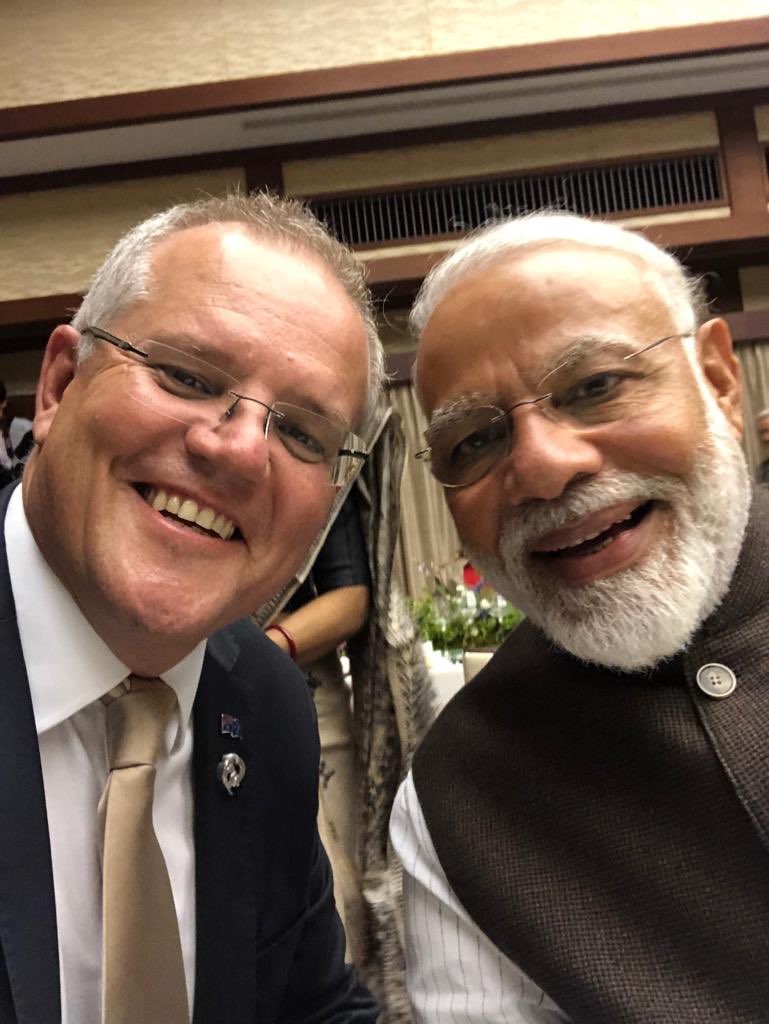
Australia’s Prime Minister Morrison wrote yesterday that: “While, for now, our people are separated, the truth is that Australia and India are closer than we have ever been. Our progress is unchecked. We’ve taken huge strides in the last year, and, despite its enormous hardship and loss, 2020 will be remembered as a pivotal moment in our friendship.”

Business and investment can become the next step in the “huge strides” in the friendship of the two great democracies.

India’s growth and demand right now means that every sector of Australian business should have an “India strategy” and become part of this amazing growth story – and the future closeness of the two countries.

Here is the link to his article:

https://timesofindia.indiatimes.com/blogs/toi-edit-page/what-we-have-in-common-wonderful-coincidence-of-republic-day-and-australia-day-indicates-our-natural-partnership/

First INTO INDIA blog for the year 2021 – and it has to be against racism

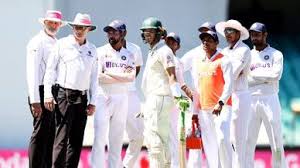
The disturbing instances of racism against an Indian cricketer are a reminder that racism is always there and we need to oppose it. It was good to see 6 people ejected from the ground and well done by the Indian cricketer for calling it out.

Racism hurts individuals and communities.

Individuals

A study of over 800 Australian secondary school students found that racism had huge mental health impacts on young people who experience it, including:

  • ongoing feelings of sadness, anger, depression and being left out
  • headaches, increased heart rate, sweating, trembling and muscle tension
  • a constant fear of being verbally or physically attacked
  • not wanting to go to school
  • having little or no trust in anybody apart from family. 1

Communities

Australia is now a very culturally diverse country – about half of us were born overseas or had one or more parents born overseas. When racial tensions develop, they don’t just affect one or two of us – they affect us all… as neighbours, workmates, friends and fellow Australians.

Racism creates a society where people don’t trust and respect each other.

When it’s allowed to flourish, it lessens us as a people.

Let’s all take a strong stand against racism.

(Thanks to the Australian Human Rights Commission for some of the above)

India releases its first ever “Australia Economic Strategy” as the two countries move closer

The launch by India on 18 December of its Australia Economic Strategy (AES) – the first of its kind for India – could be an exciting step along the way to increased trade. As KPMG has expressed it: “It demonstrates India’s intent to fast-track the relationship with Australia in a post-pandemic world.” Exciting.

My view is that as Australia and India move closer together, opportunities will emerge for the two to create and lead an “Indian Ocean Countries Group” – a pathway to peace and prosperity in our region.

India and Australia could lead a prosperous and peaceful Indian Ocean Region

The AES is India’s response to Australia’s An India Economic Strategy to 2035 (IES), launched two years ago.

The AES adds to the Comprehensive Strategic Partnership (CSP) announced by Prime Ministers Morrison and Modi in June 2020 – and both are real evidence that India and Australia are moving closer together.

Three pillars of India’s strategy

The AES is based on three pillars: resources; technology & services; and research & innovations.

Five key sectors

According to KPMG there are five key sectors:

The first is Indian investment in Australia’s mining and resources sector, especially lithium, cobalt and nickel, important for a rapidly growing e-vehicle market.

Second is Indian investment in renewable energy both in the establishment & operation of solar farms as well as the supply of EPC services with Sterling Wilson Solar Limited being a case in point.

Third is health and pharmaceuticals. Collaboration in clinical trials, cancer research, medical & health-tech and training, knowledge transfer and sharing of Australian best practices in hospital administration and patient care.

Fourth is investment in Australia’s agribusiness sector including farmlands and Australian food processing capabilities. There is also significant potential for knowledge sharing and collaboration in best practices for dairy processing.

The fifth is software & information technology. India’s tech giants already have sizeable operations in Australia with further organic and inorganic growth on the cards and an opportunity to extend their business portfolio into government accounts. Further, as Australia looks to build up internal capability and capacity, there is opportunity for the tech giants to set-up centres of excellence or innovation hubs in strategically important areas such as cyber security, cloud and digital, for Australia and the wider ASPAC region.

Make in India program

The new AES, and IES and the wider strategic partnership, all serve to complement India’s flagship Make in India program, which makes India a credible alternative for lower cost manufacturing for Australian companies as they look to diversify business and supply chain risk in a post pandemic world.

Conclusion

Close relations have historically been built on a combination of defence/strategic alliances, mutual investment and trade.

For Australia and India, the future is looking bright in all three areas.

Bill Gates says India is one to watch for tech innovation

Tech pioneer Bill Gates praised India’s policies for financial innovation and inclusion, saying his philanthropic foundation is working with other countries to roll out open-source technologies modeled on the country’s implementation.

“If people are going to study one country right now, other than China, I’d say they should look at India,” Gates said at the Singapore Fintech Festival on Tuesday. “Things are really exploding there and innovation around that system is phenomenal.”

India has built ambitious platforms for universal identification and digital payments, including the world’s largest biometric database and a system for sending rupees between any bank or smartphone app. Gates said those policies have drastically reduced the cost and friction of distributing aid to the poor, especially during the pandemic.

6 steps to bring India and Australia closer in 2021

6 steps to strong India-Australia ties in 2021

  1. Australian Prime Minister Scott Morrison and Indian Prime Minister Narendra Modi get on well – they can turn that into specific outcomes by continuing the close dialogue.
  2. PM Modi is a politician who likes to think outside the square, so innovative ideas from Australia will be welcome in Delhi.
  3. Two-way trade is at around A$30 billion and can grow – aiming for slow and steady rather than dramatic boosts will work well for both sides.
  4. Food security and food quality provide collaboration opportunities for both countries. India offers the advantage of diversifying Australian global agricultural exports away from wheat and beef and towards vegetables and fruit.
  5. More interaction at all levels of politics (State and Federal, Ministers and Members) will help because India is a complicated political puzzle with Modi pushing more decision making down to state level and competition between states is increasing – and there are 29 of those!
  6. Creatively looking for ways to collaborate will work well and move our trade from “transactional” to “relationship”.

With these steps we will see strong India-Australia ties in 2021.

Blinken as new US Secretary of State to push India UN role and closer ties

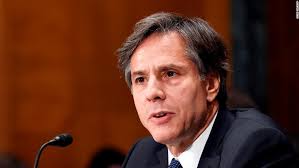
Antony Blinken, US President-elect Joe Biden’s closest foreign policy adviser, has been nominated for Secretary of State.

What will be the Biden-Blinken approach to India?

India a “High priority relationship”

On July 9, Blinken spoke at the Hudson Institute, Washington DC. “Strengthening and deepening the relationship with India is going to be a very high priority.”

Biden role

“During the Bush administration, then Senator Biden partnered with that administration to help get the peaceful nuclear cooperation agreement, the 123 agreement through the United States Senate, usually important to solidifying our relationship,” Blinken said.

Defence Cooperation

Blinken talked about the Biden administration making India a “major defence partner”. This is a major new statement on defence.

Paris Climate Change Pact

“Having sort of set that foundation and made the relationship stronger, guess what? We then worked hard to persuade India that it would be more prosperous and more secure if it’s signed on to the Paris Climate Agreement. We succeeded… It was a challenging effort but Vice President Biden was one of the leaders of the effort to convince our partners in India and they did. I think that’s a reflection, again, of the fact that we cannot solve common global challenges without India as part of the deal,” Blinken said. 

Kashmir & CAA

Blinken flagged concerns on the human rights situation in Kashmir and the Citizenship Amendment Act.

India leading role in UN

On August 15, Blinken again participated in a panel discussion on Indo-US ties and flagged the issue of UN reforms. “In a Biden administration, we would be an advocate for India to play a leading role in international institutions and that includes helping India get a seat on a United Nations Security Council,” he said.

China challenge

“We have a common challenge which has to deal with an increasingly assertive China across the board, including its aggression toward India…I think you’d see Joe Biden as president investing in ourselves, renewing our democracy, working with our close partners like India, asserting our values and engaging China from a position of strength. India has to be a key partner in that effort,” he said.

Cross-border terrorism

Blinken also addressed New Delhi’s concern of cross-border terrorism, without naming Pakistan. “We would work together to strengthen India’s defence and also I might add its capabilities as a counterterrorism partner.”

Biden’s vision 2020

Blinken quoted Biden from 2006 — just before he was going to take charge as the chair of the Senate Foreign Relations Committee in 2007-2009 — “My dream is that in 2020, the two closest nations in the world will be India and the United States.”

7 fatal mistakes in Indian market entry

India is super exciting, vibrant, colourful and amazingly friendly. People are accessible and available. Deals can be signed and MOU’s are much loved. The population of over 1.2 billion is soon to become the largest in the world and is soon to overtake China.

While India will probably not be “another China”, it is becoming a global power in its own right and an economy that will soon not be too far behind the USA and China.

So, it makes sense to be there real quick, yes?

YES be there – but watch out for these fatal mistakes

  1. Trying to do the whole country at once will exhaust and confuse you – even Indian companies take years to cover it. Select your best one or two points of entry and the rest will follow.

2. Going in quick on price might seem exciting – but who is actually winning out of this deal? You become a disposable and cheaper provider – so your future is very short term.

3. Appointing the first person who says “yes” seems exciting and then nothing happens. Later you might work out every Indian says “yes” – in their culture, they have to. It takes time to find a “yes” that is real.

4. Focusing on injustice, slums, inequality and the Indian way might be something you think is important but of course it is pretty offensive to your hosts. Sure the traffic is diabolical, but there is no benefit in whinging.

5. A short time frame such as one year is a real killer for Indian market entry. It needs to be a minimum 3 years. If you cannot give it time, go somewhere else.

6. Going it alone sounds brave – but is stupid and wasteful. India is all about relationships and collaborations. And you will need “hand holding” by someone who knows the ropes.

7. Ignoring cultural differences is a recipe for misunderstanding and disappointment. Cultural differences between India and the west are massive – and what we have in common is also massive. You need to understand them both.