India’s EdTech has a huge boost due to covid and home learning

Harsh Rajan and Nirmla Sankaran founders of HeyMath – an E-Learning, online Maths coaching institute in Chennai.

India’s online education sector has really taken off as the pandemic led to school closures and a big part of the 250 million school children switched to online learning.

Investors are attracted to the large number of startups and unicorns in EdTech.

It’s an industry that will be worth nearly $2 billion by next year and is producing unicorns such as Byjus and Skillmatics.

Even with this dramatic growth, online education is touching only a small fraction of the Indian education market, so the future is strong.

A further boost for EdTech is the new National Education Policy (NEP), which looked at addressing the challenges and extending the scope of right to education (RTE) to students aged 3-18 years, with a key recommendation to harness edtech through app-based learning, online student communities, and lesson delivery beyond ‘chalk and talk’.

According to estimates by DataLabs, there are a total of 4,450 edtech startups operating in India, spread across various segments such as test preparation, e-tutoring, online certification, skill development, online discovery, and STEAM kit and enterprise solutions.

Educational delivery will no longer be either fully online or offline but a hybrid blend of both worlds.

For countries like Australia, India has an appetite for almost all of the EdTech innovations coming through.

India ranks high for tech innovation as “the internet and digital become the superhighways of global trade”

Pictured – Sundaram Business Services Chennai has a long relationship with Australia.

Indian firms like Sundaram Business Services in Chennai and Australia should be on your radar for tech innovation – A KPMG survey ranks India third among countries that show the most promise for tech innovation. India Global Business has reported on the results:

The Indian tech industry has always stood as a byword for resilience, agility and innovation – and a latest survey from KPMG has just confirmed that, ranking the country third among jurisdictions that show the most promise for developing disruptive global technologies.

In its annual Global Technology Industry Innovation Survey, KPMG ranked Bengaluru at eighth position among the top 10 cities.

More than 800 industry leaders were surveyed for the report which said 39 per cent believe global ‘hub’ cities such as London, Singapore, and Tel Aviv will continue to play a vital role, enabling talent to coalesce and collaborate in communities with a solid digital infrastructure.

Federica Saliola, joint director of the World Development Report, said: “The internet and digital technology are the new superhighways of trade. India, where most workers are employed in the informal sector and the participation of women in the labour force is low, has an opportunity to seize the opportunities that digital technology provides,” said. “Innovation is also a friend to entrepreneurs and India’s entrepreneurial spirit makes it an ideal incubator for start-ups to thrive,” he said.

India speeding up solar power across Africa

Indian PM Narendra Modi meets with African leaders during the International Solar Alliance meeting – an initiative created by India.

India is taking a leading role in supporting the spread of solar power across Africa – where nearly 600 million Africans still do not have access to modern sources of electricity.

India created and leads the International Solar Alliance, which has 86 member countries including Australia – and is now attracting strong participation from Africa.

With drastically falling technology costs, renewable energy has become a cost-effective option of generating clean power all over the world.

The International Solar Alliance (ISA) was conceived as a coalition of solar-resource-rich countries (which lie either completely or partly between the Tropic of Cancer and the Tropic of Capricorn) to address their special energy needs.

The ISA will provide a dedicated platform for cooperation among solar-resource-rich countries, through which the global community, including governments, bilateral and multilateral organizations, corporates, industry, and other stakeholders, can contribute to help achieve the common goal of increasing the use and quality of solar energy in meeting energy needs of prospective ISA member countries in a safe, convenient, affordable, equitable and sustainable manner.

ISA has been conceived as be an action-oriented, member-driven, collaborative platform for increased deployment of solar energy technologies to enhance energy security and sustainable development, and to improve access to energy in developing member countries. The ISA has 122 sun-belt countries that lie between the two tropics as its prospective member countries and currently boasts a membership of 86 countries globally.

Bengaluru is India’s “must visit” city for all kinds of tech

New research based on data by Dealroom.co data and analysis by London & Partners – the Mayor of London’s international trade and investment agency – found Bengaluru as the world’s fastest growing tech ecosytem.

Bengaluru, often dubbed the Silicon Valley of India, has firmly cemented its tech credentials. The second Indian city was Mumbai, which made it into the top 10 fast-growing ranking at sixth place.

While Bengaluru, the capital city of the southern Indian state of Karnataka, grew 5.4 times from $1.3 billion in 2016 to $7.2 billion in 2020, the Maharashtra capital of Mumbai grew 1.7 times from $0.7 billion to $1.2 billion in the same period.

Bengaluru is also ranked sixth for the world’s tech venture capitalist (VC) investments, on a global list topped by Beijing and San Francisco, New York, Shanghai and London making up the top five. Mumbai comes in at No. 21 in the worldwide ranking, with Boston and Singapore among the other high-ranking cities.

Bengaluru is dynamic and global in feel, with sleek offices and countless quality bars and restaurants.

It used to be India’s “garden city” but has become a global “tech city”.

For EdTech, MedTech, AgriTech and in fact “any Tech”, Bengaluru is your India starting point.

It is also home to the dynamic Victorian Government Business Office led by Michelle Wade – essential to talk with them about your India entry plans.

Doing Business in India – Finding the Right Local Partner


 One of the most frequent questions for INTO INDIA is how do we find the right business partner in India? Most case studies of Australian businesses succeeding in India reveal one key element – finding the right local partner.

What is the right local partner?

It is much more than someone who says “yes”. Too many have been frustrated in Indian market entry because they forged alliances with any and everyone who said “yes” – which means everyone they meet. India is a culture that cannot say no, so be wary of the yes answer.

The right partner is already active and successful in your field. They can show you their track record.

Your right partner will have connections among suppliers and customers, and will be keen to introduce you to them so you can form your own judgement.

In the collective culture of India, your right partner will be well connected in the various business chambers and will have good connections in government – central and state. This right partner will demonstrate these connections by organising meetings for you, rather than just saying “yes” we are connected.

Your right partner will be someone you double check with Austrade and with other reliable connections you have in India or Australia.

Your right partner could ultimately become an agent, a joint venture or more. They might just be a trusted individual who willingly offers to make connects for you – this freely opening doors does occur in India.

Your right partner might be a talented individual who you hire into your business. Or it might be a combination of external and internal. Patience will be your best friend as you make these choices.

Finally, your right partner will develop relationships for you – because in Indian culture relationships matter. Relationships first, business second is the path to long term business in India. Quick deals are just that – one transaction that might not lead to anything.

So, how are you going finding the right partner in India?
 

Despite a shift towards USA and Japan, India maintains close friendship with Russia and a “multipolar” world view

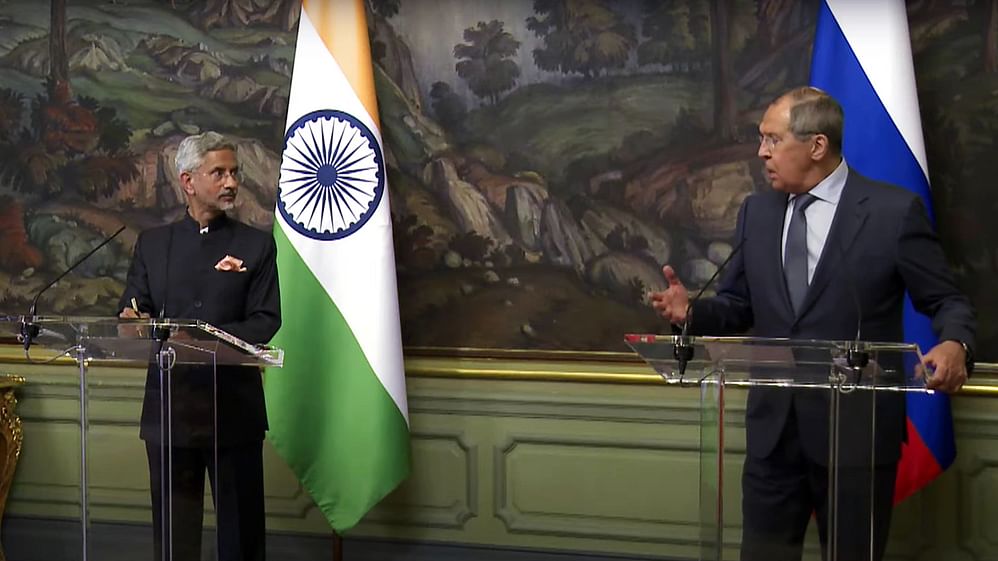
External Affairs Minister S Jaishankar along with Russian Foreign Minister Sergey Lavrov address a joint press conference, in Moscow. The visit was aimed more at reiterating the importance both nations accord each other.

India has long been able to see both sides of an argument in international affairs – and today is a champion of a multipolar global order.

This frustrates countries like the USA and Australia, which clearly see the world in terms of goodies and baddies – for them, the world order is either run by “us or them”.

India’s independent approach was seen in the recent reinforcement of its long held close friendship with Russia. At a time when the rise of China has pushed India into closer relations with the US and Japan, the Indian External Affairs Minister, Dr S Jaishankar held a three day visit to Russia, to reassure an old friend.

Russia could be described as India’s oldest and strongest allies since independence.

“I think what makes our working together so natural and comfortable is our belief in a multipolar global order,” Jaishankar said.

In the complexity of our pandemic world, “multipolar” could be something that takes us forward in peace.

Can India teach the west and China about co-existence?

With India’s role as a rising power, plus its long record of peaceful co-existence with multiple countries, can it help the west and China live together?

Here is the situation as outlined by Michael Spence, a Nobel laureate in economics, Professor of Economics Emeritus and a former dean of the Graduate School of Business at Stanford University:

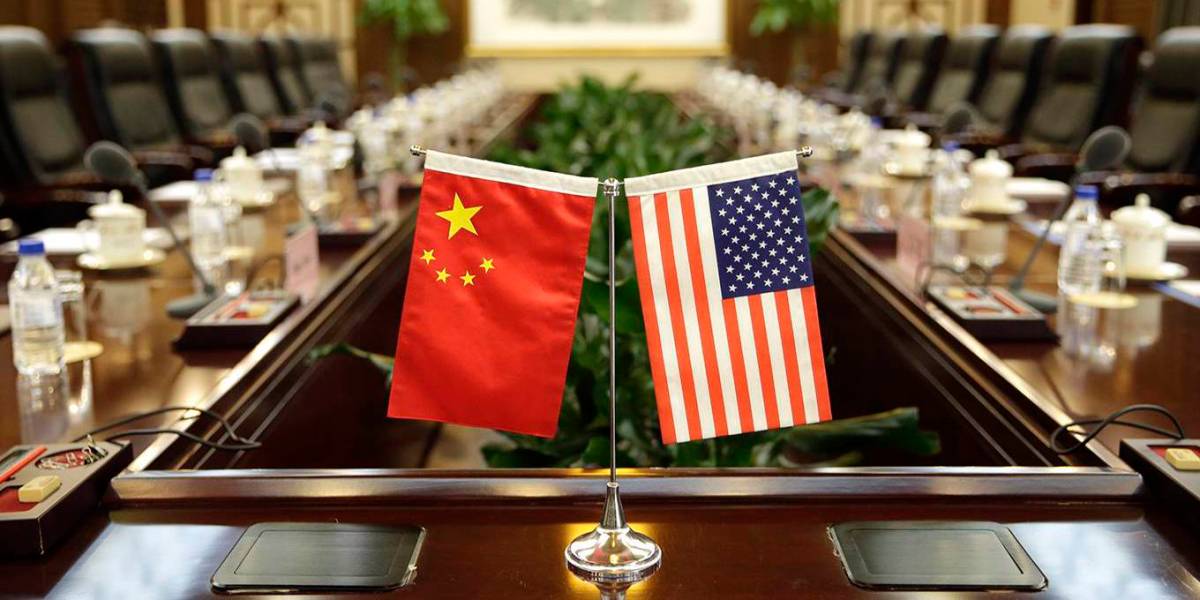
“At the recent G7 and NATO gatherings, China was singled out as a strategic competitor, a calculating trading partner, a technological and national-security threat, a human-rights violator, and a champion of authoritarianism globally.”

Not a great recipe for co-existence.

Spence continues: “China denounced these characterizations, which its embassy in the United Kingdom called “lies, rumors, and baseless accusations.” The risks that such rhetoric poses should not be underestimated.”

Also not a recipe for co-existence.

He concludes: ” The real danger, however, is that officials on both sides seem to have embraced a zero-sum framework, according to which the two sides cannot simply co-exist; one side must “win.”

But India has long experience of getting along with all sorts of regimes and managing to see both sides of the argument.

As India plays a bigger role in global groupings, can it influence both the west and China to drop “zero sum” thinking and work to co-exist?

India a prime target for Aussie exports and investment – Austrade

Austrade’s Ashley Brosnan puts the case for Australian businesses to quickly get into India:

Australian businesses continue to see opportunities across a range of sectors including education, mining and resources, infrastructure, agri-food, and digital services. Thanks to the steady success of some great Australian brands, Australia is already a trusted supplier and investor.

However, India remains a challenging place do business. Expansion requires a high degree of market literacy and on-the-ground experience. Local partners help exporters and investors to navigate markets and regulation – and these partners can prove invaluable.

Despite this, the Government of India has signalled that India is ‘open for business’. It is emphasising investment and competitiveness as factors that will support the economy and encourage a return to growth.

The effects can be observed already in global rankings. India has moved up 63 places in the World Bank ‘ease of doing business’ rankings in recent years.

Austrade is helping Australian companies to explore India

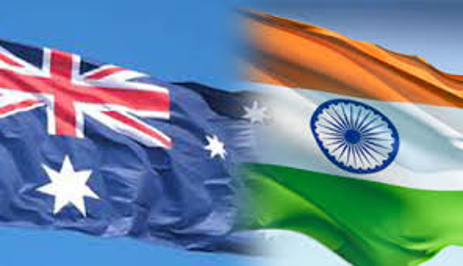
The Australian Government is investing heavily in developing commercial links between Australia and India. The Australia-India Comprehensive Strategic Partnership agreed by Prime Ministers in June 2020 creates further opportunities for Australian business.

The Partnership seeks to build supply chain resilience between the two countries. It strengthens and diversifies trade and investment links with a focus on education, critical minerals and technology cooperation.

Today, Austrade posts across India are working intensively with Australian businesses to understand market, identify opportunities, make connections and help companies negotiate contracts.

India consumer spending skyrockets

India’s consumer spending a “revolution”

Austrade’s Ashley Brosnan on India’s consumer spending “revolution”:

The biggest revolution taking place is the rapid rise of a huge, diverse and wealthy consumer market. Despite the impacts of the pandemic, domestic demand is likely to be a major driver of recovery and growth over the next decade, making up 60% of the overall economy.

E-commerce is taking off as smartphone usage multiplies. India already has over 1 billion internet users and the digital economy’s contribution to GDP is projected to grow 15–20% by 2024.

Incomes are also rising strongly. India’s median income per household is expected to reach A$13,867 by 2025. The World Economic Forum considers that consumer expenditure in India will grow by a factor of four up to 2030.

This means over 80% of Indian households will be middle-income in 2030 – an increase of 140 million. Another 20 million will be considered high income.

India’s emerging and aspirational middle class is seeking premium food and beverage, healthy lifestyle products, technical infrastructure, quality healthcare and education, entertainment and consumer goods.

Trends in consumer demand are encouraged by a substantial, highly-skilled Indian diaspora in Australia, which is set to number 1.4 million in 2031.

India now a top FDI destination – assuring economic growth

FDI fuels double-digit growth

Austrade’s Ashley Brosnan sets out the FDI picture:

Despite the COVID-19 crisis, foreign direct investment (FDI) inflows into India grew 13% in 2020. This is an extraordinary achievement – and a landmark development in a country that has historically proved challenging to foreign investors.

The rapid inflow of investment makes India one of the few countries to experience double digit growth in FDI during 2020. It means India is now a top 10 destination for FDI, and it heralds a sea change in global investment sentiment.

Multinationals are seeking to move their supply chains into the subcontinent. The push factor is a desire to diversify from an over-dependence on China. The principal pull factor is a young, competitive workforce, particularly in the information technology and construction sectors.

FDI flows into India contrast sharply with the global picture. For example, FDI flows into China grew by 4% last year, while FDI flows globally fell 42%. FDI flows into developed economies fell 69%.

Investment in India is likely to grow significantly over the next decade.