How China and India differ in the consumer goods market

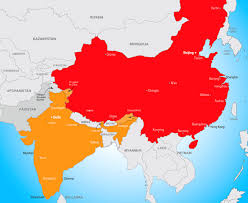
India’s share in the consumption of consumer goods is expected to double by 2030 and favourable demographics (youth) will soon take it ahead of China in regional market dynamics, according to a report by Credit Suisse.

Interestingly, in India it is the home-grown brands like watchmaker Titan, hosiery company Rupa and another watchmaker Sonata which are gaining the most out of this propensity to spend in India.

consumer8

However, India is at a comparative disadvantage vis-a-vis China because of factors like less urbanisation, high concentration of urban pockets and lower enrolments in higher education.

It said in 2015, China had 150 million more people in working age than India, while by 2045, the northern neighbour will have 300 million less people than India in the bracket.

Additionally, China will also have to grapple with ageing related issues by 2045, it said, pointing out that the Communist country will have 350 million people aged over 65 as against 200 million in India.

consumer1

It marked out the apparel and meat sectors as the ones with ‘high’ growth potential as the per capital income of the country grows, followed by beverages, cars, cereals, personal computers, smart phones and education with ‘medium’ growth potential, while healthcare, consumer credit and tourism were the ones with ‘low’ potential.

consumer 4

From a consumption perspective, the Chinese prefer more of travel and entertainment-related options, it is staples that dominate the Indian story, the brokerage said.

India scores over China when it comes to spending intentions, the brokerage said, pointing out that the desire to spend is declining “more broadly” in China.

consumer3


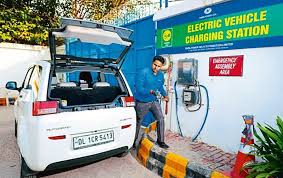
World auto industry investing in Indian auto startups

India is attracting global investment, especially in automotive startups – global automobile manufacturers have invested around $491 million in 2018 in Indian automobile industry start-ups, led by Essel Green Mobility’s investment of $300 million into Bengaluru-based on-demand AC bus service provider Zipgo, according to market intelligence firm Venture Intelligence.

essel

There were 13 investments during the year. In 2018, Taiwanese two-wheeler manufacturer Kwang Yang Motor, known as Kymco, invested $65 million in Gurugram-based electric two-wheeler maker Twenty Two Motors, while auto major Mahindra and Mahindra invested $40 million in self-drive car company Zoomcar.

Toyota Tsusho Corporation, the trading arm of Toyota Group, invested around $30 million in Droom Technology, the operator of India’s largest online automobile marketplace by co-leading Series D fundraising of the company. The firms also concluded a pact on the overseas expansion of the used car and motorcycle marketplace business.

essel2

What’s the “biggest story in the world you have not heard about”? Happening in India right now

“The biggest global story you haven’t heard about right now is India’s sanitation drive,” according to my friends at FUTURE CRUNCH. See https://futurecrun.ch/ 

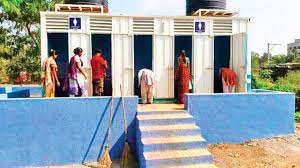
Since 2014, 90 million toilets have been built, 93% of households now have access, and 500 million people have stopped defecating in the open.

This is change on a massive scale – but not such a big story for the short concentration span of the major media.

swachbharat3

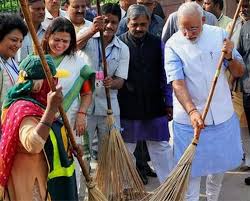
Pictured – Indian Prime Minister Modi launches the program in 2014

The government claims that since its Swachh Bharat Mission programme started in October 2014, 500 million people have stopped defecating in the open, down from 550 million at the beginning of the programme to less than 50 million today. Over 90 million toilets have been built across rural India under the Mission. 615 districts have been declared ODF, along with 30 ODF States and Union Territories, as per the government.

“A clean India would be the best tribute India could pay to Mahatma Gandhi on his 150-birth anniversary in 2019,” said Shri Narendra Modi, Indian Prime Minister, as he launched the Swachh Bharat Mission at Rajpath in New Delhi.

swachbharat

The Independent Verification Agency has presented their findings to the Expert Working Group (EWG) constituted for oversight of the survey, comprising representatives from organizations including the World Bank, UNICEF, Water Aid, Bill & Melinda Gates Foundation, India Sanitation Coalition, NITI Aayog, and Ministry of Statistics and Program Implementation.

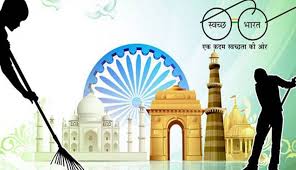
Swachh Bharat Abhiyan or Swachh Bharat Mission is a nation-wide campaign in India for the period 2014 to 2019 that aims to provide sanitation, clean up the streets, roads and infrastructure of India’s cities, towns, and rural areas. The campaign’s official name is in Hindi and translates to “Clean India Mission” in English.

It is India’s largest cleanliness drive to date with three million government employees and students from all parts of India participating in 4,041 cities, towns, and rural areas.

Do you agree this could be the biggest story in the world today that you have not heard about?

Asia Society showing the way on “global competence” for students

We are facing massive and fast change. Industrial 4.0 (the Fourth Industrial Revolution) is beginning to impact – the technology a current student will use in their first job has probably not been invented yet. And where we work is becoming irrelevant – we will all be global.

It is therefore good to see the Asia Society and its Centre for Global Education taking such a lead on the idea of global competence – articulating the knowledge and skills students need in the 21st century.

Our universities need to move fast on this. 

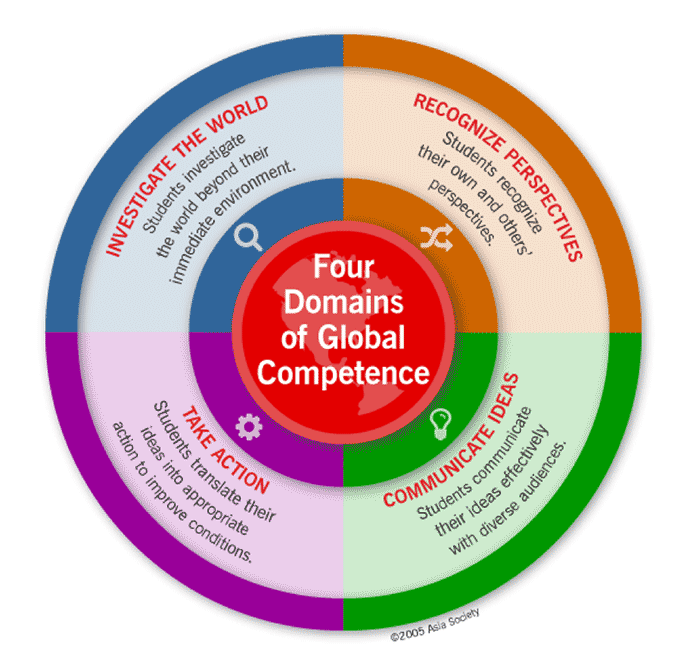
According to the Asia Society, globally competent students have the knowledge and skills to:

Investigate the World

Globally competent students are aware, curious, and interested in learning about the world and how it works. MY COMMENT – curiosity is the basis for cross-cultural success, it embraces difference, is tolerant and generous.

Recognize Perspectives

Globally competent students recognize that they have a particular perspective, and that others may or may not share it. MY COMMENT – we still hear frustrated business leaders asking “why can’t they be more like us”. Recognising perspectives is the basis of acceptance – which is a reality based way to deal with difference.

Communicate Ideas

Globally competent students can effectively communicate, verbally and non-verbally, with diverse audiences. MY COMMENT – there is a huge job to train and motivate students from Asian cultures to speak up and have confidence in their ideas – once they do speak up, we will quickly learn how much value they add.

Take Action

Globally competent students have the skills and knowledge to not just learn about the world, but also to make a difference in the world. MY COMMENT – my guess is that in Industrial 4.0 many of the jobs of the future will be ones we create for ourselves – individually or in teams. This used to be called entrepreneurship but might morph into a new form.

Please share your perspectives…

5 essential tips for starting out in India

  1. Prepare for Culture Shock

For most of us, our first one or two trips to India is a culture shock. Chaos, arguments, the challenge of crossing the road, cattle in cities, people everywhere, sights and smells you have never experienced, the sounds of the Hindu temple or the Muslim call to prayer, clothing, facial decorations – most of these arise from an ancient tradition which you will grow to love. But, take your time.  This culture shock is more than superficial – prepare for your inner being and values to be challenged by a different way of life and way of thinking about life. With an open heart and open mind, you will learn fast. But if you make early judgements, you will probably never get to know India.

India is also a land of non-conformity where great value is placed on difference and heritage.  An Indian might continue to wear the clothing of their place of origin, even though they are living and working successfully in a major city. Unlike the west, your Indian host might want to know about your belief in God, your approach to diet or your family values.

  1. Stop Stereotyping

India will not work for you if you bring along your prejudices and stereotyping. Yes, you will see extremes of wealth or poverty – but balance this with the massive achievement of the last 20 years or so when millions have been lifted out of poverty. When meeting with your Indian hosts, it is insensitive to talk about the massive slum you drove past to get to the meeting. Yes, you will see men holding hands and women holding hands, but this does not necessarily mean they are gay – hand holding among the same sex is a simple sign of friendship. Yes, someone is bound to say “yes” when they cannot actually do what they said “yes” to – this is not being deceptive it is just a culture when saying “no” is almost forbidden. Going with an open mind is a key step to success. 

  1. Be flexible about your daily schedule

India is not a 9-5 place, it is more a 24/7 place. Meetings can happen anywhere and anytime, on any day of the week. The line between working life and family life is very thin and the two often merge. We used to say the Indian business day started late and finishes very late – but now most actually start early. Breakfast and dinner meetings are a regular part of getting to know you and prepare for these to go on a bit – breakfast can roll on to 10am and dinner might not even start until 9pm.

On top of the 24/7 approach, Indians will change your appointment at very short notice – sometimes as little as 15 minutes. You just have to expect the unexpected. For example, your one-hour meeting might go for two, and then the person you are meeting with decides to introduce you to the CEO – don’t rush off, you have made a good beginning!

All of this means if you are not a patient person, India might not be for you. Being flexible and adaptable are actually signs your Indian counterpart will be looking for – once they know you are easy to work with, things can progress.

  1. Be Diplomatic and more Formal

Indian society is collective and hierarchical, so it runs with a real focus on formality and politeness in every situation. Formality should last a long time in your relationship, and my guess is only after meeting three or four times should you be informal and relaxed in your manner. This formality can apply to clothing – your host might wear relaxed and comfortable hot weather clothing but you are probably best to be more formal. Addressing someone by their first name is just no-go territory and terms like Sir and Madam are often used – in parts of Indian culture addressing a person by their name is less polite than using these terms.

Indians are diplomatic and therefore are indirect in their approach to communication – maintaining face and relationships is the key so the best answer is given for those purposes rather than addressing the facts at hand. Any bad news will be approached in a very circuitous way, so you might not even realise you have received bad news.

Indians genuinely struggle to say “no”, so “yes” is their default answer. You will need to learn the art of asking open questions where a yes or no cannot be used. I have been offered very specific but totally wrong directions in India – again, the focus is on satisfying the relationship rather than finding the facts.

  1. Be Personal and Drink Tea

Indians are very much into people, they want to like you and hope you will share your personal life with them, so be prepared to talk to someone you have just met about your family, dreams and your diet. Sharing personal information is highly valued, so be prepared to open up.

Sharing a cup of tea is also important – symbolic even. This is a tea-loving country so get used to it. The tea at business and government meetings will be a milky and often sweet substance – just drink it. For Indians, this is all about building the relationship, being a kind host and getting to know you.



I feel sorry for Adani Group, but wonder why they bought in the first place

I kind of feel sorry for the Adani Group. Here they are sitting on Australia’s biggest coal reserve, yet nobody wants them.

But, how did Adani Group get into this strife torn project?

After all, Australia has most of the world’s biggest and smartest coal miners. They all knew about the Carmichael but none of them would touch it. Did Adani ask why not?

No Australian bank would fund it. Did this give Adani pause to think?

Aussie politics was always going to be mixed on this one – yes, er, no. Did these give Adani concerns?

The whole scheme depended on a new railway and a port – right near the globally significant Great Barrier Reef. Promised the “world’s biggest coal mine” our governments offered billions to pay for railway and port. But then it became “just enough coal for Adani’s own power stations”. That’s a long way short of the early promise and politicians are looking for an out. Is this a surprise to Adani?

Importing coal is no longer popular in his country of India, which is moving in a big way to alternatives such as wind and solar. Did Adani factor this into their Aussie plans?

And finally – global demand for coal has taken a hit, demand just fell over the cliff. What did Adani market research tell them about this?

In Australia, Adani Group is lonely.

Adani might be a fine Indian corporation. But here in Australia they seem to have stumbled into something no Aussie firm would touch.

That’s why I kind of feel sorry for them.

Mark Mobius (investment guru) calls for reform of FDI in India

The Economic Times recently spoke to Mark Mobius, emerging markets guru and Founder of Mobius Capital Partners:

What are your thoughts on Indian economy currently?

I think the (economic) growth is still going to be higher than China. We will probably see around 7 per cent, and that itself is a tremendous accomplishment. I know unemployment is a real issue, and this is something that whoever comes to power in the next election, is going to have to address very forcefully. They will have to think how to make it work, and that means making it easier for foreign investors to come in.  ..

4 trends for Indian university students studying abroad

Trend 1

STEM courses (Science, Technology, Engineering, and Mathematics) will remain the top preferences for Indian students for studying abroad.

Trend 2

Unusual course choices to increase – The Open Doors Report on International Educational Exchange shows Indian students in the US are now showing a strong interest in off-beat courses like marine engineering, geophysics, game design and development. One main reason behind the shift is that these interdisciplinary courses are not easily available in their home countries. Also, as parents in India become more supportive of their children’s career choices, students are no longer shying away from choosing the road less travelled.

Trend 3

With the ongoing fourth industrial revolution and rapid progress in automation, machine learning and AI (artificial intelligence), traditional job roles are evolving, and new jobs are coming up. Courses such as Robotics, Automation and Mechatronics are likely to witness increased demand in 2019.

Trend 4

The USA, Canada and UK have been the top destination, but challengers will emerge or pass them – including Australia. Plus, spending on tuition and hostel fees by Indians studying overseas has gone up by 44 per cent from $1.9 billion in 2013-14 to $2.8 billion in 2017-18. Australia now has 68,000 Indian students.


Time for my confession

Time for a confession. For most of the time that I have been consulting on India, my advice for those entering the market has been “don’t go to West Bengal and Kolkata – nothing is happening there”. I can say that 100% of my colleagues in this advisory industry have said the same.

But it might be time to change our tune.

I saw the beginning of change when I visited Kolkata three or so years ago.

Bengal has always had what it takes, and I could see it emerging again – a large educated workforce, abundant raw materials, good road, rail and air connectivity with the rest of India and the world and a strategic location as the gateway to the largely untapped markets of the North East of India.

But decades of lethargy at the top, union activity, civil unrest and downright complacency took its toll.

Now leading a new charge into West Bengal are the big names of Indian and global industry such as Mukesh Ambani, Sajjan Jindal, DP World, Coca Cola, Ikea and ITC.

Indian Ocean

Ambani’s Reliance Industries is investing in the state’s digital sector through Reliance Jio, with a very successful foray into 4G telephony in the country. They will connect small merchants with their retail network and warehouses to increase their reach several folds. His group already has more than 500 retail stores in West Bengal.

You can see the results of change – West Bengal’s Gross State Domestic Product (GSDP) was $158 billion in 2017-18 while its average annual growth rate from 2011-12 to 2017-18 was about 11.88 per cent. The state is sixth-largest contributor to India’s manufacturing GDP and fourth-largest contributor to the country’s services GDP.

Moreover, West Bengal is also a major producer of petroleum and petrochemical products. Production of natural gas in the state is projected to touch 410.30 million cubic metres in 2018-19.

It is also an increasingly important centre for India’s massive information technology sector. Total IT exports from West Bengal is about $3 billion – the Big Three of Indian IT – TCS, Infosys and Wipro – all have a large presence there.

Food is booming – Bengal is India’s largest rice producer, second-largest producer of potatoes and among the country’s biggest fish producers. The world-famous Darjeeling tea is also grown in the state, which is India’s second-largest tea producer.

Hence my confession.

Time for all of us to take another look at West Bengal and Kolkata.

Bengaluru and New Delhi 3rd and 4th fastest growing office markets in world

Bengaluru (Bangalore) is the third fastest growing office market globally in terms of prime rental values for office space, mainly due to continued supply crunch, a recent survey found.

According to a global study by property consultant Knight Frank, the estimated growth in office rental values in Bengaluru by end of 2019 is expected to be 6.6 percent.

Bengaluru is the “Silicon Valley” of India, employing 35% of India’s 2.5 million IT professionals. But it is also big in food (Cafe Coffee Day), pharma and biotechnology, aerospace, cars, and is home to Ola Cabs (competitor to Uber).

The report evaluates 33 global cities and gives insight on office rental growth – it noted that New Delhi, in fourth position, is expected to see a rise of 6.5 percent in prime rental values in 2019. Delhi is more than a government centre – it is big in consumer goods manufacturing, IT, telecoms, banking, construction, retail and tourism.

connaughtplace

Delhi’s Connaught Place

Bengaluru is impacted by demand from the IT/ITeS and the start-up sectors, so the lack of quality space in key markets is pushing the rentals up.

BangaloreInfosys

Infosys headquarters in Bengaluru

Mumbai is however expected to see stable rentals in 2019 with an outlook of marginal rental growth due to anticipated supply for 2019 in the prime market.

Where would you locate your India headquarters? One challenge is that with so much regulation and the need to deal with government, wherever your HQ is based, your people will have to travel often to New Delhi.

But options exist outside of these three major cities and it is worth evaluating tier two cities.

Please share your thoughts and experiences…