India – have a go! Some “quick tips” for those thinking of doing business with India

Have a go! India is already a large market and growing fast – with a massive young population driving future demand. Interest is growing in “all things western” and demand in many sectors (IT, education, resources) is just so big it cannot be satisfied locally.

Do your homework! Failures are many and most can be traced back to lack of research or inability to adapt to the local market. Factors such as cultural differences, consumer trends and what the market wants have to be identified.

ModiMorrisonSmile2

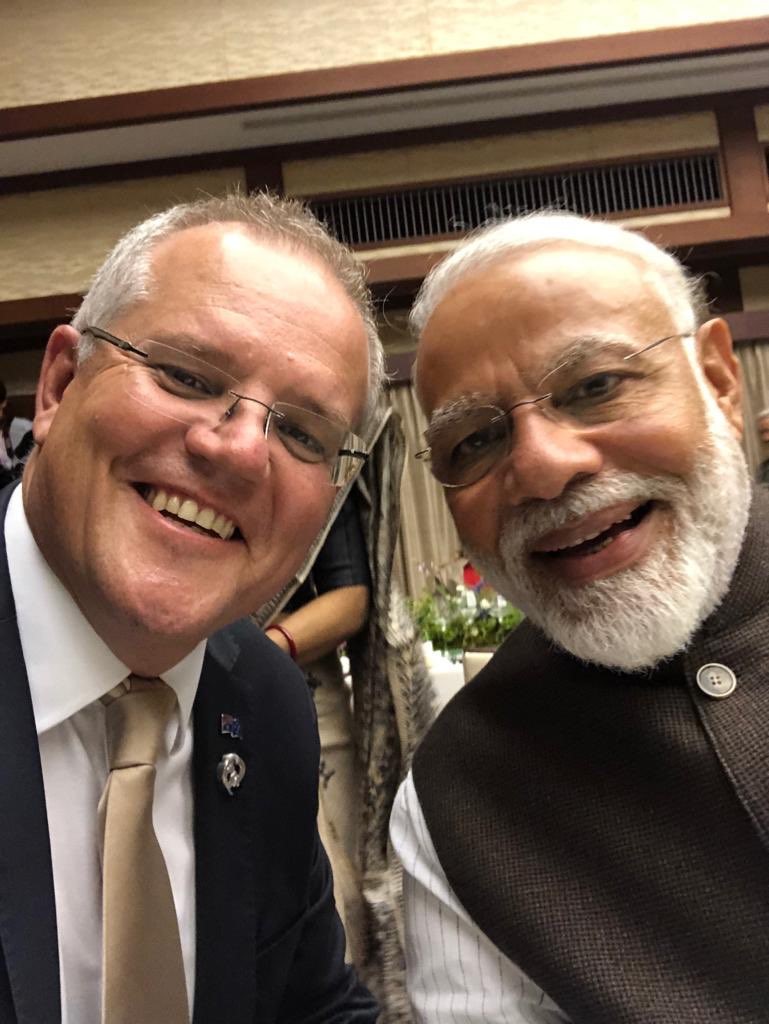
Above Australian PM Morrison and Indian PM Modi hit it off at a recent meeting

Use our reputation! Australia is generally well thought of in India – those who come here are amazed at the quality of our cities. Use this for brand advantage and to open doors.

cotton5

Choose the right channel. Distribution, e-commerce choices and so on will be make or break for you if consumers are your target. Aussie firm COTTON ON recently set up and online sales entry into India, the first step towards a physical presence.

India is a “relationship” culture – meaning they want to get to know you first. It might take several visits for you to create the connection. Otherwise you get a short term transaction this year that might not be there next.

Indians can help you! Finding local Indian talent has been a big success factor for so many global companies, large and small. If you cannot afford to establish a local team then perhaps you cannot afford to do business there.

Adapt to culture – get some training to understand how to behave and how your Indian counterpart might think. We are different! If you are culturally adaptive you can succeed and enjoy the difference.

Have both short term and long-term goals – and long term with India means committing to this venture for at least three years.

But above all – have a go!

Australian firm MoooFarm wins award for work in India

MoooFarm, co-founded by Australian Indian impact entrepreneur Param Singh (pictured below) has been awarded a winning prize of $30,000 for their breakthrough technology of ‘Facial Recognition of Cattle’ in the Agriculture Insuretech Innovation Challenge organised by the World Bank Global Index Insurance Facility.

param3

MoooFarm is an award-winning initiative that aims to increase income of 75 million small dairy farmers through capacity building, last mile extension and transfer of technology. Through its unique approach, MoooFarm addresses United Nation’s Sustainable Development Goals toward Gender Equality, Poverty and Responsible Production and Consumption.

MoooFarm, bagged a winning price of USD 30,000 by The World Bank Group in Data Analytics category for their unique solution of ’Facial Recognition of cattle’.

With an accuracy of 95.7%, MoooFarm was able to test the facial recognition model using deep learning technology. In the coming weeks, this breakthrough technology will reach each and every small-holder farmer via MoooFarm’s mobile based application and its network of Village level Entrepreneurs.

According to The World Bank Group, the Global Index Insurance Facility (GIIF), “helps smallholder farmers and micro-entrepreneurs gain better access to finance, manage financial losses, and protect their livelihoods against more frequent and more severe weather events…since 2009 it has facilitated more than 4.6 million contracts, covering over 23 million beneficiaries and $730 million in agricultural investments insured in more than 30 developing countries.”

Australia could benefit from Trump’s trade war with China

Here’s a very nice irony – Australia and India have really struggled to agree a Free Trade Agreement but one outcome of the Trump trade war on China is that the 15 countries in the Regional Comprehensive Economic Partnership (Including Australia and India) are now motivated to do a deal.

They are talking fast, negotiating hard and could come up with a sweeping deal this year that reduces the need for direct talks on an Australia-India FTA.

ModiMorrisonSmile2

Australian PM Morrison (left) and Indian PM Modi – pretty happy about the future

RCEP will have the potential to deliver significant opportunities to Australian businesses and consumers. RCEP will cover ten of Australia’s top 15 trading partners, and collectively RCEP participating countries will account for a combined GDP of US$23.8 trillion (2016). These countries account for almost 60 per cent of Australia’s total two way trade, and over 65 per cent of our exports.

Thanks Donald.

Indian budget signals some shifts in education and skills training

The Indian Budget this month signalled continued commitment to free (free-er) market economy and was interesting in terms of education, skill development and related sectors.

The New Education Policy (NEP) is at the centre of reforms, set to bring major changes in school and higher education.

YoungIndians 2

Research is being given a big thrust with the National Research Foundation. Also, approx. US$60 million has been allocated to world-class institutions, signalling the continued thrust on excellence in higher education.

PM Modi is personally committed to having high ranking universities in India and some future deregulation is expected to allow greater global involvement – but nothing on this in the budget.

The finance minister also highlighted the ambitious Study in India programme, which has the potential to make India the hub of learning (again).

The National Sports Education Board is a much-needed initiative to promote sports amongst children who want to pursue that as a career.

We do hope the much-awaited Higher Education Commission of India (HECI) takes shape this financial year – still waiting on that one.

Aussie firm Atlassian sets up base in Bengaluru, India

Australian IT firm Atlassian, which provides its technology to customers such a NASA, Spotify and Lyft, has set up its global R&D Centre in Bengaluru and plans to hire 300 people.

This move by the Australian software developer firm shows it is betting big on the India market and its tech ecosystem. The company provides team collaboration and productivity software.

Atlassian Mike

Mike Cannon-Brookes, (pictured) co-founder and co-chief executive of Atlassian, said in an interview. “It (India) is a big part of our growth plans as the company continues to grow very rapidly. We always try to build well-balanced R&D teams not just on the software side of the things but also design, product management, security and all the aspects that go into making great software products.

“One of the big advantages Bengaluru has is (the availability) of great talent in all those areas in one spot,” he added.

Indian budget to be presented today showing the way for Modi 2.0

The India Budget 2019 is due to be presented today by Finance Minister Nirmala Sitharaman (pictured).

This will be one of the most crucial Budgets for Modi 2.0 as it will become a guide for upcoming reforms and policies in the next five years of his government.

Modi2Promo

Come and learn more at our FREE Melbourne seminar (copy this and paste into your browser):

https://www.eventbrite.com/e/modi-20-journey-towards-greater-india-tickets-64489650280

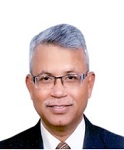
My Interview with Dr A M Gondane, Indian High Commissioner Canberra – on “soft power” and diaspora

The High Commissioner sees great potential in the Indian diaspora in Australia.

“The Indian diaspora here is very active and each diaspora brings its own culture. India has several sub-nationalities.  They bring their culture to Australia. It will mature over time and you will see multifaceted manifestation in the diaspora, the best of the best emerging.

“Similarly, the Indian diaspora will fuse with the Australian culture and this fusion could be transported back to India.  It would be very interesting. Australians will not only embrace English content and Hollywood but may be Australia will embrace, make and watch Bollywood films and something wonderful will come out and would be very good for both countries. We would be happy to facilitate in all ways as this is important. There should be movement, it should not be static, it should not remain in one place, failure does not matter,” he said.

Talking about Indian culture, Dr Gondane said: “India culture in Australia is not jazzy or upfront like Hollywood – but in a soft way it is very good and longer lasting.

“Music, fashion, literature, cuisine, poetry, dance, academic exchanges – we should mutually make each other better through this soft power. Soft power relations are very encouraging” Dr Gondane said.

One of the High Commissioner’s favourite themes is that India is changing fast – so fast it is hard to keep up with.

“To comprehend modern India is difficult even for Indians! India is changing rapidly while trying to keep its moorings intact.

“More visits of business and people between the two countries will be very good, especially if they are perceptive to imagine modern India; I encourage people to go for whatever time they can. The changing dynamic can be utilised for expansion of Australian businesses, ably guided and chaperoned by the Indian Diaspora.

“Buddha said – one principal of life which is constant is change. Change is constant, everything is susceptible to change, whether it is life, material things or ideas – all are subject to change,” Dr Gondane said in conclusion.

awoindia2

Pictured – the Australian World Orchestra performing in Chennai during its second tour of India – “soft power’ diplomacy at work under the leadership of the Chairperson of the AWO, Harish Rao.

‘Kithana acha he Modi!’ Morrison wrote in Hindi, which means “how good is Modi?”

The Australian Prime Minister took to Twitter on Saturday to share a cheerful selfie with Indian Prime Minister Narendra Modi — a fellow world leader attending the G20 summit in Osaka.

‘Kithana acha he Modi!’ Morrison wrote in Hindi, which means “how good is Modi?”.

Indian PM Modi replied in Aussie style – “Mate, I’m stoked about the energy of our bilateral relationship!”

ModiMorrisonSmile2

This relationship could be a key to a successful Regional Comprehensive Economic Partnership deal of 15 countries in our region – big step forward.

The personal connections of leaders can go a long way to overcome bureaucratic hurdles. Long may their relationship flourish!!

Let’s hope PM Modi and PM Morrison meet lots and do deals

Now, this is the kind of photo I would like to see a lot more of.

Australian PM Scott Morrison (left) and Indian PM Narendra Modi in discussions.

ModiMorrison2

This is vital for Indian Ocean strategic issues plus our trade and investment relations.

Here’s a very nice irony – Australia and India have really struggled to agree a Free Trade Agreement but one outcome of the Trump trade war on China is that the 15 countries in the Regional Comprehensive Economic Partnership (Including Australia and India) are now motivated to do a deal – they are talking fast, negotiating hard and could come up with a sweeping deal this year that reduces the need for direct talks on an Australia-India FTA.

Thanks Donald.


My interview with His Excellency Dr A.M. Gondane, High Commissioner of India to Australia – first extract “tariffs and trade”

One 12 June, I had the privilege of a one-on-one interview in Canberra with the Indian High Commssioner, Dr AM Gondane. Here is the first of a series of short extracts from that interview:

Gondane

Dr Gondane: “Australian tariff rates are low and ours are at a higher level. There are differences and we know that Australia is a very open economy. It is natural for Australia to desire Indian tariffs to match the Australian model, but this will take time. We have actually made a lot of progress and opened more than 90% of our tariff lines for restarting the negotiations.

“There are some sticking points, but I think, with careful negotiation and goodwill, the free trade agreement could be reached. Because India’s tariffs are higher it will naturally take longer to get them down.

“Both Australia and India are negotiating the Regional Comprehensive Economic Partnership (RCEP) forum (meeting in Melbourne this week) which could be another avenue for increased trade.

“The  RCEP provides good scope for commonality and the opening up of India and Australia economies – both are active in the RCEP,” the High Commissioner said.

The 15 Member countries of RCEP are Australia, India, China, Japan, Republic of Korea, Singapore, New Zealand, Malaysia, Indonesia, Brunei, Cambodia, Laos, Myanmar, Vietnam, Philippines. They are meeting in Melbourne this week.

Dr Gondane concluded with a wide ranging comment about the Indian Ocean region and pointed to Prime Minister Modi’s vision for the Indo-Pacific:

Modi oath

“The period of doubling of Indian economy has reduced and we can reach US $ 5 trillion within the next few years. We are already the fifth largest economy in nominal terms and third largest in purchasing power parity. That is why the Indian Prime Minister has elaborated on what is our conception of the Indo-Pacific.  Australia is an important partner in the Indian Ocean. These two powers will be of great consequence in the next twenty years.”