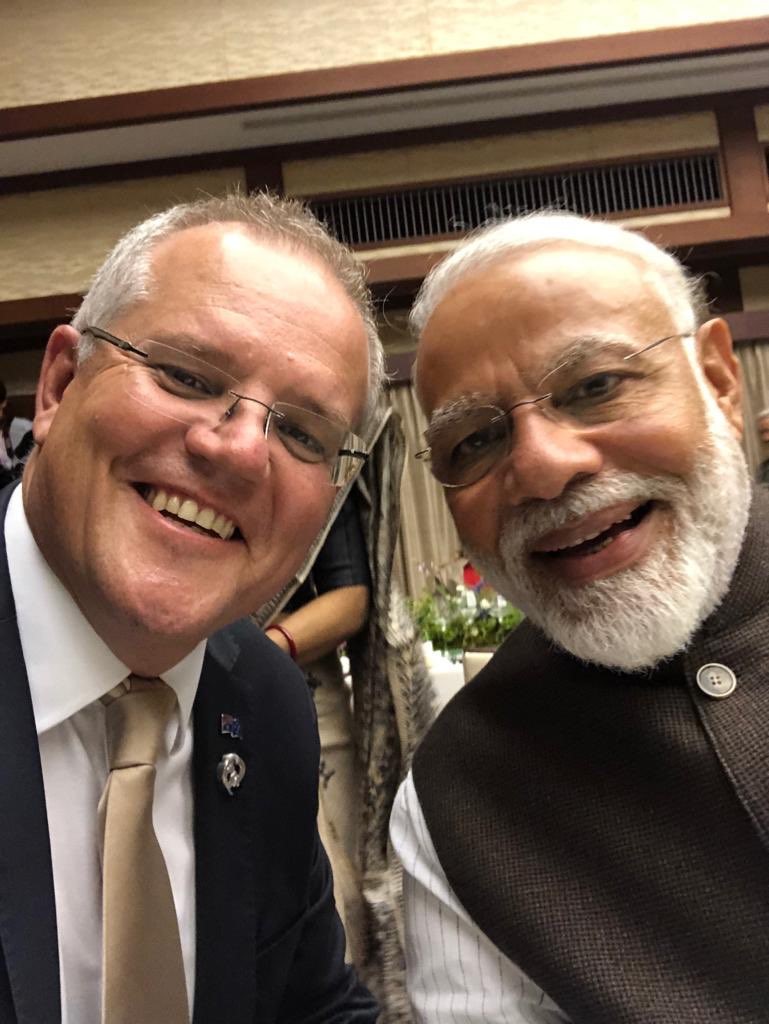
‘Kithana acha he Modi!’ Morrison wrote in Hindi, which means “how good is Modi?”

The Australian Prime Minister took to Twitter on Saturday to share a cheerful selfie with Indian Prime Minister Narendra Modi — a fellow world leader attending the G20 summit in Osaka.

‘Kithana acha he Modi!’ Morrison wrote in Hindi, which means “how good is Modi?”.

Indian PM Modi replied in Aussie style – “Mate, I’m stoked about the energy of our bilateral relationship!”

ModiMorrisonSmile2

This relationship could be a key to a successful Regional Comprehensive Economic Partnership deal of 15 countries in our region – big step forward.

The personal connections of leaders can go a long way to overcome bureaucratic hurdles. Long may their relationship flourish!!

Let’s hope PM Modi and PM Morrison meet lots and do deals

Now, this is the kind of photo I would like to see a lot more of.

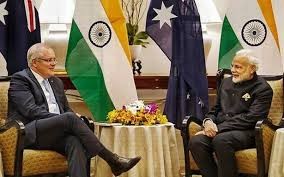
Australian PM Scott Morrison (left) and Indian PM Narendra Modi in discussions.

ModiMorrison2

This is vital for Indian Ocean strategic issues plus our trade and investment relations.

Here’s a very nice irony – Australia and India have really struggled to agree a Free Trade Agreement but one outcome of the Trump trade war on China is that the 15 countries in the Regional Comprehensive Economic Partnership (Including Australia and India) are now motivated to do a deal – they are talking fast, negotiating hard and could come up with a sweeping deal this year that reduces the need for direct talks on an Australia-India FTA.

Thanks Donald.


Family businesses in India are the world’s most upbeat

Family businesses in India are on a growth trajectory, with 89 per cent of them expecting to grow in the next two years, according to a survey.

The global survey, ‘Family Business Survey 2019’ by PwC, was done among 2,953 family leaders across 53 countries, including 106 family business leaders, between April 20 and August 10, 2018.

The survey has revealed that 89 per cent of family businesses in India expect to grow in the next two years, with 44 per cent of them looking at growing aggressively and 45 per cent expecting steady growth.

“Regulatory changes are getting family businesses to bring in order and professionalise the business, and disruptive technology is pushing them to transform. These new market dynamics are cultivating a renewed sense of ambition in family businesses, making them resilient in the face of change,” PwC India Partner and Leader, Entrepreneurial and Private Business, Ganesh Raju K said.

In terms of expansion, a little more than half of the family businesses are open to internationalisation, while 40 per cent are looking at diversification, the survey said.

Nearly half of the family businesses in India are open to mergers and acquisitions both within India and outside thus reinforcing the belief that inorganic growth will facilitate synergies and achieve incremental revenue, it said.

A lot of Indian family business owners are looking at private equity or venture capital funding or are looking at listing their business on stock exchanges.

Further, the survey said, more and more companies looking at professionalising their business functions are distinguishing between ownership and management as they feel partnering with the right talent might help family businesses to adapt to the changes.

About 73 per cent of Indian family businesses have the next generation working in the business and 60 per cent plan to pass on the management or ownership to the next generation.

It also found that 92 per cent of family businesses in India allow family members to work in the business. When it comes to spouses or partners, three-fourth of family businesses allow them to own shares and two-third allow them to work in the business.

BUT – there is some evidence the next generation of young Indians will want to branch out and create their own startups rather than the traditional path of joining the family firm.YoungIndians 2

Some inspiring quotes from Indian PM Narendra Modi

We are harbingers of peace. We come from the land of Gandhi and Buddha.

All religions and all communities have the same rights, and it is my responsibility to ensure their complete and total protection. My government will not tolerate or accept any discrimination based on caste, creed and religion.

Modi20192

The diversity of India, of our civilization, is actually a thing of beauty, which is something we are extremely proud of.

I believe that a government has only one religion – India first. A government has only one holy book – our Constitution. A government has only one kind of devotion – towards nation.

Our country does not believe in the concept of your God and my God. We believe that all gods are one. We have different ways of accepting Him. All ways lead to Him.

Our country does not believe in the concept of your God and my God. We believe that all gods are one. We have different ways of accepting Him. All ways lead to Him.

Modi 2.0 – What will Modi do in 7 major policy areas?

Health

Telemedicine and diagnostic laboratories

More medical colleges

National immunisation programs

Modernisation

50 cities to have metros

Toilets for all Indians

State road network expansion

Inclusion

Banking access for all

Pension for small shop keepers

Poverty reduced to single digit

Economy

Grow to $5 trillion by 2025 and $10 trillion by 2032

Infrastructure spend

Credit scheme for MSME’s

Governance

Simultaneous elections

Time-bound delivery of public services

Upgrade governance standards

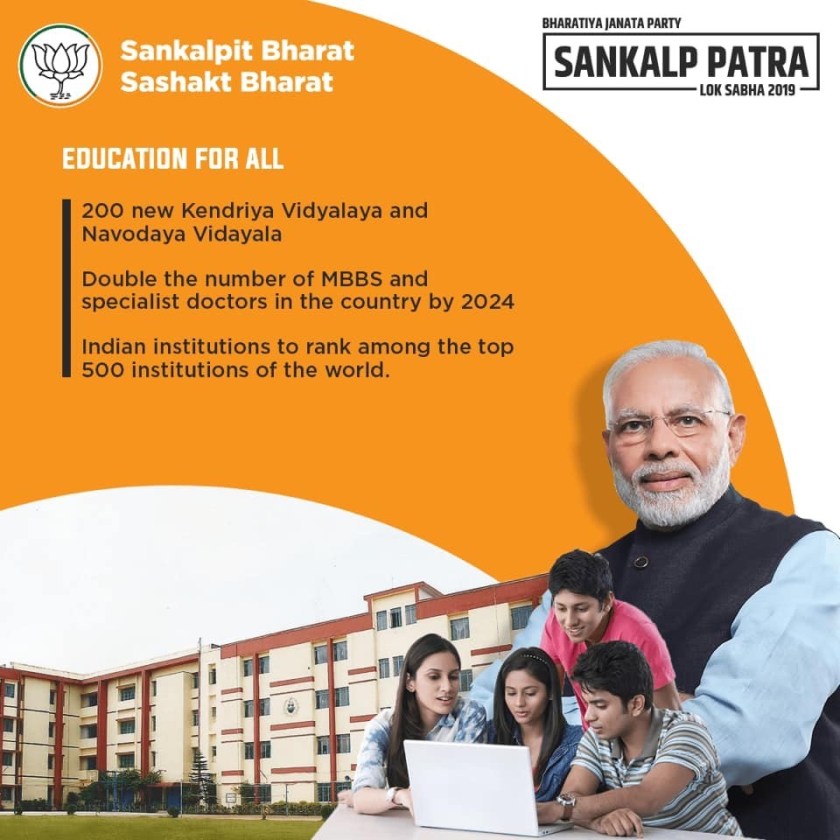
Education

Indian institutions to rate in top 500 in world

Medical and specialist doctors

Foreign Policy

Increase diaspora interaction

Multilateral cooperation on terrorism and corruption

Increase diplomatic corp

PLUS since this is PM Modi, expect the unexpected in this new 5 year term as Indian Prime Minister.

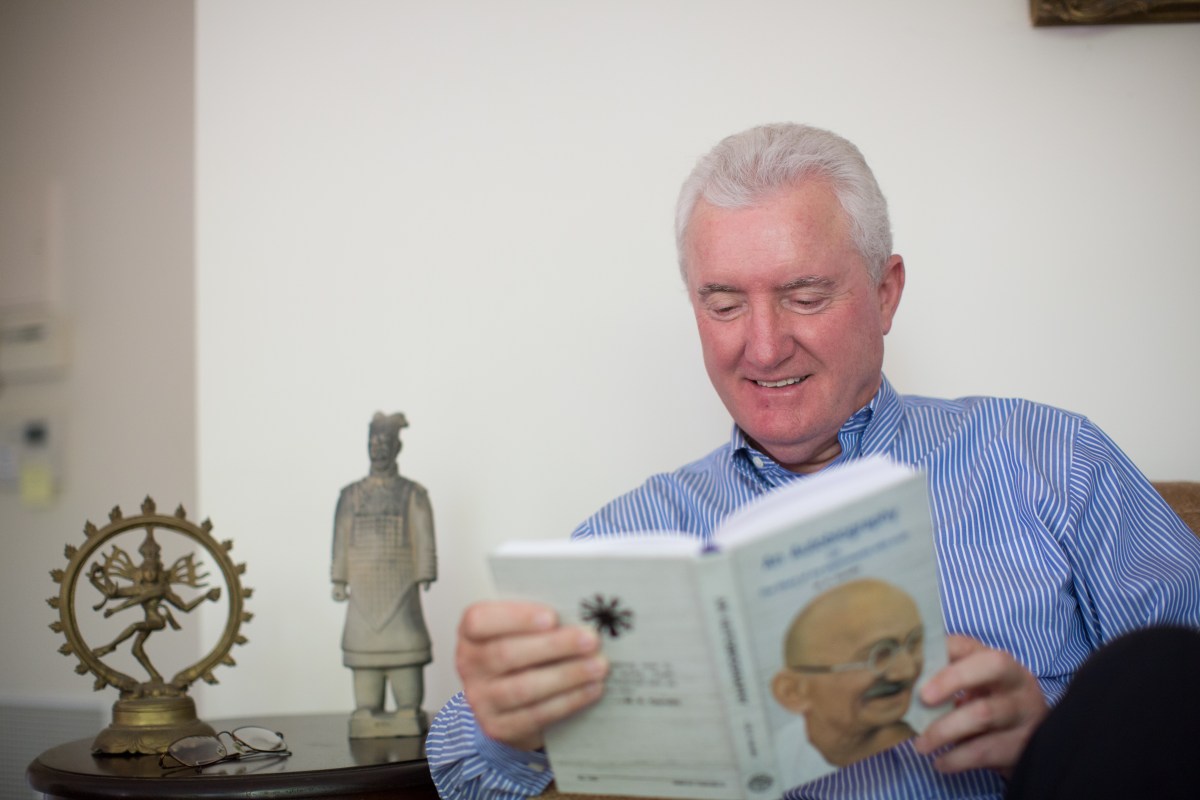
Gandhi’s inspiration lives on today

Mohandas Karamchand Gandhi was an Indian activist who was the leader of the Indian independence movement against British colonial rule, becoming known as “The father of the nation”. Employing nonviolent civil disobedience, Gandhi led India to independence and inspired movements for civil rights and freedom across the world.

I well remember campaigns against the Vietnam War – I was one of so many who used silent protest, peaceful marches and so on, all inspired by Gandhi. It was so special recently to visit his Ashram in Gujarat, and I have previously been to his burial site and other special locations in other cities.

Gandhiashram

Apparently he also influenced Martin Luther King in the USA who used peaceful means, also Nelson Mandela and the Dalai Lama.

Incredible wisdom.

“In a gentle way, you can shake the world.”

Thank you Mahatma Gandhi.

gandhisatyagraha


Australia – just be quiet and accept that China and India are the new powers and we are not top of their minds

Australia should calm down on Asia and just build healthy relationships.

Media and politicians react hysterically to even the smallest policy shift out of China. We sweat over the relationship. And if China has any dispute with a neighbour, we want to jump in and offer our advice.

We should just quietly get used to the new reality that China is now the world’s second biggest economy and is about to become the biggest.

change - secret

And when it comes to India, Australia cannot see beyond divisions and communal unrest. Objectively looking at the numbers will tell us India is a stable, growing economy that in our region will be a close number two to China.

Australians will agonise over whether getting closer to India is a good buffer to China.

Forget it – just get closer to India because that in itself is a good idea. Same for China.

Get over it. Things have changed.

Now – how do we build sensible and quiet relations with China and India – two countries that probably don’t think about Australia too often?

Be inspired! Some great quotes from Australian-Indian business leader Vivek Chaand Sehgal

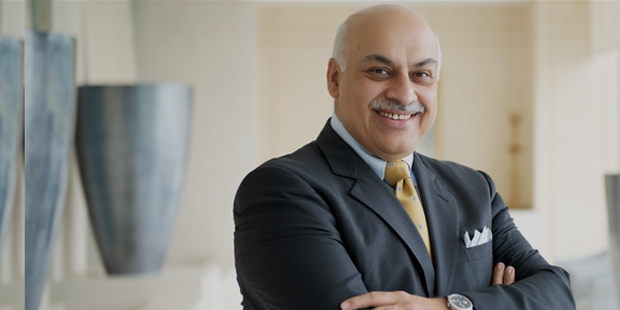
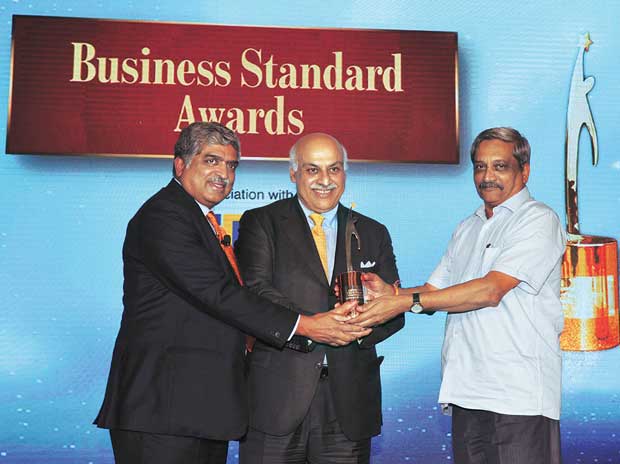
I recently saw some inspirational quotes from Australian-Indian business leader Vivek Chaand Sehgal, Chairman of Samvardhana Motherson Group (SMG).

“In Sanskrit we say that what doesn’t grow is dead.”

“A river, without other rivers flowing into it, will never reach the sea.”

VivekCEOofyearbusstandard

“In Hinduism we believe in four stages of life … the third is where you hand over what you have done, before going to the mountains, so I’m probably just about there.”

“There’s a saying in Sanskrit – ‘the world is a family’.”

“Only the most brainless businessman arbitrages labour or walks away when he doesn’t have to. He ignores the genius of a whole people, and our university partners have shown us that out-of-the-box thinking is still everywhere in Australia.”

Be inspired!

What will PM Modi do for India in his second term?

What will Modi 2.0 do for India?

With the world’s biggest democracy opting for stability and returning the Narendra Modi Government for a second five-year term, all eyes are on what will Modi 2.0 do?

Here are some actions to look out for. As my friend Amith Karanth from India Australia Exchange Forum says: “Modi will also pull some surprises”.

modi2.0

Looking ahead at Modi’s priorities

Health – telemedicine, more doctors, increase immunisation

Education – Modi wants India to have a top 100 global university – he will deregulate many top universities to allow this improvement

Add 50 city metros

Inclusion – banking for all, reduce poverty to single digit

Employment creation and lifting farm/shopkeeper incomes will continue to be a focus

Building more infrastructure

Devolving more responsibility and power to the state governments, extending the level of competition between them and empowering local leaders

Streamlining the GST, which was a minor miracle itself, but has multiple complexities

While privatisation of government institutions such as banks and more is needed – this might remain in the “too hard basket” in term two

Modi2.02

Looking at what Modi has already achieved

Moves against corruption such as demonetisation (one of his major surprises), reduction in cash and movement towards digital payments

Introduction of a GST, arguably the world’s biggest tax reform – meaning the central and state governments are now awash with funds and can now do things

Focus on startups and cheaper loans for SME’s has created real growth in new enterprises

National campaigns such as “Clean India” have begun the big job – providing access for many millions to toilets is just one of the outcomes

Some reforms to the insolvency and bankruptcy has increased confidence in doing business

Modi has been a relentless global salesperson for India and attracted record foreign investment

India’s infrastructure has changed massively in five years – with more to do

Modi

Professor Bhargava of RMIT University shows how to respond to Industry 4.0

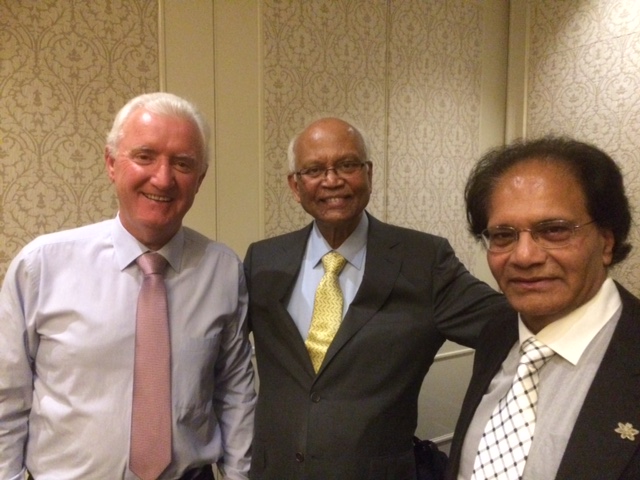
Featured pic – such an honour for me to be with two global innovators – India’s Dr Mashelkar and Australia’s Professor Bhargava (right)

Most students and many universities will not be ready for the fast-changing world of “Industrial Revolution 4.0” which has begun and will be in full swing by the time most graduate.

In Australia the RMIT University Distinguished Professor Suresh Bhargava, Associate Pro Vice-Chancellor (India), Director-Centre for Advanced Materials and Industrial Chemistry (CAMIC) College of Science, Engineering & Health is a pioneer of “The Science for Developing a 21st Century Scientist”.

This program will see students learning the art of global collaboration over a four-year program – one year each at RMIT University, with industry in Australia and India, involved in CSIRO international collaborations and with the Indian Academy of Scientific and Innovative Research.

Now, employers would be keen to talk to such a graduate!

Professor Bhargava says we should “Move towards collaborative innovation”.

Australia’s Chief Scientist, Dr Alan Finkel AO, is enthusiastic: “Very few of us have the opportunity to do something that is first in the world and worthwhile.”

Professor Bhargava has been my mentor on matters India and educational for many years.

I will be speaking at several Indian universities later this year on my own passion piece:

The 7 ways graduates can thrive in Industrial 4.0

  1. Show you can continue to learn

We know employers’ value this very highly – their focus is not on what you know through your degree – but is more on what you can learn in future. Prepare for this by being curious, reading and listening widely, entering discussion groups and being able to summarise what you have learned outside of university or since your degree.

  1. Demonstrate wisdom and common sense

For employers, further than what you know is how you think, and the value of wisdom and common sense. The best way to describe the difference between knowledge and wisdom is through the humble tomato – knowledge tells you a tomato is a fruit (not a vegetable) – but wisdom prevents you adding the tomato to a fruit salad. One fast track to wisdom is via mentors and guides, those who can share experience with students.

  1. Gain good collaboration and friendship skills

Industrial 4.0 will make collaboration easy and instant with anyone, anywhere and anytime – and the change will benefit those who have the skills to reach out, make friends, work across the globe and build collaboration. Future corporations and employers will be looking for people who can build collaboration.

  1. Gain cross-border understanding and skills

Already our lives in one country are intersecting with lives of other countries, and Industrial 4.0 will make the globe an even smaller place. Those who have travelled, who have acquired both knowledge and experience of other cultures will be in high demand, simply because almost every job will have global aspects.

  1. Become an outstanding communicator

Traditional “soft skills” training will not prepare students for the fast future – outstanding communication skills for Industrial 4.0 will include rapid pitching, ability to support points in a way which moves others, skills to relate directly and closely with those above and below you – any student sitting back quietly as a “newbie” will get left behind. Old notions of being silent in front of elders or superiors will not apply. Respectful and strong communication skills will rule.

  1. Be a team-based problem solver

More work will be team-based and some of those who succeed will actually present to future employers as a team. Problem solving as a team while at university should lead students to then approach employers as teams – a good standout in the race to gain attention.

  1. Build self-reliance and resilience

With the demise of “study hard, get the degree which entitles you to a job for life” model, students will need skills in self-reliance and resilience. As jobs come and go, individuals will need to be able to bounce back and start again, maybe many times in their careers. Where no jobs are forthcoming, graduates will need to create their own or join teams that provide solutions.